
- Home: eye surgery in Istanbul
- Knowledge centre
- Eye conditions & symptoms A–Z
Common Eye Problems: An A–Z Guide to Eye Conditions and Symptoms

The most common eye problems are refractive errors (short-sightedness, long-sightedness, astigmatism and age-related reading difficulty), dry eyes, cataract, glaucoma and macular degeneration. This guide explains 24 eye symptoms and conditions, shows which signs need help the same day, and tells you which of our three Istanbul surgeons, Prof. Dr. Ahmet Satıcı, Doç. Dr. (Associate Professor) Muhammet Derda Özer or Op. Dr. Aysan Bayram, treats them.
Eye problems range from a twitching eyelid that disappears on its own to a sudden shadow across your vision that needs treatment within hours. That is why this page does two jobs. It is an A–Z list of eye problems and symptoms, with a short plain-English summary of each and a link to the full guide. And it helps you decide how urgent your symptom is before you read further.
The scale of the issue is large. The World Health Organization's February 2026 fact sheet says at least 2.2 billion people worldwide have a near or distance vision impairment, and for at least 1 billion of them it could have been prevented or has not yet been addressed. Refractive errors and cataract are the leading causes.
Most eye problems do not need surgery. Many are fixed with glasses, drops or a few weeks of rest. When surgery is the right answer, whether lens surgery for cataract, laser for a prescription, cross-linking for keratoconus or retina surgery, it is carried out by one of three named surgeons in a fully equipped, Ministry of Health–licensed operating theatre in Istanbul, after a full examination that tells you honestly whether you need it.
Eye problems: when to see an optician, a doctor or emergency care
Start here if you have a symptom today. The table follows NHS guidance (UK); in other countries use the local emergency number and your nearest eye emergency service.
| How urgent | Signs | What to do |
|---|---|---|
| Emergency | Eye injury (especially from a chemical or a sharp object); severe headache with blurred or double vision, or an enlarged pupil with blurred or double vision; double vision after a head injury; dark red eye or light sensitivity with severe headache and nausea | Go to A&E or call 999 (UK), or your local emergency number |
| Same day | Sudden new floaters or flashes of light; a dark "curtain" or shadow moving across your vision; sudden blurring or loss of vision; double vision that started suddenly; eye pain with double vision; a painful, very red eye or sensitivity to light; yellow whites of the eyes | Call NHS 111 or ask for an urgent GP appointment today (UK); elsewhere, urgent eye care |
| Angle-closure warning | Intense eye pain, a red eye, rainbow-coloured circles around lights, nausea and headache. The NHS describes this pattern as acute angle-closure glaucoma, and the AAO says it requires emergency treatment | Treat as an emergency |
| Routine | Gradual blurring, headaches after reading or screens, tired or dry eyes, reading becoming harder, a lump that is not painful | Book an optician (optometrist) sight test; they refer you on if needed |
If you are in the UK, an optician is usually the right first stop for everyday vision problems: the NHS advises seeing one for suspected cataract and for early signs of macular degeneration, and an optician or GP for suspected double vision. If you are not sure, the quickest safe step is a call to NHS 111.
Eye problems list: every condition and symptom, by what you notice
Blurred, double or distorted vision
Astigmatism explained
An irregular curve of the cornea or lens blurs or distorts vision at all distances and can cause eye strain and headaches. Glasses, toric lenses or laser can correct it.
Astigmatism explainedShort-sightedness (myopia) explained
Distant objects look blurred. The NHS says it usually begins between ages 6 and 13, and that some adults can choose laser or lens surgery privately.
Short-sightedness (myopia) explainedSudden blurred vision: causes
Gradual blurring is usually a prescription or cataract issue, but sudden blurring is a same-day symptom: the NHS lists it among the warning signs of a retinal problem.
Sudden blurred vision: causesDouble vision: causes and urgent signs
Seeing two images has two main groups of causes: eyes that are not lined up (a squint or a muscle or nerve problem), or a problem inside one eye such as astigmatism, cataract or keratoconus. Sudden onset is urgent.
Double vision: causes and urgent signsHalos around lights
Rings around bright lights are listed by the NHS as a symptom of cataract. With intense eye pain and redness they can mean acute angle-closure glaucoma, which is an emergency.
Halos around lightsMacular degeneration (yellow spot): symptoms and treatment
Age-related macular degeneration affects central vision. The first sign is usually a blurred or distorted patch in the centre, or straight lines looking wavy. It is painless and typically starts in your 50s.
Macular degeneration (yellow spot): symptoms and treatmentHigh eye pressure: normal values and what raises it
Normal pressure is roughly 10 to 20 mmHg, according to the AAO. High pressure and early glaucoma usually cause no symptoms, which is why regular eye tests matter.
High eye pressure: normal values and what raises itNew glasses giving you headaches or dizziness?
A new prescription can take a little while to settle. If headaches or dizziness do not ease, your optician should recheck the prescription and the fit.
New glasses giving you headaches or dizziness?Red, sore, dry or tired eyes
Red eyes: causes and treatment
The NHS says conjunctivitis usually clears within a couple of weeks. A red eye with pain, light sensitivity or changes in vision needs urgent assessment.
Red eyes: causes and treatmentEye pain: causes by type of pain
Gritty, burning, aching behind the eye and sharp pain point to different causes, and some need same-day care.
Eye pain: causes by type of painBurning eyes: causes and relief
Burning and grittiness often come from dry eyes, allergies, screens or irritation from contact lenses.
Burning eyes: causes and reliefDry eyes: causes and home remedies
Itchy, sore, gritty or blurry eyes. The NHS lists age over 50, long screen time, contact lenses and air conditioning as common triggers, and recommends eyelid cleaning, screen breaks and a humidifier.
Dry eyes: causes and home remediesEye allergies: symptoms and treatment
Itching, watering and redness in both eyes, often with hay fever. The NHS notes that allergic conjunctivitis is not contagious.
Eye allergies: symptoms and treatmentDigital eye strain and screen time
Tired, dry eyes and headaches after long hours on a screen. Regular screen breaks and a well-set-up monitor help.
Digital eye strain and screen timeEye twitching: causes, when to worry, how to stop it
A flickering eyelid is usually harmless and temporary. This guide explains the common triggers and the signs that deserve a check.
Eye twitching: causes, when to worry, how to stop itEyelids and the look of the eye
Swollen eyelid: causes and home care
Infection, allergy, a blocked gland or an injury can swell a lid. Swelling with severe pain, spreading redness or reduced vision needs urgent care.
Swollen eyelid: causes and home careLump on the eyelid: sebaceous cyst, stye or chalazion?
The NHS says a stye is a small, painful lump, while a hard lump that is not very painful is more likely a chalazion. Do not try to burst either.
Lump on the eyelid: sebaceous cyst, stye or chalazion?Bulging eyes (exophthalmos): causes
The NHS lists eye irritation, double vision and bulging eyes among the complications of an overactive thyroid. A new change in how your eyes look deserves a medical check.
Bulging eyes (exophthalmos): causesYellow eyes: what they mean
Yellow whites of the eyes can be a sign of jaundice, which may point to liver, gallbladder or blood problems. The NHS says to ask for an urgent GP appointment or call 111.
Yellow eyes: what they meanChildren's eyes
Lazy eye (amblyopia) in children and adults
Vision in one eye does not develop properly. The NHS says treatment should ideally start before age 7, while vision is still developing.
Lazy eye (amblyopia) in children and adultsSquint / strabismus causes
The eyes point in different directions. The NHS says it is particularly common in young children but can happen at any age, and treatment can include glasses, exercises, injections or surgery.
Squint / strabismus causesEyes, body and nutrition
Iron deficiency and your eyes
What is known about low iron and your eyes, and when it is worth asking your doctor about a blood test.
Iron deficiency and your eyesVitamin B12 deficiency: eye symptoms
The NHS lists problems with vision among the possible effects of B12 or folate deficiency. This guide explains what to look for.
Vitamin B12 deficiency: eye symptomsFoods and vitamins that are good for your eyes
What a healthy diet can and cannot do for your eyes, without supplement hype.
Foods and vitamins that are good for your eyes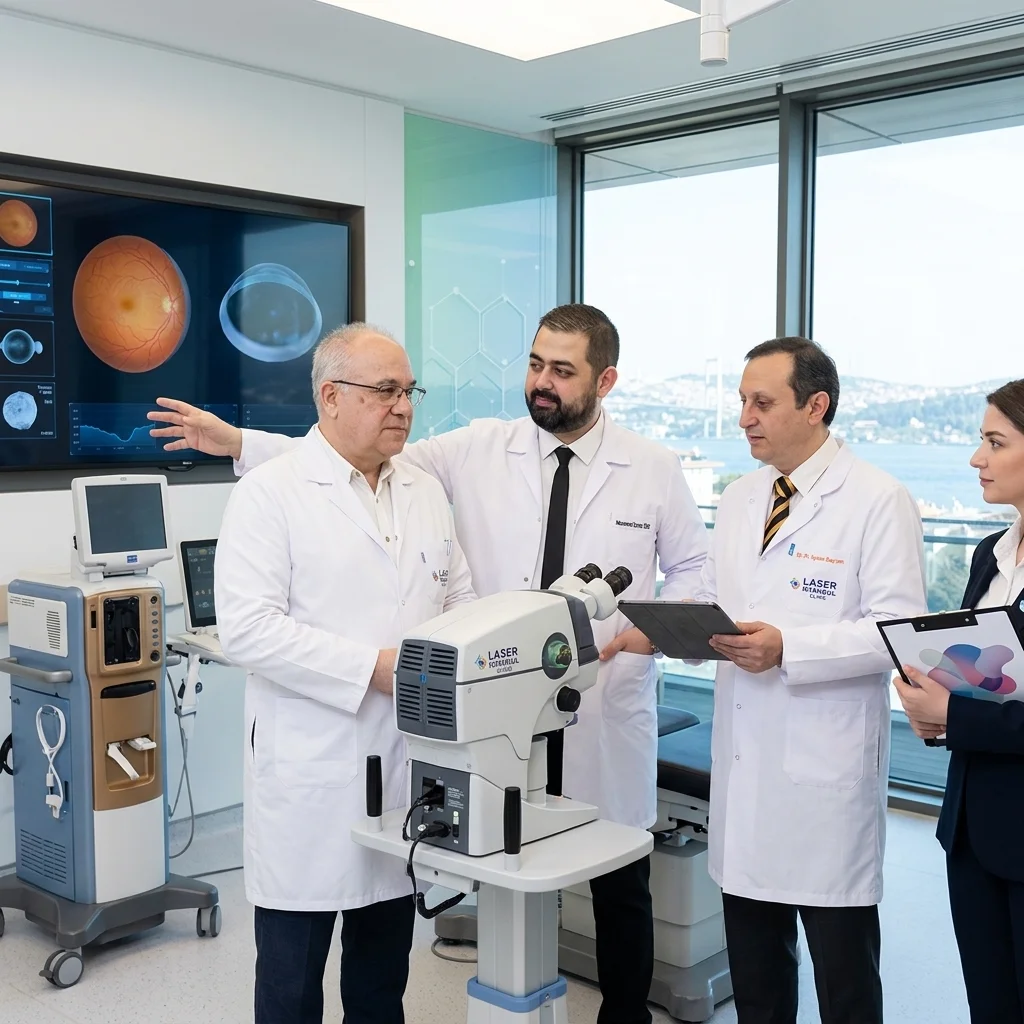
Eye conditions A–Z at a glance
A: Astigmatism · B: Bulging eyes · Burning eyes · D: Digital eye strain · Double vision · Dry eyes · E: Eye allergies · Eye pain · Eye twitching · F: Foods and vitamins for your eyes · H: Halos around lights · High eye pressure · I: Iron deficiency · L: Lazy eye · Lump on the eyelid · M: Macular degeneration · N: New glasses problems · R: Red eyes · S: Short-sightedness · Squint · Sudden blurred vision · Swollen eyelid · V: Vitamin B12 deficiency · Y: Yellow eyes
Which types of eye problems need glasses?
Four common refractive errors are corrected with glasses or contact lenses, and each has a different pattern, according to the US National Eye Institute (NEI):
| Eye problem | What looks blurred | Typical correction |
|---|---|---|
| Short-sightedness (myopia) | Far-away objects | Glasses, contact lenses or laser |
| Long-sightedness (hyperopia) | Nearby objects; eye strain and headaches are common | Glasses, contact lenses or surgery |
| Astigmatism | Near and far, often with distortion | Cylindrical lenses, toric contact lenses or corneal reshaping |
| Presbyopia | Close objects, usually from the mid-40s | Reading glasses, bifocals, varifocals or contact lenses |
The WHO counts 826 million people worldwide whose near vision is affected by presbyopia that has not been corrected. If you are tired of glasses, ask a surgeon what suits your eyes: short-sightedness in adults can often be treated with laser eye surgery, and reading glasses after 45 can be addressed with lens surgery. Read our lens and cataract guides for the options.
Common eye problems with age: what changes and when
Aging eye problems and their symptoms tend to arrive in a predictable order. These are the milestones from NHS and NEI information:
| Age or group | Common eye problem | Typical first symptom |
|---|---|---|
| Children (about 6 to 13) | Short-sightedness | Struggling to see distant text, holding devices close |
| Children, under 7 | Lazy eye and squint | Often no symptoms; an eye that turns or a tilted head. Treatment works best before age 7 |
| From about 45 | Presbyopia | Holding things further away to read |
| From about 50 | Dry eyes, macular degeneration, glaucoma risk | Gritty eyes; a blurred or distorted central patch; glaucoma usually none |
| From about 60 | Cataract | Blurred or cloudy vision, difficulty driving at night, halos around lights |
| Any age with diabetes | Diabetic retinopathy | None at first; the NEI advises a dilated eye exam at least once a year |
Two points to remember. First, two of the biggest sight-threatening diseases, glaucoma and diabetic retinopathy, usually have no early symptoms, so a regular sight test is your early warning. The NHS recommends a sight test at least every two years. Second, in England free NHS sight tests are available to people aged 60 or over, under 16, with diabetes or glaucoma, and aged 40 or over with a family history of glaucoma.
Eye problems, headaches and dizziness
Headaches. Eye strain and headaches are listed by the NEI among the symptoms of long-sightedness and astigmatism, and the NHS lists headaches among the signs of short-sightedness, so an out-of-date prescription is a common suspect. Headache with a red, painful eye, nausea and halos is different: that is the acute angle-closure pattern above and is an emergency.
Dizziness. Eyes cause dizziness mainly when the two eyes do not line up and you see double, or when a new prescription is still settling in. Dizziness has many causes outside the eyes, so tell your optician and your GP. Double vision that appears suddenly, or comes with eye pain or a severe headache, needs urgent help (see the table above).
Which eye problems are treated with surgery, and by whom?
Surgery is the answer to only a minority of the problems listed here. These are the ones it can solve, with the surgeon who leads each.
| Eye problem | Treatment | Lead surgeon(s) | Guide |
|---|---|---|---|
| Cataract (cloudy lens) | Lens replacement under local anaesthetic, usually same-day discharge (NHS) | All three surgeons | Lens & cataract guides |
| Prescription, astigmatism | Laser eye surgery, ICL, lens replacement | Prof. Dr. Ahmet Satıcı, Op. Dr. Aysan Bayram (laser) | Laser eye surgery guides |
| Keratoconus, corneal disease | Corneal cross-linking stiffens the cornea; transplant for advanced cases | Doç. Dr. Muhammet Derda Özer | Keratoconus & cornea guides |
| Retinal detachment, macular and diabetic eye disease | Vitrectomy, laser, injections | Doç. Dr. Muhammet Derda Özer, Op. Dr. Aysan Bayram | Retina & glaucoma guides |
| Glaucoma not controlled by drops | Laser, stents or surgery | Prof. Dr. Ahmet Satıcı | Retina & glaucoma guides |
| Squint, drooping or heavy eyelids | Muscle surgery, eyelid surgery | Prof. Dr. Ahmet Satıcı | Squint / strabismus causes |
Everything else on this page, from dry eyes to eye allergies, is usually managed with drops, lifestyle changes or glasses, and we will tell you so rather than suggest an operation you do not need. Not sure which treatment is which? The comparisons hub explains how treatments differ, and the eye glossary A–Z defines the medical terms your optician or doctor may use.
Questions about eye problems
Refractive errors, meaning short-sightedness, long-sightedness, astigmatism and presbyopia, are the most common, followed by dry eyes and cataract. The World Health Organization (2026) names refractive errors and cataract as the leading causes of vision impairment worldwide. Glaucoma, macular degeneration and diabetic retinopathy are less common but matter because early damage is often silent.
Presbyopia usually appears from the mid-40s, dry eyes and macular degeneration become more common from the 50s, and cataract mainly affects people over 60. The NHS lists being over 50 as a glaucoma risk factor. A sight test at least every two years catches most of these early.
For most everyday problems, such as blurred vision, headaches or suspected cataract, book an optician sight test; they refer you to a hospital eye clinic if needed. For sudden vision loss, new flashes or floaters, a dark curtain over your vision, a painful red eye or sudden double vision, call NHS 111 or ask for an urgent GP appointment the same day. Eye injuries and severe headache with blurred or double vision mean 999 or A&E.
Short-sightedness, long-sightedness, astigmatism and presbyopia are corrected with glasses or contact lenses. Adults with a stable prescription can sometimes choose laser or lens surgery instead, which your surgeon assesses after measuring your eyes.
Yes. The NEI lists headaches and eye strain among the symptoms of long-sightedness and astigmatism, and the NHS lists headaches among the signs of short-sightedness. A headache with intense eye pain, a red eye and nausea can be acute angle-closure glaucoma, which is an emergency.
Mainly through double vision, when the two eyes point in different directions, or while you adjust to a new prescription. Dizziness has many non-eye causes, so mention it to both your optician and your GP. Sudden double vision, or double vision with eye pain or a severe headache, needs urgent medical help.
Sudden loss or blurring of vision, new flashes of light or floaters, a dark curtain across your vision, intense eye pain with a red eye and halos, an eye injury and sudden double vision all need same-day care. The NHS says retinal detachment must be treated quickly to stop it permanently affecting your sight. If you are travelling, do not wait for an appointment abroad: go to the nearest emergency eye service.
Cataract, keratoconus, retinal detachment and some macular and diabetic eye disease, glaucoma that drops do not control, squint, heavy eyelids and prescriptions you want to be free of glasses. Dry eyes, eye allergies, eye strain and most red eyes are usually treated without surgery.
Yes. Send your prescription, scans or eye reports and one of our surgeons will tell you what they think and whether travelling is worthwhile, with no obligation. Surgery in Istanbul only goes ahead after a full examination confirms it is right for you. Any urgent symptom from the table above should be seen where you live first.
Sources for the facts on this page
- World Health Organization fact sheet, "Blindness and vision impairment" (10 Feb 2026): at least 2.2 billion people with near or distance vision impairment; at least 1 billion preventable or unaddressed; refractive error and cataract leading causes; 826 million with presbyopia. https://www.who.int/news-room/fact-sheets/detail/blindness-and-visual-impairment
- NHS, "Retinal detachment": floaters, flashes, dark curtain, sudden blurring; contact NHS 111 immediately; needs quick treatment. https://www.nhs.uk/conditions/retinal-detachment/
- NHS, "Glaucoma": chronic glaucoma usually has no symptoms; acute angle-closure symptoms (intense pain, red eye, rainbow circles, nausea, headache); risk groups; eye tests at least every 2 years. https://www.nhs.uk/conditions/glaucoma/
- NHS, "Double vision": optician or GP; urgent if sudden or with eye pain; 999 with severe headache or enlarged pupil, or after head injury; binocular (squint) and monocular causes. https://www.nhs.uk/conditions/double-vision/
- NHS, "Dry eyes" (reviewed 6 Jan 2025): symptoms, risk factors, self-care, urgent and emergency signs. https://www.nhs.uk/conditions/dry-eyes/
- NHS, "Conjunctivitis": causes (allergic form not contagious); urgent signs (pain, light sensitivity, vision changes, very red eyes). https://www.nhs.uk/conditions/conjunctivitis/
- NHS, "Age-related macular degeneration (AMD)" and "AMD symptoms": affects central vision; typically from the 50s; blurred or distorted centre, wavy lines; painless; urgent signs. https://www.nhs.uk/conditions/age-related-macular-degeneration-amd/ · https://www.nhs.uk/conditions/age-related-macular-degeneration-amd/symptoms/
- NHS, "Cataracts": symptoms including night-driving difficulty and halos, risk factors (over 60 etc.), surgery under local anaesthetic, see an optician. https://www.nhs.uk/conditions/cataracts/
- NHS, "Short-sightedness": starts typically between ages 6 and 13; headaches; private laser or lens surgery for some adults. https://www.nhs.uk/conditions/short-sightedness/
- NHS, "Squint": definition; common in young children, any age; treatments; untreated risks. https://www.nhs.uk/conditions/squint/
- NHS, "Lazy eye": definition; treatment ideally before age 7; free sight tests for under 16s. https://www.nhs.uk/conditions/lazy-eye/
- NHS, "Stye": stye vs chalazion; do not burst; when to see a GP. https://www.nhs.uk/conditions/stye/
- NHS, "Jaundice": yellow whites of the eyes; urgent GP or 111. https://www.nhs.uk/conditions/jaundice/
- NHS, "Overactive thyroid": eye irritation, double vision or bulging eyes as complications. https://www.nhs.uk/conditions/overactive-thyroid-hyperthyroidism/
- NHS, "Vitamin B12 or folate deficiency anaemia": vision problems among possible symptoms. https://www.nhs.uk/conditions/vitamin-b12-or-folate-deficiency-anaemia/
- NHS, "Free NHS eye tests and optical vouchers" (England eligibility, reviewed July 2023). https://www.nhs.uk/nhs-services/opticians/free-nhs-eye-tests-and-optical-vouchers/
- National Eye Institute (NEI), "Refractive errors": myopia, hyperopia, astigmatism, presbyopia (common from age 45); symptoms and corrections. https://www.nei.nih.gov/learn-about-eye-health/eye-conditions-and-diseases/refractive-errors
- NEI, "Diabetic retinopathy": no early symptoms; dilated eye exam at least yearly; injections, laser, vitrectomy. https://www.nei.nih.gov/learn-about-eye-health/eye-conditions-and-diseases/diabetic-retinopathy
- American Academy of Ophthalmology, "What is glaucoma?": normal eye pressure about 10–20 mmHg; no early symptoms; angle-closure needs emergency treatment; risk groups. https://www.aao.org/eye-health/diseases/what-is-glaucoma
- Leeds Teaching Hospitals NHS Trust, "Keratoconus & corneal cross-linking": cross-linking stiffens the cornea. https://www.leedsth.nhs.uk/patients/resources/keratoconus-corneal-cross-linking/
- Not sourced externally (general advice, no figures): a new prescription that does not settle should be rechecked by the optician; dizziness has many non-eye causes.
Worried about your eyes? Ask a surgeon, free
Send your prescription, scans or eye reports. Prof. Dr. Satıcı, Doç. Dr. Özer or Op. Dr. Bayram will tell you what may be going on, which treatment, if any, would suit your eyes, and what it would cost in writing. Your price includes examination and scans, surgery, medication, follow-up in Istanbul, a personal interpreter and remote follow-up; hotel and airport transfers are a separate charge, arranged on request.
3 eye surgeons
Your case is reviewed by a named surgeon, not a salesperson. Reply within {{response time}}.
 Prof. Dr. Ahmet Satıcı
 Doç. Dr. Muhammet Derda Özer
 Op. Dr. Aysan Bayram