
- Home: eye surgery in Istanbul
- Our eye surgeons
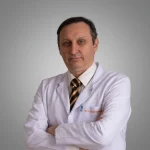
- Doç. Dr. Muhammet Derda Özer
Doç. Dr. Muhammet Derda Özer, Cornea, Keratoconus, Retina and Uveitis Surgeon in Istanbul
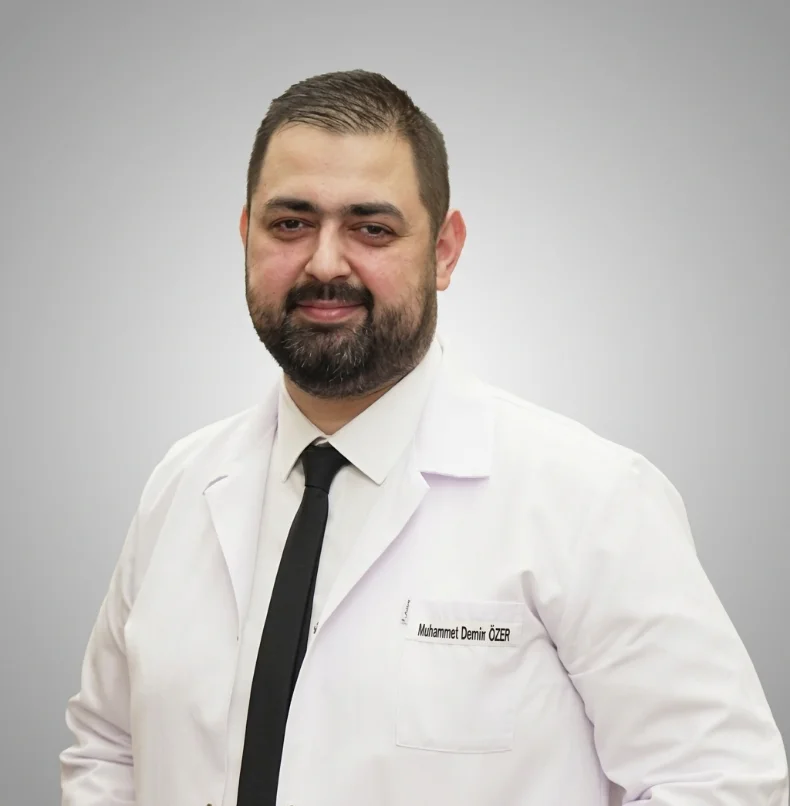
Doç. Dr. Muhammet Derda Özer (also written Muhammet Derda Ozer) is an eye surgeon in Istanbul and an Associate Professor of Ophthalmology ("Doç." is the Turkish title for Associate Professor). He trained at Istanbul University's Faculty of Medicine, has been an ophthalmology specialist since 2016 and has 27 papers indexed on PubMed, many on keratoconus cross-linking, corneal surface surgery and uveitis. He speaks Turkish and English.
Derda Özer, eye surgeon: cornea and inflammation in one specialist
Doç. Dr. Özer is the surgeon our patients see when the problem is the cornea itself or inflammation inside the eye. That covers keratoconus, corneal scarring and transplant, damage to the eye's surface after chemical or heat burns, uveitis, and retinal and eye-tumour problems.
His research follows the same lines. He is first author of 10 original studies on PubMed, including long-term results of cross-linking in children and teenagers with keratoconus, surgery for limbal stem cell deficiency, and anti-TNF treatment for a form of uveitis in children. Before his move to Istanbul he spent more than three years in the Department of Ophthalmology at Van Yüzüncü Yıl University in eastern Türkiye, where he also co-authored research on Behçet's disease, one of the autoimmune conditions that can cause uveitis.
Education
-
2004–2010
Medical degree (MD), Istanbul University Istanbul Faculty of Medicine
-
2011–2016
Specialist training in ophthalmology, Department of Ophthalmology, Istanbul University Istanbul Faculty of Medicine
-
2012 and 2013
Ocular oncology observerships (July–August 2012; August 2013) at a leading eye hospital in Philadelphia, USA
-
2020
FICO, Fellow of the International Council of Ophthalmology
Career
-
2016–2018
Ophthalmology specialist at a state hospital in Hakkari, eastern Türkiye
-
2018–2021
Assistant Professor (Dr. Öğretim Üyesi), Department of Ophthalmology, Van Yüzüncü Yıl University Faculty of Medicine
-
2021
Associate Professor of Ophthalmology (Doçent)
-
2022–2024
Associate Professor of Ophthalmology at a university hospital in Istanbul
-
Today
Cornea, retina and uveitis surgeon in Istanbul
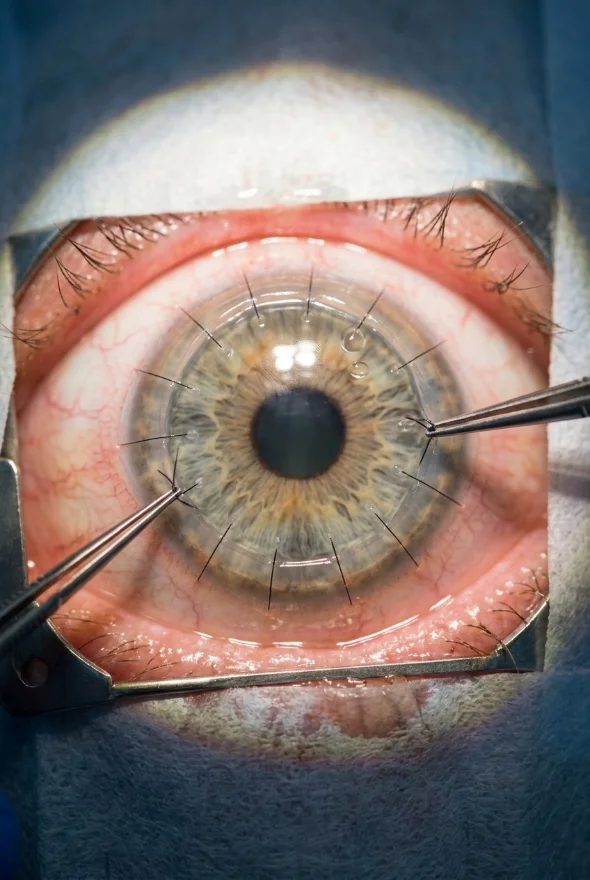
At Van Yüzüncü Yıl University he treated patients, trained ophthalmology residents and ran the clinical studies listed below. He also reviews manuscripts for international ophthalmology journals; his ORCID record lists peer-review work from 2020 to 2026.
Memberships
- {{Professional memberships, to be confirmed by Doç. Dr. Özer}}
How many papers has Muhammet Derda Özer published?
Doç. Dr. Özer has 27 peer-reviewed papers indexed on PubMed (2016–2026). He is first author of 11 of them: 10 original studies and one reply to readers. His work covers four areas:
| Area | What the papers look at |
|---|---|
| Keratoconus and cross-linking | Long-term results of accelerated cross-linking in children and teenagers; oxidative-stress markers in keratoconus |
| Cornea and ocular surface | Limbal stem cell transplantation after chemical and heat burns, with or without corneal transplant; corneal densitometry; treatment of corneal swelling |
| Uveitis | Fuchs uveitis syndrome; anti-TNF treatment of pars planitis in children; TNF-inhibitor treatment and choroidal imaging in Behçet's disease; herpetic uveitis; toxoplasma retinochoroiditis |
| Retina and imaging | Optical coherence tomography (OCT) in central retinal vein occlusion; light-induced damage to the macula; retinal and choroidal thickness in systemic disease |
Selected papers:
- Long-term results of accelerated corneal cross-linking in adolescent patients with keratoconus. Cornea, 2019. First author. 35 eyes of 23 patients aged 14 and under, followed for an average of 56 months; keratoconus still progressed in 20% of eyes despite treatment.
- Comparison of the efficacy of accelerated corneal cross-linking therapy in different pediatric age groups having progressive keratoconus. International Ophthalmology, 2020. First author. Two years after cross-linking, progression was seen in 35% of eyes in children aged 14 and under, against 4% in teenagers aged 15–18. The authors advise closer follow-up and early treatment in the younger group.
- The surgical outcomes of limbal allograft transplantation in eyes having limbal stem cell deficiency. Journal of Current Ophthalmology, 2020. First author. 18 eyes followed for an average of almost eight years; 67% gained two or more lines of vision.
- The long-term surgical outcomes of conjunctival-limbal autograft procedure with or without penetrating keratoplasty in eyes with unilateral limbal stem cell deficiency. Taiwan Journal of Ophthalmology, 2020. First author.
- Anti-tumor necrosis factor-alpha treatment in pediatric patients with pars planitis: a single-center experience from Turkey. International Ophthalmology, 2023. First author. All children treated with adalimumab plus immunomodulatory medicines were in steroid-free remission at their last visit.
- Association between choroidal vascularity index and disease activity in Behçet uveitis. Graefe's Archive for Clinical and Experimental Ophthalmology, 2026. Co-author.
→ Link: See all 27 papers on PubMed (https://pubmed.ncbi.nlm.nih.gov/?term=Ozer+Muhammet+Derda%5BAuthor%5D)
Case numbers
| Specialist in ophthalmology since | 2016 |
|---|---|
| Associate Professor (Doçent) since | 2021 |
| Eye operations performed (self-reported) | {{number from Doç. Dr. Özer}} |
| Cross-linking treatments performed (self-reported) | {{number from Doç. Dr. Özer}} |
| Corneal transplants performed (self-reported) | {{number from Doç. Dr. Özer}} |
What does Doç. Dr. Özer specialise in?
He specialises in diseases of the cornea and in inflammation and disease at the back of the eye. Your coordinator sends your case to him when you need one of the treatments below.
Keratoconus and corneal cross-linking
Keratoconus is when the cornea thins and bulges into a cone shape, and it often starts in the late teens to early twenties, according to the American Academy of Ophthalmology (AAO). Cross-linking uses riboflavin drops and UV light to strengthen the cornea. NHS patient information is clear that its main aim is to stop keratoconus getting worse, not to improve vision. Doç. Dr. Özer checks whether your keratoconus is progressing, whether your cornea is thick enough for cross-linking, and how glasses, special contact lenses or ring segments fit in.
Keratoconus treatment in TurkeyCorneal transplant and ocular surface reconstruction
When keratoconus or scarring is too advanced for contact lenses, a corneal transplant replaces all or part of the cornea with healthy donor tissue (AAO). Doç. Dr. Özer also treats limbal stem cell deficiency, where the stem cells that renew the corneal surface are lost, often after a chemical or heat burn (EyeWiki, AAO). This needs stem-cell grafting before or alongside a transplant, the subject of two of his published studies.
Uveitis
Uveitis is inflammation inside the eye; it causes blurred vision, floaters, pain, redness and light sensitivity, and can lead to vision loss if it isn't treated, according to the US National Eye Institute (NEI). Causes include autoimmune conditions such as Behçet's disease, and infections such as toxoplasmosis. Treatment ranges from steroid drops and injections to, when steroids are not enough, biologic anti-TNF medicines, the subject of two of Doç. Dr. Özer's studies.
Retina
He diagnoses and treats retinal disease, including retinal vein occlusion and inflammation of the retina and choroid, using OCT scans to plan and follow treatment. Vitreoretinal surgery is one of the research fields listed on his ORCID record.
Ocular oncology (eye tumours)
Melanoma inside the eye is the most common eye cancer in adults, according to the US National Cancer Institute (NCI). Ocular oncology is one of Doç. Dr. Özer's listed research fields, and during his training he completed two ocular oncology observerships in the USA. He assesses suspicious lesions of the eye and plans treatment or monitoring.
Cataract surgery
Patients who already see him for corneal, retinal or uveitis problems can have cataract surgery with him, so one surgeon knows the whole eye.
Cataract surgery in Turkey / IstanbulTreatments led by his colleagues
Once your cornea is stable, you may want less dependence on glasses. Vision correction and glaucoma are led by Prof. Dr. Ahmet Satıcı and Op. Dr. Aysan Bayram, and your coordinator can arrange a joint review:
- Laser eye surgery in Turkey and Istanbul
- Lens replacement (RLE / smart lens) in Turkey
- ICL and EVO ICL implantable lenses
- Glaucoma treatment and surgery in Turkey

Languages
Doç. Dr. Özer speaks Turkish and English, so English-speaking patients can talk to him directly. A personal interpreter in your language joins every appointment if you need one.
Video
Frequently asked questions
He is an Associate Professor of Ophthalmology and eye surgeon in Istanbul who specialises in the cornea, keratoconus, retina and uveitis. He studied medicine and trained in ophthalmology at Istanbul University's Faculty of Medicine, then taught at Van Yüzüncü Yıl University before returning to Istanbul. He has 27 papers indexed on PubMed.
"Doç." is short for Doçent, the Turkish academic title for an Associate Professor. It sits between Assistant Professor and full Professor (Prof.). Doç. Dr. Özer has held it since 2021.
Yes. Keratoconus in young people is a focus of his research: his 2019 and 2020 studies followed patients aged 18 and under after cross-linking. They found that children aged 14 and under were more likely to progress after treatment than older teenagers, so he advises close follow-up for young patients after cross-linking.
As of October 2026, 27 of his papers are indexed on PubMed, and he is first author of 11 of them. Topics include keratoconus cross-linking, limbal stem cell surgery, uveitis in Behçet's disease and children, and retinal imaging.
Yes, he speaks Turkish and English. If you prefer another language, a personal interpreter joins your appointments at no extra cost.
Yes. Send your corneal topography or tomography scans, OCT scans and any eye reports. He reviews them before you book and can speak to you by video call. He examines you in person in Istanbul before any treatment decision is final.
He operates in a fully equipped, Ministry of Health–licensed operating theatre in Istanbul. Your coordinator gives you the address and arranges your appointments.
Prices depend on the treatment: cross-linking starts from {{price}} per eye and a corneal transplant from {{price}}. Your written quote includes the pre-op examination and scans, surgery by Doç. Dr. Özer, medication, follow-up checks in Istanbul, a personal interpreter, a coordinator and remote follow-up. Hotel and airport transfers are not included and can be arranged on request for a separate charge; flights are not included.
Sources for the facts on this page
- *Doctor facts (all opened 6 Oct 2026):**
- ORCID record 0000-0002-3954-270X (public API): https://orcid.org/0000-0002-3954-270X — MD Sept 2004–July 2010 and ophthalmology training Aug 2011–Mar 2016 (Istanbul University); specialist at Hakkari State Hospital July 2016–Apr 2018; lecturer (Dr. Öğretim Üyesi) at Van Yüzüncü Yıl University Apr 2018–Oct 2021; Associate Professor at Yeni Yüzyıl University Gaziosmanpaşa Hospital Jan 2022–Jan 2025; ocular oncology observer at Wills Eye Hospital, Philadelphia (23 Jul–31 Aug 2012; 5–23 Aug 2013); research keywords uveitis, vitreoretinal surgery, ocular oncology; peer-review activity 2020–2026.
- Doktortakvimi profile (Turkish): https://www.doktortakvimi.com/muhammet-derda-ozer/goz-hastaliklari/istanbul — medical school 2004–2010 and specialist training 2011–2016 at Istanbul University Istanbul Faculty of Medicine; career list; areas of work; languages Turkish and English.
- PubMed author search, 27 results (2016–2026), 11 first-author (one an authors' reply): https://pubmed.ncbi.nlm.nih.gov/?term=Ozer+Muhammet+Derda%5BAuthor%5D (count, titles, journals and first authorship checked via the NCBI E-utilities API).
- Ozer MD et al. Cornea 2019;38(8):992–997, PMID 31033692: 35 eyes of 23 patients ≤ 14 years, mean follow-up 56 months, progression in 20%. https://pubmed.ncbi.nlm.nih.gov/31033692/
- Ozer MD et al. Int Ophthalmol 2020;40(10):2651–2658, PMID 32488590: 41 eyes, progression at 2 years 35% (≤ 14 y) vs 4% (15–18 y). https://pubmed.ncbi.nlm.nih.gov/32488590/
- Ozer MD et al. J Curr Ophthalmol 2020;32(2):132–141, PMID 32775793: 18 eyes of 14 patients, mean follow-up 93.8 months, ≥ 2 lines gained in 67%. https://pubmed.ncbi.nlm.nih.gov/32775793/
- Ozer MD et al. Taiwan J Ophthalmol 2020;10(1):22–28, PMID 32309120. https://pubmed.ncbi.nlm.nih.gov/32309120/
- Ozer MD, Batur M. Int Ophthalmol 2023;43(1):155–166, PMID 35780435: all patients in steroid-free remission at last visit (mean follow-up 15.5 months). https://pubmed.ncbi.nlm.nih.gov/35780435/
- Tan RB, Özer MD et al. Graefes Arch Clin Exp Ophthalmol 2026, PMID 42720747. https://pubmed.ncbi.nlm.nih.gov/42720747/
- Bektaş M, Özer MD, Oğuz E. Clin Immunol 2024, PMID 38734038 (Behçet's disease, TNF inhibitors, Van). https://pubmed.ncbi.nlm.nih.gov/38734038/
- *Medical facts (opened 6 Oct 2026):**
- AAO, What Is Keratoconus?: definition (cornea thins and bulges like a cone), onset late teens to early 20s, treatments including cross-linking and corneal transplant (replaces all or part of the cornea with donor tissue). https://www.aao.org/eye-health/diseases/what-is-keratoconus
- AAO, Corneal Crosslinking: riboflavin and UVA, aim to halt progression; endothelial risk below 400 microns. https://www.aao.org/eye-health/treatments/corneal-crosslinking
- Moorfields Eye Hospital NHS Foundation Trust, Corneal cross-linking: "the main aim of CXL is to stabilise, and not to improve vision". https://www.moorfields.nhs.uk/eye-conditions/keratoconus/corneal-cross-linking
- EyeWiki (AAO), Limbal Stem Cell Deficiency: definition; chemical and thermal burns as causes; limbal grafting procedures. https://eyewiki.org/Limbal_Stem_Cell_Deficiency
- NEI, Uveitis: definition, symptoms, causes including Behçet's disease and toxoplasmosis, vision loss if untreated, steroid treatments. https://www.nei.nih.gov/learn-about-eye-health/eye-conditions-and-diseases/uveitis
- NCI, Intraocular (Uveal) Melanoma Treatment (PDQ®), Patient Version: most common eye cancer in adults; treatment options. https://www.cancer.gov/types/eye/patient/intraocular-melanoma-treatment-pdq
- schema.org IndividualPhysician: https://schema.org/IndividualPhysician · Google review-snippet guidelines: https://developers.google.com/search/docs/appearance/structured-data/review-snippet
Ask Doç. Dr. Özer about your cornea or retina, free
Send your corneal scans, OCT images or eye reports. Doç. Dr. Özer will tell you which treatments may suit you and send a written quote naming him as your surgeon, with no obligation.
3 eye surgeons
Your case is reviewed by a named surgeon, not a salesperson. Reply within {{response time}}.
 Prof. Dr. Ahmet Satıcı
 Doç. Dr. Muhammet Derda Özer
 Op. Dr. Aysan Bayram