
Eye Surgery in Turkey FAQ: Your Questions, Answered by Our Surgeons' Team
This eye surgery in Turkey FAQ answers the questions patients ask us most, before they send a single scan: who operates, what it costs and what's included, how long to stay, when you can fly home, how recovery goes and what happens if you need help once you're back. If your question isn't here, ask a surgeon directly.
With Laser Istanbul Clinic, your eye surgery in Turkey is done by one of three named surgeons: Prof. Dr. Ahmet Satıcı (lens, cataract, laser, eyelid), Doç. Dr. Muhammet Derda Özer (cornea, keratoconus, retina) or Op. Dr. Aysan Bayram (cataract, laser, retina). You know your surgeon and your written price before you book. Plan 3–5 days in Istanbul for laser and 5–7 days for lens or cataract surgery. Hotel, transfers and flights are not included.
Eye surgery in Turkey FAQ: before you book, your surgeon and your assessment
Who will perform my surgery?
One of our three eye surgeons: Prof. Dr. Ahmet Satıcı, Doç. Dr. Muhammet Derda Özer or Op. Dr. Aysan Bayram. "Doç." is the Turkish title for Associate Professor. Which surgeon depends on your eyes: keratoconus, cornea and complex retina cases usually go to Doç. Dr. Özer; lens replacement, eyelid, squint and glaucoma surgery to Prof. Dr. Satıcı; cataract and laser surgery can be done by any of the three. You know your surgeon's name before you book, and the same surgeon examines you, operates and checks your recovery.
Can I choose my surgeon?
Yes, as long as the surgeon you choose treats your condition. Tell us your preference when you send your details, and we'll tell you honestly if another of the three is better suited to your eyes. Each surgeon's training, academic title and publications are on our eye surgeons page, so you can check them yourself.
Can I have a female eye surgeon?
Yes. Op. Dr. Aysan Bayram operates on cataracts, performs laser eye surgery and treats retinal disease. She has been an ophthalmology specialist since 1999 and speaks English. Ask for her when you contact us.
What do Prof. Dr., Doç. Dr. and Op. Dr. mean?
They are Turkish titles. "Prof. Dr." is a full professor and "Doç. Dr." an associate professor, academic ranks awarded after a review of a doctor's published research. "Op. Dr." (operator doctor) is a fully trained surgical specialist. All three of our surgeons are fully trained ophthalmologists who operate.
How do I find out if I'm suitable for eye surgery?
Send us your glasses or contact-lens prescription and any recent eye reports or scans through our free assessment form or WhatsApp. The surgeon who leads your treatment reviews them and tells you which options may suit you, with a written quote. The final decision is made only after a full examination in Istanbul: if the scans show surgery isn't right for you, your surgeon will tell you, even after you've travelled.
Can I speak to my surgeon before I book?
Yes. You can talk to your surgeon by video before you book and ask every question you have. The Royal College of Ophthalmologists (RCOphth) advises meeting the surgeon who will operate and taking at least a week after the consultation to think. When you're travelling, that thinking time happens at home, before you fly.
What questions should I ask before eye surgery?
Ask who will operate and how often they do your procedure, which tests will be done, why this treatment suits your eyes, which laser or lens model will be used, what the likely side effects are, what the price includes and what happens if you need further treatment. Our safety checklist lists twelve questions to take to any consultation, with us or anyone else.
Treatments: which one is right for me?
Which eye treatment is right for me?
That depends on your age, your prescription and the health of your eyes, and only an examination can confirm it. As a starting point:
| Your situation | Treatments your surgeon may suggest | Led by |
|---|---|---|
| 18–40, glasses or contacts, healthy corneas | Laser eye surgery: Femto-LASIK, SMILE Pro, PRK | Prof. Dr. Satıcı, Op. Dr. Bayram |
| Very high prescription or thin corneas | ICL implantable lens | Prof. Dr. Satıcı |
| Over 45, reading glasses or varifocals | Lens replacement (trifocal or EDOF lens) | Prof. Dr. Satıcı |
| Cloudy, dim or glaring vision | Cataract surgery, standard or premium lens | All three surgeons |
| Keratoconus or a thinning cornea | Cross-linking, ring segments, corneal transplant | Doç. Dr. Özer |
| Retinal detachment, macular hole, diabetic eye disease | Vitrectomy, retinal laser, injections | Doç. Dr. Özer, Op. Dr. Bayram |
| Glaucoma not controlled by drops | SLT laser, MIGS, trabeculectomy | Prof. Dr. Satıcı |
| Hooded eyelids, eye bags, droopy lid, squint | Blepharoplasty, ptosis repair, strabismus surgery | Prof. Dr. Satıcı |
Am I too young or too old for laser eye surgery?
You must be over 18 with a stable prescription. The RCOphth defines stable as no change greater than 0.5 dioptres in the last two years, and the US Food and Drug Administration (FDA) notes that no lasers are approved for LASIK in people under 18. There is no strict upper age limit, but from the mid-40s lens replacement often gives a better, longer-lasting result because it also corrects near vision.
Who should not have laser eye surgery?
According to the FDA, people who are pregnant or breastfeeding, whose prescription changed in the past year, or who have diseases or medicines that affect healing (such as some autoimmune conditions, diabetes or steroids) are usually not good candidates. Thin corneas, previous eye surgery, severe dry eye or keratoconus can also rule laser out. Your surgeon checks all of this before recommending anything.
What if I'm told I'm not suitable for laser?
You may still have good options. An ICL lens suits many people with very high prescriptions or thin corneas, lens replacement suits many people over 45, and keratoconus can often be stabilised with corneal cross-linking. Your surgeon will tell you what fits your eyes, or that no surgery is the best choice.
Can both eyes be treated on the same trip?
For laser eye surgery, yes: the RCOphth says it is usual to treat both eyes in one session, which takes about half an hour. For cataract and lens surgery, the NHS treats the two eyes on separate days; when both eyes need surgery, your surgeon plans them a day or more apart within the same stay if it is safe for you. Corneal and retina operations are usually one eye at a time.
Can I combine eyelid surgery with lens surgery?
Often, yes. Many patients have blepharoplasty for hooded upper lids or eye bags on the same trip as lens replacement, both with Prof. Dr. Ahmet Satıcı. Your surgeon decides the order and the gap between them, usually eyelid surgery and lens surgery on different days.
Prices: what it costs and what's included
How much does eye surgery in Turkey cost?
It depends on the treatment. Typical published Istanbul prices in 2025–26 are about £1,100–2,700 for laser eye surgery on both eyes, $1,100–2,700 per eye for monofocal cataract surgery and $3,400–7,000 for trifocal lens replacement on both eyes. Typical UK private prices are about £3,000–5,600 for Femto-LASIK and £6,000–11,000 for trifocal lens replacement. Our starting prices, from {{£ price}}, are on the full price list, and your surgeon confirms your exact price in writing.
What is included in the price?
Your full pre-operative examination and scans, surgery by your named surgeon (including the laser treatment or lens in your quote), medication and eye drops, follow-up checks in Istanbul, a personal interpreter at every appointment, a dedicated coordinator and remote follow-up by your surgeon once you're home.
Are hotel and airport transfers included?
No. Hotel and airport transfers are a separate charge, and flights are not included. We can book a hotel ({{nights}} nights, from {{hotel price}}) and transfers ({{transfer price}}) for you on request, or you can arrange your own.
Is the price per eye or for both eyes?
Laser eye surgery, lens replacement and blepharoplasty are priced for both eyes. Cataract surgery, cornea, retina and glaucoma treatments and ptosis repair are priced per eye, because they are often done on one eye or one eye at a time. Every row of our price list says which.
Can the price change after my examination in Istanbul?
Only if your examination shows that a different treatment or lens suits your eyes better, and you agree to it before surgery. Your surgeon explains why and confirms the new price in writing first. If surgery isn't suitable for you at all, you won't pay for an operation you don't need.
How do I pay, and is my deposit refundable?
You pay a deposit to secure your dates and the balance in Istanbul, once your surgeon has confirmed in person that you're suitable: {{payment terms: deposit amount, how it is paid, refund conditions, when the balance is due}}. We accept {{accepted payment methods and currencies}}.
Does the NHS or my health insurance pay for eye surgery abroad?
Usually not. The RCOphth states that surgery to correct the need for glasses or contact lenses is not available on the NHS and is not covered by private health insurance. The NHS does provide cataract surgery with a standard lens at home, but insurers rarely pay for treatment abroad, so check your own policy.
Travel and your stay in Istanbul
How long do I need to stay in Istanbul?
| Treatment | Typical stay |
|---|---|
| Femto-LASIK or SMILE Pro | 3–5 days |
| Surface laser (PRK, LASEK, Trans-PRK) | 3–5 days or longer, until the bandage lens is removed |
| Lens replacement or cataract surgery | 5–7 days |
| Eyelid surgery | 5–7 days, until the stitches are removed |
| Cornea or retina surgery | Set by your surgeon; longer if a gas bubble is used |
Your stay includes your examination, surgery and the check-ups your surgeon needs before you fly. Your surgeon confirms the number of days after reviewing your case.
When can I fly home after eye surgery?
Most patients can fly 1–3 days after Femto-LASIK or SMILE and about 3–7 days after lens or cataract surgery, once their surgeon has checked the eye. Retina surgery is different: you must not fly while there is a gas bubble in your eye, because it expands at altitude. UK NHS patient guidance gives up to 2 weeks for air, 4 weeks for SF6 gas, 8 weeks for C2F6 and 12 weeks for C3F8, and 2 weeks after silicone oil unless your consultant clears you.
Do I need a visa for Turkey?
British citizens don't need a visa for tourism: GOV.UK says you can visit Turkey without a visa for up to 90 days in any 180-day period. Your passport must be valid for at least 150 days after you arrive and have at least one blank page. Rules differ by passport, so check the current rules for yours before booking; we send a visa letter if you need one.
Do I need travel insurance?
Yes. GOV.UK advises having appropriate travel insurance for local treatment or medical evacuation, and notes that the GHIC and EHIC are not valid in Turkey. Standard travel insurance doesn't normally cover travel for planned surgery, so look for a policy that covers treatment abroad and tell your insurer about your plans.
Can I bring a companion?
Yes, and we recommend it, especially for lens, cataract, cornea or retina surgery, when your vision may be blurred for the first day or two. Your companion can come to your appointments; their travel and accommodation are not included in your treatment price.
Where will my surgery take place?
In a fully equipped, Ministry of Health–licensed operating theatre in Istanbul. Your coordinator sends you the address before you travel, and your surgeon checks your eyes again on the day, before the operation.
Surgery day: what to expect
Do I need to stop wearing contact lenses before my examination?
Yes. Contact lenses change the shape of your cornea, which can lead to wrong measurements. The FDA advises stopping soft lenses for 2 weeks, toric soft or rigid gas-permeable lenses for at least 3 weeks and hard lenses for at least 4 weeks before the baseline evaluation for LASIK. Your coordinator confirms the exact dates for your treatment.
Does eye surgery hurt?
The operation itself doesn't hurt, because your eye is numbed with anaesthetic drops (and for some operations an injection); you may feel pressure for a few seconds. After LASIK or SMILE, eyes feel gritty or watery for a few hours. Surface laser (PRK, LASEK, Trans-PRK) is more uncomfortable for several days while the surface heals, and after cataract surgery the NHS notes the eye may hurt for a few days. Your surgeon gives you drops and pain relief.
Am I awake during the operation?
Yes, for most eye operations. Laser, lens and cataract surgery are done under local anaesthetic, so you're awake but comfortable and lying down. The NHS notes that for cataract surgery you can usually eat and drink as normal beforehand. Some longer cornea, retina, eyelid or squint operations may use sedation or general anaesthetic; your surgeon explains which applies to you.
How long does the operation take?
Laser eye surgery on both eyes typically takes about half an hour in total, according to the RCOphth. Cataract surgery usually takes 20–45 minutes per eye, according to the NHS. You go back to your hotel the same day for both, with someone to accompany you.
Recovery and aftercare
How soon can I see clearly and go back to normal life?
After LASIK, many people can return to work the day after surgery, according to the RCOphth. Recovery is slower after SMILE and surface laser: after PRK, LASEK or Trans-PRK it can take a week or longer to reach the driving standard. After cataract surgery, vision improves over several days, and the NHS says you'll usually use eye drops for about 4 weeks.
What should I avoid after eye surgery?
After laser surgery, most surgeons recommend no swimming for a week and, after LASIK, no contact sports for a month; gym and jogging are usually fine from day one (RCOphth). After cataract or lens surgery, the NHS advises not rubbing your eye, not swimming, not driving until your vision is back to normal, and wearing a shield at night while the eye heals. Your surgeon gives you a written list for your treatment.
Will I still need glasses after surgery?
Many people don't for most activities, but some do. Glasses may still be needed for some tasks after laser, particularly reading from the mid-40s onwards, and up to 1 in 10 laser patients need an additional treatment for the best result (RCOphth). After cataract surgery with a standard lens, most people still need glasses for reading; premium lenses reduce, but don't always remove, the need for glasses.
What happens when I get home?
Before you fly, your surgeon examines you again and you leave with your full surgical report, your drop schedule and, for lens surgery, the exact lens model and power. At home, your coordinator stays in touch and your surgeon reviews your recovery by video at agreed intervals. If you need to be seen in person, we help you arrange it with a local optometrist or ophthalmologist and send them your records.
What if something goes wrong after I get home?
Contact your surgeon's team straight away. The RCOphth says to contact your surgeon without delay for increasing pain, light sensitivity, redness or blurred vision. After cataract, lens or retina surgery, a dark curtain or shadow in your vision, flashes of light or a sudden shower of new floaters can mean a retinal detachment: get seen urgently at an eye casualty or emergency department, then tell us. {{complication policy, one sentence}}
Will the NHS treat complications from surgery abroad?
The NHS treats genuine emergencies, but the RCOphth warns that it is unlikely to help with aftercare for surgery abroad unless you have a serious complication needing emergency or life-saving treatment. That's why your aftercare plan with your own surgeon matters. It's a good idea to tell your GP or optometrist about your plans before you go.
Can a cataract come back after surgery?
No. Once the natural lens is removed, the cataract can't return. Some people later notice cloudy vision again because the capsule behind the new lens becomes hazy (posterior capsule opacification). In a study of 20,763 UK eyes, 5.8–19.3% needed treatment within five years, depending on the lens model; a short YAG laser treatment clears it.
Safety and results
Is eye surgery in Turkey safe?
It can be as safe as at home when an experienced ophthalmologist operates after full pre-operative tests, in a fully equipped operating theatre, with a clear aftercare plan. Quality varies between surgeons and facilities in every country, so judge the individual surgeon, not the country. Our safety guide explains what to check before you book with anyone.
What are the risks of laser eye surgery?
The RCOphth reports that over 95% of patients are satisfied with the outcome. Temporary dry eye, glare and halos are common and usually improve within a few months. Up to 1 in 10 patients need additional surgery for the best result, and fewer than 1 in 5,000 need a corneal transplant to restore vision; permanent serious loss of vision is rare.
What are the risks of cataract surgery?
Serious complications are rare. In the UK National Cataract Audit (operations from April 2023 to March 2024), a tear in the lens capsule occurred in 0.69% of operations, retinal detachment in about 0.05% and serious infection inside the eye in about 0.02%. Your surgeon explains your own risk, which is higher in some eyes, for example very short-sighted eyes, before you consent.
Can I see reviews from other patients?
Yes. Our patient reviews and video stories are from real patients, published with their consent, and show the treatment and the surgeon. Look for detail about the surgeon, the aftercare and how problems were handled, not just star ratings.
Language and communication
Do I need to speak Turkish?
No. A personal interpreter in your language joins every appointment: your examination, the consent discussion, surgery and check-ups. All your documents are provided in English. Doç. Dr. Özer and Op. Dr. Bayram also speak English, but the interpreter is there anyway, so nothing is lost in a conversation that matters this much.
Which languages do your interpreters speak?
{{languages your team covers, e.g. English, German, Arabic, Dutch, Russian, French, Spanish}}. Tell us your language when you contact us, and the same interpreter and coordinator stay with you from your first message to your last check-up.
About Laser Istanbul Clinic
Who are you?
Laser Istanbul Clinic is built around three named Istanbul eye surgeons: Prof. Dr. Ahmet Satıcı, an ophthalmology specialist since 1992 and former Professor and Head of Ophthalmology at Harran University; Doç. Dr. Muhammet Derda Özer, Associate Professor since 2021 and holder of the International Council of Ophthalmology's FICO qualification; and Op. Dr. Aysan Bayram, a specialist since 1999. Together they have 48 papers listed on PubMed (21 by Prof. Dr. Satıcı and 27 by Doç. Dr. Özer). Read more about us, our team and interpreters.
How do I contact you, and how fast will you reply?
Send your question or prescription through our free assessment form, on WhatsApp at {{WhatsApp number}} or by phone at {{phone number}}. You'll get a reply within {{response time}}. There is no obligation and no deadline.
Sources for the facts on this page
- US Food and Drug Administration, When is LASIK not for me?: no lasers approved for LASIK under 18; pregnancy or breastfeeding; prescription change in the past year; diseases and medicines affecting healing; thin corneas, previous surgery, severe dry eye, large pupils. https://www.fda.gov/medical-devices/lasik/when-lasik-not-me
- US Food and Drug Administration, What should I expect before, during and after LASIK surgery?: stop soft lenses 2 weeks, toric soft and RGP lenses at least 3 weeks, hard lenses at least 4 weeks before the baseline evaluation. https://www.fda.gov/medical-devices/lasik/what-should-i-expect-during-and-after-surgery
- NHS, Cataract surgery: local anaesthetic (drops, injection or both); eat and drink as normal; 20–45 minutes; both eyes treated on separate days; eye may hurt for a few days; drops for about 4 weeks; night shield; do not rub, swim or drive until vision is back to normal; prescription may change; posterior capsule opacification months or years later. https://www.nhs.uk/conditions/cataract-surgery/ and https://www.nhs.uk/conditions/cataract-surgery/recovery/
- NHS, Detached retina (retinal detachment): dark curtain or shadow, flashes, sudden floaters; get help urgently; avoid flying with a gas bubble. https://www.nhs.uk/conditions/detached-retina-retinal-detachment/
- NHS eye hospital patient information (vitreo-retinal service of a London NHS foundation trust), Retinal detachment: diagnosis and treatment: air up to 2 weeks, SF6 up to 4 weeks, C2F6 up to 8 weeks, C3F8 up to 12 weeks; no flying for these periods; no flying for 2 weeks after silicone oil without consultant clearance; gas expands at altitude. https://www.moorfields.nhs.uk/eye-conditions/retinal-detachment/diagnosis-and-treatment
- The Royal College of Ophthalmologists, National Ophthalmology Database, Eighth Annual Report of the National Cataract Audit (2025; operations 1 April 2023–31 March 2024): posterior capsule rupture 0.69%; retinal detachment about 0.05%; endophthalmitis about 0.02%. https://nodaudit.org.uk/sites/default/files/2025-07/NOD%20Cataract%20Audit%208th%20Annual%20Report%202025%20Final.pdf
- Ursell PG et al. 5 year incidence of YAG capsulotomy and PCO after cataract surgery with single-piece monofocal intraocular lenses: a real-world evidence study of 20,763 eyes. Eye (Lond) 2020;34(5):960–968 (5.8–19.3% at five years by lens model). https://pmc.ncbi.nlm.nih.gov/articles/PMC7182577/
- GOV.UK, Turkey travel advice: Entry requirements: no visa for tourism, up to 90 days in any 180-day period; passport valid at least 150 days after arrival with at least one blank page. https://www.gov.uk/foreign-travel-advice/turkey/entry-requirements
- GOV.UK, Turkey travel advice: Health: appropriate travel insurance for local treatment or medical evacuation; GHIC and EHIC not valid in Turkey; speak to your UK doctor before treatment abroad. https://www.gov.uk/foreign-travel-advice/turkey/health
- GOV.UK, Medical emergencies, treatment and hospitalisation abroad: standard travel insurance doesn't normally cover travel for elective surgery. https://www.gov.uk/guidance/in-hospital-abroad
- Republic of Türkiye, Interuniversity Board (ÜAK): associate professor title awarded after review of published work. https://www.uak.gov.tr
- PubMed, US National Library of Medicine (surgeon paper counts). https://pubmed.ncbi.nlm.nih.gov
Still have a question? Ask a surgeon
Send us your prescription, eye report or simply your question. Prof. Dr. Satıcı, Doç. Dr. Özer or Op. Dr. Bayram will tell you whether surgery may suit your eyes, which option and why, and what it would cost, with no obligation. You'll get a reply within {{response time}}. More to read: all eye treatments · price list for every treatment · meet our eye surgeons · patient reviews and video stories · back to the home page
3 eye surgeons
Your case is reviewed by a named surgeon, not a salesperson. Reply within {{response time}}.
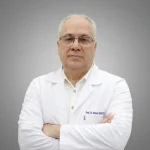 Prof. Dr. Ahmet Satıcı
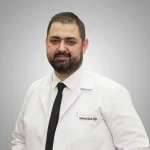 Doç. Dr. Muhammet Derda Özer
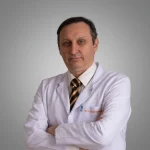 Op. Dr. Aysan Bayram