
- Home
- Knowledge centre
- Eye conditions & symptoms A–Z
- What Is Myopia of the Eye? Short-Sightedness Explained
What Is Myopia of the Eye? Short-Sightedness Explained
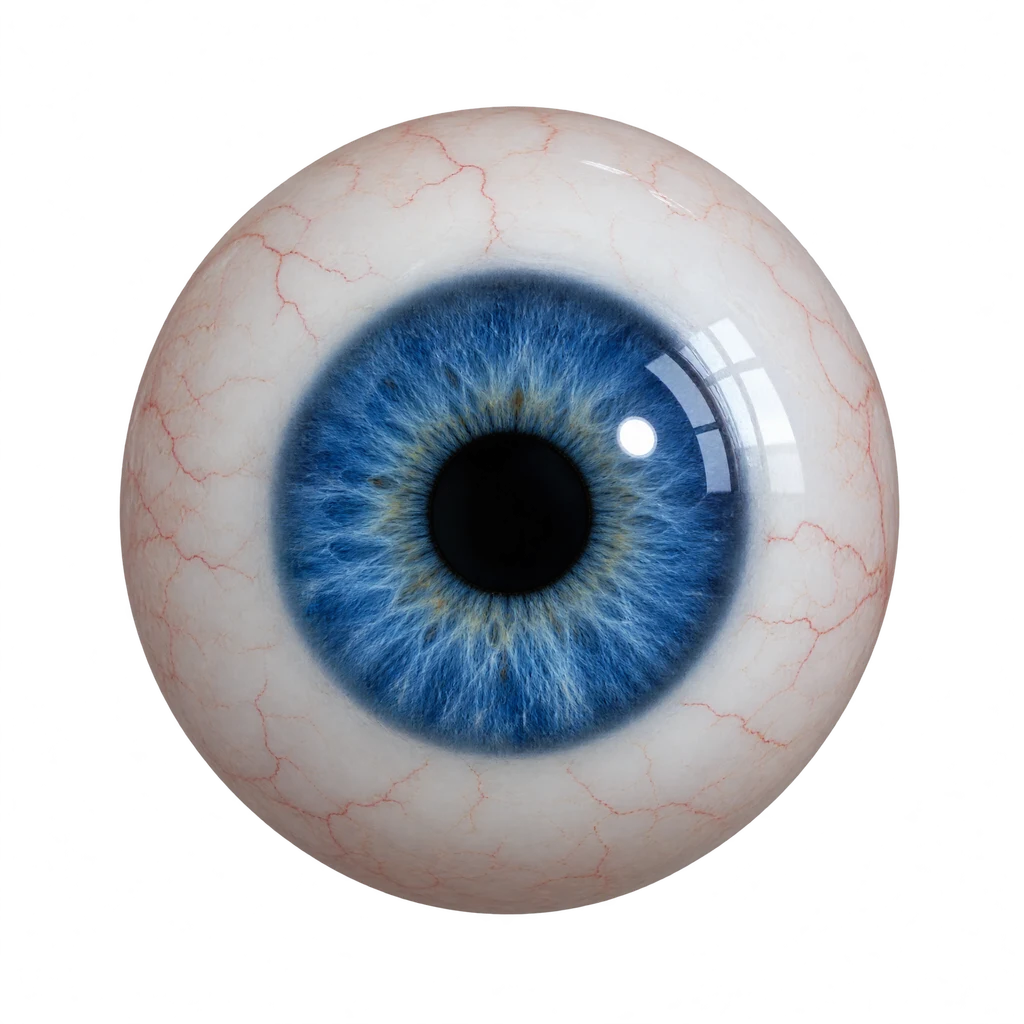
What is myopia of the eye? Myopia, also called short-sightedness or nearsightedness, is a common focusing problem in which close objects look clear but distant ones look blurred. The eye focuses light in front of the retina instead of on it, usually because the eyeball is slightly too long. Glasses and contact lenses correct it; for adults with a stable prescription, laser eye surgery or an implantable lens can correct it long term. Our surgeons, Prof. Dr. Ahmet Satıcı and Op. Dr. Aysan Bayram, treat myopia in Istanbul.
What is myopia of the eye?
Myopia is a refractive error: the eye does not bend light exactly onto the retina, the light-sensitive layer at the back of the eye, so the image is out of focus. In myopia, light comes to a focus in front of the retina rather than on it. The National Eye Institute (NEI) explains that this happens because the eyeball has grown too long from front to back, or because the cornea (the clear window at the front of the eye) or the lens has a shape that bends light too strongly. The American Academy of Ophthalmology (AAO) describes it the same way: a cornea that is too steeply curved, or an eye that is longer than normal.
The result is the pattern that gives the condition its everyday name. Close-up objects look clear, and distant objects such as road signs, a classroom board or a face across the room look blurred. The NHS calls it "a very common eye condition where you cannot see objects far away clearly".
What is myopia in the eye, in one picture?
Think of the eye as a camera. For a sharp photograph, the lens must focus light exactly on the sensor. In a short-sighted eye the camera is a little too long, so the focus lands just before the sensor and the picture is soft. Your glasses prescription shows this as a minus number in dioptres (D): for example −2.50 D is a low-to-moderate degree of short sight. The more minus, the stronger the myopia.
What does "myopic eye" mean? Myopia eyes meaning explained
"Myopic" is the medical adjective for short-sighted. A myopic eye is an eye with myopia, so "myopic eye meaning" and "myopia eyes meaning" both come down to the same thing: an eye that sees near objects clearly and distant objects blurred. Doctors also use the word for the person ("a myopic patient"), for the way they see ("myopic vision") and for the prescription ("myopic correction" means minus lenses).
What are the symptoms of myopia?
The first sign is usually that distant things look blurred. The NHS and the NEI list these common signs:
- difficulty reading road signs, whiteboards or subtitles from a distance
- squinting to see clearly
- eye strain, with tired or sore eyes
- headaches, which are less common
- sitting very close to the television, or holding a phone or book close to the face
- frequent eye rubbing
Children often do not realise that others see more clearly, so a child who squints, sits at the front of the class or cannot see the board may simply need an eye test. The NHS says myopia usually starts in children aged 6 to 13, while the NEI gives the typical onset as 6 to 14. Mild myopia may cause no obvious symptoms at all, which is why the NEI points to a comprehensive eye examination, described as simple and painless, rather than self-diagnosis.
Why do lights look different at night? Night myopia and halos
In the dark, the pupil widens to let in more light, and the AAO notes that as the pupil gets bigger, some people become more short-sighted than they are in bright light. This is called night myopia: distant objects look fuzzier after dark, which may be a sign that your glasses prescription needs updating. Halos and glare around lights have other possible causes too, including cataract, and the AAO notes that refractive surgery can cause more glare or halos at night.
What causes myopia?
Myopia develops when the eye grows too long or its focusing power is too strong, but why this happens is only partly understood. The NHS says it is not clear why short-sightedness happens and that it is hard to prevent. The main known influences are:
| Factor | What the sources say |
|---|---|
| Family history | Myopia often runs in families (NHS). The NEI lists a family history of nearsightedness as a risk factor, and the AAO adds that it can also develop without one. |
| Age while the eye is growing | It usually starts in childhood. The NHS says it can get worse until the eye has stopped growing, usually at about 20 years old; the NEI says progression can continue until the early twenties. |
| Time outdoors | The NEI reports that children who spend more time outdoors have lower rates of myopia. The AAO says more time outdoors in natural light reduces the risk, and the NHS also mentions outdoor time, especially for children. |
| Where people live | EyeWiki (the AAO's clinical encyclopedia) reports about twice as much myopia in urban areas as in rural areas. |
Reading and screen use are widely blamed. EyeWiki describes the link with close-up work as weak and mixed up with other factors, such as time spent indoors, so the honest answer is that nobody can promise that cutting screen time alone will prevent myopia.
Can short sight start in adults?
Yes, although it is much more often a childhood condition. The NHS notes that short-sightedness can also develop in adults. If your distance vision changes, have your eyes tested; if the change was abrupt, read our guide to sudden blurred vision.
How is myopia measured? Low, moderate and high myopia
Myopia is measured in dioptres (D) with a minus sign, at an eye examination by an optometrist or an ophthalmologist. Eye doctors group it by strength:
| Strength | Prescription | What it usually means |
|---|---|---|
| Low myopia | less than −3 D | Distance vision is blurred without correction |
| Moderate myopia | −3 D to −6 D | Distance vision is clearly blurred without correction |
| High myopia | stronger than −6 D | Very blurred without correction; needs regular eye health checks |
Grades as used by the AAO. EyeWiki also defines high myopia as −6.00 D or more, or an eyeball length of 26.5 mm or more.
If your prescription has a second number, you also have astigmatism, an uneven curve of the cornea, which glasses, contact lenses and laser can correct together with the myopia. The examination also looks at the health of the retina, because the stronger the myopia, the more important it is to check the back of the eye.
How common is myopia?
Myopia is very common, and it is becoming more common. A widely cited global analysis by Holden and colleagues, published in Ophthalmology in 2016 and summarised in Community Eye Health in 2019, estimated that myopia affected 28% of the world's population (about 2 billion people) in 2010 and projected that this would reach 50% (about 5 billion people) by 2050. For high myopia the same analysis estimated 4% (227 million people) in 2010, rising to 10% (938 million) by 2050.
The numbers are highest in East and South-East Asia, where the Community Eye Health summary reports that in highly developed urban areas as many as 90% of school leavers have myopia. These are projections, not certainties, but they explain why eye doctors worldwide treat myopia as a growing public-health issue.
Is high myopia dangerous?
Mild and moderate myopia is mainly a focusing problem that glasses fix; high myopia also affects eye health. The NHS lists these possible complications of uncorrected or severe short sight: squint and lazy eye in children, and glaucoma, retinal detachment, cataract and macular degeneration in adults. The AAO and the NEI both say that people with severe myopia have a higher risk of a detached retina, and the Royal College of Ophthalmologists says patients with high myopia are more likely to get a retinal detachment.
EyeWiki describes pathologic myopia, the most serious form, as a degenerative condition that damages the macula (the centre of the retina); the most common cause of vision loss in high myopia is the growth of abnormal blood vessels under the retina (choroidal neovascularisation). It advises that people with stable high myopia have a yearly assessment of vision, prescription and general eye health, with a dilated retinal examination.
When is myopia an emergency?
Get urgent help the same day if you notice:
- a sudden shower of floaters (dots and lines) or flashes of light
- a dark curtain or shadow in your vision
- a sudden worsening or blurring of vision
These are the warning signs of a retinal detachment, for which the NHS advises getting help at once, and being short-sighted makes it more likely. In the UK, call NHS 111; elsewhere go to the nearest eye emergency service. At Laser Istanbul Clinic, retinal findings in people with high myopia are reviewed by Doç. Dr. Muhammet Derda Özer (Doç. is the Turkish title for Associate Professor), who treats retinal and corneal disease.
How is myopia treated?
Myopia can be corrected, and in children its progression can often be slowed. The options depend on age and on how stable the prescription is:
| Option | What it does | Who it suits |
|---|---|---|
| Glasses | Minus lenses move the focus back onto the retina | All ages; the first choice for children |
| Contact lenses | The same correction, worn on the eye | Adults and some children (NHS) |
| Myopia-control treatments | Low-dose atropine drops, overnight orthokeratology lenses and special contact lenses aim to slow how fast myopia progresses | Children, through an eye specialist (AAO) |
| Laser eye surgery (LASIK, SMILE, PRK) | Reshapes the cornea so light focuses on the retina | Adults over 18 with a stable prescription |
| Implantable contact lens (ICL) | A lens placed inside the eye, in front of the natural lens, without removing corneal tissue | Higher prescriptions or corneas too thin for laser |
| Lens replacement | The natural lens is replaced with an artificial lens | Higher prescriptions, or older adults |
Laser and lens surgery are not available on the NHS, so in the UK they are privately funded.
Can myopia be slowed in children?
Often, yes. The AAO says that low-dose atropine eye drops stop or slow progression in about 7 in 10 children, and that orthokeratology (hard contact lenses worn at night) and special peripheral-defocus contact lenses are other options. The NHS says specially designed glasses or contact lenses may help slow myopia and that overnight orthokeratology lenses can be recommended, but that these are not available on the NHS. These treatments need regular follow-up with a local optometrist or ophthalmologist, so for children they are best arranged at home.
Can laser cure myopia?
Laser eye surgery can correct myopia for many adults, but it does not stop the eye from changing later in life. The Royal College of Ophthalmologists' patient information gives these rules of thumb:
- you must be over 18
- your glasses prescription must be stable, normally meaning a change of no more than 0.5 D in the last two years
- you are most likely to be suitable with up to −10.00 D of myopia; higher prescriptions may be better suited to lens implantation techniques
- short sight normally stabilises in the late teens or early twenties, but natural changes can occur at any stage of life, so laser vision correction sometimes needs to be repeated
At Laser Istanbul Clinic, your surgeon (Prof. Dr. Ahmet Satıcı or Op. Dr. Aysan Bayram) chooses between laser, ICL and lens replacement only after measuring your corneas, your pupils and the health of your retina, and tells you plainly if surgery is not right for you. Our guide to laser eye surgery in Turkey covers the methods, recovery and what is included.
Frequently asked questions
Myopia is a common refractive error in which close objects look clear and distant objects look blurred, because light focuses in front of the retina. It is usually caused by an eyeball that is slightly too long. It is also called short-sightedness or nearsightedness, and it is corrected with glasses, contact lenses or, for suitable adults, surgery.
A myopic eye is a short-sighted eye. The phrase describes an eye that sees near things clearly but distant things blurred, and "myopic vision" means the same. On a prescription, myopia always appears as a minus number.
It is a refractive error, a focusing problem, rather than an infection or an injury. Low and moderate myopia are mainly corrected with lenses, but high myopia raises the chance of retinal detachment, glaucoma and cataract, so it needs regular eye checks.
It usually changes most in childhood and the teenage years. The NHS says it can get worse until the eye has stopped growing, usually at around 20, and the Royal College of Ophthalmologists says it normally stabilises in the late teens or early twenties. Changes can still happen later in life.
No. Myopia does not go away by itself; it is corrected with glasses, contact lenses or surgery, and in children its progression can sometimes be slowed.
Often, yes. The NHS and the NEI both say it tends to run in families. It can also develop without a family history (AAO).
Yes. The two eyes can have different prescriptions, so one eye can be more short-sighted than the other, or only one may be affected. A difference between the eyes is worth having checked, especially in a child.
The evidence is mixed. EyeWiki describes the link with close-up work as weak and confounded by other factors, while the NEI and the NHS point to time outdoors as helpful for children. Regular breaks from screens help tired eyes, but they are not proven to prevent myopia.
It corrects the focus of the cornea for many years, but it does not change the length of the eye, so the prescription can still change. The Royal College of Ophthalmologists notes that natural changes can happen at any stage of life and that treatment sometimes needs to be repeated.
Book an eye test if you or your child has signs of short-sightedness, or if you have not had an eye test for two years (NHS). Go the same day for sudden floaters, flashes, a shadow in your vision or a sudden loss of sight.
Short-sighted and thinking about being glasses-free?
Your surgeon at Laser Istanbul Clinic measures your prescription, corneas and retina, and recommends laser, an ICL lens or lens replacement only if it is right for your eyes. Myopia treatment is led by Prof. Dr. Ahmet Satıcı and Op. Dr. Aysan Bayram, with retinal findings reviewed by Doç. Dr. Muhammet Derda Özer.
Sources for the facts on this page
- NHS. Short-sightedness (myopia). https://www.nhs.uk/conditions/short-sightedness/
- NHS. Short-sightedness (myopia): treatment. https://www.nhs.uk/conditions/short-sightedness/treatment/
- NHS. Retinal detachment. https://www.nhs.uk/conditions/retinal-detachment/
- National Eye Institute (NIH). Nearsightedness (myopia). https://www.nei.nih.gov/learn-about-eye-health/eye-conditions-and-diseases/nearsightedness-myopia
- American Academy of Ophthalmology. Myopia (nearsightedness). https://www.aao.org/eye-health/diseases/myopia-nearsightedness
- American Academy of Ophthalmology. Night vision (night myopia, halos and glare). https://www.aao.org/eye-health/anatomy/night-vision
- EyeWiki (AAO). Myopia. https://eyewiki.org/Myopia
- EyeWiki (AAO). Pathologic Myopia (Myopic Degeneration). https://eyewiki.org/Pathologic_Myopia_(Myopic_Degeneration)
- Flanagan J, Fricke T, Morjaria P, Yasmin S. Myopia: a growing epidemic. Community Eye Health 2019 (summarising Holden BA et al., Ophthalmology 2016;123(5):1036–42). https://pmc.ncbi.nlm.nih.gov/articles/PMC6688420/
- The Royal College of Ophthalmologists. Laser vision correction: patient information (PROF/2024/499). https://www.rcophth.ac.uk/wp-content/uploads/2026/08/Laser-vision-correction-patient-information.pdf