
- Home: eye surgery in Istanbul
- All eye treatments
- Glaucoma treatment & surgery in Turkey
Glaucoma Surgery in Turkey: SLT Laser, MIGS and Trabeculectomy in Istanbul
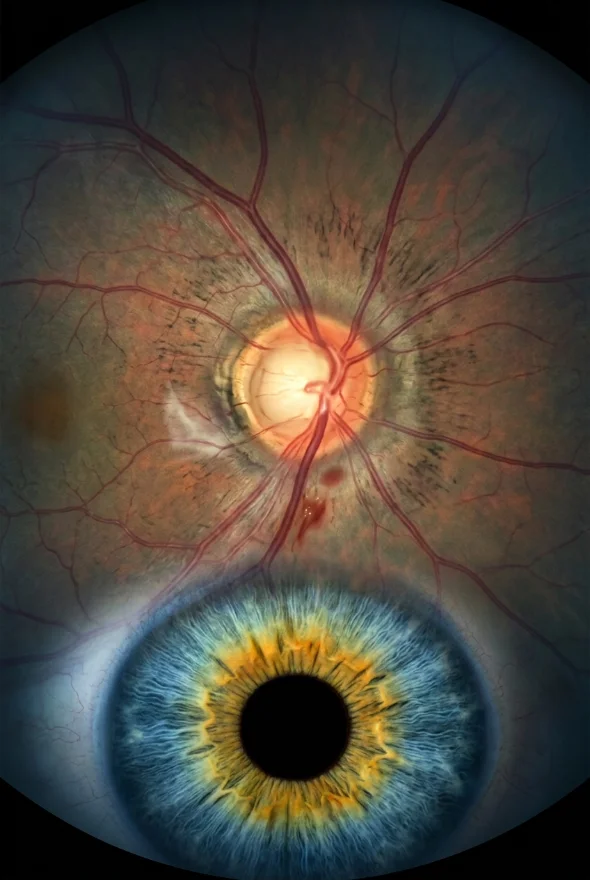
Glaucoma surgery lowers the pressure inside the eye to protect the optic nerve, using SLT laser, MIGS stents, trabeculectomy or a drainage tube when drops are not enough; it cannot restore lost sight, but it can slow or stop further loss. At Laser Istanbul Clinic, glaucoma treatment is led by Prof. Dr. Ahmet Satıcı, who examines you in Istanbul and recommends the least invasive option that can reach your target pressure, from {{£ price}}.
What is glaucoma?
Glaucoma is a group of eye diseases that damage the optic nerve, the cable that carries what your eye sees to your brain. In most cases the damage is linked to pressure building up inside the eye. The front of the eye is filled with a clear fluid (aqueous humour) that is made all the time and drains out through a tiny sieve-like channel called the trabecular meshwork. When that drainage works poorly, fluid builds up, the pressure rises, and over time the pressure damages the nerve.
The most common form, open-angle glaucoma, develops slowly and usually has no symptoms in the early stages, according to the US National Eye Institute (NEI). Side (peripheral) vision is lost first, so many people do not notice until the damage is advanced. The American Academy of Ophthalmology (AAO) is clear that glaucoma damage is permanent and cannot be reversed, but that blindness from glaucoma can often be prevented with early treatment. Worldwide, the World Health Organization (WHO) estimates that glaucoma accounted for 7.7 million of the cases of vision impairment in 2020 that could have been prevented or have yet to be addressed.
What does glaucoma surgery do?
Every glaucoma treatment, from eye drops to surgery, works in the same way: it lowers eye pressure, either by helping fluid drain out or by reducing how much fluid the eye makes. Lowering the pressure is the only proven way to slow glaucoma. Glaucoma surgery is not a cure, and it does not improve vision; its job is to protect the sight you still have. That is why the right moment for glaucoma surgery depends on how fast your glaucoma is changing, not only on a single pressure number.
Who glaucoma treatment in Turkey suits
Glaucoma treatment with us suits adults who already have a diagnosis of glaucoma or high eye pressure (ocular hypertension), and who want an experienced surgeon's opinion or a specific procedure. You are most likely to benefit from a consultation if:
- Your eye pressure is not controlled well enough on drops, or your glaucoma is still getting worse on your visual field tests.
- You struggle with eye drops: side effects, allergy to preservatives, forgetting doses, or difficulty getting the drops in.
- You have newly diagnosed open-angle glaucoma or ocular hypertension and would prefer laser (SLT) to lifelong drops, which UK guidance now recommends as a first option for many people (see below).
- You also have a cataract. Cataract surgery can be combined with a MIGS stent in the same operation in suitable eyes.
- You have narrow drainage angles and have been told you may need laser iridotomy.
- You want a second opinion before trabeculectomy or tube surgery.
Who is at higher risk of glaucoma? According to the NHS, glaucoma is most common in adults over 50, and the risk is higher if a parent or sibling has glaucoma, if you are of Black African, Caribbean or Asian heritage, or if you are short-sighted, long-sighted or have diabetes. The AAO adds high eye pressure, thin corneas, high blood pressure, long-term steroid use and previous eye injury. The NHS advises an eye test at least every two years, more often if you are at higher risk.
What does high eye pressure mean?
High eye pressure means the fluid pressure inside your eye is above the normal range, because fluid is not draining out as well as it should. When the pressure is high but your optic nerve and visual field are still healthy, doctors call it ocular hypertension. It is not glaucoma yet, but it raises your risk of developing it. When high pressure has already damaged the optic nerve, it is glaucoma.
Pressure in the eyes is measured in millimetres of mercury (mmHg), the same unit used for blood pressure, but the two are unrelated: high blood pressure does not mean high eye pressure. High pressure in the eyes usually causes no pain and no symptoms you can feel, which is why it is normally found at a routine eye test. Tonometry (eye pressure measurement) →
Does high eye pressure always need treatment? Not always. In the large Ocular Hypertension Treatment Study (OHTS), 9.5% of people with high eye pressure who were only observed developed glaucoma within five years, compared with 4.4% of those treated with eye drops: treatment cut the risk by more than half. Most people with ocular hypertension never develop glaucoma, so the decision depends on your pressure, corneal thickness, optic nerve, age and family history.
Eye pressure range: what is normal?
The normal eye pressure range in the population is about 10 to 21 mmHg, with an average of around 15 mmHg in healthy adults, according to a 2023 review in Cureus. The AAO gives the typical range as about 10 to 20 mmHg. Your pressure is not a fixed number:
- it varies by about 3–5 mmHg over a normal day, usually highest in the early morning;
- in people with glaucoma, it can vary by 10 mmHg or more over 24 hours, and about two-thirds of glaucoma patients have their highest readings outside normal clinic hours (EyeWiki, AAO);
- the reading depends on your cornea: the standard Goldmann tonometer is calibrated for an average corneal thickness of about 520 microns, so a thicker or thinner cornea can push the reading away from the true pressure. Laser eye surgery thins the cornea and can make readings look falsely low (Royal College of Ophthalmologists, RCOphth).
This is why your doctor measures corneal thickness (pachymetry) and looks at your optic nerve and visual field, not just one pressure reading.
| Eye pressure reading | What it usually means | What usually happens next |
|---|---|---|
| About 10–21 mmHg | Within the normal range | Routine eye tests; glaucoma can still occur at normal pressure (normal-tension glaucoma), so the optic nerve is checked too |
| 22–23 mmHg | Just above the usual range | Below NICE's referral threshold: keep having regular checks with your optician, who also looks at your optic nerve and visual field |
| 24 mmHg or more | High eye pressure | In the UK, NICE advises referral to an eye specialist, and treatment if you are at risk of losing sight in your lifetime |
| Very high pressure with a painful red eye, halos and nausea | Possible acute angle-closure glaucoma | Emergency: seek care immediately |
Ranges: Noya-Padin et al., Cureus 2023; AAO. Thresholds: NICE guideline NG81. A reading is always interpreted together with the optic nerve, visual field and corneal thickness.
Is an eye pressure of 17 normal?
Yes. An eye pressure of 17 mmHg is within the normal range of about 10–21 mmHg. On its own it is not a sign of glaucoma. Some people develop normal-tension glaucoma, in which the optic nerve is damaged despite normal pressure (AAO), so if you have a family history of glaucoma or your optician has seen changes in your optic nerve, keep having regular checks.
What does an eye pressure of 24 mean?
An eye pressure of 24 mmHg is above the normal range. It is the threshold the UK's National Institute for Health and Care Excellence (NICE) uses: if the pressure is 24 mmHg or more on Goldmann-type tonometry, NICE recommends referral to an eye specialist (ideally after a repeat measurement), and below 24 mmHg it advises continuing regular visits with your optician. If you have ocular hypertension of 24 mmHg or more and are at risk of visual impairment in your lifetime, NICE recommends treatment, with 360° SLT laser as the first option offered. A reading of 24 does not mean you have glaucoma; it means your eyes need a proper specialist assessment.
What does "pressure in the eye" feel like? Pressure behind the eye explained
When people search "pressure behind my right eye", they usually mean a feeling of fullness or ache, not a measured eye pressure. Raised eye pressure from open-angle glaucoma almost never causes that feeling. The AAO notes that eye diseases are one of the least common causes of headaches; a pressure feeling behind one eye more often comes from sinus congestion, tension-type headache, migraine or eye strain from long periods of near work.
The important exception is acute angle-closure glaucoma. Here, fluid is suddenly blocked from draining and the pressure rises quickly. Warning signs, according to the AAO and NHS, include severe eye pain, headache, a red eye, blurred vision, rainbow-coloured halos around lights, and nausea or vomiting. This is a medical emergency: go to an emergency department or eye casualty straight away, because sight can be lost permanently if it is not treated quickly.
How to relieve eye pressure at home, and how to reduce eye pressure "instantly"
There is no safe way to reduce eye pressure instantly at home. Real, measurable eye pressure is lowered by prescribed eye drops, laser or surgery. If you have a sudden painful red eye with blurred vision or halos, do not try home remedies: get emergency care.
What the evidence does support, according to the AAO:
- Use your prescribed drops exactly as directed. Missing doses is one of the commonest reasons pressure stays high.
- Exercise regularly. Brisk walking and moderate exercise can lower eye pressure in some people with open-angle glaucoma.
- Avoid long head-down positions (inversion tables, some yoga poses), which can raise eye pressure considerably.
- Do not rely on supplements. Many herbal remedies are advertised for glaucoma, but none has been proven effective, and they should never replace prescribed treatment.
- Protect your eyes with safety glasses during sport and DIY, because eye injury is a glaucoma risk factor.
If what you feel is sinus or tension-related pressure behind the eye, the usual remedies for those conditions apply, and a pharmacist or GP can advise. If you are unsure, an eye test that includes a pressure check will tell you whether your eye pressure is actually high.
Glaucoma treatment options: drops, SLT, MIGS, trabeculectomy and tubes
Treatment for high eye pressure and glaucoma follows a ladder. Most people start with drops or SLT laser; surgery is for pressure that stays too high or glaucoma that keeps progressing. Your surgeon sets a target pressure for your eye and chooses the least invasive treatment likely to reach it.
| Eye drops | SLT laser | Laser iridotomy | MIGS (stents, trabeculotomy) | Trabeculectomy | Tube (drainage device) | |
|---|---|---|---|---|---|---|
| How it works | Reduce fluid production or improve drainage | Laser stimulates the eye's own drain (trabecular meshwork) to work better | Laser makes a tiny hole in the iris so fluid can reach the drain | Microscopic stent or removal of a strip of the blocked drain, through a tiny cut | A new, guarded drainage channel lets fluid escape into a small blister (bleb) under the eyelid | A silicone tube carries fluid to a plate under the eye's surface |
| Main use | Ocular hypertension and most glaucoma | Newly diagnosed open-angle glaucoma and ocular hypertension; or to reduce drops | Narrow angles and angle-closure glaucoma | Mild to moderate open-angle glaucoma, often with cataract surgery | Moderate to advanced glaucoma, or pressure not controlled by drops and laser | Advanced or complex glaucoma, or after failed surgery |
| Where / anaesthetic | At home, daily | Clinic laser, numbing drops | Clinic laser, numbing drops | Operating theatre, local anaesthetic | Operating theatre, usually local anaesthetic | Operating theatre, local or general anaesthetic |
| Time | Daily, lifelong | About 10 minutes per eye | A short laser procedure | About 20 minutes alone; about 40 minutes with cataract surgery | About 1–2 hours | About 1–2 hours |
| Pressure lowering | Varies by drug | Typically 20–30% | Prevents angle closure rather than lowering pressure in open angles | At least 20% in suitable eyes; less than trabeculectomy | Strongest; can reach low targets | Strong; similar to trabeculectomy |
| Recovery | None | Normal activities next day | Short; your surgeon advises | Rapid, with minimal downtime | At least 2 weeks off work; several weeks to settle | At least 2 weeks off work; several weeks to settle |
| Price | {{£ drops / medication note}} | from {{£ SLT price}} | from {{£ laser iridotomy price}} | from {{£ MIGS price}} | from {{£ trabeculectomy price}} | from {{£ tube shunt price}} |
Sources: NICE NG81; Glaucoma UK patient booklets (SLT, shunt surgery, trabeculectomy); EyeWiki (AAO); AAO glaucoma treatment; NHS trust patient information (Dudley Group). Your surgeon recommends a method only after your examination.
Eye drops: the usual first step
Prescription eye drops are the most common glaucoma treatment (NEI). Some reduce the amount of fluid the eye makes; others help it drain. In the UK, NICE recommends a generic prostaglandin analogue (such as latanoprost) as the usual first drop. Drops work well when used every day, but the AAO lists possible side effects including stinging, red eyes, eyelash growth, darkening of the iris or eyelid skin, and, with some drops, effects on pulse and breathing. If drops cause problems, or if you find them hard to use, tell your doctor: there are preservative-free drops, other drug classes, and laser and surgical alternatives.
SLT laser: treatment for high eye pressure without daily drops
Selective laser trabeculoplasty (SLT) uses a gentle laser on the eye's drainage meshwork, which triggers the body's own repair processes so that fluid drains better and the pressure falls. It is done in the clinic with numbing drops, takes about 10 minutes per eye, and most people feel no pain, according to Glaucoma UK. SLT typically lowers eye pressure by 20–30% (EyeWiki).
The evidence for SLT as a first treatment is strong. In the UK LiGHT trial, published in Ophthalmology in 2023, 69.8% of eyes treated first with SLT were still at their target pressure without drops or surgery six years later. Fewer SLT eyes progressed than eyes started on drops (19.6% vs 26.8%), fewer needed trabeculectomy (13 vs 32 eyes) and fewer needed cataract surgery (57 vs 95 eyes), with no serious laser-related side effects. Since 2022, NICE has recommended offering 360° SLT as the first treatment for newly diagnosed open-angle glaucoma that is not advanced, and for ocular hypertension of 24 mmHg or more when treatment is needed.
Two honest points: it takes about two to three months to know how well SLT has worked, and the effect usually lasts a few years and can wear off, although SLT can usually be repeated (Glaucoma UK). SLT may be unsuitable for advanced glaucoma or angle-closure glaucoma.
Laser iridotomy: for narrow angles and angle-closure glaucoma
In angle-closure glaucoma, the coloured part of the eye (iris) blocks the drain. In laser peripheral iridotomy, your ophthalmologist uses a laser to make a tiny hole in the iris so fluid can flow to the drainage angle (AAO). It is a short procedure under numbing drops. In some people with narrow angles, cataract surgery can also lower eye pressure by creating more space between the iris and the cornea (AAO), so your surgeon may discuss lens surgery instead of, or after, laser. Cataract surgery in Turkey / Istanbul →
MIGS: minimally invasive glaucoma surgery and stents
MIGS (minimally or micro-invasive glaucoma surgery) is a group of procedures done from inside the eye through a tiny corneal incision, with less disruption to the eye than traditional surgery and a faster recovery. Examples include trabecular bypass stents (such as the iStent inject and the Hydrus microstent) and procedures that open or remove part of the blocked drain (goniotomy or ab-interno trabeculotomy, for example with the Kahook Dual Blade). According to EyeWiki, MIGS suits people with mild to moderate glaucoma, people who cannot tolerate drops, and people having cataract surgery who want to reduce their drops.
Combined with cataract surgery, results are good in suitable eyes: in the pivotal trials summarised by EyeWiki, 75.8% of iStent inject eyes and 77.3% of Hydrus eyes achieved at least a 20% pressure reduction at two years. The limitation is equally clear: MIGS usually lowers pressure less than trabeculectomy and is often not enough for advanced glaucoma that needs a very low target. An NHS patient leaflet gives about 20 minutes for an ab-interno trabeculotomy on its own and about 40 minutes when combined with cataract surgery.
Trabeculectomy: the established glaucoma operation
Trabeculectomy creates a new, guarded drainage channel in the white of the eye, under the upper eyelid, so that fluid drains into a small blister called a bleb and is absorbed (AAO). It is usually done under local anaesthetic and takes about one to two hours (Glaucoma UK). Anti-scarring medicine, such as mitomycin C, is commonly applied during surgery to help the new channel stay open; NICE recommends glaucoma surgery with this type of augmentation for advanced open-angle glaucoma.
Trabeculectomy can achieve lower pressures than other options, which matters when glaucoma is advanced. One NHS trust reports that pressure fell by at least a third in 66% of patients at one year, and about one in three may still need some drops. It is also the most demanding option for recovery: several clinic visits in the first weeks, adjustment of stitches, and at least two weeks off work.
Trabeculotomy
Trabeculotomy opens the eye's natural drainage canal (Schlemm's canal) by cutting through the trabecular meshwork, so fluid can reach the outflow channels more easily. Modern versions are done from inside the eye as a MIGS procedure (ab-interno trabeculotomy or goniotomy), while the traditional external operation is used mainly for glaucoma in babies and children. Your surgeon explains which version, if any, suits your eyes.
Tube surgery (glaucoma drainage devices)
In tube or shunt surgery, a tiny silicone tube is placed into the eye and carries fluid to a plate that sits under the eye's surface, where it forms a bleb and is absorbed. Common devices include the Ahmed glaucoma valve and the Baerveldt, PAUL and Molteno implants (Glaucoma UK). Tubes are usually offered when glaucoma is advanced, when pressure stays high after other treatments, or after previous eye surgery. Five years after surgery, Glaucoma UK reports that shunts still work well for more than 7 in 10 people.
Which is better, tube or trabeculectomy? It depends on the eye. In eyes that had already had cataract or glaucoma surgery, the Tube Versus Trabeculectomy (TVT) study found a 29.8% probability of failure with tubes compared with 46.9% with trabeculectomy at five years. In eyes with no previous surgery, the Primary Tube Versus Trabeculectomy study (2022) found that trabeculectomy with mitomycin C failed less often, with similar pressure reduction, and tube patients needed more drops.
Cyclodiode laser (laser to the fluid-producing ciliary body) is a further option, usually when surgery has not controlled the pressure or is not suitable (NICE).
How much is glaucoma surgery in Turkey?
Glaucoma treatment in Istanbul with Laser Istanbul Clinic starts from {{£ price}}. The price depends on the procedure, whether one or both eyes are treated, and whether glaucoma surgery is combined with cataract surgery. Your surgeon confirms your exact price in writing after reviewing your scans and before you book flights.
| Treatment | Laser Istanbul Clinic |
|---|---|
| SLT laser (per eye) | from {{£ SLT price}} |
| Laser iridotomy (per eye) | from {{£ laser iridotomy price}} |
| MIGS stent or ab-interno trabeculotomy, combined with cataract surgery (per eye) | from {{£ MIGS price}} |
| Trabeculectomy or trabeculotomy (per eye) | from {{£ trabeculectomy price}} |
| Tube / drainage device surgery (per eye) | from {{£ tube shunt price}} |
| Glaucoma examination and second opinion in Istanbul (no surgery) | {{£ second-opinion examination price}} |
Your price includes:
- full pre-operative examination and scans with your surgeon (eye pressure, corneal thickness, optic nerve imaging, visual field and drainage-angle assessment);
- your procedure by your named surgeon, as agreed in your written quote;
- medication and eye drops for your recovery;
- follow-up checks in Istanbul with the same surgeon;
- a personal interpreter for every appointment, a dedicated coordinator, and remote follow-up after you return home.
Not included: flights, hotel and airport transfers. Hotel and transfers are a separate charge, and we are happy to arrange them for you if you ask. Your long-term glaucoma drops and regular pressure checks at home are also not part of the surgical price.
Glaucoma treatment and the NHS: in the UK, glaucoma diagnosis and treatment, including SLT and surgery, are provided on the NHS following NICE guideline NG81. Patients who come to us usually want a named surgeon's opinion, prefer private treatment, or want to combine glaucoma and cataract surgery in a single trip. Whatever you decide, keep your home eye team informed.
Your glaucoma surgeon in Istanbul
Glaucoma treatment with us is led by Prof. Dr. Ahmet Satıcı. You know who will treat you before you book, and the same surgeon examines you, operates and checks your recovery.

When your glaucoma is linked to another eye condition, our other surgeons join your care:
- Doç. Dr. Muhammet Derda Özer (Doç. is the Turkish title for Associate Professor) reviews glaucoma caused by eye inflammation (uveitis), retinal disease or corneal problems. He is an Associate Professor of Ophthalmology with 27 papers on PubMed and speaks Turkish and English.
- Op. Dr. Aysan Bayram has been an ophthalmology specialist since 1999 and focuses on cataract surgery, laser and retinal disease. She speaks English.
Your glaucoma treatment trip to Istanbul, step by step
How long you stay depends on the treatment. SLT and laser iridotomy need a short stay. MIGS combined with cataract surgery needs a few days. After trabeculectomy, NHS patient information describes checks at one day, one week and two weeks; after tube surgery, Glaucoma UK describes a check the next day and then weekly checks for about four weeks. Your surgeon tells you how many nights to book and which checks can be done by your eye doctor at home.
- Send your records (free)
Upload your latest eye-pressure readings, visual field tests, OCT scans, your list of glaucoma drops and any letters from your eye clinic through our free consultation form or on WhatsApp. You get a reply within {{response time}}.
- Prof. Satıcı reviews your case
He tells you whether SLT, MIGS, trabeculectomy, a tube or simply a change of drops looks most likely to help, or whether you should stay with your current care. You receive a written plan and quote.
- Prepare at home
Keep using your glaucoma drops as normal unless your surgeon tells you otherwise. Pack your drops in your hand luggage: Glaucoma UK advises this, and suggests keeping to your home time zone for drops until you arrive. Book your flights; if you like, we arrange your hotel and airport transfer at an extra cost.
- Arrival and full examination
With your surgeon and interpreter, you have eye-pressure measurement (tonometry), corneal thickness, a look at the drainage angle (gonioscopy), optic nerve imaging and a visual field test. Your surgeon sets your target pressure, explains the recommended treatment, its expected benefit and risks, and answers your questions before you sign the consent form. Tonometry (eye pressure measurement) → · Visual field test (perimetry) (/en/eye-tests-diagnostics/visual-field-test/)
- Treatment day
Laser is done in the clinic with numbing drops, and your pressure is checked before you leave, because it can rise briefly after laser. Surgery takes place in a fully equipped, Ministry of Health–licensed operating theatre in Istanbul, usually under local anaesthetic, and you normally go back to your hotel the same day with a protective shield. Do not drive on the day of treatment.
- Check-ups in Istanbul
Your surgeon checks you the next day and at the agreed intervals. After trabeculectomy or tube surgery, stitches may be adjusted at these visits to fine-tune the pressure.
- Fly home and stay in touch
Glaucoma UK says it is safe to fly after glaucoma surgery, but you should plan your trip around your early follow-up appointments. You fly once your surgeon is happy with your pressure. Back home, your coordinator stays in touch, your surgeon reviews your progress remotely, and your full surgical report in English goes to your home eye doctor, who continues your long-term glaucoma monitoring.
Recovery after glaucoma surgery: what to expect
Recovery is quickest after laser, a little longer after MIGS, and slowest after trabeculectomy or tube surgery, where the eye takes several weeks to settle.
| When | SLT laser | MIGS (with cataract surgery) | Trabeculectomy or tube |
|---|---|---|---|
| First hours | Vision may be blurry for a few hours; pressure checked before you leave | Eye numb, then gritty; shield on | Eye numb, then sore or scratchy; double vision until the local anaesthetic wears off; pad or shield on |
| Day 1 | Back to normal activities; you can usually drive again the next day | First check-up; some blood in the front of the eye is common and clears | First check-up; shield removed and drops started |
| Week 1–2 | Eye may be a little red, sore or light-sensitive for a few days | Vision improving | Frequent checks; stitches may be adjusted; at least two weeks off work |
| Week 2–4 | No restrictions | Back to most activities | Avoid strenuous exercise, swimming, goggles, head-down positions and heavy lifting, typically for about four weeks |
| 2–3 months | Pressure check to see how well SLT has worked | Pressure settles; drops reviewed | Eye drops after surgery for up to three months; vision settles; new glasses only after about three months |
| Long term | Effect usually lasts a few years; can be repeated | Regular pressure and field checks | Regular checks for life, including bleb checks |
SLT and tube recovery: Glaucoma UK; trabeculectomy: Glaucoma UK and NHS patient information; MIGS: NHS patient information (Dudley Group). Your surgeon gives you personal dates.
Everyday activities after glaucoma surgery (your surgeon gives you personal advice):
| Activity | Typical advice |
|---|---|
| Driving | Not on the day of treatment; after SLT usually from the next day; after surgery only when your surgeon says it is safe |
| Work | Usually the next day after SLT; at least two weeks after trabeculectomy or tube surgery, longer for heavy manual or dusty work |
| Sleeping | Wear the eye shield at night for about two weeks after surgery |
| Showering and hair washing | Keep water out of the operated eye for a few weeks after surgery |
| Exercise and swimming | Avoid strenuous exercise, swimming and contact sports for about four weeks after tube surgery or trabeculectomy |
| Bending and lifting | Avoid heavy lifting and long head-down positions in the early weeks; you can kneel to pray but should not bow your head to the floor (Glaucoma UK) |
| Glaucoma drops | Do not stop or change any drops unless your surgeon tells you to; keep using drops in the other eye |
Call your surgeon or coordinator straight away if the operated eye becomes more painful, red, sticky or light-sensitive, or if your vision gets worse. After trabeculectomy or tube surgery, a red, sticky or painful eye can be a sign of bleb infection at any time, even years later, and early treatment protects your sight.
Is glaucoma surgery safe? The risks, explained honestly
All glaucoma treatments carry some risk, and the stronger the pressure-lowering effect, the higher the risk tends to be. That is why surgeons start with the gentlest treatment that can reach your target pressure. Your surgeon goes through the risks for your own eyes, in writing and through your interpreter, before you agree to treatment.
SLT laser: low risk
- Blurred vision for a few hours and a red, slightly sore or light-sensitive eye for a few days are common (Glaucoma UK).
- Eye pressure can rise shortly after laser; it is checked before you go home and treated with drops or tablets if needed.
- A small risk of inflammation, treated with drops.
- In the LiGHT trial, no serious laser-related side effects occurred over six years.
MIGS: fewer severe complications than traditional surgery
- Bleeding into the front of the eye (hyphaema) is common during ab-interno trabeculotomy; one NHS leaflet reports it in 38% of patients during surgery, almost always resolving within one to three weeks.
- Infection, inflammation and vision loss are possible, as with any eye operation, but serious complications are less frequent than after trabeculectomy or tubes (EyeWiki).
- The pressure-lowering effect may not be enough, and further treatment may be needed later.
Trabeculectomy and tube surgery: more effective, more risk
- Pressure too low or too high in the early weeks, managed by adjusting stitches, drops or small procedures.
- Cataract: both operations can speed up cataract formation, which can later be treated with cataract surgery.
- Infection: infection inside the eye after trabeculectomy affects about 1–2 in 100 people (NHS patient information), and the risk of bleb infection lasts for life.
- Vision: about 1 in 10 people lose one line on the eye chart after trabeculectomy (NHS patient information). After tube surgery, serious or sudden vision loss affects fewer than 1 in 100 people, with a higher risk in advanced glaucoma (Glaucoma UK).
- Tube-specific problems: rarely, the tube can block, rub the cornea or wear through the eye's surface; about 1 in 50 people have a long-lasting droopy eyelid, which can usually be corrected (Glaucoma UK).
- More surgery: some eyes need a second operation. In the TVT study, 9% of tube eyes and 29% of trabeculectomy eyes needed further glaucoma surgery within five years.
The risk of not treating: glaucoma that is not controlled continues to damage the optic nerve, and that damage is permanent. Glaucoma UK notes that choosing no treatment increases the risk of losing vision. Your surgeon helps you weigh both sides.
Having glaucoma surgery abroad: glaucoma is lifelong, so the most important question is who looks after your eye pressure after you go home. We send your full surgical report in English to your home eye doctor, agree the follow-up plan with you before you travel, and stay in touch remotely. Our policy if a problem needs treatment after you return home: {{complication and re-treatment policy}}.
Glaucoma surgery in Turkey: frequently asked questions
With Laser Istanbul Clinic, glaucoma treatment starts from {{£ price}}, depending on the procedure, the number of eyes and whether it is combined with cataract surgery. Your price includes the examination and scans, surgery by your named surgeon, medication, follow-up checks in Istanbul, an interpreter and remote follow-up. Flights, hotel and airport transfers are extra. Prof. Satıcı confirms your price in writing after reviewing your records.
There is no single best treatment for high eye pressure; it depends on how high the pressure is and whether the optic nerve is damaged. For many people with newly diagnosed open-angle glaucoma or ocular hypertension of 24 mmHg or more, UK guidance (NICE) now recommends SLT laser first, with prostaglandin eye drops as the alternative. Surgery is for pressure that stays too high or glaucoma that keeps getting worse.
No. Glaucoma damage to the optic nerve is permanent, and no surgery can bring back sight that has already been lost. Glaucoma surgery aims to lower your eye pressure so that you keep the vision you still have. Some people's vision is slightly blurred for a few weeks after surgery while the eye settles.
SLT and laser iridotomy are done with numbing drops, and most people feel no pain, only flashes of light or mild discomfort. Glaucoma operations are usually done under local anaesthetic, so you are awake but your eye is numb. Afterwards the eye may feel sore or scratchy for a few days, and simple pain relief is usually enough.
Possibly fewer, sometimes none. In the LiGHT trial, 69.8% of eyes treated first with SLT needed no drops after six years, and after trabeculectomy about one in three people still use some drops. Never stop your drops on your own: your surgeon tells you which to continue.
Normal eye pressure is about 10 to 21 mmHg, with an average of around 15 mmHg in healthy adults. It changes by a few points over the day and is usually highest in the early morning. The reading also depends on the thickness of your cornea, so doctors interpret it together with your optic nerve and visual field.
Yes. An eye pressure of 24 mmHg is above the normal range, and it is the level at which NICE recommends referral to an eye specialist. It does not mean you have glaucoma; it means you need a full check of your optic nerve, visual field and corneal thickness, and possibly treatment.
It depends on the procedure. SLT and laser iridotomy need a short stay, while trabeculectomy and tube surgery need several check-ups in the first weeks, often over about two weeks or more. Your surgeon confirms the number of nights after reviewing your case and agrees which later checks your home eye doctor can do.
Yes. Glaucoma UK says people with glaucoma can usually fly without problems and that it is safe to fly after glaucoma surgery. The reason to wait is your early follow-up appointments, not the flight itself. Keep your eye drops in your hand luggage.
Often, yes. MIGS stents or an ab-interno trabeculotomy can be added to cataract surgery through the same tiny incisions, and in suitable eyes this lowers pressure and the number of drops needed. In some narrow-angle eyes, cataract surgery alone also lowers eye pressure. Your surgeon decides after examining your drainage angle and lens.
Yes. Glaucoma diagnosis, drops, SLT laser and glaucoma surgery are all provided on the NHS, following NICE guideline NG81. Some UK patients choose private treatment for a named surgeon, a second opinion or a combined cataract and glaucoma operation. Whatever you choose, keep your NHS or home eye team informed.
Not reliably. Regular moderate exercise can lower eye pressure a little in some people, and avoiding long head-down positions helps, but no home remedy or supplement has been proven to treat glaucoma (AAO). Use your prescribed drops as directed, and get emergency care for a sudden painful red eye with blurred vision.
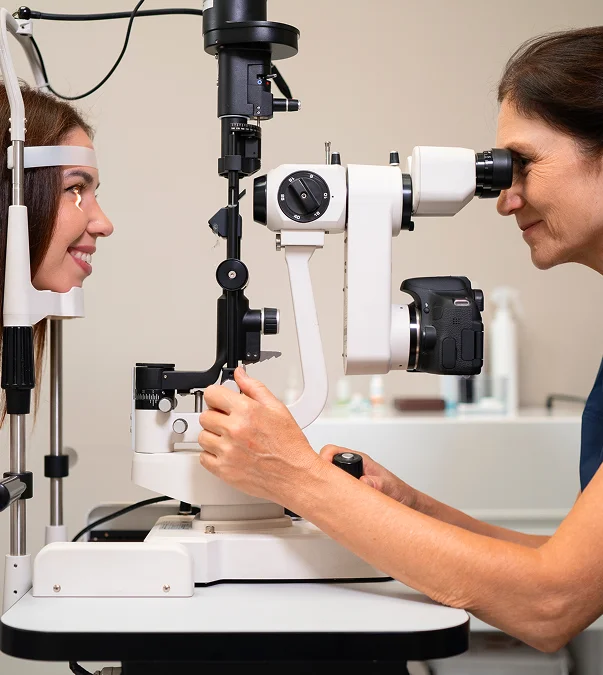
Explore glaucoma treatments and related eye care
Glaucoma procedures
- MIGS, SLT laser & glaucoma stents: laser and minimally invasive surgery for mild to moderate glaucoma, often combined with cataract surgery.
- Trabeculectomy & trabeculotomy: established glaucoma operations for pressure that drops and laser cannot control.
Eye pressure tests
- Tonometry (eye pressure measurement): how eye pressure is measured and what affects the reading.
- Visual field test (perimetry): the test that shows whether glaucoma is affecting your side vision.
Related eye treatments
- Cataract surgery in Turkey / Istanbul: can be combined with MIGS, and can lower pressure in some narrow-angle eyes.
- Lens replacement (RLE / smart lens) in Turkey: your surgeon checks your eye pressure and optic nerve before any premium lens.
- Retina surgery: vitrectomy & retinal detachment: specialist care for the back of the eye, including retinal disease that can raise eye pressure.
- Laser eye surgery in Turkey / Istanbul: uncontrolled glaucoma is a reason to delay laser; if you have had laser, tell every eye doctor, because it can make pressure readings look low.
- ICL / EVO ICL implantable lens: an implantable lens for high prescriptions; eye pressure is checked before and after.
- Keratoconus treatment in Turkey: cornea care with our cornea specialist.
Sources for the facts on this page
- *Medical facts (all opened and checked, October 2026):**
- NICE, Glaucoma: diagnosis and management (NG81, 2017, updated 2022), Recommendations: refer if IOP is 24 mmHg or more on Goldmann-type applanation tonometry (1.1.4–1.1.7); no treatment for OHT not at risk of visual impairment (1.4.3); offer 360° SLT to newly diagnosed OHT with IOP ≥ 24 mmHg at risk of visual impairment, excluding pigment dispersion (1.4.4), second SLT (1.4.5); generic prostaglandin analogue as alternative (1.4.6); surgery with MMC augmentation for advanced COAG (1.4.14); 360° SLT for newly diagnosed non-advanced COAG (1.4.17); SLT or surgery after two drug classes (1.4.23); cyclodiode after failed surgery (1.4.26); reassessment intervals (1.5.11). https://www.nice.org.uk/guidance/ng81/chapter/Recommendations
- Gazzard G, et al. Laser in Glaucoma and Ocular Hypertension (LiGHT) Trial: six-year results of primary SLT versus eye drops. Ophthalmology 2023;130(2):139–151 (PMID 36122660): 69.8% of SLT eyes at target without drops or surgery at 72 months; progression 19.6% vs 26.8%; trabeculectomy 13 vs 32 eyes; cataract surgery 57 vs 95 eyes; no serious laser-related adverse events. Summary checked at the European Glaucoma Society: https://www.eugs.org/news/laser-in-glaucoma-and-ocular-hypertension-light-trial-six-year-results-of-primary-selective-laser-trabeculoplasty-versus-eye-drops-for-the-treatment-of-glaucoma-and-ocular-hypertension-2023-01-31-clinical-paper-of-the-month · Article: https://www.sciencedirect.com/science/article/pii/S0161642022007321
- Glaucoma UK, Trabeculectomy surgery: local anaesthetic, 1–2 hours, several weeks to recover, wait three months before changing glasses, lost vision cannot be recovered. https://glaucoma.uk/about-glaucoma/treatments-surgery/trabeculectomy-surgery/
- Glaucoma UK, Flying with glaucoma: usually no problems flying; safe to fly after surgery but plan around follow-up; drops in hand luggage; time-zone advice. https://glaucoma.uk/care-support/care-support-flying-with-glaucoma/
- The Dudley Group NHS Foundation Trust, Glaucoma drainage surgery (trabeculectomy): 70–100 minutes; pressure reduced by at least one third in 66% at one year; about one third still need drops; infection inside the eye about 1–2 in 100; about 1 in 10 lose one line of vision; two weeks off work; eye shield for two weeks; visits at one day, one week and two weeks; cataract risk. https://www.dgft.nhs.uk/pil/glaucoma-drainage-surgery-trabeculectomy/
- The Dudley Group NHS Foundation Trust, Trabeculotomy (MIGS): Kahook Dual Blade; about 20 minutes alone, about 40 minutes with cataract surgery; hyphaema in 38% during surgery, resolving in one to three weeks. https://www.dgft.nhs.uk/pil/trabeculotomy-migs-minimally-invasive-glaucoma-surgery/
- EyeWiki (AAO), Laser Trabeculoplasty: SLT typically lowers IOP by 20–30%; 532 nm Q-switched frequency-doubled Nd:YAG laser; repeatability. https://eyewiki.org/Laser_Trabeculoplasty
- EyeWiki (AAO), Microinvasive Glaucoma Surgery (MIGS): definition, ab-interno approach, device categories (iStent inject, Hydrus, Kahook Dual Blade and others), candidates (mild to moderate glaucoma), iStent inject + phaco 75.8% and Hydrus + phaco 77.3% with ≥ 20% IOP reduction at 24 months, often insufficient for advanced disease. https://eyewiki.org/Microinvasive_Glaucoma_Surgery_(MIGS)
- EyeWiki (AAO), Trabeculectomy: indications (moderate to advanced or rapidly progressing glaucoma), antimetabolites (MMC, 5-FU), complications. https://eyewiki.org/Trabeculectomy
- EyeWiki (AAO), The Reliability of Intraocular Pressure Measurements: Goldmann designed for an average corneal thickness of 520 microns; two-thirds of glaucoma patients peak outside clinic hours; IOP can vary by 10 mmHg or more over 24 hours. https://eyewiki.org/The_Reliability_of_Intraocular_Pressure_Measurements
- Noya-Padin V, et al. Intraocular Pressure Fluctuation Throughout the Day. Cureus 2023: normal IOP 10–21 mmHg, mean about 15 mmHg; daily oscillation 3–5 mmHg; highest in the morning. https://pmc.ncbi.nlm.nih.gov/articles/PMC10722343/
- American Academy of Ophthalmology, What Is Glaucoma?: types, symptoms, risk factors, acute angle-closure warning signs, normal pressure typically about 10–20 mmHg, damage is permanent, leading cause of blindness over 60, blindness often preventable with early treatment. https://www.aao.org/eye-health/diseases/what-is-glaucoma
- American Academy of Ophthalmology, What Is Ocular Hypertension?: definition, risk factors, pachymetry, treatment reduces but does not eliminate risk. https://www.aao.org/eye-health/diseases/what-is-ocular-hypertension
- American Academy of Ophthalmology, Glaucoma Treatment: drops and side effects, laser trabeculoplasty, laser iridotomy, trabeculectomy, drainage devices, cataract surgery lowering pressure in narrow angles. https://www.aao.org/eye-health/treatments/glaucoma-treatment
- American Academy of Ophthalmology, Headaches and Eye Problems: eye diseases one of the least common causes of headache; angle-closure glaucoma symptoms and emergency. https://www.aao.org/eye-health/diseases/headaches-eye-problems
- American Academy of Ophthalmology, Is there any way to lower eye pressure using home remedies?: exercise can reduce pressure in some people; no herbal remedy proven. https://www.aao.org/eye-health/ask-ophthalmologist-q/home-remedies-to-lower-eye-pressure
- American Academy of Ophthalmology, 10 Things To Do Today To Prevent Vision Loss From Glaucoma: brisk walking and moderate exercise can lower eye pressure; head-down positions can greatly raise it; take drops as prescribed; protective eyewear. https://www.aao.org/eye-health/tips-prevention/easy-steps-to-prevent-vision-loss-from-glaucoma
- Ocular Hypertension Treatment Study (OHTS), Results: 9.5% observation vs 4.4% medication developed glaucoma at five years; risk reduced by more than 50%. https://ohts.wustl.edu/results/
- Gedde SJ, et al. Treatment outcomes in the Tube Versus Trabeculectomy (TVT) study after five years of follow-up. Am J Ophthalmol 2012;153(5):789–803: failure 29.8% tube vs 46.9% trabeculectomy; reoperation 9% vs 29% (summary checked at Healio). https://www.healio.com/ophthalmology/news/online/%7B3E1D676D-E219-4184-863A-53AB8DEAC435%7D/Tube-shunt-more-successful-than-trabeculectomy-5-year-TVT-study-data-show
- American Academy of Ophthalmology, Fewer glaucoma surgical failures seen with trabeculectomies vs tube surgeries (Primary TVT study, Ophthalmology, December 2022). https://www.aao.org/education/editors-choice/fewer-glaucoma-surgical-failures-seen-with-trabecu
- NHS, Glaucoma: definition, symptoms including acute glaucoma, risk groups, eye tests at least every two years, no cure. https://www.nhs.uk/conditions/glaucoma/ · Glaucoma – Treatment: drops, laser, surgery, follow-up. https://www.nhs.uk/conditions/glaucoma/treatments/
- National Eye Institute, Glaucoma: no early symptoms, risk groups, dilated eye exam with visual field testing, drops most common treatment, early treatment can often stop damage. https://www.nei.nih.gov/eye-health-information/eye-conditions-and-diseases/glaucoma
- World Health Organization, Blindness and vision impairment fact sheet: glaucoma 7.7 million (2020). https://www.who.int/news-room/fact-sheets/detail/blindness-and-visual-impairment
- *Surgeon facts (project files):**
Find out which glaucoma treatment suits your eyes, free
Send us your latest eye-pressure readings, visual field tests, OCT scans and your list of glaucoma drops. Prof. Dr. Ahmet Satıcı will tell you whether SLT laser, MIGS, trabeculectomy or a tube could help, or whether your current treatment is the right one, and what it would cost, with no obligation.
3 eye surgeons
Your case is reviewed by a named surgeon, not a salesperson. Reply within {{response time}}.
 Prof. Dr. Ahmet Satıcı
 Doç. Dr. Muhammet Derda Özer
 Op. Dr. Aysan Bayram