
- Home: eye surgery in Istanbul
- All eye treatments
- Strabismus (squint) surgery
Strabismus Surgery in Istanbul: Squint Eye Surgery for Adults and Children
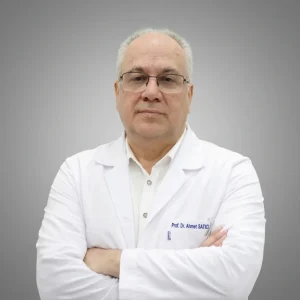
Strabismus surgery with Laser Istanbul Clinic is planned and performed by Prof. Dr. Ahmet Satıcı, a Professor of Ophthalmology whose specialist fields include squint. He examines the eyes first, measures the turn precisely and only recommends an operation when glasses or other treatment are not enough. You see the full price in writing before you travel, and a personal interpreter stays with you, or with you and your child, from the first examination to the final check-up.
Strabismus surgery straightens eyes that point in different directions by moving or tightening the small muscles on the outside of the eye. The eye is never removed. According to the NHS, it is done under general anaesthetic, usually takes less than an hour, and most people go home the same day and return to work or school after about a week. In Istanbul it is performed by Prof. Dr. Ahmet Satıcı, from {{£ strabismus surgery price}}; hotel and transfers are extra.
What is strabismus surgery, and what does "squint" mean?
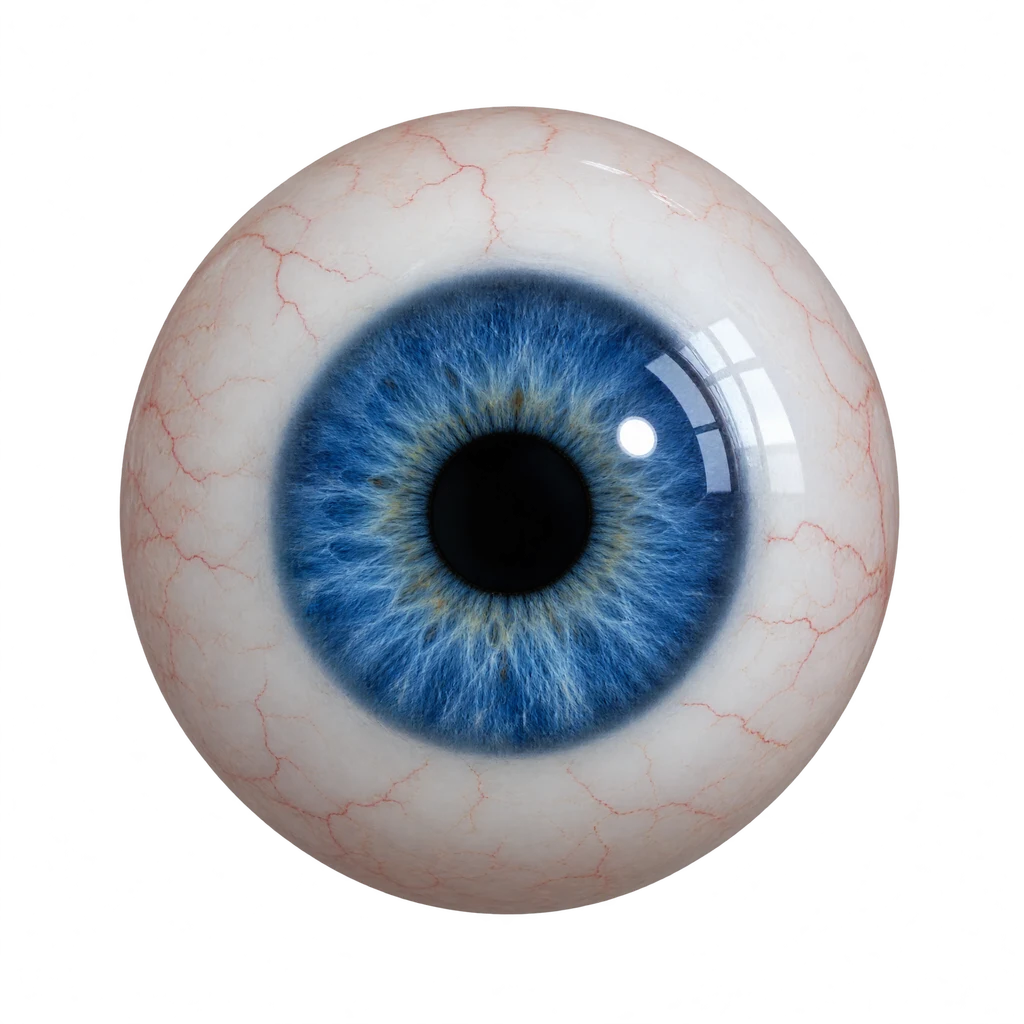
Strabismus surgery, also called squint eye surgery or eye muscle surgery, changes the position or tension of the muscles that move the eye so that both eyes line up. Six small muscles attach to the outside of each eyeball. If one is relatively too strong or too weak, the eye turns in, out, up or down. The American Association for Pediatric Ophthalmology and Strabismus (AAPOS) explains that the surgeon reaches these muscles through a small opening in the conjunctiva, the thin clear skin over the white of the eye, without taking the eye out of its socket.
Squint meaning. In medicine, "squint" is the everyday British word for strabismus: the NHS defines a squint as "where the eyes point in different directions". So the squint medical term is strabismus, and a "squint eye" is an eye that turns while the other looks straight ahead.
Squinting eyes meaning. In everyday English, "squinting" also means narrowing your eyes to see more clearly. That is a different thing. According to the US National Eye Institute, squinting to see far away is a common sign of short-sightedness, and it is also listed as a symptom of astigmatism. If you or your child often squint to see, the first step is an eye test for glasses, not surgery. If one eye visibly drifts, that is strabismus, and it needs an eye specialist.
How common is it? AAPOS estimates that about 4% of the US population has strabismus. In UK children, the Royal College of Ophthalmologists (RCOphth) childhood guideline puts it at about 2.1%, more often after a premature birth, low birth weight or a neuro-developmental condition.
Squint types: which way does the eye turn?
Squint types are named by the direction the eye turns and by whether the turn is constant or comes and goes.
| Type | What happens | Typical facts (sources below) |
|---|---|---|
| Esotropia | One eye turns inwards, towards the nose ("crossed eyes") | About 60% of childhood squints turn inwards (RCOphth). Infantile esotropia starts before 6 months of age; accommodative esotropia usually starts between 2 and 5 years, is caused by uncorrected long sight and is straightened by glasses |
| Exotropia | One eye turns outwards | About 20% of childhood squints (RCOphth). Intermittent exotropia affects up to 1% of children, usually starts at 2–4 years and shows when a child is tired, daydreaming or in bright sunlight, when they may close one eye |
| Hypertropia | One eye sits higher than the other | Vertical squints can follow nerve palsies, injury or thyroid eye disease (AAPOS) |
| Hypotropia | One eye sits lower than the other | As above; often managed together with a horizontal squint |
| Constant or intermittent | Present all the time, or only sometimes | The NHS says a squint that comes and goes is common and usually harmless in babies younger than 3 months; a constant squint at any age, or an intermittent one after 3 months, should be checked |
Adult squints have their own causes. The American Academy of Ophthalmology (AAO) lists diabetes, thyroid eye disease, myasthenia gravis, stroke, brain tumours, head injury and earlier eye surgery, as well as a childhood squint that never went away. A squint or double vision that appears suddenly in an adult needs prompt medical assessment where you live before any trip.
Who strabismus surgery suits
Strabismus surgery suits children and adults whose squint remains after the right glasses and, in children, after any lazy eye has been treated. The NHS recommends surgery when other treatments are not suitable or do not help.
Strabismus surgery for children
The NHS advises seeing a doctor if your child has a squint all the time, or one that comes and goes after the age of 3 months. Treatment is usually recommended because a squint is unlikely to get better on its own. Without it, a child can develop persistent blurred or double vision, a lazy eye and, as the NHS notes, embarrassment or low self-esteem.
Timing depends on the type of squint:
- Infantile esotropia: EyeWiki (AAO) reports that early surgery, before age 2, gives more potential for the two eyes to learn to work together.
- Accommodative esotropia: glasses are the treatment; surgery is only for any turn left over with glasses on.
- Intermittent exotropia: AAPOS notes that age is not the main reason to operate. Surgery is considered when the turn shows often, causes eye strain or double vision, or threatens binocular vision. The RCOphth guideline reports a favourable result in around 80–90% of cases.
One important safety point: the NHS and the RCOphth both note that a squint can occasionally be the first sign of a serious eye or brain condition, such as retinoblastoma, a rare childhood eye cancer. Any new squint in a child must be examined by a local doctor first. Doç. Dr. Muhammet Derda Özer (Doç. = Associate Professor), our ocular oncology and retina specialist, can review reports and scans for a second opinion.
Is there "lazy eye surgery"?
No operation makes a lazy eye see better on its own. A lazy eye (amblyopia) is weak vision because the brain has learned to ignore one eye, and the NHS says it is treated with glasses, patching the stronger eye or blurring drops, ideally before the age of 7. When people search for "lazy eye surgery", they usually mean surgery for the squint that caused the lazy eye. That operation straightens the eye, but the vision still has to be trained, which is why the NHS says a lazy eye may need to be treated before squint surgery. EyeWiki reports amblyopia in about 40–50% of children with infantile esotropia.
Strabismus surgery for adults
It is never too late to straighten the eyes. AAPOS says eyes can be straightened at any age, including in people in their 90s, and the NHS confirms that surgery can improve alignment even when a squint has been left untreated for a long time; only vision that did not develop in childhood may stay weaker. A 2014 review in Optometry and Vision Science found that most adults gain some binocular function after surgery, such as a wider field of vision in inward-turning squints, and some regain depth perception. AAPOS classes eye muscle surgery as reconstructive, not cosmetic, and lists reduced double vision, better depth perception and greater confidence at work and socially as benefits.
Squint eye treatment options compared
Squint eye treatment starts with the simplest option that works: glasses first, then treatment of any lazy eye, and surgery only for the turn that remains.
| Treatment | What it does | Best for | Limits |
|---|---|---|---|
| Glasses | Correct the focusing problem behind the squint | Accommodative esotropia; squints linked to long sight, short sight or astigmatism | Do not fix squints with other causes |
| Patching or blurring drops | Make the brain use the weaker eye | A lazy eye (amblyopia), mainly before age 7 | Treat the vision, not the alignment |
| Eye exercises | Train the eyes to work together | Some cases, such as convergence insufficiency (AAO, NHS) | AAPOS says evidence is limited outside convergence insufficiency |
| Prism glasses | Bend light to reduce double vision | Small, stable deviations in adults | Do not straighten the eye |
| Botulinum toxin injection | Temporarily weakens one muscle | Selected cases: infantile esotropia, sixth nerve palsy, small angles | The NHS says the effect usually lasts less than 3 months; drooping eyelid in 12% of adults and 25% of children (EyeWiki) |
| Strabismus surgery | Repositions or tightens eye muscles permanently | Squints that remain after glasses and amblyopia treatment, in children and adults | May need more than one operation (see risks) |
How the operation works: recession, resection and adjustable stitches
Strabismus surgery weakens a muscle that pulls too hard, strengthens one that pulls too little, or both. AAPOS describes the two main techniques:
- Recession (weakening). The muscle is detached and re-stitched further back on the eyeball, like releasing tension on an elastic band.
- Resection or plication (strengthening). The muscle is shortened, or folded, so that it pulls more strongly.
- Stitches. The NHS explains that the muscles are fixed in their new position with dissolvable stitches, hidden behind the eye so they cannot be seen. Sometimes both eyes need surgery to get the alignment right.
Adjustable sutures. In adults and teenagers, the NHS says the surgeon may fine-tune the muscle position after you wake up, using numbing drops. In a study of 353 patients aged over 12 in the British Journal of Ophthalmology (2015), patients with adjustable stitches more often reached the planned alignment straight after surgery (75.5% vs 54%), and reaching it was linked to a higher success rate. {{Whether Prof. Dr. Satıcı uses adjustable sutures, and for which patients.}}
Anaesthesia. According to AAPOS, most children have general anaesthesia, while adults may have general anaesthesia or local anaesthesia with sedation. The operation is usually done as a day case.
Where: in a fully equipped, Ministry of Health–licensed operating theatre in Istanbul, after an examination that measures the angle of the squint, eye movements, binocular vision and the focusing of each eye.
Strabismus surgery price in Istanbul and what is included
At Laser Istanbul Clinic, strabismus surgery starts from {{£ strabismus surgery price}}. The final price depends on how many muscles and whether one or both eyes need surgery, and Prof. Dr. Satıcı confirms it in writing after reviewing your reports, before you book anything.
Your treatment price includes:
- a full pre-operative eye examination and squint measurements with your surgeon
- strabismus surgery by Prof. Dr. Ahmet Satıcı, including anaesthesia
- medication and eye drops for your recovery
- follow-up checks in Istanbul with the same surgeon
- a personal interpreter, a dedicated coordinator and remote follow-up after you return home
Not included: flights, hotel and airport transfers. Hotel and transfers are a separate charge, and we can arrange them for you if you ask.
Check your cover at home first. Squint surgery is offered on the NHS, and AAPOS notes that most US insurance plans cover eye muscle surgery because it is reconstructive, not cosmetic. Patients choose Istanbul when they want a named professor to plan their surgery, a date that suits them or a second opinion after earlier squint surgery. {{UK private price range for squint surgery, if you want a comparison table here.}}
Your strabismus surgeon
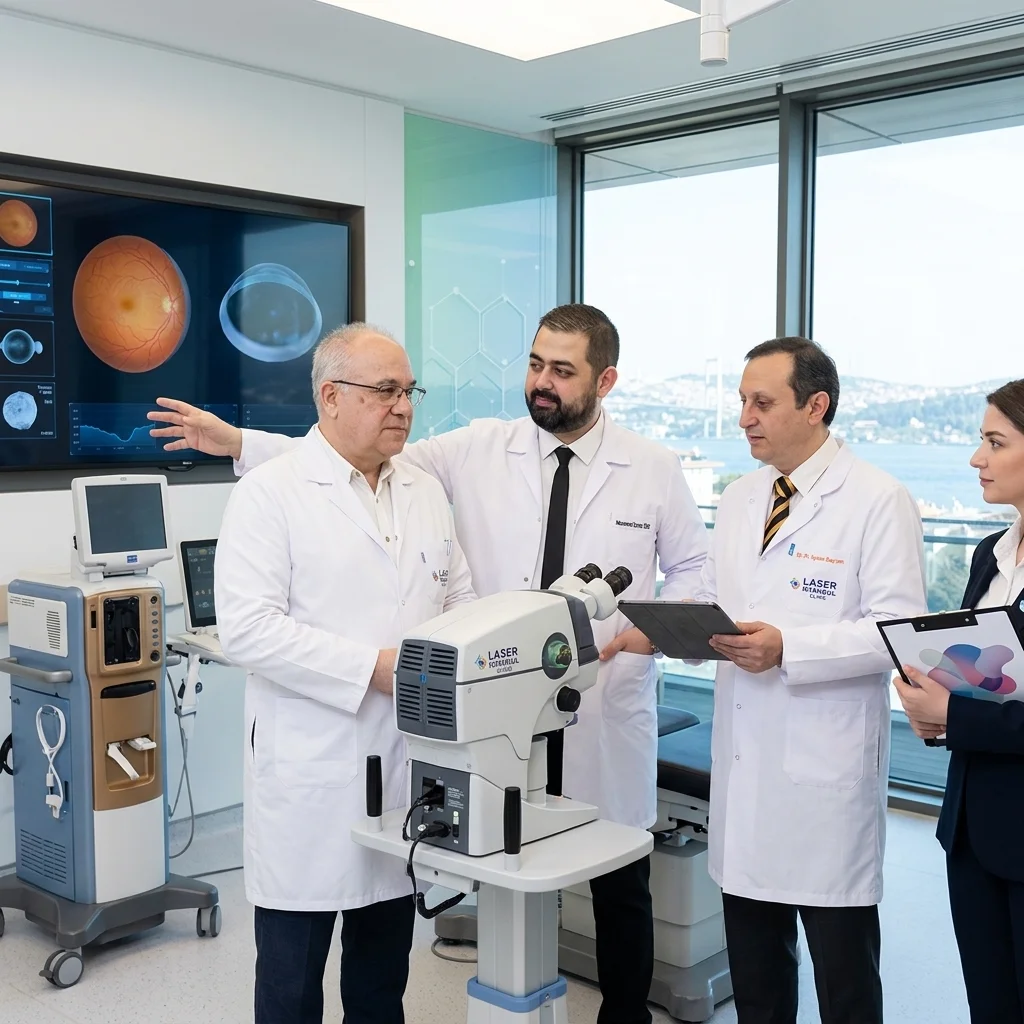
When the squint has another cause. A squint can follow poor vision in one eye. If your examination finds a retinal or corneal problem, it is reviewed by Doç. Dr. Muhammet Derda Özer, our cornea, retina and ocular oncology specialist, or by Op. Dr. Aysan Bayram, who treats retinal disease and speaks English.
Your strabismus surgery journey, step by step
- Free online assessment
Send photos of the eyes looking straight ahead, any orthoptist or eye-clinic reports, glasses prescriptions and, for children, the history of patching. Prof. Dr. Satıcı tells you whether surgery is likely to help and sends a written quote.
- Book your dates
Plan {{stay length in Istanbul}}. Your coordinator helps you choose dates and can arrange a hotel and transfers at extra cost.
- Full examination (day 1)
Vision in each eye, the angle of the squint at near and distance, eye movements, binocular vision and a dilated check of the focusing and the back of the eye. If surgery is not the right step, your surgeon explains why.
- Surgery (day 1 or 2)
You stop eating and drinking for a set time beforehand. Under general anaesthetic, the operation usually takes less than an hour (NHS). Parents can usually stay with their child until the anaesthetic has been given.
- Same-day discharge
Most patients go home the same day. A pad may cover the eye until the next day.
- First check (the next day)
Your surgeon checks alignment and healing and, if adjustable stitches were used, any fine-tuning.
- Home and remote follow-up
You fly home once Prof. Dr. Satıcı is happy with your eyes. He reviews progress remotely; children keep their glasses and any patching with their local eye team.
Recovery after strabismus surgery: week by week
Most people are back at work or school after about a week, but full recovery takes several weeks. This timeline follows NHS and AAPOS guidance; your surgeon's instructions come first.
-
First few days
The eye feels gritty, sore and watery, especially when you move it. Simple painkillers help (no aspirin for under-16s). Do not drive for at least a day or two, longer if you have double vision
-
First week
Read, watch TV and do daily activities as you feel able. Keep soap and shampoo out of the eye. Use the antibiotic or steroid drops as prescribed. Double vision, if any, usually passes after a week or so
-
About 1 week
Most people return to work, school, exercise and sport (not swimming or contact sport)
-
2 weeks
Children can play in sand and use face paint again
-
3 weeks after strabismus surgery
The eye usually looks and feels much better, but some redness, watering and itching from the dissolving stitches can still be present. This is expected: AAPOS says redness may take several weeks, occasionally months, to disappear. Still no swimming and no eye make-up
-
4 weeks
Swimming and eye make-up near the eyes can usually restart
-
6 weeks
Contact sports such as rugby can usually restart
-
1–3 months
Alignment settles; EyeWiki describes a follow-up at 1–3 months to assess the stable result
If you wore glasses before surgery, you will probably still need them. Do not wear contact lenses until you are told it is safe. Contact your coordinator straight away if pain increases, redness spreads, there is discharge, or vision gets worse.
Risks of strabismus surgery
Strabismus surgery is a common, generally safe operation, but no operation is risk-free, and the most frequent issue is that the eyes are not perfectly straight after one operation.
Needing more than one operation. The NHS calls further surgery "quite common", particularly for large squints. A review of adult surgery found satisfactory alignment after one operation in about 80% of adults, and EyeWiki reports that 15–30% of children with infantile esotropia need a second operation.
Double vision. EyeWiki reports temporary double vision in 9% of adults, usually settling within 6 weeks, and persistent troublesome double vision in 0.8%. In a 2019 study of adults with a childhood squint and no double vision beforehand, constant double vision occurred in 1–2%, and quality of life still improved overall.
Less common and rare risks (EyeWiki, NHS):
- infection around the eye (about 0.14%); infection inside the eye (endophthalmitis) is very rare, between 1 in 18,500 and 1 in 350,000 operations
- a small hole in the white of the eye from a stitch (0.3–7.8% depending on technique), sometimes needing antibiotics or a procedure
- a muscle slipping or being lost, which may need further surgery (a lost muscle in about 1 in 5,000 children's operations)
- reduced blood supply to the front of the eye, about 1 in 13,000
- a change in eyelid position after surgery on the vertical muscles, cysts and visible scarring of the conjunctiva
- loss of vision, which the NHS describes as very rare
Prof. Dr. Satıcı explains your personal risks through your interpreter before you sign anything.
Strabismus surgery: frequently asked questions
Strabismus surgery is an operation on the muscles that move the eye, which loosens or tightens them so both eyes point in the same direction. The eye is not removed; the surgeon works through a small opening in the clear skin over the white of the eye. It usually takes less than an hour, and most people go home the same day.
In UK medical use, a squint is strabismus: the eyes point in different directions, with one turning in, out, up or down. In everyday English, squinting also means narrowing your eyes to see better, which often points to a need for glasses. A visible eye turn should always be checked by an eye specialist.
Yes. Eyes can be straightened at any age, according to AAPOS, even when the squint dates from childhood. Adults often gain a wider field of vision, less double vision and more confidence, and most need only one operation.
Not for the weak vision itself. A lazy eye is treated with glasses, patching or drops, ideally before the age of 7. Surgery can straighten the squint that often goes with a lazy eye, but the vision still needs training, so amblyopia is usually treated first.
You are asleep or numbed during the operation. Afterwards the eye feels gritty and sore for a few days, especially when you move it, and simple painkillers usually help. Scratchiness and redness then fade over the following weeks.
At 3 weeks the soreness has usually gone, but some redness and itching from the dissolving stitches can still be there. AAPOS says redness may take several weeks, and occasionally months, to clear. Keep avoiding swimming and eye make-up until 4 weeks, and tell your surgeon about increasing pain, discharge or worse vision.
Possibly. About 80% of adults reach satisfactory alignment with one operation, and 15–30% of children with infantile esotropia need a second one. Your surgeon tells you your own likelihood before surgery.
No. AAPOS classes eye muscle surgery as reconstructive: besides the appearance, it can reduce double vision, widen the field of vision and, in some people, improve depth perception.
Plan {{stay length in Istanbul}}. You will have the examination, the surgery and a check the next day, and you fly home once your surgeon has examined your eyes. You can usually return to work or school after about a week.
Prof. Dr. Ahmet Satıcı, a Professor of Ophthalmology and specialist since 1992, plans and performs strabismus surgery for adults and children. If another eye problem is behind the squint, Doç. Dr. Muhammet Derda Özer or Op. Dr. Aysan Bayram review that part of your case.
Squint surgery and other eye operations
Strabismus surgery changes where the eye points; it does not change your glasses prescription or the clarity of the eye. If you have another eye problem as well, these treatments are planned separately:
| If you also have… | The treatment that addresses it | What it does not do |
|---|---|---|
| Short sight, long sight or astigmatism (adults) | Laser eye surgery or an ICL lens | Neither straightens a squint |
| Reading-glasses age (45+) | Lens replacement (RLE) | Does not change eye alignment |
| A cataract | Cataract surgery | Can restore vision in an eye that drifted because it saw poorly, but the drift may still need surgery |
| Keratoconus | Cross-linking and corneal treatments | Do not affect the eye muscles |
| A retinal problem | Retina surgery | Treats the cause of poor vision, not the turn |
Sources for the facts on this page
- NHS, Squint (overview; last reviewed 2 May 2023): definition ("eyes point in different directions"); common in young children but any age; unlikely to get better on its own; when to get advice (constant squint, intermittent after 3 months, adult-onset squint or double vision); treatments (glasses, eye exercises, surgery, injections lasting less than 3 months); lazy eye may need treating first; untreated problems (blurred/double vision, lazy eye, embarrassment, low self-esteem); surgery helps alignment even if long untreated; causes incl. refractive errors, measles, Down's syndrome, cerebral palsy; retinoblastoma. https://www.nhs.uk/conditions/squint/
- NHS, Squint: Surgery (last reviewed 2 May 2023): recommended if other treatments are not suitable or do not help; general anaesthetic, usually less than an hour, home the same day; parents accompany child until anaesthetic; dissolvable hidden stitches; sometimes both eyes; adjustments in adults/teenagers with numbing drops; pad until next day; side effects (pain a few days, blood-stained tears and watering for a few weeks, itching until stitches dissolve, double vision usually passes after a week or so); return to work/school after about a week; no driving for a day or two; exercise after a week, swimming 4 weeks, contact sports 6 weeks, eye make-up 4 weeks, sand/face paint 2 weeks; glasses still needed, no contact lenses until told; risks (further surgery "quite common", permanent double vision, infection/abscess/cyst, slipped muscle, small hole in the eye, very rare loss of vision). https://www.nhs.uk/conditions/squint/surgery/
- NHS, Lazy eye (last reviewed 25 Aug 2026): definition; causes incl. squint; treatment with glasses, patching, blurring drops; surgery for squint, cataract or drooping eyelid; treatment ideally before age 7. https://www.nhs.uk/conditions/lazy-eye/
- AAPOS, Strabismus: about 4% of the US population; types (esotropia, exotropia, hypertropia, hypotropia); adult causes (trauma, stroke, neurological problems, thyroid eye disease); amblyopia treated before muscle surgery. https://aapos.org/glossary/strabismus
- AAPOS, Strabismus Surgery: loosens or tightens eye muscles through a conjunctival incision without removing the eye; general anaesthesia in most children, general or local with sedation in adults; outpatient; recession and resection/plication; adjustable sutures; redness may take several weeks or occasionally months to disappear; soreness improves after a few days; antibiotic or steroid drops. https://aapos.org/glossary/strabismus-surgery
- AAPOS, Adult Strabismus: about 4% of US adults; eyes can be straightened at any age, including patients in their 90s; benefits (less double vision, depth perception, confidence, employment); risks; reconstructive, not cosmetic; most US insurance plans cover it; swimming and strenuous exercise may be restricted for weeks. https://aapos.org/patient/patient-resources/adult-strabismus-new
- AAPOS, Exotropia: intermittent exotropia, closing one eye in bright sunlight; age is not the main reason for surgery; vision therapy evidence limited outside convergence insufficiency. https://aapos.org/glossary/exotropia
- AAPOS, Esotropia (last updated March 2023): types (infantile, acquired, accommodative, non-accommodative); treatments incl. glasses, patching, surgery, botulinum toxin. https://aapos.org/glossary/esotropia
- American Academy of Ophthalmology, Adult Strabismus (24 June 2026): adult causes (diabetes, thyroid eye disease, myasthenia gravis, brain tumours, stroke, head injury, earlier eye surgery, childhood strabismus); symptoms; treatments (surgery, exercises for convergence insufficiency, prism glasses, botulinum toxin). https://www.aao.org/eye-health/diseases/adult-strabismus
- EyeWiki (AAO), Strabismus Surgery Complications: scleral perforation 0.3–7.8%; endophthalmitis 1 in 18,500 to 1 in 350,000; post-operative infection 0.14%; lost muscle ~1 in 5,000 (paediatric); anterior segment ischaemia ~1 in 13,000; temporary diplopia 9% of adults, resolving within 6 weeks; persistent intractable diplopia 0.8%; ~20% of adults not satisfactorily aligned with one procedure; conjunctival scarring in over 90%; eyelid position changes after vertical rectus surgery. https://eyewiki.org/Strabismus_Surgery_Complications
- EyeWiki (AAO), Strabismus Surgery, Horizontal: recession, resection, plication; anaesthesia options; follow-up at 1–3 months for alignment stabilisation. https://eyewiki.org/Strabismus_Surgery,_Horizontal
- EyeWiki (AAO), Adjustable Sutures for Strabismus Surgery: technique and timing; suited to adults and reoperations; RCT 90% vs 85% success (not significant). https://eyewiki.org/Adjustable_Sutures_for_Strabismus_Surgery
- EyeWiki (AAO), Infantile Esotropia: onset in the first 6 months; amblyopia in about 40–50%; early surgery (before age 2) gives more potential for binocular function; 15–30% need a second operation; botulinum toxin effect around 2–3 months. https://eyewiki.org/Infantile_Esotropia
- EyeWiki (AAO), Botulinum Toxin Use In Strabismus: indications; ptosis in 12% of adults and 25% of children; effect duration. https://eyewiki.org/Botulinum_Toxin_Use_In_Strabismus
- Kushner BJ. The benefits, risks, and efficacy of strabismus surgery in adults. Optom Vis Sci 2014 (PMID 24739461): satisfactory alignment with one operation in ~80%; low risks; most adults gain some binocular function (wider binocular field in esotropia; some regain stereopsis); not merely cosmetic. https://pubmed.ncbi.nlm.nih.gov/24739461/
- Wang JY, Leske DA, Hatt SR, Holmes JM. Diplopia after strabismus surgery for adults with nondiplopic childhood-onset strabismus. J AAPOS 2019 (PMC6925318): constant diplopia 1% at 6 weeks, 2% at 1 year; HRQOL improved. https://pmc.ncbi.nlm.nih.gov/articles/PMC6925318/
- Mireskandari K, Schofield J, Cotesta M, Stephens D, Kraft SP. Achieving postoperative target range increases success of strabismus surgery in adults: a case for adjustable sutures? Br J Ophthalmol 2015 (PMID 25990655): 353 patients over 12; target reached 75.5% adjustable vs 54% non-adjustable; success 83.6% vs 63.7% when target reached vs not. https://pubmed.ncbi.nlm.nih.gov/25990655/
Find out if strabismus surgery can help, free
Send us a photo of the eyes looking straight ahead and any eye reports. Prof. Dr. Ahmet Satıcı will tell you whether surgery, glasses or another treatment is the right next step, and what surgery would cost, with no obligation.
3 eye surgeons
Your case is reviewed by a named surgeon, not a salesperson. Reply within {{response time}}.
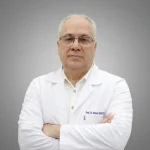 Prof. Dr. Ahmet Satıcı
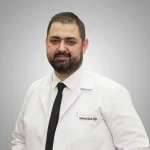 Doç. Dr. Muhammet Derda Özer
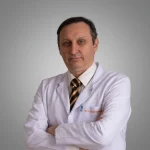 Op. Dr. Aysan Bayram