
Myopia Treatment in Istanbul: Laser Eye Surgery for Short Sight
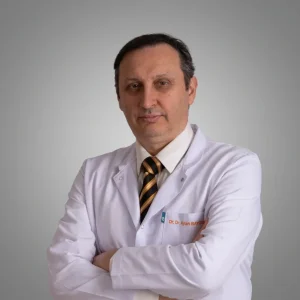
Myopia treatment with Laser Istanbul Clinic starts with measuring your eyes, not with choosing a laser. Prof. Dr. Ahmet Satıcı or Op. Dr. Aysan Bayram examines your corneas and retina in Istanbul and recommends short-sighted laser eye surgery, an implantable contact lens (ICL) or, later in life, lens replacement, depending on your prescription, your corneal thickness and your age. You see the full price in writing before you travel, and a personal interpreter stays with you from your first scan to your final check-up.
Myopia (short-sightedness) means distant objects look blurry while close objects stay clear, because the eye focuses light in front of the retina. Glasses and contact lenses correct it; laser eye surgery can correct it permanently, usually up to about −10 dioptres, by reshaping the cornea. Higher prescriptions or thin corneas are often better treated with an ICL lens. In Istanbul, Prof. Dr. Ahmet Satıcı or Op. Dr. Aysan Bayram treats it from {{£ price}} for both eyes; hotel and transfers are extra.
What is myopia, and what does a myopic eye see?
Myopia, also called short-sightedness or nearsightedness, is "a very common eye condition where you cannot see objects far away clearly", in the words of the NHS. It is a refractive error, not an eye disease: the eye focuses light incorrectly, and the fix is to change where that light lands.
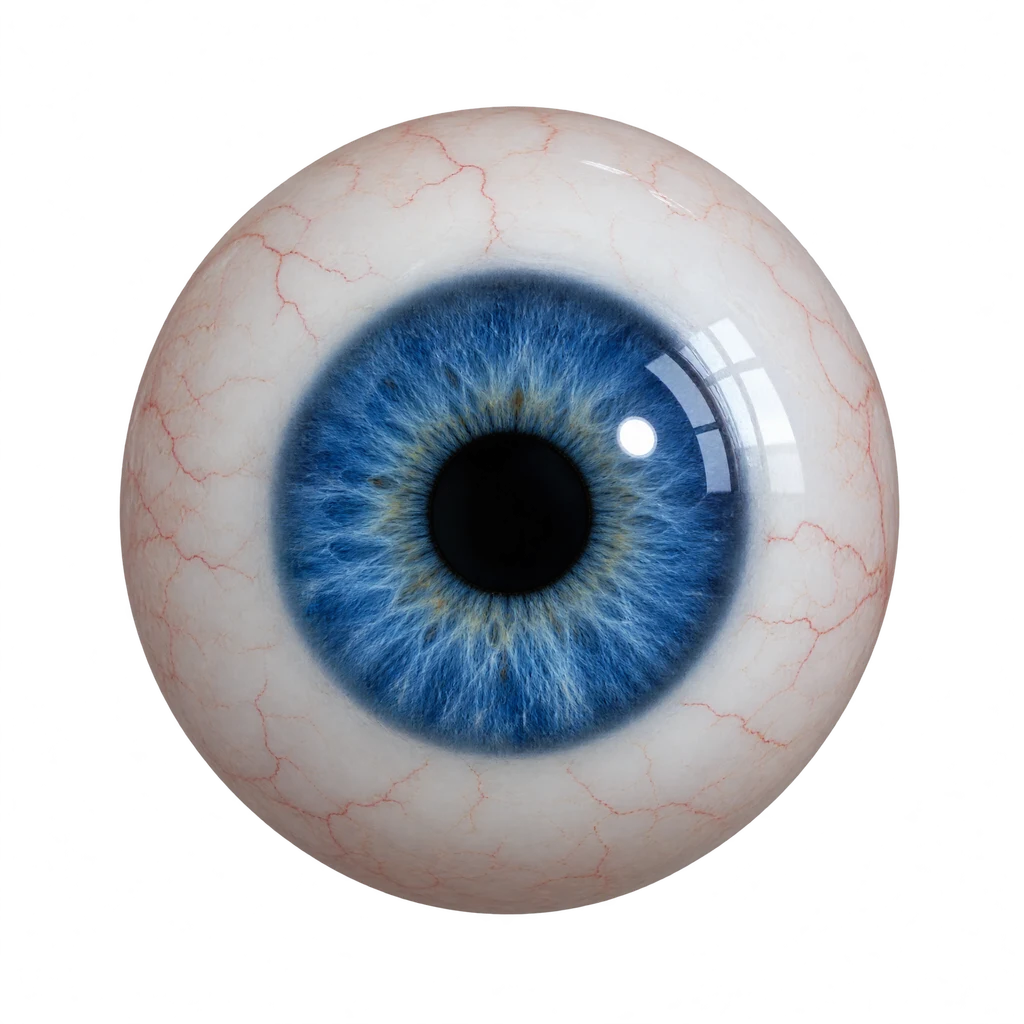
What happens inside a myopic eye. According to the US National Eye Institute (NEI), myopia develops when the eyeball grows too long from front to back, or when the cornea or lens is shaped so that it bends light too strongly. Either way, light comes to a focus in front of the retina instead of on it. The American Academy of Ophthalmology (AAO) puts it simply: the cornea "may be too steeply curved", or the eye "may be longer front to back than normal".
What myopic vision looks like. Close-up objects look clear, but road signs, a television across the room, faces at a distance or a whiteboard look soft and blurred. People with myopia often:
- squint to see far away
- hold phones, books and screens close to their face
- get eye strain or, less often, headaches
- notice that vision is worse at night (see below)
Mild myopia may cause no noticeable symptoms at all, which is why the NEI recommends regular eye examinations.
When it starts and when it stops. Myopia usually begins between the ages of 6 and 14 and gets worse until the early twenties (NEI). The NHS says it can get worse until the eye stops growing, usually at around 20. The Royal College of Ophthalmologists (RCOphth) notes that short sight normally stabilises in the late teens or early 20s, but natural prescription changes can happen at any age. That is why your prescription must be stable before any surgery.
How common is it? Very. A study by Holden and colleagues in Ophthalmology (2016) estimated that myopia affected about 28% of the world's population (2 billion people) in 2010 and projected 50% (about 5 billion people) by 2050. It tends to run in families, and the NEI notes that children who spend more time outdoors are less likely to become short-sighted.
How myopia is measured. Your glasses prescription shows it as a minus number in dioptres (D). The AAO classes less than 3 D as low myopia, 3–6 D as moderate, and more than 6 D as high myopia. If your prescription also has a second "cylinder" number, you have astigmatism as well, which laser and toric lenses can correct in the same treatment.
Why do short-sighted eyes see halos around lights at night?
Halos and glare around lights at night are common with myopia, and they usually get worse in the dark for a simple reason: your pupils widen. The AAO explains that as the pupil gets bigger in the dark, some people become more short-sighted than in daylight; this "night myopia" makes distant objects look fuzzier and can surround headlights and streetlights with glare or halos.
Halos around lights can also come from astigmatism, dry eye or an out-of-date prescription, and, later in life, from cataract. If your night vision has changed, have your prescription and eye health checked first; often new glasses are enough.
Laser eye surgery can also cause halos. The RCOphth states that most patients notice some light-scatter effects (glare, halos, starbursts) early on, particularly after treatment for higher prescriptions; with modern lasers these are usually mild and improve within a few months. Your surgeon measures your pupil size in dim light and plans the treatment zone with this in mind.
Myopia in one eye, or myopia and hyperopia at the same time
Myopia in one eye. It is possible to be short-sighted in one eye only, or much more in one eye than the other. A difference in prescription between the two eyes is called anisometropia. In a 2025 PLoS One study of 134,603 people seeking refractive surgery, 17.9% had a difference of more than 1 dioptre between their eyes, and anisometropia became more common as myopia increased. In children, a large difference matters because the brain can start to ignore the blurrier eye; EyeWiki (AAO) lists about 3 D of difference in myopia as a level that can cause a lazy eye (amblyopia). In adults, laser or an ICL can treat each eye to its own prescription, including one eye only.
Myopia and hyperopia at the same time. One eye cannot be short-sighted and long-sighted (hyperopic) along the same line of focus, but there are three ways the two can occur together:
- One eye short-sighted, the other long-sighted. This is a rare type of anisometropia called antimetropia. Each eye is treated to its own prescription.
- Mixed astigmatism. Within one eye, one direction (meridian) focuses in front of the retina and the other behind it, as explained in the University of Iowa's teaching material on refractive errors. Laser can correct this kind of astigmatism too, within the usual ranges.
- Short sight plus age-related reading problems. From the mid-40s, the eye's natural lens stiffens and close focus fades (presbyopia), so many short-sighted people need help for both distance and near. The RCOphth notes that from the mid-40s surgeons often set one eye for distance and the other for arm's length ("blended vision").
So "myopia and hyperopia treatment" is possible in one plan: laser can correct short sight up to about −10 D and long sight up to about +4 D (RCOphth), and lens surgery covers higher prescriptions.
Is high myopia bad for your eyes?
High myopia (more than 6 D, or an eyeball 26–26.5 mm or longer) is not only a stronger prescription; it stretches the inside of the eye. The NHS and the AAO both state that severe short sight increases the risk of retinal detachment, glaucoma and cataract, and the NHS adds macular degeneration. EyeWiki describes "pathologic myopia", where the stretched retina and choroid degenerate, as a cause of vision loss in a minority of highly myopic eyes, and recommends a yearly eye examination for stable high myopia.
Important: laser eye surgery and ICLs change your glasses prescription, not the length or shape of your eye. Your retina keeps the same risks after surgery, so a careful dilated retina check is part of your examination with us before any treatment. Know the warning signs of retinal detachment for life: a sudden shower of floaters, flashing lights or a dark shadow spreading across your vision need same-day eye care.
Myopia treatment options compared
Myopia treatment for adults falls into four groups. The right one depends on your prescription, corneal thickness and shape, age and eye health, not on the price list.
| Option | How it works | Typical range | Best for | Main trade-offs |
|---|---|---|---|---|
| Glasses or contact lenses | Lenses refocus light onto the retina | Any | Everyone; first choice for children | Daily dependence; RCOphth: about 1 in 3,000 contact lens wearers a year get a serious corneal infection |
| Laser eye surgery (Femto-LASIK, SMILE Pro, PRK / Trans-PRK) | Reshapes the cornea so it bends light less | Up to about −10 D (RCOphth) | Adults 18+ with a stable prescription and healthy, thick enough corneas | Temporary dry eye and halos; tissue removed limits how much can be corrected |
| ICL (implantable contact lens) | A soft lens placed inside the eye, in front of your natural lens; nothing removed | FDA-approved range −3 to −20 D; toric versions for astigmatism | High myopia, thin corneas, dry eyes, people told they are "not suitable for laser" | Intraocular surgery; small long-term cataract risk; can be removed |
| Refractive lens exchange (RLE) | The natural lens is replaced with an artificial lens, as in cataract surgery | High myopia (to about −23 D) | People 45–50+ with reading problems or early cataract | Ends natural focusing; higher retinal-detachment risk in young, highly short-sighted eyes |
The RCOphth notes that some people outside the usual laser range can still have laser, while some people inside it are better served by a lens implant. Your surgeon decides only after measuring your eyes.
Short-sighted laser eye surgery: how it corrects myopia
For short sight, the laser flattens the centre of the cornea slightly so that it bends light less and the focus moves back onto the retina. The RCOphth describes three types, all performed with numbing eye drops, usually on both eyes in about half an hour, and with equally good visual results at three months:
- Femto-LASIK. A femtosecond laser makes a thin flap, an excimer laser removes a precisely calculated lens-shaped layer underneath, and the flap is laid back without stitches. Fastest visual recovery; many people return to work the next day.
- SMILE Pro / ReLEx SMILE (lenticule extraction). A femtosecond laser shapes a thin lens of tissue inside the cornea, which the surgeon removes through a small incision, with no flap. In the US, the FDA has approved SMILE for −1.00 to −10.00 D of myopia with up to −3.00 D of astigmatism.
- PRK, LASEK and no-touch Trans-PRK (surface laser). The surface skin of the cornea is removed and the excimer laser reshapes the cornea directly. No flap, but the eye is sore for several days while the skin regrows, and the RCOphth says it may take a week or longer to reach the driving standard.
Why the strength of your myopia matters. The stronger the short sight, the more corneal tissue the laser has to remove, and your cornea must stay thick enough afterwards to remain stable. A 2019 review in Community Eye Health notes that LASIK was once used for up to −15 D, but the recommended maximum is now −10 D because of the risk of the cornea weakening (ectasia), and that surface treatments work best up to about −6 D. Outcomes are also more predictable at lower prescriptions: according to EyeWiki's summary of the evidence, a median 98% of eyes with low to moderate myopia saw 20/20 or better without glasses after LASIK, compared with a median 89% for high myopia.
Technology we use: {{femtosecond laser platform name}} and {{excimer laser platform name}}, in a fully equipped, Ministry of Health–licensed operating theatre in Istanbul. Your examination includes corneal topography and thickness, pupil size in dim light, a dry-eye assessment and a dilated retina check.
Who is suitable for myopia laser treatment?
The RCOphth says you are most likely to be suitable for laser vision correction if you are over 18 and your prescription has been stable, with no change greater than 0.5 D in the last two years, within these ranges:
| Prescription | Usual laser range | If you are outside it |
|---|---|---|
| Short sight (myopia) | up to −10.00 D | ICL, or lens replacement from about 45–50 |
| Long sight (hyperopia) | up to +4.00 D | Lens surgery |
| Astigmatism | up to ±6.00 D | Toric ICL or toric lens |
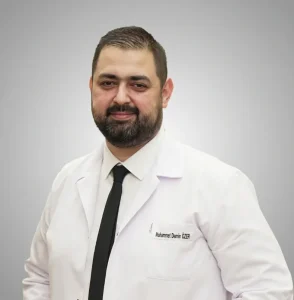
Laser is usually not the right choice if you have keratoconus or a cornea whose shape suggests it, a cornea too thin for your prescription, severe dry eye, cataract, an active eye infection or inflammation, uncontrolled diabetes or autoimmune disease, or if you are pregnant or breastfeeding. In these cases your surgeon explains the alternatives; for corneal problems, Doç. Dr. Muhammet Derda Özer, our cornea specialist, reviews your scans.
Contact lens wearers: many are wrongly told they have dry eyes and cannot have laser, according to the RCOphth; contact-lens discomfort is often treatable, and laser can be a good solution for people struggling with lenses. Stop wearing your lenses before your examination so your cornea returns to its natural shape; your coordinator confirms how long for your lens type.
Can myopia be slowed in children?
Surgery is for adults with a stable prescription, but in children myopia can often be slowed. The AAO lists three proven approaches: daily low-dose atropine eye drops, which slow progression in about 7 in 10 children; orthokeratology (rigid lenses worn overnight to reshape the cornea); and special peripheral-defocus contact lenses for children aged about 6–12. The NHS adds that specialised glasses and orthokeratology may slow progression but are not available on the NHS. More time outdoors is the simplest step for every child. Ask your child's optometrist or ophthalmologist at home, because these treatments need regular local follow-up.
Myopia eye surgery cost: Istanbul vs UK, Germany and US
At Laser Istanbul Clinic, laser treatment for myopia starts from {{£ price}} for both eyes, and ICL from {{£ ICL package price}} per eye. Your surgeon confirms your exact price in writing after reviewing your prescription and scans, before you book anything.
Typical published prices for eye surgery for myopia (2025–26):
| Treatment | UK private clinics | Germany | USA | Istanbul (published prices) | With Laser Istanbul Clinic |
|---|---|---|---|---|---|
| Femto-LASIK, both eyes | £3,000–5,600 | €2,400–4,600 | $4,000–6,000 | about $1,450–2,700 | from {{£ price}} |
| SMILE / SMILE Pro, both eyes | £4,400–7,600 | €2,800–5,200 | $5,000–8,000 | about $2,000–3,450 | from {{£ price}} |
| ICL, per eye | about $3,350–8,700 | from about $2,900 | about $3,500–9,000 | about $1,800–3,500 | from {{£ ICL package price}} |
UK, German, US and Istanbul figures are typical ranges published by clinics and price-comparison sites in 2025–26, not quotes. Published Istanbul prices are often packages with a hotel added; our prices do not include hotel or transfers, which are extra. ICL prices are usually quoted per eye; check this whenever you compare.
Your treatment price includes:
- full pre-operative eye examination and scans with your surgeon
- surgery by your named surgeon
- medication and eye drops for your recovery
- follow-up checks in Istanbul with the same surgeon
- a personal interpreter, a dedicated coordinator and remote follow-up after you return home
Not included: flights, hotel and airport transfers. Hotel and transfers are a separate charge, and we can arrange them if you ask. In the UK, the NHS and the RCOphth both state that laser and lens surgery to correct short sight are not available on the NHS, and the RCOphth adds that private health insurance does not cover laser vision correction.
To get a short-sighted eye surgery cost quote, send your current glasses prescription, any recent eye report and, if you have them, previous corneal scans. Your surgeon replies with suitable options and a written quote within {{response time}}.
Your myopia surgeons
Your myopia treatment journey, step by step
Free online assessment
Send your prescription and any eye reports. A surgeon tells you whether laser or an ICL is likely to suit you and sends a written quote.
Book your dates
Plan 3–5 days in Istanbul for laser, or {{days in Istanbul for ICL}} for ICL. We help you choose dates with your surgeon.
Full eye examination (day 1)
Refraction with and without dilating drops, corneal topography and thickness, pupil size, a dry-eye assessment and a dilated retina check. For an ICL, the inside of the eye is also measured to size your lens. If surgery is not right for you, your surgeon tells you and explains why.
Surgery (day 1 or 2)
Numbing drops are used and a small clip keeps your eyelids open. Laser on both eyes usually takes about half an hour in total, and you return to your accommodation the same day.
First check (the next day)
Your surgeon examines both eyes.
Final check and home
Most laser patients can fly 1–3 days after Femto-LASIK or SMILE Pro, once their surgeon has checked their eyes; surface treatment needs a few more days. Your coordinator stays in touch, and your surgeon reviews your progress remotely at agreed intervals.
Recovery after laser treatment for short sight
-
First few hours
Gritty, watery, light-sensitive eyes. Rest with your eyes closed and use lubricating drops often.
-
Day 1
After Femto-LASIK, vision is usually much clearer and many people return to work. Washing and showering are fine from day one after LASIK or SMILE; gym and jogging can restart.
-
Days 4–7
After surface laser (PRK / Trans-PRK), the bandage contact lens is usually removed and the soreness eases.
-
First week
No swimming. Do not rub your eyes. Use antibiotic and anti-inflammatory drops exactly as prescribed.
-
Up to 6 weeks
Red patches on the white of the eye are harmless and can take up to 6 weeks to fade.
-
1 month
Contact sports can restart after LASIK (sooner after SMILE or surface laser).
-
1–3 months
Glare, halos and dry-eye symptoms usually improve within a few months. Surface laser completes its visual recovery over about three months.
-
Up to 2 years
Most changes after three months are very small, but full stabilisation can take up to two years (RCOphth).
Do not drive until your surgeon confirms that your vision meets the driving standard. Contact your coordinator straight away if you have increasing pain, light sensitivity, redness or blurred vision, or if your eye is injured.
Risks of myopia surgery, stated plainly
Laser eye surgery for short sight is one of the most studied operations in medicine. The numbers are reassuring, but they are not zero.
Results. The RCOphth reports that over 95% of patients are satisfied with laser vision correction. In an 18-year audit of 53,731 LASIK eyes summarised on EyeWiki, 0.37% lost two or more lines of best-corrected vision.
Common, usually temporary side effects:
- Dry eye, the most common: it usually settles within 6–12 months but persists in up to 20% of patients (EyeWiki).
- Glare, halos and starbursts, more likely after higher prescriptions; usually mild and improving within a few months (RCOphth).
- Fluctuating vision in the first weeks.
Less common risks:
- Under- or over-correction needing a touch-up. The RCOphth says up to 1 in 10 patients need some form of additional surgery; touch-ups are more often needed in high myopia, where EyeWiki reports 83% of eyes treated for −8.00 to −14.25 D were within 1 D of target after one treatment and 95% after retreatment.
- Myopia returning. The laser effect is permanent, but your eyes can still change with age; a 12-year follow-up of LASIK for moderate to high myopia found an average shift of −0.74 D between 3 months and 12 years.
- Corneal ectasia (weakening of the cornea), roughly 1 in 5,000 with modern screening.
- Serious, permanent loss of vision is rare: fewer than 1 in 5,000 patients need a corneal transplant to restore vision after laser surgery (RCOphth).
For ICL, the main long-term risk is earlier cataract; other risks include raised eye pressure and loss of cells on the inner surface of the cornea, which your surgeon monitors at your follow-up checks. Later in life, tell any eye doctor that you have had laser surgery: the RCOphth notes it can make glaucoma pressure readings under-read, especially after treatment for high myopia, and it changes the calculations for future cataract surgery.
Your surgeon explains your personal risks in writing and through your interpreter before you sign anything.
Myopia treatment: frequently asked questions
Adults with a stable prescription can have myopia corrected permanently with laser eye surgery, an ICL or lens replacement. These treatments change how the eye focuses, not the length of the eye, so the retinal risks of high myopia remain. Glasses and contact lenses remain safe, non-surgical alternatives.
There is no single best treatment: laser suits most adults up to about −10 D with healthy, thick enough corneas, an ICL suits higher prescriptions or thin corneas, and lens replacement suits people over about 45–50. Check that your surgeon offers all of these and measures your eyes before recommending one. Prof. Dr. Satıcı performs laser, ICL and lens replacement, so the recommendation is not tied to one machine.
Published Istanbul prices are about $1,450–2,700 for Femto-LASIK on both eyes and about $1,800–3,500 per eye for an ICL (2025–26). With Laser Istanbul Clinic, laser starts from {{£ price}} for both eyes and ICL from {{£ ICL package price}} per eye, including your examination, surgery, medication, follow-up checks, interpreter and coordinator. Hotel and transfers are extra.
Often yes, up to about −10 D, if your cornea is thick enough and its shape is normal. Above that, or with thin corneas, an ICL usually gives a better and safer result, because laser would have to remove too much tissue. Your surgeon decides after corneal topography and thickness measurements.
Yes. If only one eye is short-sighted, or one eye is much more short-sighted than the other, each eye is treated to its own prescription, and treating one eye only is possible. Your surgeon checks both eyes, because an untreated difference between the eyes can make it hard for them to work together.
Yes, in three ways: one eye short-sighted and the other long-sighted (antimetropia), mixed astigmatism within one eye, or short sight combined with age-related loss of reading vision from the mid-40s. Laser can correct short sight, long sight and astigmatism in the same treatment, and lens surgery covers higher prescriptions.
In the dark your pupils widen, and some people become more short-sighted in low light ("night myopia"), which blurs lights into halos and glare. An updated prescription often helps. After laser, halos are common at first and usually improve within a few months.
The correction itself is permanent, but natural prescription changes can still occur, especially if your myopia was not stable before surgery. In a 12-year study of LASIK for moderate to high myopia, prescriptions drifted by an average of −0.74 D. {{Your surgeons' enhancement and re-treatment policy, including how long touch-ups are included in the price.}}
Plan 3–5 days in Istanbul for Femto-LASIK or SMILE Pro, a few more for surface laser, and {{days in Istanbul for ICL}} for ICL. Most laser patients can fly 1–3 days after surgery, once their surgeon has checked their eyes.
No. The NHS says laser and lens surgery for short sight are not available on the NHS, and the RCOphth states that laser vision correction is not covered by private health insurance. Most patients pay privately wherever they are treated.
Laser options for short sight in Istanbul
All laser treatments reshape the cornea to correct myopia. The RCOphth notes that visual results at three months are equally good for all types; the differences are recovery speed, comfort and which corneas each suits.
| Femto-LASIK | SMILE Pro / ReLEx SMILE | PRK / LASEK / no-touch Trans-PRK | |
|---|---|---|---|
| How it works | Laser-made flap, then excimer reshaping | Lens of tissue removed through a small incision; no flap | Surface skin removed, then excimer reshaping |
| Visual recovery | Fastest; often back to work the next day | Slightly slower than LASIK | Slowest; a week or longer before driving standard |
| Contact sports | Wait at least 1 month | Sooner than LASIK | Sooner than LASIK |
| Often chosen for | Most myopic prescriptions with normal corneal thickness | Active lifestyles; myopia with or without astigmatism | Lower myopia, thinner corneas, flap-free preference |
LASIK & Femto-LASIK
Blade-free LASIK with the quickest visual recovery.
LASIK & Femto-LASIK in IstanbulSMILE Pro and ReLEx SMILE
Flap-free keyhole laser correction for short sight and astigmatism.
SMILE Pro in Istanbul (VisuMax 800)PRK, LASEK and no-touch laser
Surface treatments without a flap, often recommended for thinner corneas and lower prescriptions.
PRK / LASEK in IstanbulSources for the facts on this page
- NHS, Short-sightedness (myopia): "a very common eye condition where you cannot see objects far away clearly"; symptoms; often runs in families; usually starts age 6–13; can get worse until about age 20; glasses/contacts; laser and lens surgery not available on the NHS; myopia management (special glasses, orthokeratology) not on the NHS; severe short sight raises risk of glaucoma, detached retina, cataract and macular degeneration; squint and lazy eye in children. https://www.nhs.uk/conditions/short-sightedness/
- National Eye Institute (NIH), Nearsightedness (Myopia): light focuses in front of the retina; eyeball too long or cornea/lens shape; squinting, eye strain, headaches less common; mild cases may have no symptoms; starts 6–14, worsens until early twenties; family history; outdoor time; high myopia raises retinal detachment risk. https://www.nei.nih.gov/learn-about-eye-health/eye-conditions-and-diseases/nearsightedness-myopia
- American Academy of Ophthalmology, Nearsightedness: What Is Myopia?: cornea too steeply curved or eye longer than normal; low < 3 D, moderate 3–6 D, high > 6 D; detached retina, glaucoma, cataract risk; LASIK, PRK, SMILE, lens replacement; children: low-dose atropine slows progression in 7 in 10, ortho-k, peripheral-defocus contact lenses for ages 6–12; outdoor time. https://www.aao.org/eye-health/diseases/myopia-nearsightedness
- American Academy of Ophthalmology, Night Vision: pupil enlarges in the dark; "night myopia" makes distant objects fuzzy; glare and halos around lights; LASIK can cause more glare or halos. https://www.aao.org/eye-health/anatomy/night-vision
- Holden BA, Fricke TR, Wilson DA, et al. Global Prevalence of Myopia and High Myopia and Temporal Trends from 2000 through 2050. Ophthalmology 2016;123(5):1036–42, as summarised in Myopia: a growing epidemic (Community Eye Health, PMC): 28% (2 billion) in 2010, 50% (5 billion) projected for 2050. https://pmc.ncbi.nlm.nih.gov/articles/PMC6688420/
- EyeWiki (AAO), Pathologic Myopia (Myopic Degeneration): high myopia ≥ −6.00 D or axial length ≥ 26.5 mm; pathologic myopia and its complications; yearly monitoring for stable high myopia. https://eyewiki.org/Pathologic_Myopia_(Myopic_Degeneration)
- EyeWiki (AAO), Anisometropic Amblyopia: amblyogenic thresholds incl. 3.00 D of anisomyopia. https://eyewiki.org/Anisometropic_Amblyopia
- Deuchert et al. Prevalence and associations of anisometropia with spherical ametropia, cylindrical power, age, and sex, based on 134,603 refractive surgery candidates. PLoS One 2025: anisometropia > 1 D in 17.9%; prevalence rises with myopia. https://pmc.ncbi.nlm.nih.gov/articles/PMC11698341/
- University of Iowa Department of Ophthalmology (EyeRounds), Introduction to Optics and Refractive Errors of the Eye: mixed astigmatism, one meridian myopic and one hyperopic. https://webeye.ophth.uiowa.edu/eyeforum/video/Refraction/Intro-Optics-Refract-Errors/index.htm
- Farooqui JH, Acharya M, Kekan M. Current trends in surgical management of myopia. Community Eye Health 2019;32(105):S5–S6: LASIK maximum revised to −10 D because of ectasia risk; PRK/LASEK best up to 6 D; RLE for high myopia up to about −23 D; retinal detachment risk in high myopes after RLE. https://pmc.ncbi.nlm.nih.gov/articles/PMC6688407/
- EyeWiki (AAO), LASIK for Myopia and Astigmatism: Safety and Efficacy: 20/20 or better in median 98% (low–moderate) vs 89% (high myopia); −8.00 to −14.25 D: 83% within 1 D after primary treatment, 95% after retreatment; 18-year audit of 53,731 eyes: 0.37% lost ≥ 2 lines; dry eye 6–12 months, persists in up to 20%; ectasia about 1 in 5,000. https://eyewiki.org/LASIK_for_Myopia_and_Astigmatism:_Safety_and_Efficacy
- US FDA, Patient information: VisuMax SMILE (PMA P150040/S003, 2018): −1.00 to −10.00 D myopia with −0.75 to −3.00 D astigmatism, age 22+, stable within 0.50 D for a year (US labelling). https://www.accessdata.fda.gov/cdrh_docs/pdf15/P150040S003C.pdf
- EyeWiki (AAO), Implantable Collamer Lens: FDA-approved range −3.0 to −20.0 D; EVO/EVO+ approved March 2022; toric 1.0–4.0 D; cataract, eye-pressure and endothelial-cell risks. https://eyewiki.org/Implantable_Collamer_Lens
- Ikeda T, Shimizu K, Igarashi A, et al. Twelve-Year Follow-Up of Laser In Situ Keratomileusis for Moderate to High Myopia. BioMed Res Int 2017: −0.74 D shift from 3 months to 12 years (cited on the LASIK master page). https://pmc.ncbi.nlm.nih.gov/articles/PMC5449750/
Find the right myopia treatment for your eyes, free
Send us your glasses prescription and any eye reports. Prof. Dr. Satıcı or Op. Dr. Bayram will tell you whether laser, an ICL or another option suits your short sight, and what it would cost, with no obligation.
3 eye surgeons
Your case is reviewed by a named surgeon, not a salesperson. Reply within {{response time}}.
 Prof. Dr. Ahmet Satıcı
 Doç. Dr. Muhammet Derda Özer
 Op. Dr. Aysan Bayram