
MIGS Glaucoma Surgery and SLT Laser in Istanbul: iStent, Hydrus and Selective Laser Trabeculoplasty
MIGS glaucoma surgery and SLT laser are the two least invasive ways to lower eye pressure when you have open-angle glaucoma or high eye pressure. In Istanbul they are planned and performed by Prof. Dr. Ahmet Satıcı, an ophthalmology specialist since 1992 who has published research on laser treatment for glaucoma. Your surgeon reviews your pressure readings, scans and drops before recommending anything, you see your written price before you travel, and a personal interpreter stays with you at every appointment.
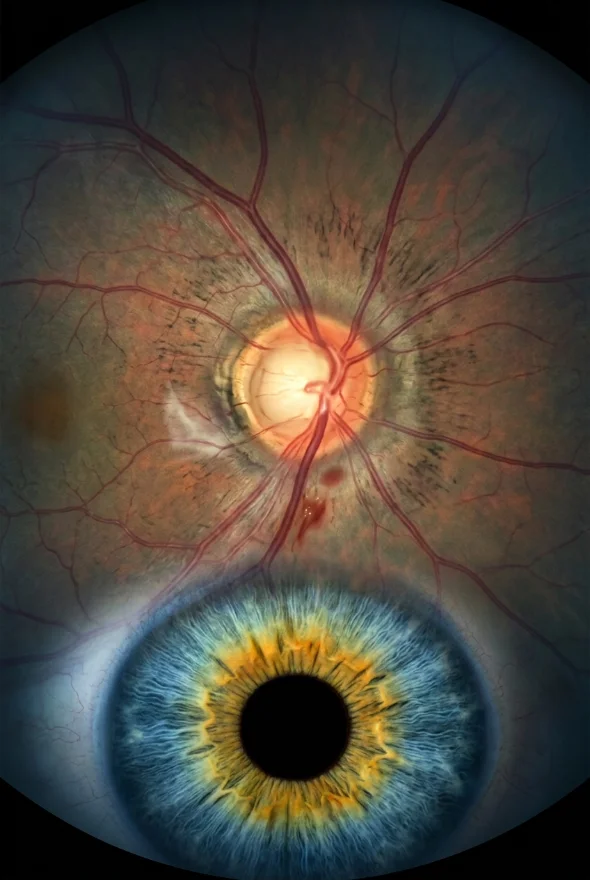
SLT (selective laser trabeculoplasty) is a 10–15-minute laser that helps the eye's own drain work better, with no cut. MIGS (minimally invasive glaucoma surgery) places a tiny stent such as the iStent or Hydrus in the drain, usually during cataract surgery. Both suit mild to moderate open-angle glaucoma and can reduce or replace eye drops. In Istanbul, Prof. Dr. Ahmet Satıcı treats you from {{£ SLT price}} per eye for SLT; hotel and transfers are extra.
What is MIGS glaucoma surgery, and what is SLT laser?
MIGS glaucoma surgery and SLT laser both lower the pressure inside the eye by improving the outflow of fluid through the eye's natural drainage system. Glaucoma damages the optic nerve, usually because that drain, the trabecular meshwork, lets fluid out too slowly and the pressure builds up. According to the US National Eye Institute (NEI), there is no cure for glaucoma and treatment cannot undo damage that has already happened, but early treatment can often stop it getting worse. Lowering eye pressure is the only proven way to do that.
Eye drops are the most common treatment. SLT and MIGS exist because drops have to be used every day for life, can sting or redden the eye, and are easy to forget.
What is SLT laser (selective laser trabeculoplasty)?
SLT laser eye treatment aims short pulses of laser light at the trabecular meshwork through a special contact lens. The laser does not burn a hole or make a cut. It targets only the pigmented cells in the drain, which triggers the body's own repair cells to clear and remodel the meshwork, so fluid drains more easily.
- The SLT laser wavelength is 532 nm (green light). The American Academy of Ophthalmology's EyeWiki describes the laser as a frequency-doubled, Q-switched Nd:YAG laser with a 400-micron spot and a pulse lasting just 3 nanoseconds.
- Why "selective": each pulse is shorter than the time the pigment needs to pass heat to its neighbours, so surrounding tissue is spared. This is why SLT can be repeated, unlike the older argon laser trabeculoplasty.
- How much it lowers pressure: EyeWiki reports a typical reduction of 20–30%, or about 5–8 mmHg at 6–12 months, with larger drops in eyes that start higher.
- Laser energy is adjusted to how pigmented your drain is (about 0.3–1.0 mJ per pulse), and your surgeon treats half (180°) or all (360°) of the drain.
What is MIGS glaucoma surgery?
MIGS is a group of micro-operations done from inside the eye through the same tiny corneal opening used for cataract surgery. EyeWiki defines MIGS by five features: an approach from inside the eye (ab interno), minimal disruption of normal anatomy, a high safety profile, a meaningful effect (at least a 20% pressure reduction or one fewer drop) and a fast recovery.
The most widely used MIGS devices are trabecular bypass stents, which create a permanent channel from the front of the eye into Schlemm's canal, the collecting channel behind the drain:
| Device | What it is | US FDA approval |
|---|---|---|
| iStent | Heparin-coated titanium stent about 1 mm long | 2012 |
| iStent inject | Two smaller titanium stents injected into the drain | 2018 |
| iStent infinite | Three stents, approved for use without cataract surgery in uncontrolled glaucoma | 2022 |
| Hydrus microstent | Flexible 8 mm nitinol scaffold that holds open about 90° of Schlemm's canal | 2018 |
Other MIGS procedures remove or open part of the drain instead of placing a stent (for example goniotomy with a dual blade, or canaloplasty). Not every device lasts: one suprachoroidal stent (CyPass) was withdrawn in 2018 because of concerns about loss of corneal cells. That is why your surgeon favours devices with long-term trial data.
What is used for you: {{SLT laser platform}} for SLT and {{MIGS devices used}} for stent surgery, in a fully equipped, Ministry of Health–licensed operating theatre in Istanbul.
Who is suitable for SLT laser or MIGS?
SLT and MIGS suit people with open-angle glaucoma or high eye pressure (ocular hypertension) that is mild to moderate. EyeWiki notes that MIGS is often not enough on its own for advanced glaucoma, where a stronger operation such as trabeculectomy may be needed.
SLT laser glaucoma treatment may suit you if:
- you have newly diagnosed open-angle glaucoma or ocular hypertension and want to avoid or delay daily drops
- you find drops hard to use, forget them or get side effects from them
- your pressure is not low enough on drops, or you would like to use fewer
- a previous SLT worked well but its effect has worn off
SLT is usually not used for inflammatory glaucoma, glaucoma caused by abnormal new vessels (neovascular), glaucoma after a blunt injury to the drain (angle recession), developmental glaucoma, iridocorneal endothelial syndrome or active uveitis (EyeWiki). In the UK, NICE leaves out eyes with pigment dispersion syndrome from its first-line SLT recommendation.
A MIGS stent (iStent or Hydrus) may suit you if:
- you need cataract surgery and also have mild to moderate open-angle glaucoma treated with drops; this is the approved use of the iStent and iStent inject
- you want to reduce the number of drops you use
- your surgeon judges that a bigger operation is not yet needed
Who needs something else: advanced glaucoma that needs a large pressure reduction, closed-angle glaucoma (often treated first with a laser iridotomy) and glaucoma that has not responded to SLT and MIGS. For these, trabeculectomy or a tube shunt may be advised.
When it is an emergency, get treated at home first. SLT and MIGS are planned treatments. The NHS warns that glaucoma that comes on suddenly, with intense eye pain, a red eye, rainbow-coloured circles around lights, blurred vision, nausea or a headache, is a medical emergency: go to A&E or your local eye emergency service straight away, not on a trip abroad.
Before any decision, your surgeon checks your eye pressure (tonometry), the thickness of your cornea, the drainage angle with a mirrored lens (gonioscopy), your visual field and an OCT scan of the optic nerve.
SLT vs MIGS vs trabeculectomy: how do they compare?
SLT is the least invasive, MIGS adds a small device during eye surgery, and trabeculectomy is the most powerful but has the longest recovery. The table summarises the differences.
| SLT laser | MIGS stent (iStent / Hydrus) | Trabeculectomy | |
|---|---|---|---|
| What it is | Laser to the drain, no cut | Micro-stent through a tiny corneal opening | New drainage channel under a flap in the white of the eye |
| Usually done with cataract surgery? | No | Usually yes | Sometimes |
| Typical stage of glaucoma | Ocular hypertension, early to moderate | Mild to moderate | Moderate to advanced, or when others fail |
| Time taken | About 10–15 minutes per eye | Adds minutes to cataract surgery | Longer operation |
| Recovery | Blurred vision for a few hours; most daily activities within a day | Days; avoid heavy work and contact sports early on | Weeks, with frequent checks |
| Can be repeated? | Yes, if the first worked | Stents stay in place | Revision possible |
| Typical pressure effect | 20–30% lower | With cataract surgery, ≥20% lower in about 3 in 4 eyes in trials | The largest reduction |
SLT laser procedure on the NHS: what UK guidance says
In the UK, SLT is a first-line NHS treatment. NICE guideline NG81 (updated January 2022) recommends offering 360° SLT as the first treatment for people with newly diagnosed open-angle glaucoma that is not advanced, and for people with newly diagnosed ocular hypertension with a pressure of 24 mmHg or more who are at risk of sight loss in their lifetime. NICE asks doctors to tell patients that:
- SLT can delay the need for eye drops, and can reduce but not remove the chance that drops will be needed at all.
- It may take time for the pressure to improve after treatment.
- There are SLT-specific side effects, usually short-lived.
- A second SLT may be needed later; NICE advises considering one if the effect of a successful first treatment wears off.
The evidence behind this. The UK LiGHT trial randomly assigned 718 newly diagnosed patients to SLT first or drops first. At three years, 74.2% of the SLT group needed no drops to keep their pressure at target. At six years, 69.8% of SLT-first eyes were still at or below target without drops or surgery. Glaucoma got worse in 19.6% of SLT-first eyes versus 26.8% of drops-first eyes, and the SLT group needed fewer trabeculectomies (13 vs 32 eyes) and fewer cataract operations (57 vs 95 eyes).
Why people come to Istanbul for it anyway: to have SLT recommended by their own eye doctor done on a fixed date, to get a second opinion on whether laser, a stent or surgery is right, or to combine cataract surgery with an iStent or Hydrus stent in one planned trip.
MIGS glaucoma surgery and SLT laser in Istanbul: price and what is included
With Laser Istanbul Clinic, SLT laser starts from {{£ SLT price}} per eye, and cataract surgery combined with a MIGS stent starts from {{£ cataract + MIGS stent price}} per eye. Your surgeon confirms the exact price in writing after reviewing your eye reports, pressure readings and scans, before you book anything.
| Treatment | Price with Laser Istanbul Clinic |
|---|---|
| SLT laser, one eye | from {{£ SLT price}} |
| SLT laser, both eyes | from {{£ SLT both eyes price}} |
| Cataract surgery + iStent or Hydrus stent, per eye | from {{£ cataract + MIGS stent price}} |
| Stand-alone MIGS procedure (where suitable), per eye | from {{£ standalone MIGS price}} |
Your treatment price includes:
- a full glaucoma examination: eye pressure, corneal thickness, drainage-angle check, visual field and OCT scan
- SLT or MIGS surgery by your named surgeon
- medication and eye drops for your recovery
- follow-up checks in Istanbul with the same surgeon
- a personal interpreter, a dedicated coordinator and remote follow-up after you return home
Not included: flights, hotel and airport transfers. Hotel and transfers are a separate charge, and we arrange them for you if you ask. Your ongoing glaucoma checks after the first weeks continue with your own optometrist or ophthalmologist at home, and we send them your full treatment report in English.

Your SLT or MIGS treatment, step by step
Free online review
Send your latest pressure readings, visual field and OCT reports and a list of your drops. Prof. Dr. Satıcı tells you whether SLT, a stent or another option is likely to suit you, and sends a written quote.
Book your dates
For SLT, plan {{days in Istanbul for SLT}}. For cataract surgery with a stent, most patients stay 5–7 days. Keep using your glaucoma drops as normal until your surgeon tells you otherwise; NHS patient leaflets ask patients to use their usual drops on the day of SLT.
Full glaucoma examination (day 1)
Eye pressure, corneal thickness, gonioscopy, visual field and OCT. If SLT or MIGS is not right for you, your surgeon tells you and explains the alternatives.
SLT treatment
Numbing drops and a pressure-lowering drop go in first; a drop to make the pupil smaller may also be used. You sit at a microscope while a contact lens rests on your eye. You see flashes and may hear clicks for about 10–15 minutes per eye. Your pressure is checked about an hour later.
MIGS surgery (with cataract surgery)
Under local anaesthetic, your surgeon removes the cataract, then places the stent in the drain through the same tiny opening, watching through a special mirrored lens. You go back to your hotel the same day.
Checks and home
After MIGS, your surgeon examines the eye the next day and again before you fly; most patients can fly about 3–7 days after cataract surgery. After SLT, the first pressure review is usually 4–6 weeks later, which your local eye doctor can do; your surgeon reviews the results with you remotely.
SLT laser surgery recovery time, and recovery after MIGS
Most people are back to normal daily activities within a day of SLT, but the pressure-lowering effect builds up over several weeks. After MIGS with cataract surgery, recovery is the same as for cataract surgery, plus a few extra precautions.
| When | After SLT laser | After MIGS with cataract surgery |
|---|---|---|
| First hours | Blurred vision that NHS leaflets say usually settles within a few hours; possible ache or headache from the pupil drops | Gritty, watery, light-sensitive eye; vision misty |
| Day 1–3 | Normal daily activities; the eye may be a little red or achy; mild inflammation can appear 2–3 days after treatment | Antibiotic and anti-inflammatory drops as prescribed; first check with your surgeon |
| First weeks | Keep using your glaucoma drops unless told otherwise | Avoid strenuous work, heavy lifting and contact sports (EyeWiki); do not rub the eye |
| 4–8 weeks | Pressure review; EyeWiki notes the full effect is judged at 6–8 weeks, and an NHS leaflet says it can take a few weeks to a few months | Your surgeon decides whether any glaucoma drops can be reduced or stopped |
| Long term | Effect usually lasts 1–5 years or longer; repeatable | Stent stays in place; regular glaucoma checks for life |
Do not drive yourself to SLT and back: your vision may be blurred for a few hours. Contact your coordinator straight away if your vision drops, the pain is severe or getting worse, or the eye produces discharge.
SLT laser side effects and MIGS risks
SLT and MIGS are among the safest glaucoma treatments, but they are not risk-free, and neither guarantees that you will never need drops again.
SLT laser side effects (usually temporary):
- Blurred vision for a few hours. An NHS leaflet describes the chance of permanent damage to your vision from SLT as extremely small.
- Ache around the eye or headache, mostly caused by the drop that makes the pupil smaller; it usually lasts 1–2 hours and paracetamol helps.
- A short-lived rise in eye pressure. EyeWiki reports a rise of more than 5 mmHg in about 10% of eyes or fewer when a preventive drop is used, and more than 10 mmHg in about 3%. This is why your pressure is checked an hour after treatment.
- Mild inflammation two to three days after treatment, which usually settles by itself.
- Rare: corneal swelling, small adhesions in the drainage angle (about 1.1%) and a little bleeding in the front of the eye.
- It may not work for you. NHS leaflets put success at about 3 to 4 in 5 patients, and say about half of treatments stop working after five years. If SLT worked once, it can be repeated: EyeWiki cites repeat SLT keeping 67% of 115 eyes drop-free at 18 months.
MIGS stent risks:
- Blood in the front of the eye (hyphema) in the first days, which usually clears within days to weeks.
- A temporary pressure rise after surgery.
- Stent blockage or malposition. In iStent inject studies summarised by EyeWiki, stent obstruction ranged from 3% to 13.2%.
- Small adhesions in the drainage angle, reported in 2–3.7% of eyes in MIGS studies.
- Further surgery may be needed if the pressure is not controlled, and you may still need some drops.
- Usual cataract surgery risks apply when the stent is placed during cataract surgery.
What the trials show for stents. In the US trial of 505 eyes at 40 sites that led to the iStent inject's 2018 FDA approval, 75.8% of eyes with cataract surgery plus iStent inject achieved at least a 20% drop in unmedicated pressure at 24 months, versus 61.9% with cataract surgery alone. In the HORIZON trial of 556 patients, 77.3% of Hydrus eyes reached a 20% reduction at two years, and over five years 2.4% of Hydrus eyes needed further incisional glaucoma surgery versus 6.2% with cataract surgery alone. In the UK, NICE reviewed trabecular stent bypass surgery in 2017 and found no major safety concerns and adequate evidence that it works.
Your surgeon explains your personal risks in writing and through your interpreter before you sign anything.
MIGS glaucoma surgery and SLT laser: frequently asked questions
MIGS (minimally invasive glaucoma surgery) is a group of micro-operations that lower eye pressure through a tiny opening at the edge of the cornea, usually by placing a stent such as the iStent or Hydrus in the eye's drain. It is mostly done during cataract surgery for mild to moderate open-angle glaucoma. Recovery is faster and safer than with traditional glaucoma surgery, but the pressure reduction is smaller.
The iStent is a heparin-coated titanium stent about 1 mm long (the newer iStent inject is smaller still) that bypasses the blocked drain so fluid can reach Schlemm's canal. It is designed to stay in the eye permanently, and you cannot feel it. Glaucoma itself is lifelong, though, so you still need regular pressure checks and some people still need drops.
Most people feel no pain. NHS patient leaflets say most patients tolerate SLT well, with slight discomfort from the contact lens on the eye at most. You may see bright flashes and hear clicks during the 10–15 minutes per eye.
Yes, a headache or ache around the eye is common for a short time. It is mostly caused by the drop used to make the pupil smaller before treatment, and NHS leaflets say it usually lasts 1–2 hours and responds to paracetamol. A severe or worsening headache with eye pain or blurred vision is not normal: contact your surgeon or local eye service the same day.
The common ones are blurred vision for a few hours, a short-lived ache or headache, a temporary rise in eye pressure and mild inflammation for a few days. Rarely, the cornea swells or small adhesions form in the drainage angle. Serious, permanent loss of vision from SLT is extremely rare.
Blurred vision usually settles within a few hours, so most people are back to normal daily activities within a day; do not drive on the day itself. The pressure-lowering effect takes several weeks to build up, and the result is usually judged at 4–8 weeks. After MIGS with cataract surgery, plan a recovery similar to cataract surgery.
NHS leaflets say the effect generally lasts 1–5 years or longer, and about half of treatments stop working after five years. Because SLT does not scar the drain, it can be repeated if the first treatment worked. NICE advises considering a second 360° SLT when the effect of a successful first treatment wears off.
Yes. Since NICE updated its glaucoma guideline in January 2022, the NHS offers 360° SLT as the first treatment for most people with newly diagnosed open-angle glaucoma that is not advanced, and for ocular hypertension of 24 mmHg or more with a risk of sight loss. Patients who come to Istanbul usually want a fixed date, a second opinion or SLT and cataract care in one trip.
SLT uses a 532 nm green laser: a frequency-doubled, Q-switched Nd:YAG laser with a 400-micron spot and pulses of 3 nanoseconds. The very short pulse treats only the pigmented cells of the drain without heating the surrounding tissue, which is what makes it "selective".
Possibly, but no one can promise it. In the UK LiGHT trial, 74.2% of people who had SLT first needed no drops at three years. After MIGS, many people use fewer drops; your surgeon decides at your pressure check whether any can be stopped, and you should never stop drops on your own.
In the LiGHT trial, quality of life was similar for people treated with SLT first or drops first, and over six years the SLT group needed fewer glaucoma and cataract operations. NHS leaflets add that most patients tolerate the laser well, with slight discomfort at most. You can read and watch our own patients' experiences on our reviews page.
For SLT, plan {{days in Istanbul for SLT}}; flying is not usually affected by the laser itself, but your surgeon checks your pressure before you leave. For cataract surgery with a MIGS stent, most patients stay 5–7 days and fly about 3–7 days after surgery, once the surgeon has checked the eye.
Other glaucoma treatments in Istanbul
If SLT and MIGS are not enough, or your glaucoma is already advanced, your surgeon may recommend a stronger operation.
Trabeculectomy and trabeculotomy
Trabeculectomy creates a new drainage channel under a small flap in the white of the eye. It lowers pressure more than MIGS, but recovery takes longer and needs closer follow-up.
Trabeculectomy & trabeculotomy in IstanbulAll glaucoma options
From drops and laser to surgery, how glaucoma is diagnosed and treated, and which option suits which stage.
Glaucoma treatment & surgery in TurkeySources for the facts on this page
- NICE, Glaucoma: diagnosis and management (NG81, published Nov 2017, last updated 26 Jan 2022), recommendations 1.4.4–1.4.6 and 1.4.17–1.4.19: offer 360° SLT to newly diagnosed OHT with IOP ≥ 24 mmHg at risk of visual impairment and to newly diagnosed COAG that is not advanced, excluding pigment dispersion syndrome; what to tell patients (delays need for drops, time to improve, side effects, second SLT may be needed); consider a second 360° SLT if the effect reduces. https://www.nice.org.uk/guidance/ng81/chapter/recommendations
- EyeWiki (American Academy of Ophthalmology), Laser Trabeculoplasty: SLT 532 nm frequency-doubled Q-switched Nd:YAG, 3 ns, 400 µm, 0.3–1.0 mJ, 180° or 360°; selective photolysis of pigmented TM cells; indications and contraindications (inflammatory, ICE, developmental, neovascular, angle recession, active uveitis); 20–30% IOP reduction (5–8 mmHg at 6–12 months); repeat SLT 67% of 115 eyes drop-free at 18 months; IOP spike >5 mmHg ≤ ~10%, >10 mmHg ~3% with prophylaxis; PAS 1.1%; hyphema and corneal oedema rare; IOP check 1 hour after; effect assessed at 6–8 weeks. https://eyewiki.org/Laser_Trabeculoplasty
- EyeWiki (AAO), Microinvasive Glaucoma Surgery (MIGS): five defining features; device categories and FDA years (iStent 2012, iStent inject 2018, iStent infinite 2022, Hydrus 2018, XEN 2016); CyPass withdrawn 2018 over endothelial cell loss; mild–moderate glaucoma, often not sufficient for advanced disease; iStent inject + phaco 75.8% ≥20% IOP reduction at 24 months; Hydrus + phaco 77.3% at 24 months; complications (hyphema, transient IOP elevation, PAS 2–3.7%, stent obstruction 3–13.2%, additional surgery). https://eyewiki.org/Microinvasive_Glaucoma_Surgery_(MIGS)
- EyeWiki (AAO), Trabecular Meshwork Bypass by Stent: iStent 1 mm × 0.33 mm heparin-coated titanium, FDA 2012; iStent inject FDA 2018; indicated with cataract surgery for mild–moderate OAG on topical medication; hyphema resolves in days to weeks; avoid strenuous work and contact sports; antibiotic and anti-inflammatory drops; glaucoma drops may be reduced. https://eyewiki.aao.org/Trabecular_Micro-Bypass_Stent
- US FDA, Summary of Safety and Effectiveness Data: iStent inject Trabecular Micro-Bypass System (PMA P170043, 2018): 505 eyes randomised at 40 US sites; 75.8% (288/380) vs 61.9% (73/118) with ≥20% medication-free diurnal IOP reduction at 24 months; mean change −7.0 vs −5.4 mmHg. https://www.accessdata.fda.gov/cdrh_docs/pdf17/P170043B.pdf
- NHS, Glaucoma: usually no symptoms and found at routine eye tests; sudden symptoms (intense eye pain, red eye, rainbow-coloured circles around lights, blurred vision, nausea and vomiting, headache) are a medical emergency, call 999 or go to A&E; treatment by drops, laser or surgery; follow-up appointments. https://www.nhs.uk/conditions/glaucoma/
- Gazzard G, Konstantakopoulou E, Garway-Heath D, et al. Selective laser trabeculoplasty versus eye drops for first-line treatment of ocular hypertension and glaucoma (LiGHT): a multicentre randomised controlled trial. Lancet 2019;393:1505–16 (corrected): 718 patients; 74.2% of SLT patients drop-free at 36 months. https://pubmed.ncbi.nlm.nih.gov/30862377/ and https://www.thelancet.com/article/S0140-6736(18)32213-X/fulltext
- Gazzard G, et al. Laser in Glaucoma and Ocular Hypertension (LiGHT) Trial: Six-Year Results. Ophthalmology 2023: 69.8% of SLT eyes at/below target without medical or surgical treatment; progression 19.6% vs 26.8%; trabeculectomy 13 vs 32; cataract surgery 57 vs 95; no significant difference in health-related quality of life. https://www.sciencedirect.com/science/article/pii/S0161642022007321 (summary: Association of Optometrists, Nov 2022, https://www.aop.org.uk/ot/news/2022/11/04/study-comparing-slt-to-eye-drops-publishes-six-year-results)
- Ahmed IIK, et al. Long-term Outcomes from the HORIZON Randomized Trial for a Schlemm's Canal Microstent in Combination Cataract and Glaucoma Surgery. Ophthalmology 2022;129:742–51: 556 patients; 5-year cumulative incisional glaucoma surgery 2.4% vs 6.2%; Hydrus 8 mm nitinol, as summarised in Spotlight on Schlemm's Canal MicroStent Injection in Patients with Glaucoma (PMC). https://pmc.ncbi.nlm.nih.gov/articles/PMC10243342
- NICE, Trabecular stent bypass microsurgery for open-angle glaucoma (IPG575, 22 Feb 2017): no major safety concerns; efficacy evidence adequate; done by clinicians with specific training; often combined with cataract surgery. https://www.nice.org.uk/guidance/ipg575
- National Eye Institute (NIH), Glaucoma: no cure; treatment cannot undo damage but can stop it getting worse; drops most common; laser and surgery. https://www.nei.nih.gov/learn-about-eye-health/eye-conditions-and-diseases/glaucoma
- Hull University Teaching Hospitals NHS Trust, Selective Laser Trabeculoplasty (SLT) patient leaflet: 10–15 minutes per eye; about 2 hours in clinic; use usual drops on the day; pupil drops may cause ache/headache for 1–2 hours; flashes and clicks; slight discomfort, no pain; blurred vision settles within hours; successful in about 75%; lasts 1–5 years or longer; repeatable; pressure rise, inflammation at 2–3 days, corneal swelling; review 4–6 weeks. https://www.hey.nhs.uk/patient-leaflet/selective-laser-trabeculoplasty-slt/
- The Dudley Group NHS Foundation Trust, Laser treatment for glaucoma – selective laser trabeculoplasty (SLT): blurred vision for a few hours, permanent effect on vision extremely small; do not drive to the appointment; review within about four weeks; success about 80%; effect from a few weeks to a few months; about half stop working after five years; seek help for vision loss, severe pain or discharge. https://www.dgft.nhs.uk/pil/laser-treatment-for-glaucoma-selective-laser-trabeculoplasty-slt/
- Other NHS SLT leaflets checked for consistency (headache from pupil drops, paracetamol, blurred vision for hours): Imperial College Healthcare NHS Trust. https://www.imperial.nhs.uk/-/media/website/patient-information-leaflets/ophthalmology/selective-laser-trabeculoplasty.pdf
- College of Optometrists, SLT: first line of defence (Acuity, Autumn 2023): NICE excludes pigment dispersion syndrome; LiGHT 74% controlled without drops for at least three years. https://www.college-optometrists.org/professional-development/college-journals/acuity/all-issues/autumn-2023/slt-first-line-of-defence
Find out if SLT or a MIGS stent suits your eyes, free
Send us your latest eye-pressure readings, visual field and OCT reports and the drops you use. Prof. Dr. Satıcı will tell you whether SLT, a MIGS stent or another treatment suits you, and what it would cost, with no obligation.
3 eye surgeons
Your case is reviewed by a named surgeon, not a salesperson. Reply within {{response time}}.
 Prof. Dr. Ahmet Satıcı
 Doç. Dr. Muhammet Derda Özer
 Op. Dr. Aysan Bayram