
- Home: eye surgery in Istanbul
- All eye treatments
- Glaucoma treatment & surgery in Turkey
- Trabeculectomy & trabeculotomy
Trabeculectomy and Trabeculotomy in Istanbul: Glaucoma Surgery Explained
Trabeculectomy is the established operation for glaucoma that drops and laser have not controlled: it creates a new, guarded drain so fluid can leave the eye and the pressure falls. In Istanbul, trabeculectomy and trabeculotomy surgery are planned and performed by Prof. Dr. Ahmet Satıcı, a professor of ophthalmology who has treated glaucoma since the 1990s. He reviews your pressure readings, visual fields and scans before recommending anything, you see your written price before you travel, and a personal interpreter stays with you at every appointment.
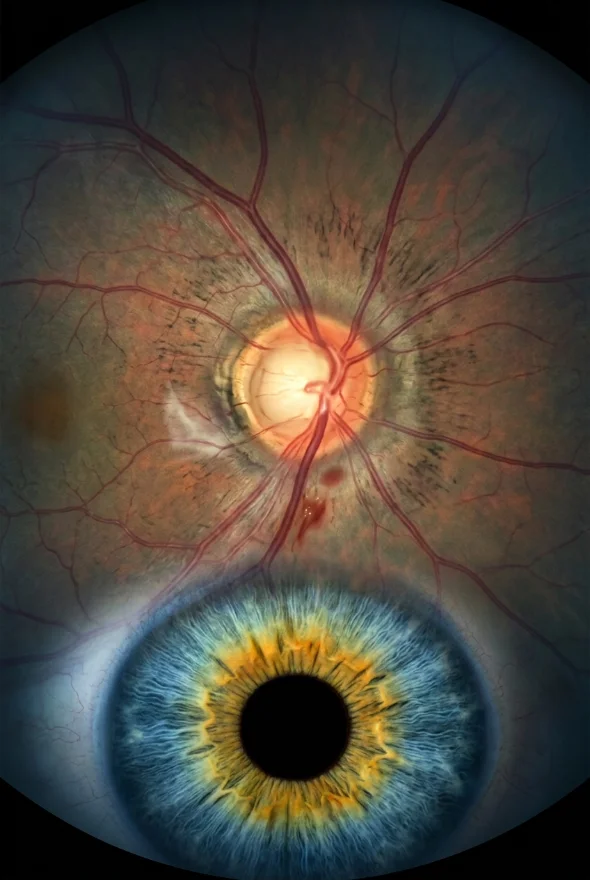
Trabeculectomy makes a tiny trapdoor in the white of the eye so fluid drains into a small blister (bleb) hidden under the upper eyelid, lowering eye pressure to protect the optic nerve. It takes about one to two hours under local anaesthetic, and recovery takes several weeks of check-ups. Trabeculotomy opens the eye's own drain instead, with no bleb. In Istanbul, Prof. Dr. Ahmet Satıcı performs both, from {{£ trabeculectomy price}} per eye; hotel and transfers are extra.
What is trabeculectomy, and how does the surgery work?
Trabeculectomy is a glaucoma operation that builds a new drainage route for the fluid inside the eye. In glaucoma, the eye's natural drain (the trabecular meshwork) lets fluid out too slowly, the pressure builds up and, over time, the optic nerve is damaged. Trabeculectomy bypasses that blocked drain. It does not cure glaucoma and cannot bring back sight that has already been lost, according to Glaucoma UK, but for most people it lowers eye pressure well and protects the vision that remains.
Trabeculectomy surgery is done through the microscope in an operating theatre, usually under local anaesthetic, so you are awake but your eye is numb. Glaucoma UK says it usually takes one to two hours; one NHS patient leaflet gives 70–100 minutes. The American Academy of Ophthalmology's EyeWiki describes these steps:
- A pocket is opened under the conjunctiva, the thin clear skin over the white of the eye, high up where the upper eyelid will cover it.
- A partial-thickness flap is made in the sclera (the white of the eye), hinged at the edge of the cornea, like a small trapdoor.
- A tiny opening (sclerostomy) is made under the flap into the front chamber of the eye. Many surgeons also make a small hole at the edge of the iris (peripheral iridectomy) to stop the iris blocking the opening.
- Anti-scarring medicine is applied. Mitomycin C or 5-fluorouracil is placed on the tissue for between 30 seconds and 5 minutes, because the body's natural healing would otherwise scar the new drain shut. Mitomycin C is stronger and tends to give lower pressures.
- The flap is closed with fine stitches (usually 9-0 or 10-0 nylon) that are tight enough to stop the pressure falling too low, but can be loosened, removed or cut with a laser in the following weeks to fine-tune the flow.
- The conjunctiva is sutured back. Fluid now trickles out under the flap and collects in a small blister under the conjunctiva, called the bleb, where it is absorbed by the surrounding tissue.
The AAO notes that the bleb is usually hidden under the upper eyelid and cannot be seen. In the UK, NICE recommends glaucoma surgery with this kind of anti-scarring "augmentation" for people with advanced open-angle glaucoma.
Trabeculectomy can also be combined with cataract surgery in one operation in suitable eyes. Your surgeon discusses this if you also have a cataract, because the NHS leaflet notes that trabeculectomy can speed up cataract formation, and a later cataract operation is usually done at least six to 12 months after it.
Where it takes place: in a fully equipped, Ministry of Health–licensed operating theatre in Istanbul, with {{anti-scarring agent and suture technique used}}.
What is trabeculotomy, and how is it different?
Trabeculotomy opens the eye's own drainage canal instead of building a new one. The surgeon passes a fine instrument or thread into Schlemm's canal, the circular channel just behind the trabecular meshwork, and tears or cuts through the meshwork so fluid can reach the eye's natural outflow vessels. Because the fluid stays inside the eye's normal plumbing, there is no bleb, which removes the lifelong bleb-related risks of trabeculectomy, but the pressure usually falls less.
Trabeculotomy is used in two main ways:
- In babies and children with congenital glaucoma. EyeWiki describes angle surgery as the main treatment for primary congenital glaucoma. Trabeculotomy from outside the eye (ab externo) is preferred when the cornea is cloudy, with reported success of 40–80%, compared with 30–65% for goniotomy. When these fail, a combined trabeculotomy–trabeculectomy may be done.
- In adults, from inside the eye (ab interno). Modern versions such as gonioscopy-assisted transluminal trabeculotomy (GATT) are done through tiny corneal openings, like cataract surgery, and belong to the MIGS family. In one study summarised by EyeWiki, GATT succeeded in 87% of eyes with open-angle glaucoma at 12 months, with average pressure falling from 24.9 to 12.1 mmHg. Most studies follow patients for only one to two years.
Trabeculotomy steps (traditional ab-externo technique)
- A small flap of conjunctiva is opened, as for trabeculectomy.
- A partial-thickness flap is made in the white of the eye.
- Under high magnification, the surgeon finds Schlemm's canal underneath.
- A trabeculotome probe, or a thread or microcatheter for a full 360° treatment, is passed along the canal.
- The instrument is turned or the thread pulled into the front chamber, opening the meshwork.
- The flaps are closed with fine stitches.
In the ab-interno version (GATT), steps 1–2 are replaced by a tiny corneal opening, and the surgeon threads the canal while looking at the drainage angle through a special mirrored lens.
The most common side effect is bleeding into the front of the eye (hyphaema). EyeWiki calls it the most common finding after ab-interno trabeculotomy, usually temporary; one NHS leaflet reports it in 38% of patients during an ab-interno trabeculotomy, almost always clearing within one to three weeks.
Who is trabeculectomy for?
Trabeculectomy is for people whose glaucoma is not controlled, or is still getting worse, despite drops or laser. EyeWiki lists the main reasons: eye pressure that is not low enough on medication, or real barriers to using drops every day. It is especially useful when glaucoma is moderate to advanced and the optic nerve needs a low target pressure, because it can reach lower pressures than most other options.
Trabeculectomy may suit you if:
- your eye pressure stays above your target despite drops and SLT laser
- your visual field tests show your glaucoma is still progressing
- you have advanced glaucoma and your doctor wants a low target pressure
- you cannot tolerate or manage glaucoma drops
- you need a second opinion before trabeculectomy has been booked at home
Trabeculectomy is less suitable, or riskier, if you have:
- extensive scarring of the conjunctiva at the top of the eye from previous surgery (EyeWiki)
- blood-thinning treatment that cannot be safely paused, which raises the bleeding risk
- glaucoma caused by abnormal new vessels (neovascular) or by uveitis, previous eye operations, or young age, which EyeWiki lists as risk factors for the drain scarring up. In these eyes a tube (drainage device) may be the better choice.
Trabeculotomy suits congenital and childhood glaucoma, and selected adults with open-angle glaucoma who want a bleb-free operation and do not need a very low pressure.
Before any decision, your surgeon measures your eye pressure (tonometry), corneal thickness and drainage angle, repeats your visual field and scans your optic nerve.
Not for emergencies. Trabeculectomy is a planned operation. A sudden painful red eye with blurred vision, haloes around lights, headache or nausea can be acute angle-closure glaucoma and needs same-day care from your local eye emergency service.
Trabeculectomy vs trabeculotomy vs SLT and MIGS
Trabeculectomy lowers pressure the most but has the longest recovery; trabeculotomy and MIGS are gentler with smaller effects; SLT is a laser with no cut at all.
| Trabeculectomy | Trabeculotomy (ab externo or GATT) | MIGS stent | SLT laser | |
|---|---|---|---|---|
| What it does | New drain under a scleral flap into a bleb | Opens the eye's own drain (Schlemm's canal) | Tiny stent in the drain, usually with cataract surgery | Laser stimulates the drain, no cut |
| Bleb? | Yes, lifelong | No | No | No |
| Typical stage | Moderate to advanced, or failed drops/laser | Childhood glaucoma; selected adults | Mild to moderate | Ocular hypertension, early to moderate |
| Anaesthetic and time | Local; about 1–2 hours | Depends on technique and age (children have a general anaesthetic) | Adds minutes to cataract surgery | Numbing drops; about 10–15 minutes per eye |
| Pressure effect | Largest; can reach low teens | Moderate | Moderate (≥20% in most trial eyes) | 20–30% lower |
| Recovery | Weeks; frequent checks and stitch adjustment | Days to weeks; temporary bleeding common | Days | Next day for most |

Has SLT been tried first? Selective laser trabeculoplasty on the NHS
Many people reading about trabeculectomy have not yet had laser. In the UK, selective laser trabeculoplasty (SLT) is a first-line NHS treatment: NICE guideline NG81 recommends offering 360° SLT first for newly diagnosed open-angle glaucoma that is not advanced, and for ocular hypertension of 24 mmHg or more when treatment is needed. In the UK LiGHT trial, 74.2% of people treated with SLT first needed no drops at three years, and over six years the SLT-first group needed fewer trabeculectomies (13 vs 32 eyes).
SLT in brief, according to EyeWiki: a 532 nm laser treats the pigmented cells of the drain in 3-nanosecond pulses, typically lowers pressure by 20–30%, and can be repeated. Selective laser trabeculoplasty side effects are usually short-lived: blurred vision for a few hours, an ache or headache, mild inflammation and a temporary pressure rise (more than 5 mmHg in about 10% of eyes or fewer when a preventive drop is used). Small adhesions in the drainage angle form in about 1.1%.
Selective laser trabeculoplasty price with us: from {{£ SLT price}} per eye. SLT is usually not enough for advanced glaucoma, which is where trabeculectomy comes in.
Trabeculectomy cost in Istanbul: price and what is included
With Laser Istanbul Clinic, trabeculectomy starts from {{£ trabeculectomy price}} per eye. Prof. Dr. Satıcı confirms your exact price in writing after reviewing your eye reports, pressure readings and scans, before you book anything.
| Treatment | Price with Laser Istanbul Clinic |
|---|---|
| Trabeculectomy with anti-scarring medicine, per eye | from {{£ trabeculectomy price}} |
| Combined cataract surgery and trabeculectomy, per eye | from {{£ cataract + trabeculectomy price}} |
| Trabeculotomy (ab externo or GATT), per eye | from {{£ trabeculotomy price}} |
| Glaucoma examination and second opinion only | {{£ second-opinion examination price}} |
Your treatment price includes:
- a full glaucoma examination: eye pressure, corneal thickness, drainage-angle check, visual field and OCT scan of the optic nerve
- surgery by your named surgeon
- medication and eye drops for your recovery
- follow-up checks in Istanbul with the same surgeon, including stitch adjustments during your stay
- a personal interpreter, a dedicated coordinator and remote follow-up after you return home
Not included: flights, hotel and airport transfers. Hotel and transfers are a separate charge, and we arrange them for you if you ask. Because trabeculectomy needs several early check-ups, your hotel stay is longer than for laser or cataract surgery (see below). Your long-term glaucoma checks continue with your own eye doctor at home, and we send them your full surgical report in English.

Your trabeculectomy surgery, step by step
- Free online review
Send your latest pressure readings, visual fields, OCT reports, a list of your drops and any letter recommending surgery. Prof. Dr. Satıcı tells you whether trabeculectomy, trabeculotomy, a tube, laser or a change of drops looks most suitable, and sends a written quote.
- Plan your stay
NHS patient leaflets schedule checks one day, one week and two weeks after trabeculectomy, and some trusts see patients weekly for the first four weeks. Plan to stay in Istanbul for about {{days in Istanbul for trabeculectomy}}; your surgeon agrees which later checks your home eye doctor can do. Ask your own doctor before surgery about any blood thinners.
- Full glaucoma examination (day 1)
Pressure, corneal thickness, gonioscopy, visual field and OCT. If surgery is not right for you, your surgeon tells you and explains the alternatives.
- Surgery day
Local anaesthetic numbs the eye; the operation takes about one to two hours. You go back to your hotel the same day with a protective shield over the eye. Do not drive.
- Next-day check
Your surgeon checks the pressure, the bleb and the front of the eye, and starts your drop schedule.
- Fine-tuning visits
Over the following days and weeks, stitches may be loosened, removed or cut with a laser, the bleb massaged, or anti-scarring injections given. An NHS leaflet stresses that these adjustments are common and do not mean the operation has failed.
- Fly home and stay in touch
Glaucoma UK says it is safe to fly after glaucoma surgery; the reason to wait is your early follow-up, not the flight. Your coordinator stays in touch, your surgeon reviews your progress remotely, and your English report goes to your home eye doctor.
Recovery and living with a trabeculectomy bleb
Recovery from trabeculectomy takes several weeks, and the eye may look red and swollen at first. Vision is often blurred for a while and may fluctuate as the pressure settles; Glaucoma UK advises waiting three months before changing your glasses.
-
First days
Gritty, uncomfortable, watery eye; a few days for discomfort to settle. Shield at night.
-
First 2 weeks
Wear the shield at night every night; do not press on the eye, bend down or lift anything heavy. Keep your head above heart level. Wash hair leaning backwards. No eye make-up. About two weeks off work.
-
Weeks 1–4
Frequent checks; stitches adjusted as needed. No swimming for at least a month. No strenuous exercise until your surgeon agrees.
-
Up to about 3 months
Antibiotic drops for around six weeks and steroid drops tapered over about ten weeks, in one NHS regime. Do not rub the eye.
-
3 months onward
Vision has usually settled; a new glasses prescription can be checked. Regular glaucoma checks continue for life.
Drop schedules and restrictions are from NHS patient leaflets and Glaucoma UK; your surgeon gives you your personal plan.
Living with a trabeculectomy bleb long term
Once healed, the bleb sits under the upper eyelid and usually cannot be seen (AAO). Three things matter for life:
- Know the warning signs of bleb infection. Infection can happen months or years later. Seek urgent eye care the same day if the operated eye becomes red, sticky, painful or light-sensitive, or your vision drops.
- Never stop your glaucoma checks. The new drain can still scar over time, so your pressure, optic nerve and visual field still need regular review.
- Tell any eye doctor you have had a trabeculectomy, before contact lens fitting, cataract surgery or any other eye treatment.
Trabeculectomy success rates
Trabeculectomy lowers eye pressure well for most people, but no surgeon can promise you will never need drops again.
- NHS audit figures: one NHS trust reports that 86.1% of its patients had an eye pressure under 21 mmHg two years after trabeculectomy (80% nationally), and that pressure fell by at least a third in 66% at one year. About one in three still need some drops.
- Another NHS leaflet quotes success in about 8 out of 10 patients.
- Trials summarised by EyeWiki: in the Tube Versus Trabeculectomy (TVT) study, trabeculectomy with mitomycin C gave average pressures of 12.7, 12.1 and 13.3 mmHg at one, two and three years, with failure rates of 13.9%, 28.2% and 30.7%. In the CIGTS study, average pressure stayed at 14–15 mmHg over five years.
- First operation in eyes with no previous surgery: the Primary Tube Versus Trabeculectomy study of 242 patients found trabeculectomy with mitomycin C had a lower probability of failure than a tube at five years (35% vs 42%), with similar pressure and vision, and tube patients needed more drops.
Risks of trabeculectomy and trabeculotomy
Trabeculectomy is more effective than gentler options, and it also carries more risk. Your surgeon explains your personal risks in writing and through your interpreter before you sign anything.
Early complications in the TVT study (trabeculectomy with mitomycin C), as summarised by EyeWiki:
- leak from the wound: 11%
- shallow front chamber: 10%
- bleeding in the front of the eye (hyphaema): 8%
- fluid under the choroid (choroidal effusion): 13% early
- pressure too low affecting the macula (hypotony maculopathy): 4%
- bleb infection or infection inside the eye: 3%
- bleeding behind the retina (suprachoroidal haemorrhage): 3%
- a walled-off, poorly draining bleb: 6%
Other risks from NHS patient leaflets:
- Infection inside the eye in about 1–2 in 100 people, a risk that lasts as long as the bleb.
- Vision: about 1 in 10 patients have vision one line lower on the eye chart at one year. Severe loss of vision is rare.
- Cataract: trabeculectomy can speed up cataract formation.
- Droopy upper eyelid (ptosis) was seen in 12% in the CIGTS study.
- More treatment: extra stitch adjustments, injections or another operation may be needed if the drain scars.
Trabeculotomy avoids bleb problems. Its main risks are temporary bleeding in the front of the eye, a short pressure spike in the first two weeks and, rarely, low pressure or infection (EyeWiki). One EyeWiki comparison of trabeculectomy with an ab-interno angle procedure found trabeculectomy more successful at two years (76.1% vs 22.4%) but with far more complications (35.3% vs 4.3%), which is the trade-off your surgeon weighs for your eye.
Trabeculectomy: frequently asked questions
Yes, trabeculectomy is a significant eye operation, although it is done as day surgery under local anaesthetic. It takes about one to two hours, needs several check-ups in the first weeks and about two weeks off work, and creates a bleb that stays for life. It is chosen when gentler treatments are not enough, because it lowers pressure more than they do.
The bleb is a small blister under the conjunctiva, usually high up under the upper eyelid, where fluid from the new drain collects and is absorbed. It is a sign the operation is working. Once healed it is usually hidden and cannot be seen, but it carries a small lifelong risk of infection.
With Laser Istanbul Clinic, trabeculectomy starts from {{£ trabeculectomy price}} per eye. This includes your glaucoma examination and scans, surgery by Prof. Dr. Satıcı, medication, follow-up checks in Istanbul, an interpreter, a coordinator and remote follow-up. Flights, hotel and airport transfers are extra.
Yes, trabeculectomy is a standard NHS glaucoma operation, and NICE recommends surgery with anti-scarring medicine for advanced open-angle glaucoma. Patients who contact us usually want a second opinion before surgery, a fixed date, or cataract and glaucoma surgery planned together in one trip.
Longer than for most eye operations: NHS leaflets schedule checks at one day, one week and two weeks, and some see patients weekly for four weeks. Plan about {{days in Istanbul for trabeculectomy}}. Glaucoma UK says flying itself is safe after glaucoma surgery; your surgeon clears you once the pressure is stable.
Many people stop their glaucoma drops, but about one in three still need some, according to an NHS trust audit. You also use antibiotic and steroid drops for several weeks after surgery. Never stop any drops on your own.
No. Trabeculectomy protects the sight you have; Glaucoma UK states that vision already lost to glaucoma cannot be recovered. Vision is often blurred for some weeks, and about 1 in 10 people end up one line lower on the chart.
Once the eye has healed, daily life is usually normal again, and about two in three people in one NHS audit needed no glaucoma drops. The main lifelong rules are to know the signs of bleb infection (a red, sticky, painful eye or blurred vision needs same-day care) and keep every glaucoma check. You can read our patients' own experiences on our reviews page.
No. Trabeculotomy opens the eye's existing drain, Schlemm's canal, with a probe or thread, so no bleb forms; trabeculectomy builds a new drain with a bleb. Traditional trabeculotomy is mainly used for childhood glaucoma, while the ab-interno version (GATT) is used in adults.
Blurred vision for a few hours, a short ache or headache, mild inflammation and a temporary rise in pressure are the usual ones. Small adhesions in the drain form in about 1.1% of eyes (EyeWiki). Serious damage to vision is very rare.
Other glaucoma treatments in Istanbul
If trabeculectomy feels like too big a step, or your glaucoma is still mild, a gentler option may be enough.
SLT laser and MIGS stents
SLT is a 10–15-minute laser with no cut, and MIGS places a tiny stent in the drain, usually during cataract surgery. Both suit mild to moderate open-angle glaucoma and recover in days.
MIGS, SLT laser & glaucoma stents in IstanbulAll glaucoma options
From drops and laser to tubes, how glaucoma is diagnosed and treated, and which option suits which stage.
Glaucoma treatment & surgery in TurkeySources for the facts on this page
- EyeWiki (American Academy of Ophthalmology), Trabeculectomy: definition (ostium under a partial-thickness scleral flap); indications; contraindications (limited life expectancy, extensive superior conjunctival scarring, anticoagulation); local or general anaesthesia; scleral flap hinged at limbus; 9-0 or 10-0 nylon sutures; peripheral iridectomy; fornix- vs limbus-based flaps; MMC and 5-FU applied 30 seconds to 5 minutes, MMC more potent with lower IOPs; postoperative steroids and antibiotics; follow-up day 1, 1 week, then every 1–2 weeks for two months; laser suture lysis; success without antimetabolites 48%/40% at 3/5 years; CIGTS IOP 14–15 mmHg over 5 years; TVT (MMC) mean IOP 12.7/12.1/13.3 mmHg and failure 13.9%/28.2%/30.7% at 1/2/3 years; failure risk factors (previous intraocular surgery, neovascular/uveitic glaucoma, Black race, young age); complications in CIGTS (ptosis 12%) and TVT (wound leak 11%, shallow AC 10%, hyphema 8%, choroidal effusion 13% early, hypotony maculopathy 4%, endophthalmitis/blebitis 3%, suprachoroidal haemorrhage 3%, encapsulated bleb 6%). https://eyewiki.org/Trabeculectomy
- EyeWiki (AAO), Ab Interno Trabeculectomy and Trabeculotomy: ab-interno trabeculotomy increases outflow without a bleb; GATT technique (microcatheter or suture advanced circumferentially in Schlemm's canal); GATT 87% success at 12 months in POAG (Faria et al.), IOP 24.9 to 12.1 mmHg; hyphema most common, usually transient; IOP spike between day 4 and week 2; rare hypotony and endophthalmitis; trabeculectomy 76.1% vs ab-interno 22.4% success at two years, complications 35.3% vs 4.3%; most studies limited to 12–24 months. https://eyewiki.org/Ab_Interno_Trabeculectomy_and_Trabeculotomy
- EyeWiki (AAO), Primary Congenital Glaucoma: angle surgery is the primary treatment; goniotomy success 30–65%; trabeculotomy ab externo (probe or 360° suture) 40–80%, preferred when the cornea is cloudy; combined trabeculotomy–trabeculectomy when needed. https://eyewiki.org/Primary_Congenital_Glaucoma
- EyeWiki (AAO), Laser Trabeculoplasty: SLT 532 nm frequency-doubled Q-switched Nd:YAG, 3 ns pulses; IOP spike >5 mmHg in about 10% or less with prophylaxis; PAS 1.1%; repeatable; effect judged at 6–8 weeks. https://eyewiki.org/Laser_Trabeculoplasty (20–30% IOP reduction as cited on the sibling MIGS/SLT page from the same article)
- American Academy of Ophthalmology, Glaucoma Treatment: trabeculectomy makes a tiny flap in the sclera and a filtration bleb, usually hidden under the upper eyelid; drainage devices; laser trabeculoplasty; iridotomy. https://www.aao.org/eye-health/treatments/glaucoma-treatment
- Glaucoma UK, Trabeculectomy surgery: drains fluid into a bleb under the surface of the eye; local anaesthetic; usually one to two hours; reduces IOP well for most people; lost vision cannot be recovered; time off work; wait three months before changing glasses; several follow-up appointments. https://glaucoma.uk/about-glaucoma/treatments-surgery/trabeculectomy-surgery/
- Glaucoma UK, Flying with glaucoma: safe to fly after glaucoma surgery but plan around follow-up appointments. https://glaucoma.uk/care-support/care-support-flying-with-glaucoma/ (as cited on the glaucoma pillar page)
- The Dudley Group NHS Foundation Trust, Glaucoma drainage surgery (trabeculectomy): 70–100 minutes; 86.1% IOP under 21 mmHg at 24 months vs 80% nationally; at least one-third IOP reduction in 66% at one year; about one-third still need drops; drops for about three months; infection inside the eye about 1–2 in 100; about 10% lose one line at one year; visits at one day, one week and two weeks; about two weeks off work; shield at night for about two weeks; no pressure on the eye, bending or heavy lifting for two weeks; stitch adjustment and anti-scarring injections; cataract risk, later cataract surgery usually after 6–12 months; urgent signs. https://www.dgft.nhs.uk/pil/glaucoma-drainage-surgery-trabeculectomy/
- Hull University Teaching Hospitals NHS Trust, Trabeculectomy patient leaflet: day surgery under local anaesthetic; about 80% success; antibiotic drops for 6 weeks, steroid drops tapered to week 10–11; no swimming for at least one month; head above heart level; shield at night for several weeks; no rubbing for 3 months; no make-up initially; backwash hair for two weeks; at least two weeks off work; weekly visits for four weeks; bleb manipulation common and not a sign of failure. https://www.hey.nhs.uk/patient-leaflet/trabeculectomy/
- The Dudley Group NHS Foundation Trust, Trabeculotomy (MIGS): hyphaema in 38% during ab-interno trabeculotomy, resolving within one to three weeks. https://www.dgft.nhs.uk/pil/trabeculotomy-migs-minimally-invasive-glaucoma-surgery/ (as cited on the glaucoma pillar page)
- American Academy of Ophthalmology, Fewer glaucoma surgical failures seen with trabeculectomies vs tube surgeries (Primary Tube Versus Trabeculectomy study, Ophthalmology 2022): 242 patients with no previous eye surgery; 5-year probability of failure 35% trabeculectomy vs 42% tube; similar IOP and visual acuity; more medications with tubes. https://www.aao.org/education/editors-choice/fewer-glaucoma-surgical-failures-seen-with-trabecu
- NICE, Glaucoma: diagnosis and management (NG81, updated January 2022): 360° SLT first for newly diagnosed non-advanced COAG and for OHT ≥ 24 mmHg at risk of visual impairment; surgery with pharmacological augmentation (MMC) for advanced COAG. https://www.nice.org.uk/guidance/ng81/chapter/Recommendations (as verified for the glaucoma pillar and MIGS/SLT pages)
- Gazzard G, et al. LiGHT trial, Lancet 2019 (74.2% of SLT-first patients drop-free at 3 years) and Ophthalmology 2023 six-year results (trabeculectomy 13 vs 32 eyes). https://pubmed.ncbi.nlm.nih.gov/30862377/ · https://www.sciencedirect.com/science/article/pii/S0161642022007321
Find out whether trabeculectomy is right for your eye, free
Send us your latest eye-pressure readings, visual field and OCT reports and the drops you use. Prof. Dr. Satıcı will tell you whether trabeculectomy, trabeculotomy, laser or a stent suits you, and what it would cost, with no obligation.
3 eye surgeons
Your case is reviewed by a named surgeon, not a salesperson. Reply within {{response time}}.
 Prof. Dr. Ahmet Satıcı
 Doç. Dr. Muhammet Derda Özer
 Op. Dr. Aysan Bayram