
- Home: eye surgery in Istanbul
- Knowledge centre
- Laser eye surgery guides
Laser Eye Surgery Guide: Every Question, Answered by Our Laser Surgeons
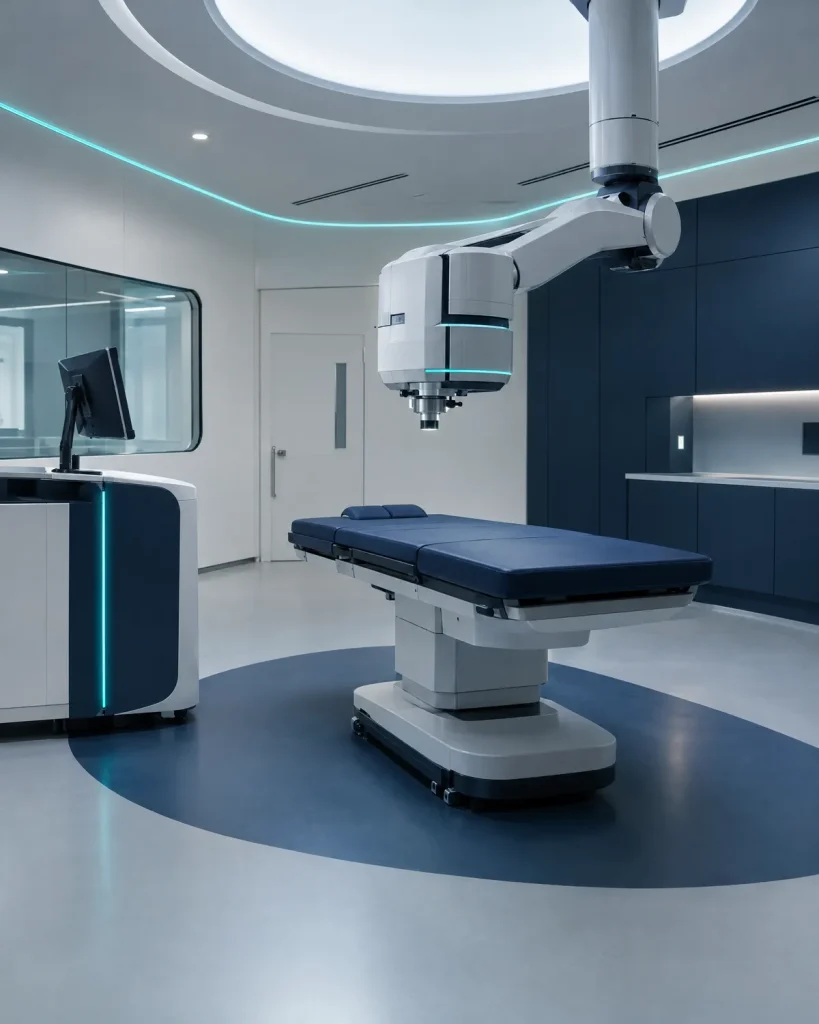
This laser eye surgery guide collects our plain-English articles on every stage of the decision: choosing between LASIK, SMILE Pro and PRK, checking whether you are suitable, recovery, risks and long-term results. Laser eye surgery reshapes the cornea to correct short sight, long sight and astigmatism, and more than 95% of patients are satisfied with the outcome, according to the Royal College of Ophthalmologists. Our laser surgeons, Prof. Dr. Ahmet Satıcı and Op. Dr. Aysan Bayram, review the guides.
Laser eye surgery, also called laser vision correction, uses a laser to change the shape of the cornea, the clear window at the front of the eye, so that you depend less on glasses or contact lenses. The Royal College of Ophthalmologists (RCOphth) describes three families of treatment: LASIK, lenticule extraction (SMILE) and surface laser (PRK, LASEK and Trans-PRK). Visual results at three months are equally good for all of them; the real differences are how fast you recover, how your cornea is treated and who each method suits.
That is why most questions people ask before laser eye surgery are not "does it work?" but "which one, is it right for me, and what will the weeks afterwards be like?" Each guide below answers one of those questions, explained in plain language with the numbers that matter and the source behind every figure.
The guides are grouped the way most people research: first choosing a treatment, then checking suitability, then safety and long-term results, and finally recovery and travel. They are written with, and reviewed by, the surgeons who perform laser treatment in Istanbul: Prof. Dr. Ahmet Satıcı, former Head of Ophthalmology at Harran University with 21 published eye-research papers, and Op. Dr. Aysan Bayram, a laser, cataract and retina surgeon who lectures at Nişantaşı and Bilgi universities. Questions about keratoconus and thin or irregular corneas go to our cornea specialist, Doç. Dr. Muhammet Derda Özer (Doç. = Associate Professor).
If you already know you want treatment, the main laser page explains methods, prices and the trip to Istanbul.
Laser eye surgery guides, by question
1. Choosing the right type of laser eye surgery
LASIK vs SMILE vs PRK: which laser treatment is right for you?
The starting point for most readers. LASIK lifts a thin flap and gives the fastest visual recovery; SMILE removes a small disc of tissue through a keyhole opening with no flap; PRK treats the surface and needs about a week for the skin layer to regrow. The RCOphth says LASIK patients are often back at work the next day, while surface laser patients may need a week or longer to reach the driving standard.
LASIK vs SMILE vs PRK: which laser treatment is right for you?SMILE Pro vs ReLEx SMILE vs Femto-LASIK: what changed with VisuMax 800
What is actually new in SMILE Pro. According to EyeWiki (American Academy of Ophthalmology), both SMILE versions work through a 2–3 mm opening, and on the VisuMax 800 the laser part takes about 8–10 seconds per eye, with automatic centring and eye-rotation correction.
SMILE Pro vs ReLEx SMILE vs Femto-LASIK: what changed with VisuMax 800No-touch laser (Trans-PRK) vs LASIK vs SMILE: pros, cons, recovery
For people drawn to a treatment where nothing but the laser touches the eye. Trans-PRK removes the skin layer and reshapes the cornea in one step, which the RCOphth says shortens recovery by 1 to 2 days compared with PRK and LASEK. It is still a surface treatment, so the first days are sore.
No-touch laser (Trans-PRK) vs LASIK vs SMILE: pros, cons and recoveryWhat is RLE? Refractive lens exchange vs laser explained
Not every vision problem is best fixed on the cornea. Refractive lens exchange replaces the eye's natural lens with an implant; the RCOphth notes it is often preferred to laser in older patients, in whom early cataract is common.
What is RLE? Refractive lens exchange vs laser explainedWhy not laser after 45? Laser vs lens surgery by age
Age changes the best answer. The American Academy of Ophthalmology (AAO) explains that LASIK cannot correct presbyopia and that almost everyone with excellent distance vision needs reading glasses from around 40. This guide compares blended-vision laser and lens surgery decade by decade.
Why not laser after 45? Laser vs lens surgery by age2. Am I suitable for laser eye surgery?
Laser eye surgery for astigmatism and high prescriptions
How high is too high? The RCOphth says you are most likely to be suitable with up to −10.00D of short sight, up to +4.00D of long sight and up to ±6.00D of astigmatism, though some people outside these ranges can still be treated and some inside them are better served by a lens implant.
Laser eye surgery for astigmatism and high prescriptionsCan astigmatism be lasered?
Yes, in most cases: astigmatism is corrected in the same treatment as short or long sight. The short answer, with the cases where it can't be (such as keratoconus), is in this guide.
Can astigmatism be lasered?Does insurance pay for laser eye surgery? (NHS, GKV, Zorgverzekering, Mutuelle)
Usually not. In the UK, the RCOphth states that surgery to reduce the need for glasses is not an NHS procedure and is not covered by private health insurance. In Germany, statutory health insurance does not pay for it, and in the Netherlands basic insurance treats it as cosmetic. The guide covers each country and the exceptions.
Does insurance pay for laser eye surgery? (NHS, Germany, the Netherlands, France)3. Safety, results and the long term
Is laser eye surgery 100% safe? Risks, side effects and success rates
No surgery is 100% safe, but serious problems are rare. The RCOphth puts the chance of needing a corneal transplant after laser at less than 1 in 5,000, and notes that about 1 in 3,000 contact-lens wearers each year develops a serious corneal infection. This guide explains every risk honestly.
Is laser eye surgery safe? Risks, side effects and success ratesWill vision be 6/6 (20/20) after LASIK?
Often, but not always. The AAO reports that about 9 in 10 LASIK patients end up with vision between 20/20 and 20/40 (6/6 to 6/12) without glasses or contact lenses. Here is what affects your own chances.
Will my vision be 6/6 (20/20) after LASIK?What happens 10 years after LASIK?
Long-term studies are reassuring. In a series of 10-year studies by Alió and colleagues (American Journal of Ophthalmology, 2008), complications did not build up over time, and regression was linked to the size of the original correction.
What happens 10 years after LASIK?Can you have laser eye surgery twice?
Often, yes. The RCOphth says up to 1 in 10 patients need some form of additional surgery to get the best result, and that fine-tuning treatment is normally included for up to two years. Whether a second treatment is possible depends on how much cornea is left.
Can you have laser eye surgery twice?Dry eyes and halos after laser surgery: causes and fixes
The two side effects people notice most. According to the RCOphth, glare, halos and dry-eye symptoms are common early on, usually mild with modern lasers and improve within a few months; lasting problems are unusual. This guide explains why they happen and what helps.
Dry eyes and halos after laser surgery: causes and fixes4. Recovery, travel and everyday life
Laser eye surgery recovery: day-by-day timeline
What the first hours, days and months feel like after each method. Most prescription changes after three months are very small, but the RCOphth notes it can take up to two years for the result to stabilise fully.
Laser eye surgery recovery: day-by-day timelineFlying after laser eye surgery: when is it safe?
Most of our patients fly home 1–3 days after LASIK or SMILE, once their surgeon has checked their eyes. Surface laser needs more time, because the bandage contact lens usually comes out between day 4 and day 7.
Flying after laser eye surgery: when is it safe?Driving, sport and screens after laser eye surgery
Practical return dates. The RCOphth says gym and jogging can restart from day one, most surgeons advise no swimming for a week, and LASIK patients should avoid contact sports for at least a month. The NHS advises that you should not drive home after surgery.
Driving, sport and screens after laser eye surgeryLaser eye surgery explained: where to start
The first sentence of each guide answers the question; the rest gives you the detail. If you only have a few minutes, start here:
| If your question is… | Read first |
|---|---|
| "Which type of laser eye surgery is best for me?" | LASIK vs SMILE vs PRK |
| "Is it safe, and what can go wrong?" | Risks, side effects and success rates |
| "My prescription is high or I have astigmatism" | Astigmatism and high prescriptions |
| "I'm over 45 and need reading glasses" | Laser vs lens surgery by age |
| "How much time off do I need?" | Recovery day by day |
| "I'm travelling for surgery" | Flying after laser eye surgery |
Laser is not the only way to correct vision. If your scans show a thin or irregular cornea, read our keratoconus and cornea guides; if you are thinking about lens implants, see our lens and cataract guides. For side-by-side comparisons of every eye treatment, go to eye treatment comparisons, and for unfamiliar terms such as "dioptre", "lenticule" or "ectasia", use the eye glossary A–Z.
Laser eye surgery guide: frequently asked questions
There are three main types: LASIK (including blade-free Femto-LASIK), lenticule extraction (SMILE and SMILE Pro) and surface laser (PRK, LASEK and no-touch Trans-PRK). The RCOphth says visual results at three months are equally good for all of them. They differ in recovery speed, comfort in the first days and which eyes they suit, which is why your surgeon chooses after measuring your corneas.
Most adults over 18 with a stable prescription and healthy eyes. The RCOphth defines stable as no change greater than 0.5 dioptres in the last two years, and the AAO adds that over 21 is ideal because vision is more likely to have stopped changing. Keratoconus, very thin corneas, severe dry eye, cataract and some general health conditions can rule laser out, but other treatments are often possible.
The treatment itself is not painful, because it is done under numbing eye drops; you are awake and may feel pressure. The RCOphth says surgery on both eyes usually takes about half an hour and you go home the same day. After LASIK or SMILE the eyes feel gritty for a few hours; after surface laser they are usually very sore while the skin layer regrows over about a week.
It depends on the method. After LASIK many people are back at work the next day; recovery after SMILE may be slightly slower, and after surface laser it can take a week or longer to reach the driving standard (RCOphth). For every method, vision keeps settling over about three months.
Not on its own, because the need for reading glasses comes from the ageing lens inside the eye, not the cornea. From the mid-40s, the RCOphth explains, surgeons often set one eye for distance and the other for arm's length, which partly restores near vision. For many people over about 50, or with early cataract, lens replacement is the better option.
No. The RCOphth states that surgery to reduce the need for glasses or contact lenses is not an NHS procedure and is not covered by private health insurance. The NHS says laser may be offered only for eye conditions that could lead to loss of vision, or for sight problems that glasses or contact lenses cannot correct.
The change to your cornea is permanent, but your eyes can still change naturally over the years. The RCOphth notes that short sight and astigmatism usually stabilise in the late teens or early twenties, but natural prescription changes can happen at any age, so laser sometimes needs to be repeated. Reading glasses are needed from the 40s onwards by almost everyone, laser or not.
The laser guides are reviewed by Prof. Dr. Ahmet Satıcı and Op. Dr. Aysan Bayram, who perform laser eye surgery in a fully equipped, Ministry of Health–licensed operating theatre in Istanbul; cornea topics are reviewed by Doç. Dr. Muhammet Derda Özer. Every figure is taken from a named medical source, such as the RCOphth, the NHS, the AAO or the US Food and Drug Administration, and the review date is shown at the top of each guide.
Sources for the facts on this page
- *Medical facts (all opened and checked, 7 October 2026):**
- American Academy of Ophthalmology, LASIK — Laser Eye Surgery: 18 or older, ideally over 21; prescription stable; LASIK cannot correct presbyopia; almost everyone with excellent distance vision needs reading glasses after around age 40; about 9 in 10 achieve 20/20 to 20/40 without glasses or contacts. https://www.aao.org/eye-health/treatments/lasik
- American Academy of Ophthalmology, 10-year study finds LASIK safe, effective (Alió et al., American Journal of Ophthalmology, January 2008): no progressive accumulation of complications; regression related to the size of correction. https://www.aao.org/education/editors-choice/10year-study-finds-lasik-safe-effective
- EyeWiki (American Academy of Ophthalmology), Small Incision Lenticule Extraction (SMILE): 2–3 mm incision; SMILE on VisuMax 500 vs SMILE Pro on VisuMax 800; laser time about 8–10 seconds; automated centration and torsion correction. https://eyewiki.org/Small_Incision_Lenticule_Extraction_(SMILE)
- NHS, Laser eye surgery and lens surgery: not usually offered on the NHS except for conditions that could lead to loss of vision or sight problems not correctable with glasses or contact lenses; do not drive home after surgery. https://www.nhs.uk/tests-and-treatments/laser-eye-surgery-and-lens-surgery/
- US Food and Drug Administration, What should I expect before, during, and after surgery? (checked for consistency of recovery advice; no figure from it is quoted on this page beyond the general reference in the FAQ). https://www.fda.gov/medical-devices/lasik/what-should-i-expect-during-and-after-surgery
- *Project files:**
Have a question these guides don't answer? Ask a laser surgeon, free
Send your glasses or contact-lens prescription and any recent eye report. Prof. Dr. Satıcı or Op. Dr. Bayram will tell you whether laser is likely to suit your eyes, which method they would consider, or whether a lens treatment would be better. If you go ahead, your price is confirmed in writing before you travel: it covers your examination and scans, surgery, medication, follow-up checks in Istanbul, a personal interpreter, a coordinator and remote follow-up. Flights are not included, and hotel and airport transfers are a separate charge, arranged on request.
3 eye surgeons
Your case is reviewed by a named surgeon, not a salesperson. Reply within {{response time}}.
 Prof. Dr. Ahmet Satıcı
 Doç. Dr. Muhammet Derda Özer
 Op. Dr. Aysan Bayram