
- Home: eye surgery in Istanbul
- All eye treatments
- Laser eye surgery in Turkey
- No-touch laser (Trans-PRK)
No-Touch Laser Eye Surgery in Istanbul: Trans-PRK Explained
No touch laser eye surgery, known medically as Trans-PRK, corrects short sight, long sight and astigmatism without a blade, a flap, alcohol or any instrument touching your cornea. At Laser Istanbul Clinic it is planned and performed by Prof. Dr. Ahmet Satıcı or Op. Dr. Aysan Bayram, who measure your eyes first, explain whether surface laser really suits you, and confirm your full price in writing before you travel.
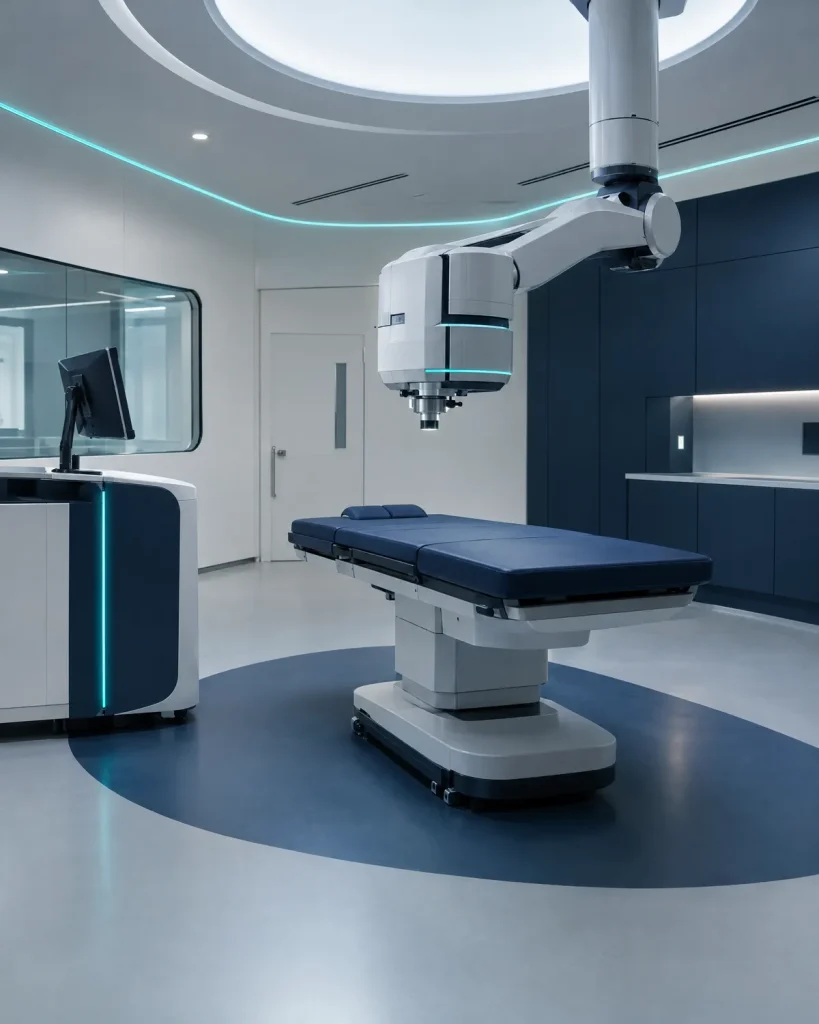
No-touch laser (Trans-PRK) is a surface laser treatment in which the excimer laser removes the cornea's skin layer and reshapes the cornea in one step. With no flap, it often suits thinner corneas and contact sports. Recovery is slower than LASIK: the eye is sore for a few days and driving vision takes a week or longer. In Istanbul, Prof. Dr. Satıcı or Op. Dr. Bayram treat both eyes from {{£ price}}; hotel and transfers are extra.
What is no-touch laser eye surgery (Trans-PRK)?
No-touch laser eye surgery is transepithelial photorefractive keratectomy, usually shortened to Trans-PRK, TransPRK or tPRK. It belongs to the surface laser family, alongside PRK and LASEK, which the Royal College of Ophthalmologists (RCOphth) lists as one of the three main types of laser vision correction used in the UK; the other two are LASIK and lenticule extraction (SMILE).
All laser vision correction works on the same principle. The cornea, the clear window at the front of your eye, does most of your eye's focusing. An excimer laser removes a precisely calculated, lens-shaped layer of tissue so that light focuses sharply on the retina again. What differs between methods is how the surgeon reaches that tissue.
How the three surface treatments differ. The cornea is covered by a thin, fast-healing skin layer called the epithelium. In every surface treatment this layer is removed, the cornea beneath is reshaped, and the skin layer then grows back. According to the RCOphth, all surface laser treatments produce similar results, and the only difference between them is the way the skin layer is removed:
- PRK: the surgeon removes the skin layer by hand with a fine instrument.
- LASEK: dilute alcohol is applied first to loosen the skin layer, which the surgeon then moves aside.
- Trans-PRK (no-touch): the excimer laser itself removes the skin layer as part of the reshaping treatment, in one continuous step. Nothing but the laser light touches the cornea.
Why "no-touch" matters. The RCOphth explains that in Trans-PRK the area of skin removed is reduced to the minimum needed to reshape the cornea beneath, and that this shortens recovery by 1 to 2 days compared with PRK and LASEK. A 2025 review in the Romanian Journal of Ophthalmology describes the main aims of the technique as less trauma to the surface, faster epithelial healing and less discomfort, without the alcohol or the instrument used in older methods.
What "no-touch" does not mean. Your eyelids are still held open with a small, gentle clip, numbing drops are used, and a soft bandage contact lens is placed on the eye at the end to protect it while it heals. "No-touch" refers to the cornea itself: no blade, no flap, no brush and no alcohol.
Technology we use: {{excimer laser platform name and Trans-PRK software}}, in a fully equipped, Ministry of Health–licensed operating theatre in Istanbul. Several excimer laser manufacturers now offer a single-step transepithelial treatment, and modern systems use eye trackers that follow small eye movements during the laser, so you do not need to worry about blinking or moving slightly. Before any treatment, your examination includes corneal topography and tomography, corneal thickness and a tear-film check.
Who is no touch laser eye surgery suitable for?
No-touch laser suits adults with a stable prescription whose corneas are healthy but perhaps too thin, or too exposed to knocks, for a LASIK flap. The RCOphth says you are most likely to be suitable for laser vision correction if you are over 18 and your prescription has changed by no more than 0.5 dioptres in the last two years, within these ranges:
| Prescription | Usual range for laser vision correction (RCOphth) |
|---|---|
| Short sight (myopia) | up to −10.00 D |
| Long sight (hyperopia) | up to +4.00 D |
| Astigmatism | up to ±6.00 D |
Some people outside these ranges can still be treated, and some inside them are better served by a lens implant. Within the surface laser family, your surgeon also looks at how much tissue the laser needs to remove, because deeper treatments for higher short sight carry a higher risk of corneal haze (see the risks section).
No-touch laser is often recommended if you have:
- a thinner cornea, where leaving more untouched tissue is safer than cutting a flap
- a job or sport with a risk of eye knocks, such as martial arts, rugby or boxing; the RCOphth notes that people can return to contact sports sooner after surface laser than after LASIK
- a preference for a flap-free treatment, or a corneal surface that is not ideal for a flap
- low to moderate short sight or astigmatism, where most of the published Trans-PRK research has been done
It is usually not the right choice if you have:
- keratoconus or a cornea whose shape suggests early keratoconus; this is reviewed by our cornea specialist
- severe or poorly controlled dry eye, or active eye infection or inflammation
- cataract or advanced glaucoma
- uncontrolled diabetes or autoimmune disease
- pregnancy or breastfeeding
- a need to drive or work within a few days of surgery; in that case Femto-LASIK or SMILE Pro may fit your plans better
A note on long sight. A 2025 systematic review in BMC Ophthalmology found that the evidence for Trans-PRK in hyperopia is still limited and that predictability is lower at higher corrections. If you are long-sighted, your surgeon discusses whether Femto-LASIK or, from your mid-40s, lens surgery would give a more reliable result.
Before your examination, stop wearing contact lenses so your cornea returns to its natural shape. The US FDA advises 2 weeks for soft lenses, 3 weeks for toric soft or rigid gas-permeable lenses and 4 weeks for hard lenses. Your coordinator confirms the timing for your lenses.
Trans-PRK vs PRK vs LASEK at a glance
| PRK | LASEK | No-touch Trans-PRK | |
|---|---|---|---|
| How the skin layer is removed | By the surgeon, with an instrument | Loosened with dilute alcohol, then moved aside | By the excimer laser, in the same step as the reshaping |
| Anything touching the cornea? | Yes (instrument) | Yes (alcohol and instrument) | No, only laser light |
| Size of the area of skin removed | Set by the surgeon | Set by the surgeon | Reduced to the minimum needed for the treatment |
| Recovery | Skin regrows in about a week | Similar to PRK | 1 to 2 days shorter than PRK and LASEK (RCOphth) |
| Vision at three months | Equally good for all types of laser vision correction (RCOphth) | Same | Same |
| What we offer | {{offered? yes/no}} | {{offered? yes/no}} | Our standard surface laser |
Research comparing the techniques directly is reassuring. A 2022 meta-analysis in the Journal of Ophthalmology pooled 12 studies of 1,711 eyes and found that Trans-PRK and conventional PRK gave comparable vision, accuracy and safety. Pain scores were lower after Trans-PRK and corneal haze was similar. The authors noted that most of the included studies had a high risk of bias, so the size of these differences is uncertain.
No touch laser eye surgery in Turkey: price and what is included
At Laser Istanbul Clinic, no-touch Trans-PRK starts from {{£ price}} for both eyes. Your surgeon confirms your exact price in writing after reviewing your prescription and scans, before you book anything.
For comparison, typical published prices for other laser methods, both eyes (2025–26):
| Method | UK private clinics | Istanbul (published package prices) | Laser Istanbul Clinic |
|---|---|---|---|
| Femto-LASIK | £3,000–5,600 | about $1,450–2,700 | from {{£ price}} |
| SMILE / SMILE Pro | £4,400–7,600 | about $2,000–3,450 | from {{£ price}} |
| No-touch Trans-PRK | not in our price data | not in our price data | from {{£ price}} |
UK and Istanbul figures are typical ranges published by clinics and price-comparison sites in 2025–26, not quotes. Published Istanbul prices are often packages that include a hotel; ours cover your medical treatment.
Your treatment price includes:
- full pre-operative eye examination and scans with your surgeon
- no-touch Trans-PRK on both eyes by your named surgeon
- medication and eye drops for your recovery, including the bandage contact lenses
- follow-up checks in Istanbul with the same surgeon, including bandage lens removal
- a personal interpreter, a dedicated coordinator and remote follow-up after you return home
Not included: flights, hotel and airport transfers. Hotel and transfers are a separate charge, and we can arrange them for you if you ask. Because surface laser needs a longer stay than LASIK, include the extra nights in your budget. In the UK, the RCOphth notes that laser vision correction is not available on the NHS and is not covered by private health insurance.
Touch-ups. The RCOphth notes that UK clinics normally include fine-tuning laser treatment for up to two years after surgery. Ask any clinic about this before you book. Our policy: {{enhancement / re-treatment policy and the period it covers}}.
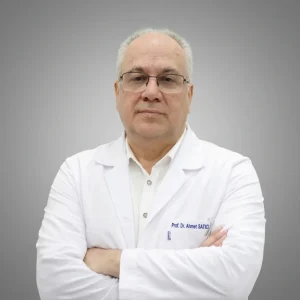
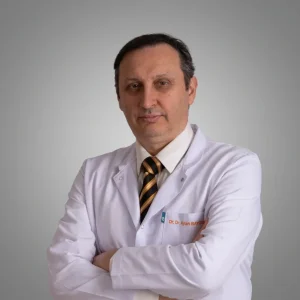
Your no-touch laser surgeons
You know which surgeon will treat you before you book, and the same surgeon examines you, operates on you and removes your bandage lenses.
Your no-touch laser journey, step by step
- Free online assessment
Send your glasses prescription and any eye reports. A surgeon tells you whether no-touch laser is likely to suit you, or whether another method would be better, and sends a written quote within {{response time}}.
- Book your dates
Surface laser needs a longer stay than LASIK, because the bandage contact lens usually comes out between day 4 and day 7 after surgery (RCOphth). Most patients plan about a week in Istanbul; your surgeon tells you how many nights to book.
- Full eye examination (day 1)
Corneal topography and thickness, refraction with and without dilating drops, a tear-film assessment and a retina check. If Trans-PRK is not right for you, your surgeon tells you and explains the alternatives.
- Surgery (day 1 or 2)
Numbing drops are used, and a small clip keeps your eyelids open. You look at a target light while the laser removes the skin layer and reshapes the cornea in one sequence, then a soft bandage contact lens is placed on each eye. Both eyes are usually treated in the same session, which takes about half an hour in total. You return to your hotel the same day and must not drive.
- The first days
Rest, use your drops exactly as prescribed and wear sunglasses outdoors. Your coordinator checks on you, and your surgeon sees you as planned.
- Bandage lens removal (around day 4–7)
Your surgeon checks that the skin layer has healed and removes the bandage lenses.
- Fly home and stay in touch
Your surgeon confirms when you are fit to fly. Back home, your coordinator stays in touch and your surgeon reviews your progress by video at agreed intervals. Your surgical report is provided in English for your optometrist.
Recovery after no-touch laser: what to expect day by day
Recovery after Trans-PRK is slower than after LASIK or SMILE, but faster than after PRK or LASEK. The RCOphth explains that the skin layer regrows over about a week and then smooths optically, completing the visual recovery over the next three months.
-
First hours
The eye feels comfortable at first, then becomes sore, watery and light-sensitive as the numbing wears off. The bandage contact lens protects the surface.
-
Days 1–3
The most uncomfortable period. EyeWiki notes that discomfort after surface laser is usually worst on the second and third days; the American Academy of Ophthalmology (AAO) says eye pain for 2–3 days is typical and usually manageable with painkillers. Vision is blurry.
-
Days 3–5
The skin layer closes. In the studies reviewed in BMC Ophthalmology (2025), 90–100% of eyes had healed within 72 hours after single-step Trans-PRK. Comfort improves quickly.
-
Days 4–7
Your surgeon removes the bandage lenses. Showering and hair-washing are fine once they are out (RCOphth). EyeWiki reports vision of about 20/30 to 20/50 at this stage, still improving.
-
Week 1–2
Most people return to screen work as vision allows. The RCOphth says you may need a week or longer before reaching the driving standard. No swimming for at least a week.
-
Up to 4 months
Steroid (anti-inflammatory) drops are often used for several weeks, sometimes up to 4 months, to reduce the risk of haze (EyeWiki). Protect your eyes from strong sunlight.
-
3 months
Vision is largely settled. Visual results at three months are equally good for all types of laser vision correction (RCOphth).
-
Up to 2 years
Small refinements continue; most changes after three months are very small, but full stabilisation can take up to two years (RCOphth).
Gym and jogging can usually restart early, and contact sports sooner than after LASIK, once your surgeon agrees. Do not rub your eyes, use lubricating drops often, and leave at least two minutes between different eye drops. Call your coordinator straight away if you have increasing pain, light sensitivity, redness or blurred vision, or if your eye is injured.
Risks and side effects of no-touch laser
Trans-PRK has the same main risks as other surface laser treatments. They are uncommon and mostly temporary, but you should know them before you decide.
Results. The RCOphth reports that over 95% of laser vision correction patients are satisfied with the outcome. In a 2016 study in the journal Medicine of 173 eyes treated with single-step Trans-PRK, 97% saw 20/20 or better without glasses at three months, compared with 94% after alcohol-assisted PRK. A 2026 meta-analysis in the European Journal of Ophthalmology (17 studies, 5,686 eyes) found no significant difference in efficacy or predictability between Trans-PRK and LASIK or SMILE, while LASIK showed a safety advantage in a subgroup with low to moderate short sight and astigmatism.
Common, usually temporary side effects:
- Pain and light sensitivity for the first few days while the skin layer heals.
- Blurred and fluctuating vision for the first weeks.
- Dry eye symptoms. The RCOphth notes that the tear film becomes less stable for a few months; most people stay comfortable with lubricating drops.
- Glare and halos at night, which usually improve within a few months.
- Red blotches on the white of the eye, which can take up to 6 weeks to fade.
Less common risks:
- Corneal haze, a mild cloudiness of the healing cornea. EyeWiki explains that it usually appears a few weeks after surgery, peaks at about one to two months and is more likely after deeper treatments, especially for short sight above −6.00 D, and with more UV exposure. Many surgeons apply a medicine called mitomycin C during surgery and prescribe steroid drops afterwards to reduce it. Wearing sunglasses outdoors helps; the AAO advises sun protection after surface laser.
- Under- or over-correction needing a touch-up. The RCOphth says up to 1 in 10 patients need some form of additional surgery to get the best result.
- Infection while the surface is healing, which is why the antibiotic drops and the bandage lens instructions matter.
- Serious, permanent loss of vision is rare. The RCOphth states that fewer than 1 in 5,000 patients need a corneal transplant to restore vision after laser surgery.
Pain: an honest answer. The 2022 meta-analysis found lower pain scores after Trans-PRK than after conventional PRK, but individual studies disagree: in the 2016 Medicine study, average pain was similar with both methods. Expect a few sore days, and plan for them.
Later in life, tell any eye doctor that you have had laser surgery. It can make eye-pressure readings for glaucoma read low, and it changes the calculations for future cataract surgery (RCOphth).
Your surgeon explains your personal risks in writing and through your interpreter before you sign anything.
No-touch laser eye surgery: frequently asked questions
No touch laser eye surgery is Trans-PRK (transepithelial photorefractive keratectomy), a surface laser treatment in which the excimer laser removes the cornea's skin layer and reshapes the cornea in one step. No blade, flap, alcohol or instrument touches the cornea. It corrects short sight, long sight and astigmatism, and the skin layer grows back within days.
With Laser Istanbul Clinic, no-touch Trans-PRK starts from {{£ price}} for both eyes, including your examination and scans, surgery, medication, follow-up checks, interpreter and coordinator. Hotel and transfers are extra, and surface laser needs a longer stay than LASIK. Your exact price is confirmed in writing after your free assessment.
The treatment itself does not hurt, because numbing drops are used. The first two to three days afterwards are usually sore, gritty and light-sensitive while the skin layer heals; drops and painkillers help. Pooled research suggests pain may be a little lower than after conventional PRK, but individual studies differ, so plan for a few uncomfortable days.
The skin layer usually heals within 3 to 5 days, and the bandage lens comes out between day 4 and day 7. The RCOphth says you may need a week or longer before reaching the driving standard, and vision keeps sharpening for about three months. Recovery is 1 to 2 days shorter than after PRK or LASEK.
Neither is better for everyone. LASIK gives faster recovery, often back to work the next day, while Trans-PRK avoids a flap, leaves more of the cornea untouched and allows an earlier return to contact sports. A 2026 meta-analysis found similar vision and accuracy with both. Your surgeon recommends one after measuring your corneas.
Only the way the skin layer is removed. In PRK the surgeon removes it with an instrument; in Trans-PRK the laser removes it as part of the same treatment, over the smallest possible area. The reshaping of the cornea and the long-term results are the same.
Most patients plan about a week, because the bandage contact lenses are usually removed between day 4 and day 7 after surgery. Your surgeon confirms the number of nights and when you are fit to fly after reviewing your case.
Usually yes. Both eyes are normally treated in one session, which keeps your trip short. Your surgeon may recommend treating one eye at a time if there is a medical reason.
The reshaping of the cornea is permanent, but your eyes can still change with age. Reading glasses in your 40s or 50s are caused by the natural lens ageing, not by the laser wearing off. If a touch-up is needed, surface laser can usually be repeated if enough corneal thickness remains.
Surface laser is often recommended for thinner corneas because no flap is cut, so more of the cornea stays untouched. It is not safe for every thin cornea: if your scans suggest keratoconus or weakness, laser may be ruled out. Doç. Dr. Özer, our cornea specialist, reviews borderline cases.
Yes, once your surgeon has checked that the surface has healed, usually after the bandage lenses are removed. Keep using your lubricating drops during the journey, as your surgeon advises.
No-touch laser vs LASIK vs SMILE
All three methods reshape the cornea with a laser, and the RCOphth notes that visual results at three months are equally good for all types of laser vision correction. The main differences are how the tissue is reached, how quickly you recover and which corneas each suits.
| No-touch Trans-PRK | Femto-LASIK | SMILE Pro / ReLEx SMILE | |
|---|---|---|---|
| How it works | Laser removes the skin layer, then reshapes the surface; no flap, no cut | Laser-made flap, then excimer reshaping beneath it | Femtosecond laser shapes a thin lens of tissue, removed through a small opening; no flap |
| Back to driving standard | A week or longer | Often the next day | Slightly slower than LASIK |
| Comfort in the first days | Sore for a few days | Gritty for a few hours | Gritty for a few hours |
| Contact sports | Sooner than LASIK | Wait at least 1 month | Sooner than LASIK |
| Often chosen for | Thinner corneas, contact sports, flap-free preference | Most prescriptions, fastest recovery | Active lifestyles, avoiding a flap with fast recovery |
Femto-LASIK
Blade-free LASIK with the fastest visual recovery. Best if you need to be back at work within days and your corneas are thick enough for a flap.
LASIK & Femto-LASIK in IstanbulSMILE Pro and ReLEx SMILE
Flap-free keyhole laser through a small opening, with a faster recovery than surface laser.
SMILE Pro in Istanbul (VisuMax 800)PRK and LASEK
The original surface treatments, with the skin layer removed by the surgeon.
PRK / LASEK in IstanbulLaser for reading glasses (40+)
Blended-vision laser that sets one eye for distance and the other for arm's length.
Laser for reading glasses (Presbyond, 40+)Sources for the facts on this page
- Margarit DA, Munteanu M, Stanca HT. Transepithelial photorefractive keratectomy: an analysis of the solutions offered by the industry nowadays. Romanian Journal of Ophthalmology, 2025: TransPRK as a no-touch, single-step surface ablation; aims of less epithelial trauma, faster healing and less discomfort; offered by several excimer laser manufacturers; indications incl. thin corneas, contact-lens intolerance, active lifestyles, LASIK contraindications. https://pmc.ncbi.nlm.nih.gov/articles/PMC12277988/
- Alasbali T. et al. Transepithelial Photorefractive Keratectomy Compared to Conventional Photorefractive Keratectomy: A Meta-Analysis. Journal of Ophthalmology, 2022: 12 studies, 1,711 eyes; comparable efficacy, predictability and safety; lower pain scores with TPRK; comparable haze; high risk of bias in most included studies. https://pmc.ncbi.nlm.nih.gov/articles/PMC9427238/
- Kaluzny BJ et al. Single-Step Transepithelial PRK vs Alcohol-Assisted PRK in Myopia and Compound Myopic Astigmatism Correction. Medicine (Baltimore), 2016: 173 tPRK vs 103 aaPRK eyes; UDVA 20/20 or better at 3 months 97% vs 94%; similar mean pain scores; faster epithelial closure with tPRK. https://pmc.ncbi.nlm.nih.gov/articles/PMC4753858/
- Akram S, Moazzum W, Abid K. Efficacy of single-step transepithelial photorefractive keratectomy in myopia, hyperopia and astigmatism: a systematic review. BMC Ophthalmology, 2025: 11 studies; epithelial healing complete in 90–100% within 72 hours; evidence for hyperopia limited, lower predictability at higher corrections. https://pmc.ncbi.nlm.nih.gov/articles/PMC11863916/
- Serfözö A, Abu Dail Y, Munteanu C, Hoxha Z, Seitz B, Daas L. The efficacy, safety and predictability in transepithelial photorefractive keratectomy versus LASIK/SMILE: A meta-analysis. European Journal of Ophthalmology, 2026: 17 studies, 5,686 eyes; no significant difference in efficacy or predictability vs LASIK/SMILE; LASIK safety advantage in the astigmatism and low-to-moderate myopia subgroup. https://pubmed.ncbi.nlm.nih.gov/41734035/ (figures taken from the published abstract; please have the reviewing surgeon confirm)
- EyeWiki (American Academy of Ophthalmology), Photorefractive Keratectomy: TransPRK as a variation in which the epithelium is removed by laser ablation; epithelial recovery 3–4 days; bandage lens removed on the fourth or fifth day; discomfort worst on days 2–3; vision about 20/30–20/50 at bandage removal; steroid drops up to 4 months; refractive stability 3–6 months. https://eyewiki.org/Photorefractive_Keratectomy
- EyeWiki (American Academy of Ophthalmology), Mitomycin C for Haze Prophylaxis: haze emerges a few weeks after PRK and peaks at about 1–2 months; risk rises with ablation depth, myopia above 6 D and UV exposure; mitomycin C 0.02% for 12 seconds commonly used; reduces early and late haze. https://eyewiki.org/Mitomycin_C_for_Haze_Prophylaxis
- American Academy of Ophthalmology, What Is Photorefractive Keratectomy (PRK)?: suits thin corneas and active people; bandage contact lens; eye pain for 2–3 days; vision improves over 3–5 days, best results a month or longer; sunglasses because sun exposure can cause corneal scarring. https://www.aao.org/eye-health/treatments/photorefractive-keratectomy-prk
- EyeWiki (American Academy of Ophthalmology), Preoperative Evaluation for LASIK Surgery: general contraindications to corneal laser surgery (keratoconus or suspicious topography, pregnancy, uncontrolled autoimmune disease or diabetes, active eye disease). https://eyewiki.org/Preoperative_Evaluation_for_LASIK_Surgery
- US FDA, What should I expect before, during, and after surgery?: contact-lens breaks before examination (2 weeks soft; 3 weeks toric soft / rigid gas-permeable; 4 weeks hard). https://www.fda.gov/medical-devices/lasik/what-should-i-expect-during-and-after-surgery
Find out if no-touch laser suits your eyes, free
Send us your glasses prescription and any eye reports. Prof. Dr. Satıcı or Op. Dr. Bayram will tell you whether Trans-PRK, Femto-LASIK, SMILE Pro or another option suits you, and what it would cost, with no obligation.
3 eye surgeons
Your case is reviewed by a named surgeon, not a salesperson. Reply within {{response time}}.
 Prof. Dr. Ahmet Satıcı
 Doç. Dr. Muhammet Derda Özer
 Op. Dr. Aysan Bayram