ReLEx SMILE in Istanbul: Flap-Free Keyhole Laser Eye Surgery
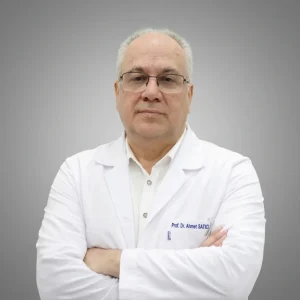
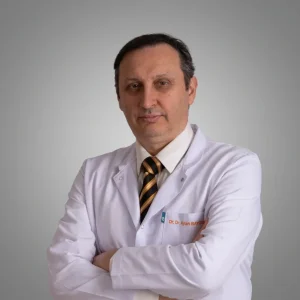
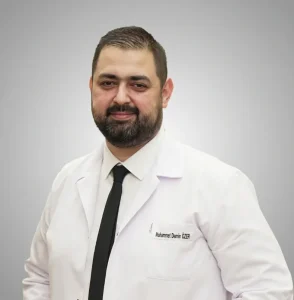
ReLEx SMILE is keyhole laser eye surgery without a flap, and in Istanbul it is planned and performed by Prof. Dr. Ahmet Satıcı or Op. Dr. Aysan Bayram. Your surgeon measures your corneas before recommending anything, you see the full price in writing before you travel, and a personal interpreter stays with you from your first examination to your final check-up.
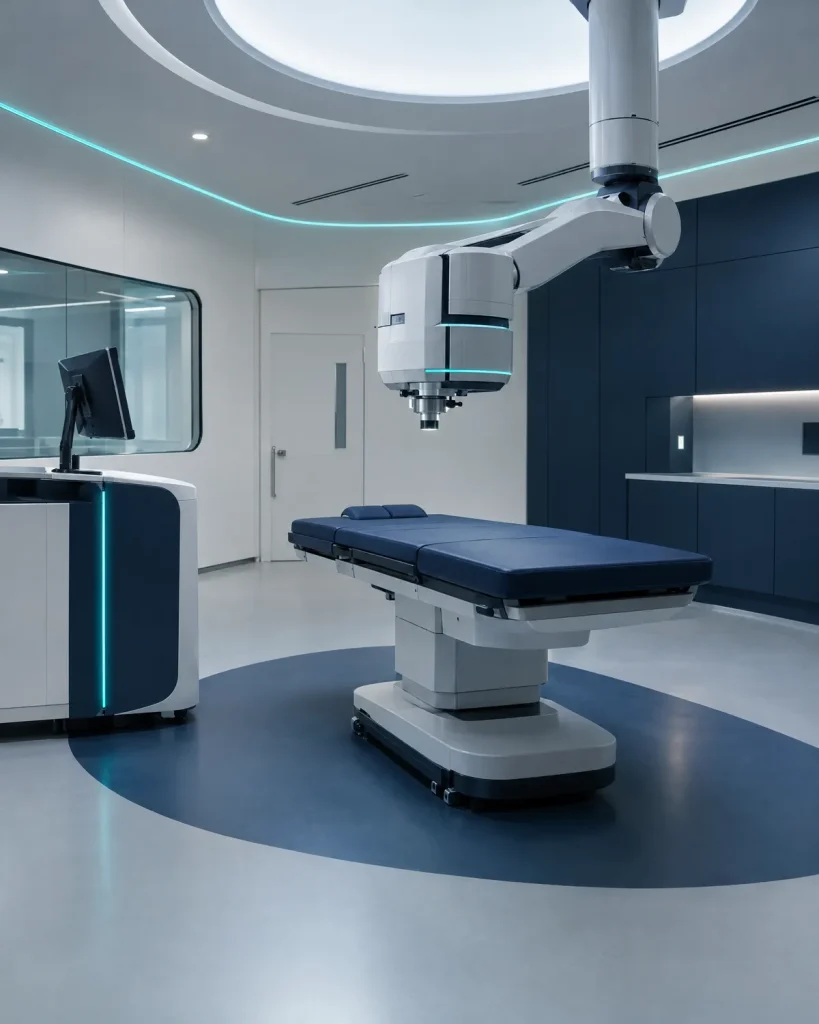
ReLEx SMILE is flap-free laser eye surgery. A single femtosecond laser shapes a thin disc of tissue (a lenticule) inside the cornea, and the surgeon removes it through an opening of about 2–3 mm. It corrects short sight, with or without astigmatism. In Istanbul, Prof. Dr. Ahmet Satıcı or Op. Dr. Aysan Bayram performs it from {{£ price}} for both eyes; most patients stay 3–5 days, and hotel and transfers are extra.
What is ReLEx SMILE laser eye surgery?
ReLEx SMILE is a form of laser vision correction that reshapes the cornea from the inside instead of under a flap. ReLEx stands for refractive lenticule extraction, and SMILE for small incision lenticule extraction. Doctors now group SMILE and similar methods under the name keratorefractive lenticule extraction (KLEx), and the Royal College of Ophthalmologists (RCOphth) lists lenticule extraction as one of the three main types of laser eye surgery used in the UK, alongside LASIK and surface laser (PRK, LASEK, Trans-PRK).
The cornea is the clear window at the front of your eye, and it does about two-thirds of your eye's focusing. Making it slightly flatter in the centre corrects short sight; making it flatter in one direction corrects astigmatism. ReLEx SMILE does this in three steps:
- The femtosecond laser shapes a lenticule. While you look at a target light, the laser places millions of tiny pulses inside the cornea, outlining a thin, lens-shaped disc of tissue whose thickness matches your prescription. It also makes a small side opening of about 2–3 mm.
- Your surgeon removes the lenticule. Through the small opening, the surgeon gently separates the lenticule and lifts it out.
- The cornea settles into its new shape. With the lenticule gone, the front of the cornea is flatter and focuses light correctly. No flap is lifted, so there is nothing to lay back and nothing that can shift later.
The RCOphth describes lenticule extraction as being "like LASIK without the LASIK flap": slightly more tissue is removed, from slightly deeper in the cornea, and the end results are similar to those of LASIK and surface laser. Unlike Femto-LASIK, which needs two lasers (a femtosecond laser for the flap and an excimer laser for the reshaping), ReLEx SMILE uses only one femtosecond laser for the whole correction.
A short history. According to the American Academy of Ophthalmology's EyeWiki, an earlier lenticule method called FLEx was introduced in 2007, and SMILE followed in September 2011 on the Zeiss VisuMax laser. The US Food and Drug Administration (FDA) approved SMILE for short sight on 13 September 2016 and extended the approval to short sight with astigmatism on 4 October 2018. By 2026 it is an established method in Europe, Asia and the US.
Technology we use: {{laser platform}}, in a fully equipped, Ministry of Health–licensed operating theatre in Istanbul. Before any decision, your examination includes corneal topography and tomography, a corneal thickness measurement and a dry-eye assessment.
ReLEx SMILE vs SMILE Pro: what is the difference?
ReLEx SMILE and SMILE Pro are the same operation on two generations of the same laser. Both remove a lenticule through a small opening, without a flap. ReLEx SMILE was first performed on the Zeiss VisuMax 500; SMILE Pro is the upgrade on the faster VisuMax 800.
| ReLEx SMILE (VisuMax 500) | SMILE Pro (VisuMax 800) | |
|---|---|---|
| Principle | Lenticule removed through a 2–3 mm opening; no flap | The same |
| Laser time per eye | Longer than on the VisuMax 800 | About 8–10 seconds (EyeWiki) |
| Centring the treatment | Set manually by the surgeon | CentraLign assistant helps the surgeon centre the treatment |
| Correcting eye rotation (important for astigmatism) | Adjusted manually | OcuLign assistant helps correct the eye's rotation |
| Set-up | Original VisuMax design | Two separate robotic arms for the laser head and the microscope |
| Visual results | Well established since 2011 | In a 2025 comparison of 87 eyes, three-month vision was comparable on the two lasers |
What this means for you: the faster laser shortens the time you need to keep still, and the assistants support precise alignment, but the published results so far are similar. The surgeon's planning and your corneal measurements matter more than the laser's name. Your surgeon tells you which laser will treat your eyes before you book.
Who is ReLEx SMILE suitable for?
ReLEx SMILE suits adults with short sight, with or without astigmatism, whose prescription is stable and whose corneas are healthy and thick enough. The RCOphth says you are most likely to be suitable for laser vision correction if you are over 18 and your prescription has changed by no more than 0.5 dioptres in the last two years.
| Prescription | ReLEx SMILE | All laser vision correction (RCOphth guide) |
|---|---|---|
| Short sight (myopia) | Yes. FDA-approved range: −1.00 to −10.00 D | up to −10.00 D |
| Astigmatism (with short sight) | Yes. FDA-approved range: −0.75 to −3.00 D | up to ±6.00 D |
| Long sight (hyperopia) | Not FDA-approved; usually treated with Femto-LASIK, surface laser or a lens instead | up to +4.00 D |
The FDA range applies to patients aged 22 and over in the US. Surgeons elsewhere may treat outside it after a full assessment; your surgeon explains what applies to your eyes.
EyeWiki notes that, compared with LASIK, lenticule extraction is often preferred for people with existing dry eye, higher short-sighted prescriptions, contact sports or jobs with a risk of eye injury, and larger pupils.
Can ReLEx SMILE correct astigmatism?
Yes. ReLEx SMILE treats short sight with astigmatism in the same procedure; the FDA-approved range covers astigmatism from −0.75 to −3.00 D. One caveat: a meta-analysis summarised on EyeWiki found a slight tendency towards under-correction of low to moderate astigmatism (up to 2.00 D) with SMILE compared with LASIK. Your surgeon allows for this when planning, and lines the treatment up with your eye's exact rotation, because astigmatism has a direction (its axis).
When ReLEx SMILE is not the right choice
The FDA lists these reasons not to have SMILE:
- keratoconus or an abnormal corneal shape on topography, or a suspicion of it
- a cornea too thin to leave at least 250 microns of untreated tissue under the treatment
- a prescription that is still changing
- severe dry eye
- active eye infection or inflammation, or a recent herpes eye infection
- active autoimmune or connective-tissue disease, uncontrolled diabetes or uncontrolled glaucoma
Pregnancy and breastfeeding are also reasons to wait. If your scans suggest keratoconus, the answer is not laser at all: your case goes to our cornea specialist (see the surgeon box).
Before your examination, stop wearing contact lenses so your cornea returns to its natural shape. The FDA advises 2 weeks for soft lenses, 3 weeks for toric soft or rigid gas-permeable lenses and 4 weeks for hard lenses. Your coordinator confirms the timing for your lenses.
Is ReLEx SMILE better than LASIK?
ReLEx SMILE is not better than LASIK for everyone; the evidence shows similar vision, with some advantages for the eye surface and some trade-offs. Here is what the research says.
- Vision results are equivalent. A 2016 meta-analysis of 12 studies (1,076 eyes) in PLoS One found no significant differences between SMILE and Femto-LASIK in the share of eyes seeing 20/20 or better without glasses, in accuracy of the correction, or in loss of sharpness, up to six months after surgery. The RCOphth states that visual results at three months are equally good for all types of laser vision correction.
- Dry-eye symptoms tend to be milder. SMILE cuts fewer corneal nerves because there is no flap. A second 2016 meta-analysis (568 eyes) found that dry eye after both methods is usually temporary, but symptom scores and tear-film stability were better after SMILE at one, three and six months. EyeWiki summarises newer studies with the same direction.
- Corneal strength. EyeWiki notes that the upper layers of the cornea carry about 60% of its tensile strength, and that SMILE preserves corneal biomechanics better than LASIK and comparably to PRK. That does not make SMILE safe for weak or keratoconic corneas.
- No flap to dislodge. This is why people who play contact sports or whose jobs carry a risk of eye injury often ask for it.
- Recovery of sharp vision is a little slower. The RCOphth says visual recovery after lenticule extraction may be slightly slower than after LASIK.
- Touch-ups are different. If a small correction is needed later, it is often done with surface laser (PRK) rather than by repeating SMILE.
- Narrower range. SMILE treats short sight and astigmatism; LASIK also treats long sight.
How much does ReLEx SMILE eye surgery cost in Turkey?
At Laser Istanbul Clinic, ReLEx SMILE starts from {{£ price}} for both eyes. Your surgeon confirms your exact price in writing after reviewing your prescription and scans, before you book anything.
Typical published prices for SMILE / SMILE Pro, both eyes (2025–26):
| Where | Typical price range |
|---|---|
| UK private clinics | £4,400–7,600 |
| Germany private clinics | €2,800–5,200 |
| USA | $5,000–8,000 |
| Istanbul (published package prices) | about $2,000–3,450 |
| Istanbul with Laser Istanbul Clinic | from {{£ price}} |
UK, German, US and Istanbul figures are typical ranges published by clinics and price-comparison sites in 2025–26, not quotes. Comparing the middle of each range, SMILE in Istanbul costs about 66% less than in the UK. Many published Istanbul prices are packages that include a hotel; ours do not, so you can compare the treatment cost like for like.
Your ReLEx SMILE price includes:
- full pre-operative eye examination and scans with your surgeon
- ReLEx SMILE on both eyes by your named surgeon
- medication and eye drops for your recovery
- follow-up checks in Istanbul with the same surgeon
- a personal interpreter, a dedicated coordinator and remote follow-up after you return home
Not included: flights, hotel and airport transfers. Hotel and transfers are a separate charge, and we can arrange them for you if you ask. In the UK, the RCOphth notes that laser vision correction is not available on the NHS and is not covered by private health insurance, so most patients pay privately wherever they are treated.
What to compare between clinics. The RCOphth notes that UK clinics normally include follow-up visits and any fine-tuning laser treatment for up to two years after surgery. Ask every clinic the same question. Our policy: {{enhancement / re-treatment policy and the period it covers}}.
Your ReLEx SMILE surgeons
Your ReLEx SMILE journey, step by step
Free online assessment
Send your glasses prescription and any eye reports. A surgeon tells you whether ReLEx SMILE is likely to suit you and sends a written quote within {{response time}}.
Book your dates
Plan 3–5 days in Istanbul. We help you choose dates with your surgeon.
Full eye examination (day 1)
Corneal topography and tomography, corneal thickness, refraction with and without dilating drops, a dry-eye assessment and a retina check. If ReLEx SMILE is not right for you, your surgeon explains why and what the alternatives are.
Surgery (day 1 or 2)
Numbing drops are used and a small clip keeps your eyelids open. A curved contact glass holds the eye steady with light suction while you look at a light; you feel pressure but no pain. The laser works for seconds, and your surgeon then removes the lenticule. The RCOphth says both eyes typically take about half an hour, and you go back to your hotel the same day.
First check (the next day)
Your surgeon examines both eyes.
Final check and home
Most patients can fly 1–3 days after SMILE, once their surgeon has checked their eyes. Your coordinator stays in touch, and your surgeon reviews your progress by video at agreed intervals.
ReLEx SMILE recovery time: what to expect
ReLEx SMILE recovery is quick for comfort and gradual for sharpness: most people see well enough for daily life within days, and vision keeps sharpening over the first weeks. The RCOphth says eye-surface comfort may recover slightly faster after lenticule extraction than after LASIK, while visual recovery may be slightly slower.
-
First few hours
Gritty, watery, light-sensitive eyes. Rest with your eyes closed and use lubricating drops often.
-
Day 1
Vision is usually good but may be a little hazier than after LASIK. You can wash and shower normally from day one. First check with your surgeon.
-
Week 1
In the FDA trial of SMILE for short sight with astigmatism, 96% of eyes already saw 20/40 or better without glasses, and 44% saw 20/20 or better. Do not rub your eyes. Most surgeons advise no swimming for the first week (RCOphth); gym and jogging are fine from day one.
-
Month 1
66% of eyes saw 20/20 or better in the same trial. Contact sports usually restart sooner than after LASIK; your surgeon gives you the date.
-
Month 3
83% of eyes saw 20/20 or better and 94% saw 20/25 or better. The RCOphth says results by now are equally good for all laser types.
-
Up to 2 years
Most changes after three months are very small, but full stabilisation can take up to two years (RCOphth).
Figures: FDA Summary of Safety and Effectiveness Data for SMILE with astigmatism (2018), 353 eyes, uncorrected vision.
Everyday activities: use lubricating drops often, especially when reading or working at screens, and ask your surgeon when to return to work. Avoid eye make-up and swimming until your surgeon allows it. Do not drive until your surgeon confirms that your vision meets the driving standard. Call your coordinator straight away if you have increasing pain, light sensitivity, redness or blurred vision, or if your eye is injured.
Risks and side effects of ReLEx SMILE
ReLEx SMILE is safe and effective in the right eyes, but like every eye operation it has risks, and you should know them before you decide.
Results. In the FDA trial of 357 eyes, no eye lost two or more lines of best corrected vision at six months, and 99% were within 1.00 D of the planned correction. In a 2024 study that followed 208 eyes for ten years after SMILE, 84.6% still saw 20/20 or better without glasses, with only a small average shift in prescription.
Common side effects (usually temporary):
- Dry eye, milder on average than after LASIK but still possible. In the FDA trial, moderate or severe dry-eye symptoms were reported by 8% of patients before surgery and 9% at 12 months.
- Glare, halos and haziness, especially at night and in the first weeks.
- Slightly slower sharpening of vision than after LASIK.
Less common risks:
- Suction loss during surgery. If the eye moves, the laser releases its hold. In the FDA trial this happened in 14 of 357 eyes (3.9%): 10 treatments were completed, and 4 were stopped and handled another way. EyeWiki reports that in most cases suction can be re-applied in the same session.
- Difficult lenticule removal, or cells in the interface. These are uncommon; in the FDA trial, one eye (0.3%) had surface cells growing under the cap with a temporary loss of sharpness.
- Under- or over-correction, sometimes needing a touch-up, usually by surface laser. The RCOphth says up to 1 in 10 laser patients need some form of additional surgery to get the best result.
- Inflammation or infection in the interface, which is rare and treated with drops.
- Corneal ectasia, a gradual bulging of a weakened cornea. EyeWiki notes that most reported cases after lenticule extraction were in eyes that were borderline or high-risk before surgery, which is why corneal tomography is checked first.
- Serious, permanent loss of vision is rare. The RCOphth states that fewer than 1 in 5,000 laser patients need a corneal transplant to restore vision.
Later in life, tell any eye doctor that you have had laser eye surgery. It affects eye-pressure readings for glaucoma and the calculations for future cataract surgery.
Your surgeon explains your personal risks in writing and through your interpreter before you sign anything.
ReLEx SMILE in Turkey: frequently asked questions
SMILE in Istanbul typically costs about $2,000–3,450 for both eyes on published price lists, which often bundle a hotel. With Laser Istanbul Clinic, ReLEx SMILE starts from {{£ price}} for both eyes, including your examination and scans, surgery, medication, follow-up checks, interpreter and coordinator. Hotel and transfers are extra. Your exact price is confirmed in writing after your free assessment.
They are the same keyhole operation on two generations of the Zeiss VisuMax laser. ReLEx SMILE was developed on the VisuMax 500; SMILE Pro runs on the VisuMax 800, which completes the laser step in about 8–10 seconds and adds assistants for centring and eye rotation. Published three-month results are comparable.
Vision results are equivalent in meta-analyses. SMILE avoids a flap, which tends to mean milder dry-eye symptoms and no flap that could shift after a knock. LASIK gives slightly faster sharp vision and also treats long sight. Your surgeon recommends one after measuring your corneas.
Yes. ReLEx SMILE corrects short sight with astigmatism in one procedure, and the FDA-approved range covers astigmatism from −0.75 to −3.00 D. Studies show a slight tendency to under-correct low astigmatism compared with LASIK, so your surgeon plans for it.
Not routinely. SMILE is approved by the FDA for short sight with or without astigmatism, not for long sight. If you are long-sighted, your surgeon will usually suggest Femto-LASIK, surface laser or, from middle age, lens surgery.
Most people see well enough for everyday life within a few days and can shower from day one. Vision sharpens over the first weeks: in the FDA trial, 66% of eyes saw 20/20 or better at one month and 83% at three months. Full stabilisation can take longer.
No. Numbing drops are used, and you feel pressure for a short time while the laser works and the lenticule is removed. Afterwards your eyes may feel gritty or watery for a few hours, and lubricating drops keep you comfortable.
The correction itself is permanent, because the removed tissue does not grow back. Your eyes can still change with age: in a ten-year study, 84.6% of eyes still saw 20/20 or better. Reading glasses in your 40s or 50s come from the natural lens ageing, not from the laser wearing off.
A touch-up is possible if enough corneal thickness remains, but it is usually done with surface laser (PRK) rather than a second SMILE. Your surgeon measures your cornea before advising. {{enhancement / re-treatment policy and the period it covers}}
Plan 3–5 days in Istanbul. Most patients can fly 1–3 days after SMILE, once their surgeon has checked their eyes.
The RCOphth says gym and jogging can be resumed from day one, and most surgeons recommend no swimming for a week. Because there is no flap, contact sports can restart sooner than after LASIK, where the RCOphth advises waiting at least one month. Your surgeon gives you the exact date at your final check.
Other laser options in Istanbul
ReLEx SMILE is one of several ways to reshape the cornea. All of them give equally good vision at three months, according to the RCOphth; the differences are recovery, comfort and which corneas and prescriptions each suits.
| ReLEx SMILE / SMILE Pro | Femto-LASIK | PRK / LASEK / no-touch Trans-PRK | |
|---|---|---|---|
| How it works | One femtosecond laser shapes a lenticule, removed through a 2–3 mm opening; no flap | Laser-made flap, then excimer reshaping | Surface skin removed, then excimer reshaping |
| Treats | Short sight, astigmatism | Short sight, long sight, astigmatism | Short sight, long sight, astigmatism |
| Visual recovery | Slightly slower than LASIK | Fastest; often back to work the next day | Slowest; a week or longer before driving standard |
| Comfort in the first days | Eye-surface comfort may recover slightly faster | Mild grittiness for a few hours | Sore for several days while the surface regrows |
| Contact sports | Sooner than LASIK | Wait at least 1 month | Sooner than LASIK |
| Often chosen for | Dry-eye-prone eyes, higher short sight, contact sports | Most prescriptions, including long sight | Thinner corneas, flap-free preference |
SMILE Pro on the VisuMax 800
The newest version of the same keyhole method.
SMILE Pro in Istanbul (VisuMax 800)Femto-LASIK
Blade-free LASIK with the fastest visual recovery, also for long sight.
LASIK & Femto-LASIK in IstanbulPRK / LASEK and no-touch laser
Surface laser without a flap or an incision, often recommended for thinner corneas.
PRK / LASEK in IstanbulLaser for reading glasses (40+)
Blended-vision laser that sets one eye for distance and the other for arm's length.
Laser for reading glasses (Presbyond, 40+)Sources for the facts on this page
- *Medical facts (all opened and checked, 6 Oct 2026):**
- US FDA, Summary of Safety and Effectiveness Data, VisuMax Femtosecond Laser, PMA P150040/S003 (approved 4 Oct 2018; original PMA 13 Sep 2016): indications (age ≥ 22; sphere −1.00 to −10.00 D; cylinder −0.75 to −3.00 D; MRSE ≤ 10.00 D; stable refraction), contraindications (residual stromal bed < 250 µm, abnormal topography/keratoconus, unstable refraction, severe dry eye, active infection/inflammation, recent herpes, autoimmune/connective-tissue disease, uncontrolled diabetes or glaucoma); 357 treated eyes; UCVA 20/20 or better 44.2% (week 1), 66.0% (month 1), 83.3% (month 3), 84.2% (month 6); 20/40 or better 96.0% at week 1; 20/25 or better 94.3% at month 3; MRSE within ±1.00 D 99.1% at month 6; 0 eyes lost ≥ 2 lines BSCVA at month 6; loss of suction 10 completed (2.8%) + 4 discontinued (1.1%); epithelium in the interface with loss of ≥ 2 lines 1 eye (0.3%); moderate/severe dry-eye symptoms (OSDI) 8% preop vs 9% at month 12. https://www.accessdata.fda.gov/cdrh_docs/pdf15/p150040s003b.pdf
- US FDA, What should I expect before, during, and after surgery?: contact-lens breaks (soft 2 weeks, toric soft / RGP 3 weeks, hard 4 weeks). https://www.fda.gov/medical-devices/lasik/what-should-i-expect-during-and-after-surgery
- EyeWiki (American Academy of Ophthalmology), Small Incision Lenticule Extraction (SMILE) / Keratorefractive Lenticule Extraction (KLEx) Surgeries (last modified 21 Jul 2026): KLEx terminology incl. ReLEx (refractive lenticule extraction); FLEx 2007; SMILE from September 2011 on the VisuMax 500; 2–3 mm incision; SMILE Pro on VisuMax 800 with CentraLign and OcuLign, two robotic arms, laser time about 8–10 seconds (manual centration/cyclotorsion on VisuMax 500); KLEx preferred for dry eye, higher myopia, contact sports, larger pupils; biomechanics superior to LASIK and comparable to PRK; re-treatment may require PRK; suction can be re-applied in the same sitting in most cases (81.8%); ectasia cases mostly in borderline/high-risk eyes; hyperopic SMILE not FDA-approved. https://eyewiki.org/Small_Incision_Lenticule_Extraction_(SMILE) · https://eyewiki.org/Keratorefractive_Lenticule_Extraction_(KLEx)_Surgeries
- EyeWiki (AAO), LASIK for Myopia and Astigmatism: Safety and Efficacy: SMILE tendency to under-correct low-to-moderate astigmatism (≤ 2.00 D); anterior stroma ~60% of corneal tensile strength; fewer ocular-surface signs after SMILE. https://eyewiki.org/LASIK_for_Myopia_and_Astigmatism:_Safety_and_Efficacy
- Shen Z, Shi K, Yu Y, et al. Small Incision Lenticule Extraction (SMILE) versus Femtosecond Laser-Assisted In Situ Keratomileusis (FS-LASIK) for Myopia: A Systematic Review and Meta-Analysis. PLoS One 2016;11:e0158176 (12 studies, 1,076 eyes; no significant difference in UCVA 20/20, predictability or BSCVA loss; fewer dry-eye symptoms and better corneal sensitivity after SMILE). https://pmc.ncbi.nlm.nih.gov/articles/PMC4930219/
- Shen Z, Zhu Y, Song X, et al. Dry Eye after SMILE versus FS-LASIK for Myopia: A Meta-Analysis. PLoS One 2016;11:e0168081 (291 + 277 eyes; dry eye usually transient; TBUT and OSDI better after SMILE at 1, 3 and 6 months). https://pmc.ncbi.nlm.nih.gov/articles/PMC5161410/
- Ten-year evaluation on efficacy, safety, and predictability of femtosecond laser corneal small incision lenticule extraction for correction of myopia and myopic astigmatism: a case series. Annals of Medicine and Surgery 2024 (208 eyes; UCVA ≥ 20/20 in 84.6% at 10 years; mean SER −0.11 D at 3 months vs −0.28 D at 10 years). https://pmc.ncbi.nlm.nih.gov/articles/PMC11543156/
- Davis et al. Comparison of Initial Visual Outcomes Following Keratorefractive Lenticule Extraction (KLEx) Using VisuMax 500 Versus VisuMax 800. Cureus 2025 (87 eyes; comparable three-month outcomes; all eyes 20/40 or better). https://pmc.ncbi.nlm.nih.gov/articles/PMC12417058/
- *Prices and project facts:**
Find out if ReLEx SMILE suits your eyes, free
Send us your glasses prescription and any eye reports. Prof. Dr. Satıcı or Op. Dr. Bayram will tell you whether ReLEx SMILE, Femto-LASIK or another option suits you, and what it would cost, with no obligation.
3 eye surgeons
Your case is reviewed by a named surgeon, not a salesperson. Reply within {{response time}}.
 Prof. Dr. Ahmet Satıcı
 Doç. Dr. Muhammet Derda Özer
 Op. Dr. Aysan Bayram