
PRK Eye Surgery in Istanbul: PRK and LASEK Surface Laser
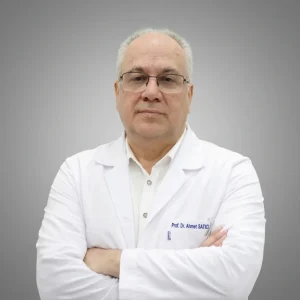
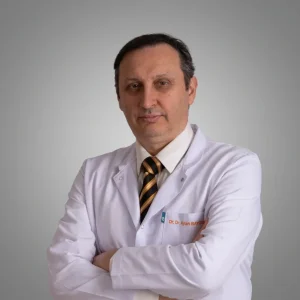
PRK eye surgery reshapes the surface of your cornea with a laser, without cutting a flap. At Laser Istanbul Clinic, PRK and LASEK are planned and performed by Prof. Dr. Ahmet Satıcı or Op. Dr. Aysan Bayram, who measure your corneas before recommending anything. You see the full price in writing before you travel, and a personal interpreter stays with you from your first examination to your final check-up.
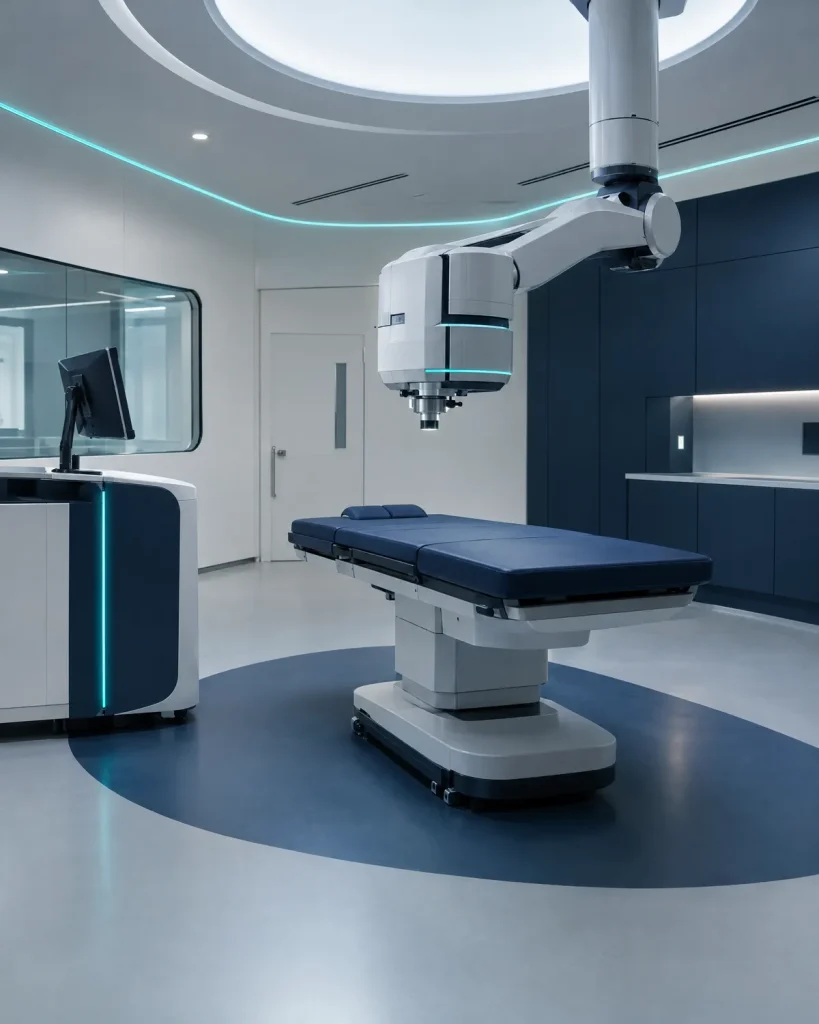
PRK (photorefractive keratectomy) and LASEK are flap-free "surface" laser treatments for short sight, long sight and astigmatism. The surgeon removes the cornea's thin skin layer, and an excimer laser reshapes the surface beneath. They often suit thinner corneas and contact sports. Expect a sore first few days and about a week before driving. In Istanbul, PRK with us starts from {{£ price}} for both eyes; hotel and transfers are extra.
What is PRK eye surgery?
PRK is the original form of laser vision correction: an excimer laser reshapes the front surface of the cornea after its outer skin layer has been removed. The cornea is the clear window at the front of the eye. Change its curve precisely and light focuses sharply again, so you need glasses or contact lenses less, or not at all. The US Food and Drug Administration approved the excimer laser for PRK in 1995, according to the American Academy of Ophthalmology's EyeWiki, so it has the longest track record of any laser eye treatment.
PRK laser eye surgery works in three steps:
- The skin layer is removed. The epithelium, the cornea's thin, fast-healing outer layer, is gently cleared from the central cornea.
- The excimer laser reshapes the cornea. It removes a precisely calculated, lens-shaped layer of tissue from the surface, guided by your measurements. The Royal College of Ophthalmologists (RCOphth) explains that surface treatments use the same excimer lasers as LASIK and remove an identical shape of tissue; the difference is only where the laser works.
- A bandage contact lens goes on. This soft, clear lens protects the eye while the skin layer grows back over the next few days.
The American Academy of Ophthalmology (AAO) says the procedure usually takes about 15 minutes. There is no flap and no deep cut, which is the main reason surgeons choose PRK or LASEK for some eyes. The trade-off is comfort and time: the eye is sore while the skin layer regrows, and sight clears more slowly than after LASIK.
Technology we use: {{excimer laser platform name}}, in a fully equipped, Ministry of Health–licensed operating theatre in Istanbul. Before treatment, your examination includes corneal topography, corneal thickness measurement and a dry-eye assessment.
PRK vs LASEK vs epi-LASIK vs Trans-PRK: what is the difference?
All surface laser treatments reshape the cornea in exactly the same way; the only difference is how the skin layer is removed. The RCOphth states that all surface laser treatments produce similar results. That is why people searching for "LASEK" or "epi-LASIK" are really choosing between variations of PRK.
| Method | How the skin layer is removed | What happens to it | Notes |
|---|---|---|---|
| PRK | The surgeon clears it gently with an instrument | Discarded; a new layer grows back | The original and most studied surface method |
| LASEK | Dilute alcohol (about 18–20%) loosens it for 20–30 seconds, then the surgeon folds it aside | Laid back over the treated area after the laser | A Cochrane review of 11 trials found little clear difference from PRK in vision or haze |
| Epi-LASIK | A blunt mechanical device (epikeratome) lifts it as a thin sheet, without alcohol | Laid back, or removed, after the laser | Not a LASIK flap: no cut into the deeper cornea |
| Trans-PRK (no-touch) | The laser itself removes it, in one step with the reshaping | Regrows like PRK | Nothing but the laser touches the eye; the RCOphth says recovery is 1–2 days shorter than PRK or LASEK |
Which variation your surgeon uses depends on your eyes and on the platform available: {{surface laser methods offered, e.g. PRK and alcohol-assisted LASEK; confirm whether epi-LASIK is offered}}. If a no-touch treatment appeals to you, see our page on no-touch laser (Trans-PRK) in Istanbul.
Who is PRK laser eye surgery for?
PRK suits adults with a stable prescription whose corneas are healthy but too thin, too irregular in fit, or too exposed to knocks for a flap. The RCOphth says you are most likely to be suitable for laser vision correction if you are over 18 and your prescription has changed by no more than 0.5 dioptres in the last two years, within these usual ranges:
| Prescription | Usual range for laser vision correction |
|---|---|
| Short sight (myopia) | up to −10.00 D |
| Long sight (hyperopia) | up to +4.00 D |
| Astigmatism | up to ±6.00 D |
Your surgeon is more likely to suggest PRK or LASEK than LASIK if you:
- have thinner corneas: the AAO names thin corneas as a reason PRK may be the better choice, because no corneal tissue is used to make a flap
- do contact or combat sports, or work where a blow to the eye is likely: with no flap, there is nothing that can be dislodged (EyeWiki)
- tend towards dry eyes: EyeWiki notes that corneal nerves recover faster after PRK, which reduces dryness
- have an unusual corneal shape (EyeWiki) or a very low prescription (AAO)
PRK is usually not the right choice if you have (AAO): an unstable prescription, corneal scars or corneal disease such as keratoconus, advanced glaucoma, a cataract that affects your sight, uncontrolled diabetes, certain past eye infections, or skin conditions that affect healing; or if you are pregnant or breastfeeding. Patients with keratoconus are first reviewed by our cornea specialist, because they may need cross-linking or another treatment instead.
Before your examination, leave out your contact lenses so the cornea returns to its natural shape. The US FDA advises 2 weeks for soft lenses, 3 weeks for toric soft or rigid gas-permeable lenses and 4 weeks for hard lenses. Your coordinator confirms the timing for your lenses.
How much is PRK eye surgery? PRK price in Turkey vs the UK and US
At Laser Istanbul Clinic, PRK or LASEK starts from {{£ price}} for both eyes. Your surgeon confirms your exact price in writing after reviewing your prescription and scans, before you book anything.
PRK eye surgery cost is often lower than LASIK or SMILE, according to the US Refractive Surgery Council. Typical published prices in 2026:
| Where | PRK / LASEK eye surgery price |
|---|---|
| UK private clinics | about £575–£2,950 per eye, so roughly £1,150–£5,900 for both eyes (March 2026) |
| Germany (example, a large laser-centre group) | from €1,990 per eye (2026) |
| USA | no national PRK average is published; the US Refractive Surgery Council puts the average LASIK price at $4,492 for both eyes (June 2026) and says PRK is often less expensive than LASIK or SMILE |
| Istanbul (published laser prices) | about £1,100–£2,700 for both eyes across all laser methods, with PRK at the lower end |
| Istanbul with Laser Istanbul Clinic | from {{£ price}} for both eyes |
UK, German, US and Istanbul figures are typical published prices, not quotes. UK and German clinics often quote per eye; our prices are always for both eyes. Many published Istanbul prices are bundles that include a hotel.
Your PRK price includes:
- full pre-operative eye examination and scans with your surgeon
- PRK or LASEK on both eyes by your named surgeon
- bandage contact lenses, medication and eye drops for your recovery
- follow-up checks in Istanbul with the same surgeon, including removal of the bandage lenses
- a personal interpreter, a dedicated coordinator and remote follow-up after you return home
Not included: flights, hotel and airport transfers. Hotel and transfers are a separate charge, and we can arrange them for you if you ask. The RCOphth notes that laser vision correction is not available on the NHS and is not covered by private health insurance, so most patients pay privately wherever they are treated. {{Enhancement / re-treatment policy: whether, and for how long, touch-ups are included}}.
Your PRK and LASEK surgeons
Your PRK journey in Istanbul, step by step
Free online assessment
Send your glasses prescription and any eye reports or scans. A surgeon tells you whether PRK, LASEK or another option is likely to suit you and sends a written quote within {{response time}}.
Book your dates
Plan about a week in Istanbul ({{nights}} nights), because the bandage lenses usually come out between day 4 and day 7. We help you choose dates with your surgeon; hotel and transfers can be booked for you at extra cost.
Full eye examination (day 1)
Corneal topography, corneal thickness, refraction with and without dilating drops, a dry-eye assessment and a retina check. If PRK is not right for you, your surgeon tells you and explains the alternatives.
Surgery (day 1 or 2)
Numbing drops are used and a small clip keeps your eyelids open. The skin layer is removed, then you look at a light for the seconds the laser works. The AAO says the procedure usually takes about 15 minutes. Someone should accompany you back to your hotel.
Check-ups
Your surgeon checks the healing surface during the first days and removes the bandage lenses once the skin layer has closed.
Home
You fly once your surgeon has removed the bandage lenses and checked your eyes. Your coordinator stays in touch, and your surgeon reviews your progress by video at agreed intervals.
PRK recovery: what to expect, day by day
PRK recovery is slower than LASIK: the eye is sore for 2–3 days, the skin layer heals in about a week, and sight keeps sharpening for up to three months.
-
First hours
Numbing drops wear off; the eye becomes watery, light-sensitive and sore. Rest with your eyes closed.
-
Days 1–3
The AAO says some eye pain is usual for 2–3 days after PRK and over-the-counter painkillers usually control it. Vision is blurred. Use your drops exactly as prescribed.
-
Days 3–5
Vision gradually improves as the skin layer heals (AAO). EyeWiki describes the skin layer growing back over 3–4 days.
-
Days 4–7
The bandage lenses come out, typically between day 4 and day 7 (RCOphth). After that you can wash and shower normally.
-
Week 1
Avoid strenuous activity for up to a week (AAO) and no swimming. Your surgeon may suggest a few days off work (AAO).
-
Week 1–2
The RCOphth says you may need a week or longer before you reach the driving standard. EyeWiki puts functional vision at 7–10 days. Do not drive until your surgeon confirms it.
-
Month 1
The AAO notes it may take a month or longer to reach your best vision. Contact sports can usually restart sooner than after LASIK, which needs at least a month.
-
Up to 3–4 months
The new surface smooths optically, completing visual recovery over about three months (RCOphth). Steroid ("cortisone") drops may be used for up to 4 months to control healing (EyeWiki).
Call your coordinator straight away if you have increasing pain, light sensitivity, redness or blurred vision, or if your bandage lens falls out or your eye is injured.
PRK risks, side effects and results
PRK has decades of follow-up data and serious problems are rare, but recovery is more uncomfortable than LASIK and a few specific risks apply
Results. The AAO states that about 9 in 10 people who have PRK end up with 20/40 vision or better without glasses or contact lenses. The RCOphth says visual results at three months are equally good for all types of laser vision correction. A Cochrane review of 13 randomised trials (1,135 participants) found that LASIK gives faster visual recovery and less pain, while results one year after surgery were similar. In a small 20-year follow-up of PRK for mild to moderate short sight (16 eyes), every eye still saw 20/40 or better without glasses.
Common, usually temporary side effects
- Pain in the first days while the skin layer regrows, controlled with drops, the bandage lens and painkillers.
- Glare, halos and starbursts, especially at night and after higher prescriptions. The RCOphth says these are usually mild with modern lasers and improve within a few months.
- Dry eyes and fluctuating vision while the surface heals.
Risks specific to surface laser
- Corneal haze, a faint clouding as the surface heals. It tends to appear a few weeks after PRK and peaks at about one to two months (EyeWiki); the AAO describes it usually resolving within 6–12 months. The risk is higher with prescriptions above about −6.00 D. Surgeons often apply a drug called mitomycin C during surgery for higher corrections: a 2021 meta-analysis of 12 randomised trials found it cut the risk of haze by about 70%.
- Delayed healing of the skin layer and, rarely, infection under the bandage lens, which is why you use antibiotic drops and attend every check.
Risks shared with all laser eye surgery
Later in life, tell any eye doctor that you have had PRK; it affects eye-pressure readings and future cataract calculations. Your surgeon explains your personal risks in writing and through your interpreter before you sign anything.
- Under- or over-correction. The RCOphth says up to 1 in 10 patients need some form of additional surgery to get the best result.
- Serious, permanent loss of vision is rare. Fewer than 1 in 5,000 patients need a corneal transplant to restore vision after laser surgery (RCOphth). Because no flap is made, the AAO notes that surface ablation reduces the risk of ectasia, a weakening of the cornea.
PRK eye surgery: frequently asked questions
PRK (photorefractive keratectomy) is laser eye surgery that corrects short sight, long sight and astigmatism by reshaping the front surface of the cornea. The surgeon first removes the thin outer skin layer, then an excimer laser reshapes the tissue beneath, and a bandage contact lens protects the eye while it heals. No flap is cut, which makes it a good option for thinner corneas.
In UK private clinics, PRK or LASEK typically costs about £575–£2,950 per eye in 2026, roughly £1,150–£5,900 for both eyes. In Istanbul, laser eye surgery is published at about £1,100–£2,700 for both eyes, with PRK at the lower end. With Laser Istanbul Clinic, PRK starts from {{£ price}} for both eyes, including your examination, surgery, medication, check-ups and interpreter; hotel and transfers are extra.
Both keep the cornea's skin layer as a thin sheet and lay it back after the laser, instead of discarding it as in PRK. In LASEK the sheet is loosened with dilute alcohol; in epi-LASIK a blunt mechanical device lifts it without alcohol. The laser reshaping is the same, and the RCOphth says all surface treatments produce similar results.
The surgery itself is not painful, because numbing drops are used. The AAO says you may have some eye pain for 2–3 days afterwards, usually controlled with over-the-counter painkillers, and the bandage contact lens and prescribed drops help. This is the main drawback of PRK compared with LASIK or SMILE Pro.
The skin layer heals in about 3–7 days, and the bandage lenses usually come out between day 4 and day 7. The RCOphth says you may need a week or longer before you reach the driving standard, and sight keeps sharpening for about three months. The AAO says your surgeon may suggest a few days off work.
Neither is better for everyone. A Cochrane review found LASIK gives faster visual recovery with less pain, while results one year after surgery are similar. PRK is often the safer choice for thinner corneas, contact sports and dry-eye-prone eyes, because no flap is made.
The reshaping of your cornea is permanent, although your eyes can still change with age. In a 20-year follow-up of PRK for mild to moderate short sight, all 16 eyes still saw 20/40 or better without glasses. Reading glasses in your 40s or 50s come from the natural lens ageing, not from PRK wearing off.
Yes. PRK treats short sight, long sight and astigmatism. The RCOphth's usual laser ranges are up to −10.00 D of short sight, +4.00 D of long sight and ±6.00 D of astigmatism; outside these, a lens implant may suit you better.
Plan about a week. You have your examination and surgery in the first one or two days, then check-ups until your surgeon removes the bandage lenses, usually between day 4 and day 7. Your coordinator confirms the exact number of nights once your surgeon has chosen your treatment.
Patients choose PRK in Turkey for a lower price than at home, with the same type of excimer laser. Before you book, check your surgeon's name and qualifications, where the surgery takes place and how aftercare works once you are home. We give you all of this in writing before you pay.
PRK compared with other laser options
PRK is one of three families of laser eye surgery; the RCOphth says visual results at three months are equally good for all of them, and the main differences are recovery speed, comfort and which corneas each suits.
| PRK / LASEK | No-touch Trans-PRK | Femto-LASIK | SMILE Pro / ReLEx SMILE | |
|---|---|---|---|---|
| Flap or incision | None; surface treatment | None; surface treatment | Thin flap made by a femtosecond laser | Small 2–3 mm incision, no flap |
| Who touches the eye | Surgeon removes the skin layer | Only the laser | Laser and surgeon | Laser and surgeon |
| Visual recovery | A week or longer before driving | 1–2 days faster than PRK | Fastest; often back to work the next day | Slightly slower than LASIK |
| Comfort in the first days | Sore for 2–3 days | Sore for several days | Gritty for a few hours | Gritty for a few hours |
| Contact sports | Sooner than LASIK | Sooner than LASIK | Wait at least 1 month | Sooner than LASIK |
| Often chosen for | Thinner corneas, contact sports, dry-eye-prone eyes | As PRK, with a no-touch technique | Most prescriptions with normal corneal thickness | Active lifestyles, flap-free preference |
No-touch laser (Trans-PRK)
Surface laser in one step: the laser removes the skin layer and reshapes the cornea, with nothing else touching the eye.
No-touch laser (Trans-PRK) in IstanbulLASIK and Femto-LASIK
Blade-free flap and the fastest visual recovery, for most prescriptions with a normal corneal thickness.
LASIK & Femto-LASIK in IstanbulSMILE Pro and ReLEx SMILE
Flap-free keyhole laser correction through a small incision, with less discomfort than surface treatment.
SMILE Pro in Istanbul (VisuMax 800)Laser for reading glasses (40+)
Blended-vision laser treatment that sets one eye for distance and the other for arm's length.
Laser for reading glasses (Presbyond, 40+)Sources for the facts on this page
- American Academy of Ophthalmology, What Is Photorefractive Keratectomy (PRK)? (published 14 Jan 2026): treats myopia, hyperopia, astigmatism; good choice for thin corneas and active people; no flap; about 15 minutes; bandage contact lens; vision improves over 3–5 days, a month or longer for best vision; pain for 2–3 days controlled by OTC medicine; about 9 in 10 achieve 20/40 or better; risks (glare and halos, corneal scarring, infection); non-candidates; a few days off work; avoid strenuous activity for up to a week; someone to drive you home. https://www.aao.org/eye-health/treatments/photorefractive-keratectomy-prk
- EyeWiki (AAO), Photorefractive Keratectomy: FDA approval 1995; faster corneal nerve recovery and less dryness; no flap dislodgement risk; epithelium regrows over 3–4 days; cortisone drops for up to 4 months; vision recovery 7–10 days; TransPRK definition. https://eyewiki.org/Photorefractive_Keratectomy
- EyeWiki (AAO), LASEK: dilute alcohol 18–20%; epithelial flap folded on a hinge; mixed evidence on pain versus PRK. https://eyewiki.org/LASEK
- American Academy of Ophthalmology, Surface Ablation: Photorefractive Keratectomy, LASEK, Epi-LASIK, and Epi-LASEK (Current Insight): LASEK alcohol about 20% for 20–30 seconds; epi-LASIK uses a modified microkeratome with a blunt blade and no alcohol; surface ablation avoids flap complications, suits thin corneas and reduces ectasia risk; haze peaks at 1–2 months and resolves within 6–12 months; mitomycin C usually for high myopic corrections. https://www.aao.org/education/current-insight/surface-ablation-photorefractive-keratectomy-lasek
- EyeWiki (AAO), Mitomycin C for Haze Prophylaxis: haze emerges a few weeks after PRK, peaks at one to two months; higher risk above 6 D of myopia; 0.02% MMC. https://eyewiki.org/Mitomycin_C_for_Haze_Prophylaxis
- Ouerdane Y, et al. Mitomycin C application after photorefractive keratectomy in high, moderate, or low myopia: systematic review and meta-analysis. Indian J Ophthalmol 2021: 12 RCTs, 1,118 patients; haze RR 0.29 (95% CI 0.19–0.45), i.e. about 70% lower risk. https://pmc.ncbi.nlm.nih.gov/articles/PMC8837284/
- Shortt AJ, Allan BD, Evans JR. Laser-assisted in-situ keratomileusis (LASIK) versus photorefractive keratectomy (PRK) for myopia. Cochrane Database Syst Rev 2013 (PMID 23440799): 13 trials, 1,135 participants; LASIK faster visual recovery and less painful; similar outcomes at one year. https://www.cochranelibrary.com/cdsr/doi/10.1002/14651858.CD005135.pub3/full
- Li SM, et al. Laser-assisted subepithelial keratectomy (LASEK) versus photorefractive keratectomy (PRK) for correction of myopia. Cochrane Database Syst Rev 2016 (PMID 26899152): 11 RCTs, 428 participants; 20/20 at 12 months comparable; haze differences small and inconsistent; uncertainty about differences. https://www.cochranelibrary.com/cdsr/doi/10.1002/14651858.CD009799.pub2/full
- Bilgihan K, Yesilirmak N, Altay Y, et al. Evaluation of Long-Term Corneal Morphology After Photorefractive Keratectomy by In Vivo Confocal Microscopy and Specular Microscopy; 20-Year Follow-Up. Eye Contact Lens 2019 (PMID 31170117): 16 eyes; at 20 years, uncorrected vision 20/40 or better in all eyes, 20/20 or better in 6 (37.5%). https://pubmed.ncbi.nlm.nih.gov/31170117/
- US FDA, What should I expect before, during, and after surgery?: contact-lens breaks (2/3/4 weeks). https://www.fda.gov/medical-devices/lasik/what-should-i-expect-during-and-after-surgery
- Laser Eye Surgery Hub, Compare Laser Eye Surgery Costs From 8 UK Providers – 2026 (data as of 18 Mar 2026): LASEK/PRK/TransPRK from about £575–£595 per eye (simple-case promotions) up to about £2,200–£2,950+ per eye. https://www.lasereyesurgeryhub.co.uk/laser-eye-surgery/costs/
- Refractive Surgery Council, How Much Does LASIK Cost? (4 Jun 2026): national average LASIK $4,492 for both eyes; PRK often less expensive than LASIK or SMILE. https://americanrefractivesurgerycouncil.org/cost-of-lasik/
Find out if PRK or LASEK suits your eyes, free
Send us your glasses prescription and any eye reports or corneal scans. Prof. Dr. Satıcı or Op. Dr. Bayram will tell you whether PRK, LASEK, Femto-LASIK or SMILE Pro suits your corneas, and what it would cost, with no obligation.
3 eye surgeons
Your case is reviewed by a named surgeon, not a salesperson. Reply within {{response time}}.
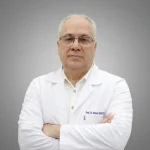 Prof. Dr. Ahmet Satıcı
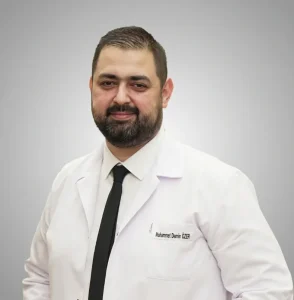
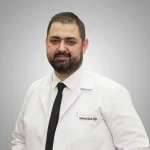 Doç. Dr. Muhammet Derda Özer
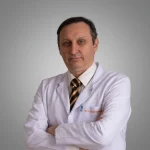 Op. Dr. Aysan Bayram