
- Home: eye surgery in Istanbul
- Knowledge centre
- Retina & glaucoma guides
Early Stage High Blood Pressure Eye Symptoms: Retina and Glaucoma Guides
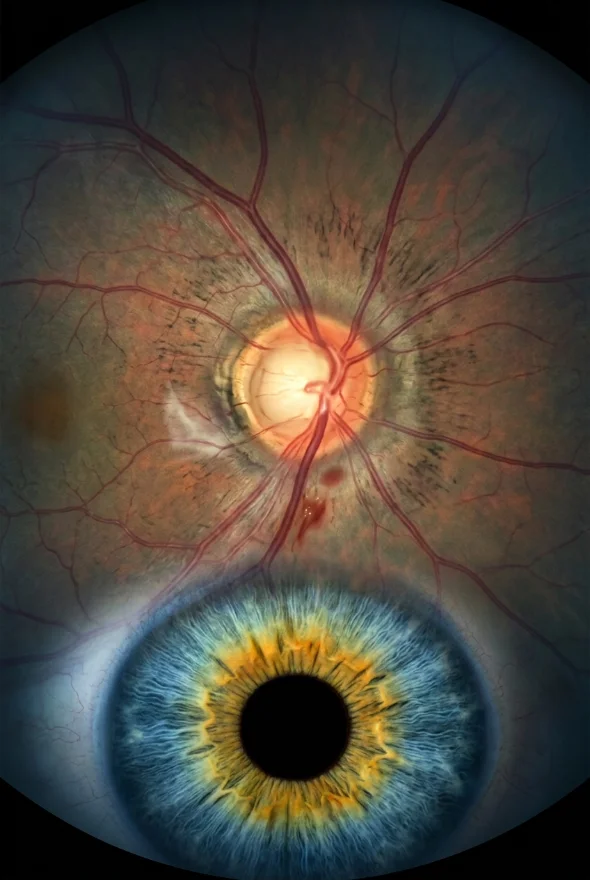
Early stage high blood pressure eye symptoms are usually absent: the retina can be damaged while vision still looks normal, so only an eye examination shows it. Blurred vision or headaches tend to appear later. Treatment is controlling blood pressure with your doctor. Our retina guides, led by Doç. Dr. Muhammet Derda Özer and Op. Dr. Aysan Bayram, and our glaucoma guides, led by Prof. Dr. Ahmet Satıcı, cover the rest.
Your retina is the light-sensitive layer at the back of the eye, and the optic nerve carries its signals to the brain. Both can be damaged slowly and silently, which is why early stage high blood pressure eye symptoms, early glaucoma and early diabetic eye disease are so often missed. According to the NHS, glaucoma usually has no symptoms at first and is typically found during a routine eye test, and the NHS says the early stages of diabetic retinopathy are typically symptom-free too.
This hub brings together our articles on the retina, glaucoma and stem cell treatments. Some cover emergencies that need action within hours, such as a retinal detachment. Others cover long-term conditions where the aim is to protect the sight you still have, such as glaucoma and diabetic retinopathy. One covers a topic that attracts a lot of hope and a lot of hype: stem cell therapy for the eye.
The articles are written for patients, in plain language, and are overseen by our surgeons. Doç. Dr. Muhammet Derda Özer ("Doç." is the Turkish title for Associate Professor) leads retina care with Op. Dr. Aysan Bayram, and Prof. Dr. Ahmet Satıcı leads glaucoma care. Every page says plainly what a treatment can and cannot do. Below the article cards you will find a short guide to how high blood pressure affects the eye, a table to help you pick the right article, and answers to the questions people ask most.
Needs urgent care where you are, not a trip abroad
Get same-day help from an eye emergency service, A&E or an urgent eye clinic near you if you notice:
- new floaters, flashes of light, or a dark curtain or shadow moving across your vision (possible retinal detachment; the NHS advises contacting NHS 111 straight away for these signs);
- sudden loss or blurring of vision in one eye, even without pain;
- severe eye pain with redness, blurred vision, halos around lights, nausea or vomiting (possible acute angle-closure glaucoma, which the NHS treats as an emergency);
- a severe headache with vision changes in someone with very high blood pressure.
Our articles on retinal detachment and floaters explain these warning signs in detail.
Retina and glaucoma articles
Retina
Retinal detachment: warning signs and urgent surgery
What it feels like when the retina pulls away from the back of the eye, why speed matters, and how vitrectomy, gas bubbles and other repairs work. Includes who is at higher risk, such as people who are short-sighted or have had eye surgery or injury.
Best for: anyone who has seen flashes or a curtain, or who has had a detachment before.
Reviewed by: Doç. Dr. Muhammet Derda Özer and Op. Dr. Aysan Bayram
Retinal detachment: warning signs and urgent surgeryEye floaters: when to worry and when vitrectomy helps
Why most floaters are harmless and come from age-related changes in the gel inside the eye, which signs mean an urgent check, and the limited cases in which surgery to remove floaters is considered.
Best for: people with new or annoying floaters.
Reviewed by: Doç. Dr. Muhammet Derda Özer and Op. Dr. Aysan Bayram
Eye floaters: when to worry and when vitrectomy helpsDiabetic retinopathy: treatment and prevention
How diabetes damages the retinal vessels, what screening looks for, and how laser, injections and vitrectomy are used. Blood sugar, blood pressure and cholesterol control all matter.
Best for: people with diabetes and anyone told they have retinopathy.
Reviewed by: Doç. Dr. Muhammet Derda Özer and Op. Dr. Aysan Bayram
Diabetic retinopathy: treatment and preventionBlurry vision after retina surgery: what is normal
What to expect in the weeks after vitrectomy or detachment repair, why vision is blurred while the eye heals or a gas bubble is present, and which changes mean you should call your surgeon.
Best for: people who have had retina surgery, or are about to.
Reviewed by: Doç. Dr. Muhammet Derda Özer and Op. Dr. Aysan Bayram
Blurry vision after retina surgery: what is normalGlaucoma
Glaucoma: symptoms, causes and when surgery is needed
How raised eye pressure damages the optic nerve, why most glaucoma has no early symptoms, who is at risk, and the point at which drops are no longer enough.
Best for: anyone newly diagnosed, with a family history, or told they have high eye pressure.
Reviewed by: Prof. Dr. Ahmet Satıcı
Glaucoma: symptoms, causes and when surgery is neededGlaucoma surgery options: SLT, MIGS, trabeculectomy
A plain-language tour of the laser, minimally invasive and traditional operations that lower eye pressure, and who each one usually suits.
Best for: people whose drops are not controlling their glaucoma, or who struggle to use them.
Reviewed by: Prof. Dr. Ahmet Satıcı
Glaucoma surgery options: SLT, MIGS, trabeculectomyTrabeculectomy vs trabeculotomy vs MIGS: which glaucoma operation?
A side-by-side comparison of three operations with similar names and different purposes: how invasive each is, how long recovery takes and what the risks are.
Best for: people choosing between operations after a glaucoma assessment.
Reviewed by: Prof. Dr. Ahmet Satıcı
Trabeculectomy vs trabeculotomy vs MIGS: which glaucoma operation?Trabeculectomy recovery and success rates
What the weeks after a trabeculectomy involve, the follow-up visits and eye drops, how success is measured and why the operation is not a cure.
Best for: people who have been advised to have, or have just had, a trabeculectomy.
Reviewed by: Prof. Dr. Ahmet Satıcı
Trabeculectomy recovery and success ratesStem cells and the eye
Stem cell therapy for eyes in 2026: what is proven and what is not
Limbal stem cell transplantation is an established operation for damage to the corneal surface; stem cell injections for the retina and optic nerve are still experimental. This article separates the two and explains how to spot clinics that overpromise.
Best for: anyone who has been offered stem cell treatment for an eye disease.
Reviewed by: Doç. Dr. Muhammet Derda Özer
Stem cell therapy for eyes in 2026: what is proven and what is notStem cells for macular degeneration and optic nerve damage: current trials
What researchers are testing for macular degeneration and optic nerve disease, how early those trials are, and why trial participation is different from an approved treatment.
Best for: people with macular degeneration or optic nerve damage who are researching new options.
Reviewed by: Doç. Dr. Muhammet Derda Özer
Stem cells for macular degeneration and optic nerve damage: current trialsWhat are the early stage high blood pressure eye symptoms?
Most people with early high blood pressure have no eye symptoms at all. The NHS says high blood pressure does not usually cause any symptoms, and only rarely headaches, blurred vision or chest pain, so a blood pressure check is the only reliable way to know. The eye is useful for this reason: a 2020 review in Clinical Optometry describes it as the only organ where the vascular changes of high blood pressure can be seen directly, and mild hypertensive retinopathy usually causes no symptoms and is found only when an eye doctor looks at the retina.
Hypertensive retinopathy is damage to the retina's small blood vessels caused by long-standing or very high blood pressure. Doctors grade it by what they see. This table follows the Wong–Mitchell classification described in the 2020 review:
| Grade | What the eye doctor sees | What you may notice |
|---|---|---|
| Mild (early stage) | Narrowing of the small arteries, "copper wiring" of vessel walls, or crossing changes where an artery presses on a vein | Usually nothing |
| Moderate | Small bleeds in the retina, cotton-wool spots, fatty "hard" deposits or tiny bulges in vessel walls | Often nothing; sometimes blurred or patchy vision |
| Severe (malignant) | All of the above plus swelling of the optic nerve head | Reduced vision, eye pain or headache; an emergency |
When early stage high blood pressure eye symptoms do appear
Symptoms usually mean the problem has moved beyond the early stage. EyeWiki, the American Academy of Ophthalmology's wiki, lists eye pain, headaches or reduced vision in acute malignant hypertension. High blood pressure also raises the risk of a retinal vein occlusion, a blockage of a vein draining the retina that typically causes sudden, painless blurring in one eye; EyeWiki reports that high blood pressure is present in up to 73% of people over 50 with central retinal vein occlusion. The NHS lists high blood pressure as a risk factor for age-related macular degeneration, and the American Academy of Ophthalmology lists it among the risk factors for glaucoma.
How is it found, and how is it treated?
An eye doctor diagnoses hypertensive retinopathy from the appearance of the retina on a dilated examination, together with a history of high blood pressure. Retinal photographs and OCT scans record the changes. The treatment is to bring blood pressure under control with your own doctor: according to EyeWiki, most retinal changes improve once blood pressure is controlled, although changes in the vessel walls can remain. Eye surgeons treat the complications, such as macular swelling or a vein occlusion, but not the blood pressure itself.
What you can do now
- Know your numbers. The NHS defines high blood pressure as 140/90 mmHg or higher in a clinic, or 135/85 mmHg or higher when measured at home, and recommends a check for adults aged 40 and over who have not had one in the past 5 years.
- Have a dilated eye examination if you have high blood pressure and have never had one, or if you also have diabetes.
- Do not wait for symptoms. If your vision suddenly changes, treat it as an emergency (see the box above).
Our retina team can examine and scan your retina, and Doç. Dr. Özer or Op. Dr. Bayram can advise on any damage that is found. Your blood pressure treatment stays with your own doctor.
Which guide should I read first?
| If you… | Start with |
|---|---|
| have seen flashes, new floaters or a dark curtain | Retinal detachment: warning signs and urgent surgery |
| have floaters that are more annoying than worrying | Eye floaters: when to worry and when vitrectomy helps |
| have diabetes, or have been told you have retinopathy | Diabetic retinopathy: treatment and prevention |
| have had retina surgery and your sight is blurred | Blurry vision after retina surgery: what is normal |
| have been told you have glaucoma or high eye pressure | Glaucoma: symptoms, causes and when surgery is needed |
| are comparing glaucoma operations | Glaucoma surgery options · Trabeculectomy vs trabeculotomy vs MIGS |
| are facing, or recovering from, a trabeculectomy | Trabeculectomy recovery and success rates |
| have been offered stem cell treatment | Stem cell therapy for eyes: what is proven · Stem cells for macular degeneration and optic nerve damage |
Eye problems often overlap, so you may need more than one guide. Our other knowledge-centre hubs cover lens and cataract surgery, laser eye surgery, cornea and eyelids, and the glossary explains unfamiliar terms.
Questions about high blood pressure, retina and glaucoma
Usually there are none. The NHS says high blood pressure does not usually cause symptoms, and mild hypertensive retinopathy is typically found only when an eye doctor examines the retina. When symptoms appear they can include blurred vision, headaches or eye pain, which suggest more advanced damage and need prompt medical review.
Yes. It can narrow and damage the small vessels of the retina (hypertensive retinopathy) and raises the risk of retinal vein occlusion. The NHS adds that high blood pressure puts strain on the brain, kidneys and eyes. A 2020 review notes that moderate retinopathy is also linked with a higher risk of stroke.
Partly. According to EyeWiki, most retinal changes improve when blood pressure is brought under control, but permanent changes in the vessel walls can remain. The earlier it is found and the better blood pressure is controlled, the better the outlook.
Your own doctor treats the cause, which is high blood pressure. An ophthalmologist examines and scans the retina and treats complications such as macular swelling or vein occlusion. In our team, Doç. Dr. Muhammet Derda Özer and Op. Dr. Aysan Bayram assess retinal disease; Op. Dr. Bayram speaks English and is a female surgeon, and Doç. Dr. Özer speaks Turkish and English.
Usually not. The NHS says glaucoma does not usually have symptoms and most people do not realise they have it. It is typically found at a routine eye test, which is why regular tests matter, especially over 50 or with a family history. Acute angle-closure glaucoma is different: severe eye pain, red eye, blurred vision and nausea are an emergency.
No. The NHS states that there is currently no cure, but drops, laser or surgery can slow the damage and help stop vision getting worse. The American Academy of Ophthalmology stresses that damage already done is permanent, so early treatment matters. Prof. Dr. Ahmet Satıcı leads glaucoma care in our team.
New floaters or a sudden increase in them, flashes of light, a dark curtain or shadow across your vision, sudden blurred vision, or sudden loss of sight in one eye. The NHS advises contacting NHS 111 or an eye service immediately for the first four. Do not travel for treatment in this situation: get seen locally the same day.
Not yet. The American Academy of Ophthalmology states that no stem cell products are approved by the US Food and Drug Administration for treating eye disease, and warns patients about clinics that sell unproven injections. Limbal stem cell transplantation for a damaged corneal surface is the established exception. Our two stem cell articles explain the difference.
In a fully equipped, Ministry of Health–licensed operating theatre in Istanbul. Every patient is examined and scanned first by the surgeon who will treat them, and surgery is recommended only if it suits your eyes.
More guides from the knowledge centre
Sources for the facts on this page
- *Medical facts (all opened and checked, October 2026):**
- NHS, High blood pressure (hypertension): usually no symptoms, rarely headaches, blurred vision or chest pain; a check is the only reliable way to know; 140/90 mmHg in clinic and 135/85 at home; adults 40+ to be checked if not in the last 5 years; strain on brain, kidneys and eyes. https://www.nhs.uk/conditions/high-blood-pressure-hypertension/
- Tsukikawa M, Stacey AW. A Review of Hypertensive Retinopathy and Chorioretinopathy. Clin Optom. 2020 (PMC7211319): the eye as the only organ where hypertensive vascular changes are seen in vivo; mild forms typically asymptomatic and found on fundus examination; Wong–Mitchell classification (mild, moderate, severe); moderate retinopathy linked with about 2–4 times higher incident stroke risk; complications include retinal vein and artery occlusion, optic neuropathy and macroaneurysms; treatment focuses on lowering systemic blood pressure. https://pmc.ncbi.nlm.nih.gov/articles/PMC7211319/
- EyeWiki (AAO), Hypertensive Retinopathy: many patients asymptomatic early; eye pain, headaches or reduced vision in acute malignant hypertension; signs by severity; blood-pressure reduction is the management; most retinal changes improve with control, arteriosclerotic changes persist. https://eyewiki.org/Hypertensive_Retinopathy
- EyeWiki (AAO), Central Retinal Vein Occlusion: high blood pressure present in up to 73% of CRVO patients over 50 and 25% of younger patients; sudden unilateral blurred vision; anti-VEGF first line for macular oedema. https://eyewiki.aao.org/Central_Retinal_Vein_Occlusion
- NHS, Glaucoma: damage to the optic nerve; usually no symptoms; usually found at a routine eye test; no cure but treatment can slow damage; acute angle-closure glaucoma (severe pain, red eye, blurred vision, nausea) is an emergency; treatments are drops, laser or surgery. https://www.nhs.uk/conditions/glaucoma/
- American Academy of Ophthalmology, What Is Glaucoma?: damage is permanent and cannot be reversed; open-angle most common and often symptomless early; risk factors include diabetes, high blood pressure and migraines; treatments include drops, laser and trabeculectomy or drainage implants. https://www.aao.org/eye-health/diseases/what-is-glaucoma
- NHS, Detached retina: floaters, flashes and a dark shadow or curtain; contact NHS 111 immediately; risk higher with short sight, previous eye surgery or injury. https://www.nhs.uk/conditions/retinal-detachment/
- NHS, Floaters and flashes in the eyes: usually caused by posterior vitreous detachment, a harmless age-related change, but can signal retinal detachment; urgent check for new or increasing floaters, flashes, a curtain or blurred vision. https://www.nhs.uk/conditions/floaters-and-flashes-in-the-eyes/
- NHS, Diabetic retinopathy: early stages typically without symptoms; screening every 1 or 2 years in the UK; treatment by laser, injections, implants and surgery; blood sugar, blood pressure and cholesterol control. https://www.nhs.uk/conditions/diabetic-retinopathy/
- NHS, Age-related macular degeneration (AMD): risk factors include ageing, smoking, high blood pressure, being overweight and family history. https://www.nhs.uk/conditions/age-related-macular-degeneration-amd/
- American Academy of Ophthalmology, Stem Cell Therapy for Eye Disease: What You Need to Know (4 Jun 2019): no FDA-approved stem cell products for eye disease; retinal uses unproven. https://www.aao.org/eye-health/tips-prevention/stem-cell-therapy-eye-disease-facts
- American Academy of Ophthalmology (EyeNet), The State of Limbal Stem Cell Transplantation (1 Nov 2024): limbal transplantation is established for limbal stem cell deficiency. https://www.aao.org/eyenet/article/limbal-stem-cell-transplantation
Worried about your retina or eye pressure? Ask a surgeon, free
Send your eye reports, OCT scans or visual field results. Doç. Dr. Özer, Op. Dr. Bayram or Prof. Dr. Satıcı will tell you what they see and whether any treatment may help, in writing, with no obligation. If your symptoms are sudden, see an eye emergency service near you first.
3 eye surgeons
Your case is reviewed by a named surgeon, not a salesperson. Reply within {{response time}}.
 Prof. Dr. Ahmet Satıcı
 Doç. Dr. Muhammet Derda Özer
 Op. Dr. Aysan Bayram