
- Home
- Knowledge centre
- Retina & glaucoma guides
- Selective Laser Trabeculoplasty vs Trabeculectomy, Trabeculotomy and MIGS: Which Glaucoma Operation?
Selective Laser Trabeculoplasty vs Trabeculectomy, Trabeculotomy and MIGS: Which Glaucoma Operation?
Selective laser trabeculoplasty vs trabeculectomy is rarely a straight either-or: the two are usually used at different stages of glaucoma. This guide compares all four options (SLT laser, MIGS, trabeculotomy and trabeculectomy) in plain English: what each one does, who it suits, what the studies show and what can go wrong.
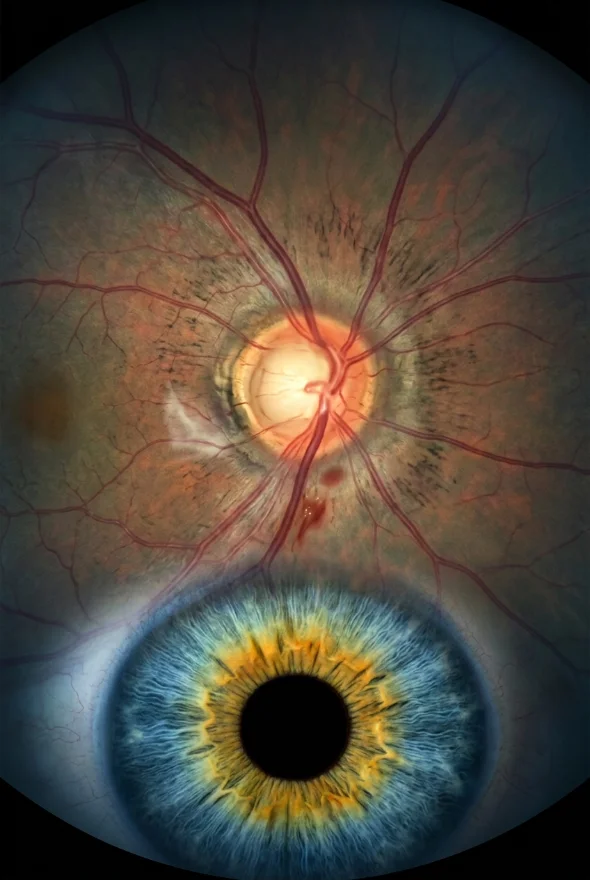
Selective laser trabeculoplasty (SLT) is a gentle laser used early. MIGS (micro-stents or small drainage cuts, usually added to cataract surgery) suits mild to moderate glaucoma. Trabeculotomy opens the eye's own drain with no bleb. Trabeculectomy builds a new drain and lowers pressure the most, so it is used for advanced or uncontrolled glaucoma, but it needs the most aftercare. Prof. Dr. Ahmet Satıcı helps match the operation to your stage.
How do the four glaucoma operations compare at a glance?
All four aim to do the same thing: lower the pressure inside the eye so the optic nerve is damaged more slowly. They differ in how much they lower it, how invasive they are and how long recovery takes. Glaucoma UK describes the usual route as moving from drops, through laser, to more invasive surgery as needed.
| SLT laser | MIGS (micro-stents, goniotomy) | Trabeculotomy (ab externo, GATT) | Trabeculectomy | |
|---|---|---|---|---|
| What it does | Laser stimulates the eye's own drain; no cut | Tiny stent or small cut improves flow through the eye's own drain | Opens the drain's canal (Schlemm's canal) from outside or inside the eye | Creates a new, guarded drain under a scleral flap that empties into a bleb |
| Bleb? | No | No (except subconjunctival devices) | No | Yes, for life |
| Typical stage | Newly diagnosed, not advanced; ocular hypertension | Mild to moderate, often with cataract surgery | Childhood glaucoma; selected adults | Moderate to advanced, or drops and laser not enough |
| Pressure effect | About 20–30% lower (5–8 mmHg) | Moderate; the trial benchmark is at least 20% | Moderate to good in selected adults | Largest; a mean of 12.4 mmHg at one year in a major trial |
| Recovery | Usually back to normal life next day | Days | Days to weeks | Weeks of check-ups |
| Main downside | Effect fades over years; can be repeated | Usually not enough for advanced disease | Bleeding in the eye is common (usually clears) | Most complications; lifelong bleb care |
Figures are from the studies cited below; your own result depends on your eye, your stage and your surgeon.
Selective laser trabeculoplasty vs trabeculectomy: which comes first?
SLT usually comes first and trabeculectomy later, because they treat different stages: SLT is a gentle laser for early glaucoma, while trabeculectomy is a surgical operation for glaucoma that is advanced or not controlled.
SLT in brief. According to EyeWiki, the American Academy of Ophthalmology's clinical encyclopedia, SLT uses a 3-nanosecond laser pulse to stimulate pigmented cells in the eye's drainage meshwork. It typically lowers pressure by 20–30% (about 5–8 mmHg). It can be repeated: in one study quoted by EyeWiki, repeat SLT kept pressure controlled without drops in 67% of 115 eyes at 18 months. The effect does fade, though: EyeWiki quotes success rates of 68% at one year, 46% at three years and 32% at five years. Side effects are mostly short-lived: a pressure spike above 5 mmHg in about 10% of eyes even with preventive treatment, mild inflammation, and rarely small adhesions in the drainage angle (1.1%).
Why SLT is often offered first. In the UK LiGHT trial of 718 untreated patients, 74.2% of those treated with SLT first needed no drops at three years. After six years, 69.8% of SLT eyes were still at target pressure without drops or surgery, fewer SLT eyes progressed (19.6% vs 26.8%), and far fewer needed a trabeculectomy (13 eyes vs 32 in the drops-first group). NICE guideline NG81 recommends SLT as first-line treatment for newly diagnosed open-angle glaucoma that is not advanced and for ocular hypertension, as summarised by the College of Optometrists; people with pigment dispersion syndrome are excluded.
When SLT is not enough. SLT is not suitable for every eye. EyeWiki lists active uveitis, neovascular glaucoma, iridocorneal endothelial syndrome and angle-closure with adhesions among the contraindications. And when glaucoma is advanced, or pressure stays above target after drops and laser, doctors move to surgery. That is the point where trabeculectomy, trabeculotomy and MIGS are compared.
Not an either-or. Having SLT does not rule out surgery later, but the LiGHT results suggest it makes it less likely. If you are weighing SLT against trabeculectomy, the real question is: what pressure does my optic nerve need, and has a gentler step already been tried?
What is MIGS, and who is it for?
MIGS (minimally invasive glaucoma surgery) is a group of small, quick operations done through a tiny corneal incision, which lower pressure modestly with a lower risk of serious complications than trabeculectomy. EyeWiki gives five defining features: a high safety profile, minimal disruption to the eye's anatomy, an approach from inside the eye (ab interno), a meaningful pressure-lowering effect (at least a 20% reduction or one fewer medication) and quick recovery that fits with cataract surgery.
Main types of MIGS (EyeWiki, with FDA approval years):
- Micro-stents in the drain: iStent (2012), iStent inject (2018), Hydrus (2018)
- Cutting or removing the meshwork (goniotomy): Kahook Dual Blade (2015), Trabectome (2004)
- Schlemm's canal procedures: such as OMNI and iTrack
- Subconjunctival gel stent: XEN (2016), which drains into a bleb like trabeculectomy
- Withdrawn: the CyPass stent was withdrawn in August 2018 after a 5-year trial showed a significant drop in corneal endothelial cell counts
What the trials show. In the iStent inject trial at 24 months, 75.8% of cataract-plus-stent eyes had a pressure reduction of at least 20%, against 61.9% for cataract surgery alone. In the Hydrus HORIZON trial the figures were 77.3% vs 57.8% at 24 months; at five years, 66% of Hydrus eyes were medication-free against 46% of cataract-surgery-only eyes, and incisional glaucoma surgery was needed in 2.4% vs 6.2%.
Who it suits. EyeWiki says MIGS suits mild to moderate glaucoma and that it is "often not sufficient treatment" for advanced disease needing a low target pressure, which is where trabeculectomy or a drainage tube is used. Many MIGS devices are approved for use during cataract surgery, so MIGS is a natural conversation if you need cataract surgery anyway.
MIGS vs trabeculectomy in one line: MIGS is gentler and recovers faster; trabeculectomy lowers pressure further.
Trabeculectomy vs trabeculotomy: what is the difference?
Trabeculectomy builds a new drain that empties into a bleb; trabeculotomy opens the eye's own drain, so there is no bleb.
Trabeculectomy. The surgeon makes a partial-thickness flap in the white of the eye, opens a small channel under it and applies an anti-scarring drug (mitomycin C or 5-fluorouracil). Fluid then drains into a small blister, the bleb, which the AAO says is usually hidden under the upper eyelid. It takes one to two hours under local anaesthetic, according to Glaucoma UK, and it does not cure glaucoma or bring back vision already lost. EyeWiki shows why the anti-scarring drug matters: without antimetabolites, pressure control was 48% and 40% at 3 and 5 years.
Trabeculotomy. The surgeon opens the meshwork so fluid can reach Schlemm's canal and the eye's natural outflow veins. It is done either from outside the eye through a scleral flap (ab externo, the classic version) or from inside through a tiny corneal opening (ab interno), where a thread or catheter is passed around the canal in gonioscopy-assisted transluminal trabeculotomy (GATT). EyeWiki describes the most common problem after ab-interno surgery as bleeding into the front of the eye (hyphaema), and reports GATT success ranging from 46% at 18 months to 89% at 2 years across studies.
| Trabeculectomy | Trabeculotomy | |
|---|---|---|
| Drain | New drain under a flap (bleb) | The eye's own drain (Schlemm's canal) |
| Pressure effect | Largest of the four | Moderate; limited by the eye's own outflow pathway |
| Typical patient | Moderate to advanced glaucoma | Congenital glaucoma; some adults who want a bleb-free option |
| Characteristic problems | Low pressure, bleb leak, bleb infection, cataract | Bleeding in the eye (hyphaema), pressure spike |
| Aftercare | Frequent early visits, stitch adjustment, long-term bleb care | Fewer visits |
How low can trabeculectomy go? In the Primary Tube Versus Trabeculectomy (PTVT) study, trabeculectomy with mitomycin C brought mean pressure to 12.4 mmHg at one year, with 0.9 glaucoma medicines on average. The MicroShunt trial found at five years that trabeculectomy lowered pressure by 9.1 mmHg (45%) against 5.5 mmHg (26%) for a subconjunctival micro-shunt.

Trabeculotomy vs goniotomy: how do they differ?
Goniotomy and trabeculotomy both open the eye's drain, but goniotomy works from inside the eye under direct view, while trabeculotomy opens the canal itself, either from outside or by threading it.
In children with congenital glaucoma, EyeWiki says angle surgery is the main treatment. Goniotomy is preferred by some surgeons when the cornea is clear enough to see the drainage angle; ab-externo trabeculotomy is the procedure of choice when a cloudy cornea blocks the view. EyeWiki reports success of 30–65% for goniotomy and 40–80% for trabeculotomy, with about 90% in infants diagnosed between 2 months and 1 year but under 50% in newborns and late-detected cases. When angle surgery fails, filtering surgery or drainage devices follow.
In adults, the modern ab-interno versions overlap. In a 12-month comparison of GATT with Kahook goniotomy, pressure fell from 21.2 to 13.2 mmHg with GATT and from 22.9 to 14.4 mmHg with goniotomy, with similar success rates, though bleeding in the eye was more frequent after GATT. Both are generally seen as MIGS-family operations for mild to moderate glaucoma.
Which operation is safest, and which carries the most risk?
In general, the gentler the operation, the lower the risk and the smaller the pressure drop. EyeWiki says MIGS carry a much lower risk of serious complications such as very low pressure (hypotony), fluid or bleeding behind the retina (choroidal effusion or haemorrhage) than traditional incisional surgery. The PTVT five-year safety analysis found early complications in 34% of trabeculectomy eyes and 19% of tube eyes, and serious complications requiring reoperation in 8% against 2%.
Risks of trabeculectomy that matter most:
- Early low pressure. EyeWiki puts shallow front chambers at 10–13%, wound leak at 6–11% and hypotony at 0.9–4%.
- Bleb infection. In a long-term study published in the British Journal of Ophthalmology in 2023, 1.44% of eyes developed a bleb-related infection over up to 28 years and 0.36% an infection inside the eye (endophthalmitis). That is low, but it never goes away, which is why a red, painful or sticky eye after trabeculectomy needs same-day care.
- Failure of the bleb. Scarring can close the new drain; the PTVT one-year failure probability for trabeculectomy was 7.9%, and the first weeks are spent fine-tuning it.
Risks of SLT, MIGS and trabeculotomy are generally milder (short pressure spikes, bleeding in the eye that clears), but none of them is risk-free, and none guarantees you will stop your drops. In HORIZON, 34% of Hydrus eyes were still on at least one medication at five years.
Which operation suits which situation?
Your surgeon decides after measuring pressure, scanning the optic nerve, repeating the visual field and examining the drainage angle. As a rough guide:
| Your situation | What is usually considered |
|---|---|
| Newly diagnosed, not advanced, or ocular hypertension | SLT (first-line in NICE guidance in the UK) |
| Mild to moderate glaucoma and you also need cataract surgery | Cataract surgery combined with MIGS |
| Pressure above target after drops and SLT, glaucoma still progressing | Trabeculectomy, a tube or a bleb-forming micro-shunt |
| Advanced glaucoma needing a low target pressure | Trabeculectomy (or a tube) |
| You want to avoid a bleb | Trabeculotomy or goniotomy in selected eyes |
| Glaucoma in a baby or child | Goniotomy or trabeculotomy, depending on the cornea |
| Glaucoma linked to uveitis, new vessels or previous eye surgery | Specialist planning; a drainage tube may be considered |
If your eye also has retinal disease, such as diabetic eye disease or a previous detachment, glaucoma surgery should be planned together with your retina care.
Can any of these restore lost vision? No. According to the NHS, glaucoma damage cannot be reversed, and Glaucoma UK stresses that vision already lost cannot be recovered and the condition is not cured. Operations protect the sight you still have. Repairing the optic nerve with stem cells is still experimental.
When it is an emergency. The NHS lists intense eye pain, a red eye and rainbow-coloured circles around lights as symptoms of acute glaucoma, and says to call 999 or go to A&E if they come on suddenly. Surgery abroad is for planned care and second opinions, never for emergencies.
Frequently asked questions
They do different jobs. SLT is a first-line laser for early glaucoma and ocular hypertension; in the LiGHT trial 74.2% of SLT-first patients needed no drops at three years. Trabeculectomy lowers pressure further, so it is used for advanced glaucoma or when drops and laser have not been enough.
Trabeculectomy usually lowers pressure the most. In the PTVT study it reached a mean of 12.4 mmHg at one year, and in the MicroShunt trial it lowered pressure by 45% against 26% for the micro-shunt. The price is more complications and a longer recovery.
MIGS is safer and recovers faster, but it lowers pressure less. EyeWiki says it suits mild to moderate glaucoma and is often not enough for advanced disease.
Trabeculectomy creates a new drain that empties into a bleb under the upper eyelid. Trabeculotomy opens the eye's own drain, so there is no bleb, but the pressure effect is usually smaller. Trabeculotomy is also a standard angle operation for children with congenital glaucoma, especially when the cornea is cloudy.
Both open the drainage meshwork. Goniotomy works from inside the eye under direct view, which needs a clear cornea; trabeculotomy opens Schlemm's canal, from outside the eye or by threading a suture or catheter around it (GATT). In adults the results of the modern versions are similar.
Yes. SLT is a laser with no cut and does not rule out later surgery; the LiGHT trial found that people treated with SLT first needed trabeculectomy less often over six years (13 eyes against 32).
Often fewer, but not always none. After trabeculectomy in the PTVT study, patients used on average 0.9 glaucoma medicines at one year. In HORIZON, 66% of Hydrus eyes were medication-free at five years. Your surgeon will tell you what to expect for your eye.
SLT is a short outpatient laser session. Glaucoma UK says trabeculectomy usually takes one to two hours under local anaesthetic. MIGS adds a few minutes to cataract surgery.
Thinking about glaucoma surgery or a second opinion?
Prof. Dr. Ahmet Satıcı, an ophthalmology professor who treats glaucoma, plans glaucoma surgery at Laser Istanbul Clinic. For glaucoma linked to uveitis or corneal disease, Doç. Dr. (Associate Professor) Muhammet Derda Özer joins the review, and for eyes that also have retinal disease, Op. Dr. Aysan Bayram does. You see the plan in writing before you travel, a personal interpreter stays with you at every appointment, and we send your full report to your own eye doctor.
Sources for the facts on this page
- EyeWiki (American Academy of Ophthalmology). Laser Trabeculoplasty. https://eyewiki.org/Laser_Trabeculoplasty
- EyeWiki (AAO). Microinvasive Glaucoma Surgery (MIGS). https://eyewiki.org/Microinvasive_Glaucoma_Surgery_(MIGS)
- EyeWiki (AAO). Trabeculectomy. https://eyewiki.org/Trabeculectomy
- EyeWiki (AAO). Ab Interno Trabeculectomy and Trabeculotomy. https://eyewiki.org/Ab_Interno_Trabeculectomy_and_Trabeculotomy
- EyeWiki (AAO). Primary Congenital Glaucoma. https://eyewiki.org/Primary_Congenital_Glaucoma
- American Academy of Ophthalmology. Glaucoma Treatment. https://www.aao.org/eye-health/treatments/glaucoma-treatment
- Glaucoma UK. Trabeculectomy surgery. https://glaucoma.uk/about-glaucoma/treatments-surgery/trabeculectomy-surgery/
- Glaucoma UK. Glaucoma treatments and surgery. https://glaucoma.uk/about-glaucoma/treatments-surgery/
- NHS. Glaucoma. https://www.nhs.uk/conditions/glaucoma/
- NICE. Glaucoma: diagnosis and management (NG81). https://www.nice.org.uk/guidance/ng81 (recommendation as summarised by the College of Optometrists, Acuity, Autumn 2023, "SLT: first line of defence". https://www.college-optometrists.org/professional-development/college-journals/acuity/all-issues/autumn-2023/slt-first-line-of-defence)
- Gazzard G, et al. Selective laser trabeculoplasty versus eye drops for first-line treatment of ocular hypertension and glaucoma (LiGHT). Lancet 2019. PMID 30862377. https://pubmed.ncbi.nlm.nih.gov/30862377/
- Gazzard G, et al. Laser in Glaucoma and Ocular Hypertension (LiGHT) Trial: Six-Year Results. Ophthalmology 2023. PMID 36122660. https://pubmed.ncbi.nlm.nih.gov/36122660/
- Ahmed IIK, et al. Long-term Outcomes from the HORIZON Randomized Trial for a Schlemm's Canal Microstent in Combination Cataract and Glaucoma Surgery. Ophthalmology 2022. PMID 35218867. https://pubmed.ncbi.nlm.nih.gov/35218867/
- Gedde SJ, et al. Treatment Outcomes in the Primary Tube Versus Trabeculectomy Study after 1 Year of Follow-up. Ophthalmology 2018. PMID 29477688. https://pubmed.ncbi.nlm.nih.gov/29477688/
- Gedde SJ, et al. Postoperative Complications in the Primary Tube Versus Trabeculectomy Study During 5 Years of Follow-up. Ophthalmology 2022. PMID 35835336. https://pubmed.ncbi.nlm.nih.gov/35835336/
- Panarelli JF, et al. Ab-Externo MicroShunt vs. Trabeculectomy in Primary Open-Angle Glaucoma: 5-Year Safety Results from a Randomized, Multicenter Study. Ophthalmology Glaucoma 2026. PMID 40912402. https://pubmed.ncbi.nlm.nih.gov/40912402/
- Yang et al. Bleb-related infection after trabeculectomy, 28-year follow-up. British Journal of Ophthalmology 2023. PMID 36283798. https://pubmed.ncbi.nlm.nih.gov/36283798/
- Comparison of surgical outcomes of suture gonioscopy-assisted transluminal trabeculotomy versus excisional goniotomy with Kahook Dual Blade at 12 months. Indian Journal of Ophthalmology 2026. PMID 42808863. https://pubmed.ncbi.nlm.nih.gov/42808863/