
- Home: eye surgery in Istanbul
- All eye treatments
- Laser eye surgery in Turkey
- Hyperopia (long-sightedness) treatment
Hyperopia Treatment in Istanbul: Laser and Lens Options for Long-Sightedness
Hyperopia treatment means correcting long-sightedness so that close-up things, and later distant things too, look sharp again. Glasses and contact lenses work for almost everyone; laser eye surgery or lens replacement can reduce or end your need for them. In Istanbul, your eyes are measured and treated by Prof. Dr. Ahmet Satıcı or Op. Dr. Aysan Bayram, who recommend laser or a lens only after your full examination.
Hyperopia (long-sightedness or farsightedness) is when the eye focuses light behind the retina, so near objects look blurred. It is treated with plus-powered glasses or contact lenses, laser eye surgery (usually up to +4.00 dioptres, according to the Royal College of Ophthalmologists) or lens replacement from about 50 or for higher prescriptions. In Istanbul, Prof. Dr. Ahmet Satıcı or Op. Dr. Aysan Bayram treats long sight with laser from {{£ price}} for both eyes; hotel and transfers are extra.
What is hyperopia? Meaning, the hyperopic eye and how to read your prescription
Hyperopia is a focusing (refractive) error in which nearby objects look blurry because light comes to a focus behind the retina instead of on it, as the US National Eye Institute (NEI) explains. The retina is the light-sensitive layer at the back of the eye. Hyperopia is also called hypermetropia, long-sightedness (UK) or farsightedness (US); all four words mean the same condition.
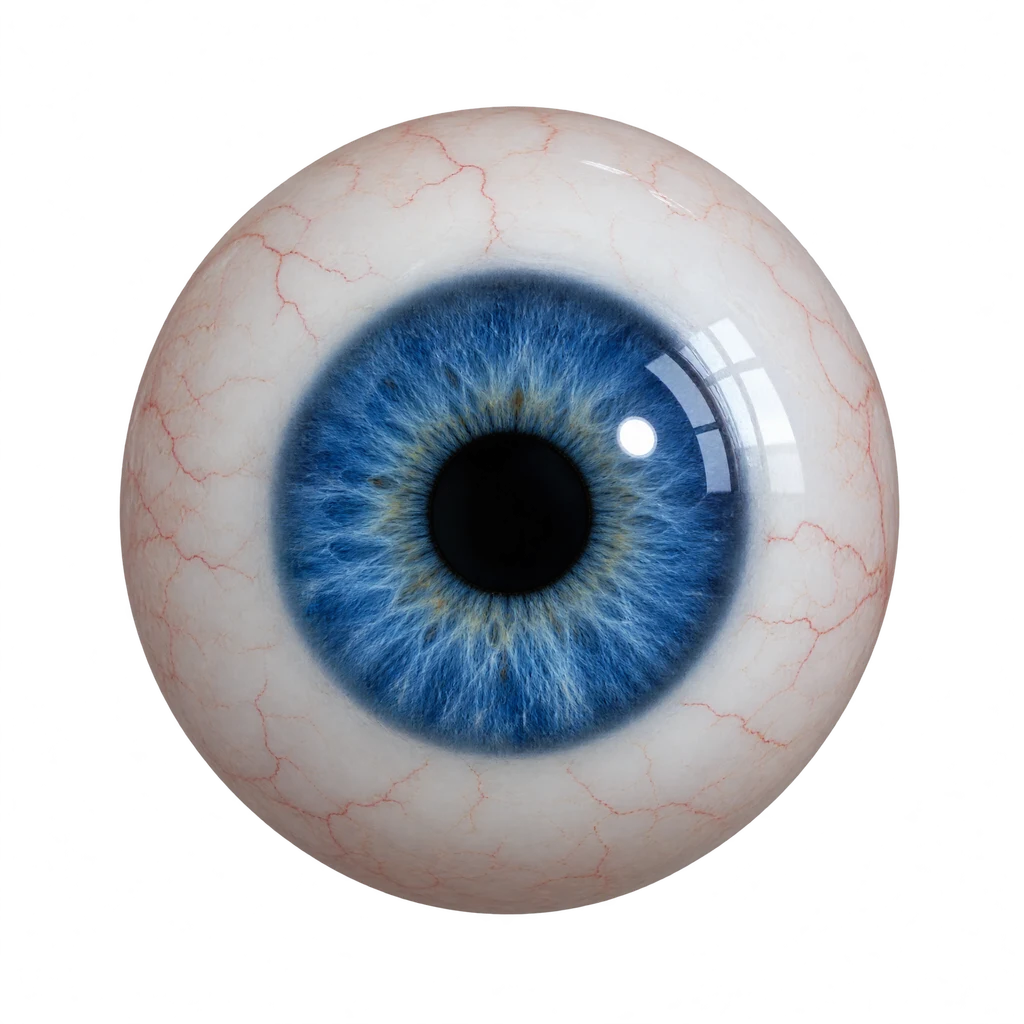
What a hyperopic eye looks like inside. A hyperopic eye is usually slightly too short from front to back, or its cornea (the clear front window) and lens are not curved enough to bend light strongly enough. The cornea does about two-thirds of the eye's focusing, which is why laser surgery, which reshapes the cornea, can correct long sight.
Why long-sighted people often see well when young. The natural lens inside the eye can change shape to add focusing power, a reflex called accommodation. The Royal College of Ophthalmologists (RCOphth) explains that younger people with hyperopia often have no problems seeing, because this flexible lens compensates. As the lens stiffens with age, long-sighted people first need reading glasses earlier than others, and then need glasses for distance too.
Is hyperopia farsightedness? Yes. "Farsighted" means you see far better than near, which is how hyperopia usually starts.
What is the opposite of hyperopia? Myopia (short-sightedness or nearsightedness): the eye focuses light in front of the retina, so distant objects are blurred. An eye with no focusing error is called emmetropic.
How to read a long-sighted prescription. Long sight is shown as a positive (plus) number in the sphere (SPH) column of your glasses prescription; short sight is a minus number. The American Academy of Ophthalmology (AAO) explains that OD means your right eye and OS your left eye.
What does "hyperopia OU" mean? OU stands for oculus uterque, Latin for "both eyes". "Hyperopia OU" on a report means you are long-sighted in both eyes. OU is rarely used on glasses prescriptions, because most people need a different power in each eye.
How much hyperopia is "high"? EyeWiki, the AAO's medical encyclopedia, grades hyperopia as:
| Grade | Prescription |
|---|---|
| Low hyperopia | +2.00 D or less |
| Moderate hyperopia | +2.25 D to +5.00 D |
| High hyperopia | +5.25 D or more |
In the United States, about 10% of people (roughly 14 million) are long-sighted, according to figures quoted by EyeWiki.
Hyperopia symptoms: how long-sightedness feels
The main symptom of hyperopia is blurred vision up close that clears when you hold things further away. The NHS, NEI and EyeWiki list these hyperopia symptoms:
- blurred reading, phone or screen text, which improves at arm's length
- eye strain: tired, sore or aching eyes after reading or screen work
- headaches linked to close work
- squinting or frowning to read
- in older long-sighted people, blurred distance vision as well, for example road signs at night
- in children: an eye turning inwards (a squint) or a lazy eye, sometimes with no complaint at all
Because the eye works hard to focus, mild long sight can cause eye strain long before it causes blur. If you or your child has these signs, the NHS advises going to an optician for an eye test.
What causes hyperopia?
Hyperopia is usually caused by the shape of the eye: an eyeball that is too short, or a cornea or lens that is too flat to focus light on the retina. The NHS adds that it is often inherited and cannot be prevented. The main hyperopia causes and risk factors are:
- Eye length and shape. A shorter eyeball is the most common cause (NEI, EyeWiki).
- Genes. Long sight runs in families; the NEI notes that most people are born long-sighted, and family history raises the risk.
- Birth factors. EyeWiki lists prematurity, low birth weight and maternal smoking in pregnancy as risk factors.
- Ageing of the lens. As accommodation weakens with age, "hidden" long sight becomes visible.
- Rare medical causes. The NHS says diabetes and eye tumours can very rarely cause long sight, which is one reason a full eye examination matters if your vision changes suddenly.
Hidden (latent) hyperopia. Young eyes can mask part of their long sight by focusing harder. Eye doctors uncover it with dilating, focus-relaxing drops (a cycloplegic refraction). EyeWiki recommends both a normal and a cycloplegic refraction before any treatment is chosen, and we do both before laser treatment.
Hyperopia vs presbyopia: are they the same?
No. Hyperopia is a focusing error caused mainly by the eye's shape and present from birth; presbyopia is the age-related loss of near focus that affects everyone from their 40s. They are often confused because both blur near vision, and long-sighted people feel presbyopia sooner.
| Hyperopia (long sight) | Presbyopia (ageing near vision) | |
|---|---|---|
| Cause | Eye too short, or cornea/lens too flat | Natural lens stiffens with age |
| When it starts | From birth; noticed at any age, often in the 30s or 40s | From the mid-40s, in everyone |
| What is blurred | Near first, then distance as you age | Near only (if distance vision is otherwise normal) |
| Glasses | Plus lenses for near and, later, distance | Reading glasses or varifocals |
| Surgical options | Laser, phakic lens, lens replacement | Blended-vision laser, lens replacement |
Many people over 45 have both. That combination is exactly where the choice between laser and lens replacement matters most (see below).
Hyperopia in children: when glasses are needed
Most babies are born slightly long-sighted, and mild hyperopia in young children often needs no treatment because their eyes focus through it easily. EyeWiki states that children aged 0–10 with uncomplicated low to moderate hyperopia usually do not need glasses, and that prevalence falls as children grow: in an Australian study, about 13% of 6-year-olds were long-sighted compared with 5% of 12-year-olds.
Higher long sight in childhood is different. The NHS warns that young children with severe long-sightedness are more likely to develop a lazy eye (amblyopia) and a squint. EyeWiki reports that infants with more than +3.50 D of uncorrected hyperopia are up to 13 times more likely to develop a squint by age 4. Glasses are the standard treatment for children; contact lenses usually wait until adolescence, and laser surgery is not used for growing eyes.
What parents can do: book regular eye tests, and see an eye doctor promptly if an eye turns in, your child avoids reading or complains of headaches. If a squint has developed, Prof. Dr. Ahmet Satıcı treats squint (strabismus) in children and adults.
Hyperopia treatment options compared
Hyperopia treatment depends on your age, how long-sighted you are and your eye health: glasses or contacts suit everyone, laser suits most adults up to about +4.00 D, and lens surgery suits higher prescriptions or people over about 50.
| Option | How it works | Usually suits | Main trade-off |
|---|---|---|---|
| Hyperopia glasses | Convex (plus) lenses add focusing power | Everyone, including babies and children | Daily dependence; varifocals can feel awkward |
| Contact lenses | Plus-powered lenses on the eye | Teenagers and adults | Infection risk: about 1 in 3,000 wearers a year develop a serious corneal infection (RCOphth) |
| Laser eye surgery (Femto-LASIK, PRK, Trans-PRK) | Reshapes the cornea to make its centre steeper | Adults 18+ with a stable prescription, usually up to +4.00 D | Some regression over the first year; touch-ups more common than for short sight |
| Phakic lens (ICL) | A lens is added in front of your own lens | Selected younger adults with higher long sight and enough space inside the eye | Intraocular surgery; long-sighted eyes often lack the space |
| Refractive lens exchange (RLE) | Your natural lens is replaced with an artificial lens | Usually over 50, or prescriptions beyond the laser range | Higher rate of serious complications than laser (RCOphth) |
Hyperopia glasses are the safest option and the right first step for most people. They have convex lenses, thicker in the middle, and the higher the plus number, the stronger and thicker the lens. Surgery is a choice, never a necessity, for adults who want to be less dependent on glasses.
Laser treatment for long sight: how hyperopic laser works
Laser surgery corrects hyperopia by removing a ring of tissue from the mid-periphery of the cornea, which makes the centre of the cornea steeper and increases its focusing power. EyeWiki describes this mid-peripheral ablation as the key difference from short-sight treatment, where the centre is flattened. Hyperopic treatments also need a larger treatment zone than short-sight treatments.
Three laser methods are used for long sight:
- Femto-LASIK. A femtosecond laser makes a thin flap, the excimer laser reshapes the cornea underneath, and the flap is laid back without stitches. Vision recovers fastest. This is the method most long-sighted patients have.
- PRK, LASEK or no-touch Trans-PRK. The thin surface skin of the cornea is removed and the excimer laser reshapes the surface. EyeWiki notes that refractive results are comparable to LASIK; surface treatment suits thinner corneas and some unusually flat or steep corneas, but recovery is slower and more uncomfortable.
- Hyperopic SMILE (lenticule extraction). A newer, flap-free option: hyperopic SMILE received a European CE mark in 2024 for the VisuMax 800 laser. It is not FDA-approved for long sight in the US, and long-term data are more limited than for LASIK. Ask your surgeon whether it is an option for your eyes.
Technology we use: {{femtosecond laser platform name}} and {{excimer laser platform name}}, in a fully equipped, Ministry of Health–licensed operating theatre in Istanbul. Your examination includes corneal topography and thickness, a dry-eye assessment, and refraction with and without dilating drops to uncover hidden hyperopia.
Who is suitable for laser hyperopia treatment?
You are most likely to be suitable if you are over 18, your prescription has changed by no more than 0.5 D in two years, and your long sight is up to +4.00 D (with astigmatism up to ±6.00 D), according to the RCOphth. Some people with higher prescriptions can still be treated, but EyeWiki notes that predictability for hyperopic laser is lower than for myopic laser and depends on the amount of long sight, any astigmatism and your age.
Laser is usually not the right choice if you have keratoconus or an irregular cornea, a cornea too thin for the planned treatment, severe dry eye, cataract, or active eye disease, or if you are pregnant or breastfeeding. Before your examination, stop wearing contact lenses so your cornea returns to its natural shape: the US FDA advises 2 weeks for soft lenses, 3 weeks for toric soft or rigid gas-permeable lenses and 4 weeks for hard lenses.
Over 45? The RCOphth notes that from the mid-40s surgeons often set one eye for distance and the other for arm's length (blended vision), which can reduce the need for reading glasses.
How well does laser work for long sight, and does it last?
Laser corrects low to moderate hyperopia well, but long-sighted corrections are less predictable than short-sighted ones and can partly regress, mostly in the first year. The published evidence:
- Modern lasers. In a 2015 study of 86 eyes treated with a sixth-generation excimer laser, 76% saw 20/20 or better without glasses three years after hyperopic LASIK, and 70% were within ±0.50 D of their target. The correction regressed by an average of 0.47 D, mostly in the first 12 months, and 29% of eyes had a re-treatment (Plaza-Puche et al., J Refract Surg 2015).
- Older lasers. A five-year study of 1990s-generation LASIK found that 71% of eyes treated for +1.00 to +3.00 D were within ±1.00 D of target, but only 37.5% of eyes treated for +3.50 to +6.00 D (Jaycock et al., Ophthalmology 2005). This is why surgeons are more cautious above about +4.00 D.
In short: the lower your long sight, the more predictable and stable the result. If you are near the top of the laser range, your surgeon will discuss a lens option with you as well.
Lens options for higher long sight or age 50+
For long sight beyond the laser range, or once the natural lens has aged, a lens-based treatment usually gives a more reliable result than laser.
Refractive lens exchange (RLE) is the same operation as modern cataract surgery: your natural lens is replaced with an artificial intraocular lens. The RCOphth says that if you are over 50 and your prescription is higher than the normal range for laser eye surgery, you are likely to be suitable, and that almost any level of long sight can be corrected. With multifocal (for example trifocal) lenses, about four in five patients are completely free of glasses, and about 95% are satisfied. Surgery takes about 20 minutes per eye, and you go home the same day.
RLE has an extra benefit for many long-sighted people. The RCOphth explains that long-sighted eyes often have a narrow space for fluid at the front (a shallow anterior chamber), which narrows further as the natural lens grows with age, raising the risk of angle-closure glaucoma, a sudden, painful rise in eye pressure. Because an artificial lens is much thinner than the natural lens, RLE can remove this future risk.
Phakic lens (ICL). For younger adults with higher long sight, a lens can be implanted in front of the natural lens, keeping your own focusing ability. EyeWiki notes that this needs enough depth in the front chamber and a healthy endothelial cell count, which many long-sighted eyes do not have. The RCOphth considers laser or a phakic lens generally better than RLE for most people under 50 who still have a clear, flexible natural lens.
Hyperopia treatment in Istanbul: price and what is included
At Laser Istanbul Clinic, laser treatment for long sight starts from {{£ price}} for both eyes, and refractive lens exchange with a trifocal lens from {{£ lens price}} for both eyes. Your surgeon confirms your exact price in writing after reviewing your prescription and scans, before you book anything.
Typical published prices, both eyes (2025–26):
| Where | Femto-LASIK | Trifocal lens replacement |
|---|---|---|
| UK private clinics | £3,000–5,600 | £6,000–11,000 |
| Germany private clinics | €2,400–4,600 | €5,800–9,000 |
| USA | $4,000–6,000 | $11,000–15,000 |
| Istanbul (published package prices) | about $1,450–2,700 | about $3,400–7,000 |
| Istanbul with Laser Istanbul Clinic | from {{£ price}} | from {{£ lens price}} |
UK, German, US and Istanbul figures are typical ranges published by clinics and price-comparison sites in 2025–26, not quotes. Published Istanbul prices are often packages that include a hotel.
Your treatment price includes:
- full pre-operative eye examination and scans, including refraction with dilating drops
- surgery on both eyes by your named surgeon
- medication and eye drops for your recovery
- follow-up checks in Istanbul with the same surgeon
- a personal interpreter, a dedicated coordinator and remote follow-up after you return home
Not included: flights, hotel and airport transfers. Hotel and transfers are a separate charge, and we can arrange them if you ask. In the UK, the NHS says laser and lens surgery for long-sightedness are not usually available on the NHS, and the RCOphth notes that they are not covered by private health insurance.
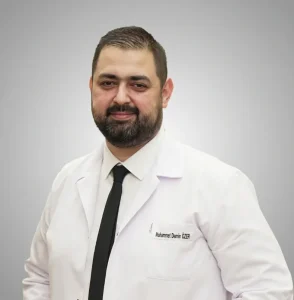
Your surgeons for long-sightedness

Your hyperopia treatment journey, step by step
Free online assessment
Send your glasses prescription (the plus numbers), any eye reports and your age. A surgeon tells you whether laser or a lens is more likely to suit you and sends a written quote within {{response time}}.
Book your dates
Plan 3–5 days in Istanbul for Femto-LASIK, longer for surface laser, and 5–7 days for lens replacement.
Full eye examination
Corneal topography and thickness, refraction with and without dilating drops, eye pressure, the depth of the front chamber of the eye, a dry-eye assessment and a retina check. If surgery is not right for you, your surgeon tells you and explains why.
Surgery
Laser takes about half an hour for both eyes under numbing drops; lens replacement about 20 minutes per eye. You return to your hotel the same day.
Check-ups
Your surgeon checks your eyes the next day and again before you fly. Most patients fly 1–3 days after Femto-LASIK.
Home
Your coordinator stays in touch, and your surgeon reviews your progress by video at agreed intervals.
Recovery after hyperopia treatment
| When | After Femto-LASIK for long sight | After lens replacement |
|---|---|---|
| First hours | Gritty, watery, light-sensitive eyes | Blurred, bright vision while the dilating drops wear off |
| Day 1 | Vision much clearer; many people return to work the next day (RCOphth) | First check-up; vision improving |
| First weeks | No eye rubbing or swimming; drops as prescribed | Drops as prescribed; red patches can take up to 6 weeks to fade (RCOphth) |
| First 3–12 months | Near and distance vision settle; most regression happens in the first year | Halos or light arcs, especially with multifocal lenses, usually lessen with time |
Do not drive until your surgeon confirms that you meet the driving standard. Call your coordinator straight away if you have increasing pain, redness or worsening vision.
Risks and side effects of hyperopia surgery
All hyperopia surgery carries some risk; serious problems are rare, but they are more common after lens surgery than after laser
After laser for long sight
- Regression and touch-ups. Some of the correction can return, mostly in the first year; in the 2015 study above, 29% of eyes had a re-treatment.
- Glare, halos and dry eye, usually improving over months (EyeWiki).
- Under- or over-correction. EyeWiki notes that younger patients tend towards under-correction and older patients towards over-correction after hyperopic LASIK.
- Loss of best-corrected vision, infection, inflammation or scarring, all uncommon.
After lens replacement (RLE)
Your surgeon explains your personal risks in writing, through your interpreter, before you sign anything.
- Permanent, serious loss of vision affects about 1 in 500 patients, significantly more than after laser or phakic lenses (RCOphth).
- Retinal detachment risk is about five times higher in the first four years after surgery (RCOphth).
- Clouding behind the lens (posterior capsule opacification) is common and is usually treated with a quick YAG laser procedure.
- Optical side effects with multifocal lenses; about 1% of patients cannot adapt and have the lens exchanged (RCOphth).
Hyperopia treatment: frequently asked questions
Hyperopia means long-sightedness: your eye focuses light behind the retina, so close objects look blurred while distant ones are usually clearer. It is also called hypermetropia or farsightedness. It is a focusing error, not an eye disease, and it is corrected with plus-powered glasses, contact lenses or surgery.
Yes. Hyperopia, farsightedness, long-sightedness and hypermetropia are four names for the same condition. "Farsighted" means you see far objects better than near ones.
The opposite of hyperopia is myopia, or short-sightedness. In myopia, light focuses in front of the retina and distant objects are blurred. On a prescription, myopia is a minus number and hyperopia a plus number.
OU means "both eyes" (from the Latin oculus uterque). "Hyperopia OU" means you are long-sighted in both eyes. OD is the right eye and OS the left.
Hyperopia is usually caused by an eyeball that is slightly too short, or a cornea or lens that is too flat to focus light on the retina. It often runs in families and is present from birth. Very rarely, conditions such as diabetes or eye tumours cause it, so sudden changes in vision should always be checked.
Laser surgery and lens replacement both correct hyperopia permanently in the sense that the change to your eye is lasting. After laser, some long sight can return, mostly in the first year, and a touch-up may be needed. Lens replacement gives a very stable prescription, but it carries a higher risk of serious complications.
The RCOphth says people with up to +4.00 D of long sight are the most likely to be suitable for laser. Higher prescriptions can sometimes be treated, but results become less predictable, so lens options are often discussed instead. Your surgeon decides after measuring your corneas.
Hyperopia often feels worse with age. As the eye's natural lens stiffens, it can no longer compensate for long sight, so long-sighted people need reading glasses earlier and later need glasses for distance as well. EyeWiki notes that loss of accommodation makes hyperopia worsen with age.
Laser usually suits adults under about 50 with long sight up to around +4.00 D and healthy corneas. Lens replacement usually suits people over 50, higher prescriptions, or eyes with a shallow front chamber or early cataract. The RCOphth says RLE is the default option over 65, though laser can still suit some older people with healthy eyes.
Not always. Mild long sight is normal in young children and often needs no glasses, but higher long sight, a squint or a lazy eye do need treatment, usually glasses. Have your child's eyes tested regularly.
Femto-LASIK in Istanbul is typically about $1,450–2,700 for both eyes on published price lists, and trifocal lens replacement about $3,400–7,000. With Laser Istanbul Clinic, laser for long sight starts from {{£ price}} and lens replacement from {{£ lens price}} for both eyes, including your examination, surgery, medication, follow-up, interpreter and coordinator. Hotel and transfers are extra.
Which laser method suits long sight?
Femto-LASIK and surface laser are the established laser treatments for long sight; SMILE methods are newer for hyperopia. The RCOphth notes that risks and benefits of the main laser methods are similar in the right patients; the differences are recovery speed, comfort and which corneas each suits.
| Femto-LASIK | PRK / LASEK / no-touch Trans-PRK | SMILE Pro / ReLEx SMILE | |
|---|---|---|---|
| Treats long sight? | Yes, the most common choice | Yes, with comparable results (EyeWiki) | Hyperopic SMILE CE-marked in Europe since 2024; mainly used for short sight |
| Flap | Yes | No | No (small incision) |
| Visual recovery | Fastest | Slowest | Slightly slower than LASIK |
| Often chosen for | Most long-sighted eyes with normal corneal thickness | Thinner corneas, flap-free preference | Active lifestyles; ask whether it suits your long sight |
LASIK & Femto-LASIK
LASIK & Femto-LASIK in IstanbulPRK / LASEK and no-touch laser
PRK / LASEK in IstanbulSMILE Pro and ReLEx SMILE
SMILE Pro in Istanbul (VisuMax 800)Sources for the facts on this page
- NHS, Long-sightedness (reviewed 7 Feb 2023): definition, symptoms (near blur, eye strain, headaches), causes (eye/cornea shape, lens stiffening; often inherited; very rarely diabetes or eye cancer), severe long sight in young children linked to lazy eye and squint, contact lenses usually for adults, laser and lens replacement under local anaesthetic, not usually available on the NHS. https://www.nhs.uk/conditions/long-sightedness/
- National Eye Institute (NIH), Farsightedness (Hyperopia): light focuses behind the retina; eyeball too short or cornea/lens shape; most people born farsighted; family history; severe cases raise risk of crossed eyes and amblyopia; glasses, contacts, corneal surgery in adults. https://www.nei.nih.gov/learn-about-eye-health/eye-conditions-and-diseases/farsightedness-hyperopia
- EyeWiki (AAO), Hyperopia: grading (low ≤+2.00 D, moderate +2.25 to +5.00 D, high ≥+5.25 D); US prevalence about 10% (14 million); childhood prevalence (Australia 13% at age 6, 5% at age 12); risk factors (family history, prematurity, low birth weight, maternal smoking); symptoms; amblyopia, accommodative esotropia, angle-closure; >+3.50 D in infants up to 13× squint risk by age 4; cycloplegic refraction; children 0–10 with uncomplicated low–moderate hyperopia usually need no treatment; glasses preferred in children, contacts from adolescence; hyperopia worsens as accommodation is lost. https://eyewiki.org/Hyperopia
- EyeWiki (AAO), Refractive Surgery for Hyperopia: mid-peripheral ablation steepens the central cornea; larger ablation zones; predictability lower than myopic LASIK, depends on degree, astigmatism and age; residual error linked to age (younger under-corrected, older over-corrected); PRK comparable to LASIK and suited to thin/flat/steep corneas; SMILE not FDA-approved for hyperopia, 93-eye study 95% 20/40 or better at 12 months; phakic IOL needs anterior chamber depth and endothelial count, Visian ICL not FDA-approved for hyperopia; pIOL preferable to RLE in young high hyperopes; manifest and cycloplegic refraction recommended; glare, halo, dry eye risks. https://eyewiki.org/Refractive_Surgery_for_Hyperopia
- American Academy of Ophthalmology, How to read your eyeglasses prescription: OD/OS, plus sign = farsightedness, minus = nearsightedness, SPH. https://www.aao.org/eye-health/glasses-contacts/how-to-read-eyeglasses-prescription
- Cleveland Clinic health library, How to read your eye prescription (source only, not named in the copy, per the no-facility-names rule): OU = oculus uterque, both eyes, rarely used. https://health.clevelandclinic.org/how-to-read-your-eye-prescription
- US FDA, What should I expect before, during, and after surgery?: contact-lens breaks before examination (2/3/4 weeks). https://www.fda.gov/medical-devices/lasik/what-should-i-expect-during-and-after-surgery
- Plaza-Puche AB, Yebana P, Arba-Mosquera S, Alió JL. Three-Year Follow-up of Hyperopic LASIK Using a 500-Hz Excimer Laser System. J Refract Surg 2015;31(10):674–82 (PMID 26469075): 86 eyes; 76% UDVA 20/20 or better; 70% within ±0.50 D; regression 0.47 D, mainly in first 12 months; 29% re-treated; 6.2% lost ≥1 line CDVA. https://pubmed.ncbi.nlm.nih.gov/26469075/
- Jaycock PD, O'Brart DP, Rajan MS, Marshall J. 5-year follow-up of LASIK for hyperopia. Ophthalmology 2005;112(2):191–9 (PMID 15691550): 71.0% within ±1.00 D for +1.00 to +3.00 D, 37.5% for +3.5 to +6.0 D; regression greater than expected from ageing. https://pubmed.ncbi.nlm.nih.gov/15691550/
- Healio, Patients demonstrate good results with hyperopic SMILE (7 Mar 2025, ESCRS winter meeting report): hyperopic SMILE received a CE mark in Europe in 2024. https://www.healio.com/news/ophthalmology/20250307/patients-demonstrate-good-results-with-hyperopic-smile
Find out which hyperopia treatment suits your eyes, free
Send us your glasses prescription and any eye reports. Prof. Dr. Satıcı or Op. Dr. Bayram will tell you whether laser, a lens or simply new glasses is the right answer for your long sight, and what treatment would cost, with no obligation.
3 eye surgeons
Your case is reviewed by a named surgeon, not a salesperson. Reply within {{response time}}.
 Prof. Dr. Ahmet Satıcı
 Doç. Dr. Muhammet Derda Özer
 Op. Dr. Aysan Bayram