
{{2–4 consented reviews from LASIK patients: first name, country, surgeon, date; or embedded Google/Trustpilot widget}}
- Home: eye surgery in Istanbul
- All eye treatments
- Laser eye surgery in Turkey
- LASIK & Femto-LASIK
LASIK in Turkey: Blade-Free Femto-LASIK in Istanbul
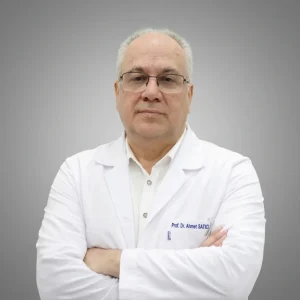
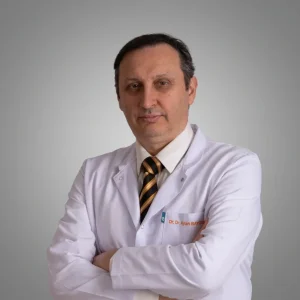
LASIK in Turkey with Laser Istanbul Clinic means blade-free Femto-LASIK in Istanbul, planned and performed by Prof. Dr. Ahmet Satıcı or Op. Dr. Aysan Bayram. Your surgeon measures your eyes before recommending anything, you see the full price in writing before you travel, and a personal interpreter stays with you from your first examination to your final check-up.
- from {{£ price}}both eyes
- ~30 minfor both eyes
- next daymany people return to work

LASIK reshapes the cornea under a thin flap to correct short sight, long sight and astigmatism. In Femto-LASIK, a femtosecond laser makes the flap instead of a blade. Both eyes take about half an hour, and many people return to work the next day. In Istanbul, Femto-LASIK with us starts from {{£ price}} for both eyes; hotel and transfers are extra.
What is LASIK, and what makes Femto-LASIK "blade-free"?
LASIK stands for laser in situ keratomileusis. It is the most common form of laser vision correction, and it changes the curvature of the cornea, the clear window at the front of the eye that does about two-thirds of your eye's focusing. Change its shape precisely and the eye focuses light correctly again, without glasses or contact lenses. Modern LASIK uses two lasers, one after the other:
A femtosecond laser makes the flap
It traces a plane of microscopic gas bubbles inside the cornea, creating a thin protective flap with a hinge. Your surgeon gently lifts it.
An excimer laser reshapes the cornea underneath
It removes a precisely calculated, lens-shaped layer of tissue in seconds, guided by your measurements. Many excimer lasers can also use a wavefront scan, an optical map of your eye, to plan the treatment.
The flap is laid back
It sticks in place on its own, without stitches, and protects the treated area while it heals. Because the surface skin of the cornea stays intact, vision recovers quickly.
Why "blade-free" matters
A laser-made flap is thinner and more predictable
Older LASIK cut the flap with a mechanical blade called a microkeratome. That is why Femto-LASIK is also called bladeless LASIK, all-laser LASIK or femto LASIK. According to the American Academy of Ophthalmology's EyeWiki, femtosecond lasers give the surgeon more control over the flap's diameter, thickness, edge angle and hinge position, with fewer flap problems such as buttonholes, free caps and irregular cuts. They can also make thinner, more predictable flaps, which leaves more of the cornea untouched. Studies summarised by EyeWiki report better visual outcomes than microkeratome LASIK for short sight, long sight and astigmatism.
Femto-LASIK has its own, mostly temporary, side effects. Some patients are unusually sensitive to light for days or weeks (transient light sensitivity), which is treated with drops. Some notice faint coloured bands around lights ("rainbow glare"). Your surgeon explains these for your eyes before you decide.
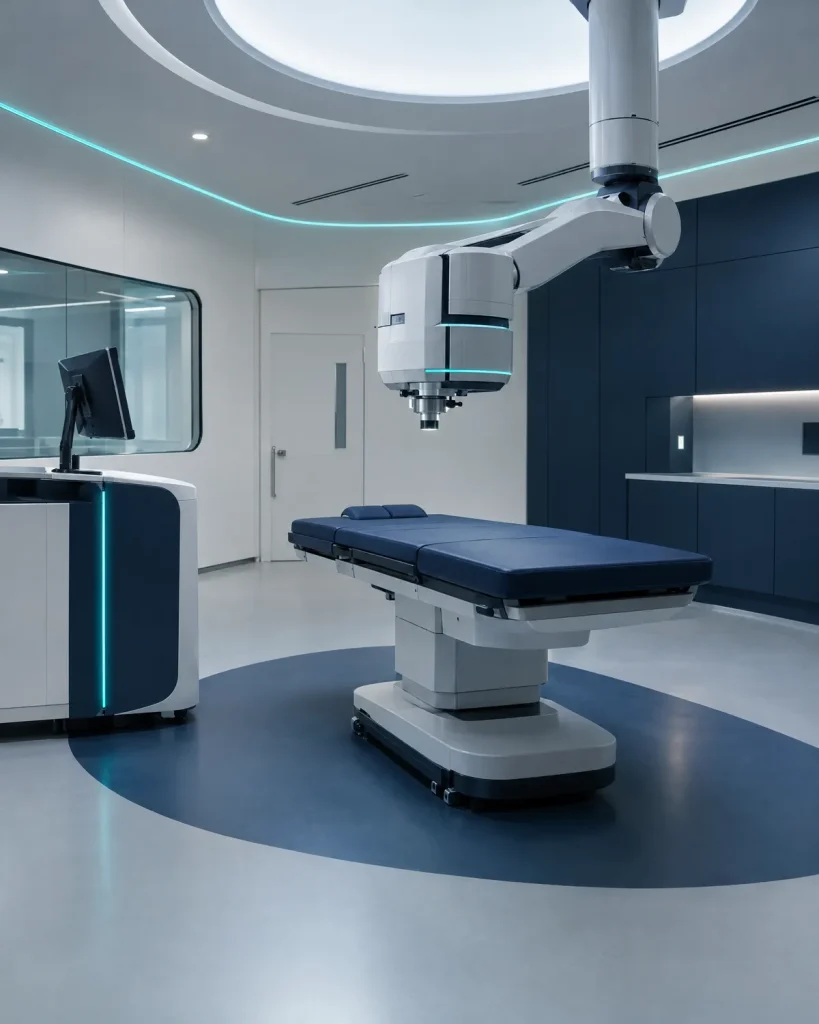
Technology we use: {{femtosecond laser platform name}} for the flap and {{excimer laser platform name}} for the reshaping, in a fully equipped, Ministry of Health–licensed operating theatre in Istanbul. Before that, your examination includes corneal topography, a corneal thickness measurement and a dry-eye assessment.
Who LASIK suits, and who should choose something else
The Royal College of Ophthalmologists (RCOphth) says you are most likely to be suitable for laser vision correction if you are over 18 and your glasses prescription has been stable, with no change greater than 0.5 dioptres in the last two years, and it falls within:
| Prescription | Usual range for laser vision correction |
|---|---|
| Short sight (myopia) | up to −10.00 D |
| Long sight (hyperopia) | up to +4.00 D |
| Astigmatism | up to ±6.00 D |
Some people outside these ranges can still be treated, and some inside them are better served by a lens implant. Your surgeon decides only after measuring your eyes.
LASIK is usually not the right choice if you have
- keratoconus, or a cornea whose shape on topography suggests early keratoconus
- a cornea too thin to leave a safe amount of untreated tissue after the flap and reshaping
- severe or poorly controlled dry eye
- cataract, advanced glaucoma, active eye infection or inflammation
- uncontrolled diabetes or autoimmune disease
- pregnancy or breastfeeding, or recent isotretinoin (acne) treatment
Why corneal shape and thickness are checked first
The most feared complication of LASIK is ectasia, a gradual bulging of a weakened cornea. EyeWiki lists abnormal pre-operative corneal topography as the single most significant identifiable risk factor. Scheimpflug tomography and modern screening software have reduced ectasia to roughly 1 in 5,000 cases. Surgeons also make sure enough cornea is left under the flap: at least 250 microns, with many preferring 300. If the numbers are borderline, your surgeon will suggest a surface treatment, SMILE Pro or an ICL lens instead.
LASIK eye surgery age limit
There is a minimum age (18) but no fixed upper age. From the mid-40s, when reading glasses start, the RCOphth notes that surgeons often aim for one eye focused for distance and the other for arm's length (blended vision). From about 50, or when early cataract appears, lens replacement often gives a better, longer-lasting result.
Before your examination
Stop wearing contact lenses so your cornea returns to its natural shape. The US FDA advises 2 weeks for soft lenses, 3 weeks for toric soft or rigid gas-permeable lenses and 4 weeks for hard lenses. Your coordinator will confirm the timing for your lenses.
LASIK vs Femto-LASIK at a glance
| Microkeratome LASIK (older method) | Femto-LASIK (blade-free) | |
|---|---|---|
| How the flap is made | Mechanical oscillating blade | Femtosecond laser |
| Flap thickness | Less predictable | Thinner and more predictable |
| Flap complications (buttonholes, free caps, irregular cuts) | Higher | Reduced |
| Corneal reshaping | Excimer laser | Excimer laser (the same step) |
| Possible specific side effects | Flap irregularities such as buttonholes or free caps | Temporary light sensitivity, rainbow glare, inflammation under the flap (usually mild) |
| What we offer | Not offered | Our standard LASIK |
LASIK in Turkey: price and what is included
Femto-LASIK starts from {{£ price}} for both eyes
Your surgeon confirms your exact price in writing after reviewing your prescription and scans, before you book anything.
Getting a LASIK eye surgery quote takes three steps: send your current glasses prescription, any recent eye report and, if you have them, previous topography scans. Your surgeon replies with suitable options and a written quote within {{response time}}.
Get my LASIK quoteTypical published prices for Femto-LASIK, both eyes (2025–26)
| Where | Typical price range |
|---|---|
| UK private clinics | £3,000–5,600 |
| Germany private clinics | €2,400–4,600 |
| USA | $4,000–6,000 |
| Istanbul (published package prices) | about $1,450–2,700 |
| Istanbul with Laser Istanbul Clinic | from {{£ price}} |
UK, German, US and Istanbul figures are typical ranges published by clinics and price-comparison sites in 2025–26, not quotes. Published Istanbul prices are often packages that include a hotel.
Your treatment price includes
- full pre-operative eye examination and scans with your surgeon
- Femto-LASIK on both eyes by your named surgeon
- medication and eye drops for your recovery
- follow-up checks in Istanbul with the same surgeon
- a personal interpreter, a dedicated coordinator and remote follow-up after you return home
Not included: flights, hotel and airport transfers. Hotel and transfers are a separate charge, and we can arrange them for you if you ask. In the UK, the RCOphth notes that laser vision correction is not available on the NHS and is not covered by private health insurance, so most patients pay privately wherever they are treated.
Your LASIK surgeons
Your LASIK journey, step by step
Free online assessment
Send your prescription and any eye reports. A surgeon tells you whether LASIK is likely to suit you and sends a written quote.
Book your dates
Plan 3–5 days in Istanbul. We help you choose dates with your surgeon and recommend flights.
Full eye examination (day 1)
Corneal topography, corneal thickness, refraction with and without dilating drops, a dry-eye assessment and a retina check. If LASIK is not right for you, your surgeon tells you and explains the alternatives.
Surgery (day 1 or 2)
Numbing drops are used, and a small clip keeps your eyelids open. You feel pressure for a few seconds while the flap is made, then look at a light while the excimer laser works; you may hear a ticking sound. Both eyes usually take about half an hour in total, and you return to your hotel the same day.
First check (the next day)
Your surgeon examines both eyes and the flaps.
Final check and home
Most patients can fly 1–3 days after LASIK, once their surgeon has checked their eyes. Your coordinator stays in touch, and your surgeon reviews your progress by video at agreed intervals.
Recovery timeline after Femto-LASIK
Do not drive until your surgeon confirms that your vision meets the driving standard. Call your coordinator straight away if you have increasing pain, light sensitivity, redness or blurred vision, or if your eye is injured.
- First few hours
Gritty, watery, light-sensitive eyes. Rest with your eyes closed and use lubricating drops often.
- Day 1
Vision is usually much clearer. Many LASIK patients can return to work the day after surgery. Washing and showering are fine from day one. Gym and jogging can restart.
- First week
Do not rub your eyes; wear the eye shields as your surgeon advises. No swimming. Use antibiotic and anti-inflammatory drops exactly as prescribed.
- Up to 6 weeks
Small red patches on the white of the eye (harmless bleeds) can take up to 6 weeks to fade.
- 1 month
Contact and combat sports can restart, not before.
- 1–3 months
Glare and halos at night and dry-eye symptoms usually improve within a few months.
- 3–6 months, up to 2 years
Vision may fluctuate slightly before it settles. Most changes after three months are very small, but full stabilisation can take up to two years.
Risks and side effects of LASIK
LASIK is one of the most studied operations in medicine. The numbers are reassuring, but they are not zero, and you should know them before you decide.
- 9 in 10achieve between 20/20 and 20/40 vision without glasses or contact lenses after LASIK (AAO)
- 95%+of patients are satisfied with the outcome (RCOphth)
- 2.55%retreatment rate in an 18-year audit summarised on EyeWiki
- ~1 in 5,000corneal ectasia with modern screening
Dry eye
The most common side effect. It usually settles within 6–12 months but persists in up to 20% of patients (EyeWiki). In the US FDA's PROWL studies of 534 LASIK patients, about 28% of those with no dry-eye symptoms before surgery reported some dry-eye symptoms at 3 months.
Glare, halos and starbursts
Especially at night and after higher prescriptions. In the same studies, 43–46% of participants reported at least one new visual symptom at 3 months, while dissatisfaction with vision was only 1–4%. Fluctuating vision in the first weeks is also common.
Less common risks
Under- or over-correction needing a touch-up: the RCOphth says up to 1 in 10 patients need some form of additional surgery to get the best result. Flap problems, inflammation under the flap and infection. Corneal ectasia (see above). Serious, permanent loss of vision is rare: fewer than 1 in 5,000 patients need a corneal transplant to restore vision after laser surgery (RCOphth).
Later in life
Tell any eye doctor that you have had LASIK. It can make eye-pressure readings for glaucoma read low, and it changes the calculations for future cataract surgery.
Your surgeon explains your personal risks in writing and through your interpreter before you sign anything.
What our LASIK patients say
Patient reviews and video stories{{2–4 consented reviews from LASIK patients}}
{{2–4 consented reviews from LASIK patients}}
LASIK in Istanbul: frequently asked questions
Femto-LASIK in Istanbul typically costs about $1,450–2,700 for both eyes on published price lists, which often bundle extras such as hotel stays. With Laser Istanbul Clinic it starts from {{£ price}} for both eyes, including your examination and scans, surgery, medication, follow-up checks, interpreter and coordinator. Hotel and transfers are extra. Your exact price is confirmed in writing after your free assessment.
The only difference is how the flap is made: traditional LASIK uses a mechanical blade, Femto-LASIK uses a femtosecond laser. The reshaping step with the excimer laser is the same. The laser-made flap is more predictable in thickness and has fewer flap complications, which is why we offer only blade-free Femto-LASIK.
The main benefit is clear distance vision without glasses or contact lenses, with a fast recovery: many people return to work the next day. The RCOphth describes vision after laser correction as similar to vision in contact lenses, without the discomfort and limitations. Older patients may still need glasses for reading.
The reshaping of your cornea is permanent, but your eyes can still change with age. In a 12-year follow-up of LASIK for moderate to high short sight, prescriptions shifted by an average of −0.74 dioptres between 3 months and 12 years, with no sight-threatening complications. Reading glasses in your 40s or 50s are caused by the natural lens ageing, not by LASIK wearing off.
Yes, LASIK can often be done twice: the flap can be lifted again, or a surface treatment used instead, if enough corneal thickness remains. Your surgeon measures this before advising. {{Your surgeons' enhancement and re-treatment policy, including how long touch-ups are included in the price.}}
You need to be at least 18 with a stable prescription, and there is no fixed upper age limit. From the mid-40s, blended vision can reduce the need for reading glasses; from around 50, or once early cataract appears, lens replacement is often the better option. Your surgeon recommends what fits your eyes and age.
No. Numbing drops are used, so you feel only pressure for a few seconds while the flap is made. Afterwards your eyes may feel gritty, watery and sensitive to light for a few hours. Lubricating drops keep you comfortable.
Plan 3–5 days in Istanbul. Most patients can fly 1–3 days after LASIK, once their surgeon has checked their eyes.
The best LASIK for you is the one that suits your corneal thickness, prescription, lifestyle and age, not the most expensive one. For many people that is Femto-LASIK; for thin corneas, contact sports or dry-eye-prone eyes it may be SMILE Pro or a surface treatment. Your surgeon recommends one only after your scans.
LASIK in Turkey can be as safe as at home when an experienced ophthalmologist performs it after full pre-operative tests, in a properly equipped operating theatre. Before you book, check your surgeon's name and qualifications, where the surgery takes place and how aftercare works once you are home. We give you all of this in writing before you pay.
Other laser options in Istanbul
LASIK is not the only way to reshape the cornea. The RCOphth notes that visual results at three months are equally good for all types of laser vision correction; the main differences are recovery speed, comfort and which corneas each suits.
| Femto-LASIK | SMILE Pro / ReLEx SMILE | PRK / LASEK / no-touch Trans-PRK | |
|---|---|---|---|
| How it works | Laser-made flap, then excimer reshaping | Femtosecond laser shapes a thin lens of tissue, removed through a small incision; no flap | Surface skin removed (by the surgeon, alcohol or the laser itself), then excimer reshaping |
| Visual recovery | Fastest; often back to work the next day | Slightly slower than LASIK | Slowest; a week or longer before driving standard |
| Comfort in the first days | Mild grittiness for a few hours | Eye-surface comfort may recover slightly faster | Sore for several days while the surface regrows |
| Contact sports | Wait at least 1 month | Sooner than LASIK | Sooner than LASIK |
| Often chosen for | Most prescriptions with normal corneal thickness | Active lifestyles, contact sports | Thinner corneas, flap-free preference |
SMILE Pro in Istanbul (VisuMax 800)
Flap-free keyhole laser correction through a small incision. A good choice if you play contact sports or want to avoid a flap.
PRK / LASEK
Surface laser treatment without a flap, often recommended for thinner corneas. Recovery is slower and more uncomfortable, but the long-term results are similar.
Laser for reading glasses
Blended-vision laser treatment that sets one eye for distance and the other for arm's length.
Presbyond, 40+Find out if Femto-LASIK suits your eyes, free
Send us your glasses prescription and any eye reports. Prof. Dr. Satıcı or Op. Dr. Bayram will tell you whether LASIK, SMILE Pro or another option suits you, and what it would cost, with no obligation.
3 eye surgeons
Your case is reviewed by a named surgeon, not a salesperson. Reply within {{response time}}.
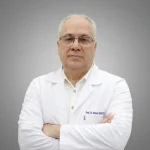 Prof. Dr. Ahmet Satıcı
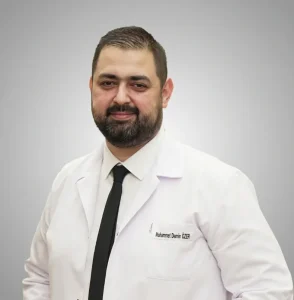
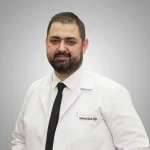 Doç. Dr. Muhammet Derda Özer
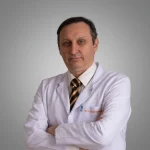 Op. Dr. Aysan Bayram