1. Home
  2. Patients from the UK

Eye Surgery Abroad for UK Patients: Cataract, Lens and Laser Surgery in Istanbul

Cataract surgery, lens replacement and laser eye surgery in Istanbul, about four hours from London, with one of three named eye surgeons: Prof. Dr. Ahmet Satıcı, Doç. Dr. Muhammet Derda Özer or Op. Dr. Aysan Bayram. Your price is in pounds and in writing before you fly, and a personal interpreter is with you at every appointment.

  • ~4 hflight from London
  • No visafor British citizen passports, up to 90 days
  • £your price in pounds, in writing
  • Medically reviewed by {{surgeon name}}, {{date}}
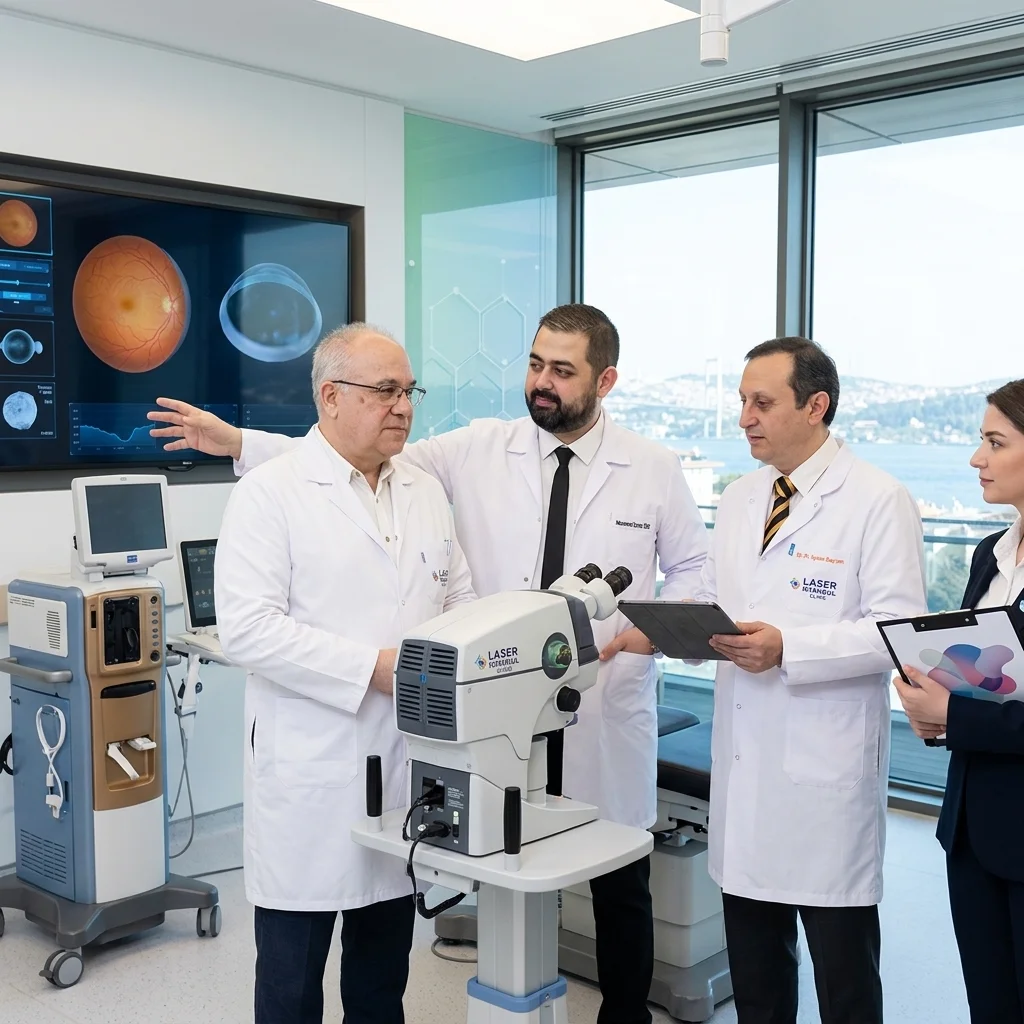
Eye surgeons reviewing scans together in a diagnostic room

Eye surgery abroad from the UK makes most sense when you want something the NHS doesn't fund, such as a premium multifocal lens or laser eye surgery, or when your local wait is long and you would rather pay than wait. In Istanbul, your surgery is done by a named, experienced ophthalmologist, usually within a few weeks of booking. British passport holders don't need a visa for short stays, and flights from London take about four hours.

NHS waiting times for eye surgery

If your local NHS wait is short and a standard lens suits you, NHS surgery may well be the right choice for you. The problem for many people is time.

  • 620,931people in England waiting to start NHS eye treatment at the end of July 2026
  • 72.9%had been waiting less than 18 weeks, against an NHS standard of 92%
  • 1 in 4+on the eye-treatment waiting list beyond the 18-week mark

Official NHS England referral-to-treatment statistics

These figures cover all NHS eye treatment in England, including cataract surgery; Scotland, Wales and Northern Ireland publish their own figures. Waits also vary a lot between hospitals. Ask your GP, optometrist or hospital how long your own wait is likely to be, and whether another hospital nearby could see you sooner. It's worth knowing that figure before you decide to travel.

Who travels for cataract surgery abroad? Mostly people who:

Face many months of waiting

Have been told their wait will be many months and are struggling to drive, read or work in the meantime.

Want a premium lens

Which the NHS doesn't offer (see below).

Want both eyes done in one trip

Rather than waiting twice.

Can't justify a UK private price

Have been quoted a private UK price they can't justify.

Eye surgery abroad from the UK: prices in pounds

Typical published prices (both eyes unless stated, 2025–26):

TreatmentUK private (typical published prices)Istanbul with Laser Istanbul Clinic
Laser eye surgery (Femto-LASIK)£3,000–5,600from {{£ price}}
SMILE / SMILE Pro£4,400–7,600from {{£ price}}
Trifocal lens replacement (RLE)£6,000–11,000from {{£ price}}
Cataract surgery, monofocal lens (per eye)£2,500–3,500from {{£ price}}
Cataract surgery with a premium lens (per eye){{UK private range}}from {{£ price}}

UK figures are typical ranges published by UK clinics and price-comparison sites in 2025–26, not quotes. Laser eye surgery in Istanbul typically costs about £1,100–2,700 for both eyes across published price lists, depending on the method. Your own price is set by your surgeon after reviewing your eyes and is confirmed in writing, in pounds, before you pay a deposit.

Included

Your treatment price includes

Your full pre-operative examination and scans, surgery by your named surgeon, medication and eye drops, follow-up checks in Istanbul with the same surgeon, a personal interpreter, a dedicated coordinator, and remote follow-up once you're home.
Extra

Not included

Flights, hotel and airport transfers. Hotel and transfers are a separate charge; we can book them for you on request. Budget for these, and for specialist travel insurance (see below), when you compare with a UK quote.

Istanbul at dusk, across the Bosphorus

Flights from UK airports

About four hours from London

Istanbul has two international airports: Istanbul Airport (IST) on the European side and Sabiha Gökçen (SAW) on the Asian side. Check which one your flight uses before you book a hotel, because they're on opposite sides of the city.

  • Turkish Airlines flies to Istanbul from six UK airports: London Heathrow, London Gatwick, London Stansted (since March 2026), Manchester, Birmingham and Edinburgh.
  • Pegasus Airlines flies from London Stansted and London Gatwick to Sabiha Gökçen; Pegasus gives the flight time as about 3 hours 45 minutes to 3 hours 55 minutes.
  • {{flight info: other airlines and regional UK airports with direct flights, e.g. British Airways from Heathrow, and any routes from Bristol, Glasgow, Newcastle or Belfast, checked before publishing}}

Flights are not included in your treatment price. Book them once your surgeon has confirmed your dates, and choose a flexible fare for the return leg if you can, in case your surgeon wants one more check before you fly.

How long to stay

Plan for 3–5 days for laser eye surgery and 5–7 days for lens replacement or cataract surgery, including your examination, surgery and check-ups.

When you can fly

Most patients can fly 1–3 days after laser surgery and about 3–7 days after lens or cataract surgery, once their surgeon has checked the eye. After some retina operations that use a gas bubble, flying isn't safe for several weeks; your surgeon will plan your dates around this.

Entry rules for British passport holders

According to the UK government's travel advice for Turkey (still current on 6 October 2026):

No visa needed

For a British citizen passport: you can visit Turkey without a visa for up to 90 days in any 180-day period, for tourism or business.

Passport validity

Your passport must have an expiry date at least 150 days after the date you arrive in Turkey.

Blank page

Your passport needs at least one blank page.

Health cover

The UK Global Health Insurance Card (GHIC) and EHIC are not valid in Turkey, and the GHIC doesn't cover planned treatment abroad anywhere. Standard travel insurance doesn't normally cover you if you travel for elective surgery, so look for a specialist policy that covers treatment abroad and possible complications, and tell your insurer about your plans.

Rules can change, and they're different for other British passport types. Check the gov.uk Turkey entry requirements before you book and again before you travel.

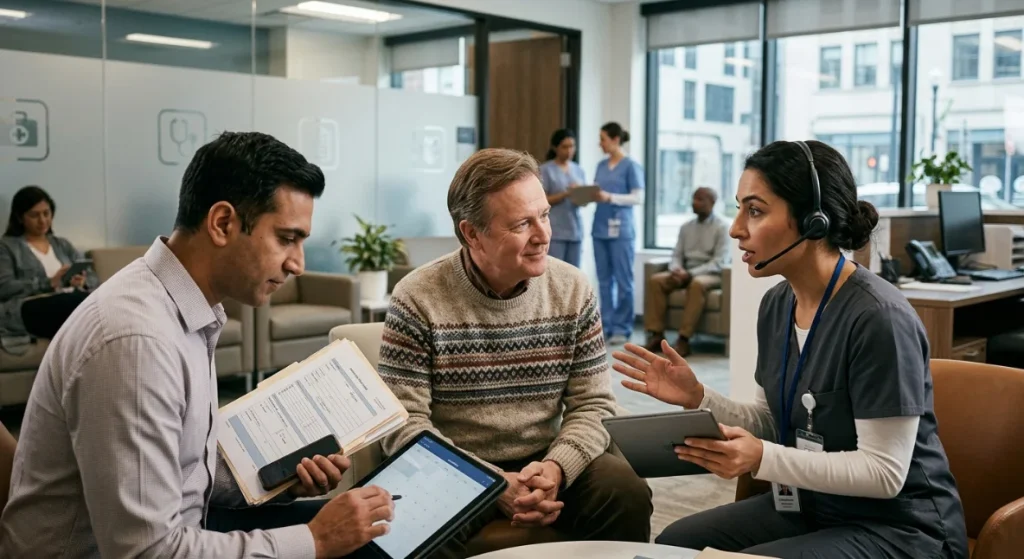
A patient talking with a patient coordinator

An English-speaking interpreter at every appointment

You won't need a word of Turkish

A personal interpreter joins your examination, your consent discussion, your surgery day and your check-ups, so nothing is lost between you and your surgeon. Doç. Dr. Özer and Op. Dr. Bayram both speak English, and the interpreter is there anyway, because medical conversations are easier with someone whose only job is to make sure you've understood.

Your coordinator handles appointments, documents and questions before and after your trip, by WhatsApp, phone or email. Your surgical report, lens details and medication plan are given to you in English, ready for your UK optometrist or GP.

Aftercare back in the UK

This is the part of eye surgery abroad that deserves the most thought, so here is exactly how it works.

  1. Before you leave Istanbul

    Your surgeon examines you again and only signs you off to fly when your eye is ready. You go home with your full surgical report in English, the exact lens model and power (for lens and cataract surgery), your drop schedule and direct contact details for your coordinator.

  2. Once you're home

    Your coordinator stays in touch, and your surgeon reviews your recovery by video at agreed intervals. If you need to be seen in person, we help you arrange it with a local optometrist or ophthalmologist and share your full records with them. {{complication policy: who pays for an in-person UK review or further treatment, and whether re-treatment in Istanbul and the travel for it are covered}}

  3. Tell your optometrist

    After laser eye surgery, remind your optometrist or doctor that you've had it whenever your eye pressure is checked for glaucoma, because laser surgery can make pressure readings read low. If you ever need cataract surgery after laser surgery, tell the surgeon and bring your old prescriptions; it helps them choose the right lens power.

  4. Keep your GP and optometrist in the loop

    Tell your GP or optometrist about your plans before you go; your surgeon's written treatment plan and quote are yours to share with them. For an emergency, NHS eye casualty and A&E are there for you. For everything else, such as questions about drops, healing or your next check, your coordinator and surgeon are your first contact, and your English surgical report means any UK eye professional can see exactly what was done.

Know the warning signs. Contact your surgeon without delay if you notice increasing pain, light sensitivity, redness or blurring. After cataract or lens surgery, a sudden shadow in part of your vision, flashing lights or a sudden shower of new floaters can mean a retinal detachment and needs urgent attention: go to your nearest eye casualty or A&E, then let us know.

{{optional: one short video story from a UK patient}}

{{2–4 real reviews from UK patients, with first name, town or region, treatment, surgeon and date; or an embedded Google/Trustpilot widget filtered to UK reviews}}

{{2–4 real reviews from UK patients}}

Questions UK patients ask

It can be, if you need something the NHS doesn't fund or your NHS wait is long. Premium lens replacement and laser eye surgery are self-pay in the UK, and typical UK private prices are well above Istanbul prices for the same type of procedure. Weigh the saving against flights, hotel, time off work and how your aftercare will work at home before you decide.

It depends on your hospital. At the end of July 2026, 620,931 people in England were waiting for NHS eye treatment, and 72.9% had waited under 18 weeks, below the 92% standard. Ask your hospital or GP for your own expected wait; some areas are much faster than others.

No. NHS cataract surgery uses monofocal lenses (and toric lenses for significant astigmatism). Multifocal lenses are available, but not as an NHS patient, so in the UK you would pay for the whole operation privately.

Usually not. The NHS only offers laser or lens surgery in specific cases, such as an eye condition that could lead to sight loss or vision problems that glasses or contact lenses can't correct. Laser surgery simply to stop wearing glasses is self-pay.

Typical UK private prices for monofocal cataract surgery are about £2,500–3,500 per eye. With Laser Istanbul Clinic, cataract surgery starts from {{£ price}} per eye, including your examination, surgery, medication and check-ups; hotel, transfers and flights are extra. Your surgeon confirms your exact price in writing after reviewing your eyes.

No, not for a short visit. British citizen passport holders can visit Turkey without a visa for up to 90 days in any 180 days. Your passport must be valid for at least 150 days from the date you arrive and have one blank page. Check gov.uk before you travel, as rules can change.

No. The GHIC and EHIC aren't valid in Turkey, and they don't cover going abroad for planned treatment. Buy specialist travel insurance that covers treatment abroad and possible complications.

Contact your coordinator straight away; your surgeon reviews your eye by video and, if you need to be seen in person, we help you arrange it locally and send your records. For an emergency, go to eye casualty or A&E first. {{complication policy, one sentence}}

Often, yes. Laser eye surgery is usually done on both eyes on the same day. For lens and cataract surgery, your surgeon will tell you whether both eyes can be treated during one stay and how many days to allow, after examining you.

Send us your prescription. A surgeon will reply.

Message us your glasses prescription, any NHS or optician letters and your questions. Prof. Dr. Satıcı, Doç. Dr. Özer or Op. Dr. Bayram will tell you which treatments may suit your eyes and what they would cost in pounds, with no obligation. You'll get a reply within {{response time}}.

3 eye surgeons

Your case is reviewed by a named surgeon, not a salesperson. Reply within {{response time}}.

  • Prof. Dr. Ahmet SatıcıProf. Dr. Ahmet Satıcı
  • Doç. Dr. Muhammet Derda ÖzerDoç. Dr. Muhammet Derda Özer
  • Op. Dr. Aysan BayramOp. Dr. Aysan Bayram