
- Home: eye surgery in Istanbul
- How it works
- Travel, hotel and how long to stay
How Long to Stay in Turkey After Laser Eye Surgery: Travel, Hotel and Flying Home
How long to stay in Turkey after laser eye surgery depends on the treatment: most patients need 3–5 days in Istanbul for laser eye surgery and 5–7 days for lens replacement or cataract surgery. This page shows how many days to book for each treatment, when you can fly home, how hotels and airport transfers work, and how to make your recovery in Istanbul easy.
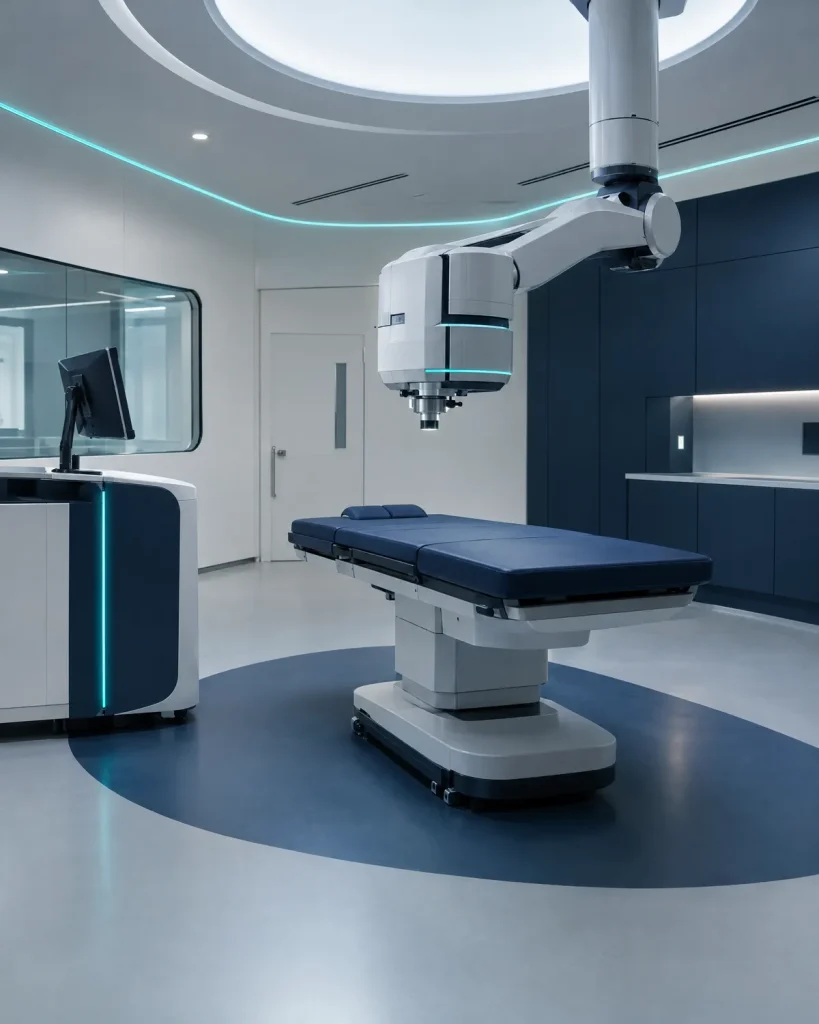
Plan 3–5 days in Istanbul for Femto-LASIK or SMILE Pro, a longer stay for surface laser (PRK), and 5–7 days for lens replacement or cataract surgery. That covers your examination, surgery and check-ups. Most patients fly 1–3 days after laser surgery and about 3–7 days after lens surgery, once their surgeon has checked the eye. Your surgeon, Prof. Dr. Ahmet Satıcı, Doç. Dr. Muhammet Derda Özer (Doç. means Associate Professor) or Op. Dr. Aysan Bayram, confirms your exact dates before you book flights.
How long to stay in Turkey after laser eye surgery, by treatment
The short answer for laser is 3–5 days in total, and the longer answer depends on the treatment, the surgeon's check-up schedule and whether your eye needs a gas bubble. The table shows typical stays. Your surgeon confirms your own number of nights in writing, with your quote, before you book anything.
| Treatment | Your surgeon | Typical time in Istanbul | When most patients can fly |
|---|---|---|---|
| Femto-LASIK, SMILE Pro | Prof. Dr. Satıcı or Op. Dr. Bayram | 3–5 days | 1–3 days after surgery, after a check-up |
| Surface laser (PRK, LASEK, no-touch Trans-PRK) | Prof. Dr. Satıcı or Op. Dr. Bayram | {{days in Istanbul for surface laser}}, long enough for the bandage lens to come out (usually day 4–7) | After the bandage lens is removed and your surgeon has checked the eye |
| Lens replacement (trifocal, EDOF, toric) | Prof. Dr. Satıcı | 5–7 days | About 3–7 days after surgery |
| Cataract surgery | Prof. Dr. Satıcı, Op. Dr. Bayram or Doç. Dr. Özer | 5–7 days | About 3–7 days after surgery |
| ICL (implantable contact lens) | Prof. Dr. Satıcı | {{days in Istanbul for ICL}} | After your surgeon checks lens position and eye pressure |
| Corneal cross-linking for keratoconus | Doç. Dr. Özer | {{days in Istanbul for cross-linking}} | When your surgeon is happy with healing |
| Corneal transplant | Doç. Dr. Özer | {{nights in Istanbul for a corneal transplant}} | Not while there is air or gas in the eye |
| Vitrectomy and retinal detachment repair | Doç. Dr. Özer or Op. Dr. Bayram | {{typical stay}}, longer if a gas bubble is used | Not until any gas bubble has gone (about 2–12 weeks) |
| Eyelid surgery (blepharoplasty, ptosis) | Prof. Dr. Satıcı | {{eyelid stay length}}; many patients stay until stitches come out, usually 5–7 days after surgery | After your surgeon's final check |
| Squint (strabismus) surgery | Prof. Dr. Satıcı | {{stay length in Istanbul}} | After your surgeon's final check |
| Glaucoma surgery | Prof. Dr. Satıcı | {{glaucoma surgery stay length}} | After your surgeon checks your eye pressure |
Why laser is the shortest stay. The Royal College of Ophthalmologists (RCOphth) says patients having LASIK are often able to return to work the day after surgery. The US Food and Drug Administration (FDA) advises seeing your doctor within the first 24 to 48 hours after LASIK. In Istanbul, that early check-up happens with your own surgeon before you fly.
Why surface laser takes longer. After PRK, LASEK or Trans-PRK a soft bandage contact lens protects the eye while the surface heals. According to the RCOphth, it's typically removed on day 4 to day 7 after surgery, and vision can take a week or longer to reach the driving standard. Plan to stay until your surgeon has taken the lens out.
Why lens and cataract surgery need a few more days. Your surgeon examines your eye the day after surgery and again before you fly, and if both eyes are treated during one stay, the second eye adds time. Your surgeon decides after your examination whether both eyes are treated on the same day, on separate days during one stay, or on two trips.
A typical day-by-day plan
These are example schedules, so you can picture the trip. Your surgeon sets your actual days after reviewing your scans.
Laser eye surgery (Femto-LASIK or SMILE Pro): about 5 days
- Day 1: Arrive. Land in Istanbul, check in to your hotel and hear from your coordinator. Rest.
- Day 2: Full examination. Corneal mapping and thickness, your prescription, a tear-film check and a dilated retina check, with your surgeon and interpreter. Your surgeon explains the recommended method and the risks for your eyes, and you sign the consent form only when every question is answered.
- Day 3: Surgery. Both eyes are usually treated in the same session, which takes about half an hour. You go back to your hotel the same day and rest with your eyes closed.
- Day 4: Check-up. Your surgeon examines your eyes. Many people feel ready for a gentle walk by now.
- Day 5: Final check and fly home, once your surgeon confirms your eyes are ready.
Lens replacement or cataract surgery: about 7 days
- Day 1: Arrive and rest.
- Day 2: Full examination and biometry, the measurements that calculate your lens power. Your surgeon confirms the lens and the plan for each eye.
- Day 3: Surgery on the first eye, or both eyes if your surgeon recommends same-day surgery.
- Day 4: Check-up the day after surgery, and second-eye surgery if your eyes are being treated on separate days.
- Days 5–6: Rest, drops and check-ups. Keep to your drop schedule and take things gently.
- Day 7: Final check and fly home with your full surgical report, including your exact lens model and power.
Can I fly after lens replacement surgery?
Yes. The flight itself doesn't harm a lens implant, and most patients fly home about 3–7 days after lens replacement, once their surgeon has checked the eye. The American Academy of Ophthalmology (AAO) says there is no risk to flying immediately following cataract surgery, which uses the same technique as lens replacement. We still keep you in Istanbul for a few days, because the check-ups in the first days after surgery are where your surgeon picks up anything that needs attention, such as raised eye pressure or inflammation, while you're still close by.
After laser eye surgery, most patients fly 1–3 days after Femto-LASIK or SMILE Pro, once their surgeon has checked the eyes, and after surface laser once the bandage lens is out.
After surgery with a gas bubble, you must not fly. Some retina operations and corneal transplants leave a bubble of air or gas inside the eye. At altitude the bubble expands and can raise the pressure inside the eye, leading to loss of vision. Moorfields Eye Hospital NHS Foundation Trust gives these periods:
| What is in the eye | How long it can stay | Flying |
|---|---|---|
| Air | Up to 2 weeks | Not until it has gone |
| SF6 gas | Up to 4 weeks | Not until it has gone |
| C2F6 gas | Up to 8 weeks | Not until it has gone |
| C3F8 gas | Up to 12 weeks | Not until it has gone |
| Silicone oil | Stays until removed | Not for 2 weeks unless your surgeon clears you |
If a gas bubble is likely, your surgeon, Doç. Dr. Özer or Op. Dr. Bayram, explains the options before you book, so you can plan a longer stay or a different approach. While there is gas in your eye, also avoid mountain roads and high altitude, and tell any doctor or anaesthetist, because nitrous oxide ("laughing gas") makes the bubble expand.
On the flight home:
- Keep your eye drops, shield and surgical report in your hand luggage. Eye-drop bottles are small; under UK airport rules, only liquid medicines in containers over 100 ml need proof of prescription.
- Keep to your drop schedule; set an alarm if you cross time zones.
- Plane cabins can feel dry, so use the lubricating drops your surgeon prescribes.
- Don't rub your eyes, and wear your shield if you plan to sleep.
- On a long-haul flight, ask your surgeon or GP whether you need any precautions against blood clots. UK travel-health guidance notes that long-distance air travel after surgery is thought to increase the risk.
Hotel and airport transfers: what's included and what isn't
Hotel and airport transfers are not included in your treatment price. They're a separate charge, and we're happy to arrange them for you if you ask. Flights are never included; you book your own once your surgeon has confirmed your dates.
If we book your hotel, we choose one that's convenient for your examination and surgery, so you aren't crossing the city on the day after your operation: {{hotel options: standard, area and typical travel time to the operating theatre}}. Rooms start from {{hotel price}} per night, and a twin or family room is available if someone is travelling with you. Extra nights, if you want to stay longer to rest or see the city once your surgeon has cleared you, are {{extra night price}}.
If you book your own hotel, tell us the address before you book so your coordinator can check the journey time to your appointments. A quiet room, blackout curtains and a kettle (for a calm evening after surgery) make the first nights easier.
Airport transfers are {{transfer price}} each way, with {{transfer details: who meets you, where, and what happens if your flight is delayed}}. Istanbul has two international airports on opposite sides of the city: Istanbul Airport (IST) on the European side and Sabiha Gökçen (SAW) on the Asian side. Check which one your flight uses before you book a hotel or a transfer.
Getting to appointments. You must not drive after eye surgery, and Istanbul traffic can be slow, so don't plan to drive yourself. Your coordinator tells you how you'll get to each appointment and what time to leave.
Before you fly: entry rules, insurance and dates
Visa. British passport holders can visit Turkey without a visa for up to 90 days in any 180-day period, according to GOV.UK, and your passport must be valid for at least 150 days from the day you arrive, with one blank page. Irish, US, Canadian and Australian passport holders can also currently visit for short stays without a visa. Rules change, so check your own government's travel advice, or the Republic of Türkiye's official e-Visa site (evisa.gov.tr), before you book. If you need a visa, we send you an invitation letter.
Travel insurance. Standard travel insurance doesn't normally cover you if you travel abroad for elective surgery, GOV.UK warns. Look for a specialist policy that covers treatment abroad, complications and, as UK travel-health guidance recommends, medical evacuation. UK travellers should know that the GHIC and EHIC are not valid in Turkey.
Choosing your dates.
- Book flights only after your surgeon has confirmed your plan and your number of nights.
- Choose a flexible return fare if you can, in case your surgeon wants one more check before you fly.
- Leave contact lenses out for the period your surgeon gives you before your examination. The FDA's guidance before laser surgery is 2 weeks for soft lenses, at least 3 weeks for rigid gas-permeable lenses and at least 4 weeks for hard lenses, because lenses change the shape of the cornea.
- Plan time off work after you're home. After LASIK many people are back at work the next day; after surface laser, lens, cataract or retina surgery, ask your surgeon how long to allow.
- Tell your GP or optometrist about your plans before you go.

Should I bring someone with me?
It's a good idea, especially for lens, cataract, cornea or retina surgery, or if you're older or travelling a long way. UK travel-health guidance advises thinking carefully about who will look after you during the journey and once you're home. A companion can read signs and menus while your vision settles, help with drops, and keep you company on the flight. Their flights and hotel room are booked and paid separately; we can book a twin or family room for you both.
Travelling alone is also fine for many laser patients. Your coordinator is a phone call away throughout your stay, and your interpreter is with you at every appointment.
What to pack for eye surgery in Istanbul
- Your passport, travel insurance documents and flight details
- Your current glasses, your latest prescription and any previous eye reports or scans
- A list of every medicine you take, including blood thinners, and enough supply for the whole trip
- Good sunglasses, ideally wraparound, for bright light and wind after surgery
- Comfortable clothes and a front-opening top, so you don't pull clothes over your face
- An eye mask or the shield you're given, for sleeping
- Phone charger and an offline map; your coordinator will message you on WhatsApp
- Leave eye make-up and face creams at home: you won't be using them around the eyes for a while
Recovering in Istanbul: what you can and can't do
You can enjoy gentle time in the city between check-ups, but protect your eyes from water, dust and rubbing while they heal. Follow your surgeon's instructions first; these are the general rules from UK and US guidance.
After laser eye surgery:
- Gym and jogging can be resumed from day one; most surgeons recommend no swimming for a week, and no contact sports for a month after LASIK (RCOphth).
- The FDA advises avoiding hot tubs and whirlpools for 1–2 months after LASIK. Treat a hamam (Turkish bath) or steam room the same way: save it for a later trip.
- You may need to wait up to two weeks before using lotions, creams or make-up around the eye (FDA).
- You can wash and shower normally from day one after LASIK or SMILE, avoiding direct water in the eyes (RCOphth).
After lens replacement or cataract surgery (NHS guidance):
- Don't go swimming, even with goggles, and don't get water in your eye.
- Don't rub your eye, wear eye make-up, lift heavy things or play sports.
- Wear sunglasses or protective glasses in windy or bright conditions.
- Use your eye drops as prescribed; after cataract surgery they're usually needed for about 4 weeks.
Sightseeing. Once your surgeon has seen you the day after surgery, many patients enjoy a slow walk or a café with a Bosphorus view; ask your surgeon what suits your eyes. Avoid crowds where your eye could be knocked, dusty building sites and long days in bright sun. Rest is part of the treatment.
Know the warning signs. Contact your surgeon or coordinator straight away if you have increasing pain, light sensitivity, redness or blurred vision. After lens or cataract surgery, a dark shadow across your vision, flashing lights or a sudden shower of new floaters needs urgent attention. While you're in Istanbul, call your coordinator at any hour and they arrange for your surgeon to see you.
Your interpreter and coordinator during your stay
Every Laser Istanbul Clinic patient has a personal interpreter at the examination, the consent discussion, surgery and every check-up, and a coordinator who looks after the practical side of the trip: appointment times, getting there, and answering questions in the evenings. Doç. Dr. Özer and Op. Dr. Bayram speak English; your interpreter is there anyway, so nothing important is lost. If you'd like us to book your hotel or airport transfer, your coordinator arranges it at the extra cost shown in your quote.
When you're back home
Before you fly, your surgeon examines you again and only signs you off when your eye is ready. You go home with your full surgical report in English (including the exact lens model and power after lens or cataract surgery), your drop schedule and direct contact details for your coordinator.
Back home, your coordinator stays in touch and your surgeon reviews your recovery by video at agreed intervals. If you need to be seen in person, we help you arrange it with a local optometrist or ophthalmologist and send them your full records. Full healing takes longer than your stay: the AAO notes that after cataract surgery most people see better within a few days, but full healing can take about 4–6 weeks, and after LASIK the FDA says vision can take three to six months to stabilise.
Frequently asked questions
Plan 3–5 days in Istanbul for Femto-LASIK or SMILE Pro, including your examination, surgery and a check-up. Surface laser (PRK, LASEK, Trans-PRK) needs a longer stay, because the bandage contact lens usually comes out between day 4 and day 7. Your surgeon confirms the number of nights in writing before you book flights.
Yes. The American Academy of Ophthalmology says there is no risk to flying immediately after cataract surgery, which uses the same technique as lens replacement. Most of our patients fly home about 3–7 days after surgery, after their surgeon's check-ups in Istanbul.
Most patients fly 1–3 days after Femto-LASIK or SMILE Pro, once their surgeon has examined their eyes. The FDA advises a check-up within 24 to 48 hours of LASIK, and we do that in Istanbul before you leave. After surface laser, you fly once the bandage lens is out and your surgeon is happy.
No. The bubble expands at altitude and can raise the pressure in your eye enough to cause sight loss. Moorfields Eye Hospital gives up to 2 weeks for air, 4 weeks for SF6, 8 weeks for C2F6 and 12 weeks for C3F8 gas, and 2 weeks after silicone oil unless your surgeon clears you. Your surgeon plans your dates around this before you book.
No. Hotel and airport transfers are a separate charge, and we're happy to arrange them for you if you ask (hotel from {{hotel price}} per night, transfers from {{transfer price}}). Flights are not included. You can also book your own hotel; just send us the address first.
Either works. Istanbul Airport (IST) is on the European side and Sabiha Gökçen (SAW) on the Asian side, on opposite sides of the city. Check which airport your flight uses before you book your hotel and transfer, and tell your coordinator.
Yes. GOV.UK warns that standard travel insurance doesn't normally cover you if you travel for elective surgery. Look for a specialist policy covering treatment abroad, complications and medical evacuation. The GHIC and EHIC are not valid in Turkey.
Not during your stay. The RCOphth says most surgeons recommend no swimming for a week after laser surgery, and the FDA advises avoiding hot tubs and whirlpools for 1–2 months after LASIK, so a hamam should wait too. After cataract or lens surgery, the NHS says not to swim, even with goggles, and to keep water out of your eye.
It helps, especially for lens, cataract or retina surgery, a long flight or if you're older. A companion can help with drops and travel while your vision settles. Their flights and room are booked separately, and we can arrange a twin or family room.
Occasionally your surgeon may want one more check before you fly, for example if your eye pressure is up or healing is slower. That's why we suggest a flexible return fare. Extra hotel nights are {{extra night price}} if we book them for you.
Sources for the facts on this page
- US Food and Drug Administration, What should I expect before, during and after LASIK surgery?: see your doctor within 24–48 hours; avoid swimming, hot tubs and whirlpools for 1–2 months; up to two weeks before lotions, creams or make-up around the eye; do not rub the eye; vision may take 3–6 months to stabilise; contact-lens pause of 2, 3 and 4 weeks. https://www.fda.gov/medical-devices/lasik/what-should-i-expect-during-and-after-surgery
- American Academy of Ophthalmology, Ask an Ophthalmologist: Flying after cataract surgery (answer by Dr David F. Chang): "There is no risk to flying immediately following cataract surgery." https://www.aao.org/eye-health/ask-ophthalmologist-q/flying-after-cataract-surgery
- American Academy of Ophthalmology, What Is Cataract Surgery?: most people see better within a few days; full healing about 4–6 weeks; avoid soap or water in the eye; do not rub the eye; shield at night. https://www.aao.org/eye-health/diseases/what-is-cataract-surgery
- NHS, Cataract surgery: eye drops for about 4 weeks; do not rub the eye, drive until vision is back to normal, lift heavy things, play sports, wear eye make-up, get water in the eye or go swimming even with goggles; protective glasses in windy or bright conditions. https://www.nhs.uk/tests-and-treatments/cataract-surgery/
- Moorfields Eye Hospital NHS Foundation Trust, Retinal detachment surgery (patient leaflet): must not fly with a gas, oil or air bubble because it expands and can raise eye pressure leading to visual loss; C3F8 up to 12 weeks, SF6 up to 4 weeks, C2F6 up to 8 weeks, air up to 2 weeks; no flying for 2 weeks after silicone oil without consultant clearance; nitrous oxide warning. https://www.moorfields.nhs.uk/mediaLocal/s1jdmews/retinal-detachment-surgery-_0.pdf
- GOV.UK, Turkey travel advice: Entry requirements: visa-free visits up to 90 days in any 180-day period; passport valid at least 150 days after arrival with one blank page. https://www.gov.uk/foreign-travel-advice/turkey/entry-requirements
- GOV.UK, Turkey travel advice: Health: GHIC and EHIC not valid in Turkey; appropriate insurance for treatment and medical evacuation. https://www.gov.uk/foreign-travel-advice/turkey/health
- GOV.UK, Medical emergencies, treatment and hospitalisation abroad: standard travel insurance does not normally cover elective surgery abroad; air travel after major surgery increases blood-clot risk. https://www.gov.uk/guidance/in-hospital-abroad
- GOV.UK, Hand luggage restrictions: essential medicines and medical equipment: proof of prescription needed only for liquid medicines in containers over 100 ml. https://www.gov.uk/hand-luggage-restrictions/essential-medicines-and-medical-equipment
- NaTHNaC / TravelHealthPro, Medical tourism: travelling for treatment: consider who will care for you during the journey and at home; long-distance air travel after surgery thought to increase venous thromboembolism risk; fitness to fly set by your doctor; insurance covering complications and medical evacuation; take copies of all records. https://travelhealthpro.org.uk/factsheet/59/medical-tourism-travelling-for-treatment
- Republic of Türkiye, official e-Visa application site (referenced for readers to check their own nationality). https://www.evisa.gov.tr
Plan your dates with your surgeon
Send us your prescription or eye report and your preferred travel dates. Prof. Dr. Satıcı, Doç. Dr. Özer or Op. Dr. Bayram reviews your case and tells you which treatment may suit you, how many nights to book and when you'll be able to fly home, with no obligation. You'll get a reply within {{response time}}.
3 eye surgeons
Your case is reviewed by a named surgeon, not a salesperson. Reply within {{response time}}.
 Prof. Dr. Ahmet Satıcı
 Doç. Dr. Muhammet Derda Özer
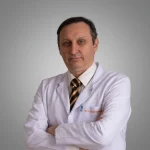 Op. Dr. Aysan Bayram