
- Home
- Knowledge centre
- Lens & cataract guides
- Bending After Cataract Surgery: Lifting, Showering and Sleeping
Bending After Cataract Surgery: Lifting, Showering and Sleeping
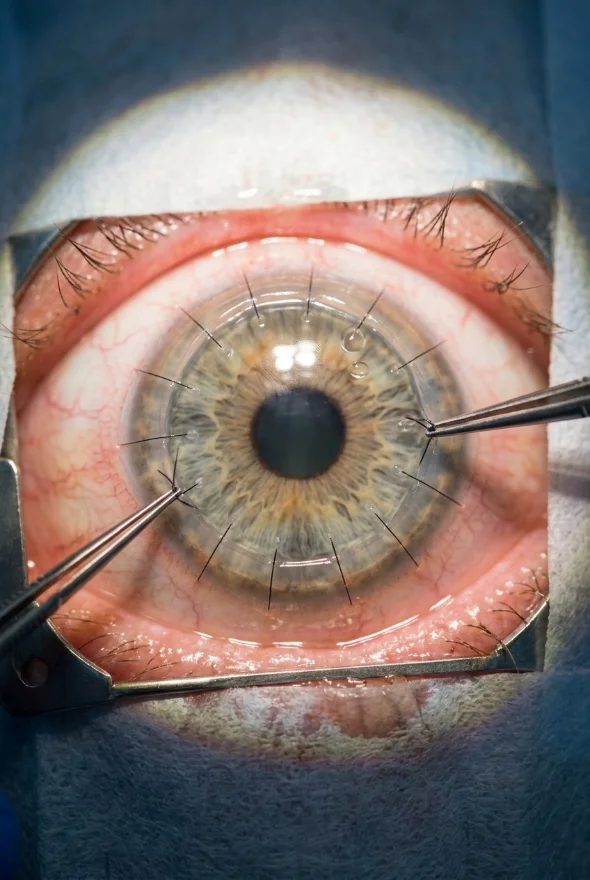
Avoid bending after cataract surgery, and heavy lifting too, for about two weeks, or "a few weeks" per the NEI. Showering is fine if no water, soap or shampoo gets into the eye. Wear the protective shield when you sleep and lie on your back or your other side. Your own surgeon's dates always come first. At Laser Istanbul Clinic, Prof. Dr. Ahmet Satıcı, Doç. Dr. Muhammet Derda Özer and Op. Dr. Aysan Bayram all perform cataract surgery.
How long should you avoid bending after cataract surgery?
Most guidance says to avoid bending over, with your head below your waist, for about the first two weeks, and some sources say "a few weeks". The National Eye Institute (NEI) tells patients to avoid touching the eye, bending over and lifting heavy things for a few weeks after surgery. A leaflet from an NHS specialist eye hospital gives a more specific figure: avoid heavy lifting and bending for the first 2 weeks. The NHS itself lists heavy lifting among the things to avoid, without a number, so your surgeon's written advice is the one to follow.
The honest answer is that there is no single number. A 2026 survey of 142 eye-health workers in Tanzania, published in BMC Ophthalmology, found that for most daily activities the advice ranged from day 1 to 6 weeks, a spread of 41 days. The authors wrote that the evidence base for many commonly recommended activity restrictions "remains surprisingly limited". That is why this guide gives you the ranges published by health services and then asks you to use your surgeon's dates.
Why do surgeons ask you not to bend at all? The survey authors list the original reasons: to reduce the risk of infection (endophthalmitis), wound problems and a rise in eye pressure while the eye heals. They add that modern small-incision surgery with self-sealing wounds does not justify long immobilisation, which is one reason the advice has relaxed over the years. A few careful weeks still cost you very little.
How do you pick things up and tie your shoes without bending?
Bend your knees and keep your head above your waist. For the first two weeks or so, treat the floor as out of reach.
- Squat or kneel to pick things up, keeping your back straight and your head up.
- Use slip-on shoes, or sit on a chair with your foot raised to put on socks and shoes.
- Raise pet bowls and anything you reach for daily to counter or table height.
- Ask someone else to handle low cupboards, the washing machine and gardening.
- Do not lean forward over a sink to wash your face or rinse your hair; stand upright (see the showering section).
The NHS adds that you should wear an eye shield or glasses if you go out in windy weather.
How much can you lift after cataract surgery?
Avoid heavy lifting and sport for at least the first two weeks, and longer if your surgeon says so. The NHS tells you not to do any heavy lifting or play sports while the eye heals, and the NEI also puts heavy lifting on its "avoid for a few weeks" list. The only numeric limit in the sources we could open comes from a Community Eye Health protocol: do not lift weights above 5 kg for 2 weeks. Five kilograms is roughly a full bag of shopping.
| Activity | What published guidance says | Practical tip |
|---|---|---|
| Heavy lifting (above about 5 kg) | Avoid for 2 weeks (Community Eye Health protocol, NHS eye-hospital leaflet); NEI: a few weeks | Let someone else carry shopping, suitcases and children |
| Sport and the gym | NHS: no sport while healing; the NHS eye-hospital leaflet allows light exercise from 2–3 days | Gentle walking is fine; skip weights, contact sport and head-down positions until cleared |
| Swimming | No swimming, even with goggles (NHS); none for 2 weeks (NHS eye-hospital leaflet) | Keep pools, hot tubs and the sea for later |
| Rubbing or touching the eye | Do not rub the eye (NHS); NEI: avoid touching it | Wash your hands before every drop |
| Eye make-up | None until your surgeon says so (NHS); none for 2 weeks (NHS eye-hospital leaflet) | Keep mascara and brushes away until cleared |
| Driving | Not until vision is back to normal (NHS); the NHS eye-hospital leaflet suggests about 3–4 days for many people | Only when you meet the driving standard and your surgeon agrees |
Sources: NHS "Cataract surgery"; NEI "Cataract Surgery"; NHS eye-hospital cataract aftercare leaflet; Community Eye Health 2016. Your surgeon gives you personal dates.
Can you shower and wash your hair after cataract surgery?
Yes. You can shower from the start as long as no water, soap or shampoo gets into the operated eye. The NHS says not to get water in your eye after surgery. The NHS eye-hospital leaflet says bathing and showering are fine while you avoid water in the eye. A Community Eye Health protocol says you can wash your hair a day after surgery, but should keep soap, water and shampoo out of the eye. In the 2026 BMC Ophthalmology survey, 46.5% of eye-health workers allowed face washing from day 1, while 2.8% delayed it until 6 weeks.
Here is a simple routine that keeps the eye dry without bending:
- Shower with your back to the water so the spray runs down your shoulders, not your face.
- Wash your face with a clean, damp flannel, keeping the cloth away from the operated eye. Clean the lids only as your surgeon has shown you, without pressure on the eyeball.
- Wash your hair standing upright with your head tilted back slightly (the hairdresser's backwash position), or ask someone to rinse it with a jug while you hold a dry cloth over the eye.
- Rinse off shampoo and soap with your eyes closed, then pat your face dry with a fresh towel; do not rub.
- Wash your hands before putting in drops, every time.
- Avoid pools, hot tubs and the sea until your surgeon clears you (see the table above).
If water or shampoo does get into the eye, do not rub it. Tell your surgeon's team, and if the eye becomes red, painful or blurred, follow the "When should you get urgent help" section below.
How should you sleep after cataract surgery?
Wear the protective shield every night while the eye heals, and sleep on your back or on the side that was not operated on. The NHS says you may need a plastic shield to protect the eye at night while it is healing. A Community Eye Health protocol advises wearing the shield when sleeping for the first week and not sleeping on the operated side. The NEI notes that you may need a special eye shield or glasses. How long you need the shield depends on your surgeon.
- Fix the shield exactly as shown. If it comes off in the night, put it back; do not press on the eye.
- Use the shield for daytime naps too while your surgeon says it is needed.
- Avoid lying on the operated eye or sleeping face down, which presses on the eye. A second pillow can help you stay on your back.
- Use your drops at the times on your written schedule. The NHS says you usually need drops for about 4 weeks.
- Expect a scratchy, light-sensitive eye for the first days. The NHS eye-hospital leaflet says the eye may feel scratchy for the first 7 to 10 days. The NEI says the eye should feel better after 1 or 2 days. If it gets worse instead of better, call your surgeon.
What is the recovery timeline for activities after cataract surgery?
Most people are back to normal daily life within days, but the eye is still healing for weeks. According to the NEI, most people are completely healed 8 weeks after surgery. The NHS eye-hospital leaflet says full healing takes about 6 weeks. The table gathers the typical published ranges; it is not a promise.
| When | What is usually allowed | What to avoid |
|---|---|---|
| Day of surgery | Rest; walking around at home | Driving; rubbing; water in the eye |
| Days 1–3 | Reading, TV and phone; showering with care; hair wash from day 1 (Community Eye Health) | Bending with the head down; heavy lifting; eye make-up |
| Days 4–14 | Light exercise from 2–3 days (NHS eye-hospital leaflet); driving once vision meets the standard (about 3–4 days in that leaflet) | Lifting above about 5 kg; swimming; bending below the waist |
| Weeks 2–4 | Most daily activities; return to work depends on the job | Sport, weights, swimming and eye make-up until your surgeon says so (NHS); drops continue for about 4 weeks (NHS) |
| Weeks 4–8 | Full activity once cleared | Rubbing the eye; windy or dusty places without eye protection |
| After 8 weeks | Most people completely healed (NEI); new glasses prescription when your surgeon advises | Nothing in particular; keep your routine eye checks |
Sources: NEI; NHS; NHS eye-hospital leaflet; Community Eye Health 2016; BMC Ophthalmology 2026.

Why do instructions after cataract surgery differ so much?
Because the evidence is thin and every surgeon weighs the risks slightly differently. The 2026 Tanzanian survey found only two activities where advice was fairly consistent: phone use and a normal diet. Most others, including bending for prayer, walking and face washing, varied widely. The authors say recent guidance from the American Academy of Ophthalmology and the European Society of Cataract and Refractive Surgeons is considerably less restrictive than many clinics' habits.
For you, the practical rule is simple: follow the written instructions from the surgeon who operated on you, because they know the details of your operation, your eye and your drops. If your instructions are shorter or longer than the ranges in this guide, that is normal. If anything is unclear, ask before you act.
Your surgeon may ask for stricter rules after a more complicated operation or if you have other eye conditions. Doç. Dr. Muhammet Derda Özer ("Doç." means Associate Professor) also treats cataracts in eyes with corneal or inflammatory disease, so a patient with those conditions may receive a more detailed plan.
How do you manage bags, flights and the first week if you travel to Istanbul?
Plan to stay in Istanbul about 5 to 7 days and let someone else carry your luggage. Most patients can fly about 3 to 7 days after cataract surgery, once their surgeon has checked the eye. Before the trip, pack light, use a wheeled case, and ask for help lifting it onto the belt, into the car and into the overhead locker. Keep your drops, shield, sunglasses and written instructions in your hand luggage. Hotel and airport transfers are not part of the package; we arrange them on request at a separate charge, which many patients find useful in the first days when lifting and driving are off the list.
Before you fly home, your surgeon checks the eye, gives you your drop schedule, and tells you your own dates for bending, lifting, swimming and sport. Your coordinator then follows up remotely. Read more on our Cataract surgery in Turkey / Istanbul page, or see lens replacement (RLE / smart lens) in Turkey if you are weighing a premium lens.
When should you get urgent help after cataract surgery?
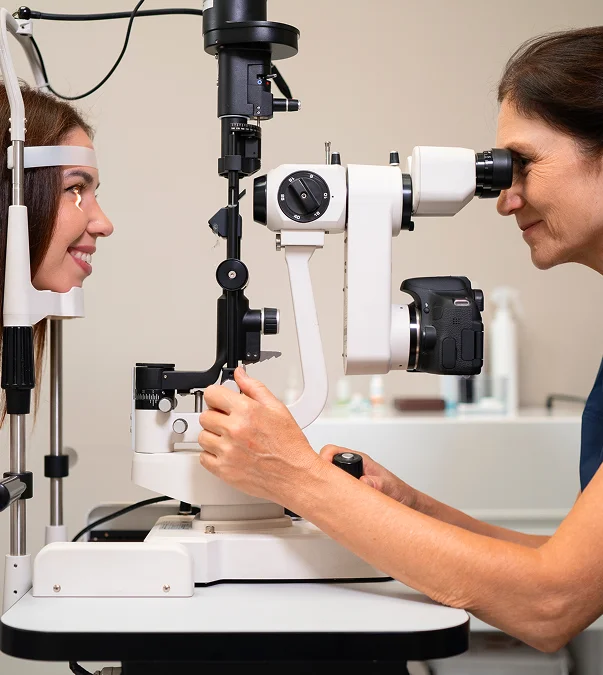
Get help the same day if your eye gets more painful, redder or blurrier instead of better. The NHS says to contact your optician if your vision becomes cloudy or blurry or the eye becomes red or painful, and to call NHS 111 straight away if floaters suddenly appear or increase, you see flashes of light, a dark shadow or "curtain" moves across your vision, or your sight suddenly blurs, which can be signs of a detached retina. The NEI lists vision loss, severe pain that does not go away with medicine, very red eyes, and floaters or flashes as reasons to call your surgeon.
If you are still in Istanbul, contact your coordinator and surgeon at once. If you are already home, go to your nearest eye casualty or emergency department first, then let us know. Cloudy vision weeks or months later is common and treatable; read our guide to after-cataract (posterior capsule opacification) and YAG laser.
Frequently asked questions
About two weeks for most patients, although the NEI says "a few weeks". Your surgeon's written advice takes priority. Squat with your knees rather than bending at the waist, and keep your head above your waist.
You can, as long as you do not lower your head below your waist. Sit on a chair and raise your foot, or use slip-on shoes for the first couple of weeks. If you struggle, ask for help.
Yes, in most cases. Keep water, soap and shampoo out of the operated eye, shower with your back to the spray, and wash your face with a damp cloth. The NHS says not to get water in your eye, and one protocol allows hair washing from the day after surgery.
Many protocols allow it from the day after surgery, as long as shampoo and water do not enter the eye. Stand upright, tilt your head back, and ask someone to help rinse. Follow your surgeon's own instructions if they differ.
On your back or on the side that was not operated on, wearing the protective shield at night. One protocol advises the shield for the first week; your surgeon sets your own period. Do not sleep face down or press on the eye.
Usually yes, while your surgeon says the shield is needed, because you may roll onto the eye without noticing. If the shield falls off, put it back, and do not rub the eye.
Avoid anything heavy for at least the first two weeks. One published protocol sets the limit at 5 kg for 2 weeks, which is roughly a full shopping bag. The NHS says to avoid heavy lifting and sports; your surgeon says when you can return to them.
Light exercise such as walking is usually fine within days; weights, swimming and contact sports wait until your surgeon agrees. The NHS says no swimming, even with goggles, and an NHS eye-hospital leaflet gives 2 weeks as the minimum.
Most patients can fly about 3 to 7 days after cataract surgery, once their surgeon has checked the eye. Keep your drops in your hand luggage and ask someone else to lift your bags.
Thinking about cataract surgery, and worried about the recovery?
Your surgeon at Laser Istanbul Clinic examines your eye, explains your lens options and gives you written aftercare dates before you fly. Cataract surgery is performed by Prof. Dr. Ahmet Satıcı, Doç. Dr. Muhammet Derda Özer and Op. Dr. Aysan Bayram, in a fully equipped, Ministry of Health–licensed operating theatre in Istanbul.
Sources for the facts on this page
- NHS. Cataract surgery (recovery; drops about 4 weeks; shield at night; no heavy lifting or sport; no swimming; no water in the eye; red flags and NHS 111). https://www.nhs.uk/tests-and-treatments/cataract-surgery/ (opened 7 Oct 2026)
- National Eye Institute (NIH). Cataract Surgery (avoid touching the eye, bending over and heavy lifting for a few weeks; eye shield; better after 1–2 days; completely healed by 8 weeks; red flags). https://www.nei.nih.gov/learn-about-eye-health/eye-conditions-and-diseases/cataracts/cataract-surgery (opened 7 Oct 2026)
- NHS specialist eye-hospital patient information. Cataract: diagnosis, treatment and recovery (scratchy 7–10 days; light exercise 2–3 days; showering allowed; avoid heavy lifting, bending, swimming and eye make-up for 2 weeks; healing about 6 weeks). https://www.moorfields.nhs.uk/eye-conditions/cataract/diagnosis-and-treatment (opened 7 Oct 2026)
- Astbury N, Adekhera E, Nyamai LA. Working with patients to optimise cataract outcomes. Community Eye Health 2016 (shield when sleeping for the first week; not on the operated side; hair wash from day 1; no weights above 5 kg for 2 weeks). https://pmc.ncbi.nlm.nih.gov/articles/PMC5100466/
- Dhalla KA, Kassamali SS, Mbezi T, Teferi K, Rugabela EG. Variations in post-operative cataract surgery instructions among eye health workers in Tanzania: a cross-sectional survey. BMC Ophthalmology 2026 (142 workers; 41-day range; face-washing figures; limited evidence base). https://pmc.ncbi.nlm.nih.gov/articles/PMC13262083/
- NHS. Detached retina (floaters, flashes, dark curtain). https://www.nhs.uk/conditions/detached-retina-retinal-detachment/