
- Home
- Knowledge centre
- Retina & glaucoma guides
- Vision Loss After Trabeculectomy: Recovery Time and Success Rates
Vision Loss After Trabeculectomy: Recovery Time and Success Rates
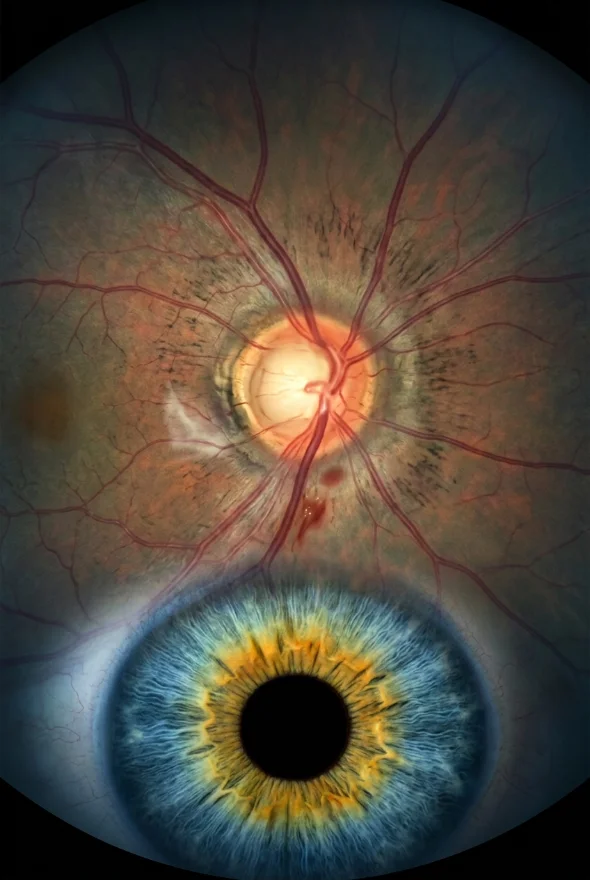
Vision loss after trabeculectomy is usually temporary or treatable. Blurred, watery vision is normal for up to six weeks. The most common lasting cause of reduced sharpness is cataract; sudden permanent loss of central vision ("wipe-out") is rare, mainly in eyes with very advanced damage. Trabeculectomy protects the sight you still have; it cannot restore sight already lost. Glaucoma surgery here is performed by Prof. Dr. Ahmet Satıcı.
Will I lose vision after trabeculectomy?
Most people notice blurred vision after trabeculectomy, and for most it fades. After glaucoma surgery your eye may water and look red, and your vision may be slightly blurred for up to 6 weeks before it returns to normal, according to Moorfields Eye Hospital's patient guidance. That is the everyday picture. The question behind the search "vision loss after trabeculectomy" is a harder one: can the operation leave you seeing worse than before? In a minority of eyes it can, and the cause matters, because some causes are treatable and one is not.
A classic review of 508 eyes after trabeculectomy (Costa et al., 1993) looked for any loss of two or more lines of vision within the first three months. 42 eyes (8.3%) lost vision. The causes were:
| Cause of vision loss | Eyes in that study | What it means for you |
|---|---|---|
| Lens clouding (cataract) | 16 | The most common cause. Treatable with cataract surgery |
| Low eye pressure that affects the macula (hypotony maculopathy) | 6 | Found at check-ups; the surgeon looks for the cause, which sometimes means revising the bleb |
| "Wipe-out" (loss of central vision with no other explanation) | 4 | Rare; linked to advanced damage and older age |
Source: Costa VP et al., Ophthalmology 1993 (see Sources). This is an older study and surgical technique has changed. Use it for the pattern of causes, not as today's exact risk.
Why is cataract the most common cause?
Trabeculectomy makes a cataract more likely to form or to progress. In the Collaborative Initial Glaucoma Treatment Study (CIGTS), 57 of 285 patients (20%) who had trabeculectomy went on to have cataract surgery during an average of 7.2 years of follow-up. A separate analysis of the same trial found that initial surgery places a patient at higher risk of needing cataract extraction than starting with drops, and that vision-related quality of life improved after the cataract was removed. An earlier Cochrane review of medical versus surgical treatment likewise concluded that reduced vision, cataract and eye discomfort are more likely with trabeculectomy than with medication.
In practice: if your vision becomes hazy months or years after trabeculectomy, the lens is a likely cause, and your surgeon plans cataract surgery with the bleb in mind. Cataract surgery is part of the work of all three of our surgeons: Prof. Dr. Ahmet Satıcı, Doç. Dr. Muhammet Derda Özer (Doç. is the Turkish title for Associate Professor) and Op. Dr. Aysan Bayram. {{confirm with surgeons: cataract surgery in eyes with an existing trabeculectomy bleb}}
What is "wipe-out" and how likely is it?
Wipe-out means a sudden, unexplained and permanent loss of the last central vision after glaucoma surgery, in an eye that already had very advanced field loss. A 2025 review in Diagnostics found that incidence figures in studies published before 2000 ranged from under 1% to 13%, while contemporary prospective studies and large reviews put it frequently below 1%. The risk factors it lists are severe field loss (especially "split fixation", where the field loss already splits the point of fixation), older age, low pressure in the first days after surgery, and poor blood supply to the optic nerve head. A 2022 prospective study of 30 eyes with advanced glaucoma and split fixation saw no wipe-out; the three eyes that lost two lines or more at two months had cataract or choroidal detachment.
This is why your surgeon asks how much central field you still have before recommending trabeculectomy, and why lowering pressure gradually matters in advanced disease. Wipe-out is not a reason to avoid surgery your glaucoma needs; it is a reason to plan it carefully.
Other causes of vision loss to know about
- Bleb-related infection (blebitis, endophthalmitis). Moorfields calls this a medical emergency that can cause irreversible blindness in a short time. Warning signs are eye pain, redness, reduced vision, pain when looking at light and discharge. See the emergency section below.
- Serious bleeding inside the eye (suprachoroidal haemorrhage). Very rare. In CIGTS there were three localised cases among 465 trabeculectomies (0.7%).
- Ongoing glaucoma damage. If pressure is not controlled, glaucoma itself continues to take field. This is the reason for surgery in the first place.
Problems at the back of the eye are also looked for at follow-up visits; if a retinal problem is suspected, a retina surgeon is involved (see our page on retina surgery: vitrectomy and retinal detachment). Doç. Dr. Özer and Op. Dr. Bayram both work in retinal disease.
How long is trabeculectomy recovery?
Trabeculectomy recovery takes about six weeks for the eye to settle, while pressure checks continue for months. There is no fixed timetable that fits everyone: your surgeon adjusts drops and visits to how the bleb (the small drainage pocket under the upper eyelid) and the pressure behave. The table combines Moorfields patient guidance and the EyeWiki (American Academy of Ophthalmology) clinical summary.
- Day of surgery
The eye is covered and then protected with a shield. Vision is blurred.
- Day 1
First check of pressure and bleb. Steroid drops are started, from four times a day up to every two hours, with antibiotic drops four times daily for a week.
- Week 1
Check at one week. Keep the eye dry and avoid driving, reading and heavy lifting for at least this first week.
- Weeks 2 to 8
Visits every one to two weeks for the first two months. If the pressure is higher than the target, the surgeon may cut tight stitches with a laser in clinic (laser suture lysis) to let more fluid out.
- Up to week 6
Watering, redness and blurred vision ease and vision returns to normal, according to Moorfields.
- After two months
Regular pressure checks continue. If scar tissue closes the bleb, a bleb needling procedure may restore drainage.
Your own schedule comes from your surgeon. {{our standard post-operative drop schedule and visit schedule for trabeculectomy}}
What are the first days and weeks like after trabeculectomy surgery?
Expect a red, watery, scratchy eye and blurred vision. Most people are advised to keep the eye dry and not to rub or press it. EyeWiki recommends an eye shield at night, and Moorfields gives the same advice after bleb needling: wear it when sleeping until your doctor says you can stop. The drops matter. Steroid drops calm inflammation after surgery, so follow your schedule and never stop or change drops without asking your surgeon.
Resuming activity after trabeculectomy
The clearest guidance comes from Moorfields and EyeWiki: most people are advised to keep the eye dry and avoid driving, reading and heavy lifting for at least a week, and to avoid pressure on the eye and vigorous physical activity or lifting during the post-operative period. After that, your surgeon tells you step by step.
| Activity | What the sources say | What to do |
|---|---|---|
| Driving | Avoid for at least a week (Moorfields) | Drive again only when your surgeon confirms your vision is safe. {{surgeon's driving advice after trabeculectomy}} |
| Reading and screens | Avoid reading for at least a week (Moorfields) | Build up gradually once your surgeon allows it |
| Lifting and straining | Avoid heavy lifting and vigorous activity (Moorfields, EyeWiki) | Wait for your surgeon's clearance. {{surgeon's advice: lifting, gym, running}} |
| Water and swimming | Keep the eye dry (Moorfields) | Ask your surgeon before swimming. {{swimming advice}} |
| Rubbing or pressing the eye | Avoid (EyeWiki) | Do not rub; use the shield at night |
| Work | No fixed time in the sources | Depends on your job. {{typical time off work after trabeculectomy}} |
Trabeculectomy recovery in the UK, and what changes if you travel
In the UK (NHS), recovery follows the pattern above, with frequent early visits at the hospital eye clinic. That is the point to understand if you are thinking about trabeculectomy abroad: the first two months involve visits every one to two weeks, so recovery is not "fly home the next day". Before booking anywhere, ask how long you will stay for the early checks, who will see you at home between visits, and how stitch release, needling or low-pressure problems would be handled.
With Laser Istanbul Clinic, the pre-operative examination and scans, surgery by the named surgeon, medication, follow-up checks in Istanbul, a personal interpreter, a coordinator and remote follow-up are included. Hotel and airport transfers are not included; they are arranged on request and charged separately, and flights are not included. {{minimum stay in Istanbul after trabeculectomy}} {{how follow-up is organised with a local glaucoma specialist}}
What are trabeculectomy success rates?
In the long-term studies below, roughly two in three to three in four first trabeculectomies still met strict success criteria at five years, with lower rates in more difficult eyes. "Success" in these studies means eye pressure control, with or without drops. It does not mean that vision improves.
| Study (year) | Eyes studied | Result |
|---|---|---|
| CIGTS (2013) | 285 patients with newly diagnosed open-angle glaucoma, average follow-up 7.2 years | Of 247 patients with at least 5 years of follow-up, 50 needed further glaucoma treatment; 14% needed bleb revision at least once; 20% had cataract extraction |
| Palanca-Capistrano et al. (2009) | 115 eyes, first (primary) trabeculectomy | Kaplan-Meier success at 5 years: 76% with 5-FU and 66% with mitomycin C (3 years: 83% and 79%). Failure meant pressure above 21 or below 6 mm Hg, less than 20% reduction, loss of light perception or further glaucoma surgery |
| Tube Versus Trabeculectomy study, 5 years (2012) | 105 eyes with trabeculectomy with mitomycin C, after previous surgery or cataract surgery | Failure in 46.9% over 5 years; 29% needed another glaucoma operation; mean pressure 12.6 mm Hg on 1.2 drugs |
| Iwao et al. (2014) | 204 eyes, trabeculectomy with mitomycin C | 3-year success 89.7% in open-angle glaucoma and 71.3% in uveitic glaucoma |
| Law et al. (2009) | 150 eyes with open-angle glaucoma, mitomycin C | 3-year success (under one of the study's definitions) 61.3% after a first trabeculectomy against 41.3% after a repeat trabeculectomy |
Reading these numbers: studies define success differently, include different kinds of eyes and follow them for different lengths of time, so the percentages cannot be lined up as a league table. The Tube Versus Trabeculectomy study enrolled eyes with previous surgery, which are harder to treat, and its failure definition also counts a pressure of 5 mm Hg or below or a reoperation.
What do success rates mean for my vision?
Success means the pressure is controlled well enough to protect the optic nerve. Moorfields explains it plainly: it is not possible to reverse any loss of vision that happened before glaucoma was diagnosed, but treatment can help stop your vision getting worse. A Cochrane review of four trials with 888 participants found that, in mild glaucoma, visual-field loss over five years did not differ significantly between starting with drops or with trabeculectomy, and that trabeculectomy lowered pressure by about 2.2 mm Hg more on average. In more severe glaucoma, medication was associated with more field loss and 3 to 8 mm Hg less pressure lowering. The review notes that medicines and surgery have evolved since those trials.
What improves the odds?
- Anti-scarring drugs. Mitomycin C or 5-FU is applied during trabeculectomy in many centres. A meta-analysis of eight studies (536 patients) found that mitomycin C lowered pressure more than 5-FU, with a similar rate of qualified success.
- Following the drop and visit schedule. Scarring is the main reason a bleb stops working, which is why bleb needling exists. Moorfields reports that needling is successful in 50% of patients at 1 year and 15% at 2 years, so it is a bridge, not a cure.
What can go wrong after trabeculectomy?
The early weeks bring many transient problems; serious ones are uncommon. CIGTS, which treated previously untreated eyes, found that 50% of eyes had at least one early complication, but few with the potential to cause severe lasting vision loss.
| Complication | How often | Notes |
|---|---|---|
| Shallow or flat front chamber | 13% of eyes in the first month (CIGTS) | Usually transient; the surgeon watches it |
| Encapsulated bleb | 12% | A scarred bleb that stops draining; may need needling |
| Ptosis (droopy upper lid) | 12% | Often transient |
| Serous choroidal detachment | 11% | Fluid under the retina; usually self-limiting |
| Bleeding in the front chamber (hyphema) | 10% | Usually clears |
| Wound leak | 6% in CIGTS; 59% had some leak at some stage in one UK series (median duration 14 days) | Many close by themselves |
| Persistent low pressure (hypotony) | 1.7% of 3,659 trabeculectomies in one US series; 23% of those eyes had hypotony maculopathy | Can blur vision; may need bleb revision |
| Blebitis or endophthalmitis | CIGTS: 1.5% blebitis and 1.1% endophthalmitis at 5 years | Emergency |
Sources: CIGTS (Jampel 2005; Zahid 2013; wound leak 6% as summarised by EyeWiki); UK leak series (Henderson 2004, one centre, mostly fornix-based flaps); low pressure (Tseng 2017). Infection risk is quoted differently by different sources: Moorfields describes bleb-related infection as relatively rare, occurring in about 1 to 5 of every 100 people who have had trabeculectomy in a given year.
When is it an emergency?
Contact your surgeon the same day, and go to an eye emergency service if you cannot reach them, if you notice any of these:
- eye pain, redness or discharge that is getting worse
- vision that is dropping, or a sudden loss of vision
- pain when looking at light
Bleb-related infection is treated with antibiotic and steroid drops and tablets, and in endophthalmitis with injections into the eye (Moorfields). Speed matters: it can cause irreversible blindness in a short period. To lower the risk, manage blepharitis and dry eye and never rub the eye or touch the bleb.
What is the recovery after laser trabeculoplasty (SLT)?
Laser trabeculoplasty recovery time is short: the treatment takes 10 to 15 minutes in clinic, your vision stays slightly blurred for several hours, and follow-up is a pressure check about an hour afterwards and a review at about two months. Selective laser trabeculoplasty (SLT) uses a gentle laser on the eye's drainage tissue; it is not an incision and there is no bleb. Prof. Dr. Ahmet Satıcı's published research includes laser trabeculoplasty in primary open-angle glaucoma. {{confirm SLT is offered by our surgeons}}
Can I drive after selective laser trabeculoplasty?
Not straight home. Moorfields tells patients they cannot drive themselves home and should arrange transport beforehand, because the vision is blurred for several hours. When you can drive again is your surgeon's call after the check-up. {{surgeon's advice on driving the day after SLT}}
What else should I expect after SLT?
- Drops. Anti-inflammatory drops are supplied, but Moorfields says you only need them if the eye becomes red, painful or sensitive to light.
- Pressure. A short-term pressure rise happens in roughly 1 in 10 patients, which is why pressure is checked about an hour after treatment.
- How long it works. About half of treatments lose effectiveness within five years; SLT can be repeated. In the LiGHT trial, 74% of people who had SLT as first treatment needed no other treatment for at least three years, and at six years 69.8% were at or below target pressure without other treatment. Trabeculectomy was needed in 13 eyes in the SLT group against 32 in the drops group.
- Serious complications are rare. In a Helsinki series of 6,081 SLT treatments, bleeding in the drainage angle occurred in 2 per 1,000 treatments and corneal oedema in about 1 per 1,000; one eye had permanent corneal damage.
- Urgent signs. Sudden vision loss, severe eye pain, headache or nausea need immediate care (Moorfields).

Can lost vision come back?
Vision lost to cataract usually can; vision lost to glaucoma cannot. A clouded lens is replaced in a cataract operation, and the CIGTS investigators found that vision-related quality of life improved after cataract removal. Damage to the optic nerve from glaucoma is permanent: Moorfields states that it is not possible to reverse loss of vision that occurred before diagnosis, and that treatment can only help stop it getting worse. This is why pressure control, regular checks and drops matter after surgery.
You may read about stem cells for the optic nerve. Our two guides explain what is established and what is still in trial: stem cell therapy for eyes in 2026: what is proven and what is not and stem cells for macular degeneration and optic nerve damage: current trials.
Frequently asked questions
Usually not. Blurred vision is normal for up to six weeks and then returns to normal. The most common lasting cause, cataract, can be treated with surgery. Permanent loss is possible through infection, low-pressure maculopathy that is not corrected, or "wipe-out", which is rare and mostly seen in eyes with very advanced damage.
About six weeks for the eye to settle, with check-ups every one to two weeks for the first two months and regular checks afterwards. Moorfields advises keeping the eye dry and avoiding driving, reading and heavy lifting for at least a week.
Light daily activity returns gradually after the first week, but heavy lifting and vigorous exercise are avoided during the post-operative period until your surgeon clears you. Time off work depends on your job; ask your surgeon.
In primary trabeculectomy studies, about 66% to 76% of eyes met strict success criteria at five years; rates were lower after previous surgery (46.9% failure at five years in the Tube Versus Trabeculectomy study). Success means pressure control, not better vision.
Not on the day: your vision stays blurred for several hours and you need someone to take you home. Your surgeon tells you when you can drive again, normally after the check-up.
The treatment takes 10 to 15 minutes, vision clears within hours, and effectiveness is reviewed about two months later. Pressure may rise temporarily in about 1 in 10 patients.
Eye pain, redness, reduced vision, pain when looking at light and discharge. Bleb-related infection is an emergency: contact your surgeon the same day or go to an eye emergency service.
Plan around the early follow-up schedule: visits every one to two weeks in the first two months. Ask for your stay length, how remote follow-up works and who sees you at home. With us, follow-up checks in Istanbul, a coordinator and remote follow-up are included; hotel and airport transfers are extra.
No. It lowers eye pressure to protect the optic nerve. Some people still need drops, and some need needling, another operation, or both. Glaucoma needs lifelong monitoring.
Considering glaucoma surgery?
Prof. Dr. Ahmet Satıcı treats glaucoma, from laser to glaucoma surgery when drops are not enough. Surgery takes place in a fully equipped, Ministry of Health–licensed operating theatre in Istanbul. Send us your latest field test, OCT and pressure readings, and a surgeon will tell you honestly whether trabeculectomy is the right operation, or whether laser, drops or another procedure suits your eye better.
Sources for the facts on this page
- All opened on 7 Oct 2026.
- EyeWiki (American Academy of Ophthalmology). Trabeculectomy. https://eyewiki.org/Trabeculectomy
- Moorfields Eye Hospital NHS Foundation Trust. Glaucoma: diagnosis and treatment (after glaucoma surgery). https://www.moorfields.nhs.uk/eye-conditions/glaucoma/diagnosis-and-treatment
- Moorfields. Selective laser trabeculoplasty. https://www.moorfields.nhs.uk/for-patients/information-hub/selective-laser-trabeculoplasty
- Moorfields. Bleb needling. https://www.moorfields.nhs.uk/for-patients/information-hub/bleb-needling
- Moorfields. Bleb-related infection. https://www.moorfields.nhs.uk/ae/patient-guides/bleb-related-infection
- Costa VP, Smith M, Spaeth GL, Gandham S, Markovitz B. Loss of visual acuity after trabeculectomy. Ophthalmology 1993. https://pubmed.ncbi.nlm.nih.gov/8493002/
- Zeppieri M, et al. Should We Fear Wipe-Out in Glaucoma Surgery? Diagnostics 2025. https://pmc.ncbi.nlm.nih.gov/articles/PMC12248684/
- Bhadra TR, et al. Prospective evaluation of wipe-out after glaucoma filtration surgery in eyes with split fixation. Indian J Ophthalmol 2022. https://pmc.ncbi.nlm.nih.gov/articles/PMC9789833/
- Jampel HD, et al. Perioperative complications of trabeculectomy in the Collaborative Initial Glaucoma Treatment Study (CIGTS). Am J Ophthalmol 2005. https://pubmed.ncbi.nlm.nih.gov/15939389/
- Zahid S, et al. Risk of endophthalmitis and other long-term complications of trabeculectomy in CIGTS. Am J Ophthalmol 2013. https://pmc.ncbi.nlm.nih.gov/articles/PMC3608803/
- Musch DC, et al. Cataract extraction in the Collaborative Initial Glaucoma Treatment Study. Arch Ophthalmol 2006. https://pubmed.ncbi.nlm.nih.gov/17159028/
- Gedde SJ, et al. Treatment outcomes in the Tube Versus Trabeculectomy (TVT) study after five years of follow-up. Am J Ophthalmol 2012. https://pmc.ncbi.nlm.nih.gov/articles/PMC4460598/
- Palanca-Capistrano AM, et al. Long-term outcomes of intraoperative 5-fluorouracil versus intraoperative mitomycin C in primary trabeculectomy surgery. Ophthalmology 2009. https://pubmed.ncbi.nlm.nih.gov/18930550/
- Iwao K, et al. Long-term outcomes and prognostic factors for trabeculectomy with mitomycin C in eyes with uveitic glaucoma. J Glaucoma 2014. https://pubmed.ncbi.nlm.nih.gov/22895522/
- Law SK, et al. Long-term outcomes of repeat vs initial trabeculectomy in open-angle glaucoma. Am J Ophthalmol 2009. https://pubmed.ncbi.nlm.nih.gov/19596220/
- Burr J, Azuara-Blanco A, Avenell A, Tuulonen A. Medical versus surgical interventions for open angle glaucoma. Cochrane Database Syst Rev 2012. https://pmc.ncbi.nlm.nih.gov/articles/PMC11707325/ (earlier version, 2005, source of the cataract and reduced-vision conclusion: https://pubmed.ncbi.nlm.nih.gov/15846712/)
- Lin ZJ, et al. Intraoperative mitomycin C versus intraoperative 5-fluorouracil for trabeculectomy: a systematic review and meta-analysis. J Ocul Pharmacol Ther 2012. https://pubmed.ncbi.nlm.nih.gov/22029538/
- Henderson HW, Ezra E, Murdoch IE. Early postoperative trabeculectomy leakage. Br J Ophthalmol 2004. https://pmc.ncbi.nlm.nih.gov/articles/PMC1772156/
- Tseng VL, et al. Risk factors and long-term outcomes in patients with low intraocular pressure after trabeculectomy. Ophthalmology 2017. https://pubmed.ncbi.nlm.nih.gov/28615113/
- Gazzard G, et al. Laser in Glaucoma and Ocular Hypertension (LiGHT) Trial: six-year results. Ophthalmology 2023. https://pubmed.ncbi.nlm.nih.gov/36122660/
- Ojanen ES, Turunen JA, Harju M. The incidence of serious complications after selective laser trabeculoplasty. Acta Ophthalmol 2026. https://pmc.ncbi.nlm.nih.gov/articles/PMC12803589/
- Melamed S, et al. Tight scleral flap trabeculectomy with postoperative laser suture lysis. Am J Ophthalmol 1990. https://pubmed.ncbi.nlm.nih.gov/2400418/