
- Home
- Knowledge centre
- Lens & cataract guides
- Fluctuating Vision After Cataract Surgery: Why It Happens and When to Worry
Fluctuating Vision After Cataract Surgery: Why It Happens and When to Worry
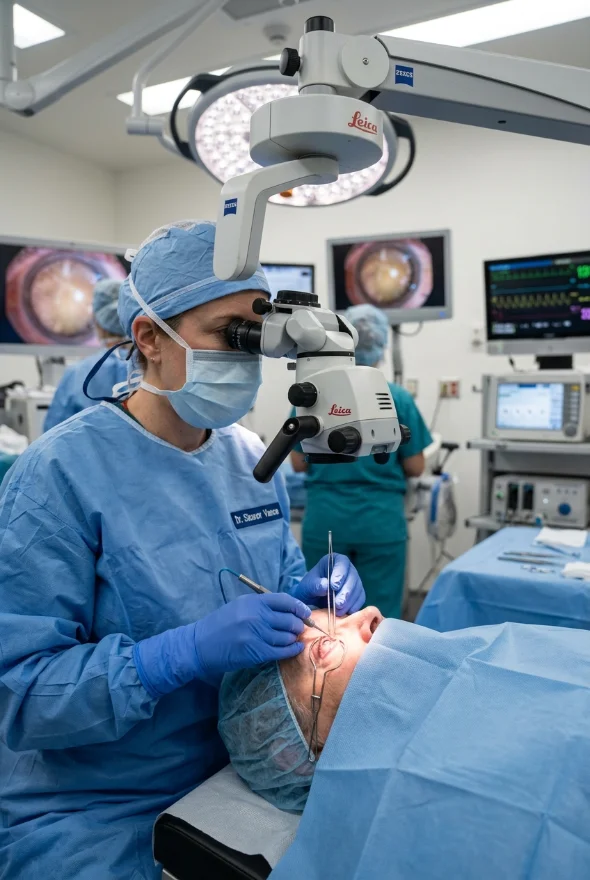
Fluctuating vision after cataract surgery, where sight blurs and clears again during the day, is common in the first weeks and usually settles as the cornea heals, the eye surface recovers and the new lens settles; the AAO puts full healing at about 4 to 6 weeks. Vision that worsens, or turns cloudy after a good start, needs a check. Prof. Dr. Ahmet Satıcı, Doç. Dr. Muhammet Derda Özer and Op. Dr. Aysan Bayram treat both.
Is fluctuating vision normal after cataract surgery?
Yes, in the early weeks it is common and usually harmless. The NHS says your vision may be blurry for a few hours after cataract surgery and that it can take several days to improve. The American Academy of Ophthalmology (AAO) says most people see better within days, but that complete healing takes about 4 to 6 weeks. During that time the eye is recovering from a small incision, the tear film is unsettled and the brain is getting used to a new lens. Vision that is a little sharper at noon than at breakfast fits that picture.
What matters is the direction of travel:
| Pattern | What it usually means | What to do |
|---|---|---|
| Clearer overall each week, with good and less good moments | Normal healing | Keep using your drops; mention it at your check |
| Blurry on waking, clearer later in the morning | Often corneal swelling or dry eye | Tell your surgeon at your next check; sooner if it is not improving after the first week |
| Clear at first, then gradually blurrier or more distorted in the following weeks | Possible macular swelling | Arrange a check promptly |
| Clear for months or years, then cloudy or glary again | Possible clouding behind the lens (after-cataract) | Arrange a check; it is treatable with a quick laser |
| Sudden new floaters, flashes or a dark curtain | Possible retinal detachment | Emergency: see below |
These are patterns, not diagnoses. Only an examination tells you which one applies to you.
Why does my vision go blurry and clear again after cataract surgery?
There are seven common reasons. Several can overlap, which is why vision can feel unpredictable.
1. The first hours
The NHS notes that blurriness for a few hours is expected after surgery. Do not drive until your vision has returned to normal, as the NHS advises.
2. A swollen cornea
During surgery the cornea, the clear front window of the eye, can swell slightly. A swollen cornea scatters light and blurs vision, and corneal swelling tends to be worse in the morning, because the eye is closed and tears barely evaporate overnight (EyeWiki, AAO). In one 2026 study of 912 eyes after phacoemulsification (the ultrasound technique used in modern cataract surgery), early corneal swelling occurred in 138 eyes (15.1%), and 17.4% of the swollen corneas were still swollen on day 7. Swelling was more likely with diabetes, older age, harder cataracts and longer or more complicated operations.
3. Dry eye after cataract surgery
Dry eye is one of the most frequent reasons for fluctuating vision, and it is often missed. A 2026 review reports that dry eye affects roughly 40% to 90% of patients after cataract surgery, depending on how it is measured and when. It peaks in the first one to two weeks and usually settles by about 3 months. Surgery cuts tiny corneal nerves at the incision, which weakens the signal that tells your eye to blink and make tears; inflammation and preserved eye drops add to the problem. A 2026 network meta-analysis cites new-onset dry eye in up to 37.4% of people who had no dry-eye disease before surgery.
Patients typically report burning, a gritty feeling, light sensitivity and blurred or fluctuating vision. Female sex and pre-existing dry eye are linked to more severe problems after surgery. Dry-eye signs are also common and under-recognised in cataract candidates: in the PHACO study of people aged 55 and over, 62.9% of tested eyes had a tear break-up time of 5 seconds or less and 77% had staining on the cornea. That is one reason your surgeon checks the eye surface before surgery.
4. A lens that is still settling, and your new prescription
In one 2026 study of a monofocal lens, the biggest change in the eye's refraction (its glasses prescription) happened between day 1 and week 1, a shift of about 0.17 dioptres, with only small changes afterwards; 76.7% of eyes were within 0.50 dioptres of target at 1 week. The authors put the early drift down to the cornea settling and the lens position stabilising. Your own eye may take longer, particularly if swelling or dryness persists. The NHS also reminds patients that the prescription after surgery may differ from before, so you may need glasses for reading or distance.
5. A big difference between your two eyes
If you have had one eye done and are waiting for the second, the two eyes can see quite differently, and the brain keeps switching between them. Many people find vision feels "off" or unstable until the second eye is done or new glasses are fitted. If this bothers you, tell your surgeon rather than waiting.
6. Swelling of the macula (cystoid macular oedema)
The macula is the central part of the retina that gives sharp vision. Fluid can collect in it in the weeks after surgery. In a 2026 series of 1,325 consecutive cataract operations by a single surgeon, OCT scans found macular cysts in 27 eyes (2.0%), and the authors describe the condition as occurring in a few per cent of uncomplicated operations in the modern era. In that series, patients reported blurred vision after having no symptoms immediately after surgery. The cysts appeared from 1 week to 13 months after surgery (median 2 weeks in eyes without preventive steroid drops, 2 months in eyes with them), and adding anti-inflammatory steroid drops cleared the swelling in 26 of the 27 eyes, within a median of one month. It is treatable, and it is a reason to call your surgeon if vision turns blurry or distorted after a good start.
7. Clouding behind the lens (after-cataract) and light effects
Posterior capsule opacification (PCO), often called "after-cataract", is clouding of the thin membrane that holds the lens. EyeWiki (AAO) states that it occurs in 20% to 50% of patients within 2 to 5 years of surgery and causes blurred vision, glare, halos and difficulty reading. The AAO says vision may turn cloudy weeks, months or even years after surgery and that it responds well to a quick laser treatment called YAG capsulotomy.
Separately, some people notice dysphotopsia: bright arcs, streaks, halos or, less often, a dark crescent-shaped shadow at the side of vision. EyeWiki reports bright light effects in up to 49% of patients and persistent dark shadows in about 3% at one year, and says most people's symptoms resolve or fade as the brain adapts.
How long does fluctuating vision last after cataract surgery?
For most people, fluctuation fades over the first few weeks and is gone by about 4 to 6 weeks, although dry eye can take up to about 3 months to settle fully. Use this as a rough guide, not a promise:
| Time after surgery | What is common | Source |
|---|---|---|
| First hours | Blurred vision | NHS |
| First days | Vision improving; early corneal swelling still clearing | NHS; 2026 corneal swelling study |
| First 1 to 2 weeks | Dry eye at its worst; the biggest change in refraction | 2026 tear-film review; 2026 refraction study |
| About 4 to 6 weeks | Most healing complete; drops usually finishing (NHS: about 4 weeks of drops) | AAO; NHS |
| About 3 months | Dry eye usually resolved with routine care | 2026 tear-film review |
| Any time later | After-cataract clouding is possible; it is not a normal part of recovery | AAO; EyeWiki |
If your fluctuation is not improving by the time of your 4 to 6 week check, ask your surgeon to look for the cause: dry eye, a leftover prescription, macular swelling or clouding behind the lens.
What can you do at home to steady your vision?
Use your drops exactly as prescribed
The NHS says drops are usually needed for about 4 weeks to aid healing and prevent infection. Follow the schedule on your sheet and do not stop early because the eye looks good.
Ask before adding other drops
Lubricating drops often help, but preservatives can aggravate surface dryness, so ask your surgeon which kind to use and when; do not mix them in with your prescribed drops without advice.
Blink fully and take screen breaks
Concentrating on a screen or a book reduces blinking and dries the surface.
Do not rub or press the eye
Wear the shield at night and protect the eye as your surgeon instructs; keep water and soap out of the eye (NHS).
Follow your activity advice
The NHS advises avoiding heavy lifting and sport at first. Details for bending, lifting, showering and sleeping are in a dedicated guide.
- Keep a short note. Write down when vision is blurry (morning, evening, after screens), in which eye, and whether it is improving week by week. This helps your surgeon find the cause quickly.
- Do not drive until your vision is back to normal and your surgeon says it is safe (NHS).
When should you call your surgeon about blurry or changing vision?
Get urgent help the same day if you have:
- sudden new floaters, flashes of light, or a dark shadow or curtain moving across your vision. The NHS says to call NHS 111 straight away, as these can signal retinal detachment
- pain that does not ease with over-the-counter painkillers (AAO)
- a sudden loss of vision, or a red and increasingly painful eye (the AAO lists vision loss, infection and pain among its warning signs)
Arrange a check soon if you notice:
- vision that gets blurrier or more distorted after it had been clear (possible macular swelling)
- vision that is not improving by the 4 to 6 week mark
- cloudy, hazy or glary vision weeks, months or years later (possible PCO)
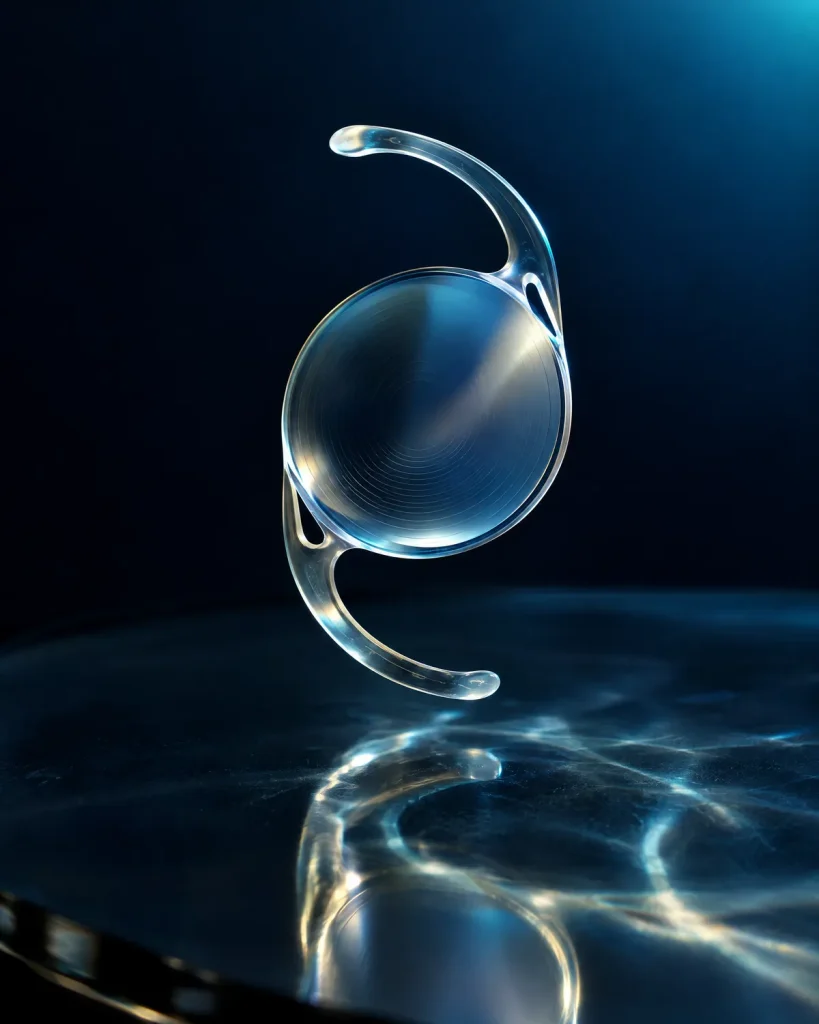
- an artificial lens (IOL) that seems displaced, or halos and glare that are new or getting worse (AAO)
The NHS lists detached retina, infection, bleeding, inflammation and lens-position problems among the possible complications of cataract surgery, and says serious complications are rare.
If you are still in Istanbul, call your coordinator, who will arrange an examination with your surgeon. If you are back home, contact your surgeon and, if you cannot reach them quickly, go to your nearest eye emergency service.
How does a surgeon find the cause of fluctuating vision?
A methodical check usually answers the question in one visit:
| Step | What it checks | What it can find |
|---|---|---|
| Visual acuity and refraction | How sharp your vision is, and whether glasses improve it | Leftover prescription, astigmatism |
| Slit-lamp examination | The cornea, tear film, lens position and the membrane behind the lens | Corneal swelling, dry eye, PCO |
| Tear-film tests | Tear break-up time and surface staining | Dry eye and eyelid-gland problems |
| OCT scan of the macula | A cross-section of the central retina | Macular swelling (cystoid macular oedema) |
| Dilated retinal exam | The back of the eye | Retinal tears, detachment, other disease |
Surgery cannot restore vision lost to other eye diseases such as macular degeneration, glaucoma or diabetic retinopathy, as the AAO notes. If the checks find one of these, your surgeon explains the options. At Laser Istanbul Clinic your surgeon checks your eyes before you fly home, and your coordinator and surgeon follow your recovery remotely, by video, at agreed intervals. If you need an in-person examination at home, we help you arrange it with a local optometrist or ophthalmologist and share your surgical records.
Frequently asked questions
Yes, in the first weeks. The NHS says vision may be blurry for a few hours and can take several days to improve, and the AAO says full healing takes about 4 to 6 weeks. Vision that is generally getting better is reassuring; vision that is getting worse, or becoming distorted, needs a check.
A mildly swollen cornea or a dry eye surface are the usual explanations, because the eye is closed overnight and tears barely evaporate; corneal swelling tends to be worst on waking. It generally improves as the cornea heals over days to weeks. Tell your surgeon if morning blur is not improving.
For most people it fades within 4 to 6 weeks. Dry eye may take up to about 3 months to settle. If the fluctuation is not easing at your 4 to 6 week check, your surgeon should look for dry eye, a leftover prescription, macular swelling or clouding behind the lens.
Yes. A 2026 review lists blurred or fluctuating vision as a typical symptom of dry eye after cataract surgery, which affects roughly 40% to 90% of patients depending on how it is measured. It peaks in the first one to two weeks and usually resolves by about 3 months.
Yes. The most common reason is clouding of the membrane behind the lens (PCO), which EyeWiki says occurs in 20% to 50% of patients within 2 to 5 years. A quick YAG laser treatment is the standard fix.
Fluid collecting in the central retina (cystoid macular oedema) in the weeks after surgery. A 2026 series found it on scans in 2.0% of 1,325 operations. It usually shows up as blurred vision after a good start and, in that series, cleared with anti-inflammatory drops in 26 of 27 eyes.
If only one eye has been operated on, the two eyes can see quite differently until the second is done or glasses are fitted. If the operated eye alone is still fluctuating, the causes above apply. Tell your surgeon which eye is affected.
Possibly. The NHS says you may still need glasses for reading or distance and that your prescription may differ from before surgery. Because most of the change in refraction happens in the first week or so, but a dry surface can distort measurements, your surgeon will tell you when a reliable glasses test is possible.
Most patients fly about 3 to 7 days after cataract surgery, once their surgeon has checked the eye. Tell your surgeon about any fluctuation, pain or new floaters before you travel, so that it is examined first.
Planning cataract surgery, or unsure about your recovery?
Cataract surgery at Laser Istanbul Clinic is performed by Prof. Dr. Ahmet Satıcı, Doç. Dr. Muhammet Derda Özer (Associate Professor) or Op. Dr. Aysan Bayram, in a fully equipped, Ministry of Health–licensed operating theatre in Istanbul. Your surgeon checks your eye surface and macula before surgery, explains which lens fits your eyes and plans your follow-up so that you are not left guessing at home.
Sources for the facts on this page
- NHS. Cataract surgery. https://www.nhs.uk/conditions/cataract-surgery/
- NHS. Cataract surgery: recovery. https://www.nhs.uk/conditions/cataract-surgery/recovery/
- NHS. Cataract surgery: risks. https://www.nhs.uk/conditions/cataract-surgery/risks/
- American Academy of Ophthalmology. What is cataract surgery (recovery and complications). https://www.aao.org/eye-health/treatments/what-is-cataract-surgery
- EyeWiki (AAO). Posterior Capsule Opacification. https://eyewiki.org/Posterior_Capsule_Opacification
- EyeWiki (AAO). Dysphotopsia. https://eyewiki.org/Dysphotopsia
- EyeWiki (AAO). Corneal Edema. https://eyewiki.org/Corneal_Edema
- Fu J, Shi Y, Yang Y, Wang T, Du W, Mo L. Predicting early postoperative corneal edema after phacoemulsification: a retrospective observational study. Medicine (Baltimore) 2026. https://pmc.ncbi.nlm.nih.gov/articles/PMC13456788/
- Datseri R, Ktistakis N, Furdová A. Tear Film Changes Following Anterior Segment Surgery. Life (Basel) 2026. https://pmc.ncbi.nlm.nih.gov/articles/PMC13412823/
- Song B, Li Y, Liu C, Du Z. Comparative Efficacy of Topical Eye-Drop Regimens for Dry Eye After Cataract Surgery. Ophthalmology and Therapy 2026. https://pmc.ncbi.nlm.nih.gov/articles/PMC13546197/
- Alreshidi SO, et al. Effect of Preoperative Ocular Surface Optimization on Biometric Accuracy. Clinical Ophthalmology 2026. https://pmc.ncbi.nlm.nih.gov/articles/PMC13618311/
- Na DG, Son HS, Tchah H, Koh K. Early refractive stability and predictive accuracy of a novel hydrophobic C-loop monofocal intraocular lens. Medicine (Baltimore) 2026. https://pmc.ncbi.nlm.nih.gov/articles/PMC13456812/
- Matsuo T, Nakago-Matsuo C. Incidence and Time to Onset of Pseudophakic Cystoid Macular Edema (Irvine-Gass Syndrome) After 1,325 Consecutive Cataract Surgeries Performed by a Single Surgeon Over Four Years. Cureus 2026. https://pmc.ncbi.nlm.nih.gov/articles/PMC13588649/
- Woodward MA, Randleman JB, Stulting RD. Dissatisfaction after multifocal intraocular lens implantation. Journal of Cataract & Refractive Surgery 2009. https://pmc.ncbi.nlm.nih.gov/articles/PMC5125020/