Trifocal Lens Surgery in Istanbul: PanOptix and Synergy

Trifocal lens surgery replaces your eye's natural lens with a premium artificial lens that focuses at three distances, near, intermediate and far, so most people can read, use a screen and drive without glasses. At Laser Istanbul Clinic, trifocal lens surgery is planned and performed by Prof. Dr. Ahmet Satıcı, with Op. Dr. Aysan Bayram for cataract patients, after a full examination of your eyes. You see the full price in writing before you travel, and a personal interpreter stays with you from your first examination to your final check-up.

  • Medically reviewed by {{surgeon}} · Last reviewed {{date}}
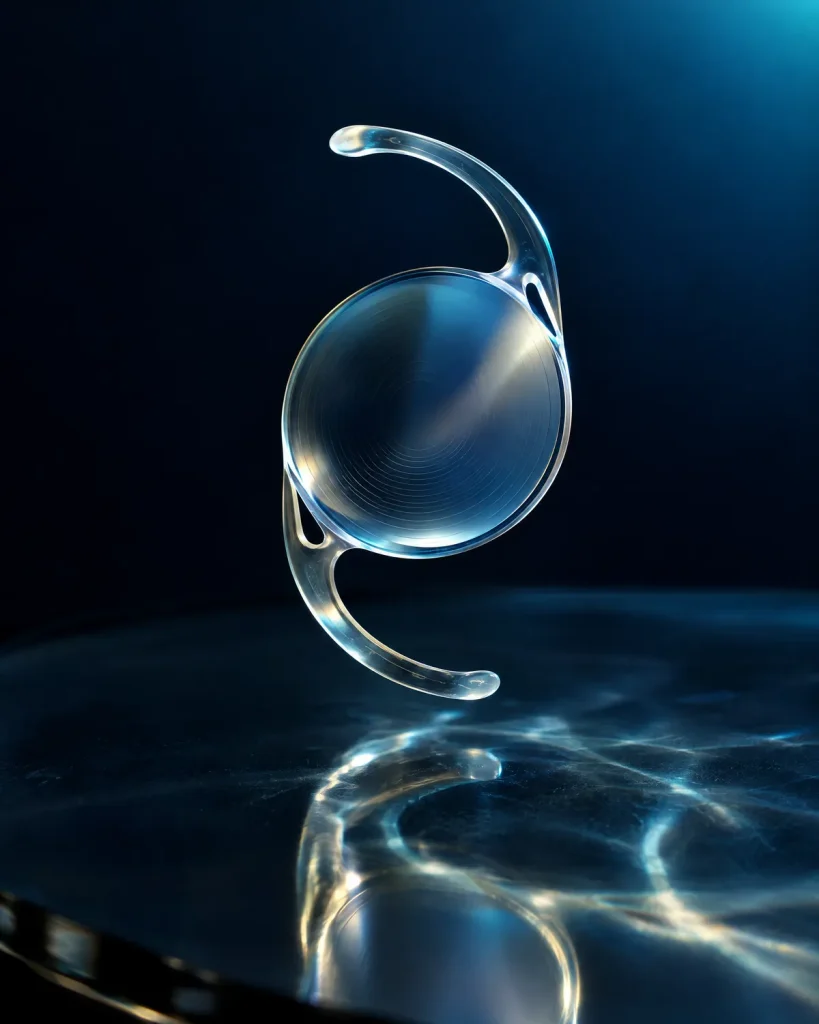
Intraocular lens implant

Trifocal lens surgery is cataract surgery or refractive lens exchange with a trifocal (multifocal) intraocular lens, such as Alcon's PanOptix or Johnson & Johnson's TECNIS Synergy. It gives the most freedom from glasses of any lens type: about four in five patients need no glasses at all, according to the Royal College of Ophthalmologists. The trade-off is more halos and glare at night. In Istanbul, trifocal lens surgery with Prof. Dr. Satıcı starts from {{£ price}} for both eyes; hotel and transfers are extra.

What is trifocal lens surgery, and how does a trifocal lens work?

Trifocal lens surgery is a lens replacement operation. Your surgeon removes the eye's natural lens through a tiny incision and places a clear trifocal intraocular lens (IOL) in the same position. The operation is identical whether it is done for a cataract or, in a clear lens, to reduce your need for glasses (refractive lens exchange, or RLE). The Royal College of Ophthalmologists (RCOphth) says the only difference is the reason for surgery.

How the lens focuses at three distances. A trifocal IOL has fine diffractive rings on its surface that split incoming light into three focus points. In the US Food and Drug Administration (FDA) approval document for the AcrySof IQ PanOptix, the rings sit in the central 4.5 mm of the optic and add +2.17 dioptres for intermediate and +3.25 dioptres for near vision. According to the American Academy of Ophthalmology's EyeWiki, this places the focus points at about 40 cm (reading), 60 cm (computer and arm's length) and distance, with roughly a quarter of the light sent to near, a quarter to intermediate and half to distance.

Trifocal and multifocal: the same family. "Multifocal lens" is the umbrella term for any IOL with more than one point of focus. Older bifocal multifocal lenses had two points, near and far. Trifocal lenses add a third for intermediate vision, and some newer multifocal designs, such as TECNIS Synergy, blend multifocal and extended-depth-of-focus optics to give a continuous range instead of three separate points.

Why there is a trade-off. Splitting light gives clear vision at several distances, but the brain also receives slightly out-of-focus images. At night, these show up as rings (halos) or rays (starbursts) around lights. Most people adapt over the first months as the brain learns to ignore them, a process called neuroadaptation.

Technology we use: {{trifocal / multifocal lens models actually offered, e.g. PanOptix / PanOptix Toric, TECNIS Synergy / Synergy Toric II}}, implanted in a fully equipped, Ministry of Health–licensed operating theatre in Istanbul. Before surgery, your examination includes optical biometry to calculate the lens power, corneal topography to measure astigmatism, and an OCT scan of the macula and optic nerve.

Trifocal and multifocal lens brands: PanOptix, Synergy and others

The two premium multifocal lenses most patients ask about in 2026 are Alcon's AcrySof IQ PanOptix trifocal and Johnson & Johnson's TECNIS Synergy. Other trifocal lenses used outside the US include FineVision and AT LISA tri, which appear in the 2024 Cochrane review of trifocal lenses.

Alcon AcrySof IQ PanOptix (trifocal)

  • Approval: FDA approval on 26 August 2019. It was already available in the European Union, Australia, Canada and many countries in Asia, South America and the Middle East. EyeWiki notes that a newer version, PanOptix Pro, was released in 2025 to reduce light scatter.
  • FDA study: 243 patients at 12 US sites, 129 with PanOptix and 114 with a monofocal lens, followed for 6 months.
  • Freedom from glasses: 80.5% of PanOptix patients said they "never" needed glasses overall, against 8.2% with the monofocal lens. For reading up close, 83.6% never needed glasses; for arm's length tasks such as a car dashboard, 94.3%.
  • Vision: 95.3% of patients saw 20/32 or better at near, intermediate and distance without glasses, with both eyes open.
  • Satisfaction: 95.3% were satisfied or very satisfied, and 126 of 127 patients said they would choose the same lenses again.
  • Side effects: halos, starbursts and glare were the most common complaints. Severe halos were reported by 12.6% (0.9% with the monofocal lens) and severe starbursts by 16.0%, but only 4.8% were "bothered very much" by starbursts, 2.4% by halos and 1.6% by glare at 6 months. One patient (0.8%) had the lens removed because of dissatisfaction with vision.
  • Toric version: PanOptix Toric corrects corneal astigmatism; the standard model is for eyes with less than 1 dioptre of corneal astigmatism.

Johnson & Johnson TECNIS Synergy (multifocal with extended depth of focus)

  • Approval: launched in Europe and Asia Pacific in 2019; FDA approval announced on 6 May 2021.
  • How it works: a diffractive design that combines multifocal and extended-depth-of-focus technologies. The FDA approval document describes distance vision comparable to a monofocal lens and continuous 20/32 or better vision from far away to about 33 cm, slightly closer than a typical reading distance.
  • FDA study: a randomised, masked study of 272 patients (135 Synergy, 137 monofocal), followed for 6 months.
  • Freedom from glasses: 87.8% of Synergy patients wore glasses "none of the time" for distance, intermediate, near and overall vision, against 3.1% with the monofocal lens.
  • Side effects: extremely bothersome halos were reported by 3.8%, glare by 4.6% and starbursts by 5.3%. Contrast sensitivity was lower than with the monofocal lens under glare, and the FDA notes that these effects may make tasks such as driving more difficult in some conditions. Lenses were removed for optical reasons in one patient.
  • Toric version: TECNIS Synergy Toric II for eyes with 1 dioptre or more of corneal astigmatism.

PanOptix vs Synergy: what the head-to-head trials show

Two randomised trials have compared the lenses directly. Their results point in different directions, and each team had financial links to one of the manufacturers, so read them together.

Dick et al., 2022Modi et al., 2025
Patients and follow-up150 patients, 3 months276 patients, 6 months
Near visionSynergy better at 40 cm and 33 cm, by about half to almost one lineSimilar at all distances
Dim-light visionSynergy betterSimilar contrast sensitivity
Halos, glare, starburstsGenerally similarFewer starbursts and glare with PanOptix
Freedom from glassesNot reported in the summaryMost patients in both groups rarely or never needed glasses
Authors' linksSeveral with Johnson & JohnsonSeveral with Alcon

In practice, Synergy may suit people who read very small print close up or in dim light, while PanOptix may suit people who are more concerned about night-time glare. Your surgeon chooses based on your measurements, your pupils and how you use your eyes every day.

Who trifocal lens surgery suits, and who should choose something else

Trifocal lens surgery is usually a good match if you are having cataract surgery or refractive lens exchange and you:

  • are over about 50, wear varifocals or reading glasses, and want to be free of glasses for most of the day
  • have a prescription outside the usual range for laser eye surgery (the RCOphth says people over 50 in this position are likely to be suitable for RLE)
  • have healthy eyes apart from the lens: a regular cornea, a healthy macula and optic nerve
  • accept some halos around lights at night, especially in the first months
  • have little astigmatism, or astigmatism that a toric trifocal lens can correct

Trifocal lens surgery is usually not the right choice if you:

  • have vision loss from glaucoma, macular degeneration or other eye disease; the American Academy of Ophthalmology (AAO) says multifocal and EDOF lenses are generally not recommended in these cases, and the RCOphth notes that monofocal lenses may be more suitable if you have other eye problems
  • drive a lot at night for work, or rely on very sharp contrast in dim light; the AAO advises night drivers to consider steering clear of multifocal lenses
  • have an irregular cornea, for example from keratoconus, or a significant amount of irregular astigmatism
  • have severe, untreated dry eye, which blurs vision with any premium lens until it is treated
  • are younger and still have a clear, flexible natural lens; the RCOphth says laser eye surgery or a phakic lens (ICL) is generally better for younger patients

If your scans show a corneal or retinal problem, your case is reviewed by Doç. Dr. Muhammet Derda Özer (Doç. = Associate Professor), our cornea and retina specialist, before any lens is chosen. If a trifocal lens is not right for your eyes, your surgeon tells you and explains the alternatives.

Trifocal lens advantages and disadvantages

The main advantage of a trifocal lens is freedom from glasses at near, intermediate and far distances; the main disadvantage is more halos, glare and starbursts at night than with a monofocal or EDOF lens.

Advantages

  • The most freedom from glasses. About four in five patients are completely glasses-free with modern multifocal lenses (RCOphth). In the FDA studies, 80.5% (PanOptix) and 87.8% (Synergy) did not need glasses.
  • Reading without glasses. A 2016 Cochrane review of 20 trials with 2,230 people found that multifocal lenses gave better near vision than monofocal lenses and made people less dependent on glasses, with similar distance vision.
  • No cataract later. Once the natural lens is replaced, a cataract cannot form in that eye.
  • Toric versions correct astigmatism in the same operation.
  • High satisfaction once adapted. The RCOphth says 19 out of 20 patients are satisfied or very satisfied three to six months after multifocal lens surgery.

Trifocal lens disadvantages

  • Halos, glare and starbursts. In the Cochrane review, halos were about 3.6 times and glare about 1.4 times more common than with monofocal lenses. They usually fade, but do not always disappear completely.
  • Slightly lower contrast in dim light. Both FDA documents report somewhat lower contrast sensitivity than with a monofocal lens, judged not clinically meaningful in the studies.
  • An adaptation period. Vision can feel less crisp for weeks to months while your brain adapts.
  • Precision matters. A small leftover prescription or dry eye affects a trifocal lens more than a monofocal one, so a laser touch-up is sometimes needed (see Risks).
  • About 1 in 100 cannot adapt. The RCOphth says approximately 1% of patients choose to have the lens exchanged for a monofocal lens, a potentially complicated operation.
  • Cost. Trifocal lenses are premium lenses; the NHS does not pay for them, and the RCOphth says lens surgery to reduce the need for glasses is not covered by private health insurance.

Trifocal vs multifocal vs EDOF vs monofocal at a glance

Monofocal lensEDOF lens (Vivity, PureSee)Trifocal lens (PanOptix)Multifocal with EDOF (Synergy)
How it focusesOne sharp focus pointOne stretched focus rangeThree focus points: near, intermediate, distanceContinuous range from distance to about 33 cm
Distance visionExcellentExcellentExcellentExcellent
Arm's length (screens, dashboard)Glasses usually neededGood to very goodGoodGood
Reading small printGlasses neededOften still needs glassesUsually without glassesUsually without glasses, including very close
Halos and glare at nightFewestFew, close to monofocalMore commonMore common
Often chosen forEyes with other conditions; people who don't mind readersNight drivers, screen usersPeople who want the most freedom from glassesPeople who read a lot close up or in dim light

The 2024 Cochrane review of trials comparing trifocal lenses with an EDOF lens found similar distance vision, while near vision was better with the trifocal: in one study, 3% of trifocal patients and 30% of EDOF patients could not read fine print without glasses. The certainty of the evidence was low. In a 2022 US study, 83% of PanOptix patients never needed glasses for anything, against 33% with the Vivity EDOF lens, while 69% and 85% respectively noticed no or only a little glare and halo in dim light.

Trifocal lens surgery in Turkey: cost and what is included

At Laser Istanbul Clinic, trifocal lens surgery starts from {{£ price}} for both eyes. Your surgeon confirms your exact price in writing after reviewing your prescription and scans, before you book anything. A toric trifocal lens for astigmatism may cost more: {{£ trifocal toric price or surcharge}}.

How much does trifocal lens surgery cost?

Trifocal lenses are not sold on their own; you pay for lens replacement surgery with the lens included. Typical published prices for trifocal lens replacement, both eyes, in 2025–26:

WhereTypical price range, both eyes
UK private clinics£6,000–11,000
Germany private clinics€5,800–9,000
USA$11,000–15,000
Istanbul (published package prices)about $3,400–7,000
Trifocal lens surgery with Laser Istanbul Clinicfrom {{£ price}}

Figures are typical ranges published by clinics and price-comparison sites in 2025–26, not quotes. Published Istanbul prices are often packages that include a hotel.

Your treatment price includes:

  • full pre-operative eye examination, biometry and scans with your surgeon
  • trifocal lens surgery on both eyes by your named surgeon, including the lenses
  • medication and eye drops for your recovery
  • follow-up checks in Istanbul with the same surgeon
  • a personal interpreter, a dedicated coordinator and remote follow-up after you return home

Not included: flights, hotel and airport transfers. Hotel and transfers are a separate charge, and we can arrange them for you if you ask. In the UK, the NHS does not pay for premium lenses such as trifocal lenses, and in the US the AAO says premium lenses are usually paid out of pocket.

Your trifocal lens journey, step by step

  1. Free online assessment

    Send your glasses prescription, any eye reports and, if you have them, previous scans. A surgeon tells you whether a trifocal lens is likely to suit you and sends a written quote within {{response time}}.

  2. Book your dates

    Plan 5–7 days in Istanbul. We help you choose dates with your surgeon and recommend flights.

  3. Full eye examination (day 1)

    Optical biometry, corneal topography, an OCT scan of the macula, a tear-film check and a dilated retina check. You talk through how you use your eyes, such as night driving, screens and reading, so your surgeon can choose between a trifocal, EDOF or monofocal lens. If a trifocal lens is not right for you, your surgeon tells you.

  4. Surgery

    Numbing drops or a local anaesthetic are used, so you are awake but should not feel pain. The natural lens is removed through a tiny incision and the folded trifocal lens opens into place. The NHS gives 20–45 minutes as the usual length of the operation; the RCOphth says about 20 minutes per eye for RLE. Eyes are usually treated on separate days: {{confirm your surgeons' usual gap between eyes}}.

  5. Check-ups

    Your surgeon examines each eye the day after surgery.

  6. Final check and home

    Most patients can fly about 3–7 days after lens surgery, once their surgeon has checked the eye. Your coordinator stays in touch, and your surgeon reviews your progress by video at agreed intervals.

Recovery and adaptation after trifocal lens surgery

Vision usually recovers within days, but full adaptation to a trifocal lens takes longer: most people are satisfied by three to six months.

  1. First hours

    Vision is blurry from the dilating drops. Rest, and wear the eye shield as advised.

  2. First days

    Distance vision clears quickly. Reading vision often sharpens once both eyes are done. Halos around lights are common at night.

  3. About 4 weeks

    Use the antibiotic and anti-inflammatory drops for about 4 weeks, as the NHS advises. Do not rub your eye, swim or wear eye make-up during this time.

  4. 1–6 months

    Halos, glare and starbursts usually fade as your brain adapts. The RCOphth says 19 out of 20 patients are satisfied or very satisfied by three to six months.

  5. If vision is not clear

    Your surgeon checks for a leftover prescription, dry eye or clouding behind the lens, which are the usual, treatable causes (see below).

Do not drive until your vision is back to normal and your surgeon confirms it meets the driving standard. Contact your coordinator or a local eye emergency service straight away if you notice sudden floaters, flashes of light, a dark curtain across your vision, sudden blurring, or increasing pain and redness.

Risks and side effects of trifocal lens surgery

Trifocal lens surgery carries the same risks as any cataract or lens replacement operation, plus the visual side effects of a multifocal lens. Serious complications are rare, but they are not zero.

Risks of the operation:

  • Serious, permanent loss of vision. The RCOphth puts this at about 1 in 500 patients after RLE, more common than after laser eye surgery.
  • Retinal detachment. A 2025 review of more than 8.5 million eyes classified it as rare after cataract surgery (about 1 in 1,000) and uncommon after refractive lens exchange (about 1 in 500). Very short-sighted eyes have a higher risk.
  • Infection inside the eye (endophthalmitis). A Canadian study of 442,177 cataract operations found about 1.4 cases per 1,000.
  • A tear in the lens capsule. The UK benchmark rate is just under 1.5%. If it happens, the RCOphth notes that a multifocal lens may not be safe to implant, and you may rely more on glasses.
  • Clouding behind the lens (posterior capsule opacification). It can appear months or years later and is treated with a quick YAG laser procedure.
  • Inflammation, raised eye pressure, swelling at the back of the eye, or a lens that moves or tilts.

Side effects of the lens design:

  • Halos, glare and starbursts, most noticeable at night (see the FDA figures above).
  • Slightly reduced contrast in dim light.
  • A leftover prescription. Lens-power calculations are very accurate but not perfect, so the RCOphth says a laser touch-up is sometimes needed to fine-tune the result.

If you are not happy with your vision. A study of dissatisfied multifocal lens patients found the commonest causes were clouding behind the lens, a leftover prescription and dry eye. 81% of eyes improved with simple treatment such as YAG laser, glasses or a laser touch-up, or dry-eye care, and 7% needed a lens exchange. Your surgeon checks for these causes first.

Your surgeon explains your personal risks in writing and through your interpreter before you sign anything. {{Your surgeons' policy on laser touch-ups and lens exchange after surgery.}}

Trifocal lens surgery: frequently asked questions

Trifocal lens surgery replaces your eye's natural lens with a trifocal intraocular lens that focuses at near, intermediate and distance. It is the same operation as cataract surgery and can be done for a cataract or to reduce your need for glasses. Most people can read, use a computer and drive without glasses afterwards.

Published Istanbul prices for trifocal lens replacement are about $3,400–7,000 for both eyes, compared with £6,000–11,000 in UK private clinics and $11,000–15,000 in the US. With Laser Istanbul Clinic, trifocal lens surgery starts from {{£ price}} for both eyes, including your examination, surgery, lenses, medication, check-ups, interpreter and coordinator. Hotel and transfers are extra.

A trifocal lens is a type of multifocal lens. "Multifocal" covers any lens with more than one focus point; older bifocal multifocals focused at near and far, while trifocals add a third focus for arm's length. Some newer lenses, such as TECNIS Synergy, combine multifocal and extended-depth-of-focus optics for a continuous range.

Neither is better for everyone. In the FDA studies, 80.5% of PanOptix and 87.8% of Synergy patients did not need glasses. One trial found Synergy better for very close and dim-light reading, while another found fewer starbursts and glare with PanOptix. Your surgeon recommends one after measuring your eyes and pupils.

The main disadvantages are halos, glare and starbursts at night, slightly lower contrast in dim light, an adaptation period of weeks to months, and the cost. About 1% of patients cannot adapt and choose to have the lens exchanged, according to the RCOphth.

For most people they fade, but they do not always disappear completely. In the PanOptix FDA study, fewer than 5% of patients were "bothered very much" by any halo, glare or starburst symptom at six months. The RCOphth says 19 out of 20 multifocal patients are satisfied or very satisfied by three to six months.

It is worth it for people whose priority is freedom from glasses and whose eyes are otherwise healthy. A Cochrane review concluded that whether the better near vision outweighs glare and halos varies from person to person, and that motivation to be free of glasses is likely to be the deciding factor. If night driving matters most, an EDOF or monofocal lens may suit you better.

Yes. Toric versions, such as PanOptix Toric and TECNIS Synergy Toric II, correct corneal astigmatism in the same operation. Your surgeon measures your astigmatism with corneal topography and biometry to decide whether you need one.

The lens is implanted permanently and does not wear out or need replacing. Months or years later, the capsule behind it can become cloudy, which a quick YAG laser treatment clears. Because your natural lens has been removed, you cannot develop a cataract in that eye.

Yes, but it is a more complex operation than the first one. The RCOphth says about 1% of patients choose to exchange a multifocal lens for a monofocal lens. Before considering this, your surgeon treats the more common causes of blurred vision, such as dry eye, a leftover prescription or clouding behind the lens.

Plan 5–7 days in Istanbul for both eyes, including your examination, surgery and check-ups. Most patients can fly about 3–7 days after lens surgery, once their surgeon has checked the eye.

Trifocal lens surgery in Turkey can be as safe as at home when an experienced eye surgeon performs it after full pre-operative tests, in a properly equipped operating theatre. Before you book, check your surgeon's name and qualifications, which lens will be used and how aftercare works once you are home. We give you all of this in writing before you pay.

What our trifocal lens patients say

★★★★★ Patricia H., United States

Lens replacement · Prof. Dr. Ahmet Satıcı · 2026

I was visiting Turkey from the U.S. and made a quick decision to have lens replacement surgery while in Istanbul as the cost was at least half the price than in the U.S. Dr. Satici's office was excellent in communicating lens options and …

Source: Google

★★★★★ Sally B., Australia

Lens replacement · Prof. Dr. Ahmet Satıcı · 2024

I would highly recommend Dr Ahmet Satici and his team […] for Eye surgery (smart lense in my case) the procedure was very good, fantastic results. Thank you Dr Ahmet Satici and team from Australia.

Source: Google

Other lens options in Istanbul

A trifocal lens is one of several premium lens choices. Your surgeon may suggest a different lens after measuring your eyes.

EDOF lens (Vivity, PureSee)

A continuous range from distance to arm's length with fewer night-time halos than a trifocal. Most people still need reading glasses for small print.

EDOF lens (Vivity, PureSee)

Toric lens

Corrects corneal astigmatism. Available as a monofocal, EDOF or trifocal lens.

Toric lens for astigmatism
Sources for the facts on this page
  1. US FDA, Summary of Safety and Effectiveness Data, PMA P040020/S087: AcrySof IQ PanOptix Trifocal and PanOptix Toric Trifocal IOLs (approved 26 Aug 2019): diffractive structure in central 4.5 mm, +2.17 D intermediate and +3.25 D near add at IOL plane; indication <1 D corneal astigmatism (non-toric); marketed in EU, Australia, Canada, Asia, South America, Middle East; prospective non-randomised 6-month study, 12 sites, 243 implanted (129 PanOptix / 114 SN60AT monofocal); IOLSAT "never" need glasses overall 80.5% vs 8.2%, near 83.6%, arm's length 94.3%, distance 95.9% vs 84.5%; 95.3% binocular uncorrected 20/32 or better at 4 m, 66 cm and 40 cm; satisfied/very satisfied 21.3% + 74.0%; 126/127 would choose same lenses again; severe halos 12.6% vs 0.9%, severe starbursts 16.0% vs 1.8%; "bothered very much" starbursts 4.8%, halos 2.4%, glare 1.6%; contrast slightly worse at higher spatial frequencies, not clinically meaningful; one explant (0.8%) for dissatisfaction. https://www.accessdata.fda.gov/cdrh_docs/pdf4/P040020S087B.pdf
  2. US FDA, Summary of Safety and Effectiveness Data, PMA P980040/S124: TECNIS Synergy and Synergy Toric II IOLs: combined multifocal and EDOF diffractive optic; continuous 20/32 or better from distance to ~33 cm (−3.0 D defocus); randomised, masked study, 272 bilaterally implanted (135 Synergy / 137 monofocal), 6 months; 87.8% vs 3.1% wore glasses "none of the time" for distance, intermediate, near and overall; extremely bothersome halos 3.8%, glare 4.6%, starbursts 5.3%; lower contrast sensitivity under glare; risk statement that stray-light symptoms may make driving more difficult; one lens removal for optical reasons; Toric II for ≥1 D astigmatism. https://www.accessdata.fda.gov/cdrh_docs/pdf/P980040S124B.pdf
  3. Johnson & Johnson Vision via PR Newswire, Approval of TECNIS Synergy and TECNIS Synergy Toric II IOLs in the U.S. (6 May 2021): combines EDOF and multifocal technologies; first launched in Europe and Asia Pacific in 2019. https://www.prnewswire.com/news-releases/johnson--johnson-vision-announces-the-approval-of-tecnis-synergy-and-tecnis-synergy-toric-ii-iols-in-the-us-and-tecnis-synergy-toric-ii-iols-in-canada-301286266.html
  4. EyeWiki (AAO), Trifocal Intraocular Lenses: PanOptix focal points ~40 cm, 60 cm and distance; light distribution 25% near, 25% intermediate, 50% distance; PanOptix Pro released 2025 to reduce light scatter; halos/glare most common complaints, decreasing over time. https://eyewiki.org/Trifocal_Intraocular_Lenses
  5. Dick HB, et al. Comparison of 3-month visual outcomes of a new multifocal intraocular lens vs a trifocal intraocular lens. J Cataract Refract Surg 2022;48(11):1270–1276: 150 patients randomised 2:1 Synergy vs PanOptix; Synergy better binocular DCNVA at 40 cm (0.5 lines) and 33 cm (0.8 lines) and mesopic performance; symptoms similar; several authors with Johnson & Johnson links. https://pubmed.ncbi.nlm.nih.gov/35545816/
  6. Modi SS, et al. Comparison of visual function and patient-reported outcomes between two full range of field intraocular lenses: a randomized controlled study. J Cataract Refract Surg 2025;51(8):695–702: 276 patients (138 each), 6 months; similar acuity at all distances and contrast sensitivity; fewer starbursts and glare with PanOptix; most rarely/never needed spectacles; several authors with Alcon links. https://pubmed.ncbi.nlm.nih.gov/40277405/
  7. de Silva SR, et al. Multifocal versus monofocal intraocular lenses after cataract extraction. Cochrane Database Syst Rev 2016;12:CD003169: 20 trials, 2,230 people; similar distance acuity; better near vision; less spectacle dependence (RR 0.63); glare RR 1.41, haloes RR 3.58; motivation for spectacle independence likely the deciding factor. https://pubmed.ncbi.nlm.nih.gov/27943250/
  8. Tavassoli S, et al. Trifocal versus extended depth of focus (EDOF) intraocular lenses after cataract extraction. Cochrane Database Syst Rev 2024;7:CD014891: 5 studies (PanOptix, AT LISA tri, FineVision vs Symfony), 233 participants; little or no difference in distance acuity; near acuity worse than J2 in 3% (trifocal) vs 30% (EDOF) in one study; low-certainty evidence. https://pubmed.ncbi.nlm.nih.gov/38984608/
  9. Hovanesian JA, Jones M, Allen Q. The Vivity Extended Range of Vision IOL vs the PanOptix Trifocal, ReStor 2.5 Active Focus and ReStor 3.0 Multifocal Lenses. Clin Ophthalmol 2022;16:145–152: complete spectacle independence 83% (PanOptix) vs 33% (Vivity); "none or just a little" glare/halo in dim light 69% vs 85%. https://pubmed.ncbi.nlm.nih.gov/35082481/
  10. Woodward MA, Randleman JB, Stulting RD. Dissatisfaction after multifocal intraocular lens implantation. J Cataract Refract Surg 2009;35(6):992–997: causes PCO, ametropia, dry eye; 81% of eyes improved with conservative treatment; 7% required IOL exchange. https://pubmed.ncbi.nlm.nih.gov/19465282/
  11. American Academy of Ophthalmology, Factors to Consider in Choosing an IOL for Cataract Surgery (updated 31 March 2025): multifocal and EDOF lenses generally not recommended for vision loss from glaucoma, macular degeneration or other eye disease; night drivers may want to steer clear of multifocal/EDOF lenses; moderate to high astigmatism usually happier with toric IOLs; premium lenses usually paid out of pocket. https://www.aao.org/eye-health/tips-prevention/best-artificial-lens-implant-iol-cataract-surgery
  12. Passaro ML, et al. Retinal detachment incidence in refractive lens exchange versus cataract surgery: uncommon versus rare. Br J Ophthalmol 2025;109(7):756–764: 40 studies, 8,592,380 eyes; RD ~1/1000 after cataract surgery, ~1/500 after RLE. https://pubmed.ncbi.nlm.nih.gov/40015940/
  13. Hatch WV, et al. Risk factors for acute endophthalmitis after cataract surgery: a population-based study. Ophthalmology 2009;116(3):425–430: 442,177 surgeries in Ontario, 1.4 per 1,000. https://pubmed.ncbi.nlm.nih.gov/19091417/
  14. NHS, Cataract surgery: operation usually 20–45 minutes, local anaesthetic, eyes treated on separate days, drops for about 4 weeks; Cataract surgery: recovery: no rubbing, swimming or eye make-up; driving; retinal-detachment warning signs. https://www.nhs.uk/conditions/cataract-surgery/ · https://www.nhs.uk/conditions/cataract-surgery/recovery/

Find out if a trifocal lens suits your eyes, free

Send us your glasses prescription and any eye reports. Prof. Dr. Satıcı or Op. Dr. Bayram will tell you whether a trifocal, EDOF or monofocal lens suits you, and what it would cost, with no obligation.

3 eye surgeons

Your case is reviewed by a named surgeon, not a salesperson. Reply within {{response time}}.

  • Prof. Dr. Ahmet SatıcıProf. Dr. Ahmet Satıcı
  • Doç. Dr. Muhammet Derda ÖzerDoç. Dr. Muhammet Derda Özer
  • Op. Dr. Aysan BayramOp. Dr. Aysan Bayram