
- Home: eye surgery in Istanbul
- All eye treatments
- Eye examinations & diagnostic tests
Comprehensive Eye Exam in Istanbul: Every Eye Test and Scan, Explained

A comprehensive eye exam in Istanbul with Laser Istanbul Clinic is a full specialist check of your vision and eye health, carried out by one of three eye surgeons: Prof. Dr. Ahmet Satıcı, Doç. Dr. Muhammet Derda Özer (Doç. means Associate Professor) or Op. Dr. Aysan Bayram. It combines a prescription check, corneal and retinal scans, an eye-pressure test and, where needed, visual fields and lens measurements, before surgery or as a second opinion.
A comprehensive eye exam goes much further than a glasses test. As well as measuring how well you see, the examiner looks at the health of every part of the eye: the surface, the lens, the optic nerve and the retina at the back. The American Academy of Ophthalmology describes a basic eye exam as covering visual acuity, pupil response, eye movements and alignment, eye pressure, visual fields, an external check, a slit-lamp examination of the front of the eye and an examination of the optic nerve and retina. Specialist scans add detail that no chart or lamp can show on its own.
At Laser Istanbul Clinic the exam is done in Istanbul by the surgeon who would treat you, so the person reading your scans is the person who would operate if you need surgery. If your eyes need treatment, your surgeon explains the options. If they don't, you are told that too. Nine tests are available, each with its own page below: corneal topography, OCT, fluorescein angiography, eye ultrasound, visual fields, eye-pressure measurement, VEP and ERG, IOL Master biometry, and autorefractor and lensmeter readings.
Your examination and scans are included in the price of any surgery we quote you. Hotel and airport transfers are not included; they are a separate charge, arranged on request. Prefer to start with a second opinion on your existing reports? You can send them first.
What is a comprehensive eye exam?
A comprehensive eye exam is a complete check of both your vision and the health of your eyes, and it is the way many eye diseases are found early. The National Eye Institute (NEI) says that many eye diseases have no symptoms at first and that a dilated eye exam can find them before they cause vision loss. It lists the core parts as visual acuity, visual field testing, an eye-muscle check, pupil response, eye-pressure measurement (tonometry) and dilation of the pupils with drops.
In a surgical eye clinic, a comprehensive exam adds scans designed to answer specific questions: is the cornea regular enough for laser, which lens power will give you the sharpest sight after cataract or lens surgery, is there any damage to the optic nerve or macula. That is why the tests on this page exist, and why each one has its own page.
What tests are in your examination?
Every patient has the basics. Your surgeon then adds the tests that fit your eyes and your reason for coming. This table shows which test answers which question; each name links to the full page.
| Test | The question it answers | Usually added when |
|---|---|---|
| Autorefractor & lensmeter | What is my prescription, and what are my current glasses? | Every exam |
| Tonometry | Is my eye pressure healthy? | Every exam |
| Corneal topography | What shape is my cornea? | Laser, ICL, keratoconus, astigmatism |
| OCT scan | Are my retina and optic nerve healthy? | Blurred or distorted vision, glaucoma, macular and diabetic eye disease |
| IOL Master biometry | What lens power do I need? | Cataract and lens replacement |
| Visual field test | Have I lost any side vision? | Glaucoma and optic nerve concerns |
| FFA (fluorescein angiography) | How are the blood vessels at the back of my eye? | Diabetic eye disease, macular degeneration, vein blockages |
| Eye ultrasound (B-scan) | What is behind a cloudy lens or a blood-filled eye? | Dense cataract, bleeding, suspected detachment |
| VEP & ERG | How well do the retina and visual pathway work? | Unexplained sight loss, inherited retinal disease |
The nine eye tests and scans we offer in Istanbul
Measuring your vision and eye pressure
Autorefractor & lensmeter (prescription measurement)
The autorefractor measures your refractive error automatically, by reading how light changes as it passes through your eye; the lensmeter reads the prescription of the glasses you already wear. StatPearls notes that autorefraction is normally a starting point that the examiner then refines by asking you which lens looks clearer.
Suits: every patient.
Read by: the surgeon treating you
Autorefractor & lensmeter (prescription measurement)Tonometry (eye pressure measurement)
Measures the pressure inside the eye, with a puff of air or a gentle probe after numbing drops. A figure of 10 to 21 mmHg is usually quoted as the normal range, but the NEI points out that normal pressure varies from person to person and that glaucoma can occur at normal pressure, so the number is read alongside the optic nerve and visual fields.
Suits: every patient, especially anyone over 40 or with a family history of glaucoma.
Read by: the surgeon treating you
Tonometry (eye pressure measurement)Visual field test (perimetry)
Maps your central and side vision by asking you to press a button whenever you see a light flash. The common Humphrey test takes about 5 to 10 minutes per eye, according to Guy's and St Thomas' NHS Foundation Trust. It is used to find and monitor glaucoma and other conditions affecting the optic nerve.
Suits: people with glaucoma or suspected glaucoma, optic nerve problems or unexplained loss of side vision.
Read by: the surgeon treating you
Visual field test (perimetry)Scanning the cornea, retina and optic nerve
Corneal topography
Produces a colour map of the cornea's curvature, showing steep and flat areas. It is how irregular corneas are found, including early keratoconus that can look normal under a microscope, so it is central to deciding whether laser surgery is safe for you.
Suits: anyone considering laser, ICL or lens surgery, and anyone with keratoconus or worsening astigmatism.
Read by: Doç. Dr. Muhammet Derda Özer for cornea and keratoconus; Prof. Dr. Ahmet Satıcı and Op. Dr. Aysan Bayram for laser planning
Corneal topographyOCT scan (optical coherence tomography)
A non-contact scan that uses light to take cross-section pictures of the retina, so its layers can be measured and tracked over time. The American Academy of Ophthalmology says the scan takes about 5 to 10 minutes and doesn't hurt. It helps detect macular degeneration, glaucoma, diabetic retinopathy, macular holes and macular swelling.
Suits: anyone with blurred or distorted vision, glaucoma, diabetes or macular disease, and most surgical patients as a baseline.
Read by: the surgeon treating you; retina cases by Doç. Dr. Özer or Op. Dr. Bayram
OCT scan (optical coherence tomography)FFA / fundus fluorescein angiography
A yellow dye is injected into a vein in the arm and photographed as it passes through the blood vessels of the retina. The American Academy of Ophthalmology says it usually takes under 30 minutes, can leave the skin yellowish for a few hours and the urine dark for up to 24 hours, and, rarely, causes an allergic reaction.
Suits: people with diabetic eye disease, macular degeneration or retinal vein blockages.
Read by: Doç. Dr. Özer or Op. Dr. Bayram
FFA / fundus fluorescein angiographyEye ultrasound (B-scan)
Sound-wave pictures of the inside of the eye, taken through the closed eyelid with a little gel and with no radiation. EyeWiki lists its main uses as examining the back of the eye when the view is blocked, for example by a dense cataract or bleeding, and telling different types of retinal detachment apart.
Suits: people whose lens or vitreous is too cloudy to see through, and some eye-injury or suspected-detachment cases.
Read by: Doç. Dr. Özer or Op. Dr. Bayram
Eye ultrasound (B-scan)Specialist and surgical-planning tests
VEP & ERG electrophysiology tests
The electroretinogram (ERG) measures how the retina responds to light; the visual evoked potential (VEP) measures the brain's response along the visual pathway. Together they help separate retinal problems from optic nerve problems when the cause of sight loss is unclear.
Suits: unexplained sight loss, suspected inherited retinal disease and some optic nerve cases.
Read by: {{lead surgeon}} (see Facts needed)
VEP & ERG electrophysiology testsIOL Master biometry (lens power calculation)
Optical biometry measures the length of the eye, the curve of the cornea and the depth of the front chamber; these numbers are used to calculate the power of your new lens. EyeWiki describes optical methods such as the IOL Master as non-contact and more accurate, although they can be harder to obtain through a very dense cataract.
Suits: every cataract and lens replacement patient.
Read by: whichever of the three surgeons operates
IOL Master biometry (lens power calculation)
What happens at a comprehensive eye exam in Istanbul?
The exam takes place with your surgeon, and most tests are quick and painless. Here is the usual order:
- History and goals. Your surgeon asks about symptoms, medical history, medication, your current glasses or lenses and what you want from the visit.
- Prescription and pressure. Autorefractor, lensmeter and eye-pressure readings.
- Scans. Corneal topography, OCT and, for lens patients, biometry, chosen to answer your questions.
- Surgeon's examination. A slit-lamp examination of the front of the eye and, with drops, a look at the optic nerve and retina.
- Extra tests if needed. Visual fields, angiography, ultrasound or VEP/ERG, only if your eyes call for them.
- Your results explained. Your surgeon goes through the scans with you, with your personal interpreter if you wish, and tells you what treatment, if any, suits you.
Three practical points:
- Dilating drops. The NEI says vision may be blurry and light-sensitive for a few hours after dilation, so bring sunglasses and arrange for someone else to drive. We tell you in advance if you will have drops.
- Contact lenses. Your coordinator will tell you how long to leave lenses out before the exam ({{contact lens rule}}).
- Bring your glasses, any previous eye reports and a list of your medicines.
Time needed for the full examination: {{exam duration}}. Hotel and airport transfers are not part of the examination price; they are arranged on request as a separate charge.
What is an accommodation eye exam?
An accommodation eye exam tests how well your eyes change focus from far to near. Accommodation is the eye's ability to focus on close objects by changing the shape of the lens. With age the lens stiffens and this ability falls; this is presbyopia, the reason most people need reading glasses. StatPearls describes symptoms such as eye strain and trouble with small print as typically appearing between the ages of 40 and 45.
Eye professionals check accommodation in several ways. The simplest is the push-up test: you read fine print on a card that is slowly moved towards your eyes until it blurs, and the distance is converted into your amplitude of accommodation. Other tests check how quickly your eyes can switch focus between distances and how well the two eyes work together up close. A younger person with headaches, eye strain or blur at near may have accommodative insufficiency, where the focusing response is weaker than expected for their age.
Why it matters if you are thinking about surgery: lens replacement and cataract surgery take out the eye's natural focusing lens, so your near vision afterwards depends on the type of lens chosen. Knowing how your eyes focus now helps your surgeon discuss the options, such as monofocal, trifocal or extended-depth-of-focus lenses, with you.

Can a free online eye exam give me a glasses prescription?
No. A free online eye test can give a rough idea of how well you see, but it cannot replace an eye exam, and it cannot check eye health. The American Optometric Association (AOA) explains that online vision tests only try to measure refraction, the lens power needed for glasses, and leave out the health examination, dilation, eye-pressure measurement, peripheral vision, pupil response, colour vision and examination of the retina and optic nerve. Its concern is that skipping a professional exam can delay the diagnosis of conditions that cause irreversible vision loss.
A sensible way to use a free online test is as a quick check of your distance vision, or as a prompt to book a proper exam. If an online result is worse than you expected, if you notice flashes, floaters, distortion or loss of side vision, or if you are over 40 and have never had a full exam, book a comprehensive exam with an eye specialist where you live or with us in Istanbul.
How often should you have a comprehensive eye exam?
It depends on your age and risk factors. The American Academy of Ophthalmology recommends a baseline eye disease screening at age 40 for adults with no symptoms or risk factors, the age when early signs of disease and changes in vision often begin. For people without risk factors who have already had a comprehensive exam, its clinical statement suggests an interval of 2 to 4 years at ages 40 to 54, 1 to 3 years at 55 to 64 and 1 to 2 years from 65. The NHS advises a sight test every 2 years, and more often if your optometrist says so.
The NEI recommends exams every 1 to 2 years for people over 60, for African Americans over 40 and for people with a family history of glaucoma, and yearly exams for people with diabetes or high blood pressure. If you have a symptom, don't wait for your next scheduled check. A sudden loss of vision, flashes with a curtain over your sight, or a painful red eye with reduced vision needs urgent care where you are now, not a trip abroad.
Which tests lead to which treatments?
Most examinations end in one of three results: no treatment needed, a prescription change, or a treatment plan. These are the treatments our tests most often lead to, with the tests that decide them.
| If your results point to… | Main tests involved | Treatment page |
|---|---|---|
| A stable prescription and a healthy cornea | Topography, autorefractor, tonometry | Laser eye surgery in Turkey and Istanbul |
| Presbyopia, high prescriptions or a wish to stop using reading glasses | Biometry, topography, OCT | Lens replacement (RLE / smart lens) in Turkey |
| A clouded lens | Biometry, OCT, B-scan if the view is blocked | Cataract surgery in Turkey and Istanbul |
| A very high prescription or a cornea too thin for laser | Topography, biometry | ICL / EVO ICL implantable lens |
| An irregular or thinning cornea | Topography | Keratoconus treatment in Turkey |
| A retinal problem, macular disease or diabetic eye disease | OCT, FFA, B-scan | Retina surgery: vitrectomy & retinal detachment |
Your surgeon makes the final recommendation after examining you.
Who performs the exam, and what does it cost?
One of three eye surgeons examines you and reads your scans. Prof. Dr. Ahmet Satıcı leads cataract, premium lens and lens replacement, laser, ICL, eyelid, squint and glaucoma care. Doç. Dr. Muhammet Derda Özer leads cornea, keratoconus, retina, uveitis and ocular oncology, and speaks Turkish and English. Op. Dr. Aysan Bayram, a female surgeon who speaks English, works in cataract, laser and retinal disease. You can ask for a specific surgeon when you book.
| Examination and scans before surgery | Included in your surgery price |
|---|---|
| Stand-alone comprehensive eye exam or second opinion | {{price}} for the examination and scans in your currency (GBP, EUR, USD or SAR), confirmed in writing before you travel |
| Also included with surgery | Surgery by your named surgeon, medication, follow-up checks in Istanbul, a personal interpreter, a coordinator and remote follow-up |
| Not included | Flights, hotel and airport transfers (hotel and transfers are a separate charge, arranged on request) |
Questions about eye exams and tests
It is a complete check of your vision and eye health: visual acuity, eye movements, pupils, eye pressure, visual fields and an examination of the front and back of the eye, usually with dilating drops. In our clinic it also includes scans such as corneal topography and OCT, chosen to suit your eyes. It can find eye diseases that cause no symptoms early on.
Yes. You can come for a stand-alone examination, or for a second opinion on a diagnosis such as glaucoma, keratoconus, a retinal problem or a cataract. Your surgeon explains the findings and your options. Surgery is only recommended if your eyes are suitable for it.
One of three surgeons: Prof. Dr. Ahmet Satıcı, Doç. Dr. Muhammet Derda Özer or Op. Dr. Aysan Bayram. The match depends on your eyes: cornea and retina cases are usually seen by Doç. Dr. Özer, lens, laser and glaucoma cases by Prof. Dr. Satıcı, and cataract, laser and retinal disease by Op. Dr. Bayram. You can ask for a female surgeon.
It checks how well your eyes can change focus between distance and near. The examiner measures the closest point you can see clearly, how quickly you can switch focus and how the two eyes work together. It is used to look for presbyopia in people over 40 and for focusing problems in younger people.
No. The American Optometric Association says online tests try to measure only refraction and leave out eye-health checks such as eye pressure and examination of the retina and optic nerve. Use a free online test as a rough check of how you see, then book a proper exam for a prescription and an eye-health check.
Often yes, because dilation lets the surgeon examine the retina and optic nerve properly. The National Eye Institute says your vision may be blurry and sensitive to light for a few hours afterwards and advises having someone else drive you home. Bring sunglasses. Your coordinator tells you beforehand whether drops are planned.
No. OCT and corneal topography are non-contact scans that take seconds to minutes. Eye-pressure testing is brief, with either an air puff or a probe touching the surface of the eye after numbing drops. The one test involving a needle is fluorescein angiography, which uses a dye injection in the arm, and your surgeon only orders it if your eyes need it.
The American Academy of Ophthalmology recommends a baseline screening at 40 if you have no risk factors, then every 2 to 4 years until 54, every 1 to 3 years from 55 and every 1 to 2 years from 65. People with diabetes, high blood pressure or a family history of eye disease usually need exams more often. Your own eye doctor sets the right schedule for you.
Yes. Send your prescription and any reports or scans, and one of our surgeons will review them for free and tell you whether you would need further tests in Istanbul. This is often the quickest way to find out which of the nine tests you would need.
Sources for the facts on this page
- American Academy of Ophthalmology (AAO), "The 8-Point Eye Exam": components of a basic exam (visual acuity, pupils, motility and alignment, intraocular pressure, confrontation visual fields, external exam, slit lamp, fundoscopy). https://www.aao.org/young-ophthalmologists/yo-info/article/the-8-point-eye-exam
- AAO, "Frequency of Ocular Examinations" (clinical statement): intervals of 2–4 years (40–54), 1–3 years (55–64), 1–2 years (65+) for people without symptoms or risk factors. https://www.aao.org/clinical-statement/frequency-of-ocular-examinations (figures seen in search results; the page itself returned a server error when opened. Reconfirm before launch.)
- AAO, "Eye disease screening": baseline screening at age 40. https://www.aao.org/eye-health/tips-prevention/screening
- National Eye Institute (NIH), "Get a Dilated Eye Exam": parts of the exam; blurry vision and light sensitivity for a few hours; bring sunglasses, have someone drive; frequency groups; many diseases have no early symptoms. https://www.nei.nih.gov/learn-about-eye-health/healthy-vision/get-dilated-eye-exam
- National Eye Institute (NIH), "Glaucoma": normal eye pressure varies by person; glaucoma can occur at normal pressure. https://www.nei.nih.gov/learn-about-eye-health/eye-conditions-and-diseases/glaucoma
- NHS, "Visiting an optician": eye test every 2 years unless advised otherwise. https://www.nhs.uk/nhs-services/opticians/visiting-an-optician
- American Optometric Association, "AOA reminds consumers that online vision tests are not replacements for in-office eye exams" (16 Jun 2016): what online tests cannot do. https://www.aoa.org/about-the-aoa/press-room/press-releases/aoa-reminds-consumers-that-online-vision-tests-are-not-replacements-for-in-office-eye-exams
- AAO, "What Is Optical Coherence Tomography?": non-contact; 5–10 minutes; painless; conditions it helps detect. https://www.aao.org/eye-health/treatments/what-is-optical-coherence-tomography
- AAO, "What Is Fluorescein Angiography?": dye in an arm vein; under 30 minutes; yellow skin, dark urine up to 24 hours; rare allergic reaction. https://www.aao.org/eye-health/treatments/what-is-fluorescein-angiography
- EyeWiki (AAO), "Echography (Ultrasound)": B-scan through closed lid with gel; no radiation; indications. https://eyewiki.org/Echography_(Ultrasound)
- EyeWiki (AAO), "Biometry for Intra-Ocular Lens (IOL) Power Calculation": axial length, keratometry, anterior chamber depth; optical methods such as IOL Master are non-contact; limits with dense cataract. https://eyewiki.org/Biometry_for_Intra-Ocular_Lens_(IOL)_Power_Calculation
- Guy's and St Thomas' NHS Foundation Trust, "Visual field eye test": Humphrey test 5–10 minutes per eye; used in glaucoma and neurology clinics. https://guysandstthomas.nhs.uk/health-information/visual-field-eye-test
- StatPearls, "Tonometry" (NCBI Bookshelf): normal intraocular pressure 10–21 mmHg; Goldmann applanation as the standard method. https://www.ncbi.nlm.nih.gov/books/NBK493225/ (seen in search results only; the page did not open. Reconfirm before launch.)
- StatPearls, "Autorefractors" (NCBI Bookshelf): autorefraction as a starting point for subjective refraction. https://www.ncbi.nlm.nih.gov/books/NBK580520/ (seen in search results only. Reconfirm.)
- StatPearls, "Presbyopia" (NCBI Bookshelf): loss of accommodation; symptoms typically between 40 and 45. https://www.ncbi.nlm.nih.gov/books/NBK560568/ (seen in search results only. Reconfirm.)
- StatPearls point-of-care entry on accommodative insufficiency: push-up and minus-lens methods, accommodative facility, definition. https://www.statpearls.com/point-of-care/142915 (seen in search results only. Reconfirm.)
- Calcagni, Neveu, Jurkute, Robson, "Electrodiagnostic tests of the visual pathway and applications in neuro-ophthalmology", Eye (London), 2024: what ERG and VEP measure. https://pmc.ncbi.nlm.nih.gov/articles/PMC11306601/
- AAO, "Corneal topography" (image page): topography as a map of corneal curvature, used to monitor and detect keratoconus. https://www.aao.org/image/corneal-topography (seen in search results only. Reconfirm.)
Book a comprehensive eye exam in Istanbul, or ask a surgeon first
Send your prescription, scans or eye reports. Prof. Dr. Satıcı, Doç. Dr. Özer or Op. Dr. Bayram will tell you which tests you need and what they would cost, in writing, with no obligation.
3 eye surgeons
Your case is reviewed by a named surgeon, not a salesperson. Reply within {{response time}}.
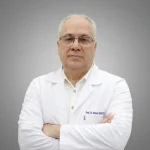 Prof. Dr. Ahmet Satıcı
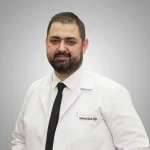 Doç. Dr. Muhammet Derda Özer
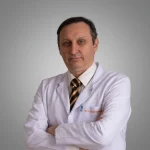 Op. Dr. Aysan Bayram