Astigmatism Treatment in Istanbul: Laser Eye Surgery and Toric Lenses

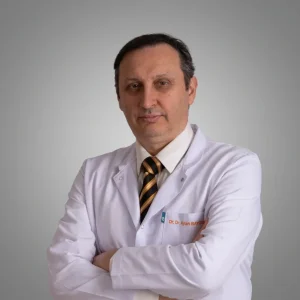
Astigmatism treatment with Laser Istanbul Clinic starts with measuring your eyes, not with choosing a machine. Prof. Dr. Ahmet Satıcı or Op. Dr. Aysan Bayram examines your corneas in Istanbul and recommends laser eye surgery, a toric implantable lens or a toric lens replacement, depending on your prescription, your corneas and your age. You see the full price in writing before you travel, and a personal interpreter stays with you from your first scan to your final check-up.

  • Medically reviewed by {{surgeon}} · Last reviewed {{date}}
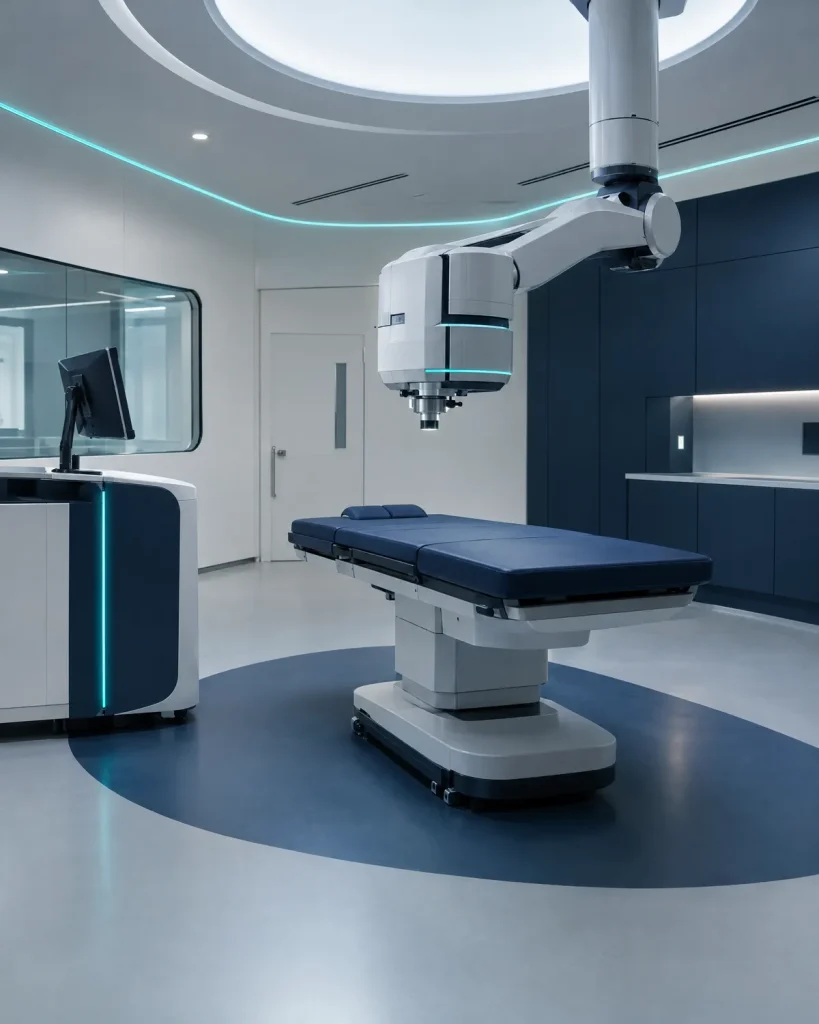
Excimer laser suite for laser eye surgery

Astigmatism means the cornea or lens is curved more like a rugby ball than a football, so light focuses at more than one point and vision blurs. Glasses or contact lenses correct it; laser eye surgery can correct it permanently, usually up to about 6 dioptres, by reshaping the cornea in the same treatment as short or long sight. Higher astigmatism can be treated with a toric lens implant. In Istanbul, Prof. Dr. Ahmet Satıcı or Op. Dr. Aysan Bayram treats it from {{£ price}} for both eyes; hotel and transfers are extra.

What is astigmatism, and what does astigmatism vision look like?

Astigmatism is one of the most common eye conditions: an imperfection in the curve of the cornea (the clear front window of the eye) or of the lens inside it. The NHS describes the eye as "shaped more like a rugby ball than a football", so light is focused at more than one place instead of at a single sharp point on the retina. It is not an eye disease, and in most people it is harmless.

How common is it? A 2018 global meta-analysis in the Journal of Current Ophthalmology found astigmatism in about 40% of adults and 15% of children, making it the most common refractive error worldwide. It usually occurs together with short-sightedness or long-sightedness, according to the NHS.

What astigmatism vision looks like. The US National Eye Institute (NEI) lists the typical symptoms as:

  • blurry vision
  • needing to squint to see clearly
  • headaches
  • eye strain
  • trouble seeing at night

The American Academy of Ophthalmology (AAO) adds "areas of distorted vision" and eye discomfort. Many people describe letters with shadows or edges that smear in one direction. With mild astigmatism you may notice nothing at all, which is why it is often found only at a routine eye test.

Regular and irregular astigmatism. Your surgeon will tell you which type you have, because it decides your treatment:

TypeWhat it meansHow it is usually treated
Regular astigmatismThe two main curves of the cornea sit at right angles, like a rugby ball. Most astigmatism is this type.Glasses, toric contact lenses, laser eye surgery, toric ICL or toric lens
Irregular astigmatismThe curves are uneven or not at right angles, often because of keratoconus, scarring or previous surgeryRigid contact lenses, corneal cross-linking for keratoconus; standard laser is usually not suitable

EyeWiki (the AAO's clinical encyclopaedia) explains that regular astigmatism is further described by its axis: "with-the-rule" (common in children), "against-the-rule" (the most common type in adults over 40) and "oblique". You will see the axis on your glasses prescription as a number between 0 and 180, next to the "cylinder" (CYL) value that shows how much astigmatism you have.

What causes it? Nobody knows exactly why corneas differ in shape. The NEI says some people are born with astigmatism and others develop it in childhood or young adulthood; an eye injury, eye disease or surgery can also cause it. The AAO calls it a myth that reading in low light or sitting close to the television causes astigmatism or makes it worse. Astigmatism can change gradually over the years: it may worsen, improve or stay the same.

When it needs checking soon. The NHS advises an eye test if you have symptoms or have not had one for two years, partly because astigmatism can be linked to keratoconus, a thinning and bulging of the cornea. Untreated astigmatism in children can lead to amblyopia (lazy eye), according to the AAO. Astigmatism that keeps increasing year after year, especially in teenagers and young adults, should be checked with a corneal scan.

Astigmatism lights at night: why you see streaks and halos

Lights at night are where astigmatism is most noticeable. Because an astigmatic eye focuses light at more than one point, a small bright source such as a headlight, street lamp or traffic light is not seen as a sharp dot. It spreads into a streak, a smear in one direction, a starburst or a halo. The AAO notes that anything which prevents light focusing sharply on the retina can cause glare and halos, and the NEI lists trouble seeing at night as a core symptom of astigmatism.

Astigmatism lights vs normal vision:

A light at night seen with…What it typically looks like
Normal vision (or well-corrected astigmatism)A sharp point of light with, at most, a small natural glow
Uncorrected astigmatismStreaks or rays stretched in one direction, starbursts, halos, sometimes a doubled or "ghost" image
Other causes (cataract, dry eye)Glare and halos that do not follow one direction; worth an eye examination

Astigmatism glasses for night driving. The most useful "night driving glasses" are simply your up-to-date prescription with the correct cylinder and axis. The AAO advises against tinted or yellow "night-driving" lenses, because anything that reduces the light reaching your eyes at night makes it harder to see, not easier. It does say that anti-reflective coatings reduce glare and are especially helpful for people bothered by headlights at night. Clean glasses, a clean windscreen and clean headlights help too. If lights still look streaky with your current glasses, your prescription may have changed; if you also notice glare, faded colours or blurred vision during the day, a cataract may be developing.

Astigmatism halos around lights after surgery. Glare and halos at night are also a known, usually temporary side effect of laser eye surgery (see the risks section below), so your surgeon will ask about night vision before and after treatment.

Astigmatism treatment options compared

Astigmatism treatment is either correction (glasses or contact lenses that compensate every day) or surgery that changes the eye's focusing permanently. The NEI notes that glasses or contact lenses are the most common treatment and that mild astigmatism may need none at all. Surgery suits adults who want to stop depending on glasses or contacts.

OptionHow it corrects astigmatismUsually suitsPermanent?
GlassesA "cylindrical" lens with extra power in one direction cancels out the uneven curveEveryone; the NHS calls them the cheapest optionNo
Toric soft or rigid (RGP) contact lensesToric lenses stay aligned on the eye; rigid lenses create a smooth new front surfaceToric: regular astigmatism. Rigid: higher or irregular astigmatism, where the AAO says they may work bestNo
Laser eye surgery (Femto-LASIK, SMILE Pro, PRK, Trans-PRK)Reshapes the cornea so both main curves focus at the same pointAdults over 18 with a stable prescription, healthy corneas and astigmatism within the laser rangeYes, although eyes keep ageing
Toric ICL (implantable lens)A lens with built-in astigmatism correction placed inside the eye, in front of your natural lensShort sight with astigmatism, especially high prescriptions or thin corneasYes, and removable
Toric lens replacement (RLE or cataract surgery)Your natural lens is replaced with a toric artificial lensUsually over about 45–50, or anyone with cataractYes
Limbal relaxing incisionsSmall curved incisions at the edge of the cornea relax the steep curveLower astigmatism, usually during cataract surgeryYes
Corneal cross-linkingStiffens a weak cornea; does not remove astigmatismProgressive keratoconusStops progression

The NHS notes that laser and lens surgery for astigmatism are not available on the NHS, so UK patients pay privately wherever they are treated.

Laser eye surgery for astigmatism: how it works

Laser eye surgery for astigmatism reshapes the cornea so that its steep and flat curves focus light at the same point. It is not a separate operation: the RCOphth (Royal College of Ophthalmologists) explains that laser vision correction treats short sight, long sight and astigmatism, and your astigmatism is corrected in the same treatment as the rest of your prescription, usually in about half an hour for both eyes.

Why alignment matters so much. Astigmatism has a direction (the axis), so the laser must be lined up with your eye's exact rotation. EyeWiki notes that the eye can rotate by about 2–4 degrees when you move from sitting up to lying down for surgery. Modern lasers correct for this: EyeWiki describes eye-tracker and iris-registration technology that keeps the treatment centred and corrects this "cyclotorsion" during LASIK, and the VisuMax 800 laser used for SMILE Pro has a dedicated assistant for cyclotorsion correction. This is one reason your surgeon measures your eyes sitting up before treatment.

Which laser method for astigmatism?

  • Femto-LASIK treats short-sighted, long-sighted and mixed astigmatism. A femtosecond laser makes a thin flap and an excimer laser reshapes the cornea beneath it. Visual recovery is the fastest.
  • SMILE Pro / ReLEx SMILE treats short sight with astigmatism through a small opening, without a flap. EyeWiki summarises a meta-analysis that found a tendency towards slight under-correction of low to moderate astigmatism (up to 2.00 D) with SMILE compared with LASIK, which your surgeon takes into account in planning.
  • PRK / LASEK and no-touch Trans-PRK reshape the surface of the cornea without a flap. They are often chosen for thinner corneas, with a slower and more uncomfortable recovery.

Technology we use: {{femtosecond laser platform name}} and {{excimer laser platform name}}, with eye tracking and cyclotorsion compensation, in a fully equipped, Ministry of Health–licensed operating theatre in Istanbul. Before that, your examination includes corneal topography and tomography (to confirm your astigmatism is regular), corneal thickness, a full refraction and a dry-eye check.

Who is suitable for astigmatism eye surgery?

You are most likely to be suitable for laser eye surgery for astigmatism if you are over 18, your prescription has been stable (no change greater than 0.5 dioptres in the last two years) and your astigmatism is up to ±6.00 D, the usual range given by the RCOphth. The same guidance gives up to −10.00 D of short sight and up to +4.00 D of long sight. Your surgeon decides only after measuring your eyes.

Matching the method to your eyes:

Your situationOften recommended
Regular astigmatism within the laser range, healthy corneas of normal thicknessFemto-LASIK or SMILE Pro
Thinner corneas, contact sports, preference for no flapPRK / LASEK, Trans-PRK or SMILE Pro
High short sight with astigmatism, or corneas too thin for laserToric ICL. In the US the toric ICL is approved for 1.0–4.0 D of astigmatism together with short sight, according to EyeWiki
Over about 45–50, reading glasses, or early cataractToric lens replacement. EyeWiki gives a typical correction of about 0.75–4.75 D of corneal astigmatism with toric lenses
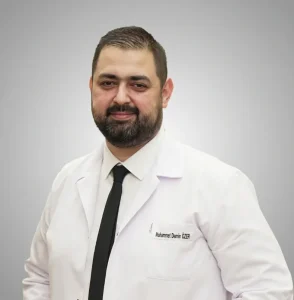
Irregular astigmatism, keratoconus or a changing corneaNot standard laser. Review by our cornea specialist, Doç. Dr. Muhammet Derda Özer: rigid lenses, cross-linking or other corneal treatment

Laser is usually not the right choice if you have keratoconus or a cornea whose shape suggests it, a cornea too thin for safe treatment, severe dry eye, cataract, active eye infection or inflammation, uncontrolled diabetes or autoimmune disease, or if you are pregnant or breastfeeding.

How precise is the result? EyeWiki summarises a systematic review in which a median of 92% of eyes treated with LASIK for short sight or short-sighted astigmatism were within 1.00 D of the intended correction. Results are less predictable at the top of the range, which is why very high astigmatism is often better treated with a toric lens.

Before your examination, stop wearing contact lenses. Toric lenses for astigmatism change the shape of the cornea for weeks. The US FDA advises stopping soft lenses 2 weeks before, toric soft or rigid gas-permeable lenses at least 3 weeks before, and hard lenses at least 4 weeks before your first evaluation. Your coordinator confirms the timing for your lenses.

Astigmatism treatment in Istanbul: price and what is included

At Laser Istanbul Clinic, laser eye surgery for astigmatism starts from {{£ price}} for both eyes. Astigmatism does not usually add a separate charge; the price depends on the method your surgeon recommends. A toric ICL starts from {{£ toric ICL price per eye}} and toric lens replacement from {{£ toric lens price per eye}}. Your surgeon confirms your exact price in writing after reviewing your prescription and scans, before you book anything.

Typical published prices (2025–26):

TreatmentUK privateGermany privateUSAIstanbul (typical published)Laser Istanbul Clinic
Femto-LASIK, both eyes£3,000–5,600€2,400–4,600$4,000–6,000about $1,450–2,700from {{£ price}}
SMILE / SMILE Pro, both eyes£4,400–7,600€2,800–5,200$5,000–8,000about $2,000–3,450from {{£ price}}
ICL, per eyeabout $3,350–8,700from about $2,900$3,500–9,000about $1,800–3,500from {{£ toric ICL price per eye}}

Typical ranges published by clinics and price-comparison sites in 2025–26, not quotes. ICL figures are in US dollars and are for ICLs in general, not toric lenses specifically. Published Istanbul prices are often packages that include a hotel.

Your treatment price includes:

  • full pre-operative eye examination and scans with your surgeon
  • surgery on both eyes (or per eye for lens treatments) by your named surgeon
  • medication and eye drops for your recovery
  • follow-up checks in Istanbul with the same surgeon
  • a personal interpreter, a dedicated coordinator and remote follow-up after you return home

Not included: flights, hotel and airport transfers. Hotel and transfers are a separate charge, and we can arrange them for you if you ask.

Your astigmatism treatment journey, step by step

  1. Free online assessment

    Send your glasses prescription (including the CYL and AXIS values) and any eye reports or scans. A surgeon tells you which treatment is likely to suit you and sends a written quote within {{response time}}.

  2. Book your dates

    Plan 3–5 days in Istanbul for Femto-LASIK or SMILE Pro; surface treatments and lens surgery usually need a few more days. Your coordinator confirms the length for your treatment.

  3. Full eye examination

    Corneal topography and thickness, refraction with and without dilating drops, a dry-eye assessment and a retina check, with your surgeon and interpreter. If laser is not right for you, your surgeon explains why and what the alternatives are.

  4. Treatment day

    Numbing drops are used and a small clip keeps your eyelids open. For laser, you look at a target light while the laser works; both eyes usually take about half an hour in total, and you return to your hotel the same day.

  5. First check (the next day)

    Your surgeon examines both eyes.

  6. Final check and home

    Most patients can fly 1–3 days after Femto-LASIK or SMILE, once their surgeon has checked their eyes. Your coordinator stays in touch, and your surgeon reviews your progress by video at agreed intervals.

Recovery after laser eye surgery for astigmatism

  1. First few hours

    Gritty, watery, light-sensitive eyes. Rest with your eyes closed and use lubricating drops.

  2. Day 1

    After Femto-LASIK, vision is usually much clearer and many people return to work the next day. After PRK or LASEK, the eye is sore for several days and vision clears more slowly.

  3. First week

    Do not rub your eyes. No swimming. Use your drops exactly as prescribed.

  4. 1 month

    Contact sports can restart after LASIK, not before.

  5. 1–3 months

    Night glare, halos and dryness usually improve.

  6. Up to 2 years

    Vision may fluctuate slightly before it settles; most changes after three months are very small.

Do not drive until your surgeon confirms that your vision meets the driving standard. Call your coordinator straight away if you have increasing pain, redness or blurred vision.

Risks and side effects of astigmatism surgery

Laser eye surgery for astigmatism carries the same risks as laser eye surgery in general. The RCOphth reports that over 95% of patients are satisfied with the outcome, but no surgery is risk-free.

  • Dry eye is the most common side effect. EyeWiki notes it usually settles within 6–12 months but persists in up to 20% of patients.
  • Glare, halos and starbursts at night, usually improving over the first months.
  • Under- or over-correction of the astigmatism. Some astigmatism can remain, especially after high corrections. The RCOphth says up to 1 in 10 patients need additional surgery to get the best result. {{Your surgeons' enhancement and re-treatment policy, including how long touch-ups are included in the price.}}
  • Corneal ectasia, a weakening and bulging of the cornea, about 1 in 5,000 with modern screening (EyeWiki). This is why irregular astigmatism and early keratoconus must be ruled out first.
  • Serious, permanent loss of vision is rare. The RCOphth states that fewer than 1 in 5,000 patients need a corneal transplant to restore vision after laser surgery.
  • With toric lenses, the lens must sit at the right angle. EyeWiki notes that each degree of rotation off axis reduces the lens's astigmatism correction by about 3.3%, so a lens that turns may need repositioning.

Your surgeon explains your personal risks in writing and through your interpreter before you sign anything.

Astigmatism treatment: frequently asked questions

Yes. Laser eye surgery corrects astigmatism by reshaping the cornea, usually up to about ±6.00 dioptres according to the RCOphth, in the same treatment as short or long sight. It is suitable only for regular astigmatism in a healthy, stable cornea. Your surgeon confirms this with corneal scans.

The best treatment is the one that fits your eyes. For most adults with regular astigmatism and healthy corneas, that is laser eye surgery. For very high astigmatism or thin corneas, a toric ICL may be better; from about 45–50, or with cataract, a toric lens replacement. Prof. Dr. Satıcı or Op. Dr. Bayram recommends one only after your examination.

With Laser Istanbul Clinic, laser eye surgery for astigmatism starts from {{£ price}} for both eyes, including your examination, surgery, medication, follow-up checks, interpreter and coordinator. Hotel and transfers are extra. Toric ICL and toric lens prices are quoted per eye after your assessment.

Astigmatism itself does not change from hour to hour, but tired eyes make blur and eye strain more noticeable. EyeWiki reports that long spells of reading with your eyes looking down can shift the cornea's curve by about 0.25 D in 15 minutes, which recovers within 30–60 minutes. Over years, astigmatism can slowly change, so update your glasses if your vision feels worse.

Tinted or yellow "night-driving glasses" do not help: the AAO warns that reducing light at night makes it harder to see. What helps is an up-to-date prescription that corrects your astigmatism, with an anti-reflective coating to reduce headlight glare. If lights still look streaky, have your eyes tested.

An astigmatic eye focuses light at more than one point, so a small bright light spreads into streaks, rays or a halo instead of a sharp dot. It is most noticeable at night. Correcting the astigmatism with glasses, contact lenses or surgery usually makes lights look sharper again.

For most people, no. Astigmatism is a very common refractive error, found in about 40% of adults, and glasses or contact lenses correct it in most cases. Irregular astigmatism caused by keratoconus or scarring can reduce vision more seriously and needs specialist care.

The reshaping is permanent, but eyes can change with age, and a small amount of astigmatism can remain or return, especially after high corrections. A touch-up is often possible if enough corneal thickness remains. Lens replacement later in life can also correct astigmatism with a toric lens.

The RCOphth gives up to ±6.00 D as the usual range, but your surgeon also looks at your total prescription and corneal thickness. Above this, or with thin corneas, a toric ICL or toric lens replacement is often more predictable.

Plan 3–5 days for Femto-LASIK or SMILE Pro. Surface laser and lens surgery usually need a few more days. Your coordinator confirms the exact length once your surgeon has chosen your treatment.

What our astigmatism patients say

★★★★★ Selin G., Türkiye

LASIK · Doç. Dr. Muhammet Derda Özer · March 2025

I recently had LASIK surgery with Dr. Derda Özer. I had high myopia and mild astigmatism in both eyes; I was a bit worried, but the surgery went smoothly. […] It's been 48 hours since I had LASIK, and now I can see clearly with vision better than 20/20.

Source: WUPDoc · translated from Turkish

Laser options for astigmatism in Istanbul

All laser methods can treat astigmatism; the RCOphth notes that visual results at three months are equally good for all types of laser vision correction. The differences are recovery, comfort and which corneas each suits.

Femto-LASIKSMILE Pro / ReLEx SMILEPRK / LASEK / no-touch Trans-PRK
Astigmatism treatedShort-sighted, long-sighted and mixedShort-sighted astigmatismShort-sighted, long-sighted and mixed
Visual recoveryFastest; often back to work the next daySlightly slower than LASIKSlowest; a week or longer before driving standard
Often chosen forMost prescriptions with normal corneal thicknessActive lifestyles, contact sports, no flapThinner corneas, flap-free preference

LASIK & Femto-LASIK

Blade-free LASIK with the fastest visual recovery.

LASIK & Femto-LASIK in Istanbul

SMILE Pro and ReLEx SMILE

Flap-free keyhole laser through a small opening.

SMILE Pro in Istanbul (VisuMax 800)

PRK / LASEK and no-touch laser

Surface treatment without a flap, often for thinner corneas.

PRK / LASEK in Istanbul
Sources for the facts on this page
  1. NHS, Astigmatism: "shaped more like a rugby ball than a football", light focused at more than one place; symptoms (blurred vision, headaches, eye strain); usually with short or long sight; lazy eye if undetected; eye test if symptoms or none for 2 years; link with keratoconus; glasses cheapest; laser/lens surgery not available on the NHS. https://www.nhs.uk/conditions/astigmatism/
  2. National Eye Institute (NIH), Astigmatism: symptoms list (blurry vision, squinting, headaches, eye strain, trouble seeing at night); mild astigmatism may cause no symptoms; cause unknown, born with it or develops in childhood/young adulthood, injury or surgery; glasses/contacts most common; surgery reshapes cornea. https://www.nei.nih.gov/learn-about-eye-health/eye-conditions-and-diseases/astigmatism
  3. American Academy of Ophthalmology, What Is Astigmatism?: imperfection in curvature of cornea or lens; distorted vision, eye discomfort; reading in low light myth; amblyopia risk in children; RGP lenses may work best for severe/irregular; astigmatism can change over time. https://www.aao.org/eye-health/diseases/what-is-astigmatism
  4. Hashemi H, Fotouhi A, Yekta A, et al. Global and regional estimates of prevalence of refractive errors: Systematic review and meta-analysis. J Curr Ophthalmol 2018;30(1):3–22: astigmatism prevalence 40.4% in adults, 14.9% in children; most common refractive error. https://pubmed.ncbi.nlm.nih.gov/29564404/
  5. EyeWiki (AAO), Physiology of Astigmatism: with-the-rule, against-the-rule (most common over 40), oblique; corneal toricity the main component; reading/downward gaze shifts corneal astigmatism ~0.25 D within 15 minutes, recovery 30–60 minutes; cyclotorsion of about 2–4 degrees from sitting to lying; iris registration. https://eyewiki.org/Physiology_of_Astigmatism
  6. EyeWiki (AAO), Limbal Relaxing Incisions: regular vs irregular astigmatism definitions; LRIs best for low to moderate astigmatism (< 3 D). https://eyewiki.org/Limbal_Relaxing_Incisions
  7. EyeWiki (AAO), Astigmatism Correction at the Time of Cataract Surgery: toric IOLs correct about 0.75–4.75 D at the corneal plane; 3.3% loss of correction per degree of rotation; LRIs up to 3.0 D, most predictable up to 1.5 D; irregular astigmatism cannot be fully corrected by cylindrical lenses. https://eyewiki.org/Astigmatism_Correction_at_the_Time_of_Cataract_Surgery
  8. EyeWiki (AAO), LASIK for Myopia and Astigmatism: Safety and Efficacy: median 92% within 1.00 D of intended correction; eye-tracker and iris registration for cyclotorsional alignment; SMILE tendency to under-correct low-moderate astigmatism (≤2.00 D); dry eye 6–12 months, persists in up to 20%; ectasia about 1 in 5,000. https://eyewiki.org/LASIK_for_Myopia_and_Astigmatism:_Safety_and_Efficacy
  9. EyeWiki (AAO), Keratorefractive Lenticule Extraction (KLEx) Surgeries: VisuMax 800 / SMILE Pro with OcuLign assistant for cyclotorsion correction. https://eyewiki.org/Keratorefractive_Lenticule_Extraction_(KLEx)_Surgeries
  10. EyeWiki (AAO), Implantable Collamer Lens: toric ICL FDA-approved in the US for myopic astigmatism with 1.0–4.0 D cylinder. https://eyewiki.org/Implantable_Collamer_Lens
  11. American Academy of Ophthalmology, Night Driving Glasses May Hurt, Not Help: tinted lenses reduce light and make night vision harder; keep prescription glasses updated, clean windscreen and headlights. https://www.aao.org/eye-health/tips-prevention/night-driving-glasses-may-hurt-not-help
  12. American Academy of Ophthalmology, Eyeglasses: How to Choose Glasses: anti-reflective coatings reduce glare, helpful for headlight glare at night. https://www.aao.org/eye-health/glasses-contacts/glasses
  13. American Academy of Ophthalmology, Ask an Ophthalmologist: glare and halos: "anything that prevents the sharp focus of light on the retina" can cause glare and halos. https://www.aao.org/eye-health/ask-ophthalmologist-q/are-nighttime-glare-halos-from-pink-eye
  14. US FDA, What should I expect before, during, and after surgery?: stop soft lenses 2 weeks, toric soft or RGP at least 3 weeks, hard lenses at least 4 weeks before evaluation. https://www.fda.gov/medical-devices/lasik/what-should-i-expect-during-and-after-surgery

Find the right astigmatism treatment for your eyes, free

Send us your glasses prescription and any eye reports. Prof. Dr. Satıcı or Op. Dr. Bayram will tell you whether laser, a toric ICL or a toric lens suits your astigmatism, and what it would cost, with no obligation.

3 eye surgeons

Your case is reviewed by a named surgeon, not a salesperson. Reply within {{response time}}.

  • Prof. Dr. Ahmet SatıcıProf. Dr. Ahmet Satıcı
  • Doç. Dr. Muhammet Derda ÖzerDoç. Dr. Muhammet Derda Özer
  • Op. Dr. Aysan BayramOp. Dr. Aysan Bayram