
Laser Eye Surgery Consultation for UK Patients: Free Video Call With an Istanbul Surgeon
Your laser eye surgery consultation starts at home. Send your glasses prescription and any eye reports, speak to one of three named Istanbul surgeons by video, and only then decide whether to travel. Prof. Dr. Ahmet Satıcı, Doç. Dr. Muhammet Derda Özer or Op. Dr. Aysan Bayram will tell you what may suit your eyes and what it would cost in pounds. After treatment, your surgeon follows your recovery by video once you are back in the UK.
UK patients can have a free laser eye surgery consultation by video, with no visit to Istanbul needed first. You send your prescription and eye reports, and one of our three surgeons (Prof. Dr. Satıcı, Doç. Dr. Özer or Op. Dr. Bayram) talks you through suitable options and a price in pounds. If you go ahead, your examination, scans and surgery take place in Istanbul, and your follow-up continues by video from home. We have no UK clinic: your local optometrist or ophthalmologist can review you with your shared records.
What is a laser eye surgery consultation, and why do it by video?
A laser eye surgery consultation is the conversation and assessment that decides whether laser surgery is right for you, which method suits your eyes, and what the risks, costs and recovery look like. It is the most important step, because the right answer is sometimes "not laser at all".
For UK patients considering Istanbul, doing this step by video has three advantages:
- You decide before you spend on flights. You get a surgeon's opinion and a written price in pounds before you book anything.
- You speak to the person who would operate. The consultation is with a named surgeon, not a salesperson, so you can ask about your own eyes and about the surgeon's own experience.
- Your questions are answered in English. A personal interpreter is available, and Doç. Dr. Özer and Op. Dr. Bayram both speak English.
A video call cannot replace a full eye examination. Measuring your corneal thickness and shape, your pupil size, your eye pressure and the health of your retina needs scans, and that examination takes place in Istanbul with your surgeon before any treatment. The video consultation is the first, free step: it tells you early whether you are likely to be a suitable candidate, so you do not make a trip for nothing.
How the free video consultation works, step by step
Here is the process from your first message to your first call.
Message us
Use WhatsApp on {{WhatsApp number}}, the booking form or email. Tell us what you are hoping for: freedom from glasses, a cataract that is getting worse, a lens question, or a second opinion.
Send your records
Your most recent glasses or contact lens prescription is the single most useful document. If you have them, add any NHS or optician letters, previous eye reports or scans, and a list of eye conditions, eye surgery and medicines.
A coordinator arranges your call
Your coordinator books a time that suits you in UK hours and sends you a link to join. The call is arranged on {{video platform}}.
Your surgeon reviews your records first
The surgeon has read your information before the call, so your time together is spent on you rather than on forms.
You speak to your surgeon by video
You will discuss which treatments may suit you, the realistic benefits, the risks, and the approximate cost. Calls last about {{call length}}.
You receive a written plan and a price in pounds
It is yours to keep, to think about, and to show your GP or optometrist. There is no obligation to book.
Your reply will come within {{response time}} of your first message.
What to send and what to prepare before your consultation
Send, if you have it:
- your current glasses or contact lens prescription (a photo of it is fine)
- any eye reports, scan results or letters from your optometrist or an NHS eye clinic
- a short list of eye conditions, previous eye operations, allergies and regular medicines
- your date of birth, so the surgeon can think about age-related options such as lens surgery
Prepare for the call:
- Write down your questions. Common ones are "Am I suitable for laser?", "Which method would you recommend, and why?", "What are the risks for my eyes?" and "What will it cost in pounds?"
- Think about your daily life. Driving at night, screen work and sport all affect which treatment makes sense.
- Tell the surgeon honestly if you wear contact lenses. Some patients need to stop wearing them before measurements are taken, and your surgeon will explain when.
- Join from a quiet place with a good connection, ideally with someone to listen alongside you.
If you have no records at all, send us your question anyway. A surgeon can still tell you which tests would be needed and what to expect.
Who will you speak to? Your three surgeons
Your consultation is with one of three named surgeons. You can ask for a particular surgeon, or we match you to the one whose specialty fits your eyes.
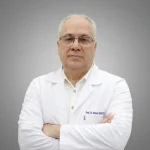
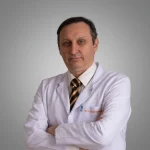
- Prof. Dr. Ahmet Satıcı: cataract and premium lens surgery, laser eye surgery (LASIK, SMILE Pro, PRK), ICL lenses, eyelid surgery, squint and glaucoma. An ophthalmology specialist since 1992, former Professor and Head of Ophthalmology at Harran University, with 21 peer-reviewed papers on PubMed.
- Doç. Dr. Muhammet Derda Özer: cornea, keratoconus, cross-linking, corneal transplant, retina, uveitis and cataract. Doç. means Associate Professor, a title he has held since 2021. He trained at Istanbul University's Faculty of Medicine, is FICO-qualified, has 27 papers on PubMed, and speaks English.
- Op. Dr. Aysan Bayram: cataract surgery, laser eye surgery and retinal disease. An ophthalmology specialist since 1999, trained at Trakya and Yüzüncü Yıl universities. She speaks English, and she is a female surgeon, which some patients prefer.
Patients with keratoconus are usually advised by Doç. Dr. Özer, and a video consultation is a sensible way to ask whether corneal cross-linking could help before travelling.
Why UK patients ask for a consultation abroad
Many UK patients start with a consultation because the alternatives are expensive or slow. According to NHS England's official referral-to-treatment statistics, at the end of July 2026 620,931 people in England were waiting to start NHS eye (ophthalmology) treatment, and only 72.9% had been waiting less than 18 weeks, against an NHS standard of 92%. These figures cover all NHS eye treatment in England, including cataract surgery; Scotland, Wales and Northern Ireland publish their own figures.
Waits vary by hospital, so ask your GP, optometrist or hospital how long yours is likely to be. A free video consultation lets you compare that with a surgeon's plan and a pound price before you decide.
It also helps to know what the NHS does not usually fund. The NHS does not usually offer laser eye surgery or lens surgery to stop you wearing glasses, and the Royal College of Ophthalmologists notes that such surgery is not available on the NHS or through private health insurance. NHS cataract surgery uses a monofocal lens, while multifocal lenses are available, but not as an NHS patient. For most UK patients the real comparison is therefore private surgery in the UK against private surgery in Istanbul.
After your consultation: treatment in Istanbul
If you decide to go ahead, the next step is the in-person part.
Your surgeon confirms the date
Plan your flights only after your surgeon has confirmed your dates. Flights are not included in the treatment price.
Full examination and scans in Istanbul
Your surgeon examines your eyes and takes the measurements the video call cannot. If your eyes are not suitable for the treatment discussed, you will be told, and an alternative will be suggested where one exists.
Surgery by your named surgeon
Your operation takes place in a fully equipped, Ministry of Health–licensed operating theatre in Istanbul.
Check-ups before you fly home
Your surgeon examines you again and only clears you to travel when your eye is ready.
Your treatment price, confirmed in pounds in writing, includes the pre-operative examination and scans, surgery by your named surgeon, medication, follow-up checks in Istanbul, a personal interpreter, a coordinator and remote follow-up. Hotel and airport transfers are not included. They are a separate charge that we arrange on request, and flights are also not included.
Aftercare for UK patients: video follow-up and a local review
Aftercare is where a UK patient should ask the hardest questions, so this section explains it plainly. We have no UK clinic, and nothing here depends on one.
Before you leave Istanbul. You go home with your full surgical report in English, the lens model and power if you had lens or cataract surgery, your drop schedule, and your coordinator's contact details.
Video follow-up from home. Once you are back in the UK, your coordinator stays in touch and your surgeon reviews your recovery by video at agreed intervals. Between those calls you can message your coordinator by WhatsApp, phone or email with questions about drops, healing or what is normal.
A local review with your shared records. Some checks need an instrument rather than a camera, such as a pressure measurement or a scan. For those, we help you arrange a review with a UK optometrist or ophthalmologist of your choice and share your full records with them, so they can see exactly what was done. Take your English surgical report to that appointment. {{complication policy: who pays for an in-person UK review or further treatment, and whether re-treatment in Istanbul and the travel for it are covered}}
Tell your optometrist. After laser eye surgery, remind your optometrist or doctor that you have had it whenever your eye pressure is checked for glaucoma, because laser surgery can make pressure readings read low. If you ever need cataract surgery later, tell the surgeon and bring your old prescriptions, which helps with choosing the right lens power.
Know the warning signs. Contact your surgeon without delay if you notice increasing pain, light sensitivity, redness or blurring. After cataract or lens surgery, a sudden shadow in part of your vision, flashing lights or a sudden shower of new floaters can mean a retinal detachment and needs urgent attention: go to your nearest eye casualty or A&E, then let us know.
Can a UK optometrist or ophthalmologist review me after surgery abroad?
Yes, a UK optometrist or ophthalmologist can examine your eyes after surgery abroad, and you do not need to have been their patient before. What makes the visit useful is your paperwork. Bring:
| Document | Why it helps your UK professional |
|---|---|
| Surgical report in English | Shows which procedure was done, on which eye, and when |
| Lens model and power (lens and cataract surgery) | Needed for any later glasses prescription or lens-related question |
| Drop schedule and medication list | Shows what you should be using and for how long |
| Your pre-operative prescription | A baseline to compare with how you see now |
| Your coordinator's contact details | Lets your local professional ask questions about your case |
Tell your GP or optometrist about your plans before you travel. Your surgeon's written treatment plan and price are yours to share with them. For an emergency, NHS eye casualty and A&E are there for you; for everything else, your coordinator and surgeon are your first contact.
Which treatments can we discuss on the call?
The consultation is open to any UK patient with a question about their eyes. The most common topics are:
| Your question | Treatment discussed | Usually with |
|---|---|---|
| "Can I stop wearing glasses or contact lenses?" | Laser eye surgery (LASIK, SMILE Pro, PRK) | Prof. Dr. Satıcı or Op. Dr. Bayram |
| "I need reading glasses and distance glasses" | Lens replacement (RLE / smart lens) | Prof. Dr. Satıcı |
| "My cataract is getting worse" | Cataract surgery, monofocal or premium lens | Prof. Dr. Satıcı, Doç. Dr. Özer or Op. Dr. Bayram |
| "My cornea is changing shape" | Keratoconus assessment and cross-linking | Doç. Dr. Özer |
| "I want a second opinion on my NHS or private quote" | Review of your records and options | Any of the three surgeons |
Questions UK patients ask about the consultation and aftercare
Your surgeon reviews your prescription and eye history, talks through which treatments may suit your eyes, explains the benefits and risks, and gives you an approximate price in pounds. A full examination with scans follows in Istanbul before any treatment is booked.
Yes. You send your prescription and any eye reports, and one of our three surgeons speaks to you by video from Istanbul. It tells you whether you are likely to be suitable. It does not replace the examination and scans that take place in person before treatment.
Yes, the video consultation is free and carries no obligation to book. Your price in pounds is only confirmed in writing after your surgeon has reviewed your eyes.
No. Laser Istanbul Clinic has no UK office or partner clinic. Your consultation is by video, your surgery is in Istanbul, and your aftercare is by video with a local review by a UK optometrist or ophthalmologist of your choice, using the records we share.
Send your latest glasses or contact lens prescription and, if you have them, any optician or NHS eye reports, scans and a list of eye conditions and medicines. Even a photo of your prescription helps. If you have nothing yet, send your questions anyway.
Your coordinator and your surgeon stay in touch, and your surgeon reviews your recovery by video at agreed intervals. If you need an in-person check, we help you arrange one with a local UK optometrist or ophthalmologist and send them your records. {{complication policy, one sentence}}
Yes. Bring your English surgical report, lens details and drop schedule. Remind them if you have had laser surgery whenever eye pressure is checked, because laser surgery can make readings lower.
For an emergency, go to your nearest NHS eye casualty or A&E first, then contact your coordinator. Warning signs include increasing pain, light sensitivity, redness, blurring, a sudden shadow in your vision, flashing lights or a shower of new floaters.
It depends on your hospital. At the end of July 2026, 620,931 people in England were waiting for NHS eye treatment, and 72.9% had waited under 18 weeks, below the 92% standard. Ask your hospital or GP for your own expected wait.
The length of your stay depends on the treatment, and your surgeon will confirm it on the consultation call or after your examination. Plan your flights only once your dates are confirmed.
Sources for the facts on this page
- NHS, Guide to NHS waiting times in England (waits vary by hospital). https://www.nhs.uk/nhs-services/hospitals/guide-to-nhs-waiting-times-in-england/
- NHS, Laser eye surgery and lens surgery ("not usually offered on the NHS"). https://www.nhs.uk/tests-and-treatments/laser-eye-surgery-and-lens-surgery/
- The Dudley Group NHS Foundation Trust, patient information Cataract surgery (monofocal lenses on the NHS; multifocal "not as an NHS patient"). https://www.dgft.nhs.uk/pil/cataract-surgery/
Send us your prescription. A surgeon will reply.
Message us your glasses prescription, any NHS or optician letters and your questions. Prof. Dr. Satıcı, Doç. Dr. Özer or Op. Dr. Bayram will arrange a free video consultation and tell you which treatments may suit your eyes and what they would cost in pounds, with no obligation. You will get a reply within {{response time}}.
3 eye surgeons
Your case is reviewed by a named surgeon, not a salesperson. Reply within {{response time}}.
 Prof. Dr. Ahmet Satıcı
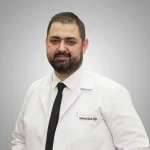 Doç. Dr. Muhammet Derda Özer
 Op. Dr. Aysan Bayram