
- Home
- Knowledge centre
- Treatment abroad guides
- Where to Stay in Istanbul While You Recover From Eye Surgery
Where to Stay in Istanbul While You Recover From Eye Surgery
Where to stay in Istanbul depends on one thing more than the view: how easily you can get to your appointments with healing eyes. This guide compares Istanbul's main areas for first-timers, families and solo travellers, explains what to look for in a hotel room after eye surgery, and shows what you can do while you recover.
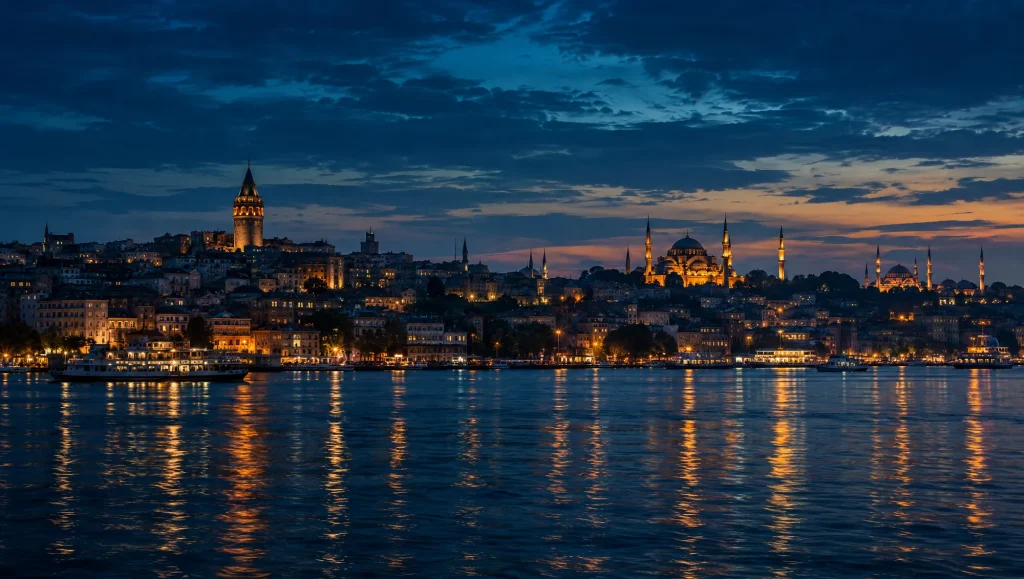
Choose where to stay in Istanbul by the journey to your appointments first and the sights second: a quiet, step-free hotel with a lift, close to your surgeon. Sultanahmet suits first-timers, Beyoğlu suits lively evenings, residential Beşiktaş and Şişli suit a calmer stay, and Kadıköy suits cafés. Prof. Dr. Ahmet Satıcı, Doç. Dr. Muhammet Derda Özer (Doç. means Associate Professor) or Op. Dr. Aysan Bayram confirms your dates.
How do you choose where to stay in Istanbul when you are having eye surgery?
Choose your hotel around your appointments, not around the sights: you will see your surgeon for an examination, for surgery and for a check-up the day after, and you must not drive. Istanbul has about 15.7 million people spread over two continents (Wikipedia, citing the figure for 31 December 2025), so a taxi or metro journey across the city can take far longer than the map suggests. Five questions narrow the choice quickly.
How far is the hotel from your surgeon?
Your surgery takes place in a fully equipped, Ministry of Health–licensed operating theatre in Istanbul, in the district of {{district of the operating theatre}}. Ask your coordinator for the journey time from any hotel you are considering; a hotel within {{typical travel time from hotel to the operating theatre}} is easiest on the morning after surgery.
Is the hotel step-free, with a lift?
The NHS says that after cataract surgery you can usually go home the same day, but that stairs need caution while your vision settles. Istanbul has rolling terrain, with its highest point at 537 metres, so many streets slope.
Is it quiet and dark at night?
Rest is part of recovery. A room facing away from the street, with blackout curtains, helps you sleep and protects eyes that are sensitive to light.
Can you reach food and a pharmacy on foot, on flat ground?
You want a short, simple walk for meals, not a long climb.
Will someone be with you?
A companion who reads menus and signs and helps with drops makes long walks less necessary. Their flights and room are booked separately, and we can arrange a twin or family room.
Hotel and airport transfers are not included in your treatment price. They are a separate charge that we arrange on request, and flights are never included. You are also free to book your own hotel: send your coordinator the address before you pay, so the journey time to your appointments can be checked first.
Which area is best to stay in Istanbul as a tourist? A map in words
The best area to stay in Istanbul as a tourist depends on what you want around you. The easiest way to picture the city is in three pieces: the historic peninsula (Fatih, where Sultanahmet is), the modern European side north of the Golden Horn (Beyoğlu, Beşiktaş, Şişli), and the Asian side (Kadıköy), with the Bosphorus running between Europe and Asia. About two-thirds of Istanbul's people live in Europe and the rest in Asia.
| Area | Side | Best for | Keep in mind |
|---|---|---|---|
| Sultanahmet (a neighbourhood of Fatih) | European, historic peninsula | First-timers who want Hagia Sophia, Topkapı Palace, the Blue Mosque and the Grand Bazaar close by | The busiest tourist area; a stop on the T1 tram; pickpockets target visitors (see safety below) |
| Beyoğlu: Taksim, Galata, Karaköy, Cihangir | European, north of the Golden Horn | Restaurants, nightlife, galleries, a lively street scene | Crowded and hilly; İstiklal Avenue alone sees up to 3 million people a day |
| Beşiktaş, Etiler, Levent | European, Bosphorus shore and inland | Upmarket residential streets, the Bosphorus waterfront, Dolmabahçe Palace, ferries | Fewer first-time sights on your doorstep |
| Şişli: Nişantaşı, Harbiye | European, inland | Upmarket shopping streets and cafés, M2 metro stations | Less "old Istanbul" atmosphere |
| Kadıköy and Moda | Asian | Cafés, markets, a local feel, ferries to the old city, the M4 metro to Sabiha Gökçen Airport | You cross the Bosphorus to reach an appointment on the European side |
Descriptions summarise the districts' reference entries (see Sources). Your coordinator confirms the journey time from each area to the operating theatre in {{district of the operating theatre}}.
[Designer: add an illustrated map of these five areas here.]
Where to stay in Istanbul for the first time
For a first visit, most people choose Sultanahmet, because Hagia Sophia, Topkapı Palace, the Blue Mosque and the Grand Bazaar all sit in Fatih, the district of the old city. If you are having eye surgery, treat the sights as a reward for after your check-up and choose your first nights by distance to your appointments. First-timers often do well with a calmer base for the surgery days, for example in Beşiktaş or Şişli (both on the metro: M2, M6 and M7 serve Beşiktaş, and M2 serves Şişli), then a night or two in Sultanahmet once the surgeon has cleared you.
Where to stay in Istanbul: Sultanahmet
Stay in Sultanahmet if the history is the point of your trip. It is a neighbourhood of Fatih and a stop on the T1 tram, which also runs through Eminönü and Karaköy to Kabataş. The trade-offs for a patient are the crowds, the tourist-area pickpockets and, as in much of Istanbul, the hills, so ask the hotel about its lift and whether the entrance is level before you book.
Taksim or Sultanahmet: which is better for eye-surgery patients?
Sultanahmet is better for sightseeing within walking distance, and Taksim is better for restaurants, shops and nightlife, but neither is automatically best while your eyes heal. The comparison uses what each area is known for.
| Sultanahmet | Taksim and Beyoğlu | |
|---|---|---|
| Character | Historic peninsula with Hagia Sophia, Topkapı Palace, the Blue Mosque and the Grand Bazaar | Modern city centre with shops, theatres, cafés and a "vibrant night life" |
| Getting around | T1 tram; the old city is on foot | M2 metro through Taksim; the Tünel funicular, in service since 1875 |
| Crowds | Heavy daytime tourist crowds | Very heavy; İstiklal Avenue is a pedestrian street of 1.4 km |
| Evenings | Dinner near the sights; the nightlife is mainly in Beyoğlu | The city's main nightlife area |
| Rest while you heal | Easier on a side street, away from the main sights | Easier on a side street or a high floor, with a lift |
The best area to stay in Istanbul for nightlife is Beyoğlu (Taksim, Galata, Karaköy, Cihangir), described on Wikipedia as one of the main centres of leisure and entertainment in the city. For eye-surgery patients, the honest advice is to save nightlife for the end of your trip or for another trip. Ask your surgeon whether you may drink alcohol while you are using drops and medicines. The UK government also warns that illegally made spirits and counterfeit alcohol can contain methanol, and that even small amounts can kill, so buy drinks only from reputable venues.
Where to stay in Istanbul with family
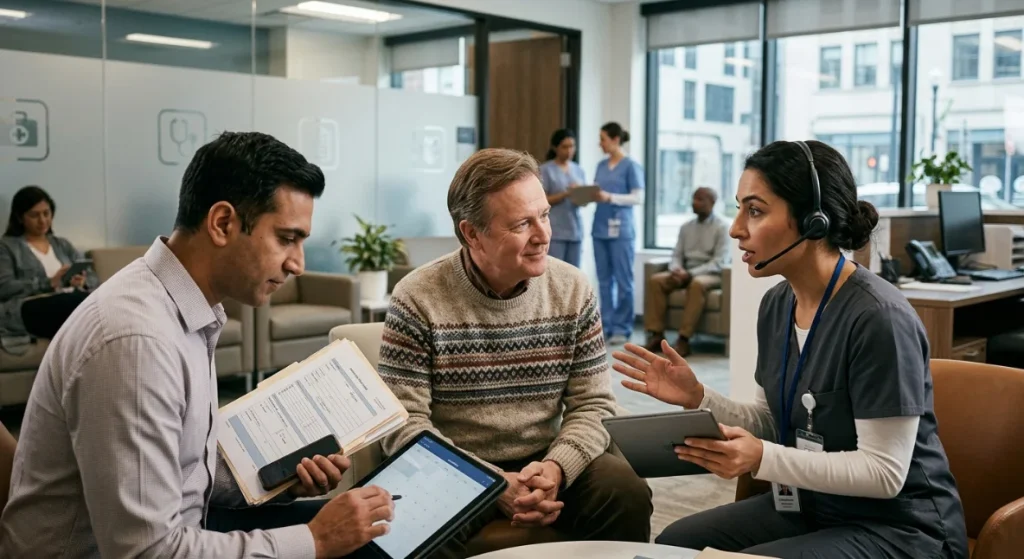
Stay where a family room, a lift and a short journey to your appointments come together, and treat the sights as an add-on for after your surgeon's check-up. If someone is travelling with you, a family or twin room means they can help with your eye drops and read menus and signs while your vision settles; their flights and room are booked and paid separately, and we can book the room for you both if you ask.
The best area to stay in Istanbul with family is usually a residential one such as Beşiktaş (the Bosphorus waterfront, ferries and Dolmabahçe Palace) or Şişli (Nişantaşı's cafés and shops, with M2 metro stations), rather than the busiest parts of Beyoğlu or Sultanahmet. If the patient is having surgery and you have children, plan for one adult to rest with the patient while another takes the children out: a crowded street is a knock risk for a healing eye.
Where to stay in Istanbul as a solo female traveller
A solo female traveller should choose a hotel with a 24-hour reception, a well-lit street and a short, pre-booked journey to appointments. Travelling alone is fine for many laser patients: your coordinator is a phone call away throughout your stay, and your interpreter is with you at every appointment. If you prefer a female surgeon, Op. Dr. Aysan Bayram treats cataract, laser and retinal disease and speaks English.
Practical points for any solo traveller, taken from the UK government's travel advice for Turkey:
- Street robbery and pickpocketing are common in the major tourist areas of Istanbul, so carry only what you need and keep your bag zipped and in front of you.
- If strangers offer you food or drink, these could be spiked, so buy your own and keep them in sight.
- Demonstrations occur regularly in Istanbul, can become violent, and the police response has included tear gas and water cannons, so avoid them.
What is the safest area to stay in Istanbul?
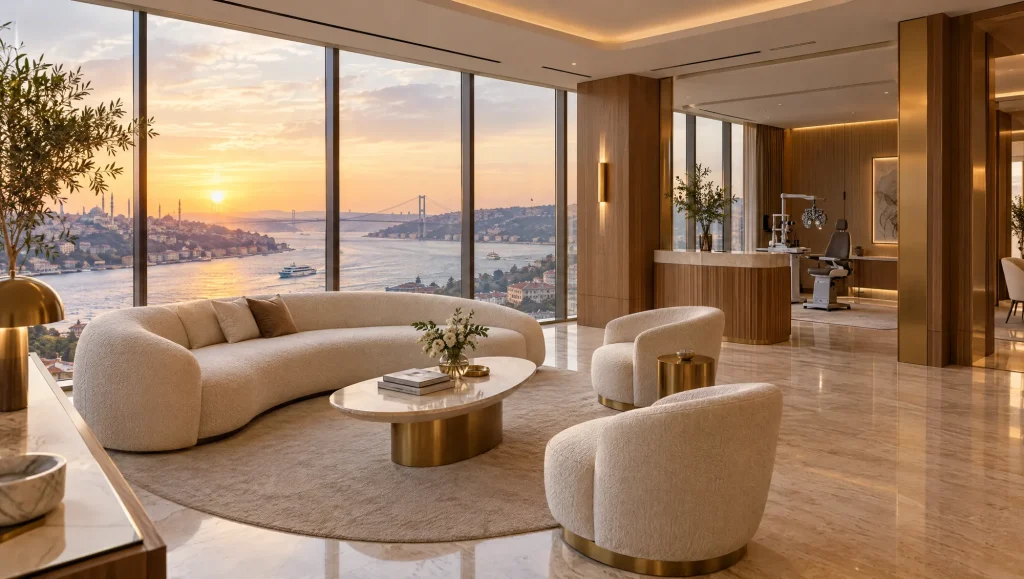
No area is "safest" in a way that replaces good habits: the UK government's advice says street robbery and pickpocketing are common in the major tourist areas of Istanbul, not in one district only. The practical answer is a hotel on a lit, busy street with 24-hour reception, a short pre-arranged transfer from the airport and a plan for the journey to each appointment. Save your coordinator's WhatsApp number ({{WhatsApp number}}) before you travel. If you need an ambulance in Turkey, the number is 112.
What is the best place to stay in Istanbul for 2 days?
For a two-day city break, Sultanahmet puts the major sights in one place, and Karaköy and Beyoğlu add food and evenings, but two days is shorter than any eye-surgery stay. Plan 3–5 days in Istanbul for laser (Femto-LASIK or SMILE Pro) and 5–7 days for lens replacement or cataract surgery, covering your examination, surgery and check-ups. Most patients fly 1–3 days after laser and about 3–7 days after lens surgery, once the surgeon has checked the eye; your surgeon confirms your own number of nights in writing before you book flights.
If you can add a couple of days of sightseeing, put them after your final check-up and move to a more central hotel for those nights. If we arrange your hotel, extra nights are {{extra night price}}.
What should your hotel room have after eye surgery?
A good recovery room is quiet, dark, clean and easy to reach without stairs. Use this checklist when you compare hotels:
- A lift, a step-free entrance and an easy bathroom, because the NHS advises caution on stairs after surgery.
- Blackout curtains and a quiet side of the building, so you can rest and sleep in the dark.
- A comfortable bed, with your shield or an eye mask for sleeping. The American Academy of Ophthalmology (AAO) says you may need to wear a protective eye shield when you sleep after cataract surgery, and the US Food and Drug Administration (FDA) advises wearing the shield at night for the first month after LASIK. Follow your own surgeon's instructions.
- A clean basin and soap for washing your hands before every drop. Your drop schedule is part of your treatment; after cataract surgery the NHS says drops are usually needed for about 4 weeks.
- A fridge, in case any of your drops need to be kept cold. Ask when you receive your schedule.
- A kettle and simple snacks for a quiet first evening.
- Reliable Wi-Fi for WhatsApp messages and video calls with your coordinator and, later, your surgeon.
- Ventilation without a vent blowing on your face. Dry or moving air makes eyes more uncomfortable.
If we book your hotel, we choose one that is convenient for your examination and surgery: {{hotel options: standard, area and typical travel time to the operating theatre}}. Rooms start from {{hotel price}} per night.
How do you get around Istanbul with healing eyes?
Get around by pre-arranged transfers and taxis for appointments, and use public transport only for gentle trips once your surgeon has cleared you, because you must not drive and crowds are a knock risk. The two international airports are on opposite sides of the city, so check which one your flight uses before you book a hotel or a transfer.
| Airport | How to reach the city | Notes |
|---|---|---|
| Istanbul Airport (IST), European side | M11 metro, Havaist shuttle buses or a taxi, according to the airport's own transport page | The M11 route to Gayrettepe is 37.5 km long, and at Gayrettepe it joins the M2 line |
| Sabiha Gökçen (SAW), Asian side, in Pendik, about 32 km south-east of the city centre | M4 metro, Havaist shuttle buses to places such as Taksim and Kadıköy, or a taxi | The M4 runs from Kadıköy to the airport |
Airport transfers are {{transfer price}} each way; {{transfer details: who meets you, where, and what happens if your flight is delayed}}.
In the city:
- Taxi or pre-booked transfer for every appointment. Your coordinator tells you what time to leave.
- Metro, tram and funicular work with an Istanbulkart, a contactless card; cash is not accepted. The metro runs from 06:00 to midnight, with trains every 6–12 minutes, and Metro İstanbul also lists a night metro service. Stations are deep underground, so check the lifts before you rely on the metro with healing eyes.
- Ferries cross the Bosphorus between the European and Asian sides. Decks are windy and bright: the NHS advises an eye shield or glasses in windy weather and sunglasses if lights seem brighter than normal.
- Marmaray, the rail tunnel under the Bosphorus, links Europe and Asia without road traffic.
What can you do in Istanbul while you recover from eye surgery?
You can rest, take gentle walks, eat well and enjoy the city from a café or a ferry between check-ups, once your surgeon has seen you the day after surgery. Your surgeon's instructions always come first; the table shows the general guidance from the NHS and the FDA.
| Activity | After laser (LASIK, SMILE, PRK) | After lens or cataract surgery |
|---|---|---|
| Gentle walking, a café, a ferry ride | Usually fine after your check-up, with sunglasses | Usually fine after your check-up, with sunglasses; take care on stairs |
| Crowded markets and busy streets | Avoid if you can; a knock or rub is the risk | Avoid if you can; the NHS says do not rub your eye |
| Swimming, hot tubs, whirlpools | The FDA says wait 1–2 months after LASIK | The NHS says no swimming, even with goggles |
| Turkish bath (hamam) and steam room | Treat like a hot tub: save it for a later trip | Save it for a later trip; keep water out of the eye |
| Eye make-up, creams and lotions | The FDA says up to 2 weeks around the eye | The NHS says no eye make-up |
| Sport and gym | The FDA says non-contact sports after 1–3 days and strenuous contact sports after at least 4 weeks | The NHS says no heavy lifting or sport until your doctor clears it |
| Driving or hiring a car | Not recommended; the NHS says do not drive at night until your eyes have recovered | The NHS says do not drive until your vision is back to normal |
A suggested rhythm for your stay.
- Arrival day: check in, eat something simple and rest.
- Examination day: your scans and consultation with your surgeon and interpreter, then back to the hotel.
- Surgery day: rest at the hotel with your eyes closed; do not plan sightseeing.
- The day after surgery: the check-up. The FDA says you must see your doctor within 24 to 48 hours of LASIK.
- Later days: a slow walk, a long lunch with a Bosphorus view, a ferry ride, with sunglasses and your drops in your bag.
- Final check, then fly home once your surgeon has confirmed your eyes are ready.
Weather matters. In Istanbul the average daily high is about 8°C in January and 28°C in July (Wikipedia), so wear sunglasses in summer sun and wind protection in winter.
Know the warning signs. Call your coordinator at once, at any hour, if you have increasing pain, redness, light sensitivity or worsening vision. After cataract or lens surgery, the NHS advises urgent help if floaters suddenly appear or increase, you see flashes of light, or a dark curtain spreads across your vision. If you need an ambulance, dial 112.
What should you check before you arrive: entry, insurance and records?
Check your entry rules and buy the right insurance before you book a hotel. Many nationalities can visit Turkey for short stays without a visa, but rules change, so read our visa guide before you travel: Turkey visa rules for patients (UK, EU, US, Gulf, Australia) →
- Travel insurance. GOV.UK says standard travel insurance does not normally cover you if you travel abroad for elective surgery, so look for a policy that covers treatment abroad, complications and medical evacuation. The GHIC and EHIC are not valid in Turkey.
- Medicines. GOV.UK says British prescriptions are not valid in Turkish pharmacies and that some common UK medicines are controlled in Turkey, so carry a list of your medicines and check the requirements before you travel.
- Records. Bring your prescription and previous eye reports. Before you leave Istanbul you receive your surgical report, and TravelHealthPro advises keeping copies of all overseas medical records for follow-up care at home.
- A plan for home. After you fly, your coordinator stays in touch and your surgeon reviews your recovery by video at agreed intervals.
Frequently asked questions
Stay close to your appointments in a quiet, step-free hotel, and move to Sultanahmet for sightseeing after your final check-up. Sultanahmet puts Hagia Sophia, the Blue Mosque and the Grand Bazaar within reach, but it is also the busiest tourist area. Ask your coordinator for the journey time from any hotel to your surgeon before you book.
Choose Sultanahmet for the sights and Taksim for restaurants, shopping and nightlife. For eye-surgery patients both are busy, so pick a side street or a higher floor, a hotel with a lift and a short transfer to your appointments.
Choose a family or twin room in a residential district such as Beşiktaş or Şişli, with a lift and a short journey to your surgeon. Your companion's flights and room are booked separately, and we can arrange a twin or family room if you ask.
Take sensible precautions. The UK government says street robbery and pickpocketing are common in major tourist areas and that food and drink offered by strangers could be spiked. Choose a hotel with 24-hour reception and pre-book your transfers. Op. Dr. Aysan Bayram is a female surgeon if you prefer one.
No. Hotel and airport transfers are a separate charge, and we arrange them on request (hotel from {{hotel price}} per night, transfers from {{transfer price}}). Flights are never included. Your treatment price covers your examination and scans, surgery by the named surgeon, medication, follow-up checks in Istanbul, a personal interpreter, a coordinator and remote follow-up.
Plan 3–5 days for laser (Femto-LASIK or SMILE Pro) and 5–7 days for lens replacement or cataract surgery. Other treatments can need longer; your surgeon confirms your nights in writing before you book.
Gentle sightseeing is usually fine once your surgeon has checked your eyes the day after surgery. Wear sunglasses, avoid crowds and dust, keep water out of your eyes and do not rub them. Ask your surgeon what suits your own recovery.
Not during your stay. The FDA says to avoid swimming, hot tubs and whirlpools for 1–2 months after LASIK, and the NHS says not to swim after cataract surgery, even with goggles. Save the hamam for a later trip.
Either works. Istanbul Airport (IST) is on the European side and Sabiha Gökçen (SAW) on the Asian side. Choose by your flights and tell your coordinator which airport you use, so your transfer and hotel match.
Planning your trip? Let us check your dates and your hotel area
Send your prescription or eye report and your preferred dates. Prof. Dr. Ahmet Satıcı, Doç. Dr. Muhammet Derda Özer or Op. Dr. Aysan Bayram reviews your case and tells you which treatment may suit you, how many nights to book and when you can fly home.
Sources for the facts on this page
- GOV.UK (FCDO). Turkey travel advice: Safety and security. https://www.gov.uk/foreign-travel-advice/turkey/safety-and-security — street robbery and pickpocketing common in the major tourist areas of Istanbul; food and drink from strangers could be spiked; methanol in illegal spirits; demonstrations and the police response.
- GOV.UK (FCDO). Turkey travel advice: Health. https://www.gov.uk/foreign-travel-advice/turkey/health — GHIC and EHIC not valid in Turkey; insurance for treatment and medical evacuation; 112 for ambulances; UK prescriptions not valid in Turkish pharmacies; some UK medicines controlled.
- GOV.UK. Medical emergencies, treatment and hospitalisation abroad. https://www.gov.uk/guidance/in-hospital-abroad — standard travel insurance does not normally cover elective surgery abroad; keep all records.
- NaTHNaC / TravelHealthPro. Medical tourism: travelling for treatment. https://travelhealthpro.org.uk/factsheet/59/medical-tourism-travelling-for-treatment — who cares for you during the journey and at home; keep copies of all overseas records.
- NHS. Cataract surgery. https://www.nhs.uk/tests-and-treatments/cataract-surgery/ — home the same day; caution on stairs; do not drive until vision is normal; do not rub the eye, lift heavy things, play sports, wear eye make-up, get water in the eye or swim, even with goggles; drops for about 4 weeks; urgent signs.
- NHS. Cataract surgery: recovery. https://www.nhs.uk/conditions/cataract-surgery/recovery/ — eye shield or glasses in windy weather; sunglasses if lights seem brighter.
- NHS. Laser eye surgery and lens surgery. https://www.nhs.uk/tests-and-treatments/laser-eye-surgery-and-lens-surgery/ — do not drive at night until your eyes have recovered; sunglasses or goggles if advised.
- US Food and Drug Administration. What should I expect during and after LASIK surgery? https://www.fda.gov/medical-devices/lasik/what-should-i-expect-during-and-after-surgery — see your doctor within 24 to 48 hours; avoid rubbing; shield at night for the first month; make-up and creams up to 2 weeks; swimming, hot tubs and whirlpools 1–2 months; non-contact sports 1–3 days; contact sports at least 4 weeks.
- American Academy of Ophthalmology. What Is Cataract Surgery? https://www.aao.org/eye-health/diseases/what-is-cataract-surgery — full healing about 4–6 weeks; avoid soap or water in the eye; do not rub; shield when sleeping.
- Istanbul Airport (iGA). Passenger transportation guide. https://www.istairport.com/en/passenger-guide/transportation — M11 metro, Havaist, taxi.
- Metro İstanbul (official). https://www.metro.istanbul/en — metro, tram and funicular lines, night metro service, accessibility services.
- Wikipedia. Istanbul. https://en.wikipedia.org/wiki/Istanbul — population 15,754,053 (31 Dec 2025); two-thirds in Europe; January and July average highs; rolling terrain, highest point 537 m; Bosphorus ferries.
- Wikipedia. Fatih, Beyoğlu, Beşiktaş, Şişli, Kadıköy. https://en.wikipedia.org/wiki/Fatih · https://en.wikipedia.org/wiki/Beyo%C4%9Flu · https://en.wikipedia.org/wiki/Be%C5%9Fikta%C5%9F · https://en.wikipedia.org/wiki/%C5%9Ei%C5%9Fli · https://en.wikipedia.org/wiki/Kad%C4%B1k%C3%B6y — landmarks; İstiklal Avenue (1.4 km, up to 3 million people a day); Tünel (1875); nightlife; Moda; metro lines.
- Wikipedia. T1 (Istanbul tram), Istanbul Metro, M11, Marmaray, Istanbulkart, Sabiha Gökçen International Airport. https://en.wikipedia.org/wiki/T1_(Istanbul_Tram) · https://en.wikipedia.org/wiki/Istanbul_Metro · https://en.wikipedia.org/wiki/M11_(Istanbul_Metro) · https://en.wikipedia.org/wiki/Marmaray · https://en.wikipedia.org/wiki/Istanbulkart · https://en.wikipedia.org/wiki/Sabiha_G%C3%B6k%C3%A7en_International_Airport — T1 stops; metro hours 06:00–24:00, every 6–12 minutes; M11 route 37.5 km to Gayrettepe with M2 interchange; Sabiha Gökçen in Pendik, about 32 km south-east of the centre, with the M4; Istanbulkart is cash-free.