
- Home
- Knowledge centre
- Treatment abroad guides
- How to choose an eye surgeon in Istanbul
Best Eye Doctor in the World? How to Choose an Eye Surgeon in Istanbul

No independent ranking can name the best eye doctor in the world, and any website that does is advertising. The right surgeon for you is an ophthalmologist who specialises in your exact eye problem, whose training and publications you can check, who examines you personally and who stays responsible for your aftercare. Our three Istanbul surgeons are Prof. Dr. Ahmet Satıcı, Doç. Dr. Muhammet Derda Özer and Op. Dr. Aysan Bayram.
Who is the best eye doctor in the world?
Nobody can say, because the world's best eye doctor depends on what is wrong with your eye. A surgeon who is outstanding at corneal transplants may rarely operate on retinas, and a leading cataract surgeon may not offer laser vision correction. Eye surgery is a set of different skills, so "best overall" is not a meaningful title.
We looked for an independent, outcome-based ranking of individual eye surgeons worldwide and found none. What does exist is different: lists of hospitals, lists of "top doctors" compiled from peer nominations or popularity, and review-site scores. Those measure reputation and satisfaction, not how a particular surgeon's operations turn out for people like you.
The US Food and Drug Administration (FDA) makes the practical point for laser surgery: risk and benefit vary "from surgeon to surgeon depending on their level of experience with a particular procedure". It also advises patients not to base the decision simply on cost and not to settle for the first doctor they find. So the useful question is not "who is the world's best eye doctor?" but "who is the best-qualified surgeon for my eyes, and how can I check?"
Which country has the best eye doctors in the world?
No country can honestly claim the best eye doctors, and no reliable ranking puts one first. What research does show is how much the number of eye doctors varies between countries, not that a surgeon's quality follows from the country.
The International Council of Ophthalmology's 2020 survey of 194 countries estimated 232,866 ophthalmologists worldwide in 2015. Low-income countries averaged 3.7 ophthalmologists per million people, against 76.2 per million in high-income countries. The authors also found that the density of ophthalmologists was only weakly linked to how much blindness a country has.
Two things follow:
- Counting doctors is not judging surgeons. A country with many ophthalmologists still has surgeons of very different skill and experience, and a country with few has some excellent ones.
- Your surgeon matters more than your passport stamp. Wherever you are treated, a good outcome rests on the surgeon's training and focus, the examination before surgery and the aftercare: the three things this guide shows you how to check.
Patients from the UK, Ireland, Germany, the US and the Gulf travel to Istanbul for eye surgery because of access, waiting times and cost. That is a reason to consider Istanbul, not proof that any one surgeon there is the best, which is why the checks below apply to every surgeon we recommend as well.
What makes a good eye surgeon? Seven checks
A good eye surgeon passes seven checks: the right specialty, verifiable training, relevant experience, published work, open discussion of results, a thorough examination before any decision, and responsibility for aftercare. Use this table to compare any surgeon, in Istanbul or anywhere else.
| Check | What to look for | Why it matters |
|---|---|---|
| 1. The right specialty | A surgeon whose main work is your problem: cataract and lens, laser, cornea, retina, glaucoma or eyelids | Laser, lens, cornea and retina surgery are different skills. Ask what share of their work is your procedure |
| 2. Training you can verify | Where and when they trained as an ophthalmologist, and any academic or international qualifications | Titles are easy to print and easy to check if you ask. In Turkey, Prof. Dr. is a Professor, Doç. Dr. is an Associate Professor (Doçent) and Op. Dr. is a surgical specialist |
| 3. Experience with your procedure | How long they have performed it, and how they handle the difficult cases | See "Does experience really matter?" below |
| 4. Published work | Peer-reviewed papers in PubMed, the free database of the US National Library of Medicine | You can search any surgeon's papers by name in a minute. A paper record shows scientific engagement; it is not proof of surgical skill on its own |
| 5. Open discussion of results | The surgeon explains their own successes and complications | The FDA says your doctor should be willing to discuss his or her outcomes, successes as well as complications |
| 6. A full examination first | Eye health, cornea measurements and refraction checked before any decision | The American Academy of Ophthalmology (AAO) lists these as the core of the pre-operative exam, and they decide whether you are a candidate at all |
| 7. Aftercare | Who checks your eyes after surgery, and who answers when you are back home | Problems are easier to deal with when one named person is responsible for checking you |
Does experience really matter?
Yes, but the number of operations is a poorer guide than who does the operation, how they were trained and how they handle difficult cases. The studies show a nuanced picture:
- In the Royal College of Ophthalmologists' National Ophthalmology Database study of 961,208 UK cataract operations (2016 to 2022, 136 centres), the lens capsule tore during surgery (posterior capsule rupture) in 1.01% of operations. Having the operation done by a trainee surgeon was one of the strongest risk factors (odds ratio 3.75), alongside conditions that make surgery harder, such as pseudoexfoliation.
- In Swedish national register data for 2007 to 2016, surgeons performing at least 500 operations a year treated patients with a lower average risk score. The authors suggest that the type of patients each surgeon takes on may explain much of the difference in complication rates.
- In a US study of 103,920 cataract operations by 136 surgeons, the gap in visual-acuity gain between the lowest- and highest-volume surgeons was about 1.25 letters on the eye chart, and the authors judged results comparable across a wide range of volumes.
- In a 2006 study of 10 trainee surgeons performing their first 50 LASIK operations each, complications linked to the microkeratome (an older blade-based flap tool) fell from 4.8% in their first 25 cases to 1.2% in their second 25. Complication rates and final vision did not differ significantly from those of experienced supervisors, and the authors concluded that supervised training keeps risk low.
What this means for you: ask who will actually operate on you, how long they have done your procedure and how they handle complicated eyes, not just "how many operations?". A surgeon who is open about complications, and who tells you when surgery is not right for you, is a better sign than a large number on a website.
Ophthalmologist, optometrist or optician: who should operate?
Only an ophthalmologist, a medical doctor who has specialised in eye disease and eye surgery, should perform eye surgery. The AAO describes the three professions in the US this way:
| Ophthalmologist | Optometrist | Optician | |
|---|---|---|---|
| Qualification | Medical doctor (MD or DO) with at least 4 years of further medical and surgical training; about 12 to 14 years of education in total (US) | Doctor of Optometry; not a medical doctor | Technician |
| What they do | Diagnose and treat all eye diseases, perform eye surgery, prescribe glasses and contact lenses | Routine eye and vision care | Fit glasses and contact lenses from a prescription |
| Surgery | Yes | No | No |
Training routes differ from country to country, but the principle is the same everywhere: the person who operates should be a qualified ophthalmologist. The NHS adds that before laser or lens surgery you should have a consultation with the surgeon about what will happen on the day, what aftercare you can expect and what to do if there are complications.
Red flags when choosing an eye surgeon
Be cautious of any clinic that cannot tell you which surgeon will operate, promises a result or pushes you to book quickly. Watch for these:
- No named surgeon. If you only learn who operates on the day, you cannot check anything.
- Guarantees. The FDA warns against "20/20 vision or your money back" promises and package deals, because there are never any guarantees in medicine.
- A price-only pitch. The FDA advises against basing the choice simply on cost.
- No proper examination. Skipping corneal measurements or the eye-health check before recommending surgery is a bad sign. The AAO says corneas must be thick enough and healthy for LASIK, so not everyone is a candidate.
- Everyone is a candidate. The AAO warns that people who have LASIK to achieve perfect vision without glasses risk disappointment. A surgeon who never says no is not protecting you.
- Vague aftercare. If nobody can say who answers your questions after you fly home, ask before you pay.
- Famous name, different surgeon. Check that the person in the advert is the person who will examine and operate on you.
How do you choose an eye surgeon in Istanbul?
Choose an Istanbul eye surgeon the way you would choose one at home: by specialty, verifiable training, a named operating surgeon and clear aftercare, with a few extra checks because you are travelling. Follow these steps:
- Define your problem. Glasses or contact lenses, reading glasses, cataract, keratoconus, a retina problem? That decides which specialty you need.
- Shortlist surgeons by name, not by clinic. Look for a named surgeon for your procedure, with training, titles and papers visible. The building matters less than the surgeon and the pre-operative tests.
- Verify what you can. Search the surgeon's name in PubMed, and ask where and when they trained.
- Send your records and ask for the surgeon's opinion. Your prescription and any eye reports should be read by the surgeon before you book. You should be able to talk to them by video, with an interpreter if you need one.
- Ask for the quote in writing. It should name your surgeon, list what is included and say what is not.
- Confirm the examination happens in Istanbul before any decision is final, and that the surgeon will tell you if surgery isn't right for you.
- Ask about aftercare at home. Who checks your eyes before you fly? Who reviews your recovery by video afterwards? How will your records reach a local eye doctor?
- Plan your trip. Allow days for your examination, surgery and check-ups, and choose where to stay.
Your surgery takes place in a fully equipped, Ministry of Health–licensed operating theatre in Istanbul, and you receive the address in writing before you travel.
Ten questions to ask any eye surgeon before you book
| Question | A good answer sounds like |
|---|---|
| Who will examine me, and who will operate? | A named surgeon, the same person throughout |
| How often do you perform my procedure? | A direct answer, including how they handle complex eyes |
| What are your own results and complication rates? | An open discussion of successes and complications (the FDA expects this) |
| Am I a good candidate, and what are the alternatives? | A reasoned answer after measuring your eyes, including "no" where it applies |
| Which method do you recommend for me, and why? | Reasons based on your cornea, prescription and lifestyle |
| What are the risks for my eyes specifically? | Plain, specific risks and no guarantees |
| What happens if something goes wrong? | A clear plan for complications, in Istanbul and at home |
| Who checks me after surgery, and how? | A check before you fly and a remote follow-up schedule |
| What is included in the price, and what is not? | A written list, including what is excluded |
| Can I speak to you before I travel? | Yes: a video call before you commit |
Our three Istanbul eye surgeons, and how they pass the checks
With Laser Istanbul Clinic you choose one of three named surgeons, and every check above can be applied to each of them. Prof. Dr. means Professor, Doç. Dr. means Associate Professor (Doçent) and Op. Dr. is the title of a surgical specialist.
| Prof. Dr. Ahmet Satıcı | Doç. Dr. Muhammet Derda Özer | Op. Dr. Aysan Bayram | |
|---|---|---|---|
| Main work | Cataract, premium lens (RLE, trifocal), laser (LASIK, SMILE Pro, PRK), ICL, eyelid and oculoplastic surgery, squint, glaucoma | Cornea, keratoconus, cross-linking, corneal transplant, retina, uveitis, ocular oncology, cataract | Cataract, laser, retinal disease |
| Training | Medicine, Uludağ University (1988); ophthalmology specialist training, Dicle University (1992) | Medicine, Istanbul University Faculty of Medicine (2010); specialist training completed 2016; FICO (International Council of Ophthalmology), 2020 | Medicine, Trakya University (1990); ophthalmology specialist training, Yüzüncü Yıl University (1999) |
| Academic career | Professor of Ophthalmology (2009) and Head of the Department of Ophthalmology, Harran University | Associate Professor (Doçent) since 2021 | Lecturer at Nişantaşı University and Bilgi University |
| PubMed-indexed papers | 21 | 27 | {{Op. Dr. Bayram's publications}} |
| Languages | {{Prof. Satıcı's languages}} | Turkish, English | English |
| Operations performed (self-reported) | {{operations performed, Prof. Satıcı}} | {{operations performed, Doç. Dr. Özer}} | {{operations performed, Op. Dr. Bayram}} |
Your case goes to the surgeon whose specialty matches your eyes, and you can ask for a particular surgeon by name. In practice:
- Laser eye surgery (LASIK, SMILE Pro, PRK): Prof. Dr. Satıcı or Op. Dr. Bayram
- Lens replacement and premium lenses: Prof. Dr. Satıcı
- Keratoconus, cross-linking and corneal transplant: Doç. Dr. Özer
- Retina: Doç. Dr. Özer or Op. Dr. Bayram
- Cataract: any of the three
If you would prefer a female surgeon, Op. Dr. Aysan Bayram is a woman ophthalmologist who speaks English. Whichever surgeon you see, a personal interpreter in your language joins your appointments. The same surgeon examines you, operates and checks your recovery, and every medical page on this site is reviewed by one of them.
Frequently asked questions
There is no official or independent ranking, so nobody can honestly name the best eye doctor in the world. The right surgeon is the one who specialises in your eye problem, has training you can verify and examines you personally. Use the seven checks above to compare any surgeon, including ours.
The world's best eye doctor for you is a specialist in that exact condition, such as a cornea surgeon for keratoconus or a retina surgeon for a detachment. Ask each surgeon how often they treat your condition and what their results and complication rates are. A surgeon who is open about both is a better sign than a famous name.
No reliable ranking puts any country first. The International Council of Ophthalmology estimated 232,866 ophthalmologists in 194 countries in 2015, with 3.7 per million people in low-income countries and 76.2 per million in high-income ones, but the number of doctors says nothing about an individual surgeon's skill. Check the surgeon, not the country.
The best LASIK surgeon for you is one who measures your eyes fully before choosing a method and who tells you if laser is not safe for your cornea. With us, laser eye surgery is led by Prof. Dr. Ahmet Satıcı and Op. Dr. Aysan Bayram, and the method (Femto-LASIK, SMILE Pro or PRK) is chosen only after your examination.
There is no official minimum that works as a quality mark. In a US study of 103,920 cataract operations, results were comparable across a wide range of surgeon volumes, while UK data show a higher complication risk with trainee surgeons. Ask who operates, how long they have done your procedure and how they handle difficult eyes.
Not automatically. A university title such as Prof. Dr. or Doç. Dr. shows an academic career, and papers in PubMed show scientific work, but what matters for your operation is the surgeon's focus on your procedure and their results. An Op. Dr. is a fully qualified surgical specialist. Judge all three titles on specialty, experience, openness and aftercare.
Yes. Send your prescription or eye report, and the surgeon who matches your problem reviews your case. You can ask for a video call, with an interpreter if you wish, before you decide to book.
It can be, if you choose by the checks in this guide: a named surgeon, a full examination before any decision, plain talk about risks, no guarantees and aftercare after you fly home. The FDA's advice to avoid choosing on cost alone and to be wary of package deals applies in every country.
Your surgeon will tell you, and you won't pay for an operation you don't need. The AAO says LASIK needs thick, healthy corneas and generally good eye health, so a good surgeon sometimes recommends a different treatment, such as lens surgery or an ICL, or no surgery at all.
Sources for the facts on this page
- US Food and Drug Administration. LASIK: What are the risks and how can I find the right doctor for me? https://www.fda.gov/medical-devices/lasik/what-are-risks-and-how-can-i-find-right-doctor-me (opened 7 Oct 2026)
- American Academy of Ophthalmology. What is an ophthalmologist? https://www.aao.org/eye-health/tips-prevention/what-is-ophthalmologist (opened 7 Oct 2026)
- American Academy of Ophthalmology. LASIK: laser eye surgery. https://www.aao.org/eye-health/treatments/lasik (opened 7 Oct 2026)
- Sim PY, et al. The Royal College of Ophthalmologists' National Ophthalmology Database study of cataract surgery: Report 17, a risk factor model for posterior capsule rupture. Eye 2024;38(18):3495–3503. PMID 39294232. https://pubmed.ncbi.nlm.nih.gov/39294232/ (abstract read via Europe PMC, 7 Oct 2026)
- Zetterberg M, et al. A Composite Risk Score for Capsule Complications Based on Data from the Swedish National Cataract Register: Relation to Surgery Volumes. Ophthalmology 2021. PMID 32710994. https://pubmed.ncbi.nlm.nih.gov/32710994/ (abstract read via Europe PMC, 7 Oct 2026)
- Modjtahedi BS, et al. Preoperative Vision and Surgeon Volume as Predictors of Visual Outcomes after Cataract Surgery. Ophthalmology 2019. PMID 30808486. https://pubmed.ncbi.nlm.nih.gov/30808486/ (abstract read via Europe PMC, 7 Oct 2026)
- Al-Swailem SA, Wagoner MD. Complications and visual outcome of LASIK performed by anterior segment fellows vs experienced faculty supervisors. American Journal of Ophthalmology 2006. PMID 16386971. https://pubmed.ncbi.nlm.nih.gov/16386971/ (abstract read via Europe PMC, 7 Oct 2026)
- Resnikoff S, et al. Estimated number of ophthalmologists worldwide (International Council of Ophthalmology update): will we meet the needs? British Journal of Ophthalmology 2020. PMID 31266774. https://pubmed.ncbi.nlm.nih.gov/31266774/ (abstract read via Europe PMC, 7 Oct 2026)
- NHS. Laser eye surgery and lens surgery. https://www.nhs.uk/tests-and-treatments/laser-eye-surgery-and-lens-surgery/ (opened 7 Oct 2026)
- PubMed (US National Library of Medicine), the database for checking a surgeon's published papers. https://pubmed.ncbi.nlm.nih.gov/
Ask the right surgeon about your eyes, free
Send your prescription or eye report, and the surgeon who specialises in your problem will tell you what is possible, with no obligation. Hotel and airport transfers are not included in your treatment price; we can arrange them on request at a separate charge. Reply time: {{response time}}.
3 eye surgeons
Your case is reviewed by a named surgeon, not a salesperson. Reply within {{response time}}.
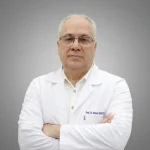 Prof. Dr. Ahmet Satıcı
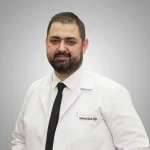 Doç. Dr. Muhammet Derda Özer
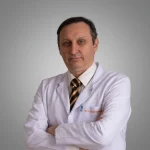 Op. Dr. Aysan Bayram