
- Home
- Knowledge centre
- Lens & cataract guides
- Cataract Surgery Recovery Time and Flying Home: What to Expect
Cataract Surgery Recovery Time and Flying Home: What to Expect
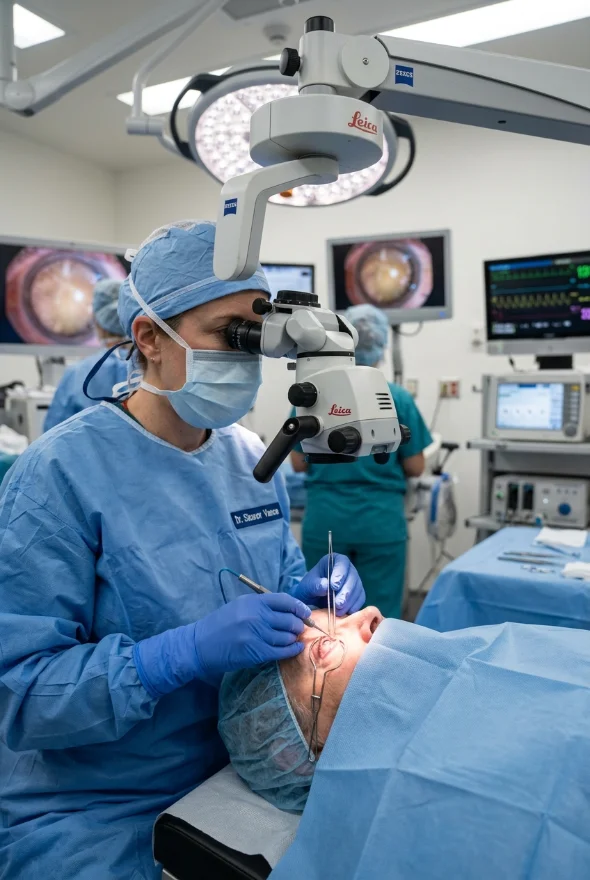
Cataract surgery recovery is quick: most people see better within days, feel normal in about two weeks and are fully healed in 6 to 8 weeks. Flying is generally safe, because routine cataract surgery puts no gas in the eye. If you have surgery in Istanbul with Prof. Dr. Ahmet Satıcı, Doç. Dr. Muhammet Derda Özer or Op. Dr. Aysan Bayram, you usually fly home about 3 to 7 days later, once your surgeon has checked the eye.
How long does cataract surgery recovery take?
For most people, vision improves over several days, the eye feels normal after about two weeks, and healing is complete after 6 to 8 weeks. The sources differ slightly. An NHS specialist eye hospital says the eye feels normal again after two weeks and takes six weeks to fully heal; the US National Eye Institute (NEI) says most people are completely healed 8 weeks after surgery. Your own timeline depends on your eye, so your surgeon gives you dates.
Here is a typical cataract surgery recovery timeline for a patient who travels to Istanbul:
| When | What usually happens | What to do |
|---|---|---|
| Surgery day | Vision may be blurry for a few hours, mainly because of the drops that widen your pupil (NHS). You go back to your hotel the same day | Rest; you cannot drive; wear the plastic shield at night if you are given one |
| Day 1 | The eye may feel gritty or ache; NEI says it should feel better after 1 or 2 days. First check with your surgeon in Istanbul | Start your drops exactly as written; attend the check |
| Days 2–7 | The eye may hurt for a few days and vision keeps improving; you may feel more tired than usual (NHS) | Paracetamol or ibuprofen if needed; sunglasses if lights seem bright; fly home once your surgeon signs you off |
| Weeks 1–2 | Scratchiness and light sensitivity can last 7 to 10 days; the eye usually feels normal by two weeks | No swimming, heavy lifting or eye make-up for the first two weeks |
| Weeks 2–4 | Eye settling | Keep using your drops; the NHS says you usually need them for about 4 weeks |
| Weeks 6–8 | Fully healed | New glasses prescription if you still need one (NEI) |
| Months to years later | Vision can become cloudy again in some people (posterior capsule opacification, PCO) | A quick laser treatment clears it |
Sources: NHS; NEI; NHS specialist eye hospital patient information (see Sources). Your drop schedule may differ from the NHS "about 4 weeks"; always follow the written plan your surgeon gives you.
Is vision blurry straight after surgery? Yes, at first. The blur has two causes: the pupil-widening drops, and an eye that is only starting to heal. About 9 out of 10 people who have cataract surgery see better afterwards (NEI), although vision may stay a little blurry while the eye recovers, and once you are fully healed you might need a new glasses prescription. The operation is the same whether it is called cataract surgery or lens replacement (RLE, smart lens) in Turkey, so the recovery described here applies to both.
How long are you off work after cataract surgery?
Most people with desk jobs or light work can go back a few days after cataract surgery; physically demanding work needs longer. Cataract surgery is a day-case operation, so you go home on the day. An NHS specialist eye hospital says you can usually return to work a few days after the operation, depending on your job, and that people in physically demanding jobs may need longer. The same guidance says you can read, watch television and use computers without problems, and return to light exercise and everyday activities within two to three days.
| Your situation | What to expect |
|---|---|
| Desk or screen-based job | A few days; screens are fine, though your eye may tire and feel dry |
| Physically demanding job (lifting, construction, heavy equipment) | Longer; avoid lifting heavy objects for the first two weeks and ask your surgeon for a date |
| Driving for work | Not until your vision meets the driving standard; in the UK that means reading a number plate at 20.5 metres, which normally takes 3 to 4 days |
| Travelling to Istanbul for surgery | Plan about 5 to 7 days away, then ask your surgeon about the rest |
If you have surgery abroad, your time off work includes the trip: most patients stay 5 to 7 days in Istanbul for cataract surgery, including the examination, surgery and check-ups. If both eyes are treated on the same trip, your surgeon tells you how many nights to book.
Can you fly after cataract surgery?
Yes, in most cases you can fly after cataract surgery. The American Academy of Ophthalmology (AAO) says that, with otherwise healthy eyes, there is generally no restriction on air travel after cataract surgery, and that routine cataract surgery does not usually create pressure-related concerns in the air. An ophthalmologist answering questions for the AAO goes further and says there is no risk to flying immediately after the operation. An NHS specialist eye hospital agrees that flying is safe for most patients, even on the day of surgery.
Why does my surgeon still ask me to wait 3 to 7 days?
Because of the check-ups, not the aeroplane. The AAO notes that most ophthalmologists want to see patients the day after cataract surgery and again about a week later, to monitor healing and protect the visual result. In England, the National Institute for Health and Care Excellence (NICE) advises against a routine in-person first-day review after uncomplicated cataract surgery, but it also requires services to have a process that spots complications and gives prompt access to a specialist. When you have surgery away from home, that safety net is being in the same city as your surgeon.
At Laser Istanbul Clinic, your surgeon examines your eye the day after surgery and again before you fly, and signs you off when the eye is ready. Most patients fly about 3 to 7 days after surgery. Prof. Dr. Ahmet Satıcı, Doç. Dr. Muhammet Derda Özer (Doç. is the Turkish title for Associate Professor) and Op. Dr. Aysan Bayram all perform cataract surgery; your own surgeon sets your date.
When you must not fly after eye surgery
The exception is a gas or air bubble inside the eye. Routine cataract surgery does not place one, but some other operations do, such as many retinal detachment repairs and some corneal transplants. The AAO warns that changes in air pressure during a flight can make a bubble expand, which can cause severe pain, permanent vision loss or even blindness, so you wait until your ophthalmologist confirms the bubble has completely dissolved.
| Your operation | Flying? | Source |
|---|---|---|
| Routine cataract surgery (no gas) | Generally safe; your surgeon confirms your date | AAO; NHS specialist eye hospital |
| Cataract surgery combined with retinal or corneal surgery that leaves a gas or air bubble | Not until your surgeon confirms the bubble has completely dissolved | AAO |
| Retinal detachment repair with a gas bubble | Not until your surgeon confirms the bubble has completely dissolved | AAO |
If your case is more complex than a routine lens replacement, tell your coordinator before you book flights.
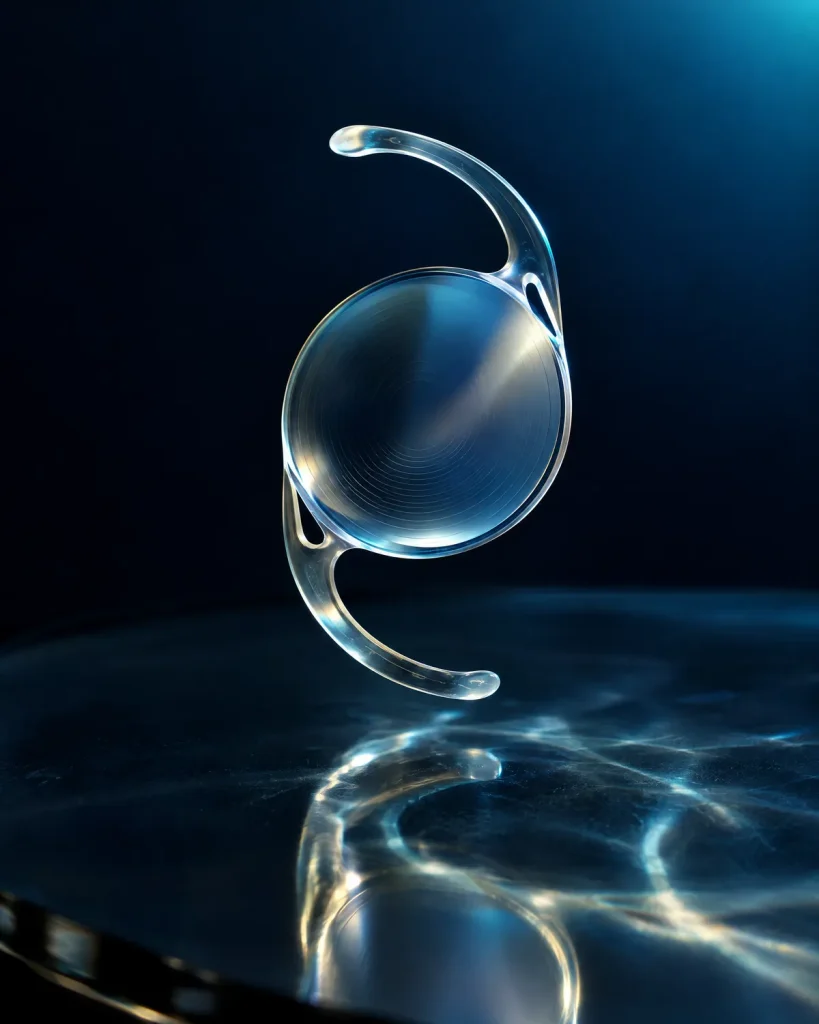
Does cabin pressure or dry cabin air affect your eye after cataract surgery?
Cabin pressure is not a problem for a healing cataract eye, but dry cabin air can make it uncomfortable. Pressure first. A 2023 review of how flight affects the eye cites a study in which eye pressure was measured in healthy volunteers during a flight: it stayed at about 14 mmHg 40 minutes after take-off and then fell slightly, to about 12 mmHg by the second hour. The review concludes that most flight-related eye changes are benign and reversible.
Dryness is the real nuisance. The same review reports that the low humidity of an aircraft cabin (30% or less) shortens the time the tear film stays intact. After cataract surgery many eyes are already dry: a 2022 systematic review found that 37.4% of patients with no previous dry eye developed dry eye disease after cataract surgery, with symptoms peaking the day after surgery and lasting at least 1 to 12 months. A dry flight on top of that can leave the eye gritty and red.
What helps on the plane:
- keep your prescribed drops in your hand luggage, in their original packaging with your written schedule, and use them on time during the flight (check your airline's rules on liquids before you travel)
- do not rub or press your eye, and wash your hands before using drops
- wear sunglasses if the cabin or the airport lights bother you
- ask your surgeon whether to wear the night shield on an overnight flight
- drink water, and use any extra lubricating drops your surgeon recommends
Flying home after cataract surgery: a checklist
Book flights around your check-ups
Leave 5 to 7 days in Istanbul and keep your return flexible if you can. Flights, hotel and airport transfers are not included in the surgery price; we arrange hotel and transfers on request for a separate charge.
Get your surgeon's go-ahead
Your surgeon examines the eye before you fly and tells you if anything affects travel.
Pack your handover in your hand luggage
Your full surgical report, the lens model and power, your drop schedule with dates and your coordinator's contact details.
Arrange someone to collect you
Do not drive until your vision is back to normal and meets your country's driving standard (NHS).
Plan the first weeks
No swimming, eye make-up or heavy lifting for two weeks, and keep using your drops.
Know your warning signs and who to call
(see the table below) before you leave the hotel.
What can you do, and what should you avoid, after cataract surgery?
Most daily life resumes within days; the rules mainly protect the eye from infection and strain.
| Activity | Typical advice |
|---|---|
| Reading, TV, phone and computer | Fine from the first day |
| Walking and light activity | Fine; light exercise within 2 to 3 days |
| Washing and showering | Fine; keep water and soap out of the eye |
| Rubbing or touching the eye | Never; keep hands clean and avoid dirty or dusty places |
| Swimming | No swimming, even with goggles, for at least the first two weeks |
| Eye make-up | None for the first two weeks |
| Heavy lifting and sport | Avoid for the first two weeks, then as your surgeon advises |
| Driving | Not until your vision meets the driving standard |
| Flying | Generally safe once your surgeon has checked the eye |
Sources: NHS; NEI; NHS specialist eye hospital patient information. Your surgeon's dates for your eye come first.
Cataract surgery after 70: is recovery different?
Recovery after 70 follows the same timeline as in younger adults; being older is normal for cataract surgery, not a barrier. In a Royal College of Ophthalmologists audit of 180,114 operations (2006–2010 data), the median age at first-eye surgery was 77.1 years, and the middle half of patients were aged 69.7 to 82.8. NICE bases the decision to operate on how the cataract affects your daily life and what you want, not on a visual-acuity cut-off, and its referral criteria mention no age limit. NICE also says that people at risk of a dense cataract should be told that delaying surgery increases the risk of complications.
Three points are worth planning for after 70:
- Dry eye is more common with age. The 2022 meta-analysis lists age among the risk factors for dry eye after cataract surgery, so use your lubricating drops as advised, especially on the flight.
- Other eye conditions change the result. In the 2025 UK National Cataract Audit, 96.4% of eyes with no other eye disease reached 6/12 vision or better (the level required to drive), against 86.6% of eyes with another recorded eye condition. Your surgeon tells you before surgery if another condition may limit your result.
- Travel with someone. You cannot drive on the day, and drops are easier with help. NICE also lists "the likely need for additional support after the operation" among the points to discuss when both eyes are done together.
Doç. Dr. Muhammet Derda Özer also operates on cataracts in eyes with corneal, retinal or inflammatory disease, which matters if you have another eye condition alongside the cataract.
What are the warning signs after cataract surgery?
Serious problems are rare, but a few symptoms need same-day attention. In the 2025 UK National Cataract Audit (550,519 operations), 0.02% of eyes developed an infection inside the eye (endophthalmitis) within 42 days and 0.05% a retinal detachment within 2 months, estimates the report says may be incomplete; severe vision loss from any cause affected 0.17% of eyes.
| What you notice | What it can mean | What to do |
|---|---|---|
| Sudden floaters or more floaters, flashes of light, a dark curtain or shadow across your vision, or sudden blur | Possible retinal detachment (NHS) | Urgent: contact your coordinator and surgeon at once; at home in the UK, call NHS 111 or go to eye casualty |
| Pain that increases, increasing redness, a swollen lid, light sensitivity or falling vision, usually in the first one to two weeks | Possible infection inside the eye (endophthalmitis) | Urgent, same day |
| Gritty, watery or aching eye, mild light sensitivity | Normal in the first days, and common after a dry flight | Drops, sunglasses, rest |
| Cloudy or misty vision months or years later | Posterior capsule opacification (PCO); about 1 in 5 people benefit from laser treatment (NHS specialist eye hospital) | See your surgeon or an optometrist; read blurry vision after cataract surgery |
NICE gives the higher risk of retinal detachment in people with high myopia (strong short-sightedness) as an example of an individual risk to discuss before surgery, so if you are very short-sighted, learn the warning signs well. If you are still weighing up lens surgery against other options, our guide to ICL vs laser for high myopia and thin corneas explains how the choice differs.
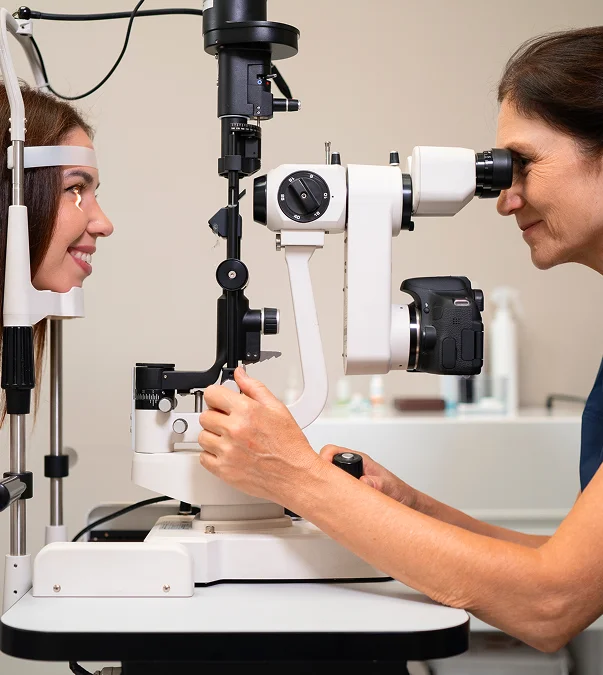
What happens once you are home?
Your surgeon stays involved for the whole recovery. Our price includes the pre-operative examination and scans, surgery by your named surgeon, medication, follow-up checks in Istanbul, a personal interpreter, a coordinator and remote follow-up. Your coordinator stays in touch after you fly, and your surgeon reviews your recovery by video at agreed intervals ({{remote follow-up schedule}}). If you need to be seen in person, we help you arrange it with a local optometrist or ophthalmologist and share your full surgical records.
When you are home:
- Use your drops for the full course on the written schedule; do not stop because the eye feels fine
- Get new glasses only when your surgeon or optometrist says the eye has settled, usually once you are fully healed at 6 to 8 weeks (NEI)
- Report blur that returns months later: it is often PCO, which a quick outpatient laser treatment clears
Frequently asked questions
Yes, in most cases. The AAO says there is generally no restriction on air travel after routine cataract surgery, because no gas is placed in the eye. The exception is any operation that leaves an air or gas bubble in the eye, and then you must wait for your surgeon's clearance. With us, your surgeon checks your eye before you fly.
Medically, the AAO and an NHS specialist eye hospital say flying is generally safe, even on the same day, after routine surgery. In practice, patients who have surgery in Istanbul usually fly about 3 to 7 days afterwards, once the surgeon has examined the eye the day after surgery and again before departure.
Vision improves over several days, the eye feels normal after about two weeks, and healing is complete after 6 to 8 weeks (NHS specialist eye hospital; NEI). You use drops for about 4 weeks according to the NHS, and your surgeon gives you your own schedule.
Most people with desk jobs go back after a few days. People with physically demanding jobs may need longer and should avoid heavy lifting for the first two weeks. If you travel abroad for surgery, plan about 5 to 7 days away.
No, the timeline is the same. The median age for first-eye cataract surgery in a large UK audit was 77.1 years. Older patients are more prone to dry eye afterwards, and those with other eye disease may see a smaller improvement, so your surgeon discusses your eyes individually.
No. The new lens sits inside the eye and routine cataract surgery leaves no gas bubble for cabin pressure to act on. In a study cited in a 2023 review, eye pressure did not rise during a flight. What affects the eye is dry cabin air, which is why you keep your drops at hand.
The AAO sets no extra limit for a longer flight after routine cataract surgery. Have your check-ups before you leave Istanbul, carry your drops and records in your hand luggage, and ask your surgeon before booking if you have any other eye condition.
Contact your coordinator and surgeon straight away. For sudden floaters, flashes, a dark curtain or sudden blur, get urgent eye care: in the UK, call NHS 111 or go to eye casualty. We share your full records with any local eye doctor who needs to see you.
Planning cataract surgery and want to know what your recovery looks like?
Your surgeon at Laser Istanbul Clinic examines your eyes, explains your lens options and gives you a recovery and flying plan before you book anything. Cataract surgery is performed by Prof. Dr. Ahmet Satıcı, Doç. Dr. Muhammet Derda Özer and Op. Dr. Aysan Bayram, in a fully equipped, Ministry of Health–licensed operating theatre in Istanbul.
Sources for the facts on this page
- NHS. Cataract surgery (recovery, drops about 4 weeks, restrictions, warning signs, complications). https://www.nhs.uk/tests-and-treatments/cataract-surgery/
- National Eye Institute (NIH). Cataract surgery (feeling better after 1–2 days, completely healed 8 weeks, 9 in 10 see better, secondary cataract). https://www.nei.nih.gov/learn-about-eye-health/eye-conditions-and-diseases/cataracts/cataract-surgery
- American Academy of Ophthalmology. Flying After Eye Surgery or With an Eye Condition (reviewed Jul 2026). https://www.aao.org/eye-health/tips-prevention/can-i-fly-with-this-eye
- American Academy of Ophthalmology, Ask an Ophthalmologist. When can you fly after cataract surgery? (Jun 2026). https://www.aao.org/eye-health/ask-ophthalmologist-q/when-can-you-fly-after-cataract-surgery
- American Academy of Ophthalmology, Ask an Ophthalmologist. Flying after cataract surgery. https://www.aao.org/eye-health/ask-ophthalmologist-q/flying-after-cataract-surgery
- NHS specialist eye hospital (London), patient information: Cataract, diagnosis and treatment (recovery times, return to work, DVLA driving standard, two-week restrictions, YAG laser about 1 in 5). https://www.moorfields.nhs.uk/eye-conditions/cataract/diagnosis-and-treatment
- NHS specialist eye hospital (London), patient information: Dos and don'ts after cataract surgery (flying is safe for most patients, even on the day, unless a gas bubble was used). https://www.moorfields.nhs.uk/private/about-moorfields-private/blog-articles/dos-and-don-ts-after-cataract-surgery
- NICE. Cataracts in adults: management (NG77), 2017: patient information, referral criteria, bilateral surgery, complication pathways, no routine first-day review. https://www.nice.org.uk/guidance/ng77/chapter/Recommendations
- The Royal College of Ophthalmologists, National Ophthalmology Database. Eighth Annual Report of the National Cataract Audit (2025; NHS year 2023–24): 550,519 operations; endophthalmitis 0.02% and retinal detachment 0.05% (incomplete reporting); severe vision loss 0.17%; 6/12 or better 96.4% / 86.6%. https://nodaudit.org.uk/sites/default/files/2025-07/NOD%20Cataract%20Audit%208th%20Annual%20Report%202025%20Final.pdf
- Day AC, Donachie PHJ, Sparrow JM, Johnston RL. The Royal College of Ophthalmologists' National Ophthalmology Database study of cataract surgery: report 1, visual outcomes and complications. Eye 2015 (180,114 operations; median age 77.1 years, IQR 69.7–82.8). https://pmc.ncbi.nlm.nih.gov/articles/PMC4816350/
- Totou S, et al. Impact of flight and equivalent short-term high-altitude exposure on ocular structures and function. Medical Hypothesis, Discovery and Innovation in Ophthalmology 2023 (cabin humidity of 30% or less and tear film; eye pressure during a flight; changes mostly benign and reversible). https://pmc.ncbi.nlm.nih.gov/articles/PMC10926315/
- Miura M, et al. Prevalence and Characteristics of Dry Eye Disease After Cataract Surgery: A Systematic Review and Meta-Analysis. Ophthalmology and Therapy 2022 (37.4%; age a risk factor; peak on day 1). https://pmc.ncbi.nlm.nih.gov/articles/PMC9253209/
- Postoperative Endophthalmitis After Cataract Surgery: An Update. Cureus 2022 (reduced vision with pain and redness, usually within one to two weeks). https://pmc.ncbi.nlm.nih.gov/articles/PMC8913541/