
- Home
- Knowledge centre
- Eye glossary A–Z
- Photophobia: Light Sensitivity, Causes, Symptoms and Treatment
Photophobia: Light Sensitivity, Causes, Symptoms and Treatment
Medically reviewed by {{surgeon}}, {{surgeon's title and specialty}}, on {{review date}}. Last updated {{date}}.
Photophobia (noun): photophobia is abnormal sensitivity to light, in which bright light, or even ordinary indoor light, causes eye discomfort or pain. Despite the name it is not a fear of light: it is a symptom, not a disease in itself, and it points to an underlying cause in the eye, the nervous system or, sometimes, a medicine. Treatment depends on finding that cause.
Quick answer
Short answer: photophobia means light hurts or irritates your eyes. Common causes include dry eye, inflammation or injury at the front of the eye, and migraine. It is often harmless and temporary, but with severe eye pain, a red eye, a stiff neck or a sudden vision change it needs urgent care. Our eye surgeons, Prof. Dr. Ahmet Satıcı, Doç. Dr. Muhammet Derda Özer and Op. Dr. Aysan Bayram, assess the eye causes.
Photophobia: key facts
- What it is
- A symptom: eye discomfort in bright light (MedlinePlus); light "induces or exacerbates pain" (Digre & Brennan, 2012)
- Also called
- Light sensitivity, light intolerance
- Most common eye cause
- Dry eye (Digre & Brennan, 2012)
- Most common nerve-related cause
- Migraine: up to 80% of people with migraine have photophobia during attacks
- Often appears with
- Headache, red or watery eyes, blurred vision, sensitivity to sound (phonophobia)
- Urgent warning signs
- Severe eye pain, white spot on the cornea, stiff neck, confusion, sudden vision loss
- Main treatment
- Treat the cause; tinted lenses such as FL-41 can ease symptoms
- Who examines it
- Ophthalmologist; at Laser Istanbul Clinic, Doç. Dr. Muhammet Derda Özer (cornea, uveitis), Prof. Dr. Ahmet Satıcı and Op. Dr. Aysan Bayram
What is photophobia, and why does light hurt?
Photophobia is a pain response to light, not a fear. In a 2024 study, researchers described it as "evoked pain to light" that can seriously limit daily activities.
Light-sensitive pain travels along several routes, according to a 2012 review in the Journal of Neuro-Ophthalmology:
- The trigeminal nerve. This nerve carries pain from the eye, and the cornea, conjunctiva and uvea are densely supplied with pain-sensing fibres. When these tissues are inflamed or dry, light can trigger pain.
- Light-sensing retinal cells. Specialised cells in the retina that contain melanopsin (intrinsically photosensitive retinal ganglion cells) detect light and feed into pain pathways.
- The thalamus. Neurons here receive both light and pain signals, which helps explain why light makes headache worse.
The same review notes that photophobia can occur in some blind people whose eyes are intact, which shows that it does not depend on seeing an image.
Photophobia symptoms: what does light sensitivity feel like?
The main photophobia symptoms are discomfort or pain when you look at bright light, such as sunlight, headlights, screens or fluorescent lighting. Typical signs include:
- squinting, or needing to close your eyes in bright places
- watering, burning or aching eyes
- a headache that gets worse in bright light
- eye redness
- blurred vision
- needing to dim the lights or wear sunglasses to feel comfortable
The extra symptoms that come with photophobia often point to the cause:
| What you notice with the light sensitivity | What it can point to |
|---|---|
| Gritty, burning, scratchy eyes | Dry eye |
| Pain, redness and a feeling of something in the eye | Corneal abrasion or other corneal problem |
| Red eye with or without pain, blurry vision, possibly floaters | Uveitis (inflammation inside the eye) |
| Severe pain, discharge or a white spot on the cornea | Corneal ulcer: urgent |
| Throbbing headache, nausea, sensitivity to sound | Migraine |
| Glare, hazy vision, trouble with oncoming headlights at night | Cataract |
| Stiff neck, severe headache, confusion | Meningitis: emergency |
| Light sensitivity since childhood, light-coloured eyes | Ocular albinism, a light-coloured iris or coloboma |
Photophobia causes: what makes eyes sensitive to light?
The causes of photophobia fall into three groups: the eye itself, the brain and nerves, and medicines. Many people have more than one cause at once.
Eye causes
- Dry eye. The most common eye cause of photophobia. Causes of dry eye include age-related hormonal changes, autoimmune conditions such as Sjögren's syndrome, eyelid problems, long screen time, contact lens wear and LASIK or other refractive surgery (American Academy of Ophthalmology, AAO).
- Corneal problems. A scratch (abrasion), an infection or ulcer, and recurrent erosion all irritate the cornea's dense nerves. Contact lens problems can do the same.
- Uveitis and iritis. Inflammation inside the eye. The AAO lists "very sensitive to bright light" among its main symptoms and says it needs prompt treatment.
- Cataract. Clouding of the natural lens can make you extra sensitive to light, especially oncoming headlights at night (AAO).
- Other eye conditions. Blepharitis, glaucoma, chalazion and episcleritis can also cause it. Inherited retinal conditions such as retinitis pigmentosa and cone dystrophy are further causes.
- Differences from birth. Ocular albinism, a light-coloured iris and reduced pigmentation can make eyes more light-sensitive. Children with a coloboma (a gap in an eye structure that formed before birth) sometimes have light sensitivity too.
- After eye surgery or eye drops. Temporary light sensitivity is common early in recovery from surface laser (PRK) and is a listed side effect of LASIK. Dilating drops can also cause it.
Brain and nerve causes
- Migraine. The most common neurological cause. A 2012 review reports that up to 80% of people with migraine have photophobia during attacks, and that 30–60% of attacks are triggered by light or glare.
- Blepharospasm. Uncontrolled eyelid squeezing; 94% of people with it report light sensitivity, according to the same review.
- Head injury. Light sensitivity is commonly reported after traumatic brain injury, with a rise in the subacute period (7–19 days after injury).
- Meningitis. Eye pain in bright light with a stiff neck and severe headache is an emergency (NHS).
- Other. The review also links photophobia with depression, anxiety and a condition called progressive supranuclear palsy.
Medicine-related causes
Photophobia medication causes are well documented. MedlinePlus lists amphetamines, cocaine and the dilating drugs atropine and tropicamide. The 2012 review adds barbiturates, benzodiazepines, chloroquine, methylphenidate and haloperidol. If you think a prescription medicine is making your eyes light-sensitive, speak to your prescriber; do not stop it on your own.

Phonophobia and photophobia: why light and sound sensitivity go together
Phonophobia means discomfort or pain from ordinary sounds. Phonophobia and photophobia often appear together in migraine: the NHS lists being "very sensitive to light and sounds" among the main migraine symptoms, alongside a throbbing headache and nausea.
Migraine is therefore the first cause to consider when both occur. The 2012 review adds that the combination of photophobia, disability and nausea predicts migraine about 98% of the time. Even between attacks, people with migraine tolerate less light than people without it, according to a 2017 review in Physiological Reviews.
Light and sound sensitivity together should still be assessed by a doctor, especially if they come with a first or sudden severe headache, fever, a stiff neck, confusion or weakness. The causes of photophobia and phonophobia overlap with serious conditions, so do not assume migraine without a diagnosis.
Is photophobia dangerous?
Photophobia itself is not dangerous, but it can be the warning sign of a condition that is. Many cases come from dry eye, mild irritation or migraine and are not sight-threatening. Some causes need treatment at once:
- Corneal ulcer. The AAO says it can badly and permanently damage vision, even cause blindness, if untreated.
- Uveitis. Treatment is needed promptly to prevent lasting problems (AAO).
- Meningitis. The NHS says to call 999 or go to A&E for a stiff neck with an inability to look at bright lights, a very painful headache, confusion or a rash that does not fade when pressed.
See "When to see a doctor" below for the full list.
Does photophobia affect vision?
Photophobia is a comfort problem, not a loss of eyesight in itself, but it often appears together with blurred vision. Light sensitivity with blur, redness or headache is a reason to see a doctor (MedlinePlus). Some causes, such as cataract, corneal scarring or uveitis, can affect vision themselves.
How is photophobia diagnosed?
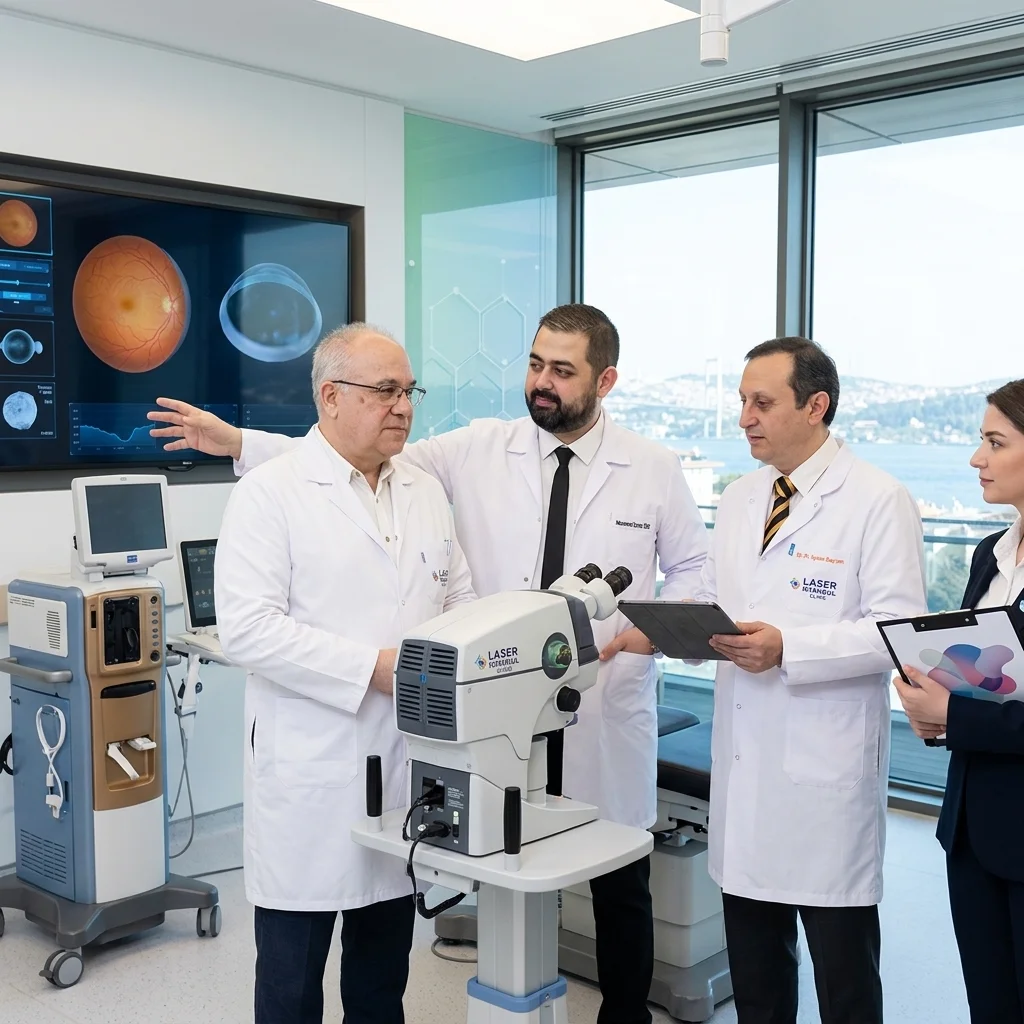
Diagnosis starts with finding the cause, because photophobia is a symptom. A doctor will ask when it started, whether it affects one or both eyes, what makes it better or worse, what medicines you take and whether you have headaches. A comprehensive eye examination follows. Depending on the findings, MedlinePlus lists:
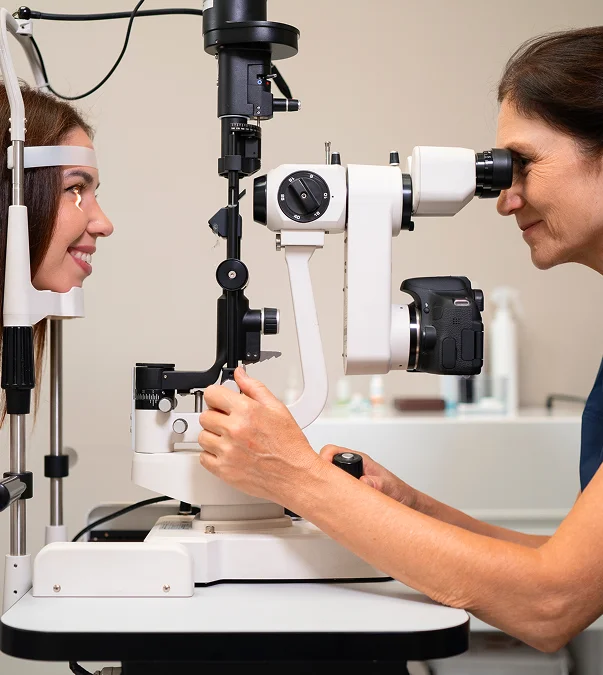
- a slit-lamp examination, a microscope with a bright light that shows the surface and inside of the eye
- an assessment of how the pupils react, including pupil dilation
- corneal scraping if an infection is suspected
- a lumbar puncture if meningitis is suspected (done in hospital, not in an eye clinic)
If the eyes are healthy, the cause is often neurological, such as migraine, and a neurologist or headache specialist takes over.
At Laser Istanbul Clinic, corneal topography, OCT and biometry are part of every pre-operative examination in Istanbul, and your surgeon reviews your existing scans before you book. We assess eye causes of light sensitivity; migraine and other neurological causes need a neurologist.
Photophobia treatment: how is light sensitivity treated?
Photophobia treatment means treating the cause, plus easing symptoms while it settles.
| Cause | Typical approach |
|---|---|
| Dry eye | Artificial tears, punctal plugs, prescription drops, warm compresses and eyelid hygiene, wrap-around sunglasses outdoors (AAO) |
| Corneal abrasion | Patching, lubricating drops or ointment, antibiotics, dilating drops for pain, therapeutic lenses; small scratches heal in 1–2 days, larger ones in about a week (AAO) |
| Corneal ulcer | Antibiotic, antifungal or antiviral drops; steroid drops once infection improves; surgery if scarring remains (AAO) |
| Uveitis | Steroid and dilating drops; sometimes injections or tablets (AAO) |
| Cataract | Surgery to replace the clouded lens with an artificial lens (AAO) |
| Migraine | Acute and preventive migraine medicines reduce photophobia, according to the 2012 review |
| Albinism or light iris | Tinted lenses, or gradient tints that are darker at the top (AAO) |
| Medicine-related | Review of the medicine with your prescriber |
For symptom relief, MedlinePlus suggests avoiding sunlight, closing your eyes or darkening the room, and wearing dark glasses. See the next section for a caution about indoor use.
Treatment with us: if your light sensitivity comes from a cataract, a corneal problem or inflammation inside the eye, our surgeons can diagnose it and treat it. Cataract and lens surgery are led by Prof. Dr. Ahmet Satıcı and Op. Dr. Aysan Bayram; cornea, keratoconus and uveitis care by Doç. Dr. Muhammet Derda Özer (Associate Professor).

Photophobia glasses: do tinted lenses help?
Photophobia glasses are tinted lenses that cut the light, or the wavelengths, that bother you. The best known are FL-41 lenses, which are rose-coloured.
- What the evidence shows. In a 2024 study of 25 people with chronic eye pain and dry-eye symptoms, 76% had a clinically meaningful improvement in light-induced discomfort with FL-41 lenses. Average light-evoked unpleasantness fell from 52.5 to 39.7 points (about 28%), and brain scans showed less activity in pain-processing areas. The study was small and the group not representative, so the result needs confirming in larger trials.
- How they work. FL-41 lenses selectively block light around 480 nanometres, though they filter a wider range, roughly 430 to 630 nm.
- Children and migraine. The 2012 review reports that FL-41 lenses reduced migraine frequency in children by over half and filter most flicker from fluorescent lights.
- Other tints. For albinism or a light-coloured iris, the AAO says tinted lenses or gradient tints can often help. For dry eye, wrap-around sunglasses outdoors reduce wind and sun exposure (AAO).
A caution: the 2012 review warns that dark adaptation should be minimised, so wearing sunglasses indoors is counterproductive and may increase your sensitivity. Use dark lenses outdoors in bright light, and ask your eye doctor about a lighter tint for indoors.
Is photophobia curable, permanent, or does it go away?
Whether photophobia is curable or permanent depends on its cause, not on photophobia itself.
- Short-term causes. When it comes from a corneal scratch, an infection, eye drops or the first days after surface laser surgery, it usually goes away as the eye heals. After PRK, light sensitivity is usual during the first days of recovery (EyeWiki, AAO).
- Treatable causes. Dry eye and uveitis can often be controlled with treatment, and cataract surgery removes the clouded lens that causes cataract-related glare.
- Longer-lasting causes. Migraine and some inherited or pigment-related conditions can bring light sensitivity back repeatedly. This can be managed, with medicines, tinted lenses and trigger control, but not always cured.
If light sensitivity lasts longer than a day or two, have it checked: MedlinePlus advises seeing a doctor when it persists beyond one or two days.
Light sensitivity after eye surgery
Temporary light sensitivity is a recognised part of recovery from some eye procedures.
- PRK (surface laser). Light sensitivity is usual in the first days; the surface layer regrows in about 3–4 days, and vision settles over weeks to months (EyeWiki).
- LASIK. The AAO lists light sensitivity, glare, halos and dry eye as possible side effects, and says almost everyone who has LASIK gets dry eye, which typically fades within about a month. Severe dry eye is one reason a person may not be a LASIK candidate, which is why dry eye is checked before laser.
- Cataract surgery. It removes the clouded lens, which can itself be a cause of glare and light sensitivity (AAO).
Glare and halos are related to, but not the same as, photophobia: Glossary: Halos and glare →.
If you are thinking about laser correction, tell your surgeon about any existing light sensitivity or dry eye. Laser eye surgery in Turkey →
When to see a doctor about light sensitivity
Seek same-day care (an eye emergency service, A&E or 999 as appropriate) if you have:
- light sensitivity with a stiff neck, a very painful headache, confusion, slurred speech or a rash that does not fade when pressed (possible meningitis; the NHS says to call 999 or go to A&E)
- severe eye pain, a white or grey spot on the cornea, or pus-like discharge (possible corneal ulcer)
- a red, painful eye with blurry vision or new floaters (possible uveitis)
- a chemical splash or an injury to the eye
- a sudden drop in vision
Book an eye examination if:
- light sensitivity lasts more than a day or two
- it keeps coming back or is getting worse
- it comes with headaches, red eyes or blurred vision
- it started after a head injury
- you have had it since childhood and glare affects school, driving or work
- you wear contact lenses and your eyes have become sore or light-sensitive (take lenses out and do not put them back in)
If you already have a diagnosis, such as uveitis, a corneal condition or a cataract, you can send your reports and scans for a second opinion before you travel.
Frequently asked questions
Photophobia is abnormal sensitivity to light that makes bright light, and sometimes ordinary light, uncomfortable or painful. It is a symptom, not a fear of light, and it points to a cause in the eye, the nervous system or a medicine.
Common causes are dry eye, corneal irritation or injury, uveitis, cataract and migraine. Medicines such as dilating drops, benzodiazepines and methylphenidate can also trigger it. Your doctor will look for the cause with an eye examination.
Typical photophobia symptoms are squinting, pain or discomfort in bright light, watering or burning eyes, and headache that worsens in light. Redness and blurred vision may come with it. The other symptoms you notice usually point to the cause.
Photophobia is sensitivity to light; phonophobia is sensitivity to sound. They often occur together in migraine, which the NHS describes as causing sensitivity to light and sounds. When both come with a severe or sudden headache, fever or a stiff neck, see a doctor urgently.
Not by itself, and many cases are harmless and temporary. It can be the warning sign of urgent problems such as a corneal ulcer, uveitis or meningitis, so severe pain, a stiff neck, confusion or a sudden vision change need same-day care.
Rose-tinted FL-41 lenses have the best-studied evidence. In a 2024 study of 25 people, 76% had meaningful relief, though the study was small. For albinism or a light iris, tinted or gradient lenses can help. Avoid wearing dark glasses indoors, which may make light sensitivity worse.
There is no single drug for photophobia: the medicine depends on the cause. Lubricating drops treat dry eye, steroid and dilating drops treat uveitis, and migraine medicines reduce light sensitivity in migraine, according to the 2012 review. Ask a doctor before taking any medicine for it.
It depends on the cause. Short-term causes such as a corneal scratch or recovery after PRK usually clear up, while migraine-related light sensitivity can come and go and is managed rather than cured. Treating the underlying condition is the key.
Sometimes, when the cause is temporary, such as an abrasion or eye drops. If it lasts longer than a day or two, or comes with pain, redness or blurred vision, have your eyes checked.
Sources for the facts on this page
- Digre KB, Brennan KC. Shedding light on photophobia. J Neuroophthalmol 2012. PMC: https://pmc.ncbi.nlm.nih.gov/articles/PMC3485070/ · PubMed: https://pubmed.ncbi.nlm.nih.gov/22330853/
- Reyes N, Huang JJ, Choudhury A, et al. FL-41 tint reduces activation of neural pathways of photophobia in patients with chronic ocular pain. Am J Ophthalmol 2024. https://pmc.ncbi.nlm.nih.gov/articles/PMC10939838/
- Goadsby PJ, et al. Pathophysiology of migraine: a disorder of sensory processing. Physiol Rev 2017. https://pmc.ncbi.nlm.nih.gov/articles/PMC5539409/
- MedlinePlus (US National Library of Medicine). Photophobia. https://medlineplus.gov/ency/article/003041.htm
- NHS. Migraine. https://www.nhs.uk/conditions/migraine/
- NHS. Meningitis symptoms. https://www.nhs.uk/conditions/meningitis/symptoms/
- American Academy of Ophthalmology. What Is Uveitis? https://www.aao.org/eye-health/diseases/what-is-uveitis
- American Academy of Ophthalmology. Corneal Abrasion and Erosion. https://www.aao.org/eye-health/diseases/what-is-corneal-abrasion
- American Academy of Ophthalmology. What Is a Corneal Ulcer (Keratitis)? https://www.aao.org/eye-health/diseases/corneal-ulcer
- American Academy of Ophthalmology. What Is Dry Eye? https://www.aao.org/eye-health/diseases/what-is-dry-eye
- American Academy of Ophthalmology. What Are Cataracts? https://www.aao.org/eye-health/diseases/what-are-cataracts
- American Academy of Ophthalmology. What Is Coloboma? https://www.aao.org/eye-health/diseases/what-is-coloboma
- American Academy of Ophthalmology. Light sensitivity (ophthalmologist Q&A). https://www.aao.org/eye-health/symptoms/photophobia
- American Academy of Ophthalmology. LASIK: Laser Eye Surgery. https://www.aao.org/eye-health/treatments/lasik
- EyeWiki (AAO). Photorefractive Keratectomy. https://eyewiki.org/Photorefractive_Keratectomy
Light sensitivity that will not go away?
Send us your eye reports or scans. Our eye surgeons will review them and tell you whether an eye cause, such as a cataract, a corneal problem or dry eye before laser, may be involved, with no obligation.
3 eye surgeons
Your case is reviewed by a named surgeon, not a salesperson. Reply within {{response time}}.
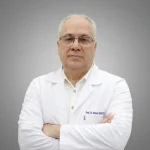 Prof. Dr. Ahmet Satıcı
 Doç. Dr. Muhammet Derda Özer
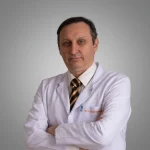 Op. Dr. Aysan Bayram