
- Home
- Knowledge centre
- Eye glossary A–Z
- Chalazion: What It Is, Causes, Symptoms and Treatment
Chalazion: What It Is, Causes, Symptoms and Treatment
Medically reviewed by {{surgeon}}, {{surgeon's title and specialty}}, on {{review date}}. Last updated {{date}}.
Chalazion (noun, plural chalazia; also called a meibomian cyst): a chalazion is a firm, usually painless lump in the eyelid that forms when an oil gland in the lid becomes blocked. The trapped oil leaks into the surrounding tissue and causes a long-lasting, sterile inflammation rather than an infection. Many chalazia settle by themselves over weeks to months; large or stubborn ones can be treated by an eye surgeon with a steroid injection or a small drainage procedure.
In short: a chalazion is a painless, firm lump in the eyelid caused by a blocked oil (meibomian) gland. Unlike a stye, it is not an infection. Warm compresses are the first step, and many chalazia clear within weeks to months. If it is large, keeps growing, affects your vision or returns, an eye surgeon can inject steroid or drain it under local anaesthetic. At Laser Istanbul Clinic, eyelid conditions are led by Prof. Dr. Ahmet Satıcı.
Chalazion: key facts
- What it is
- A chronic, sterile lipogranuloma (a lump of inflamed, oil-rich tissue) inside the eyelid, from an obstructed meibomian gland in the tarsal plate
- Where
- Upper lids more often than lower lids, because the upper lid has more meibomian glands
- Who gets it
- Both sexes and all ages
- Main risk factors
- Blepharitis, rosacea and a previous chalazion; also demodex mites, smoking and some medicines
- Typical feel
- Firm, gradually growing, usually painless lump
- Natural course
- Often resolves by itself in weeks to months
- Treatment
- Warm compresses and lid massage; steroid injection; incision and curettage
- Specialist
- Ophthalmologist; at Laser Istanbul Clinic, Prof. Dr. Ahmet Satıcı (eyelid and oculoplastic surgery)
What is a chalazion?
A chalazion is a lump in the eyelid that develops when a meibomian gland is blocked. These tiny oil glands line the edge of both eyelids and release the oil that stops your tears evaporating. When the gland's opening is obstructed, the oil it makes is trapped and leaks into the lid tissue. The body reacts with long-standing granulomatous inflammation, and a lump forms. EyeWiki, the American Academy of Ophthalmology's (AAO) clinical wiki, describes it as a chronic, sterile lipogranuloma. "Sterile" means no bacterial infection is needed for it to form, which is the key difference from a stye.
A chalazion typically shows up as a gradually enlarging nodule in the lid. It is usually not tender to the touch, although the lid can become painful if it gets secondarily infected.
Chalazion vs stye: what is the difference?
A chalazion and a stye (hordeolum) are often confused because both are lumps on the eyelid. The AAO explains that a stye is a bacterial infection of an eyelash follicle or an oil gland, whereas a chalazion develops when an oil gland clogs up and is not an infection. A chalazion can sometimes start as an internal stye.
| Chalazion | Stye (hordeolum) | |
|---|---|---|
| Cause | Blocked oil (meibomian) gland, sterile inflammation | Bacterial infection of a lash follicle or oil gland |
| Pain | Usually little or none | Painful, red, tender |
| Pus | No | Often a yellow pus spot |
| How long | Weeks to months | The NHS says most styes clear within about a week |
| Main treatment | Warm compresses; steroid injection or drainage if it persists | Warm compresses; antibiotics if infection spreads |
The NHS describes a chalazion as harder and "not very painful" compared with a stye. If you are not sure which you have, an eye doctor can tell by examining the lid. For more on the infected type, see our glossary entry on the stye (hordeolum).
What causes a chalazion?
A chalazion is caused by obstruction of a meibomian gland, but several conditions make blockage more likely. According to EyeWiki, the strongest risk factors are:
- Blepharitis, chronic inflammation of the eyelid margins
- Rosacea, a skin condition that often affects the eyelids
- A previous chalazion, which is why they tend to come back in the same people
Further factors listed include demodex mites on the lashes (demodicosis), low serum vitamin A, gastrointestinal inflammation, smoking and the cancer drug bortezomib. The AAO also lists seborrhoeic dermatitis and diabetes as risk factors.
Poor eyelid hygiene is often blamed, but the sources above focus on gland blockage and eyelid inflammation. If you get chalazia repeatedly, the useful question is why the glands keep blocking, and that usually means checking for blepharitis or rosacea.
Chalazion symptoms
The usual signs of a chalazion are:
| Symptom | What to know |
|---|---|
| A firm lump in the upper or lower lid | The hallmark; it enlarges gradually |
| Little or no pain | A chalazion is rarely tender, unlike a stye |
| Mild redness or swelling of the lid | Can develop gradually around the lump |
| Blurred vision | Only if the lump is large enough to press on the eyeball and change its curve (astigmatism) |
| Sudden pain, redness and a hot swollen lid | Suggests a secondary infection: see a doctor promptly |
It is common to have no symptoms at first, and some chalazia are only noticed in the mirror.
How is a chalazion diagnosed?
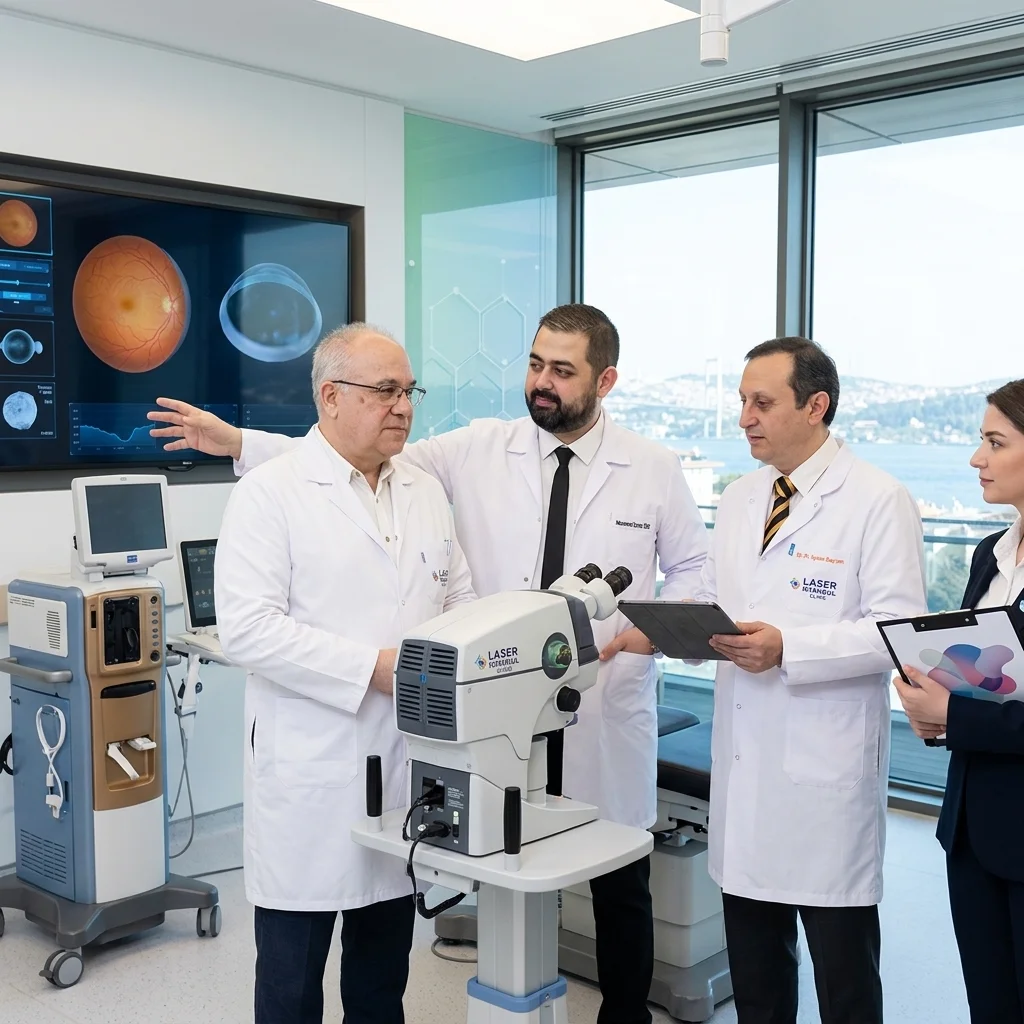
A chalazion is diagnosed clinically: your doctor looks at the lump, asks about its history and examines the eyelid margins. A slit-lamp (a microscope with a bright light) lets the doctor check the meibomian glands and look for blepharitis.
A recurring lump may need a biopsy. EyeWiki states that recurrent chalazia need pathological examination to exclude sebaceous carcinoma, and the AAO says a tiny tissue sample may be taken if a stye or chalazion keeps coming back. Sebaceous carcinoma is a rare cancer of the oil glands that can look like a chalazion. EyeWiki calls it one of the "great masqueraders", flags a recurrent or atypical chalazion in the upper lid, or a yellow thickening of the lid, as warning signs, and notes it is most often reported in older adults (median age at presentation between 57 and 72). A 2026 study of 25 patients with periocular sebaceous carcinoma found that 21 (84%) had first been misdiagnosed, most often as a chalazion (7 patients), and that each 3-month delay in treatment was linked to 16% higher odds of orbital exenteration (removal of the eye socket contents).
This is not a reason for alarm. Most chalazia are harmless. It is a reason to have a lump that keeps coming back, grows quickly or looks unusual examined, and for any tissue removed to be sent for pathology.
How long does a chalazion last?
An untreated chalazion can resolve on its own within weeks to months, according to EyeWiki. After a procedure, an inflamed lid can take several weeks to settle fully. Because the timeline varies so widely, doctors usually start with simple home care and only step up if the lump stays, grows or bothers you.
Chalazion treatment
1. Warm compresses and lid massage (first step)
Warm compresses soften the thick oil blocking the gland and are the usual first treatment, together with gentle lid massage. Guidance differs slightly: the NHS advises holding a clean flannel soaked in warm water against the lid for 5 to 10 minutes, 2 to 4 times a day, while the AAO suggests 10 to 15 minutes, 3 to 5 times a day. Do not squeeze, pop or scratch at the lump, and avoid make-up and contact lenses until it has healed, as both the NHS and the AAO advise. Drops combining an antibiotic with a steroid are sometimes used for associated inflammation.
2. Steroid injection
If a chalazion does not settle, your ophthalmologist may inject a steroid (cortisone) into the lump to reduce the swelling (AAO). The injection may be repeated after one to two weeks if needed (EyeWiki). Possible downsides listed by EyeWiki include lightening of the skin (depigmentation), thinning of the fat under the skin, skin damage and incomplete resolution, which is why it is done by an eye specialist.
3. Incision and curettage (small drainage procedure)
If the chalazion affects vision or does not go away, it may need to be drained. The AAO says this is done in the ophthalmologist's office with local anaesthetic. According to EyeWiki, local anaesthetic is injected around the lump, the eyelid is turned over with a special clamp, an incision is made on the inside surface of the lid, and the contents are scraped out (curettage). Because the cut is on the inside, there is no scar on the skin. The removed tissue should be sent to pathology.
How well do these treatments work?
A 2019 randomised study of chronic chalazia in the Journal of Current Ophthalmology compared the two procedures. Complete resolution was reached in 16 patients (61.5%) after triamcinolone steroid injection and in 21 patients (84%) after incision and curettage. Other approaches, such as intense pulsed light, are being studied, but the standard options remain compresses, injection and drainage. Results vary with the type and size of the lump.
| Step | When it is used | Where it is done |
|---|---|---|
| Warm compresses and massage | First choice for almost every chalazion | At home |
| Steroid injection | Lump persists despite compresses | Ophthalmologist |
| Incision and curettage | Large, long-standing or vision-affecting lump, or injection did not work | Ophthalmologist, with local anaesthetic |
| Biopsy | Recurrent or unusual-looking lump | Ophthalmologist or eyelid surgeon, with pathology |
Treatment with us
Eyelid conditions, including persistent chalazia and eyelid lumps, are assessed and treated at Laser Istanbul Clinic by Prof. Dr. Ahmet Satıcı, who leads our eyelid and oculoplastic surgery. If a lump looks unusual or keeps returning, Doç. Dr. Muhammet Derda Özer (Doç. = Associate Professor), who treats eye tumours (ocular oncology), can give a specialist opinion. Procedures that need an operating theatre take place in a fully equipped, Ministry of Health–licensed operating theatre in Istanbul, and a personal interpreter and coordinator stay with you from first examination to follow-up.

Can a chalazion affect your vision?
Yes, if it is large. The AAO says a chalazion can press on the eye and cause blurry vision; EyeWiki lists astigmatism and blurred vision from mass effect as a complication. This usually improves once the lump shrinks or is drained. Persistent blurring is a reason to have the lump treated rather than wait.
When to see a doctor about an eyelid lump
Seek prompt care if you have:
- severe pain, fast swelling or redness spreading across the lid or cheek, or pus (signs of infection; the NHS advises urgent help for severe pain or swelling, vision problems or spreading infection)
- blurred vision or any change in your sight
- a lump that is growing quickly, bleeds, or comes with loss of eyelashes or thickening of the lid margin
Book a routine appointment if:
- a lump has not improved after a few weeks of regular warm compresses
- it is large enough to bother you or affect how your eye looks or feels
- you keep getting chalazia in the same place or in both eyes (this needs to be examined, and sometimes biopsied)
- you are older and have a new lump on the lid margin
Photos can help a first assessment. You can send them with your details for a free online review before you decide on anything.
Frequently asked questions
A chalazion is a firm, usually painless lump in the eyelid caused by a blocked meibomian (oil) gland. The oil leaks into the lid and causes lasting sterile inflammation, not an infection.
No. A stye is a painful bacterial infection at the base of an eyelash or in an oil gland, and it usually clears within about a week according to the NHS. A chalazion is a blocked gland with sterile inflammation; it is firmer and less painful and lasts longer. A chalazion can sometimes begin as an internal stye.
Blockage of a meibomian gland. The strongest risk factors are blepharitis, rosacea and a previous chalazion. Diabetes and seborrhoeic dermatitis are also listed as risk factors.
Without treatment it can resolve by itself in weeks to months. If it is still there after several weeks of regular warm compresses, or it is large or affecting vision, see an eye doctor.
No. The NHS and the AAO both advise against squeezing or popping eyelid lumps. The NHS warns that squeezing a stye can spread infection, and a lump that needs treatment should be treated by a doctor.
Often not. Many go away with warm compresses. If it persists, a steroid injection may help, and incision and curettage is used for large, long-standing or vision-affecting lumps. In a 2019 randomised study of chronic chalazia, complete resolution was seen in 61.5% after steroid injection and 84% after incision and curettage.
It is done with local anaesthetic, according to the AAO, so the procedure itself should not hurt. The lid can be sore, swollen and bruised afterwards while it settles, and your surgeon will explain aftercare.
Almost always not, but a rare cancer called sebaceous carcinoma can mimic a recurrent chalazion, particularly in older adults. That is why a lump that keeps returning in the same spot should be examined, and why removed tissue is sent for pathology.
It can. Having had one chalazion is itself a risk factor for another, and so are blepharitis and rosacea. Treating those underlying problems is the sensible way to reduce repeat lumps; ask your doctor about it.
Sources for the facts on this page
- EyeWiki (American Academy of Ophthalmology). Chalazion. https://eyewiki.org/Chalazion
- American Academy of Ophthalmology. What Are Chalazia and Styes? Causes, Symptoms and Treatment. https://www.aao.org/eye-health/diseases/chalazion-stye-treatment
- NHS. Stye (includes how a stye differs from a chalazion, home care and when to see a GP). https://www.nhs.uk/conditions/stye/
- EyeWiki (American Academy of Ophthalmology). Sebaceous Carcinoma. https://eyewiki.org/Sebaceous_Carcinoma
- Nabie R, Soleimani H, Nikniaz L, et al. A prospective randomized study comparing incision and curettage with injection of triamcinolone acetonide for chronic chalazia. Journal of Current Ophthalmology 2019. PubMed: https://pubmed.ncbi.nlm.nih.gov/31528769/
- Welk GM, Yu CY, Israilevich R, Dalvin LA, Tooley AA. Treatment delay and risk of orbital exenteration in periocular sebaceous carcinoma. Ocular Oncology and Pathology 2026. PubMed: https://pubmed.ncbi.nlm.nih.gov/42541235/
Got an eyelid lump that will not go away?
Send us photos and a short description. Prof. Dr. Ahmet Satıcı, our eyelid surgeon, will tell you whether it looks like a chalazion, what the sensible next step is, and whether a procedure would help, with no obligation.
3 eye surgeons
Your case is reviewed by a named surgeon, not a salesperson. Reply within {{response time}}.
 Prof. Dr. Ahmet Satıcı
 Doç. Dr. Muhammet Derda Özer
 Op. Dr. Aysan Bayram