
- Home
- Knowledge centre
- Retina & glaucoma guides
- Stem cell therapy for eyes: what is proven
How to Regenerate Eye Cells Naturally: Stem Cell Therapy for Eyes in 2026, What Is Proven and What Is Not
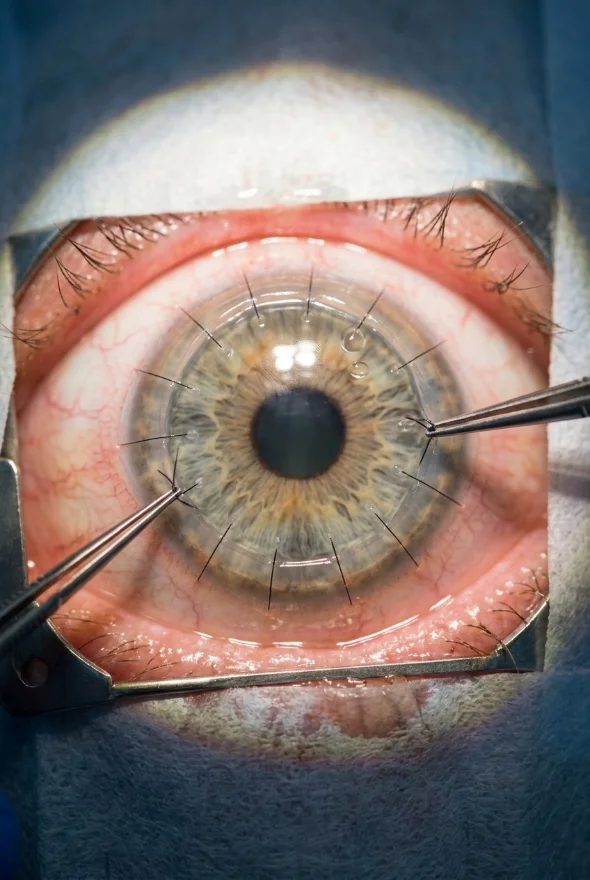
There is no known natural way to regenerate the light-sensing cells of the retina or the optic nerve: the human eye does not regrow them. Only the corneal surface renews itself, every 3 to 10 days. In 2026 the one proven stem cell eye treatment is limbal stem cell transplantation for a damaged cornea, led here by Doç. Dr. Muhammet Derda Özer. Stem cells for macular degeneration and the optic nerve remain experimental.
How to regenerate eye cells naturally: what can the eye repair by itself?
The honest answer is that it depends on which part of the eye you mean. Some tissue renews constantly, and some, once lost, does not come back in humans.
| Part of the eye | Does it regenerate on its own? | What the sources say |
|---|---|---|
| Surface of the cornea (epithelium) | Yes | It "completely regenerates every 3 to 10 days" and is refilled from limbal stem cells at the edge of the cornea (EyeWiki, American Academy of Ophthalmology) |
| Limbal stem cells themselves | Only if enough survive | If they are destroyed, for example by a chemical burn, the surface cannot renew itself: this is limbal stem cell deficiency |
| Retinal nerve cells (including the macula) | No, not in humans | In mammals, retinal support cells respond to injury with scarring-type gliosis that limits new nerve cells; diseases such as diabetic retinopathy, glaucoma and macular degeneration destroy retinal neurons and cause permanent vision loss (American Journal of Pathology, 2026) |
| Optic nerve | No | The National Eye Institute says glaucoma treatment "won't undo any damage to your vision, but it can stop it from getting worse" |
So if you are searching for how to regenerate eye cells naturally because you have macular degeneration, glaucoma or retinal damage, no diet, supplement, eye exercise or home remedy has been shown to regrow those cells. What does work is protecting the cells you still have, which is covered in the next section.
What can you do naturally to protect your eye cells?
You cannot grow new retinal cells, but you can slow the loss of the ones you have. The National Eye Institute (NEI, part of the US National Institutes of Health) lists these evidence-based steps:
- Do not smoke. Smoking is a recognised risk factor for age-related macular degeneration (AMD), and the NEI stresses quitting as critical prevention.
- Stay physically active, and keep blood pressure and cholesterol healthy.
- Eat leafy green vegetables and fish.
- Control diabetes. For diabetic retinopathy, the NEI advises healthy blood sugar levels (tracked with HbA1c tests), controlled blood pressure and cholesterol, and an annual dilated eye examination. Treatment is available too: anti-VEGF injections, laser and, for bleeding or scarring, vitrectomy. Diabetic retinopathy: treatment and prevention →
- Have glaucoma found early. There is no cure, but the NEI says early treatment with drops, laser or surgery can often stop the damage and protect remaining vision.
- Ask about the AREDS2 supplement if you have intermediate AMD. In the large AREDS trial, the original vitamin and zinc formula reduced progression from intermediate to advanced AMD by 25% and vision loss by 19%. The AREDS2 formula (vitamin C 500 mg, vitamin E 400 IU, lutein 10 mg, zeaxanthin 2 mg, zinc 80 mg, copper 2 mg) gave an incremental extra benefit. It did not prevent AMD from starting and had no effect on cataract, and current and former smokers should avoid the version with beta-carotene because it raises lung cancer risk. Take it only on your eye doctor's advice.
None of these regenerate eye cells. They are the proven way to keep vision for longer, and they work best when started early.

Why can zebrafish regrow a retina and humans cannot?
Zebrafish can repair a damaged retina. After injury, support cells called Müller glia are reprogrammed into progenitor (stem-like) cells that can regenerate all types of retinal neurons and restore visual function (Cells, 2025). A 2026 review in Neuroscience adds that, unlike mammals, zebrafish recover through "glial plasticity" and a permissive environment around the injured tissue.
Human Müller glia mostly do not do this. A 2026 review in The American Journal of Pathology explains that in mammals they respond to injury with gliosis, a response that is first protective but ends up limiting new nerve cells. Researchers are working on ways to switch the zebrafish-style repair on in human cells, through pathways such as Notch, Wnt/β-catenin and Hippo-YAP. This is laboratory research: it is not a treatment you can book, and no zebrafish-inspired therapy for patients has been approved.
What is stem cell therapy for eyes?
Stem cell therapy for eyes means replacing damaged eye tissue with new cells grown from stem cells, which can divide and become specialised cells. It covers two very different things, and the difference is the key to this page:
| Limbal stem cell transplant (cornea) | Stem cells for retina and optic nerve | |
|---|---|---|
| What it treats | Limbal stem cell deficiency: a damaged corneal surface, most often after a chemical or heat burn | Macular degeneration (AMD), retinitis pigmentosa, Stargardt disease, glaucoma, optic nerve damage |
| Evidence | Established surgery with long follow-up; systematic review of 1,023 eyes | Small early trials, mostly testing safety |
| Approved anywhere? | Yes: a cultivated limbal stem cell product (Holoclar) is authorised in the EU | The American Academy of Ophthalmology (AAO) states there are no FDA-approved stem cell products for eye disease |
| Where to get it | Specialist cornea surgeons | Only inside registered clinical trials |
| Offered by Laser Istanbul Clinic? | Yes, by Doç. Dr. Özer | No |
Doç. Dr. Özer is a cornea and retina specialist ("Doç." is the Turkish title for an Associate Professor). If you are not sure which side of the table your condition falls on, we tell you honestly after reviewing your reports.
Which stem cell eye treatment is proven? Limbal stem cell transplant
The proven stem cell eye treatment is limbal stem cell transplantation, which rebuilds the surface of the cornea in limbal stem cell deficiency (LSCD). The limbal stem cells sit in the ring where the clear cornea meets the white of the eye, and they refill the corneal surface and keep the neighbouring conjunctiva from growing over it. Causes of LSCD include chemical and thermal burns, previous surgery, radiation, contact lens overwear, Stevens-Johnson syndrome, aniridia and herpes or trachoma infection (EyeWiki). Mild cases are treated first with lubrication, steroid or cyclosporine drops and stopping contact lenses; surgery is for severe cases.
When only one eye is damaged, the surgeon can take a small amount of healthy tissue from the other eye (autologous transplant). How well does it work?
- A 2020 systematic review of 22 case series (1,023 eyes) found an anatomical success rate of 69% and a functional success rate of 60% at a median of 1.75 years. Results were 81% for CLAU (conjunctival limbal autograft), 78% for SLET (simple limbal epithelial transplantation) and 61% for CLET (cultivated cells). Burns were the cause in 88% of eyes. The authors concluded autologous transplantation is a safe and effective treatment for one-eyed LSCD. "Success" means a stable, healed, clear corneal surface; vision also depends on what else the injury damaged.
- Cultivated cells are moving forward too. Holoclar was authorised in the EU on 17 February 2015 for adults with moderate to severe LSCD after physical or chemical burns, and moved from conditional to standard authorisation on 22 February 2024 (European Medicines Agency). A US method, CALEC, produced usable grafts for 14 of 15 participants and was a complete or partial success in 92% at 18 months in a phase I/II trial; its authors call for further trials.
At Laser Istanbul Clinic, limbal stem cell transplant is led by Doç. Dr. Muhammet Derda Özer in a fully equipped, Ministry of Health–licensed operating theatre in Istanbul. Which technique suits you depends on whether one or both eyes are affected and on how damaged the surface is. Stem cell therapy for eyes: limbal stem cell transplant & what is still experimental →
Stem cell macular degeneration clinical trials: what do they show?
Stem cell macular degeneration clinical trials are real, but they are early-stage and tiny, and none has produced an approved treatment. Most replace the retinal pigment epithelium (RPE), the layer of support cells beneath the retina that fails in AMD. The NEI itself describes its stem cell work on dry AMD as researchers testing whether the approach is safe for people.
| Study | What was done | Who | What happened |
|---|---|---|---|
| London, Nature Biotechnology 2018 | Patch of RPE cells grown from embryonic stem cells, implanted under the retina | 2 people with advanced wet AMD | Patch delivered and survived; vision gains of 29 and 21 letters at 1 year; safety was the primary aim |
| USA, Ophthalmology 2024 (long-term follow-up) | Embryonic stem cell–derived RPE on a scaffold, implanted for geographic atrophy | 16 enrolled, 15 implanted, aged 69–85, legally blind in the treated eye | At a median of 3 years the implant was safe and well tolerated; treated eyes were more likely to gain more than 5 letters and less likely to worsen than untreated eyes; authors say further evaluation is warranted |
| Japan, New England Journal of Medicine 2017 | Sheet of RPE grown from the patient's own skin cells (iPS cells) | 1 person with advanced wet AMD | Sheet intact at 1 year; vision neither improved nor worsened; cystoid macular oedema developed |
What to take from this: the results are encouraging for safety and sometimes for vision, but they involve a handful of patients each, and the surgery itself is delicate. A 2026 review in Eye describes photoreceptor replacement as a promising approach for advanced retinal disease that still has to travel from experiment to clinical practice. These are steps in research, not treatments you can book. The AAO lists AMD, retinitis pigmentosa and Stargardt disease as the conditions under study and advises anyone interested to look for a registered clinical trial. Stem cells for macular degeneration and optic nerve damage: current trials →
What works for macular degeneration today? For wet AMD the NEI lists anti-VEGF injections and photodynamic therapy, and for intermediate AMD, the AREDS2-type supplements above. Retinal specialists, including Doç. Dr. Özer and Op. Dr. Aysan Bayram, can examine your macula and explain which of these applies to you.
Can stem cells repair the optic nerve or treat glaucoma?
Not yet. A 2024 systematic review and meta-analysis in BMC Ophthalmology pooled seven small studies of mesenchymal stem cell therapy for optic neuropathy, 66 eyes in total. Visual acuity improved on average (logMAR 0.90 to 0.65), but the thickness of the retinal nerve fibre layer did not change significantly. That mismatch, together with the small numbers, means the data cannot be called a treatment.
Glaucoma is treated by lowering eye pressure with drops, laser or surgery to stop further damage; the NEI is clear that treatment will not undo damage already done. For the surgical options see our retina and glaucoma guides. Retina & glaucoma guides →
What has the FDA actually approved for eye cell therapy?
On the FDA's list of approved cellular and gene therapy products (page updated 17 September 2026), two products are for the eye: Luxturna, a gene therapy for an inherited retinal dystrophy, and Encelto. Encelto is an implant of encapsulated, allogeneic RPE cells engineered to release a nerve-protecting protein (ciliary neurotrophic factor); it was approved on 5 March 2025 for idiopathic macular telangiectasia type 2. Neither is a stem cell treatment, and neither treats macular degeneration, glaucoma or optic nerve damage.
How to spot an unproven stem cell eye clinic
When unproven stem cell treatment goes wrong, it goes wrong in the eye. In a 2017 report in the New England Journal of Medicine, three patients lost vision in both eyes after fat-derived "stem cells" were injected into their eyes at a clinic in the United States. Before treatment their vision ranged from 20/30 to 20/200; a year later it ranged from 20/200 to no perception of light, after complications that included ocular hypertension, bleeding, retinal detachment and a dislocated lens. The FDA lists blindness among the harms reported from unapproved regenerative medicine products.
The AAO suggests three questions before any stem cell treatment for the eye:
- Is it approved by the FDA?
- Is it part of a registered clinical trial?
- Will your health insurance cover it?
If the answer to all three is no, walk away. The AAO also advises that clinics should not charge thousands of dollars for unproven therapy.
| Red flag | Why it matters |
|---|---|
| Stem cells offered for AMD, retinitis pigmentosa, glaucoma, optic atrophy or "all eye diseases" | No such treatment is approved; these conditions are only being studied in trials |
| Cells from your fat, bone marrow or blood injected into the eye | This is the type of treatment linked to blindness in the 2017 report |
| You are asked to pay to join a "study", or there is no trial registration number | Genuine trials are registered; ask for the number and check it |
| Testimonials and before-and-after videos instead of published results | Peer-reviewed results show the numbers, including the failures |
| Both eyes treated on the same day with an experimental product | A safe plan treats one eye first |
What should you do if you have retinal or corneal damage?
Get the diagnosis right
The right treatment depends on the exact condition: corneal surface disease, macular degeneration, diabetic retinopathy, glaucoma and optic nerve damage are managed very differently.
Use proven treatment first
Anti-VEGF injections, laser, vitrectomy, pressure-lowering treatment and supplements all have evidence that stem cell clinics cannot match.
If your cornea is the problem,
ask a cornea specialist whether limbal stem cell deficiency is involved. A burn to the eye is an emergency that needs immediate, plentiful rinsing with water and urgent eye care; transplantation is planned once the eye has settled.
If you want stem cells for your retina,
ask for a registered clinical trial at a research centre, and be wary of anything you can simply pay for.
Send your reports for a second opinion
We review your scans and tell you which treatments are proven for your eye. Free online consultation: upload your prescription and scans →
Retinal detachment, macular holes and diabetic bleeding inside the eye are treated surgically today. Retina surgery: vitrectomy & retinal detachment →
Frequently asked questions
Only the surface of the cornea regenerates on its own, completely every 3 to 10 days. Retinal nerve cells and the optic nerve do not regrow in humans, and no diet, supplement or exercise has been shown to regrow them. You can protect what you have by not smoking, controlling blood pressure, cholesterol and diabetes, eating leafy greens and fish, and having glaucoma and AMD found early.
In humans, no. After injury the retina's support cells scar rather than make new nerve cells, so lost photoreceptors and nerve cells are not replaced. Zebrafish can regrow a retina, and researchers are trying to learn how to switch that repair on in people, but it is still laboratory research.
Not an approved one. The AAO states there are no FDA-approved stem cell products for eye disease. Early trials of stem-cell-derived retinal patches have involved very few patients and mostly test safety. Proven treatments today are anti-VEGF injections for wet AMD and AREDS2-type supplements for intermediate AMD.
A 2018 London study of two patients with wet AMD reported gains of 29 and 21 letters at one year. A US trial in geographic atrophy found an implant in 15 patients safe and well tolerated at a median of 3 years. A Japanese patient treated with skin-derived cells in 2017 had no change in vision at one year. These results are early and cannot yet be called a treatment.
Limbal stem cell transplantation for limbal stem cell deficiency. In a 2020 systematic review of 1,023 eyes, 69% achieved an anatomically successful, stable corneal surface, and about 8 in 10 with the CLAU and SLET techniques. It helps the surface of the cornea, not the retina or optic nerve.
Not at present. A 2024 meta-analysis of seven small studies (66 eyes) found visual acuity improved on average but nerve fibre layer thickness did not change significantly. Glaucoma is controlled by lowering eye pressure, which can stop further damage but does not reverse it.
No stem cell product is approved by the FDA for eye disease, according to the AAO. The eye products on the FDA's cellular and gene therapy list are Luxturna, a gene therapy, and Encelto, an implant of encapsulated engineered cells; neither is a stem cell treatment.
No. We offer limbal stem cell transplantation for corneal surface damage, led by Doç. Dr. Muhammet Derda Özer, and we do not offer stem cell treatment for macular degeneration, glaucoma or the optic nerve. We review your retinal scans and tell you about treatments that are proven.
Ask whether the treatment is approved, whether it is part of a registered clinical trial (and request the registration number), and whether insurance covers it. Be cautious if cells from your fat or blood are injected into the eye, if you are charged to join a study, or if testimonials replace published results.
Damaged cornea or unsure what stem cell treatment can do for your eyes?
Send your reports and photographs and we tell you plainly what is proven for your condition. Limbal stem cell transplantation is led by Doç. Dr. Muhammet Derda Özer; retinal questions are reviewed by Doç. Dr. Özer and Op. Dr. Aysan Bayram.
Sources for the facts on this page
- Opened and checked on 7 Oct 2026 unless marked.
- American Academy of Ophthalmology. Stem Cell Therapy for Eye Disease: What You Need to Know (4 Jun 2019). https://www.aao.org/eye-health/tips-prevention/stem-cell-therapy-eye-disease-facts
- EyeWiki (AAO). Limbal Stem Cell Deficiency. https://eyewiki.org/Limbal_Stem_Cell_Deficiency
- National Eye Institute (NIH). Age-Related Macular Degeneration. https://www.nei.nih.gov/learn-about-eye-health/eye-conditions-and-diseases/age-related-macular-degeneration
- National Eye Institute (NIH). About AREDS and AREDS2. https://www.nei.nih.gov/research/clinical-trials/age-related-eye-disease-studies-aredsareds2/about-areds-and-areds2
- National Eye Institute (NIH). Glaucoma. https://www.nei.nih.gov/learn-about-eye-health/eye-conditions-and-diseases/glaucoma
- National Eye Institute (NIH). Diabetic Retinopathy. https://www.nei.nih.gov/learn-about-eye-health/eye-conditions-and-diseases/diabetic-retinopathy
- US Food and Drug Administration. Important Patient and Consumer Information About Regenerative Medicine Therapies (updated 8 Apr 2024). https://www.fda.gov/vaccines-blood-biologics/consumers-biologics/important-patient-and-consumer-information-about-regenerative-medicine-therapies
- US Food and Drug Administration. Approved Cellular and Gene Therapy Products (page updated 17 Sep 2026). https://www.fda.gov/vaccines-blood-biologics/cellular-gene-therapy-products/approved-cellular-and-gene-therapy-products
- Hoy SM. Revakinagene Taroretcel: First Approval. Molecular Diagnosis & Therapy 2025;29:553–561. https://pmc.ncbi.nlm.nih.gov/articles/PMC12343658/
- Shanbhag SS, et al. Autologous limbal stem cell transplantation: a systematic review of clinical outcomes with different surgical techniques. British Journal of Ophthalmology 2020;104:247–253 (abstract opened via Europe PMC).
- European Medicines Agency. Holoclar EPAR. https://www.ema.europa.eu/en/medicines/human/EPAR/holoclar
- Jurkunas UV, et al. Cultivated autologous limbal epithelial cell (CALEC) transplantation for limbal stem cell deficiency: a phase I/II clinical trial. Nature Communications 2025;16:1607. https://pmc.ncbi.nlm.nih.gov/articles/PMC11880323/
- da Cruz L, et al. Phase 1 clinical study of an embryonic stem cell-derived retinal pigment epithelium patch in age-related macular degeneration. Nature Biotechnology 2018;36:328–337. https://doi.org/10.1038/nbt.4114 (PMID 29553577)
- Humayun MS, et al. Long-term Follow-up of a Phase 1/2a Clinical Trial of a Stem Cell-Derived Bioengineered Retinal Pigment Epithelium Implant for Geographic Atrophy. Ophthalmology 2024;131:682–691. https://doi.org/10.1016/j.ophtha.2023.12.028 (PMID 38160882)
- Mandai M, et al. Autologous Induced Stem-Cell-Derived Retinal Cells for Macular Degeneration. New England Journal of Medicine 2017;376:1038–1046. https://doi.org/10.1056/NEJMoa1608368 (PMID 28296613)
- Kuriyan AE, et al. Vision Loss after Intravitreal Injection of Autologous "Stem Cells" for AMD. New England Journal of Medicine 2017;376:1047–1053. https://pmc.ncbi.nlm.nih.gov/articles/PMC5551890/ (PMID 28296617)
- Chaibakhsh S, et al. Evaluating the impact of mesenchymal stem cell therapy on visual acuity and retinal nerve fiber layer thickness in optic neuropathy patients: a systematic review and meta-analysis. BMC Ophthalmology 2024;24:316. https://pmc.ncbi.nlm.nih.gov/articles/PMC11287858/
- Huang L, Yao E, Yang M, Chen DF. Reprogramming Mammal Müller Glial Cells for Retinal Neuroregeneration. American Journal of Pathology 2026. https://doi.org/10.1016/j.ajpath.2026.06.006
- Balzamino BO, et al. The Zebrafish as a Model for Ocular Translational Research: From Retinal Repair to Regeneration. Cells 2025. https://doi.org/10.3390/cells14171405
- Pradhan LK, Das SK. Zebrafish neural regeneration: mechanistic insights into human nervous system repair. Neuroscience 2026;596. https://doi.org/10.1016/j.neuroscience.2026.01.009
- Pearson RA. Photoreceptor replacement: a disease-agnostic approach for the treatment of advanced retinal degeneration. Eye 2026. https://doi.org/10.1038/s41433-026-04742-4
- Sharma N, et al. Treatment of acute ocular chemical burns. Survey of Ophthalmology 2018;63:214–235 (immediate copious irrigation; carried over from content/en/stemcell.md, not re-opened today). https://doi.org/10.1016/j.survophthal.2017.09.005