
- Home: eye surgery in Istanbul
- All eye treatments
- Stem cell eye treatment
Stem Cell Eye Treatment in Turkey: Limbal Stem Cell Transplant and What Is Still Experimental
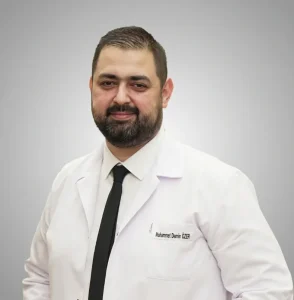
Stem cell eye treatment is real for one group of patients: people whose cornea has lost the stem cells that keep its surface clear, usually after a chemical or heat burn. For them, a limbal stem cell transplant can rebuild the surface of the eye. At Laser Istanbul Clinic it is planned and performed by cornea specialist Doç. Dr. Muhammet Derda Özer. Stem cell treatments for macular degeneration, glaucoma and the optic nerve are still being tested in clinical trials, and this page tells you plainly where the line is.
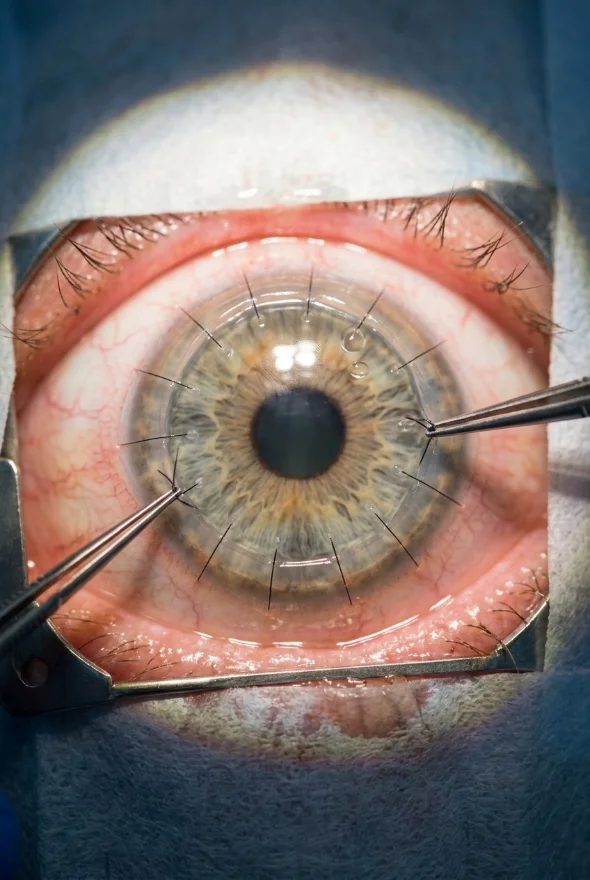
The only stem cell therapy for eyes with long-term evidence is limbal stem cell transplantation, which restores a damaged corneal surface in limbal stem cell deficiency (LSCD). In a 2020 systematic review of 1,023 eyes, the surface was successfully restored in 69% overall, and in 78–81% with the SLET and CLAU techniques. Stem cells for the retina and optic nerve remain experimental. In Istanbul, Doç. Dr. Özer treats LSCD from {{£ price}} per eye; hotel and transfers are extra.
What are eye stem cells?
Eye stem cells are cells that can divide and replace tissue that wears out or is damaged. The best understood are the limbal stem cells. They sit in the limbus, the narrow ring where the clear cornea meets the white of the eye, in small pigmented pockets called the palisades of Vogt (EyeWiki, American Academy of Ophthalmology). Every day they produce new cells for the corneal surface, keep it smooth and clear, heal scratches and act as a barrier that stops the white, blood-vessel-rich conjunctiva from growing over the cornea.
The retina is different. Adult human retinas cannot replace lost light-sensing cells or the nerve cells that form the optic nerve. That is why corneal surface stem cell treatment works today, while retinal and optic-nerve stem cell treatment is still a research question.
Stem cell eye treatment therefore means two very different things:
| Limbal stem cell transplant (cornea) | Stem cells for retina and optic nerve | |
|---|---|---|
| What it treats | Limbal stem cell deficiency: a damaged corneal surface, often after a chemical or heat burn | Macular degeneration (AMD), retinitis pigmentosa, Stargardt disease, glaucoma, optic nerve damage |
| Evidence | Decades of case series; a technique first described in 1989 (CLAU); systematic reviews of over 1,000 eyes | Small early-phase trials, mostly testing safety in a few to a few dozen patients |
| Approved anywhere? | Yes: a cultivated limbal stem cell product (Holoclar) has been authorised in the EU since February 2015; NICE recommended it for NHS use in 2017 | The American Academy of Ophthalmology states there are no FDA-approved stem cell products for eye disease |
| Where to get it | Specialist cornea surgeons | Only inside registered clinical trials |
| Offered by us? | Yes, by Doç. Dr. Özer | No. We assess your retina and tell you about proven treatments |
Who a limbal stem cell transplant suits
A limbal stem cell transplant suits people whose limbal stem cells have been destroyed or have stopped working, so the cornea can no longer renew its surface. This is called limbal stem cell deficiency. In severe cases, the American Academy of Ophthalmology says it can lead to functional corneal blindness.
Common causes of LSCD (EyeWiki and AAO EyeNet):
- chemical burns (alkali or acid) and heat burns to the eye; ocular burns were the reason for surgery in 88% of eyes in the 2020 systematic review
- previous eye surgery near the limbus and the anti-scarring drug mitomycin C, which the AAO names as leading causes in the US
- long-term overwear of contact lenses
- inherited conditions such as aniridia (a PAX6 gene mutation)
- immune diseases such as Stevens-Johnson syndrome and mucous membrane pemphigoid
- radiation, eye-surface cancers, trachoma, herpes infection of the cornea and large pterygia
Signs your surgeon looks for: pain, blurred vision, light sensitivity and contact-lens intolerance; a hazy, uneven surface creeping in from the edge of the cornea; blood vessels growing onto the cornea; and surface wounds that will not heal.
How LSCD is confirmed. Diagnosis is made by examination with special dye (fluorescein), supported by anterior segment OCT imaging and, where available, in vivo confocal microscopy or impression cytology, a painless test that looks for conjunctival cells on the cornea (EyeWiki). The 2019 global consensus grades LSCD in three stages: stage I spares the central 5 mm of the cornea, stage II reaches the centre, and stage III covers the whole surface.
Not every eye with LSCD needs a transplant. Partial, mild LSCD is treated first with medicines: stopping contact lenses, preservative-free lubricants, short courses of steroid drops, cyclosporine drops and, sometimes, a bandage or scleral lens. Surgery is reserved for total LSCD, or partial LSCD that does not respond (EyeWiki).
A transplant is usually not the right next step if:
- your burn is recent: an acute chemical burn is an emergency that needs immediate, plentiful rinsing with water and urgent eye care, and transplantation is planned once the eye has settled
- there is severe scarring between the eyelid and the eye (symblepharon), which was linked with failure in the largest SLET study, or other eyelid and tear-film problems that your surgeon wants treated first
- the poor vision comes from somewhere else, such as cataract, glaucoma or retinal damage, which your surgeon checks with a full examination
Types of limbal stem cell transplant
There are five main ways to replace limbal stem cells, and the choice depends mainly on one question: is one eye affected, or both?
| Technique | Where the stem cells come from | How much healthy tissue is taken | Immune-suppressing medicine needed? | Best for |
|---|---|---|---|---|
| CLAU (conjunctival limbal autograft, since 1989) | Your healthy other eye | Large pieces, up to 50% of the donor limbus (AAO) | No | One eye affected |
| SLET (simple limbal epithelial transplantation, since 2012) | Your healthy other eye | A tiny strip, 1–2 clock hours, cut into small pieces and glued onto amniotic membrane | No | One eye affected; no cell laboratory needed |
| CLET (cultivated limbal epithelial transplantation, e.g. Holoclar) | Your healthy other eye, grown in a laboratory | A small biopsy, expanded in culture for weeks | No | One eye affected; needs a specialised cell laboratory |
| Allogeneic limbal graft (KLAL, lr-CLAL) | A deceased donor or a living relative | None from you | Yes, for a prolonged period | Both eyes affected |
| COMET / SOMET (oral mucosal grafts) | The lining of your own cheek | A small piece of mouth lining | No | Both eyes affected, where donor tissue is unsuitable |
SLET has become a leading option when one eye is affected, because it needs only a tiny piece of tissue and no laboratory. In the original long-term study of 125 patients, a 1-clock-hour biopsy was taken from the healthy eye and, in the same operation, transplanted in small pieces on an amniotic membrane scaffold with fibrin glue. Its authors concluded that SLET is probably preferable to other limbal stem cell transplant techniques, particularly where cell cultivation facilities are unavailable.
CLET and the new CALEC method. Growing the patient's cells in a laboratory first means only a very small biopsy is needed. Holoclar was authorised in the EU in February 2015 for adults with moderate to severe LSCD after physical or chemical burns, and moved from conditional to full (standard) authorisation in February 2024. In the US, a laboratory-grown method called CALEC reported its phase I/II results in Nature Communications in 2025: grafts could be made for 14 of 15 participants (93%), and 92% of grafts achieved complete or partial success at 18 months. The authors say further studies are needed to confirm how well it works.
When both eyes are affected, there is no healthy eye to borrow from. Donor limbal tissue then needs prolonged, sometimes lifelong, immune-suppressing medicine to stop rejection (EyeWiki), so these patients need careful general health checks and long-term follow-up close to home. An artificial cornea (keratoprosthesis) is a last resort that restores vision without treating the stem cell problem.
Technique we offer: {{limbal stem cell techniques Doç. Dr. Özer performs in Istanbul}}, in a fully equipped, Ministry of Health–licensed operating theatre in Istanbul.
Stem cell therapy success rate for eyes
The stem cell therapy success rate for limbal stem cell transplant is about 7 in 10 eyes overall, and close to 8 in 10 with the techniques most used today. "Success" in these studies means a stable, fully healed, clear corneal surface without blood vessels growing over it, not perfect vision.
| Study | Patients | Success |
|---|---|---|
| Systematic review, British Journal of Ophthalmology 2020 (22 case series) | 1,023 eyes | 69% anatomical success; 60% gained 2+ lines of vision (median follow-up 1.75 years) |
| — by technique | CLAU 81%, SLET 78%, CLET 61% | |
| SLET, Ophthalmology 2016 | 125 patients (65 adults, 60 children) after burns | 76% successful at median 1.5 years; 75% gained 2+ lines of vision |
| Cultivated limbal stem cells, New England Journal of Medicine 2010 | 112 patients | 76.6% permanent restoration of a clear surface; follow-up up to 10 years |
| SLET, 5–12 years later, American Journal of Ophthalmology 2025 | 47 patients | 68% had a normal corneal surface on detailed imaging |
Three points from this evidence matter for your decision:
- Failures usually happen early. In the 2010 NEJM study, the failures occurred within the first year, and eyes that healed stayed stable.
- Some injuries do worse. In the SLET study, acid burns, severe scarring between the eyelid and the eye (symblepharon) and combining SLET with a corneal transplant in the same operation were linked with failure.
- The healthy eye is safe in the published series. The 2020 review found no serious problems in the donor eye.
Which stem cell eye treatments are still experimental?
Stem cell treatment for macular degeneration, retinitis pigmentosa, Stargardt disease, glaucoma and optic nerve damage is still experimental in 2026. The American Academy of Ophthalmology advises seeking it only through registered clinical trials and notes that insurers do not cover unapproved treatment.
The stem cell patch for macular degeneration. In 2018, researchers in London reported a phase 1 study in which a patch of retinal pigment epithelium (RPE) cells, grown from embryonic stem cells on a thin synthetic membrane, was placed under the retina of two patients with severe wet AMD. Both read more letters on the eye chart 12 months later (29 and 21 letters). In the US, a similar stem-cell-derived RPE implant was given to 15 patients with advanced dry AMD (geographic atrophy); its long-term follow-up, published in 2024, was designed to test safety at a median of 3 years. In Japan in 2017, the first patient received a sheet of retinal cells grown from reprogrammed (iPS) cells made from her own skin; one year later the sheet was intact, but her vision had neither improved nor worsened. These are important steps, but they involve very small numbers of patients and are not treatments you can book.
What about the cost of stem cell therapy for macular degeneration? There is no approved stem cell treatment for AMD to price. Genuine trials are registered and run by research centres, so ask for the registration number. The AAO's advice is that clinics should not charge thousands of dollars for unproven therapy, and that insurers will not cover it. For wet AMD, proven treatment today is a course of injections into the eye.
Glaucoma and the optic nerve. A 2024 meta-analysis pooled seven small studies of mesenchymal stem cells for optic neuropathy, 66 eyes in total. Vision improved on average, but the nerve-fibre layer measured on OCT did not change, and the numbers are far too small to call it a treatment. We do not offer stem cell treatment for the optic nerve.
What the FDA has approved for the eye. On the FDA's list of approved cell and gene therapies (updated September 2026), the eye products are Luxturna, a gene therapy for an inherited retinal dystrophy, and Encelto, an implant of encapsulated cells that release a nerve-protecting protein, approved in March 2025 for macular telangiectasia type 2. Neither is a stem cell treatment.
Zebrafish stem cells and the eye. Zebrafish can regrow a damaged retina: after injury, support cells called Müller glia are reprogrammed into stem-like cells that replace lost nerve cells, something the human retina cannot do. Scientists study zebrafish to learn which signals switch this repair on. It is laboratory stem cell research for the eye, not a zebrafish stem cell eye treatment that patients can receive.
When unproven treatment goes wrong. In 2017, the New England Journal of Medicine described three women who lost vision in both eyes after a US clinic injected fat-derived "stem cells" into their eyes for macular degeneration. Before treatment their vision ranged from 20/30 to 20/200; one year later it ranged from 20/200 to no light perception, after complications including retinal detachment and bleeding inside the eye. The FDA lists blindness, tumour formation and infection among the harms reported from unapproved regenerative treatments.
How to spot an unproven stem cell eye clinic
A trustworthy stem cell eye treatment offer names the condition, the technique and the evidence. Be cautious if a clinic:
- offers stem cells for AMD, retinitis pigmentosa, glaucoma, optic atrophy or "all eye diseases"
- injects cells from your fat, bone marrow or blood into the eye
- charges you to take part in a "study", or cannot give you a clinical-trial registration number
- shows testimonials instead of published results
- treats both eyes on the same day with an experimental product
The AAO suggests three questions before any stem cell treatment: Is it approved? Is it part of a registered clinical trial? Will your health insurance cover it? If the answers are no, no and no, walk away.
Stem cell eye treatment in Turkey: price and what is included
At Laser Istanbul Clinic, a limbal stem cell transplant starts from {{£ price}} per eye. Doç. Dr. Özer confirms which technique suits you and your exact price in writing after reviewing your eye reports and photographs, before you book anything.
| Treatment | Typical published price | With Laser Istanbul Clinic |
|---|---|---|
| Limbal stem cell transplant (SLET / CLAU), per eye | No reliable published UK or Istanbul ranges found | from {{£ price}} |
| Corneal transplant, if needed later, per eye: Istanbul | about $4,000–7,000 | quoted after examination |
| Corneal transplant, per eye: UK private | about $8,000–14,000 | |
| Corneal transplant, per eye: USA | about $13,000–28,000 |
Corneal transplant ranges are typical advertised prices from 2025–26, in US dollars, not quotes. Published Istanbul prices are often packages that include a hotel.
Stem cell eye treatment in the UK. In 2017, NICE recommended Holoclar as an NHS option for moderate to severe LSCD after eye burns, for one eye, in people who have already had a CLAU or for whom there is not enough healthy tissue for one. Ask your NHS cornea specialist whether you qualify. We found no reliable published price for private limbal stem cell transplant in the UK, so we do not quote a stem cell eye treatment cost for the UK here.
Your treatment price includes:
- full pre-operative examination and scans with Doç. Dr. Özer
- the limbal stem cell transplant by your named surgeon
- medication and eye drops for your recovery
- follow-up checks in Istanbul with the same surgeon
- a personal interpreter, a dedicated coordinator and remote follow-up after you return home
Not included: flights, hotel and airport transfers. Hotel and transfers are a separate charge, and we can arrange them for you on request. A later corneal transplant, if you need one, is quoted separately.
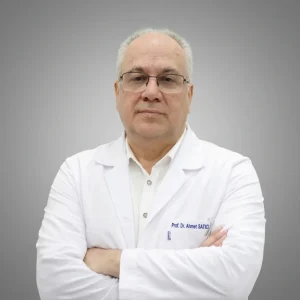
Your stem cell eye surgeons
Your limbal stem cell transplant journey, step by step
Free online review
Send your eye reports, the date and cause of the injury, any surgery you have had and clear photographs of both eyes. Doç. Dr. Özer tells you whether a transplant is likely to help and sends a written quote within {{response time}}.
Plan your stay
Plan {{nights in Istanbul for a limbal stem cell transplant}} in Istanbul. If both eyes are affected and donor tissue is needed, your plan includes a discussion of immune-suppressing treatment and follow-up with a doctor at home.
Full examination
Corneal examination with dye, anterior segment imaging, eye pressure, tear and eyelid assessment, and a retina check. If a transplant is not right for you, Doç. Dr. Özer tells you and explains why.
Surgery
For SLET, a tiny strip of tissue is taken from the edge of your healthy eye, then the scarred tissue is cleared from the injured cornea and the small pieces are fixed onto an amniotic membrane in the same operation. Your interpreter is with you before and after.
Checks in Istanbul
Doç. Dr. Özer examines both eyes before you fly home and adjusts your drops.
Remote follow-up
Your coordinator stays in touch, and your surgeon reviews photographs and reports from your local eye doctor at agreed intervals.
Recovery after a limbal stem cell transplant
Recovery after a limbal stem cell transplant is gradual: the surface needs weeks to heal, and its long-term stability is judged over the first year. Your timeline depends on the technique and on how badly the eye was damaged.
-
First days
The operated eye is sore, watery and light-sensitive. You use antibiotic and steroid drops as prescribed, and your surgeon also checks the small area where tissue was taken from your healthy eye.
-
First weeks
New surface cells grow out from the transplanted pieces and cover the cornea. Do not rub your eyes. Your surgeon checks healing with dye.
-
First months
After a transplant from your own eye, steroid drops are tapered fairly quickly (EyeWiki). Vision improves as the surface clears, but scarring underneath may still limit it.
-
First year
This is when most failures happen, so regular checks matter. If both eyes were treated with donor tissue, immune-suppressing medicine and blood tests continue.
-
Afterwards
If deep corneal scarring still blurs vision, a corneal transplant can be considered as a separate, later operation once the surface is stable.
Call your coordinator straight away if you have increasing pain, redness, discharge or a sudden drop in vision.
Risks of limbal stem cell transplant
Limbal stem cell transplant is an established operation, but it does not always work and it carries risks. Your surgeon explains your personal risks in writing and through your interpreter before you sign anything.
- The surface may not hold. Around 2 to 3 in 10 eyes do not achieve a stable surface in the published series. In the SLET study, the conjunctiva slowly grew back over the cornea in 18% of eyes.
- Infection and inflammation, controlled with drops and regular checks.
- Loss of the transplanted pieces in the first weeks, one of the factors linked with failure.
- Donor-eye problems. Taking too much tissue can cause LSCD in the healthy eye, which is why surgeons limit the amount taken (EyeWiki). SLET uses the smallest amount, and the 2020 review found no serious donor-eye problems.
- Rejection and medicine side effects with donor tissue, which is why allogeneic grafts need long-term immune suppression and monitoring.
- Vision may stay limited if the eye also has scarring, glaucoma, cataract or retinal damage from the original injury.
Stem cell eye treatment: frequently asked questions
Stem cell eye treatment replaces damaged eye cells with healthy ones. The established form is limbal stem cell transplantation, which rebuilds the corneal surface in limbal stem cell deficiency. Stem cell treatments for the retina and optic nerve are still being tested in clinical trials and are not yet proven treatments.
They can when sight is lost because the corneal surface has broken down after a burn or another cause of LSCD. In a 2016 study of 125 patients, 75% gained at least two lines on the eye chart after SLET. Stem cells cannot yet restore sight lost to macular degeneration, glaucoma or optic nerve damage outside research.
About 7 in 10 eyes overall, according to a 2020 systematic review of 1,023 eyes, and about 8 in 10 with SLET (78%) and CLAU (81%). Success means a stable, clear, healed surface; vision depends on what else the injury damaged.
Not an approved one. Early trials have tested stem-cell-derived retinal patches in small numbers of patients, with encouraging safety results, but the American Academy of Ophthalmology advises having them only within registered clinical trials. Proven treatments for wet AMD are eye injections.
It is a thin sheet of retinal support cells grown from stem cells on a synthetic membrane and placed under the retina. In a 2018 London study, two patients with severe wet AMD read 29 and 21 more letters a year later. It remains an experimental treatment.
Limbal stem cell transplantation is available through NHS cornea specialists, and in 2017 NICE recommended the cultivated stem cell product Holoclar for eligible patients with LSCD after eye burns, for one eye. Stem cell treatment for the retina in the UK is available only in research trials.
With Laser Istanbul Clinic, a limbal stem cell transplant starts from {{£ price}} per eye, including examination, surgery, medication, follow-up checks in Istanbul, interpreter and coordinator. Hotel and transfers are extra. Doç. Dr. Özer confirms your price in writing after reviewing your reports.
Plan {{nights in Istanbul for a limbal stem cell transplant}}. Doç. Dr. Özer checks the eye before you fly, and your follow-up continues remotely with your local eye doctor.
Not yet. A 2024 analysis of seven small studies, 66 eyes in total, could not show that stem cells rebuild the optic nerve. Glaucoma is treated today by lowering eye pressure, and we do not offer stem cell treatment for the optic nerve.
Stem cell eye creams and serums are skincare products for the skin around the eyes. They do not treat eye disease and cannot replace lost cells inside the eye. If you have an eye condition, see an eye doctor instead.
Other eye treatments people ask about
A limbal stem cell transplant repairs the surface of the cornea. If your problem is somewhere else in the eye, a different, proven treatment will help more.
| Your problem | What usually helps | Stem cells involved? |
|---|---|---|
| Hazy, painful, vascularised cornea after a burn (LSCD) | Limbal stem cell transplant | Yes |
| Thin, cone-shaped cornea (keratoconus) | Cross-linking, corneal rings, transplant | No |
| Cloudy natural lens (cataract) | Cataract surgery with a lens implant | No |
| Retinal detachment, macular hole, bleeding in the eye | Vitrectomy and retina surgery | No |
| Macular degeneration | Injections for wet AMD; trials only for stem cells | Experimental |
| Short or long sight, astigmatism in healthy eyes | Laser, ICL or lens replacement | No |
Keratoconus treatment
Cross-linking stops a weakening cornea from bulging further; rings and transplants restore shape and sight.
Keratoconus treatment in TurkeyRetina surgery
For retinal detachment, macular holes and bleeding inside the eye.
Retina surgery: vitrectomy & retinal detachmentCataract surgery
Often needed after an eye injury once the surface is stable.
Cataract surgery in TurkeyVision correction for healthy eyes
Laser eye surgery in TurkeySources for the facts on this page
- American Academy of Ophthalmology (EyeNet), The State of Limbal Stem Cell Transplantation (1 Nov 2024): role of limbal stem cells; LSCD can cause functional corneal blindness; causes incl. glaucoma surgery and mitomycin C (leading in the US), contact lenses, aniridia, SJS, MMP, burns, trachoma, radiation; CLAU (1989, up to 50% of donor limbus), SLET (2012, 1–2 clock hours), CLET (1997), Holoclar (EU 2015, not FDA-approved), CALEC, allografts with systemic immunosuppression, keratoprosthesis as last resort, COMET. https://www.aao.org/eyenet/article/limbal-stem-cell-transplantation
- EyeWiki (AAO), Limbal Stem Cell Deficiency: palisades of Vogt; genetic and acquired causes; symptoms and signs; impression cytology, IVCM, AS-OCT; 2019 global consensus stages I–III; medical first-line treatment; surgery for total or refractory partial LSCD; autologous vs allogeneic; limit tissue removed (<4–6 clock hours); prolonged immunosuppression for allografts. https://eyewiki.org/Limbal_Stem_Cell_Deficiency
- Shanbhag SS, Nikpoor N, Rao Donthineni P, et al. Autologous limbal stem cell transplantation: a systematic review of clinical outcomes with different surgical techniques. Br J Ophthalmol 2020;104:247–253: 22 series, 1,023 eyes, 88% burns, 69% anatomical / 60% functional success at median 1.75 years; SLET 78%/68.6%, CLAU 81%/74.4%, CLET 61.4%/53%; no serious donor-eye adverse events. https://doi.org/10.1136/bjophthalmol-2019-314081 (PMID 31118185)
- Basu S, Sureka SP, Shanbhag SS, et al. Simple Limbal Epithelial Transplantation: Long-Term Clinical Outcomes in 125 Cases of Unilateral Chronic Ocular Surface Burns. Ophthalmology 2016;123:1000–1010: 1-clock-hour biopsy, amniotic membrane and fibrin glue in one sitting; 76% success at median 1.5 years; 1-year survival 80% adults, 72% children; 75.2% two-line gain; progressive conjunctivalisation 18.4%; failure factors (acid injury, severe symblepharon, SLET combined with keratoplasty, loss of transplants); "probably preferable… where cell cultivation facilities are unavailable". https://doi.org/10.1016/j.ophtha.2015.12.042 (PMID 26896125)
- Rama P, Matuska S, Paganoni G, et al. Limbal stem-cell therapy and long-term corneal regeneration. N Engl J Med 2010;363:147–155: 112 patients, 76.6% permanent restoration; failures within the first year; up to 10 years' follow-up. https://doi.org/10.1056/NEJMoa0905955 (PMID 20573916)
- Shanbhag SS, Kate A, Ganguly S, et al. Five- to Twelve-Year Outcomes of Autologous Simple Limbal Epithelial Transplantation. Am J Ophthalmol 2025;273:107–118: 47 patients, median 5.75 years, normal corneal epithelial phenotype in 68%. PMID 39924137, https://europepmc.org/article/MED/39924137
- Jurkunas UV, et al. Cultivated autologous limbal epithelial cell (CALEC) transplantation for limbal stem cell deficiency: a phase I/II clinical trial. Nat Commun 2025;16:1607: 14 of 15 (93%) met release criteria; 86%/93%/92% complete or partial success at 3/12/18 months; one unrelated infection; further studies needed. https://pmc.ncbi.nlm.nih.gov/articles/PMC11880323/ (PMID 40038272)
- European Medicines Agency, Holoclar EPAR: indication (adults, moderate to severe LSCD due to physical or chemical burns, 1–2 mm² undamaged limbus needed); authorised 17 Feb 2015; switched from conditional to standard authorisation 22 Feb 2024. https://www.ema.europa.eu/en/medicines/human/EPAR/holoclar
- NICE, Holoclar for treating limbal stem cell deficiency after eye burns (TA467, 16 Aug 2017): recommended for one eye, after CLAU or when CLAU is not possible; two eyes only in research. https://www.nice.org.uk/guidance/ta467/chapter/1-Recommendations
- American Academy of Ophthalmology, Stem Cell Therapy for Eye Disease: What You Need to Know (4 Jun 2019): no FDA-approved stem cell products for eye disease; AMD, RP and Stargardt under study; seek clinical trials; insurance will not cover; clinics should not charge thousands; three questions to ask. https://www.aao.org/eye-health/tips-prevention/stem-cell-therapy-eye-disease-facts
- US FDA, Important Patient and Consumer Information About Regenerative Medicine Therapies (updated 8 Apr 2024): reported harms include blindness, tumour formation and infections. https://www.fda.gov/vaccines-blood-biologics/consumers-biologics/important-patient-and-consumer-information-about-regenerative-medicine-therapies
- US FDA, Approved Cellular and Gene Therapy Products (page updated 17 Sep 2026): Luxturna and Encelto are the eye-related products listed. https://www.fda.gov/vaccines-blood-biologics/cellular-gene-therapy-products/approved-cellular-and-gene-therapy-products
- Hoy SM. Revakinagene Taroretcel: First Approval. Mol Diagn Ther 2025;29:553–561: encapsulated allogeneic RPE cells releasing CNTF; approved in the US in March 2025 for idiopathic MacTel type 2. https://pmc.ncbi.nlm.nih.gov/articles/PMC12343658/ (PMID 40540142)
- Kuriyan AE, Albini TA, Townsend JH, et al. Vision Loss after Intravitreal Injection of Autologous "Stem Cells" for AMD. N Engl J Med 2017;376:1047–1053: three patients, severe bilateral vision loss; 20/30–20/200 before, 20/200 to no light perception after one year; complications listed. https://pmc.ncbi.nlm.nih.gov/articles/PMC5551890/ (PMID 28296617)
- da Cruz L, Fynes K, Georgiadis O, et al. Phase 1 clinical study of an embryonic stem cell-derived retinal pigment epithelium patch in age-related macular degeneration. Nat Biotechnol 2018;36:328–337: two patients with severe wet AMD; gains of 29 and 21 letters at 12 months. https://doi.org/10.1038/nbt.4114 (PMID 29553577)
- Humayun MS, Clegg DO, Dayan MS, et al. Long-term Follow-up of a Phase 1/2a Clinical Trial of a Stem Cell-Derived Bioengineered Retinal Pigment Epithelium Implant for Geographic Atrophy. Ophthalmology 2024;131:682–691: 16 enrolled, 15 implanted, ages 69–85, safety primary endpoint, median follow-up 3 years. https://doi.org/10.1016/j.ophtha.2023.12.028 (PMID 38160882)
- Mandai M, Watanabe A, Kurimoto Y, et al. Autologous Induced Stem-Cell-Derived Retinal Cells for Macular Degeneration. N Engl J Med 2017;376:1038–1046: iPSCs from skin fibroblasts; one patient transplanted; at 1 year the sheet was intact and best-corrected acuity had not improved or worsened. https://doi.org/10.1056/NEJMoa1608368 (PMID 28296613)
- Chaibakhsh S, Azimi F, Shoae-Hassani A, et al. Evaluating the impact of mesenchymal stem cell therapy on visual acuity and retinal nerve fiber layer thickness in optic neuropathy patients: a systematic review and meta-analysis. BMC Ophthalmol 2024;24:316: 7 studies, 66 eyes; logMAR 0.90 → 0.65; no significant RNFL change. https://pmc.ncbi.nlm.nih.gov/articles/PMC11287858/ (PMID 39075477)
- Pradhan LK, Das SK. Zebrafish neural regeneration: mechanistic insights into human nervous system repair. Neuroscience 2026: Müller glia reprogramme after retinal injury to generate progenitors that replace lost neurons. https://doi.org/10.1016/j.neuroscience.2026.01.009 (PMID 41525811)
- Sharma N, Kaur M, Agarwal T, et al. Treatment of acute ocular chemical burns. Surv Ophthalmol 2018;63:214–235: chemical burns are an emergency; immediate copious irrigation universally recommended. https://doi.org/10.1016/j.survophthal.2017.09.005 (PMID 28935121)
Find out if a limbal stem cell transplant can help your eye
Send us your eye reports, photographs of both eyes and the history of the injury. Doç. Dr. Muhammet Derda Özer will tell you whether limbal stem cell transplantation could help, which technique suits you and what it would cost, with no obligation. If your question is about the retina, Op. Dr. Aysan Bayram or Doç. Dr. Özer will review your scans and explain the proven options.
3 eye surgeons
Your case is reviewed by a named surgeon, not a salesperson. Reply within {{response time}}.
 Prof. Dr. Ahmet Satıcı
 Doç. Dr. Muhammet Derda Özer
 Op. Dr. Aysan Bayram