
- Home
- Knowledge centre
- Lens & cataract guides
- How long does cataract surgery take?
How Long Does Cataract Surgery Take? The Operation, the Day and Recovery
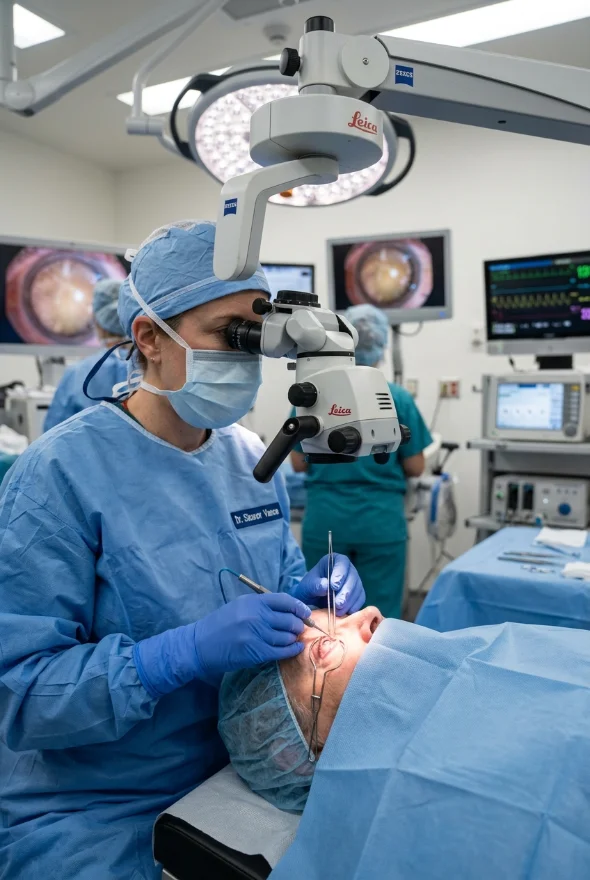
Cataract surgery usually takes 20 to 45 minutes per eye, according to the NHS, and most people go home the same day. Expect about 15 to 30 minutes in a recovery area afterwards. Vision often improves within days, drops continue for about 4 weeks, and the eye can take about 3 months to settle fully. At Laser Istanbul Clinic, the surgeons are Prof. Dr. Ahmet Satıcı, Doç. Dr. Muhammet Derda Özer and Op. Dr. Aysan Bayram.
Cataract surgery: how long does it take?
The operation itself usually takes between 20 and 45 minutes per eye. That is the figure given by the NHS, and it is a range for a reason: every eye is different, and your surgeon can tell you where you are likely to fall once they have examined you. {{surgeons' typical operating time per eye}}
The short time reflects how the operation works. Cataract surgery is the only way to remove a cataract, and the standard method, phacoemulsification ("phaco"), is done through a tiny opening at the front of the eye. The NHS and the American Academy of Ophthalmology (AAO) describe the same sequence of steps:
- Drops dilate (widen) your pupil, and the eye is cleaned and covered with a sterile sheet.
- The surgeon makes a small opening in the cornea and a round opening in the capsule that holds your lens.
- An ultrasound probe breaks up the cloudy lens and the pieces are suctioned out.
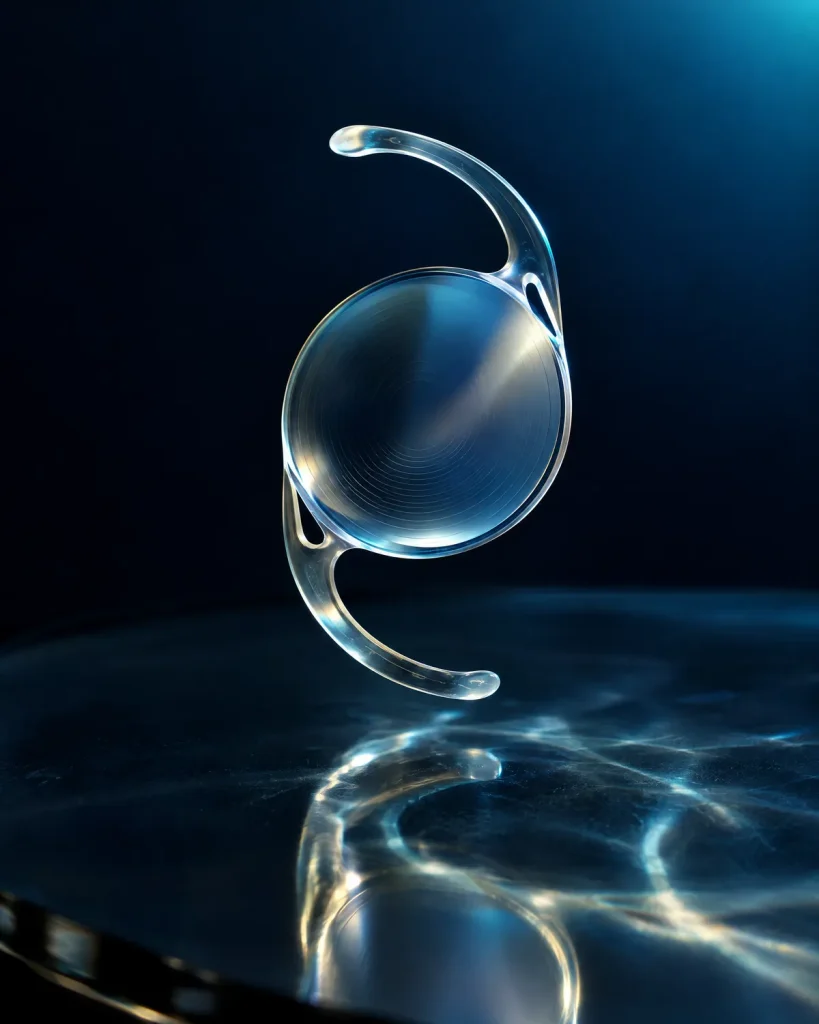
- A clear artificial lens, called an intraocular lens (IOL), is placed in the capsule.
- The incision is self-sealing and usually does not need stitches.
You stay awake. The NHS says the anaesthetic is usually local, given as eye drops, an injection or both, so you may see light and movement but the operation should not hurt.
The AAO calls cataract surgery one of the most common operations in the world. In England alone, about 681,400 publicly funded cataract operations were carried out between April 2023 and March 2024, according to the Royal College of Ophthalmologists. It is a routine, well-rehearsed procedure, which is why it fits into such a short slot in the day.
Does laser-assisted cataract surgery take less time?
No. Some clinics offer femtosecond laser-assisted cataract surgery, in which a laser performs some of the steps. A Cochrane review of 16 randomised trials found little evidence of any difference in operating time (a mean difference of 0.1 minutes, based on 274 eyes) and concluded that the two methods may need the same amount of theatre time. The AAO adds that laser-assisted surgery has not been shown to bring fewer complications or better outcomes. Choose your method on your surgeon's advice for your eye, not to save minutes.
How long will you be at the clinic on the day of surgery?
Plan on a few hours door to door, but the operation is only a small part of that. The NHS says most people can go home on the same day, and the AAO says you rest in a recovery area for about 15 to 30 minutes before you leave. The rest of the time goes on checking in, going through your details, having drops put in to widen the pupil, and waiting your turn. {{time to allow at the operating theatre on the day, from arrival to leaving}}
Here is how a typical cataract day breaks down:
| Stage | What happens | How long |
|---|---|---|
| Before the operation | Check-in, final checks, dilating drops, anaesthetic | {{time to allow before the operation}} |
| The operation | Phacoemulsification and lens implant | 20–45 minutes per eye (NHS) |
| Recovery area | You rest, then the team explains your drops and aftercare | About 15–30 minutes (AAO) |
| Going home | Same day; someone else takes you home | NHS: do not drive yourself home |
Two practical points from the NHS. First, if you wear contact lenses, you may need to leave them out for a few days before cataract surgery, and your surgeon confirms how long. Second, bring a list of all your medicines, blood thinners in particular, so the team can plan around them.
How long does it take to see clearly after cataract surgery?
Many people notice better vision within a few days, though the timing varies. The NHS says your vision may be blurry for a few hours after the operation, mainly because of the dilating drops, and that it may take several days to improve. The AAO says some people see clearly almost straight away, while others find their vision clears within a week or two.
| When | What to expect | Source |
|---|---|---|
| First few hours | Blurry vision from the dilating drops; the eye may be covered with a dressing | NHS |
| First few days | The eye may ache or feel gritty; vision improves over several days; you may feel more tired than usual | NHS |
| 1–2 weeks | Some people see clearly almost at once; others within a week or two | AAO |
| About 4 weeks | You usually take the prescribed eye drops for about 4 weeks | NHS |
| 4–6 weeks | One AAO guide describes full healing as taking about 4–6 weeks | AAO |
| About 3 months | Another AAO guide says it takes about 3 months to recover fully | AAO |
The two AAO guides give different healing times (4–6 weeks in one, about 3 months in the other). In plain terms: the eye is healing well within weeks, and the last small changes in vision and in your glasses prescription can take around three months. Your surgeon sets your own timetable.
How good will your vision be? In the Royal College of Ophthalmologists' National Cataract Audit (2025), covering 550,519 NHS operations in the year to March 2024, 93.0% of eyes reached 6/12 or better, the standard needed to drive. The median result was about 6/6, which is normal vision. These are NHS-wide figures, not our results, and eyes with other eye disease do less well: 86.6% reached 6/12 or better, compared with 96.4% of eyes with no other eye disease.
Your glasses prescription often changes after surgery, so you may need new glasses once the eye has settled. Our guide on using your old glasses after cataract surgery explains what to do while you wait. If your vision seems to go up and down in the first weeks, read about fluctuating vision after cataract surgery.
When can you drive, fly and get back to normal activities?
You can return to everyday life quickly, but some limits apply while the eye heals. The NHS says not to drive until your vision is back to normal, and not to do any heavy lifting, play sports, wear eye make-up, get water in the eye or swim (even with goggles) while it heals. Your surgeon gives you the exact dates.
- Driving: in the UK you must be able to read a number plate from 20 metres and have at least decimal 0.5 (6/12) vision with both eyes together, wearing glasses or contact lenses if you need them (GOV.UK). Your surgeon or optometrist confirms when you meet that standard.
- Eye drops: usually about 4 weeks (NHS). You may also wear a plastic shield at night while the eye heals.
- Rubbing and water: do not rub or press on the eye, and keep soap and water out of it (AAO).
- Flying: neither the NHS nor the AAO pages we read set a date. In our practice, most patients can fly home about 3–7 days after cataract surgery, once their surgeon has checked the eye. {{surgeons' standard advice on flying after cataract surgery}}
How long between cataract surgery on each eye?
The NHS treats cataracts in two eyes on separate days, and the gap between them varies. A meta-analysis of studies comparing the approaches found that, when the two operations were delayed, the time between the first and second eye ranged from two days to six months. Your surgeon decides the gap that suits your eyes.
There are three ways to handle two eyes:
| Approach | What it means | Points to weigh |
|---|---|---|
| Separate days, weeks or months apart | Each eye is a separate operation (delayed sequential surgery) | The result in the first eye can guide the lens choice for the second; vision is unequal in between |
| Same day, both eyes (immediately sequential bilateral cataract surgery, ISBCS) | Both eyes treated in one session, each as its own sterile operation | Fewer visits and balanced vision sooner; the second eye's lens cannot be adjusted for the first eye's result |
| Two operations during one stay | Separate days, close together, in one trip | Depends on your surgeon's advice |
The evidence on same-day surgery is reassuring for suitable patients. A 2022 Cochrane review of 14 studies (276,260 people) concluded that there are probably no clinically important differences in outcomes between same-day and delayed surgery, with lower costs for same-day surgery. Serious infection inside the eye was very rare in both groups (1 in 14,076 eyes after same-day surgery against 55 in 556,246 after delayed surgery). A large US registry study of more than 5.5 million patients found no statistically significant difference in endophthalmitis rates (0.059% against 0.056%).
NICE guidance in England says surgeons should consider offering same-day surgery on both eyes to people at low risk, and the Royal College of Ophthalmologists reports that just over 1% of people having their first cataract operation chose it in 2023–24. It is not right for everyone: a rare complication could affect both eyes, so your surgeon assesses your risk first.
How long should you plan to stay if you have cataract surgery in Istanbul?
Most of our patients plan 5 to 7 days in Istanbul, including the examination, surgery and check-ups. The operation takes minutes, but travelling for surgery means leaving time for the checks that make it safe to fly home. If both eyes are treated in one trip, your surgeon tells you how many nights to book.
A typical visit looks like this:
- Examination and scans at the start of your stay, with your surgeon, so the lens and the plan are confirmed.
- Surgery in a fully equipped, Ministry of Health–licensed operating theatre in Istanbul, usually 20–45 minutes per eye, with you awake and comfortable.
- Check-up the next day, and again before you fly.
- Flight home about 3–7 days after surgery, once your surgeon signs you off.
- Remote follow-up by video at agreed intervals, with your full surgical report, lens details and drop schedule in English.
Cataract surgery is led by Prof. Dr. Ahmet Satıcı (cataract and premium lens surgery), Doç. Dr. Muhammet Derda Özer (Doç. means Associate Professor; cornea, retina and uveitis, who also operates on cataracts; speaks Turkish and English) and Op. Dr. Aysan Bayram (cataract, laser and retinal disease; speaks English; female surgeon). Pre-operative examination and scans, surgery, medication, follow-up checks in Istanbul, a personal interpreter, a coordinator and remote follow-up are included in your price. Hotel and airport transfers are a separate charge and can be arranged on request; flights are not included.
If you do not have a cataract yet but want to be free of glasses, read about lens replacement (RLE / smart lens) in Turkey. It uses the same families of artificial lens (monofocal, multifocal, extended depth of focus and toric) that the AAO describes for cataract surgery.
Does a shorter operation mean a better result?
No. Duration is not a measure of quality. What matters is how often complications happen and how well people see afterwards. The UK audit found that posterior capsule rupture (a tear in the capsule behind the lens, the main complication during surgery) affected 0.69% of operations in the year to March 2024, down from 1.43% in 2014. The NHS lists the other possible complications as vision problems, detached retina, infection, bleeding, inflammation and, months or years later, posterior capsule opacification (PCO, a clouding behind the lens that is treated with a quick laser procedure called YAG capsulotomy). Serious complications are rare. A calm, unhurried operation by an experienced surgeon is the goal, whatever the clock says.
Waiting list versus operating time
For many UK patients, the real "how long" is the wait, not the operation. At the end of July 2026, 620,931 people in England were waiting to start NHS eye treatment, and 72.9% had been waiting less than 18 weeks, against an NHS standard of 92%. Cataract surgery is the largest part of that work. Ask your hospital or GP for your own expected wait, because it varies from area to area. If you want to know what your own operation would involve, a free online consultation lets you upload your prescription and scans for a surgeon to review.
Frequently asked questions
The operation usually takes 20 to 45 minutes per eye, according to the NHS. You are awake, the eye is numbed with drops, an injection or both, and you can usually go home the same day. Allow a few hours at the theatre in total, because of preparation and about 15–30 minutes in a recovery area.
From arrival to leaving, plan on a few hours: the operation is 20–45 minutes, and the AAO says you then rest for about 15–30 minutes. Your surgeon's team confirms your timings on the day. {{time to allow at the operating theatre on the day, from arrival to leaving}}
Most people notice better vision within a few days. The NHS says the eye may ache for a few days and drops continue for about 4 weeks. The AAO says some people see clearly almost at once, others within a week or two, and that full recovery takes about 3 months.
The NHS operates on each eye on a separate day, and published studies of delayed surgery report gaps from two days to six months. Your surgeon decides the interval based on your sight, your lens choice and your health. Same-day surgery on both eyes is an option for people at low risk.
Sometimes. NICE advises surgeons to consider it for people at low risk, and a 2022 Cochrane review found probably no clinically important differences from delayed surgery. The downsides are that the second eye's lens cannot be adjusted for the first eye's result, and that a rare complication could affect both eyes.
No. A Cochrane review found a mean difference of only 0.1 minutes in operating time, and the AAO says laser-assisted surgery has not been shown to give fewer complications or better outcomes than standard phaco surgery.
Not until your vision is back to normal, says the NHS, and you should not drive yourself home on the day. In the UK you need to read a number plate from 20 metres and reach at least 6/12 with both eyes together (GOV.UK). Your surgeon confirms when you are ready.
Most patients plan 5 to 7 days, including examination, surgery and check-ups, and can fly about 3–7 days after surgery once the surgeon has checked the eye. If both eyes are done in one trip, your surgeon tells you how many nights to book.
The operation should not hurt, because the eye is numbed with drops, an injection or both (NHS). Afterwards the eye may ache or feel gritty for a few days. Tell your surgeon about any worries before the day.
Ready to find out what your own cataract operation involves? A free online consultation gives you an answer for your own eyes: upload your prescription and scans, and one of our three surgeons reviews them. Cataract surgery is led by Prof. Dr. Ahmet Satıcı, Doç. Dr. Muhammet Derda Özer and Op. Dr. Aysan Bayram.
Sources for the facts on this page
- All opened and checked on 7 Oct 2026 unless marked "reused".
- NHS. Cataract surgery. https://www.nhs.uk/conditions/cataract-surgery/ (20–45 minutes; local anaesthetic by drops, injection or both; home the same day, do not drive yourself; separate days for two eyes; drops about 4 weeks; blurry for a few hours; eye may hurt for a few days; vision improves over several days; no heavy lifting, sport, eye make-up, swimming or water in the eye; do not drive until vision is back to normal; contact lenses out for a few days; complications; PCO)
- NHS. Cataract surgery: what happens, and recovery pages. https://www.nhs.uk/conditions/cataract-surgery/what-happens/ and https://www.nhs.uk/conditions/cataract-surgery/recovery/ (steps on the day; dressing; plastic shield at night)
- American Academy of Ophthalmology. What is cataract surgery? https://www.aao.org/eye-health/treatments/what-is-cataract-surgery (recovery area about 15–30 minutes; most people see better within a few days; full healing about 4–6 weeks; no soap or water in the eye; no rubbing)
- American Academy of Ophthalmology. Traditional cataract surgery vs. laser-assisted cataract surgery. https://www.aao.org/eye-health/tips-prevention/traditional-vs-laser-assisted-cataract-surgery (steps of phaco; some see clearly almost immediately, others within a week or two; about 3 months to fully recover; reused from content/en/cataract.md: one of the most common surgeries in the world, and laser-assisted surgery not shown to give fewer complications)
- American Academy of Ophthalmology. IOL implants: lens replacement after cataracts. https://www.aao.org/eye-health/diseases/cataracts-iol-implants (monofocal, multifocal, EDOF, accommodative, light-adjustable, toric)
- Day AC, Gore DM, Bunce C, Evans JR. Laser-assisted cataract surgery versus standard ultrasound phacoemulsification cataract surgery. Cochrane Database of Systematic Reviews 2016. https://pmc.ncbi.nlm.nih.gov/articles/PMC6458014/ (16 RCTs; mean difference 0.1 minutes, 274 eyes)
- Dickman MM, et al. Immediate sequential bilateral surgery versus delayed sequential bilateral surgery for cataracts. Cochrane Database of Systematic Reviews 2022. https://pmc.ncbi.nlm.nih.gov/articles/PMC9037598/ (14 studies, 276,260 participants; endophthalmitis 1/14,076 against 55/556,246)
- Lacy M, et al. Endophthalmitis rate in immediately sequential versus delayed sequential bilateral cataract surgery within the IRIS Registry data. Ophthalmology 2022. https://pmc.ncbi.nlm.nih.gov/articles/PMC8755857/ (5,573,639 patients; 0.059% against 0.056%)
- Malvankar-Mehta MS, et al. Immediate versus delayed sequential bilateral cataract surgery: a systematic review and meta-analysis. PLoS One 2015. https://pmc.ncbi.nlm.nih.gov/articles/PMC4485471/ (interval in delayed surgery from two days to six months)
- Grzybowski A, et al. Pros and cons of immediately sequential bilateral cataract surgery (ISBCS). Saudi Journal of Ophthalmology 2016. https://pmc.ncbi.nlm.nih.gov/articles/PMC5161806/ (definition; advantages and disadvantages)
- The Royal College of Ophthalmologists, National Ophthalmology Database. Eighth Annual Report of the National Cataract Audit (2025; NHS year 2023–24). https://nodaudit.org.uk/sites/default/files/2025-07/NOD%20Cataract%20Audit%208th%20Annual%20Report%202025%20Final.pdf (about 681,400 publicly funded operations in England; 550,519 audited operations; PCR 0.69% against 1.43% in 2014; 6/12 or better in 93.0%, 96.4% without and 86.6% with co-pathology; median postoperative VA about 6/6; NICE ISBCS recommendation; just over 1% of surgery-naive patients had ISBCS)
- NICE. Cataracts in adults: management (NG77). https://www.nice.org.uk/guidance/ng77 (same-day bilateral surgery recommendation; the NICE site returned an access error on 7 Oct, so the wording was confirmed through source 11, and earlier through content/en/cataract.md, items 1.6.3–1.6.4)
- GOV.UK. Driving eyesight rules. https://www.gov.uk/driving-eyesight-rules (number plate at 20 metres; decimal 0.5 (6/12) with both eyes; glasses or contact lenses allowed)
- NHS England. Statistical Press Notice: RTT waiting times, July 2026 (Ophthalmology: 620,931 incomplete pathways; 72.9% within 18 weeks; 92% standard). https://www.england.nhs.uk/statistics/wp-content/uploads/sites/2/2026/09/Jul26-RTT-statistical-press-notice-PDF-578K-97ylx5.pdf (reused from content/en/cataract.md, checked there on 6 Oct 2026)