
- Home
- Knowledge centre
- Lens & cataract guides
- Can Cataract Cause Headache? Cataract Symptoms, Stages and When to Have Surgery
Can Cataract Cause Headache? Cataract Symptoms, Stages and When to Have Surgery
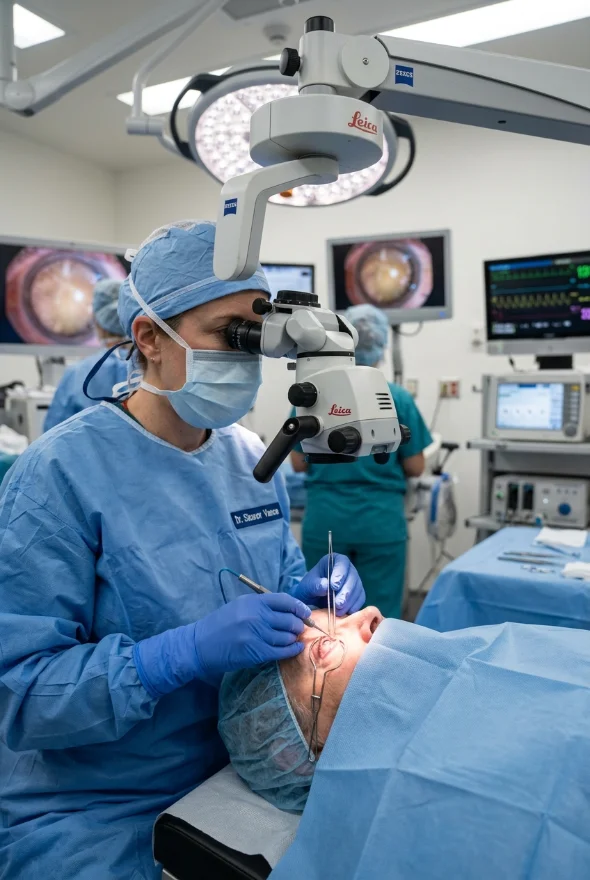
Can cataract cause headache? Not usually: its typical symptoms are blurred vision, glare, halos, faded colours and poor night vision. The exception is an advanced, swollen cataract that can trigger acute angle-closure glaucoma, with severe eye pain, headache and nausea, which is an emergency. Surgery is advised when a cataract interferes with daily life, not at a fixed stage. Prof. Dr. Ahmet Satıcı, Doç. Dr. Muhammet Derda Özer and Op. Dr. Aysan Bayram assess this in Istanbul.
What is a cataract, and what are the symptoms?
A cataract is a clouding of the lens, the clear part of the eye that focuses light onto the retina. The NHS describes it as the lens becoming cloudy, causing blurred vision. Inside the lens, proteins slowly break down, so light is scattered instead of passing cleanly through. The American Academy of Ophthalmology (AAO) says most cataracts appear after age 40, and people over 60 typically have some clouding, though vision problems may not show for years.
Cataracts are very common. According to the US National Eye Institute (NEI), by age 80 most people either have a cataract or have already had cataract surgery. The World Health Organization (WHO) reported in February 2026 that 94 million people have vision impairment from cataract that has not been treated.
Cataract symptoms: what you may notice
The NHS, NEI and AAO list the same core symptoms:
| Symptom | What it feels like | Where it is listed |
|---|---|---|
| Blurred or cloudy vision | Trouble reading or watching TV; a hazy view | NHS, NEI, AAO |
| Glare and light sensitivity | Oncoming headlights dazzle; bright light is uncomfortable | NHS, NEI, AAO |
| Halos | Glowing rings around lights, worse at night | NHS, NEI |
| Poor night vision | You need more light than before, or avoid driving after dark | NHS, NEI, AAO |
| Faded or yellowed colours | Colours look dull, blues in particular | NHS, NEI, AAO |
| Double or ghosted vision in one eye | A faint second image, even with the other eye closed | NHS, NEI, AAO |
| Frequent glasses changes | Your prescription seems to need updating again and again | NHS |
Three points help you recognise a cataract early:
- Early cataracts often cause no symptoms. The NEI says early stages produce none.
- It often develops slowly and can affect one eye first. Cover each eye in turn and compare.
- "Second sight" can happen. A nuclear cataract can increase short-sightedness, so for a while some older people read without glasses. EyeWiki, the AAO's clinical encyclopedia, calls this the second-sight phenomenon. It is a sign of the cataract, not an improvement, and it does not last.
If you notice these symptoms, start with an optician or ophthalmologist: the NHS advises contacting an optician, who refers you to an eye specialist if needed.
Can cataract cause headache?
A cataract on its own does not usually cause headaches. Headache is not among the cataract symptoms listed by the NHS, NEI or AAO. If you have frequent headaches, the cause is often something other than a cataract, and an eye examination helps to sort out whether your eyes are involved at all.
There is one important exception: a swollen, advanced cataract. As a cataract matures, the lens can swell and push the iris forward. That narrows the eye's drainage angle, blocks the flow of fluid and makes the pressure inside the eye rise suddenly. This is called phacomorphic glaucoma, a form of acute angle-closure glaucoma. According to a clinical review in Clinical Interventions in Aging, it brings eye pain, headache, blurred vision and halos around lights, with nausea and vomiting, and symptoms often begin at night when the pupil widens. The NHS lists the same pattern for acute angle-closure glaucoma: intense eye pain, a red eye, rainbow-coloured circles around lights, blurred vision, feeling or being sick, and a headache.
| If you have... | What to do |
|---|---|
| Gradual blurring, glare, halos or poor night vision | Book an eye examination with an optician or ophthalmologist |
| Sudden, severe eye pain with a red eye, headache, nausea or vomiting, halos, or a sudden drop in vision | Emergency. The NHS says to call 999 or go to A&E and not to drive yourself. Outside the UK, go to the nearest emergency eye service |
A paper in Malaysian Family Physician calls an attack of this kind from a neglected cataract a medical emergency that must be treated at once. Treatment first lowers the eye pressure with drops and tablets; removing the cataract is the definitive treatment, because the swollen lens is the cause. The paper's three cases did poorly, with permanent damage to the optic nerve and pupil, which is a strong reason not to leave a dense cataract untreated for years.
What are the stages of cataract, 1 to 4?
There is no official four-stage scale, but a cataract is commonly described in four practical steps: early, immature, mature and hypermature. People searching for "cataract stages 1 to 4" are usually looking for this progression. The table groups what the NHS, NEI, AAO and the published clinical literature say about each step. Ophthalmologists also grade cataracts with scales such as the Lens Opacities Classification System (LOCS) to plan surgery, but you do not need a grade to know when to see someone.
| Stage | What is happening in the lens | What you may notice | Usual plan |
|---|---|---|---|
| 1. Early | Small cloudy areas begin to form | Often nothing; the NEI says early stages produce no symptoms | Regular eye checks. The AAO says a new glasses prescription and brighter light for reading may be all you need |
| 2. Immature | Part of the lens is cloudy and the cloudiness grows | Blur, glare, halos, weaker night vision, faded colours, frequent glasses changes | Surgery becomes a reasonable option once daily life is affected |
| 3. Mature | The lens is cloudy throughout and may swell (intumescent) | Marked loss of vision | Surgery is advised. A swollen lens can trigger angle-closure glaucoma (phacomorphic glaucoma) |
| 4. Hypermature | The lens is overripe; proteins can leak out and the lens can become loose | Very poor vision | Surgery is advised. Leakage can cause phacolytic glaucoma, and a loose lens can cause inflammation and glaucoma |
Stage 3 and 4 details: Papaconstantinou et al., 2009 (lens-induced glaucoma); Azhany et al., 2013 (neglected cataract). Dense mature cataracts are also harder to assess before surgery (Pujari and Sharma, 2021).
Cataract types also feel different. The same stage can look different depending on where in the lens the clouding sits (EyeWiki):
| Type | Where it forms | Typical effect |
|---|---|---|
| Nuclear | Centre of the lens, which yellows and hardens | Short-sightedness increases; distance blur, poor dark vision, dull colours |
| Cortical | Outer layer of the lens, in spoke-like streaks | Glare, halos or streaks around lights, especially when driving at night |
| Posterior subcapsular | Back surface of the lens | Develops faster; affects near vision more than distance vision |
You do not have to wait for stage 3 or 4. The NEI and AAO both say surgery is advised once the cataract interferes with daily activities, which for most people happens well before the lens is fully cloudy.
Does the sun cause cataracts?
Yes, ultraviolet (UV) light from the sun can contribute to cataracts, and protecting your eyes lowers the risk. The NHS lists unprotected sun exposure as a risk factor and the NEI lists prolonged sun exposure. The AAO lists extensive sun exposure too and says protecting your eyes from sunlight is the best way to help prevent cataracts. The WHO estimates that about 10% of cataract cases may be attributable to UV exposure, so the sun is one cause among several.
People who ask "can sun cause cataracts?" often want to know how it compares with other risks. Age matters most. The other risk factors the NHS, NEI and AAO list are:
- being over 60, and having a family history of cataracts
- smoking and, in the NEI's list, heavy alcohol use
- diabetes and high blood pressure
- long-term steroid use
- a previous eye injury or eye surgery, and eye inflammation (uveitis)
- radiation exposure (NEI)
How to protect your eyes from UV:
- wear sunglasses that block 99–100% of UVA and UVB rays, ideally wraparound styles (WHO, AAO)
- add a wide-brimmed hat (WHO, NEI, AAO)
- take extra care when the UV index is 3 or above (WHO)
- stop smoking, and eat plenty of fruit, vegetables and leafy greens (NEI)
Sunglasses protect against future damage; they do not clear a cataract that has already formed.
What is the treatment of cataract?
Surgery is the only treatment that removes a cataract. The NHS and NEI both say so. Early on, you may simply need a new glasses or contact lens prescription and brighter light for reading (AAO), and the NHS says cataracts do not usually need treating straight away. Over time, though, the cataract worsens.
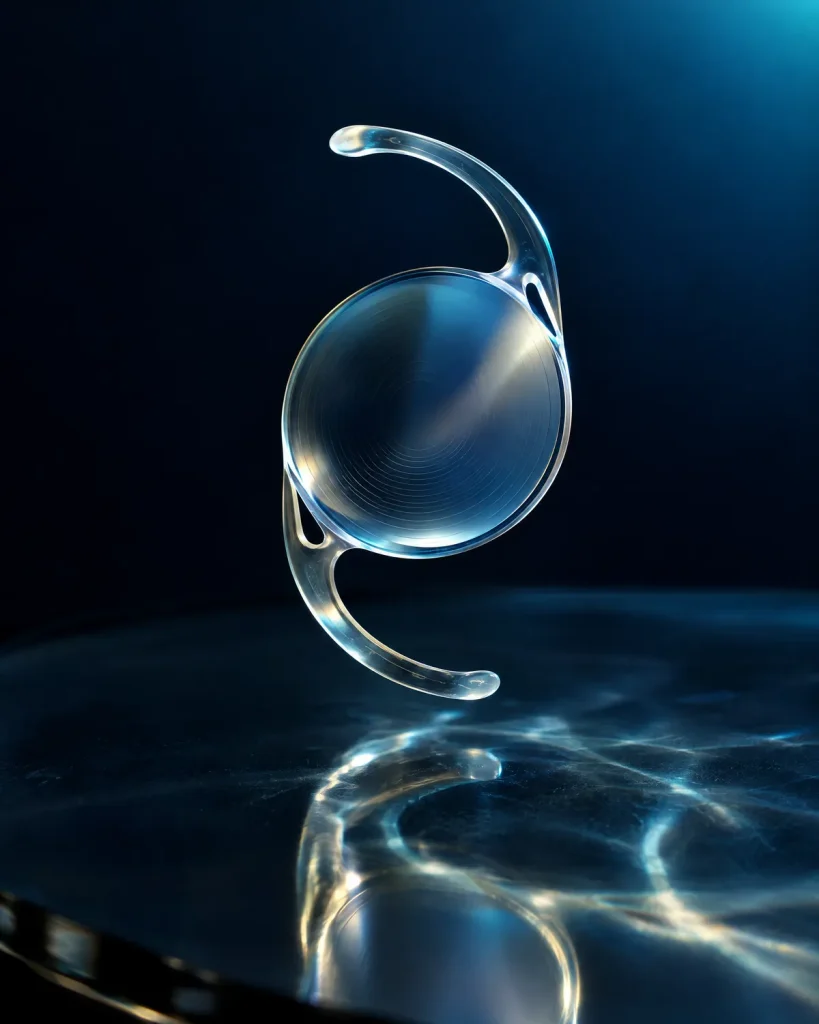
What surgery involves (phacoemulsification). The AAO describes the standard operation: the surgeon makes tiny incisions near the edge of the cornea, an ultrasound probe breaks up the cloudy lens and suctions it out, and an artificial intraocular lens (IOL) is placed in the same position. The incisions are usually self-sealing, so stitches are not normally needed. The NHS says the operation is done under local anaesthetic, takes about 20–45 minutes per eye, and you usually go home the same day. You then use eye drops for about 4 weeks.
How well does it work, and how safe is it? The NEI says 9 out of 10 people who have cataract surgery see better afterwards. In the Royal College of Ophthalmologists' National Cataract Audit (2025 report, 550,519 operations in the UK, April 2023 to March 2024):
- 93.0% of eyes reached 6/12 vision or better, the standard needed to drive, and 96.4% of eyes with no other eye disease did
- a tear in the lens capsule during surgery happened in 0.69% of operations
- serious infection inside the eye happened in about 0.02% and retinal detachment in about 0.05% (the audit notes these are estimates)
If you have another eye condition such as macular degeneration, diabetic eye disease or glaucoma, the result can be limited by that condition: 86.6% of such eyes reached 6/12 or better. Months or years later, the thin bag that holds the new lens can cloud and blur your vision again, which is treated with a quick laser. Blurry vision after cataract surgery (posterior capsule opacification / YAG) →
When is it time for cataract surgery?
It is time when the cataract stops you doing things you want or need to do. The AAO recommends surgery when cataracts interfere with everyday tasks such as driving, reading or seeing well at night. The NEI agrees: there is no need to rush, and surgery is advisable when daily activities are affected. In England, NICE guideline NG77 tells clinicians not to restrict cataract surgery on the basis of a vision score alone; the decision should reflect how the cataract affects your life and what you want.
Signs it is time to talk to a surgeon:
- you avoid driving at night, or glare from headlights worries you
- reading, screens or recognising faces have become harder
- your glasses prescription keeps changing but your vision stays poor
- colours look dull or yellow compared with a few years ago
- you have had an episode of eye pain, a red eye and halos (see the emergency section above)
Driving matters. In the UK, you must be able to read a number plate from 20 metres and have at least 6/12 vision with both eyes open, with glasses if needed (GOV.UK). The DVLA says drivers with cataracts are often safe to drive and may not need to notify it, but warns that glare can stop you passing the number plate test even when chart letters look fine. If you no longer meet the standard, you must stop driving.
Medical reasons can bring surgery forward. A swollen lens that narrows the drainage angle is one: removing the cataract removes the cause (Papaconstantinou et al.). Your surgeon will explain any other medical reasons in your case.
What if the NHS wait is long? At the end of July 2026, 620,931 people in England were waiting to start NHS eye (ophthalmology) treatment, and 72.9% had waited less than 18 weeks, against a standard of 92% (NHS England). Cataract surgery is the largest part of that. Waits vary between hospitals, so ask yours. If you decide to look at private options at home or abroad, keep up your eye checks in the meantime and tell your optician if your vision worsens.
What is the best lens for cataract surgery?
There is no single best lens, only the best lens for your eyes and your life. A cataract operation has two parts: removing the cloudy lens and choosing the new one. The AAO lists these main types:
| Lens | What it does | Trade-offs |
|---|---|---|
| Monofocal | One sharp focus, usually for distance; the most common lens | Reading glasses needed for close work; fewest night-time side effects |
| Toric | Also corrects astigmatism | Needs precise measurement before surgery |
| EDOF (extended depth of focus) | Extends focus from distance into computer range | Often light reading glasses for small print |
| Multifocal / trifocal | Several focus zones for near, middle and far | Many people manage without glasses for most tasks, but glare and halos around lights are more likely |
When people ask for the "newest" lens, they usually mean the premium designs in the lower rows, but newer is not the same as better for your eyes. A Cochrane review of 20 trials with 2,230 people found that multifocal lenses mean less need for glasses but more glare and halos than monofocal lenses, and concluded that how much you want to be free of glasses is likely to decide the choice. Ask which lens suits your night driving, work and hobbies, and whether another eye condition makes a premium lens less suitable. The NHS uses a standard monofocal lens, and NICE advises against multifocal lenses in the NHS, so a multifocal or trifocal lens in the UK usually means paying privately.
If you have no cataract yet but are tired of reading glasses, the same operation can be done as lens replacement. Lens replacement (RLE / smart lens) in Turkey →
Cataract surgery in Istanbul
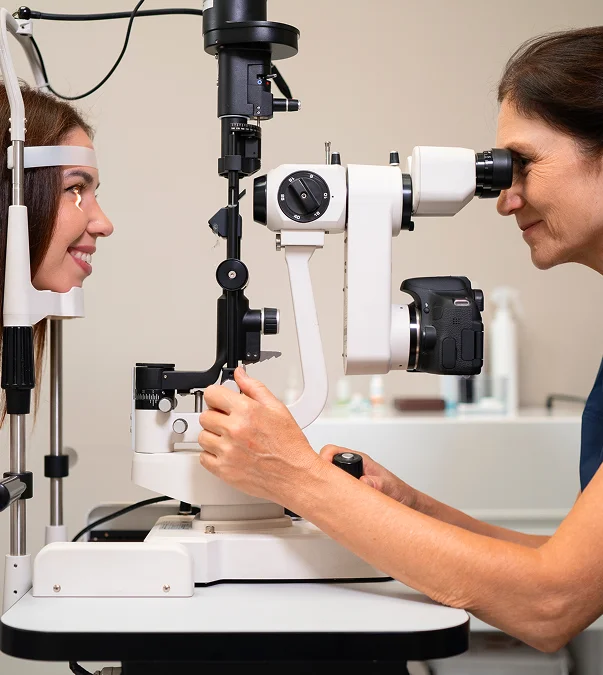
If you decide on surgery, cataract surgery in Turkey is an option for people who face a long wait at home or want a premium lens that their health system does not fund. At Laser Istanbul Clinic all three surgeons operate on cataracts: Prof. Dr. Ahmet Satıcı for cataract and premium lenses (trifocal, EDOF, toric); Doç. Dr. Muhammet Derda Özer for cataract in eyes with corneal, retinal or inflammatory disease (Doç. is the Turkish title for Associate Professor; he speaks Turkish and English); and Op. Dr. Aysan Bayram for cataract and retinal disease (a female surgeon who speaks English). Surgery takes place in a fully equipped, Ministry of Health–licensed operating theatre in Istanbul.
The price, from {{£ cataract package price}} per eye with a monofocal lens, includes the pre-operative examination and scans, surgery by the named surgeon, medication, follow-up checks in Istanbul, a personal interpreter, a coordinator and remote follow-up after you fly home. Flights are not included, and hotel and airport transfers are a separate charge that we arrange on request.
Frequently asked questions
Not usually. Headache is not on the NHS, NEI or AAO lists of cataract symptoms. The exception is a swollen, advanced cataract that triggers acute angle-closure glaucoma, which brings severe eye pain, headache, nausea and halos, and needs emergency care.
Early cataracts often cause no symptoms. The first signs are usually blurred or cloudy vision, more glare from headlights or sunlight, weaker vision at night and colours that look less bright. Halos around lights and frequent changes in your glasses prescription may follow.
Doctors commonly describe four practical steps: early, immature, mature and hypermature. There is no official four-stage scale; ophthalmologists grade cataracts with scales such as LOCS. What matters more than the stage is how much the cataract limits your daily life.
Yes, UV light can contribute. The NHS, NEI and AAO list sun exposure as a risk factor, and the WHO estimates that about 10% of cataract cases may be attributable to UV. Wear wraparound sunglasses that block 99–100% of UVA and UVB, and a wide-brimmed hat.
Surgery is the only way to remove a cataract. A new glasses prescription and brighter light can help in the early stages. Surgery replaces the cloudy lens with an artificial one, and the NEI says 9 out of 10 people see better afterwards.
When the cataract interferes with everyday life, such as driving, reading or seeing at night. There is no fixed vision score, and the NEI says there is no need to rush. Seek emergency care at once if you have severe eye pain, a red eye and headache.
The cataract itself cannot return, because the natural lens has been removed. The thin bag that holds the new lens can cloud months or years later (posterior capsule opacification) and blur vision, and a quick laser treatment clears it.
There is no single best lens. Monofocal lenses are the standard choice, toric lenses correct astigmatism, and EDOF and trifocal lenses reduce the need for glasses but can cause more glare and halos. Your surgeon recommends a lens only after measuring your eyes and discussing your lifestyle.
Wondering whether it is time for cataract surgery?
Send us your recent prescription and scans and a surgeon at Laser Istanbul Clinic will tell you honestly what your cataract looks like and whether surgery makes sense now. Cataract surgery is performed by Prof. Dr. Ahmet Satıcı, Doç. Dr. Muhammet Derda Özer and Op. Dr. Aysan Bayram.
Sources for the facts on this page
- Items 1–15 were opened and checked on 7 Oct 2026. Items 16–21 (marked *) were checked on the cataract pillar page (content/en/cataract.md) on 6 Oct 2026 and are reused for the same facts.
- NHS. Cataracts in adults. https://www.nhs.uk/conditions/cataracts/ (definition, symptoms, risk factors incl. unprotected sun exposure, no need to treat straight away, see an optician)
- NHS. Cataract surgery. https://www.nhs.uk/conditions/cataract-surgery/ (surgery is the only way to remove cataracts; drops about 4 weeks; PCO months or years later)
- NHS. Glaucoma (acute angle closure symptoms and 999 advice). https://www.nhs.uk/conditions/glaucoma/
- National Eye Institute (NIH). Cataracts. https://www.nei.nih.gov/learn-about-eye-health/eye-conditions-and-diseases/cataracts (early stages no symptoms; by age 80 most people; risk factors; surgery when daily activities are affected; 9 in 10 see better)
- National Eye Institute (NIH). Glaucoma. https://www.nei.nih.gov/learn-about-eye-health/eye-conditions-and-diseases/glaucoma (angle-closure emergency symptoms)
- American Academy of Ophthalmology. What are cataracts? https://www.aao.org/eye-health/diseases/what-are-cataracts (symptoms, risk factors, onset after 40, sunglasses blocking at least 99% UV)
- American Academy of Ophthalmology. Cataract symptoms. https://www.aao.org/eye-health/diseases/cataracts-symptoms (symptom list; consider surgery when everyday tasks are difficult)
- American Academy of Ophthalmology. Cataract treatment. https://www.aao.org/eye-health/diseases/cataracts-treatment (glasses and brighter light early on)
- American Academy of Ophthalmology. What is cataract surgery? https://www.aao.org/eye-health/treatments/what-is-cataract-surgery (phacoemulsification, self-sealing incisions, lens types)
- EyeWiki (AAO). Cataract. https://eyewiki.org/Cataract (nuclear, cortical and posterior subcapsular types; second-sight phenomenon; glare, halos, poor night vision)
- World Health Organization. Blindness and visual impairment (fact sheet, 10 February 2026). https://www.who.int/news-room/fact-sheets/detail/blindness-and-visual-impairment (94 million with cataract-related impairment)
- World Health Organization. Ultraviolet radiation. https://www.who.int/news-room/fact-sheets/detail/ultraviolet-radiation (about 10% of cataract cases attributable to UV; wraparound sunglasses with 99–100% UVA/UVB protection; hats; UV index 3)
- Papaconstantinou D, et al. Lens-induced glaucoma in the elderly. Clinical Interventions in Aging 2009;4:331–336. https://pmc.ncbi.nlm.nih.gov/articles/PMC2722872/ (phacomorphic glaucoma from an intumescent lens: ocular pain, headache, blurred vision, halos, nausea, vomiting; phacolytic glaucoma from hypermature cataract; cataract removal as definitive treatment)
- Azhany Y, Hemalatha C, Nani D, Rosediani M, Liza-Sharmini A. Sequelae of neglected senile cataract. Malaysian Family Physician 2013;8(1):33–37. https://pmc.ncbi.nlm.nih.gov/articles/PMC4170465/ (neglected cataract attack is a medical emergency; cataract extraction as definitive treatment; poor outcomes in three cases)
- Pujari A, Sharma N. The Emerging Role of Anterior Segment Optical Coherence Tomography in Cataract Surgery. Clinical Ophthalmology 2021. https://pmc.ncbi.nlm.nih.gov/articles/PMC7869024/ (LOCS grading; mature and white cataracts harder to assess)
- * American Academy of Ophthalmology. IOL implants: lens replacement after cataracts (June 2026). https://www.aao.org/eye-health/diseases/cataracts-iol-implants
- * NICE guideline NG77. Cataracts in adults: management (26 October 2017). https://www.nice.org.uk/guidance/ng77/chapter/Recommendations (do not restrict surgery on visual acuity alone; do not offer multifocal IOLs on the NHS)
- * The Royal College of Ophthalmologists, National Ophthalmology Database. Eighth Annual Report of the National Cataract Audit (2025; April 2023 to March 2024). https://nodaudit.org.uk/sites/default/files/2025-07/NOD%20Cataract%20Audit%208th%20Annual%20Report%202025%20Final.pdf
- * de Silva SR, Evans JR, Kirthi V, Ziaei M, Leyland M. Multifocal versus monofocal intraocular lenses after cataract extraction. Cochrane Database of Systematic Reviews 2016, CD003169.pub4. https://pmc.ncbi.nlm.nih.gov/articles/PMC6463930/
- * GOV.UK. Driving eyesight rules. https://www.gov.uk/driving-eyesight-rules · GOV.UK (DVLA). Visual disorders: assessing fitness to drive. https://www.gov.uk/guidance/visual-disorders-assessing-fitness-to-drive
- * NHS England. Statistical Press Notice: NHS referral to treatment (RTT) waiting times data, July 2026 (published 10 Sep 2026). https://www.england.nhs.uk/statistics/wp-content/uploads/sites/2/2026/09/Jul26-RTT-statistical-press-notice-PDF-578K-97ylx5.pdf