
- Home
- Knowledge centre
- Eye glossary A–Z
- Bloodshot Eye? Subconjunctival Haemorrhage: Causes, Symptoms and Treatment
Bloodshot Eye? Subconjunctival Haemorrhage: Causes, Symptoms and Treatment
Medically reviewed by {{surgeon}}, {{surgeon's title and specialty}}, on {{review date}}. Last updated {{date}}.

Subconjunctival haemorrhage (noun; US spelling subconjunctival hemorrhage): bleeding from a tiny blood vessel under the conjunctiva, the clear membrane that covers the white of the eye. The blood has nowhere to go, so it shows as a bright red patch on the white of the eye, which makes the eye look "bloodshot". It usually causes little or no pain, does not affect vision and heals by itself within days to a few weeks. A red eye that is painful, light-sensitive or blurred is different and needs a doctor.
Subconjunctival haemorrhage: key facts
- What it is
- A burst blood vessel under the conjunctiva, between the conjunctiva and the white of the eye (the sclera)
- What it looks like
- A well-defined, bright red patch on the white of the eye; vision and pupils are normal and the cornea is not involved
- Pain
- Usually none; at most a very mild irritation
- Usual cause
- Often none can be found; common triggers are coughing, sneezing, straining and eye rubbing
- Time to clear
- Days to a few weeks depending on size; EyeWiki gives 1–4 weeks
- Treatment
- None needed; artificial tears if the eye feels irritated
- Contagious
- No
- How often seen
- About 3% of ophthalmic emergency visits (EyeWiki)
- Specialist
- Ophthalmologist; our eye surgeons can advise on any red eye

What is a subconjunctival haemorrhage?
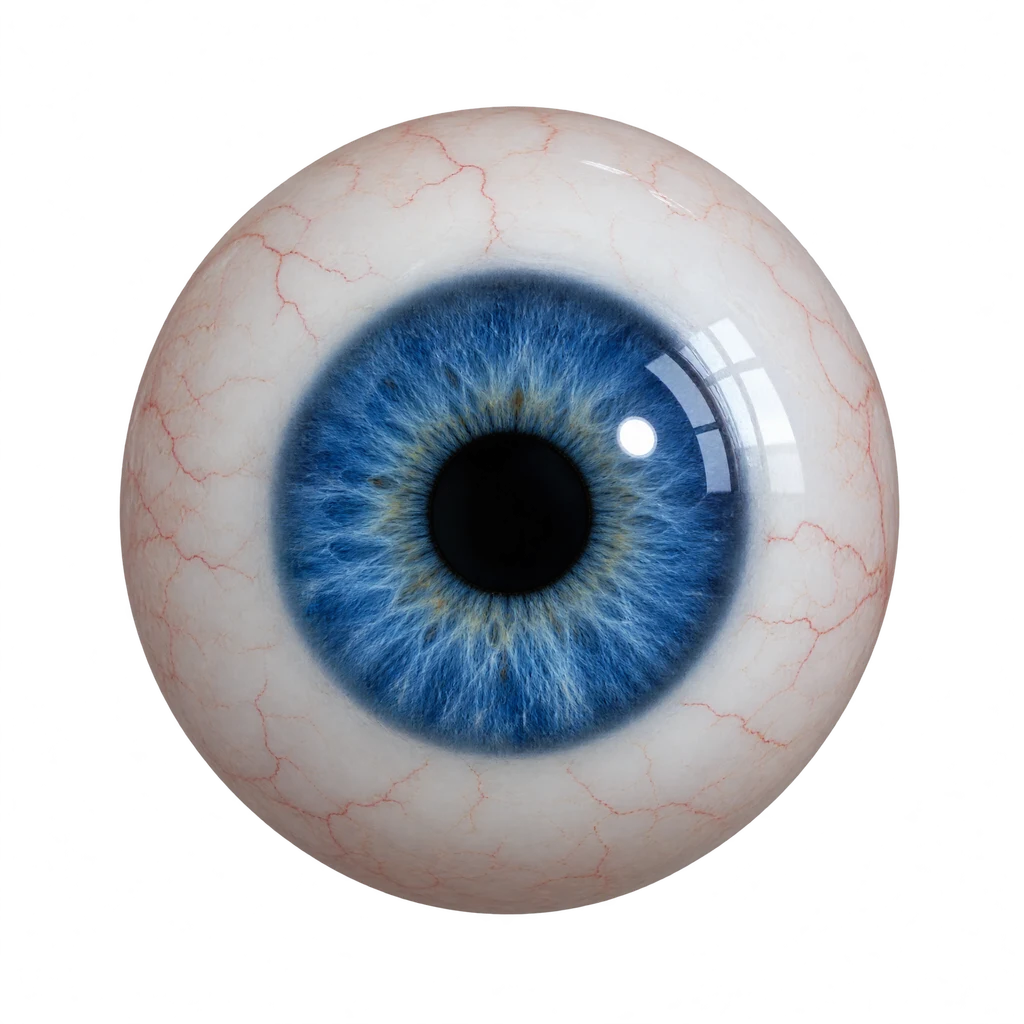
The conjunctiva is a thin, transparent membrane covering the white of the eye and the inside of the eyelids. It contains many very small, fragile blood vessels. When one breaks, blood leaks into the space between the conjunctiva and the sclera, according to the American Academy of Ophthalmology (AAO). Because the conjunctiva is clear, you see the blood as a flat, bright red patch, and because the blood is trapped under the membrane it cannot be wiped or washed away.
The patch can be small or cover a large part of the white of the eye. A large patch looks dramatic, but size alone does not make it more dangerous; it only takes longer to fade. It is not the same as bleeding inside the eye, which can affect vision and needs urgent assessment.
Why is my eye bloodshot? Subconjunctival haemorrhage versus other red eyes
"Bloodshot eye" is an everyday phrase that covers many causes. The NHS lists a burst blood vessel together with infection, dry eyes, conjunctivitis, blepharitis, an ingrowing eyelash and eyelid problems among the common causes of a red eye. The easiest way to tell them apart is to look at how the redness is spread and how the eye feels.
| Subconjunctival haemorrhage | Conjunctivitis (pink eye) | Painful red eye (for example corneal infection, inflammation or high eye pressure) | |
|---|---|---|---|
| Look | A solid, bright red patch with clear edges | The eye looks pink or red, often with swollen lids | Redness with a painful, sometimes cloudy-looking eye |
| Pain | None, or very mild irritation | Burning or grittiness; itching if allergic | Often painful |
| Discharge | None | Watery, sticky or thick yellow-green discharge | Possible |
| Vision | Normal | Usually normal | Blurred, or sensitive to light |
| Contagious | No | Viral and bacterial forms are | Depends on the cause |
| Action | Usually reassure and wait | See a pharmacist or doctor if it persists or worsens | See an eye doctor the same day |
The AAO describes viral conjunctivitis as burning red eyes with watery discharge, bacterial conjunctivitis as a thick yellowish discharge, and allergic conjunctivitis as intense itching with puffy lids. A bleed under the conjunctiva has none of these features. If you are unsure which you have, read our guide to infections and inflammation of the eye surface: Eye infections: conjunctivitis, keratitis & endophthalmitis →.
What causes a burst blood vessel in the eye?
In many people no cause is found. The AAO names the most common triggers as coughing, sneezing and straining, which temporarily raise blood pressure, along with eye injury and vigorous eye rubbing. EyeWiki, the AAO's clinical encyclopaedia, reports that idiopathic cases (no identifiable cause) account for up to 40% of presentations.
Common triggers
- Coughing fits, sneezing or straining
- Rubbing the eye hard
- Minor injury: a knock, a poke, a foreign body
- Contact lens wear (EyeWiki)
- Eye surgery: EyeWiki lists injury from ocular surgery among the causes in older patients
Medical conditions and medicines linked to it
- High blood pressure and diabetes (the AAO lists both as less common causes)
- Blood-thinning medicines such as aspirin, warfarin, clopidogrel, apixaban or rivaroxaban
- Long-term steroid eye drops (EyeWiki)
- Bleeding or clotting disorders, rarely (EyeWiki names von Willebrand disease and immune thrombocytopenia, among others)
- In children, minor injury is the usual cause: EyeWiki reports it in 83% of paediatric cases
How common is it? EyeWiki reports that subconjunctival haemorrhage accounts for about 3% of ophthalmic emergency visits and affects around 10.1% of patients over 65. It shows no significant difference between men and women.
Symptoms of a subconjunctival haemorrhage
The main sign is the red patch itself. Many people only notice it when someone points it out or when they look in a mirror. According to the AAO, there may occasionally be a very mild irritation of the eye, but symptoms are typically minimal.
A simple haemorrhage:
- is a bright red, sharply outlined patch on the white of the eye
- does not change your vision
- does not cause real pain
- leaves the cornea (the clear front window of the eye) unaffected
The AAFP review of red eye describes a well-demarcated, bright red patch on the white of the eye, with normal vision, equal pupils that react to light, and no corneal involvement.
Red flag. The AAFP notes that pain changes the picture: when a red eye is painful, the doctor needs to look for corneal involvement or a penetrating injury, and urgent eye referral may be needed. See "When to see a doctor" below.
How is it diagnosed?
A doctor diagnoses a subconjunctival haemorrhage by looking at the eye, usually with a slit lamp (a microscope with a thin beam of light). The aim is to confirm that the bleed is only under the conjunctiva and to rule out anything more serious. A typical check includes:
- History. Recent coughing, straining, rubbing or injury; contact lenses; blood-thinning medicines; past bleeding problems; previous episodes.
- Vision and pupils. Both should be normal.
- Slit-lamp examination. The cornea and the rest of the front of the eye should look normal, with no foreign body or wound.
- Further checks if needed. If the haemorrhage keeps coming back, the AAO says ophthalmologists may recommend additional testing, and the AAFP says repeat bleeds need a work-up for bleeding disorders. EyeWiki advises that patients on warfarin should have their INR (a blood-clotting test) checked.
Do not stop prescribed blood thinners yourself; ask the doctor who prescribed them.
After an eye injury, a bleed under the conjunctiva can sit on top of a more serious injury, which is why a doctor should always check after a significant blow or a sharp or fast-moving object. The NHS lists an eye injury or an object in the eye as a reason for emergency care.
How long does a subconjunctival haemorrhage take to go away?
Most clear up on their own within a few days to a few weeks. The AAO says healing takes "a few days or a few weeks" depending on the size of the spot, and EyeWiki gives a range of 1–4 weeks. The body slowly reabsorbs the blood, which the AAFP describes as taking place over a few weeks.
Larger bleeds generally take longer than small ones. EyeWiki also states that no medication has been approved to speed up healing.
Treatment: what can you do?
A simple subconjunctival haemorrhage needs no treatment. The AAO says it should heal on its own.
| What helps | Notes |
|---|---|
| Waiting | The blood is reabsorbed over days to weeks |
| Artificial tears (lubricating drops) | Can ease mild irritation; the AAO suggests them, and the AAFP says lubricants may relieve symptoms |
| Warm compress | Mentioned by the AAFP as a way to relieve symptoms |
| Avoiding eye rubbing | Rubbing is a known trigger; the NHS also advises not touching or rubbing a red eye |
| Leaving contact lenses out | The NHS advises not wearing contact lenses while an eye is red, until it has settled |
| Treating the cause | Keeping blood pressure and diabetes under control with your own doctor |
There is no approved medicine that clears the blood faster, and surgery is not indicated (EyeWiki).
Can it be prevented? Not entirely, because many bleeds have no cause. Avoiding hard eye rubbing and keeping blood pressure and diabetes controlled addresses the triggers that are known.

Is a subconjunctival haemorrhage dangerous or contagious?
It is not contagious, and on its own it is a benign condition that does not harm vision. EyeWiki describes it as benign, typically not affecting vision and causing minimal discomfort. The red patch can look alarming, but it is essentially a small bleed in a spot where the blood cannot escape, and the body reabsorbs it.
The concern is not the bleed itself but what may sit behind it: an injury, a blood-pressure or clotting problem, or, if the eye is painful or vision is affected, something else entirely. That is why recurrent bleeds, bleeds after trauma and any red eye with pain or visual symptoms deserve a check.
When to see a doctor
Seek urgent help the same day (NHS 111 in the UK, or your local urgent eye service) if your red eye is (NHS guidance):
- very painful and red
- a red eye in someone who wears contact lenses, as it can be an infection
- in a baby less than 28 days old
Go to A&E or the emergency room if the red eye comes with (NHS guidance):
- vision changes such as wavy lines, flashes or loss of vision
- pain from light
- a severe headache with nausea
- a very dark red eye
- an eye injury or an object in the eye
- a chemical splash in the eye
- pupils of different sizes
Book a routine appointment if:
- you have bleeds in the eye repeatedly (the AAO says frequent haemorrhages call for further investigation)
- you take blood thinners and have other unexplained bleeding or bruising
- the patch is not fading after about 4 weeks, or is getting bigger rather than smaller
- you have high blood pressure or diabetes that is poorly controlled
- a child has bleeding in both eyes with no clear reason (EyeWiki lists bilateral bleeds in children as a red flag for a doctor to assess)
Redness together with pain or reduced vision can point to other conditions. Raised pressure inside the eye is often painless (see the related term below), whereas inflammation of the optic nerve affects vision rather than making the eye look red. Neither is a subconjunctival haemorrhage, and both need an eye doctor.
Frequently asked questions
It is bleeding from a small blood vessel under the clear membrane (conjunctiva) covering the white of the eye. The blood shows as a bright red patch. It is usually painless, does not affect vision and clears without treatment.
A bloodshot eye can be a burst blood vessel, an infection such as conjunctivitis, dry eye, an eyelid problem or an irritant, according to the NHS. A solid bright red patch with no pain, discharge or change in vision is typical of a subconjunctival haemorrhage; a generally pink eye with discharge or itching is more likely conjunctivitis.
Usually from a few days to a few weeks; EyeWiki gives a range of 1–4 weeks, and bigger patches take longer. See a doctor if it is not fading after about a month or keeps coming back.
Coughing, sneezing, straining, eye rubbing or a minor injury are the most common triggers, and often no cause is found. High blood pressure, diabetes, blood-thinning medicines and, rarely, clotting disorders are also linked to it.
Usually not. A painless red patch with normal vision is benign and clears by itself. It becomes a concern if there is pain, loss of vision, light sensitivity, an injury to the eye or repeated episodes.
No. Unlike viral or bacterial conjunctivitis, it cannot be passed from person to person.
They can. The AAO lists blood-thinning medicines among the less common causes. If you take them and develop a red patch, mention it to your doctor, but do not stop prescribed medicine without their advice.
No treatment is needed. Artificial tears can help if the eye feels irritated; no medicine has been approved to make the blood clear faster.
Sources for the facts on this page
- American Academy of Ophthalmology. What Is Subconjunctival Hemorrhage? https://www.aao.org/eye-health/diseases/what-is-subconjunctival-hemorrhage
- EyeWiki (AAO). Subconjunctival Hemorrhage. https://eyewiki.org/Subconjunctival_Hemorrhage
- American Family Physician. Cronau H, Kankanala RR, Mauger T. Diagnosis and management of red eye in primary care. 2010. https://www.aafp.org/pubs/afp/issues/2010/0115/p137.html (PubMed 20082509)
- NHS. Red eye. https://www.nhs.uk/conditions/red-eye/
- American Academy of Ophthalmology. Pink Eye (Conjunctivitis). https://www.aao.org/eye-health/diseases/pink-eye-conjunctivitis
Red eye that keeps coming back, or not sure what you have?
Send us your eye report or describe your symptoms. One of our eye surgeons will tell you whether it looks like a harmless bleed or needs an in-person examination, with no obligation.
3 eye surgeons
Your case is reviewed by a named surgeon, not a salesperson. Reply within {{response time}}.
 Prof. Dr. Ahmet Satıcı
 Doç. Dr. Muhammet Derda Özer
 Op. Dr. Aysan Bayram