
- Home
- Knowledge centre
- Eye glossary A–Z
- Glaucoma: What It Is, Types, Symptoms, Causes and Treatment
Glaucoma: What It Is, Types, Symptoms, Causes and Treatment
Medically reviewed by {{surgeon}}, {{surgeon's title and specialty}}, on {{review date}}. Last updated {{date}}.
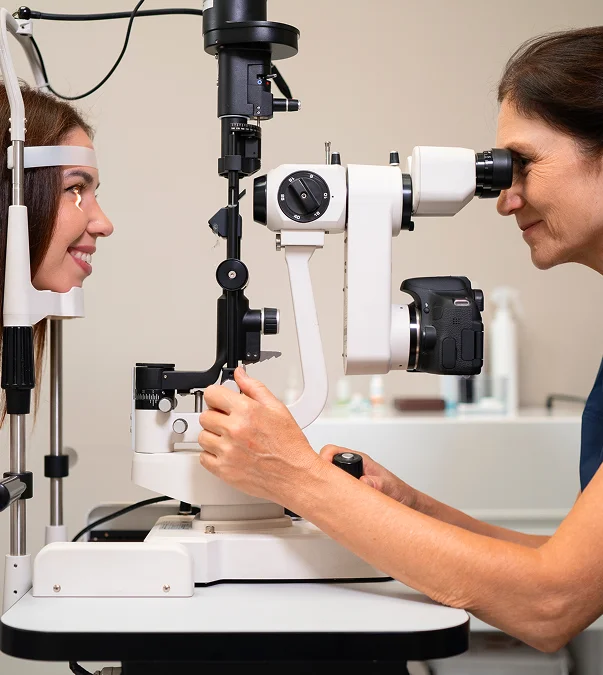
Glaucoma (noun): glaucoma is a group of eye diseases that damage the optic nerve, the cable that carries images from the eye to the brain. In most cases the damage is linked to pressure inside the eye that is too high for that nerve to tolerate, and it usually causes no pain or early warning signs. Glaucoma damage is permanent, but treatment that lowers eye pressure can slow or stop further loss, which is why early detection matters. At Laser Istanbul Clinic, glaucoma is led by Prof. Dr. Ahmet Satıcı.
Glaucoma: key facts
- What is damaged
- The optic nerve at the back of the eye
- Main driver
- Eye pressure (intraocular pressure) that is too high for that eye; the normal range is typically about 10 to 20 mmHg, but glaucoma can also occur at normal pressure
- Main types
- Open-angle (the most common), angle-closure, normal-tension, secondary and childhood (congenital) glaucoma
- Early symptoms
- Usually none. Side (peripheral) vision is lost first, slowly
- Emergency form
- Acute angle-closure: sudden severe eye pain, blurred vision, headache, nausea, rainbow-coloured halos around lights
- Reversible?
- No. Vision already lost cannot be restored, but treatment can protect the sight you still have
- How common
- An estimated 7.7 million people worldwide had distance vision impairment or blindness due to glaucoma in 2020 (WHO); around half of people with glaucoma do not know they have it (AAO, NEI)
- Who treats it
- An ophthalmologist; at Laser Istanbul Clinic, Prof. Dr. Ahmet Satıcı, with Doç. Dr. Muhammet Derda Özer when glaucoma goes together with uveitis, retinal or corneal disease
What is glaucoma?
Glaucoma is not one disease but a family of conditions that all end in the same way: gradual damage to the optic nerve. The nerve is made of a huge number of tiny fibres that send what the retina sees to the brain, and glaucoma destroys them slowly, starting at the edges of your vision. Because the brain fills in the gaps, most people do not notice anything until a large part of their side vision has gone.
The National Eye Institute (NEI) describes glaucoma as a group of eye diseases that can cause vision loss and blindness by damaging the optic nerve. The American Academy of Ophthalmology (AAO) calls it a leading cause of blindness in people over 60 and stresses that the damage is permanent, which is why glaucoma is often called "the silent thief of sight".
What causes glaucoma?
Glaucoma is usually caused by fluid that cannot drain properly from the front of the eye. The inside of the eye makes a clear fluid (aqueous humour) all the time, and it leaves through a drainage angle where the cornea and the iris meet. When that drainage is too slow or blocked, the fluid builds up and the pressure inside the eye rises. Over months or years, that pressure damages the optic nerve.
Pressure is not the whole story. Some people develop glaucoma with normal eye pressure, which is why a pressure reading alone never decides the diagnosis.
Who is at higher risk of glaucoma?
According to the AAO, you are at higher risk if you:
- have high eye pressure or thin corneas
- are over 40 (the NHS gives over 50 as the point where risk rises)
- have a family history of glaucoma: for primary open-angle glaucoma, EyeWiki (AAO) gives an odds ratio of 3 to 13 for people with an affected first-degree relative
- are of African, Caribbean, Hispanic or Asian descent; the NEI highlights African American people over 40 and people over 60, especially Hispanic or Latino people
- have diabetes, migraine, high blood pressure, short-sightedness or long-sightedness, or have had an eye injury
- have used steroid medicines for a long time
Having a risk factor does not mean you will develop glaucoma, and many people with glaucoma have none of them, so screening is advised even if you tick no boxes.
Types of glaucoma
| Type | What happens | How it usually feels |
|---|---|---|
| Open-angle glaucoma (the most common type) | The drainage angle looks open, but the fluid drains too slowly and pressure creeps up over years | No symptoms at first; side vision narrows slowly |
| Angle-closure glaucoma | The iris blocks the drainage angle, causing a sudden rise in pressure (an attack) | Sudden attack: severe pain, red eye, blurred vision, halos, nausea |
| Normal-tension glaucoma | The optic nerve is damaged although eye pressure measures within the normal range | Silent, like open-angle glaucoma |
| Secondary glaucoma | Caused by another condition or event, such as an eye injury, inflammation (uveitis) or long-term steroid use | Depends on the cause |
| Childhood (congenital) glaucoma | A rare form in babies and young children | Needs urgent specialist care |
The type matters because it decides the treatment. For example, a narrow, blocked drainage angle is treated with a different laser from the one used for open-angle glaucoma.
Glaucoma symptoms: what to look for
Open-angle glaucoma has no warning signs in the early stages. There is no pain, and your sharp central vision stays normal for a long time. As the disease advances, blind spots appear in the side vision, and eventually the field of vision narrows. This is why the AAO says that half the people with glaucoma do not know they have it.
Acute angle-closure glaucoma is different: it is an eye emergency. The signs are:
| Symptom | What it means |
|---|---|
| Severe eye pain | The pressure has risen suddenly |
| Sudden blurred vision | A warning sign of an attack |
| Rainbow-coloured halos around lights | A classic sign of an angle-closure attack |
| Red eye and headache | Inflammation and pressure |
| Nausea and vomiting | The body's response to the pain and pressure |
If you have these symptoms, do not wait for an appointment. Contact an eye emergency service or hospital eye department the same day; the AAO describes an angle-closure attack as an emergency that needs immediate care to prevent blindness.
How is glaucoma diagnosed?
Glaucoma is diagnosed with a comprehensive eye examination, because, as the AAO puts it, a single eye-pressure test by itself is not enough. The usual tests are quick and painless:
Tonometry
measures your eye pressure. The normal range is typically about 10 to 20 mmHg, but readings vary through the day.
Gonioscopy
uses a special lens to look at the drainage angle, which shows whether it is open or closed.
Optic nerve examination
, looking for damage to the nerve.
Visual field test
, which maps your side vision and finds blind spots you have not noticed.
Optic nerve imaging (OCT)
, a picture or computer measurement of the optic nerve.
Pachymetry
measures corneal thickness, because a thin cornea is a risk factor.
Because glaucoma changes slowly, doctors compare tests over time. A diagnosis rests on the whole picture: pressure, angle, optic nerve and visual field together.
At Laser Istanbul Clinic, tonometry, visual field testing and OCT are available as part of the examination in Istanbul, and your surgeon can review existing scans before you travel.
How is glaucoma treated?
Every glaucoma treatment works the same way: it lowers eye pressure so that the optic nerve is damaged more slowly or not at all. The AAO is clear that treatment aims to prevent further damage, not to restore vision already lost. There is currently no cure for glaucoma (NHS), but treatment can control it.
| Treatment | What it does | Typically used for |
|---|---|---|
| Prescription eye drops | Reduce the amount of fluid the eye makes or help it drain out; used every day | The usual first treatment for open-angle glaucoma and high eye pressure |
| Laser trabeculoplasty (e.g. SLT) | A quick laser treatment improves drainage through the eye's natural filter | Open-angle glaucoma, as a first treatment or alongside drops |
| Laser iridotomy | A tiny hole in the iris lets fluid reach the drainage angle | Angle-closure glaucoma |
| Minimally invasive glaucoma surgery (MIGS) | A micro-stent or small drainage procedure lowers pressure with less disturbance than traditional surgery | Mild to moderate glaucoma not controlled by drops, often combined with cataract surgery |
| Trabeculectomy | The surgeon creates a new drainage route under the upper eyelid, forming a small cushion (bleb) | Pressure not controlled by drops or laser |
| Drainage implant (tube shunt) | A tiny tube carries fluid to a collection area on the eye's surface | Glaucoma that is difficult to control |
| Cataract removal | Taking out the natural lens makes more room inside the eye | Some people with narrow angles |
How well each option suits you depends on the type and stage of your glaucoma and on your other eye conditions. In the UK, NICE has recommended since 2022 that 360° SLT laser is offered as the first treatment for newly diagnosed open-angle glaucoma that is not advanced. In the UK LiGHT trial, published in 2023, 69.8% of eyes treated first with SLT were still at their target pressure without drops or surgery six years later.
Treatment continues over the long term: even after laser or surgery, you need regular check-ups, because glaucoma can still progress. Eye drops work only if you use them every day, and stopping them without advice lets the pressure rise again.
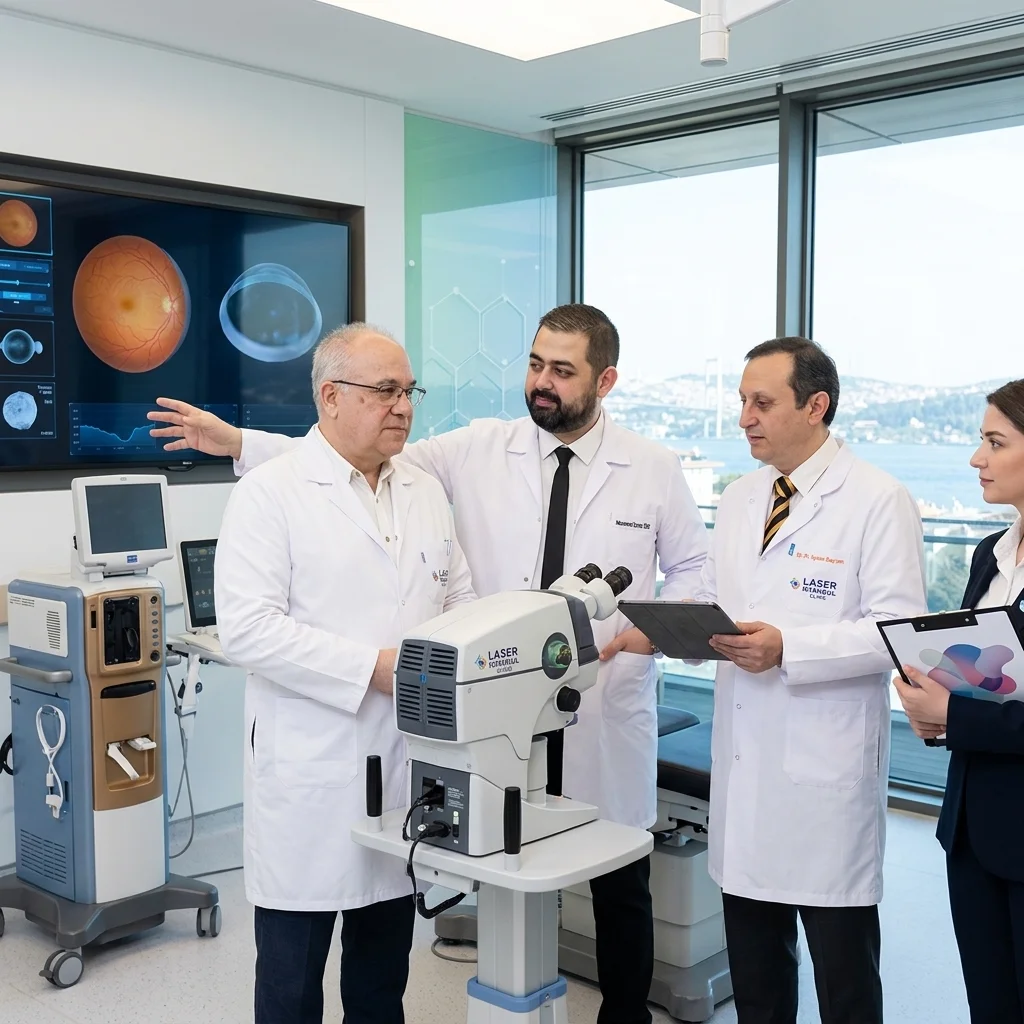
Treatment with us: glaucoma care at Laser Istanbul Clinic is led by Prof. Dr. Ahmet Satıcı, who examines you, recommends the least invasive option that can reach your target pressure and checks your recovery. Doç. Dr. Muhammet Derda Özer (Doç. means Associate Professor) also treats glaucoma that comes with uveitis, retinal disease or corneal problems. Surgery takes place in a fully equipped, Ministry of Health–licensed operating theatre in Istanbul.
Can glaucoma be cured, or sight restored?
No. Glaucoma cannot be cured and damage that has already happened cannot be reversed. Treatment lowers the pressure to protect the sight you still have, which is why it should start as early as possible.
Can you have glaucoma with normal eye pressure?
Yes. In normal-tension glaucoma, the optic nerve is damaged even though the measured pressure is within the normal range (up to 21 mmHg, according to EyeWiki). Lowering the pressure is still the approach doctors use to slow the damage.
Glaucoma and cataract: are they the same?
No. Cataract is clouding of the eye's natural lens and is treated by replacing the lens; glaucoma is damage to the optic nerve and cannot be reversed. Both are common with age, so many people have both, and for some people with narrow angles, removing the natural lens helps open the drainage angle (AAO). Glossary: Cataract →
Is the laser used after cataract surgery the same as the glaucoma laser?
No. After cataract surgery, the membrane behind the new lens can turn cloudy (posterior capsule opacification) and is cleared with a quick YAG laser treatment; this does not treat glaucoma. A YAG laser can also be used to make the small hole in the iris for laser iridotomy in angle-closure glaucoma. Glossary: Posterior capsule opacification →
When to see a doctor about glaucoma
Get emergency eye care the same day if you have:
- severe eye pain with a red eye
- sudden blurred vision, or rainbow-coloured halos around lights
- headache with nausea or vomiting alongside eye symptoms
Book a routine appointment if:
- you are around 40 or older and have never had a comprehensive eye examination (the AAO advises a complete eye exam around age 40); the NHS advises regular eye tests at least every 2 years
- you have a close relative with glaucoma, or other risk factors; the NEI advises people at higher risk to have a comprehensive dilated eye exam every 1 to 2 years
- you have been told your eye pressure is "a bit high", or your optic nerve looks unusual
- you have been diagnosed and want a second opinion on laser or surgery
If you already have a diagnosis, you can send your latest pressure readings, visual field and OCT reports for review before you decide on treatment.
Frequently asked questions
Glaucoma is a group of eye diseases that damage the optic nerve, usually because pressure inside the eye is too high for the nerve. It often causes no symptoms until a lot of side vision has been lost, and the damage cannot be reversed.
Open-angle glaucoma usually has no early signs. The first change people notice, often late, is patchy blind spots in the side vision. A sudden attack of angle-closure glaucoma is different: severe eye pain, blurred vision, halos around lights, headache and nausea.
Most often, fluid cannot drain well enough from the front of the eye, so the pressure rises and damages the optic nerve. Age, family history, certain ancestries, thin corneas, diabetes and long-term steroid use all raise the risk.
With a comprehensive eye exam: eye pressure measurement, a look at the drainage angle, an examination of the optic nerve, a visual field test, optic nerve imaging and corneal thickness measurement. No single test is enough.
There is no single best treatment. Eye drops are the most common start; laser treatment can replace or add to them; surgery is for pressure that stays too high or glaucoma that keeps worsening. Your ophthalmologist chooses based on the type and stage of your glaucoma.
No. Glaucoma cannot be cured, and lost vision cannot be recovered. Treatment can slow or stop further damage, which for many people means keeping useful sight.
Yes, if it is left untreated or found late; the WHO counts glaucoma among the main causes of distance vision impairment and blindness. With early diagnosis and regular treatment, blindness from glaucoma can often be prevented (AAO).
The AAO advises a complete eye exam around age 40, and the NHS advises regular eye tests at least every 2 years. If you have a family history or other risk factors, the NEI advises a comprehensive dilated eye exam every 1 to 2 years, or as often as your eye doctor recommends.
Sources for the facts on this page
- American Academy of Ophthalmology. What Is Glaucoma? https://www.aao.org/eye-health/diseases/what-is-glaucoma
- American Academy of Ophthalmology. Glaucoma Symptoms. https://www.aao.org/eye-health/diseases/glaucoma-symptoms
- American Academy of Ophthalmology. Glaucoma Diagnosis. https://www.aao.org/eye-health/diseases/glaucoma-diagnosis
- American Academy of Ophthalmology. Glaucoma Treatment. https://www.aao.org/eye-health/diseases/glaucoma-treatment
- National Eye Institute (NIH). Glaucoma. https://www.nei.nih.gov/learn-about-eye-health/eye-conditions-and-diseases/glaucoma
- NHS. Glaucoma. https://www.nhs.uk/conditions/glaucoma/
- World Health Organization. Blindness and vision impairment (fact sheet): glaucoma 7.7 million people with distance vision impairment or blindness (2020). https://www.who.int/news-room/fact-sheets/detail/blindness-and-visual-impairment
- EyeWiki (AAO). Primary Open-Angle Glaucoma: risk factors, odds ratio 3 to 13 for a first-degree relative, normal-tension glaucoma (IOP within normal limits, up to 21 mmHg). https://eyewiki.org/Primary_Open-Angle_Glaucoma
- NICE. Glaucoma: diagnosis and management (NG81, 2017, updated 2022): 360° SLT for newly diagnosed non-advanced open-angle glaucoma. https://www.nice.org.uk/guidance/ng81/chapter/Recommendations
- LiGHT trial, six-year results, Ophthalmology 2023 (figure reused from content/en/glaucoma.md, where it is cited in full).
Diagnosed with glaucoma or high eye pressure?
Send us your eye pressure readings, visual field and OCT reports. Prof. Dr. Ahmet Satıcı will review them and tell you which treatments may suit your eyes, with no obligation.
3 eye surgeons
Your case is reviewed by a named surgeon, not a salesperson. Reply within {{response time}}.
 Prof. Dr. Ahmet Satıcı
 Doç. Dr. Muhammet Derda Özer
 Op. Dr. Aysan Bayram