
- Home
- Knowledge centre
- Eye glossary A–Z
- Contact Lenses: Types, Materials and Which One to Choose
Contact Lenses: Types, Materials and Which One to Choose
Medically reviewed by {{surgeon}}, {{surgeon's title and specialty}}, on {{review date}}. Last updated {{date}}.
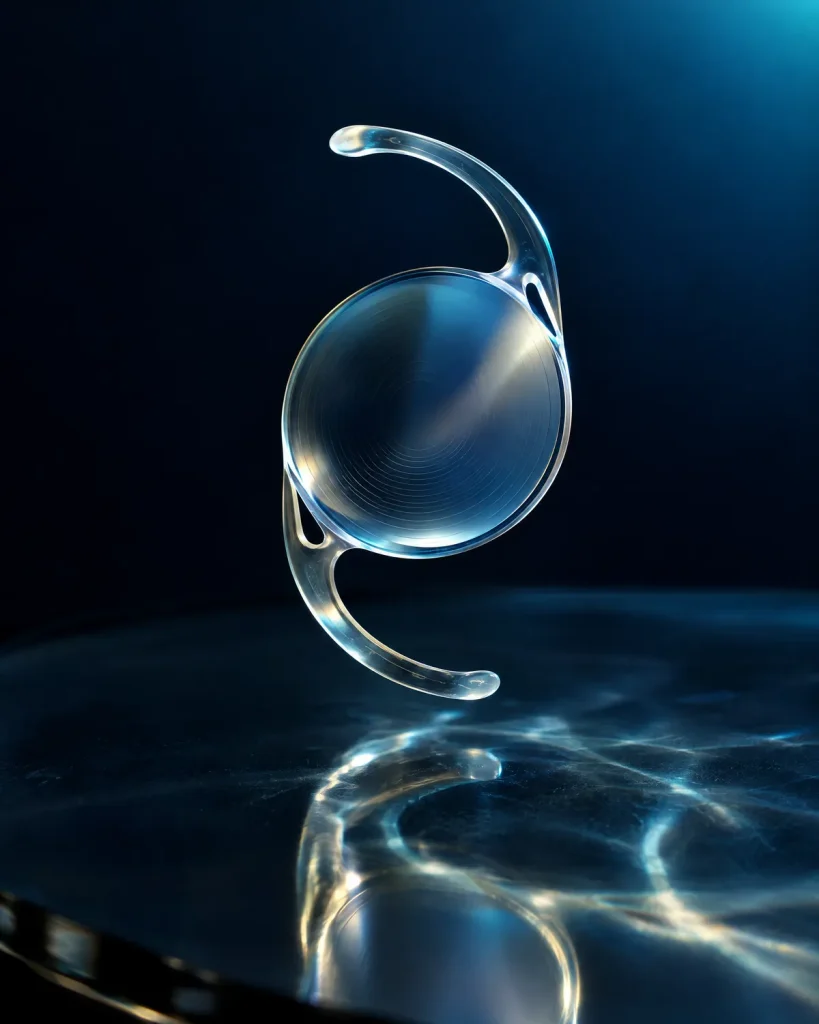
Contact lenses (noun; singular contact lens): thin, curved lenses placed directly on the front of the eye to correct short-sightedness, long-sightedness, astigmatism or reading difficulty, or to treat or protect the cornea. They are medical devices, so they need a fitting and a prescription from an eye care professional, even when they are purely decorative.
Quick answer: the main contact lens types are soft lenses (daily disposable, two-weekly, monthly or extended wear), rigid gas permeable (RGP) lenses, hybrid lenses and large scleral lenses. Special designs correct astigmatism (toric) or reading vision (multifocal, monovision), slow short-sightedness in children, or change eye colour. Your optician or eye doctor picks the type from your prescription, your corneal shape and how you live.
Contact lens types: key facts
- Two main families
- Soft lenses (flexible, most people's first choice) and rigid gas permeable lenses (firm, very sharp vision)
- Two further families
- Hybrid lenses (rigid centre, soft rim) and scleral lenses (large, resting on the white of the eye)
- Wear schedules
- Daily disposable (worn once and thrown away), two-weekly, monthly or quarterly replacement, and extended wear (overnight, from 1–6 nights up to 30 days for approved lenses)
- Special designs
- Toric (astigmatism), multifocal and monovision (presbyopia), orthokeratology (overnight reshaping), myopia-control, bandage and coloured lenses
- Who prescribes them
- An optician or optometrist, or an ophthalmologist, after a fitting; the FDA says all contact lenses, including decorative ones, need a prescription
- Biggest risk
- Eye infection and corneal ulcer, which can develop very quickly and, in uncommon cases, lead to vision loss (FDA)
- Check-ups
- Visit your eye care provider yearly, or whenever you have concerns (CDC)
What are the types of contact lenses?
Contact lenses differ in what they are made of, how long you wear them and what they are for. Each physical kind (soft, rigid, hybrid, scleral) can then come in different wear schedules and optical designs, so it helps to ask three questions: what is it made of, how long do I wear it, and what is it for?
Contact lens types by material
| Type | What it is | Strengths | Limits |
|---|---|---|---|
| Soft hydrogel lenses | Flexible, water-containing plastic (many are based on a material called HEMA) | Comfortable from the first days; inexpensive; many options | Let less oxygen through than silicone hydrogel |
| Silicone hydrogel lenses | Soft lenses with silicone added so more oxygen reaches the cornea | The most common soft lens today, with higher oxygen permeability | Still need proper cleaning and replacement on schedule |
| Rigid gas permeable (RGP, or GP) lenses | Firm, durable plastic that holds its shape yet lets oxygen through | Clearer, crisper vision than soft lenses; durable and resistant to deposits; often cheaper over time because they last longer | Need an adjustment period of several weeks (soft lenses take a few days) |
| Hybrid lenses | A rigid centre surrounded by a soft outer ring | The sharp vision of a hard lens with more of a soft lens's comfort; used for irregular corneas | Specialist fitting |
| Scleral lenses | Large gas permeable lenses that vault over the cornea and rest on the sclera (the white of the eye) | Correct vision problems from an irregularly shaped cornea; can be more comfortable than a standard rigid lens | Specialist fitting and handling |
The American Academy of Ophthalmology (AAO) notes that most people choose soft lenses because they tend to be more comfortable and come in many options. RGP lenses are the "hard contact lenses" of everyday speech, and they are particularly useful for moderate to severe astigmatism and keratoconus, where the cornea's curve is uneven.
Contact lens types by wear schedule
| Schedule | How it works | Things to know |
|---|---|---|
| Daily disposable | A fresh pair each morning; the lens is used once and discarded | The FDA defines "disposable" as used once and thrown away |
| Frequent replacement (weekly, two-weekly, monthly, quarterly) | Removed every night, cleaned, stored in fresh solution and reused until the replacement date | The FDA points out that many lenses sold as "disposable" are really frequent-replacement lenses, so follow your lens's replacement date |
| Extended wear | Approved for sleeping in, from 1–6 nights up to 30 days depending on the lens | Most are soft; a small number of rigid lenses are approved for overnight wear; the eye needs at least one night without lenses after each scheduled removal; the AAO says fewer eye doctors recommend them because of the higher infection risk |
| Orthokeratology (ortho-k) | Specially designed rigid lenses worn overnight to reshape the cornea temporarily, so you can see without lenses or glasses by day | The correction is temporary: the cornea returns to its original shape if you stop wearing them |
Contact lens types by purpose
- Toric lenses correct astigmatism. They need a design that keeps the lens from rotating on the eye (EyeWiki describes methods such as weighting the lens or thinning part of it), so they are fitted more carefully than standard lenses.
- Multifocal lenses correct reading difficulty (presbyopia) with several rings or zones of different power, so near and far vision are both available. The AAO notes they may give slightly less sharp vision than single-power lenses.
- Monovision sets one eye for distance and the other for close-up. The brain adapts, but you may lose some ability to judge distance or speed (AAO).
- Myopia-control lenses are designed for children to slow the progression of short-sightedness. The NHS says special glasses and contact lenses may help slow myopia in children, but that myopia control is not available through the NHS pending further research.
- Bandage lenses are soft lenses placed by an eye doctor to protect a healing cornea, for example after a surface scratch or after PRK laser surgery.
- Coloured and decorative lenses change or enhance eye colour; see the section below.
Soft or hard contact lenses: which type is better?
Neither is better for everyone: soft lenses win on comfort and speed of adjustment, rigid lenses on sharpness, durability and fit on an uneven cornea. The FDA sets out the trade-off plainly. Soft lenses are easier to adjust to and may take only a few days. RGP lenses are more durable, resist deposits and give a crisper image, but take several weeks to get used to.
| If you have… | Often suggested | Why |
|---|---|---|
| Mild to moderate short- or long-sightedness | Soft daily disposable or monthly lens | Comfortable and simple |
| Astigmatism | Toric soft lens, or RGP | Toric designs stay oriented; RGP lenses give a smooth optical surface (AAO: RGP suits moderate to severe astigmatism) |
| Reading difficulty after about 40 | Multifocal soft lens, or monovision | Several powers in one lens, or one eye set for near |
| Keratoconus | Soft lenses early on, then rigid, hybrid or scleral lenses as the cornea becomes more irregular | The AAO says soft lenses can help with mild symptoms and special hard lenses are needed later |
| Short-sighted child | Ask about myopia-control lenses or ortho-k | May slow progression (NHS) |
If you have keratoconus, our cornea specialist Doç. Dr. Muhammet Derda Özer (Doç. is the Turkish title for Associate Professor) treats keratoconus, including cross-linking to stop it getting worse, and can advise on your options after reviewing your corneal scans.
Coloured contact lenses: safety and how to choose the best
Coloured contact lenses are medical devices, exactly like clear ones. Many people search for the "best coloured contact lenses", but the better question is which lens is safe and well fitted for your eye.
What to check before buying coloured lenses:
Get a prescription and a fitting
The FDA says all decorative contact lenses must be prescribed by a doctor, including lenses with no vision correction.
Buy only from a seller that asks for a valid prescription
The FDA warns against street vendors, beauty supply stores, flea markets and Halloween shops, because the lenses may be contaminated or counterfeit.
Never share lenses
The FDA lists corneal scratches, infection with possible blindness, allergic reactions and vision loss among the risks of lenses bought without a prescription.
Follow the same care rules as for clear lenses
(see below).
Choose the lens type first, then the colour
Coloured lenses come as soft lenses in daily, monthly and other schedules; your fitter will say which wear schedule suits your eyes, and whether a coloured lens can also correct astigmatism or reading vision.
If you have dry eyes or a past eye infection, say so at the fitting.
Can I try contact lenses first? Trials and fittings
Trying lenses first is how most people choose a type. At a fitting, an eye care professional measures your eyes, checks the health of the front of the eye and chooses a lens. Offers advertised as a "free trial" for contact lenses usually mean trial lenses supplied during or after this fitting. Whatever the offer, the sequence should be the same: an eye examination, lens measurement, a trial pair, a check of how the lens sits and how you see, and a follow-up. A trial that skips the examination is not a safe shortcut, because the FDA states that every contact lens, decorative or not, needs a prescription.
Questions to ask at a trial:
- Is the lens soft or rigid, and what is the replacement schedule?
- Is this lens approved for sleeping in? (For most daily-wear lenses the answer is no.)
- How do I clean and store it, and which solution should I use?
- When is my follow-up, and what should I do if my eye becomes red or sore?
Contact lens problems: causes, symptoms and risks
Contact lenses are safe for most people when fitted and cared for correctly, but they sit directly on the cornea, so mistakes can lead to infection. The CDC says that failing to wear, clean and store lenses as directed increases the risk of eye infections such as microbial keratitis, and that most wearers do not follow all the hygiene advice. The CDC puts the number of contact lens wearers in the United States at 45 million and notes outbreaks of serious Acanthamoeba and fungal infections since 2006.
Common causes of trouble:
- sleeping in lenses not designed for it
- tap, bottled, ocean, lake or pool water touching lenses (the FDA advises avoiding all water contact, including tap, bottled and distilled water)
- topping up old solution instead of using fresh solution
- an old or dirty lens case (the CDC says to replace it at least every three months)
- wearing lenses past their replacement date
Symptoms that need attention (FDA list): discomfort, excess tearing or other discharge, unusual sensitivity to light, itching, burning or a gritty feeling, unusual redness, blurred vision, swelling and pain. Sensitivity to light in particular can point to inflammation of the cornea.
How are contact lens problems diagnosed? An eye doctor examines the cornea with a slit lamp (a microscope with a bright, thin beam of light) and checks how the lens fits. Corneal topography, a map of the cornea's curve, helps when the shape of the cornea is part of the problem.
How are they treated? Treatment depends on the cause: stopping lens wear, lubricating drops for dryness, antibiotic, antifungal or antiviral drops for infection, or refitting with a different lens type or schedule. A corneal ulcer is an emergency and needs urgent treatment by an eye doctor.
Healthy habits: how to wear any contact lens safely
These habits come from the CDC and the FDA and apply to every type:
- Wash your hands with soap and water and dry them completely before touching lenses.
- Use only the contact lens solution recommended for your lenses; never top off old solution.
- Rub and rinse reusable lenses, and clean the case: store it upside down with the caps off after each use.
- Replace the case at least every three months.
- Do not sleep in lenses unless your eye care provider has told you your lens is designed for it.
- Remove lenses before swimming or showering.
- Visit your eye care provider yearly, or sooner if you have concerns.
- Carry a pair of glasses with your current prescription, and pack an extra case and solution when you travel (CDC).
When to see a doctor about contact lenses
Take your lenses out and get same-day care from an eye doctor or eye emergency service if you have:
- a painful, red eye, especially with sensitivity to light
- discharge, or a white or grey spot on the front of the eye
- blurred vision that does not clear after you remove the lens
- swelling, burning or a gritty feeling that does not settle
Keep the lenses in their case so the doctor can examine them.
Book a routine appointment if:
- your lenses become uncomfortable, dry or blurry
- your prescription seems to change from year to year, which can be a sign that the cornea needs checking
- you want to try a different type, such as toric, multifocal or daily lenses
- it is time for your yearly check

Contact lenses or laser eye surgery?
Contact lenses correct your eyes only while you wear them; laser eye surgery reshapes the cornea so that many people can reduce or stop wearing glasses and lenses. Lenses are reversible and low-risk when worn correctly, but they mean daily care for years. The NHS notes that laser surgery for short-sightedness is not available on the NHS and can be expensive. It is a one-off operation with its own risks, including dry eye and night-vision symptoms.
Some people look into laser after years of lens care, dry eyes or infections. Prof. Dr. Ahmet Satıcı and Op. Dr. Aysan Bayram check whether your cornea is suitable for laser (LASIK, SMILE Pro or PRK) before any treatment. The AAO lists thin corneas, corneal disease, keratoconus, severe dry eye and an unstable prescription among the reasons someone may not be a candidate.
Can I wear contact lenses when I travel to Turkey for eye surgery?
Not right up to your examination. Lenses change the shape of the cornea, so the FDA advises stopping soft lenses 2 weeks, toric soft or rigid gas permeable lenses at least 3 weeks, and hard lenses at least 4 weeks before the initial laser evaluation, so measurements show your natural cornea. Your surgeon confirms the exact break for you ({{contact-lens break before the pre-op exam: soft / toric / rigid lenses}}). Pack glasses with your current prescription.
Frequently asked questions
Contact lenses are thin lenses worn on the front of the eye to correct vision or to treat or protect the cornea. They are medical devices that need a fitting and a prescription from an eye care professional.
Soft lenses, rigid gas permeable lenses, hybrid lenses and scleral lenses. Soft lenses come as daily disposable, two-weekly, monthly or extended-wear lenses, and special designs correct astigmatism, reading difficulty or the progression of short-sightedness.
Daily lenses are worn once and thrown away. Monthly lenses are removed every night, cleaned and stored, and replaced after about a month, so they need careful cleaning and a case replaced at least every three months.
Hard (RGP) lenses give crisper vision, last longer and suit irregular corneas such as in keratoconus, but they take weeks to get used to. Soft lenses are more comfortable immediately. Your eye doctor chooses based on your cornea and prescription.
Toric soft lenses, which are designed to stay oriented on the eye, or rigid gas permeable lenses, which give a smooth optical surface. The AAO says RGP lenses are particularly beneficial for moderate to severe astigmatism.
They are safe only when prescribed, fitted and cared for like any other lens. The FDA says all decorative lenses need a prescription and warns that lenses bought without one can cause scratches, infection, vision loss and allergic reactions.
Often yes: trial lenses are commonly given at a fitting. Make sure the trial includes an eye examination and a follow-up, and that you receive a valid prescription before you buy, because every contact lens needs one (FDA).
Only if your lens is approved for overnight wear and your eye care provider has told you to. The CDC advises avoiding sleeping in lenses unless directed, and the AAO notes that extended-wear lenses carry a higher infection risk.
In many cases, yes. The AAO says soft lenses may help in early keratoconus and that special hard lenses are needed as it advances. Scleral and hybrid lenses are also used for irregular corneas. Cross-linking can stop keratoconus getting worse.
Yes. The FDA advises stopping soft lenses 2 weeks, toric or RGP lenses at least 3 weeks, and hard lenses at least 4 weeks before the initial evaluation.
Sources for the facts on this page
- US Food and Drug Administration. Types of Contact Lenses. https://www.fda.gov/medical-devices/contact-lenses/types-contact-lenses
- US Food and Drug Administration. Decorative Contact Lenses (Halloween and more). https://www.fda.gov/medical-devices/contact-lenses/decorative-contact-lenses-halloween-and-more
- US Food and Drug Administration. Contact Lens Risks. https://www.fda.gov/medical-devices/contact-lenses/contact-lens-risks
- US Food and Drug Administration. What should I expect before, during and after LASIK surgery? https://www.fda.gov/medical-devices/lasik/what-should-i-expect-during-and-after-surgery
- American Academy of Ophthalmology. Contact Lens Types. https://www.aao.org/eye-health/glasses-contacts/contact-lens-types
- American Academy of Ophthalmology. What Is Presbyopia? (monovision and multifocal contacts). https://www.aao.org/eye-health/treatments/what-is-presbyopia
- American Academy of Ophthalmology. What Is Keratoconus? https://www.aao.org/eye-health/diseases/what-is-keratoconus
- American Academy of Ophthalmology. LASIK (candidacy). https://www.aao.org/eye-health/treatments/lasik
- CDC. About contact lens safety. https://www.cdc.gov/contact-lenses/about/index.html
- CDC. Healthy contact lens habits. https://www.cdc.gov/contact-lenses/prevention/index.html
- EyeWiki (AAO). Contact Lenses. https://eyewiki.org/Contact_Lenses
- NHS. Short-sightedness. https://www.nhs.uk/conditions/short-sightedness/
- NHS. Laser eye surgery and lens surgery. https://www.nhs.uk/tests-and-treatments/laser-eye-surgery-and-lens-surgery/
Tired of contact lenses, or told you are not suited to them?
Send us your prescription and eye scans. Our surgeons will review them and tell you which options may suit your eyes, including laser eye surgery, with no obligation.
3 eye surgeons
Your case is reviewed by a named surgeon, not a salesperson. Reply within {{response time}}.
 Prof. Dr. Ahmet Satıcı
 Doç. Dr. Muhammet Derda Özer
 Op. Dr. Aysan Bayram