
- Home
- Knowledge centre
- Eye glossary A–Z
- Blepharitis: Symptoms, Causes, Treatment and When to See a Doctor
Blepharitis: Symptoms, Causes, Treatment and When to See a Doctor
Medically reviewed by {{surgeon}}, {{surgeon's title and specialty}}, on {{review date}}. Last updated {{date}}.
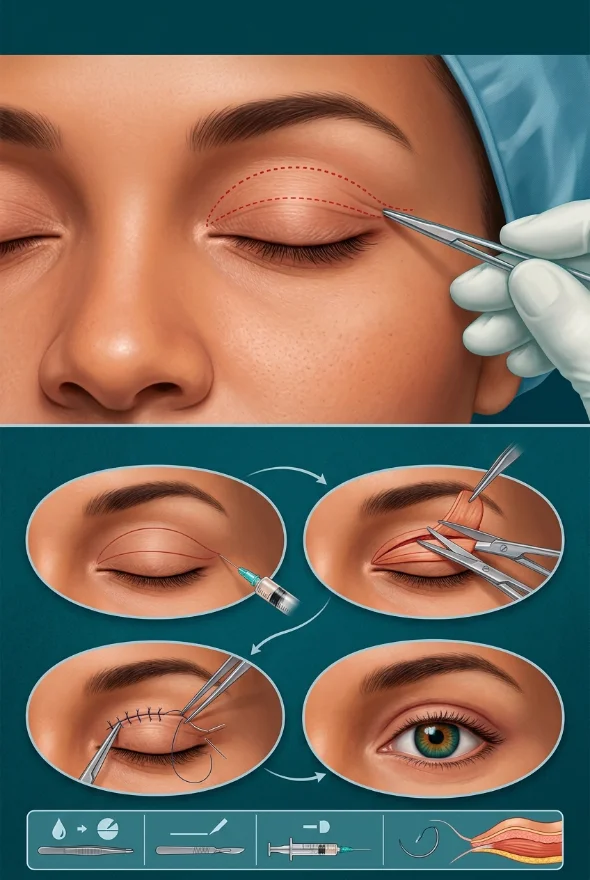
Blepharitis (noun, pronounced blef-uh-RYE-tis): blepharitis is long-term inflammation of the eyelid margins, the edges of the lids where the eyelashes grow. It makes the lids red, swollen, itchy or sore, often with crusts or flakes at the base of the lashes, and it commonly causes gritty, irritated eyes. It is usually caused by bacteria, skin conditions or blocked oil glands in the lids, it is not contagious, and it is controlled rather than cured, mainly with daily eyelid hygiene.
Blepharitis: key facts
- What it is
- Inflammation of the eyelid margins
- Main types
- Anterior (front of the lid, at the lash roots) and posterior (the oil glands behind the lash line)
- Common causes
- Bacteria on the lid skin, seborrhoeic dermatitis (a dandruff-type skin condition), meibomian gland dysfunction, Demodex mites, rosacea
- Typical symptoms
- Red, swollen, itchy or sore lids; gritty eyes; flakes or crusts on the lashes; lids stuck together on waking
- Contagious?
- No. The NHS states blepharitis cannot be spread to other people
- Cure?
- No lasting cure, but symptoms can usually be controlled. The American Academy of Ophthalmology (AAO) says there is no cure, only ongoing management
- First-line treatment
- Warm compress, gentle lid massage and daily eyelid cleaning, continued even after symptoms settle
- Specialist
- Ophthalmologist; for eyelid problems linked to blepharitis, an oculoplastic surgeon (at Laser Istanbul Clinic, Prof. Dr. Ahmet Satıcı)
What is blepharitis, and what are the types?
Blepharitis is inflammation of the eyelid margin. It is very common: in surveys of eye-care clinicians, 37% to 47% of the patients seen had signs of it, according to EyeWiki, the American Academy of Ophthalmology's clinical wiki. It tends to be a chronic condition with flare-ups, and the mean age of patients with chronic blepharitis is about 50, though the staphylococcal form appears at younger ages.
Doctors divide blepharitis by where the inflammation sits:
| Type | Where | Typical causes and signs |
|---|---|---|
| Anterior blepharitis | The front edge of the lid, where the lashes grow | Staphylococcal: bacteria on the lid skin, with redness, swelling, hard crusts (collarettes) around the lash roots and, in some people, lost or misdirected lashes. Seborrhoeic: linked to dandruff-type skin; less redness, more greasy scaling. Demodex: tiny mites living in the lash follicles, typically with cylindrical, sleeve-like collarettes at the lash base |
| Posterior blepharitis | The inner lid margin, where the meibomian glands sit | Meibomian gland dysfunction (MGD): the oil glands in the lids become blocked or produce poor-quality oil. The gland openings may look capped, dilated or plugged |
Many people have a mixture of types at the same time, and a posterior problem often coexists with dry eye.
Blepharitis symptoms: what does it look and feel like?
Blepharitis symptoms usually affect both eyes and are often worse in the morning. The most common are:
- red, swollen, itchy or sore eyelids
- a gritty, burning or "something in the eye" feeling
- flakes, scales or crusts at the roots of the eyelashes, like dandruff on the lashes
- eyelids that stick together when you wake up
- watery or dry eyes, and sometimes blurred vision that clears with blinking
- sensitivity to light
- in some cases, eyelashes that fall out or grow in the wrong direction
The NHS lists sore eyelids, itchy eyes, a gritty feeling, flakes or crusts at the lash roots and lids that stick together on waking as the main signs. Blepharitis does not usually damage sight, but it can be uncomfortable and tends to come back.
What causes blepharitis?
Blepharitis does not have one single cause. According to the NHS and the AAO, the main causes are:
- Bacteria on the skin. Bacteria normally live on the lid margin; overgrowth, especially of staphylococci, inflames the lash base.
- Skin conditions. Seborrhoeic dermatitis (dandruff and oily skin) and rosacea are both closely linked. EyeWiki reports that seborrhoeic dermatitis is found in 33% to 46% of people with blepharitis and rosacea in 20% to 42%.
- Blocked or poorly working oil glands. When the meibomian glands in the lids do not release enough healthy oil, the lid margin becomes inflamed and tears evaporate faster.
- Demodex mites. These microscopic mites live in lash follicles; EyeWiki reports them in about 30% of chronic blepharitis cases.
- Dry eye. Dry eye and blepharitis often occur together and feed each other. EyeWiki reports blepharitis signs in 75% of people with dry eye.
Allergies, eye make-up and contact lenses can aggravate symptoms, but they are not the underlying cause.
Is blepharitis contagious?
No. The NHS states that blepharitis cannot be spread to other people. The bacteria and mites involved are part of normal skin, and the problem comes from how your lids react to them, not from catching an infection. Standard hygiene is still sensible: use your own towel and flannel, and do not share eye make-up.
Is blepharitis the same as a stye or chalazion?
No, but they are related. Blepharitis is the general, long-term inflammation along the lid edge. A stye (hordeolum) is a painful, acute infection of a lash follicle or gland, and a chalazion is a firmer lump caused by a blocked meibomian gland. Having blepharitis makes both more likely, and EyeWiki lists corneal problems (infiltrates, scarring and ulceration) among the complications of severe, untreated blepharitis.
How is blepharitis diagnosed?
Blepharitis is diagnosed by examination; there is no single blood test. An ophthalmologist usually:
Asks about your symptoms,
skin conditions (rosacea, dandruff), contact lens use and eye make-up.
Examines the lids with a slit lamp
(a microscope with a bright light), looking at the lash roots for crusts and collarettes, the lid margin for redness and swelling, and the meibomian gland openings for plugging.
Checks the tear film
A tear break-up time shorter than 10 seconds suggests an unstable tear film, which is common with posterior blepharitis.
May check for Demodex
by gently removing a few lashes and examining them under a microscope.
Blepharitis that affects only one eye, does not respond to treatment, or comes with a lump or loss of lashes in one spot needs a closer look. EyeWiki notes that marked asymmetry, resistance to therapy or a repeatedly recurring chalazion in the same place can call for a biopsy to rule out a rare eyelid cancer (sebaceous carcinoma).
Blepharitis treatment: how is it treated?
Treatment is built around daily care, with medication added when needed. Because blepharitis is chronic, the aim is to keep it under control.
1. Warm compress and eyelid cleaning (the foundation)
The NHS recommends this routine, which most people can do at home:
- Soak a clean flannel in warm water and hold it on your closed eyelids for 5 to 10 minutes.
- Gently massage the lids for about 30 seconds to help release the oil from the glands.
- With cotton wool or a cotton bud and diluted baby shampoo, gently wipe along the lid edge at the base of the lashes to remove flakes and crusts.
Do this twice a day while symptoms are active. The NHS advises keeping the habit up even when you feel better, because blepharitis tends to return. The AAO describes a similar approach: a warm washcloth for at least one minute, then washing the lash base daily with baby shampoo diluted in warm water for about 15 seconds. Eyelid wipes and foams sold for lid hygiene work on the same principle.
2. Stop irritants
The NHS advises avoiding contact lenses and eye make-up, especially eyeliner and mascara, while you have symptoms.
3. Medication
If self-care is not enough, an eye doctor or GP can prescribe, according to the NHS, the AAO and EyeWiki:
| Treatment | What it does |
|---|---|
| Antibiotic ointment or drops | Reduces bacteria at the lid margin; EyeWiki describes bacitracin or erythromycin ointment for 2 to 8 weeks |
| Oral antibiotics (tetracyclines or macrolides) | Used mainly for meibomian gland dysfunction, to improve the quality of the oil |
| Steroid or steroid-antibiotic drops or ointment | Calms inflammation during a flare, normally for a short time under medical supervision |
| Lubricating drops (artificial tears) | Relieve the dry-eye symptoms that often accompany blepharitis |
| Lotilaner 0.25% eye drops | For Demodex blepharitis: one drop in each eye twice daily, about 12 hours apart, for 6 weeks. Approved by the US FDA (2023), and in two trials of 833 patients mite eradication was 68% versus 17% with placebo (Saturn-1) and 50% versus 14% (Saturn-2). The most common side effect was stinging or burning on instillation, in 10% of patients |
4. In-clinic and supplementary options
For stubborn meibomian gland dysfunction, EyeWiki lists thermal pulsation (LipiFlow) and intense pulsed light (IPL). For Demodex, EyeWiki describes 50% tea-tree-oil lid scrubs given under clinical supervision in recalcitrant cases. The AAO notes that omega-3 (fish oil) supplements may help the oil glands work better; ask your doctor before starting one. Do not put undiluted tea-tree oil on or near your eyes yourself.
Can blepharitis be cured?
Not usually. The AAO states there is no cure for blepharitis, and EyeWiki says symptoms can frequently be improved but are rarely eliminated. With regular lid care most people keep symptoms at a manageable level, with occasional flare-ups.
Blepharitis and eyelid surgery
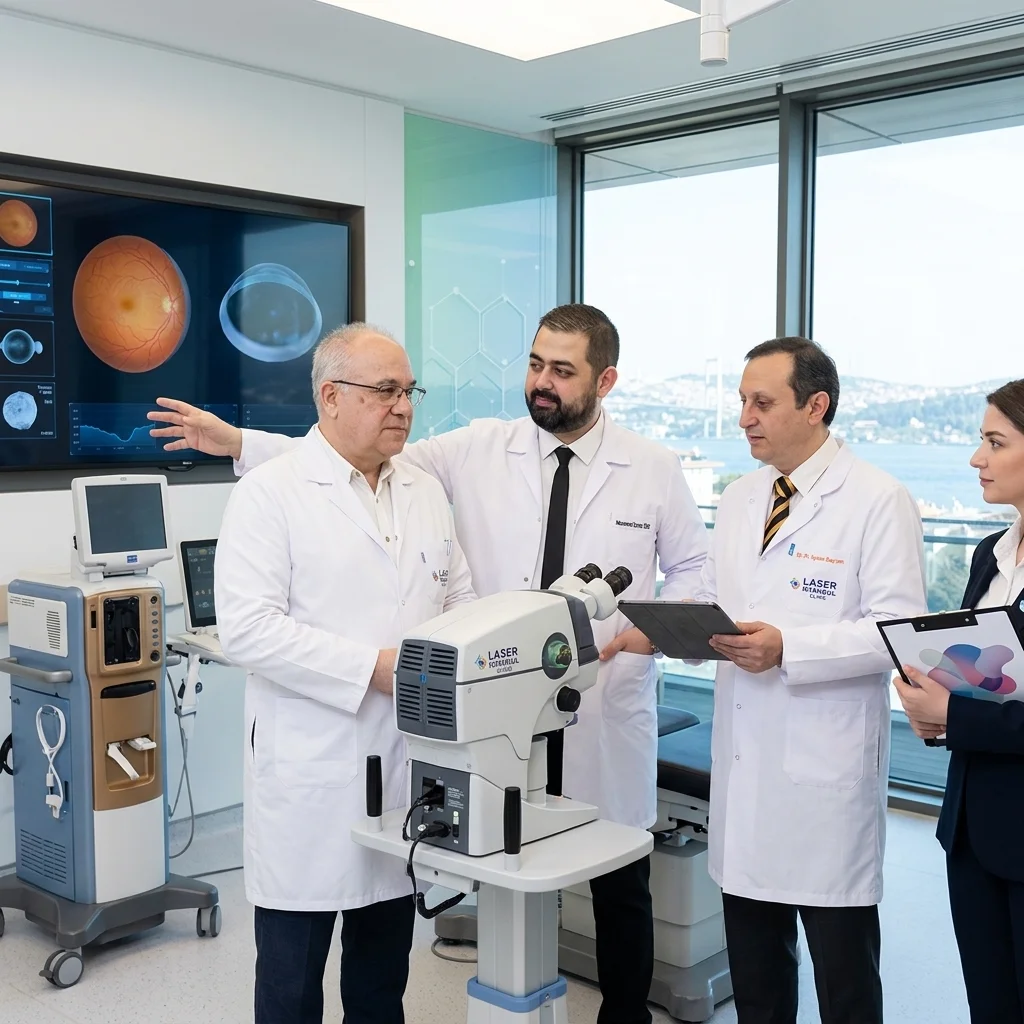
Eyelid surgery (blepharoplasty) removes excess skin and fat from drooping lids; it is not a treatment for blepharitis. The two can overlap, however, because both involve the lids and some people have both. If you are considering blepharoplasty or other eyelid surgery and also have blepharitis, dry eye or recurrent chalazia, tell your surgeon: the condition of the lid margins and the tear film is part of the assessment before surgery. Prof. Dr. Ahmet Satıcı leads eyelid and oculoplastic surgery at Laser Istanbul Clinic.
When to see a doctor about blepharitis
Book a routine appointment if:
- symptoms persist or get worse after a couple of weeks of regular lid cleaning (the NHS advises seeing a GP in this case)
- the problem keeps coming back
- you have dry, gritty eyes that do not settle with lubricating drops
- you have a recurring stye or chalazion
- you are losing eyelashes, or lashes are growing inwards
Seek same-day care from an eye doctor or eye emergency service if you have:
- severe eye pain, or a very red eye
- a sudden change or drop in vision
- marked sensitivity to light
- a rapidly swelling, hot, tender eyelid
See a doctor promptly for a one-sided problem: inflammation of one lid only, a lump that does not go away, or a lid margin that looks different from the other side should be examined.
If you already have a diagnosis and would like a second opinion on eyelid problems or surgery, you can send your reports for review.
Frequently asked questions
Blepharitis is inflammation of the eyelid margins, where the lashes grow. It causes red, swollen, itchy lids with flakes or crusts and gritty eyes. It is common and chronic but can usually be controlled with daily lid hygiene.
The main causes are bacteria on the lid skin, skin conditions such as seborrhoeic dermatitis and rosacea, blocked meibomian oil glands and Demodex mites. Dry eye often occurs alongside it.
No. The NHS states that blepharitis cannot be spread to other people. It is not an infection you can catch, so it does not require staying away from work or school.
There is no instant fix. The most effective first step is a warm compress for 5 to 10 minutes followed by gentle cleaning of the lash base, twice a day, according to the NHS. Symptoms often ease within a few weeks, and if they do not, your doctor can add antibiotic or other treatment.
Usually not permanently. The AAO states there is no cure; the goal is to control symptoms with ongoing care. Continuing lid hygiene after symptoms settle reduces flare-ups.
Anterior blepharitis affects the front edge of the lid and the lash roots (bacteria, dandruff-type skin, Demodex mites). Posterior blepharitis affects the meibomian oil glands on the inner lid margin and is called meibomian gland dysfunction.
The NHS advises avoiding contact lenses and eye make-up, particularly eyeliner and mascara, while you have symptoms. Once the lids have settled, ask your eye doctor when to restart.
No. Blepharitis is long-term inflammation along the whole lid edge. A stye is an acute, painful infection at one lash follicle. People with blepharitis are more likely to get styes and chalazia.
Usually it causes discomfort only. In severe or neglected cases EyeWiki lists corneal infiltrates, scarring and ulceration among the complications, which is why persistent or painful symptoms should be examined.
Sources for the facts on this page
- NHS. Blepharitis. https://www.nhs.uk/conditions/blepharitis/ (symptoms, causes, cleaning routine, contact lens and make-up advice, not contagious, when to see a GP)
- American Academy of Ophthalmology. What Is Blepharitis? https://www.aao.org/eye-health/diseases/what-is-blepharitis (definition, causes, warm compress and lid washing, medication, omega-3, no cure)
- EyeWiki (AAO). Blepharitis. https://eyewiki.org/Blepharitis (classification, prevalence, associations with rosacea, seborrhoeic dermatitis, Demodex and dry eye, complications, treatment, prognosis)
- EyeWiki (AAO). Blepharitis: diagnosis, treatment and biopsy indications. https://eyewiki.aao.org/Blepharitis (slit-lamp findings, tear break-up time under 10 seconds, biopsy indications)
- XDEMVY (lotilaner ophthalmic solution) 0.25% prescribing information, DailyMed (US National Library of Medicine). https://dailymed.nlm.nih.gov/dailymed/ (search XDEMVY; indication, dosing, Saturn-1 and Saturn-2 results, adverse reactions)
- Saturn-1 trial: Lotilaner Ophthalmic Solution, 0.25%, for the Treatment of Demodex Blepharitis. Cornea, 2023. PubMed: https://pubmed.ncbi.nlm.nih.gov/35965392/
Eyelid problems that will not settle?
Send us your eye report or photos of your eyelids. Prof. Dr. Ahmet Satıcı, our eyelid and oculoplastic surgeon, will review them and tell you what may suit your eyes, with no obligation.
3 eye surgeons
Your case is reviewed by a named surgeon, not a salesperson. Reply within {{response time}}.
 Prof. Dr. Ahmet Satıcı
 Doç. Dr. Muhammet Derda Özer
 Op. Dr. Aysan Bayram