
- Home
- Knowledge centre
- Treatment abroad guides
- Which Country Has the Best Cataract Surgery?
Which Country Has the Best Cataract Surgery?
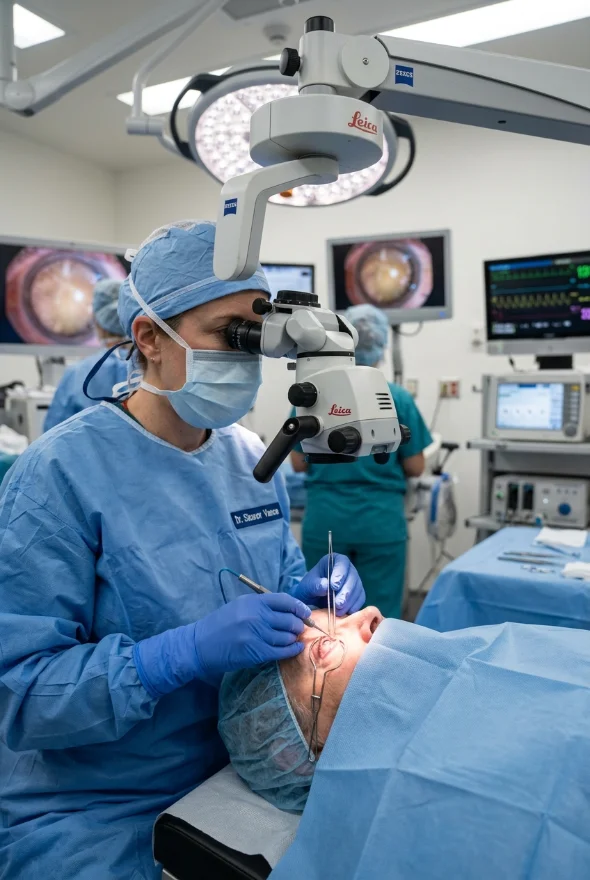
No country has the best cataract surgery. The operation is the same worldwide, and in a UK national audit 93.0% of eyes reached driving-standard vision. Your result depends on the surgeon, how your eye is measured for the lens, infection precautions and follow-up. Countries differ mainly in waiting time, lens choice and price. In Istanbul, Prof. Dr. Ahmet Satıcı, Doç. Dr. (Associate Professor) Muhammet Derda Özer and Op. Dr. Aysan Bayram operate on cataracts.
Is there one country with the best cataract surgery?
No, and be wary of anyone who names one. There is no trustworthy league table of countries for cataract surgery, mainly because nobody measures results in the same way. A 2017 study of eight eye hospitals found they reported 22 different outcome measures between them, although an international standard set recommends only 10, and none of the eight reported the patient's own view of how well they could see.
What the evidence does show is a gap in access, not in technique. The World Health Organization (WHO) estimated in February 2026 that cataract causes 94 million cases of distance vision impairment or blindness, that 1 in 2 people who need cataract surgery worldwide do not have access to it, and that the operation is among the most cost-effective in all of health care. A 2022 analysis of population surveys in 55 countries found that the share of people with a cataract who had surgery and reached a good level of vision was a median 60.5% in high-income countries and 14.8% in low-income countries.
So the real question for someone in London, Dublin, Toronto, Sydney or Munich is not "which country is best?" but "where can I get safe surgery, with the lens I want, at a wait and price I can accept?" The rest of this guide helps you answer that.
Is cataract surgery the same in every country?
Yes, in every way that matters for safety. Cataract surgery removes the clouded natural lens and replaces it with a clear artificial one. Phacoemulsification, the ultrasound technique, was introduced in 1967, and about 97% of US cataract operations have been done this way since 2000. The American Academy of Ophthalmology (AAO) calls cataract surgery one of the most common operations in the world.
The standards are shared too. The NHS describes a 20 to 45 minute operation under local anaesthetic with a return home the same day, and the European Society of Cataract and Refractive Surgeons (ESCRS) set out good practice for the whole of Europe in its guideline for cataract surgery 2024.
| The same everywhere | Where it can differ | |
|---|---|---|
| The operation | Phacoemulsification with an artificial lens, usually under local anaesthetic, usually as a day case | The surgeon's skill and experience |
| Laser-assisted ("femtosecond") cataract surgery | Current evidence shows no fewer complications or better outcomes than standard phaco (AAO); ESCRS finds comparable safety | Whether it is offered, and what it costs. It is not a sign of a better country or clinic |
| Lens choice | Monofocal lenses are the standard; toric, EDOF and multifocal lenses exist | What your health system pays for: NICE advises the NHS not to offer multifocal lenses |
| Infection prevention | An antibiotic injected into the eye at the end of surgery is recommended by ESCRS (cefuroxime, 1 mg in 0.1 mL) | Whether a clinic actually does it. In a 2025 survey of ten central and eastern European countries, seven routinely used it and one, Georgia, gave no antibiotics during surgery |
| Reporting of results | Surgeons everywhere can audit their own outcomes | What is measured and published: the 2017 study above found hospitals reporting different measures |
The infection example shows why a clinic's routine matters more than its country. The landmark ESCRS study found that a single antibiotic injection at the end of surgery cut the rate of infection inside the eye by a factor of five. It is a standard question to ask any surgeon.
What results should you expect, wherever you go?
Most people see well afterwards, and serious complications are rare. The best published benchmark comes from the Royal College of Ophthalmologists' National Ophthalmology Database, which covered 550,519 cataract operations in the UK between April 2023 and March 2024:
| Measure (UK NHS, 2023–24) | Result |
|---|---|
| Eyes reaching 6/12 or better (the UK driving standard) | 93.0% |
| ...in eyes with no other eye disease | 96.4% |
| ...in eyes with another condition (macular degeneration, diabetic eye disease, glaucoma) | 86.6% |
| Median vision after surgery | 6/6 (20/20) |
| Tear in the lens capsule during surgery (posterior capsule rupture) | 0.69%, about 1 in 145 (1.43% in 2014) |
| Infection inside the eye (endophthalmitis) within six weeks | about 0.02%, roughly 1 in 5,000 |
| Retinal detachment | about 0.05%, roughly 1 in 2,000 |
| Severe loss of vision | about 0.17% of eyes |
These are UK averages. Use them as a yardstick: ask any surgeon, at home or abroad, for their own figures on the same measures. A surgeon who audits their results can tell you; one who cannot has told you something too. Your own risk depends on your eyes and general health, and your surgeon should go through it with you in writing before you agree to anything. The NHS puts it simply: serious complications are rare.
Three later effects are worth knowing about wherever you have surgery:
- You may still need glasses for some tasks, and a small error in the lens power ("refractive surprise") is possible.
- Clouding behind the lens (posterior capsule opacification) is not the cataract coming back. In a UK study of 20,763 eyes, between 5.8% and 19.3% needed treatment within five years, depending on the lens model. A short outpatient YAG laser treatment clears it.
- Multifocal and trifocal lenses reduce your need for glasses but cause more glare and halos around lights than monofocal lenses, according to a Cochrane review.
How do countries really differ for cataract surgery?
They differ in four practical things: how long you wait, which lenses you can get, what you pay and who looks after you afterwards.
How long do you wait for cataract surgery?
| Place | Waiting time for public surgery |
|---|---|
| England (NHS) | At the end of July 2026, 620,931 people were waiting to start NHS eye (ophthalmology) treatment, and only 72.9% had waited less than 18 weeks, against an NHS standard of 92%. Cataract surgery is the largest part of this list. |
| Canada | The Fraser Institute's survey puts the median wait for ophthalmology treatment at about 31.8 weeks |
| Ireland | Cataract waits of 12 to 24 months are reported |
Waits vary a great deal between hospitals, and these figures cover all eye treatment or are national estimates, not a promise for your local hospital. Ask your GP, optometrist or hospital how long your own wait is likely to be. NICE tells doctors not to restrict cataract surgery on the basis of a vision score alone, so the decision rests on how the cataract affects your daily life and whether you want the operation.
How much does cataract surgery cost in different countries?
| Place | Typical published price, monofocal lens, per eye (2025–26) |
|---|---|
| UK, private | £2,500–3,500 |
| USA | $3,500–7,000 |
| Germany | Covered by statutory insurance; a premium lens is an extra cost |
| UAE | $2,860–3,130 |
| Istanbul (typical published) | $1,100–2,700 |
| Laser Istanbul Clinic | from {{£ cataract package price}} |
Typical ranges published by clinics and price-comparison sites, not quotes. Some published Istanbul prices bundle a hotel and airport transfers; our price covers your medical treatment (see below), and hotel and transfers are a separate charge if you want them. Comparing the middle of the published ranges, a monofocal cataract operation in Istanbul costs about 63% less than in UK private clinics and about 71% less than in the US.
Which lenses can you get?
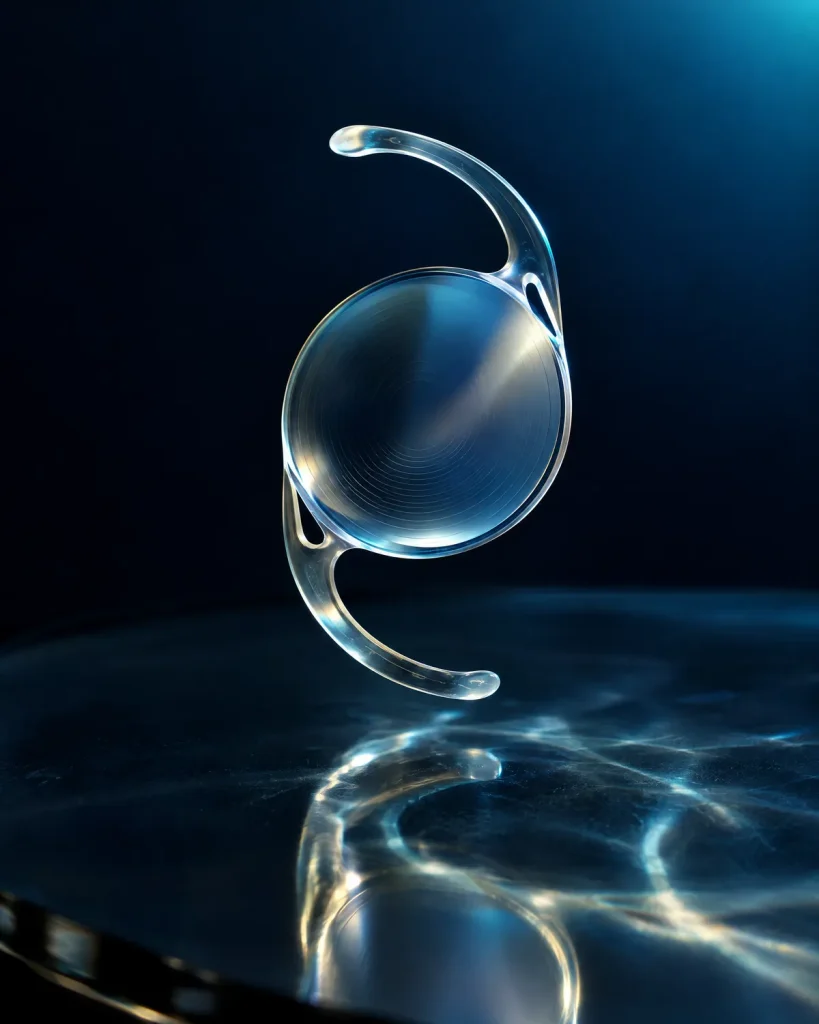
In England the NHS provides a standard monofocal lens, and NICE advises the NHS not to offer multifocal lenses for cataract surgery, so a patient who wants a multifocal or trifocal lens usually pays for the whole operation privately. Other health systems draw the line in different places. Whatever the country, the lens decision should be shared between you and your surgeon, which is what the ESCRS guideline recommends, and toric lenses should be considered when the cornea has astigmatism of 1.0 dioptre or more.
What matters more than the country: 7 checks before you book
The country is a poor guide to quality. These seven checks work anywhere:
- Who will operate on you, and how many cataracts do they do?
Ask for the surgeon's training, years in practice, published research and cataract experience. Make sure the surgeon you meet is the surgeon who operates.
- How will your eye be measured for the lens?
NICE recommends optical biometry to calculate lens power. Ask what is measured and how, because the lens power has to match your eye.
- Which lens, model and power will you receive?
Get it in writing, with the trade-offs explained: less need for glasses but more halos with multifocal designs.
- What is done to prevent infection?
Ask whether an antibiotic is given inside the eye at the end of surgery, as the ESCRS guideline recommends.
- Is your eye straightforward?
Other conditions such as macular degeneration, diabetic eye disease, glaucoma, corneal disease or past inflammation limit the result (86.6% against 96.4% good vision in the UK audit) and need a surgeon with matching experience. NICE also asks surgeons to discuss the higher risk of retinal detachment with very short-sighted patients.
- What exactly is included, and what is extra?
Examination and scans, the operation, medication and follow-up checks should be listed. Flights are never part of a surgical price, and hotel and transfers vary.
- Who looks after you at home, and for how long?
Eye drops go on for about four weeks (NHS), and clouding behind the lens can appear months or years later. Ask who you can contact, how follow-up works, and what the clinic's policy is for later treatment such as YAG laser.
If you are considering both eyes in one trip, ask about it directly. NICE advises surgeons to consider same-day surgery on both eyes for low-risk patients, and the 2024 ESCRS guideline calls it effective and safe for suitable people, but the lens for the second eye cannot be adjusted to the first result, and a rare complication could affect both eyes. Whether same-day surgery is right for you is your surgeon's decision.
When is cataract surgery abroad worth considering?
It is worth considering if you face a long wait, want a lens your health system does not offer, or have been quoted a private price you cannot justify. It is not the right choice for everyone. If your local wait is short and a standard lens suits you, NHS or public surgery may well be the best option, and you should also be comfortable travelling and having a plan for any problem once you are home.
Most patients plan 5–7 days in Istanbul for cataract surgery, including the examination, the operation and check-ups, and most can fly about 3–7 days after surgery once their surgeon has examined the eye. If you wear contact lenses, you may need to leave them out for a few days before your examination, because they change the shape of the cornea (NHS); your surgeon confirms how long.
A lower price does not by itself mean poorer technique, but it is the reason to check the extras and the follow-up with care.
What does cataract surgery in Istanbul involve?
Cataract surgery in Istanbul with Laser Istanbul Clinic is performed by one of three named surgeons, whom you know before you book. Surgery takes place in a fully equipped, Ministry of Health–licensed operating theatre in Istanbul, and the same surgeon examines you, operates on you and checks your recovery.
- Prof. Dr. Ahmet Satıcı has been an ophthalmology specialist since 1992 and was Professor and Head of the Department of Ophthalmology at Harran University. His focus is cataract surgery with premium lenses (trifocal, EDOF, toric), and he has 21 eye research papers listed on PubMed.
- Doç. Dr. Muhammet Derda Özer, an Associate Professor of Ophthalmology since 2021, has 27 papers on PubMed and treats cataract in eyes with corneal disease, keratoconus, retinal problems or past inflammation. He speaks Turkish and English.
- Op. Dr. Aysan Bayram has been an ophthalmology specialist since 1999 and focuses on cataract surgery and retinal disease. She speaks English, and patients who prefer a female surgeon can choose her.
What the price includes: your pre-operative examination and scans (including lens-power measurement), the operation by your named surgeon, medication, follow-up checks in Istanbul, a personal interpreter, a coordinator and remote follow-up after you go home. Not included: flights, hotel and airport transfers. Hotel and transfers are a separate charge, and we arrange them if you ask. Your surgeon confirms the price in writing after your free assessment, and before you book flights.
Frequently asked questions
No country can be named as best: there is no reliable ranking, and the operation and the standards behind it are shared worldwide. In the UK audit, 93.0% of eyes reached 6/12 or better. What changes your own result is your surgeon, the lens measurements, infection precautions and follow-up, so compare those rather than flags.
We found no published source that ranks countries on the same measure. The best national benchmark we found is the UK's: 93.0% of eyes reached 6/12 or better, and 96.4% where there was no other eye disease. Ask any surgeon for their own results on the same measures.
We know of no published comparison showing that the country alone makes the operation safer. UK data show serious complications are rare, with infection inside the eye in about 1 in 5,000 operations. Safety depends on the surgeon, the operating routine and what happens if something goes wrong, so ask the questions in the seven checks above wherever you go.
It can be, if you choose carefully. Check the surgeon's training and experience, the lens and measurements, the infection routine and exactly how follow-up works once you are home. We give you the surgeon, lens and follow-up plan in writing before you book.
Often, yes. Typical published prices for monofocal cataract surgery are about £2,500–3,500 per eye in UK private clinics and $3,500–7,000 in the US, against $1,100–2,700 in Istanbul. Check what is included. With Laser Istanbul Clinic, the price starts from {{£ cataract package price}} per eye, and hotel, transfers and flights are extra.
Yes. NICE advises the NHS not to offer multifocal lenses, so UK patients who want one usually pay privately, at home or abroad. Premium lenses (toric, EDOF or trifocal) reduce your need for glasses but multifocal designs can cause more glare and halos than a standard lens, so your surgeon should explain the trade-off first.
It depends on where you live. At the end of July 2026, 620,931 people in England were waiting to start NHS eye treatment, and 72.9% had waited less than 18 weeks, against a standard of 92%. Cataract surgery is the largest part of this list. Ask your GP or hospital for your own estimated wait.
Most patients plan 5–7 days, including the examination, surgery and check-ups. Your surgeon examines the eye before you fly, and most patients fly about 3–7 days after surgery. If both eyes are treated in one trip, your surgeon tells you how many nights to allow.
Your surgeon and coordinator follow your recovery remotely by video at agreed intervals, and you receive your full surgical report with the exact lens model and power. Tell your surgeon at once about pain that is getting worse, increasing redness or a drop in vision, and use your nearest eye emergency service if you cannot reach them quickly. Our policy on re-treatment: {{complication and re-treatment policy}}.
Thinking about cataract surgery abroad?
Send your prescription or latest eye report and a surgeon at Laser Istanbul Clinic will tell you whether surgery is likely to help, which lens options fit and what it costs, in writing, before you book anything. Cataract surgery is performed by Prof. Dr. Ahmet Satıcı, Doç. Dr. Muhammet Derda Özer and Op. Dr. Aysan Bayram.
Sources for the facts on this page
- Opened and checked on 6–7 Oct 2026.
- World Health Organization. Blindness and vision impairment (fact sheet, updated 10 February 2026): 94 million cases of vision impairment from cataract; 1 in 2 people who need cataract surgery lack access; among the most cost-effective health-care interventions. https://www.who.int/news-room/fact-sheets/detail/blindness-and-visual-impairment
- McCormick I, Butcher R, Evans JR, et al. Effective cataract surgical coverage in adults aged 50 years and older: estimates from population-based surveys in 55 countries. Lancet Global Health 2022;10. (148 surveys, 55 countries, 2003–2021; median 60.5% in high-income and 14.8% in low-income countries.) https://pmc.ncbi.nlm.nih.gov/articles/PMC7618287/
- Michelotti M, de Korne DF, Weizer JS, et al. Mapping standard ophthalmic outcome sets to metrics currently reported in eight eye hospitals. BMC Ophthalmology 2017;17:269. (22 different metrics against 10 recommended; no patient-reported visual function.) https://pmc.ncbi.nlm.nih.gov/articles/PMC5747118/
- The Royal College of Ophthalmologists, National Ophthalmology Database. Eighth Annual Report of the National Cataract Audit (2025; operations 1 April 2023 – 31 March 2024; 550,519 eligible operations): 93.0% 6/12 or better, 96.4% without other eye disease, 86.6% with; posterior capsule rupture 0.69% (1.43% in 2014); endophthalmitis about 0.02%; retinal detachment about 0.05%; severe vision loss 0.17%. https://nodaudit.org.uk/sites/default/files/2025-07/NOD%20Cataract%20Audit%208th%20Annual%20Report%202025%20Final.pdf
- Wanten JC, Till V, Findl O, et al. ESCRS guideline for cataract surgery 2024: executive summary. J Cataract Refract Surg 2026;52(9):e1–e13. (Intracameral cefuroxime 1 mg in 0.1 mL; shared decision on lens target; toric lenses for astigmatism of 1.0 D or more; femtosecond laser and conventional phaco comparable in safety; immediate sequential bilateral surgery effective and safe in suitable patients.) https://pmc.ncbi.nlm.nih.gov/articles/PMC13528843/
- Toro MD, Popa-Cherecheanu A, Majtanova N, et al. Country-Specific Approaches to Preventing Infections in Cataract Surgery. Antibiotics (Basel) 2025;14(12):1192. (Ten countries; seven routinely use intracameral cefuroxime, Georgia gives no intraoperative antibiotics; ESCRS study showed a five-fold reduction in endophthalmitis.) https://pmc.ncbi.nlm.nih.gov/articles/PMC12729967/
- NHS. Cataract surgery. (20–45 minutes under local anaesthetic, home the same day, drops for about 4 weeks, contact lenses out for a few days, serious complications rare, prescription may change.) https://www.nhs.uk/conditions/cataract-surgery/
- NICE guideline NG77. Cataracts in adults: management (published 26 October 2017; recommendations checked 6 Oct 2026): do not restrict access on visual acuity alone; optical biometry; do not offer multifocal lenses on the NHS; consider same-day bilateral surgery for low-risk patients; discuss retinal detachment risk with high myopia. https://www.nice.org.uk/guidance/ng77/chapter/Recommendations
- American Academy of Ophthalmology. Traditional cataract surgery vs. laser-assisted cataract surgery (15 June 2026): one of the most common surgeries in the world; laser-assisted surgery shows no fewer complications or better outcomes. https://www.aao.org/eye-health/tips-prevention/traditional-vs-laser-assisted-cataract-surgery
- Awad AA, Alkorbi HA, Abu Serhan H. Charles Kelman: The Father of Phacoemulsification. Cureus 2024;16(6):e61727 (introduced 1967; about 97% of US cataract operations by phaco since 2000). https://pmc.ncbi.nlm.nih.gov/articles/PMC11225641/
- de Silva SR, Evans JR, Kirthi V, Ziaei M, Leyland M. Multifocal versus monofocal intraocular lenses after cataract extraction. Cochrane Database of Systematic Reviews 2016, CD003169.pub4: less spectacle dependence, more glare and haloes. https://pmc.ncbi.nlm.nih.gov/articles/PMC6463930/
- Ursell PG, Dhariwal M, O'Boyle D, Khan J, Venerus A. 5 year incidence of YAG capsulotomy and PCO after cataract surgery with single-piece monofocal intraocular lenses: a real-world evidence study of 20,763 eyes. Eye 2020;34(5):960–968. https://pmc.ncbi.nlm.nih.gov/articles/PMC7182577/
- NHS England. Statistical Press Notice: NHS referral to treatment (RTT) waiting times data, July 2026 (published 10 Sep 2026), Table 1, Ophthalmology: 620,931 incomplete pathways; 72.9% within 18 weeks; 92% standard. https://www.england.nhs.uk/statistics/wp-content/uploads/sites/2/2026/09/Jul26-RTT-statistical-press-notice-PDF-578K-97ylx5.pdf
- Project research (not external pages): published price ranges 2025–26 (UK private £2,500–3,500, USA $3,500–7,000, Germany statutory insurance, UAE $2,860–3,130, Istanbul $1,100–2,700 per eye; savings about 63% vs UK and 71% vs US) in content/_briefs/research_extract.md and content/en/home.md; Canada median ophthalmology wait 31.8 weeks (Fraser Institute) and Ireland 12–24-month cataract waits in content/_briefs/research_extract.md; surgeon facts in reports/doctors-hospitals-research.md and content/en/cataract.md; stay length (5–7 days) and flying about 3–7 days after surgery in content/en/home.md.