
- Home
- Knowledge centre
- Retina & glaucoma guides
- Symptoms of High Eye Pressure: Glaucoma Causes and When Surgery Is Needed
Symptoms of High Eye Pressure: Glaucoma Causes and When Surgery Is Needed
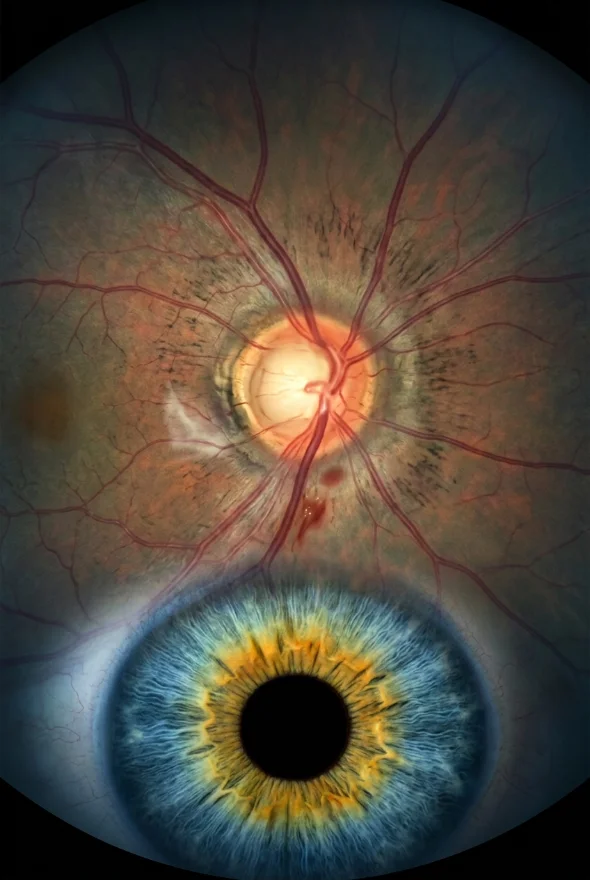
The symptoms of high eye pressure are usually none: raised pressure inside the eye normally causes no pain or blurring until the optic nerve is already damaged, which is why glaucoma is found at eye tests, not by feel. The exception is an acute angle-closure attack, with severe eye pain, a red eye, halos, blurred vision and nausea, which is an emergency. Surgery is considered when drops and laser cannot keep the pressure low enough. Glaucoma at Laser Istanbul Clinic is led by Prof. Dr. Ahmet Satıcı.
What are the symptoms of high eye pressure?
For most people, high eye pressure has no symptoms at all. The American Academy of Ophthalmology (AAO) says that open-angle glaucoma, the most common type, has no warning signs or obvious symptoms in the early stages, and that ocular hypertension (high eye pressure before any nerve damage) usually has no signs or symptoms either. The NHS describes chronic glaucoma in the same way: it develops slowly over years and is usually found during a routine eye test. That is why the AAO calls glaucoma the "silent thief of sight", and why it reports that about half of the people with glaucoma do not know they have it.
What you can notice depends on the type of glaucoma and how far it has gone:
| Situation | What you may notice | How fast | What to do |
|---|---|---|---|
| High pressure or early open-angle glaucoma | Nothing | Years | Regular eye tests: the NHS advises one at least every 2 years, and more often if you are at higher risk |
| Advanced open-angle glaucoma | Blind spots and loss of side (peripheral) vision, sometimes blurred vision | Gradual | See an eye doctor promptly; lost vision cannot be restored |
| Acute angle-closure attack | Severe eye pain, headache, red eye, sudden blurred vision, rainbow-coloured halos around lights, nausea or vomiting | Hours | Emergency: go to eye casualty or an emergency department now |
| Warning episodes before a full attack | Blurred vision, halos, mild headaches or eye pain that come and go | Episodes | Get an eye examination soon; do not wait for a full attack |
Eye pressure signs: what can you actually feel?
Very little. You cannot sense eye pressure, and the AAO notes that diseases of the eye are one of the least common causes of headaches. A pressure feeling, ache or heaviness behind one eye is far more often caused by sinus congestion, tension-type headache, migraine or eye strain than by glaucoma. Do not assume that feeling normal means a normal pressure, and do not assume an aching eye means high pressure. The only way to know is to have your pressure measured, together with a look at the optic nerve.
Can high eye pressure cause blurry vision?
Sometimes, but rarely in the early stages. In slow open-angle glaucoma, blurred vision generally appears late, when the optic nerve is already damaged. In an acute angle-closure attack, pressure rises quickly and vision blurs suddenly, usually with pain, halos and nausea. If blur comes with a red, painful eye, treat it as an emergency. If your vision is simply blurry, there are many other causes, from needing new glasses to cataract, and an eye test finds them.
Not glaucoma: flashes, floaters and a curtain across your vision
A dark curtain or shadow in your vision, new floaters or flashes of light point to a different problem, a possible retinal detachment, which the NHS says needs urgent help. Retina surgery: vitrectomy & retinal detachment →
What is eye pressure, and what is considered dangerously high eye pressure?
Eye pressure, or intraocular pressure (IOP), is the pressure of the fluid inside the front of your eye. The eye makes a clear fluid (aqueous humour) all the time, and it drains out through a sieve-like channel at the edge of the cornea. When production and drainage balance, the pressure stays steady. It is measured in millimetres of mercury (mmHg), the same unit as blood pressure, although the two are separate measurements.
The usual range in the population is about 10 to 21 mmHg, with an average of about 15 mmHg in healthy adults, according to a 2023 study in Cureus; the AAO gives about 10 to 20 mmHg. Pressure is not a fixed number:
- it normally changes by 3 to 5 mmHg over a day and is usually highest in the morning
- in people with glaucoma it can swing by 10 mmHg or more over 24 hours, and two-thirds of glaucoma patients have their highest readings outside clinic hours (EyeWiki, AAO)
- the common Goldmann tonometer assumes an average corneal thickness of about 520 microns, so a thicker or thinner cornea can make a reading look higher or lower than the true pressure
What is high eye pressure, and how high is dangerous?
High eye pressure means pressure above the normal range because fluid is not draining well. There is no single number that is "dangerous" for everyone. Some people with pressure in the normal range still develop glaucoma damage (normal-tension glaucoma), while many people with higher pressure never do. In the UK, the NICE guideline advises referral to an eye specialist when pressure is 24 mmHg or more on Goldmann-type tonometry. Whether you need treatment depends on your optic nerve, visual field, corneal thickness, age and family history, not on one reading.
In the large Ocular Hypertension Treatment Study, 9.5% of people with high pressure who were only observed developed glaucoma within five years, compared with 4.4% of those treated with drops. Treatment cut the risk by more than half, yet most people with high pressure did not develop glaucoma. Those who did were older, had higher pressure, more hollowed-out optic discs and thinner corneas.
The truly dangerous situation is not a number but a pattern: sudden high pressure with pain, a red eye, halos and nausea, which can damage sight permanently if it is not treated quickly.
What causes high eye pressure, and who gets glaucoma?
Glaucoma is a group of eye diseases that damage the optic nerve, the cable that carries images from the eye to the brain. In most cases the damage is linked to fluid building up in the front of the eye because the drainage system does not work as it should (NHS, AAO). High eye pressure is therefore a drainage problem, not something caused by stress or by what you did.
What causes high eye pressure?
| Cause | How it raises pressure |
|---|---|
| Slow blockage of the drainage channel (open-angle glaucoma) | Fluid drains too slowly over years; the most common type |
| Narrow or closed drainage angle (angle-closure glaucoma) | The iris blocks the drainage angle; pressure can rise suddenly, which is an emergency |
| Corticosteroid medicines | Steroids can clog the drainage meshwork. With eye drops about 3–4% of people respond, after roughly 3–6 weeks; the risk is higher with injections in or around the eye, and long-term skin, inhaled and oral steroids are also linked to a rise (EyeWiki) |
| Eye injury or earlier eye surgery | Listed by the AAO as a risk factor for high pressure |
| Pigment dispersion and pseudoexfoliation syndromes | Listed by the AAO as risk factors for high pressure |
Who is at higher risk?
- Age. The NHS says glaucoma is most common in adults over 50; the AAO lists over 40 as a higher-risk age.
- Family history. First-degree relatives of a person with glaucoma have 3 to 13 times higher odds (EyeWiki).
- Ethnic background. Higher risk for people of Black African, Caribbean or Asian heritage (NHS) and African, Hispanic or Asian heritage (AAO); in people of African ancestry the disease tends to begin earlier and progress faster (EyeWiki).
- Eye features and health. Short- or long-sightedness, thin corneas, high eye pressure and diabetes (NHS, AAO).
The World Health Organization (WHO) estimated that 7.7 million people worldwide had vision impairment or blindness due to glaucoma in 2020. Damage already done is permanent: the AAO says glaucoma damage cannot be reversed, though treatment can slow or stop it from getting worse.
How is glaucoma found?
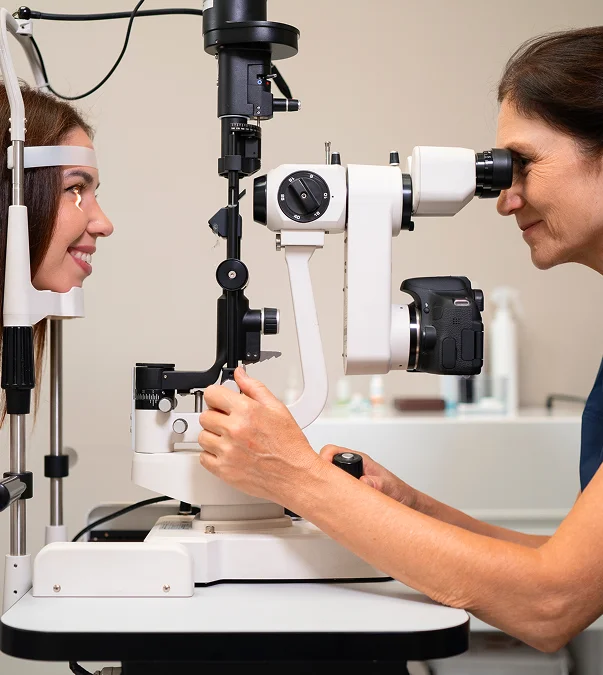
Because there are no symptoms, glaucoma is diagnosed with tests. The National Eye Institute (NEI) describes the standard check as a dilated eye exam with visual field testing; your eye doctor also measures your pressure (tonometry) and the thickness of your cornea. Retina & glaucoma guides →
You are more likely to have glaucoma picked up early if you:
- have an eye test at least every 2 years (NHS), and more often if you have a family history or another risk factor
- tell your optician about relatives with glaucoma
- mention long-term steroid treatment, including inhalers, creams and eye drops
When is glaucoma surgery needed?
Glaucoma surgery is needed when drops and laser cannot lower the pressure enough to stop the optic nerve damage. The NEI says surgery is reserved for cases where medicines and laser prove ineffective. Every glaucoma treatment, from drops to surgery, works the same way: it lowers eye pressure by helping fluid drain or by reducing how much fluid the eye makes. Surgery does not restore sight that is already lost, and it is not a cure.
According to EyeWiki (AAO), surgery is considered when:
| Reason | What it means |
|---|---|
| Drops do not reach the target pressure | Pressure stays too high on medical treatment |
| The optic nerve or visual field keeps getting worse | Damage progresses even though pressure numbers look acceptable |
| You cannot tolerate or manage drops | Side effects, cost or difficulty using them every day |
| Glaucoma is moderate to advanced or progressing quickly | A low target pressure is needed to protect the remaining sight |
Narrow drainage angles are a separate case: the AAO says a laser opening in the iris (iridotomy) or lens (cataract) surgery can open the angle and ease the pressure.
Surgery is usually a later step, not the first. The NHS describes three approaches, drops, laser and surgery, and says the choice depends on how your sight is affected and the type of glaucoma you have.
What do the glaucoma operations do?
| Option | What it does | Good to know |
|---|---|---|
| Eye drops | Reduce fluid production or help drainage; used every day | Side effects include stinging, redness and changes in pulse (AAO) |
| SLT laser (trabeculoplasty) | Laser improves drainage in open-angle glaucoma | Typically lowers pressure by 20–30% and can be repeated (EyeWiki) |
| Laser iridotomy | A tiny hole in the iris lets fluid flow in angle-closure glaucoma | Used for narrow or closed angles (AAO) |
| MIGS (minimally invasive glaucoma surgery) | Tiny implants or cuts improve drainage through a small incision, often combined with cataract surgery | Suits mild to moderate disease; often not enough when a very low pressure is needed (EyeWiki) |
| Trabeculectomy | A new drainage pocket (bleb) under the eyelid | Pressure falls by at least a third in 66% of patients at one year; about one in three still needs drops; infection inside the eye affects about 1–2 in 100 (Dudley Group NHS leaflet) |
| Drainage tube (shunt) | A tiny tube carries fluid to a reservoir under the conjunctiva | Used in more advanced or harder-to-treat cases (AAO describes the device) |
Which operation suits you depends on your type of glaucoma, how advanced it is, your target pressure and whether you also have a cataract. Trabeculectomy vs trabeculotomy vs MIGS: which glaucoma operation? → and Trabeculectomy recovery and success rates →
Risks, stated plainly. Every operation carries risks, including infection, bleeding, scarring that makes the new drainage stop working, pressure problems, cataract and, rarely, loss of vision. The Dudley Group leaflet reports that about 1 in 10 patients lose one line on the eye chart after trabeculectomy. Many people still need drops after surgery, and you need pressure checks for life.
When is it an emergency, and what should you do?
Go to an eye casualty or emergency department the same day if you have severe eye pain, a red eye, blurred vision, halos around lights, headache, nausea or vomiting. The AAO and NEI treat these as signs of acute angle-closure glaucoma, a medical emergency in which sight can be lost permanently if it is not treated quickly. Do not wait for an appointment, and do not plan to travel for treatment.
For everything else, do not leave glaucoma unchecked:
Book a full eye test
if you are over 40, have a relative with glaucoma, or have not been examined for 2 years or more.
Use drops exactly as prescribed
if you already have a diagnosis, because missed doses are an easy way for pressure to stay high.
Ask about the target pressure
your doctor has set and what happens if you do not reach it.
Ask for a second opinion
if you are told you need surgery and want to compare options.
Frequently asked questions
Usually there are none. High eye pressure and early open-angle glaucoma cause no pain and no change in vision, which is why they are found at routine eye tests. The exception is an acute angle-closure attack, which causes severe eye pain, a red eye, halos, blurred vision, headache and nausea and needs emergency care.
The signs are found by an eye doctor, not felt by you: a measured pressure above the usual range of roughly 10 to 21 mmHg, a changed optic nerve and, later, gaps in the visual field. Late symptoms include loss of side vision and blind spots.
Fluid in the front of the eye does not drain well, so pressure builds. Reasons include a slowly clogged or a narrow drainage angle, steroid medicines, eye injury or surgery, and pigment dispersion or pseudoexfoliation. Age, family history, ethnicity, short or long sight, thin corneas and diabetes raise the risk.
No single number is dangerous for everyone. In the UK, NICE advises referral to an eye specialist at 24 mmHg or more on Goldmann-type tonometry. The real emergency is a sudden rise with pain, a red eye, halos and nausea, which needs treatment the same day.
Rarely in the early stages, because slow high pressure is silent. Blurred vision can come with advanced glaucoma or with an acute angle-closure attack, usually alongside pain, redness and halos. Sudden blur with a painful eye is an emergency.
No. High pressure with a healthy optic nerve and normal visual field is called ocular hypertension. It raises the risk of glaucoma, but most people with it do not develop glaucoma, so doctors decide on treatment from your whole eye examination.
No. The NHS says there is no cure for glaucoma, and the AAO says the damage is permanent. Treatment, including surgery, aims to slow or stop further loss.
When drops and laser cannot lower your pressure enough, your nerve damage keeps progressing, you cannot use drops, or your glaucoma is advanced or fast-moving. Your surgeon sets a target pressure and chooses the least invasive operation that can reach it.
Worried about eye pressure, or told you may need glaucoma surgery?
Send us your latest eye pressure readings, visual field results and scans and our surgeons will tell you honestly whether surgery is needed. Glaucoma care at Laser Istanbul Clinic is led by Prof. Dr. Ahmet Satıcı; for glaucoma linked to uveitis, retinal disease or the cornea, Doç. Dr. Muhammet Derda Özer (Doç. means Associate Professor) takes part. Any surgery takes place in a fully equipped, Ministry of Health–licensed operating theatre in Istanbul.
Sources for the facts on this page
- NHS. Glaucoma. https://www.nhs.uk/conditions/glaucoma/
- NHS. Glaucoma: treatment. https://www.nhs.uk/conditions/glaucoma/treatments/
- NHS. Retinal detachment. https://www.nhs.uk/conditions/retinal-detachment/
- American Academy of Ophthalmology (AAO). What Is Glaucoma? https://www.aao.org/eye-health/diseases/what-is-glaucoma
- AAO. Glaucoma Symptoms and Signs. https://www.aao.org/eye-health/diseases/glaucoma-symptoms
- AAO. What Is Ocular Hypertension? https://www.aao.org/eye-health/diseases/what-is-ocular-hypertension
- AAO. Glaucoma Treatment. https://www.aao.org/eye-health/treatments/glaucoma-treatment
- AAO. Headaches and Eye Problems. https://www.aao.org/eye-health/diseases/headaches-eye-problems
- National Eye Institute (NIH). Glaucoma. https://www.nei.nih.gov/eye-health-information/eye-conditions-and-diseases/glaucoma
- World Health Organization. Blindness and vision impairment (fact sheet, 2020 data). https://www.who.int/news-room/fact-sheets/detail/blindness-and-visual-impairment
- Noya-Padin V, et al. Intraocular Pressure Fluctuation Throughout the Day. Cureus 2023. https://pmc.ncbi.nlm.nih.gov/articles/PMC10722343/
- EyeWiki (AAO). The Reliability of Intraocular Pressure Measurements. https://eyewiki.org/The_Reliability_of_Intraocular_Pressure_Measurements
- EyeWiki (AAO). Primary Open-Angle Glaucoma. https://eyewiki.org/Primary_Open-Angle_Glaucoma
- EyeWiki (AAO). Steroid-Induced Glaucoma. https://eyewiki.org/Steroid-Induced_Glaucoma
- EyeWiki (AAO). Laser Trabeculoplasty. https://eyewiki.org/Laser_Trabeculoplasty
- EyeWiki (AAO). Microinvasive Glaucoma Surgery (MIGS). https://eyewiki.org/Microinvasive_Glaucoma_Surgery_(MIGS)
- EyeWiki (AAO). Trabeculectomy. https://eyewiki.org/Trabeculectomy
- Ocular Hypertension Treatment Study (OHTS). Results. https://ohts.wustl.edu/results/
- The Dudley Group NHS Foundation Trust. Glaucoma drainage surgery (trabeculectomy). https://www.dgft.nhs.uk/pil/glaucoma-drainage-surgery-trabeculectomy/
- NICE. Glaucoma: diagnosis and management (NG81), referral at IOP 24 mmHg or more. https://www.nice.org.uk/guidance/ng81 (page blocked to our tool; threshold taken from content/en/glaucoma.md, which cites it: re-check before launch)