
- Home
- Knowledge centre
- Retina & glaucoma guides
- Glaucoma Surgery Options: SLT, MIGS and Trabeculectomy Compared
Glaucoma Surgery Options: SLT, MIGS and Trabeculectomy Compared
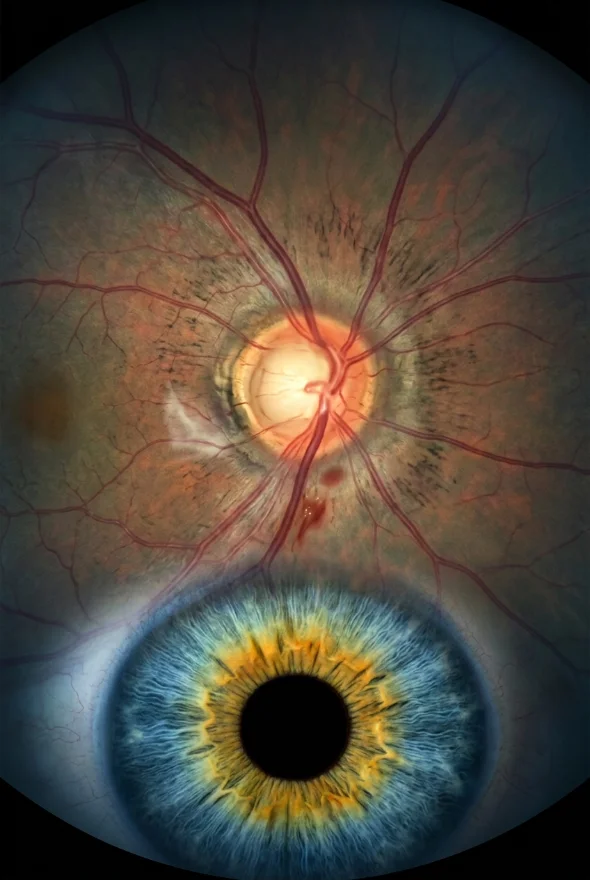
Glaucoma surgery lowers eye pressure to protect the optic nerve. The main options are SLT laser, MIGS stents, trabeculectomy and drainage tubes. SLT and MIGS are gentler and suit early to moderate glaucoma; trabeculectomy and tubes lower pressure further and suit advanced or fast-progressing glaucoma. None can restore lost vision. At Laser Istanbul Clinic, glaucoma care is led by Prof. Dr. Ahmet Satıcı.
What are the main glaucoma surgery options?
There are four main groups of glaucoma surgery, and they sit on a ladder from gentle to powerful: SLT laser, MIGS (minimally invasive glaucoma surgery), trabeculectomy and tube (shunt) surgery. All of them do the same job. They help the clear fluid inside the eye drain away, so that the pressure falls and the optic nerve is put under less strain. The US National Eye Institute (NEI) puts it plainly: treatment will not undo damage to your vision, but it can stop it getting worse.
Most people start with eye drops. The NHS describes three routes for glaucoma treatment: drops, laser and surgery. Laser or an operation is usually considered when drops are not enough, are not tolerated, or when the glaucoma is already advanced.
| SLT laser | MIGS (stents and tissue-removal devices) | Trabeculectomy | Tube (shunt) surgery | |
|---|---|---|---|---|
| What happens | A gentle laser makes the eye's own drain work better | A micro-stent or small blade works from inside the eye through a tiny cut | A new, guarded drainage channel lets fluid escape into a small blister (bleb) under the upper eyelid | A silicone tube carries fluid to a plate under the surface of the eye |
| Typical use | Newly diagnosed open-angle glaucoma and ocular hypertension; to reduce drops | Mild to moderate glaucoma, often during cataract surgery | Moderate to advanced glaucoma, or pressure that stays too high | Advanced or complex glaucoma, or after earlier surgery |
| Setting | Clinic laser, numbing drops | Operating theatre, local anaesthetic | Operating theatre, usually local anaesthetic | Operating theatre, local or general anaesthetic |
| Time | About 10 minutes per eye | About 20 minutes alone; about 40 minutes with cataract surgery (one NHS device leaflet) | About 70–100 minutes | About 1–2 hours |
| Pressure lowering | Typically 20–30% | Typically 20–30%; less than trabeculectomy | The strongest; can reach low target pressures | Strong; similar to trabeculectomy |
| Recovery | Normal activities usually the next day | Quick; drops for 3–4 weeks | At least two weeks off work; several weeks to settle | At least two weeks off work; several weeks to settle |
Sources: NICE NG81, Glaucoma UK, EyeWiki (AAO), NHS trust leaflets. Figures are typical values from published sources; your surgeon sets your own plan after examining you.
What is SLT laser, and how well does it work?
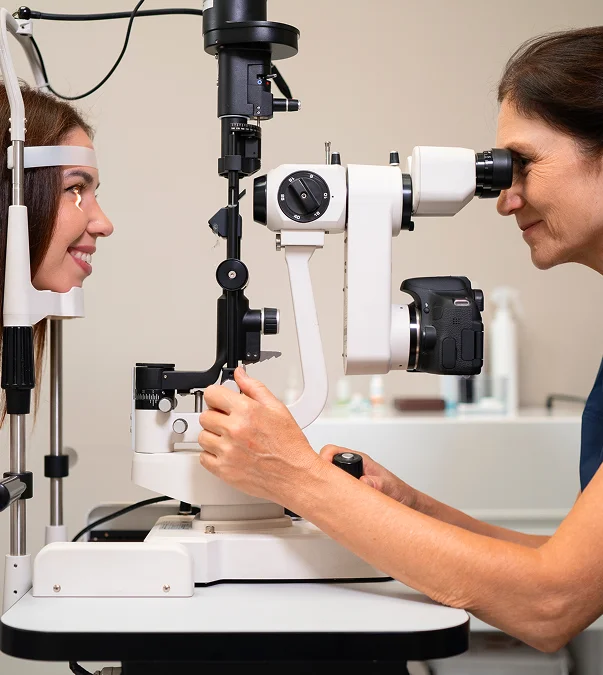
Selective laser trabeculoplasty (SLT) is an in-clinic laser treatment that improves the eye's own drainage. It uses a 532-nm frequency-doubled Nd:YAG laser that targets pigmented cells in the drainage meshwork, which triggers a chemical response that lets fluid leave the eye more easily (EyeWiki, American Academy of Ophthalmology, AAO). It typically lowers eye pressure by about 20–30%.
SLT takes about ten minutes per eye under numbing drops, and most people feel no pain (Glaucoma UK). Your vision may be blurry for a few hours and the eye may be red and sore for a few days. You usually go back to normal activities the next day, and it takes two to three months to see how well it has worked.
The evidence for SLT as a first treatment is strong. In the UK LiGHT trial (Ophthalmology, 2023), 69.8% of eyes treated first with SLT were still at their target pressure six years later without needing drops or surgery. Disease progressed in fewer SLT eyes than drop-treated eyes (19.6% against 26.8%); 13 SLT eyes needed trabeculectomy against 32 drop eyes; and no serious laser-related adverse events occurred. Since 2022, NICE has recommended offering 360° SLT to people with newly diagnosed open-angle glaucoma that is not advanced, and to people with ocular hypertension and a pressure of 24 mmHg or more who are at risk of visual impairment.
Be aware of the limits. According to Glaucoma UK, SLT lowers pressure at first in nearly 8 out of 10 people, while about 2 in 10 get little or no benefit. The effect can wear off after a few years, but SLT can often be repeated, although fewer people reach good pressure after a second or third treatment. SLT may be unsuitable for advanced glaucoma or angle-closure glaucoma, and EyeWiki lists inflammatory and neovascular glaucoma as further exclusions. A short rise in pressure after the laser is the most important side effect, which is why your pressure is checked before you leave.
What is MIGS (minimally invasive glaucoma surgery)?
MIGS is a family of glaucoma operations done from inside the eye through a tiny incision, designed to be safer and quicker to recover from than traditional surgery. EyeWiki describes five defining features: a high safety profile, minimal disruption of normal anatomy, an ab-interno (from inside) approach, efficacy and ease of use.
The group includes several different ideas:
- Stents that bypass the blocked drain, such as the iStent family and the Hydrus microstent, which create a direct path into the eye's drainage canal.
- Tissue-removal devices, such as the Kahook Dual Blade, which remove a strip of the blocked drainage meshwork (goniotomy).
- Canal-opening procedures, which widen the eye's natural drainage canal.
- Subconjunctival stents, such as the XEN gel stent, which form a bleb and are closest to traditional surgery.
MIGS suits people with mild to moderate glaucoma, people who struggle to use drops, and people having cataract surgery who want to reduce their drops (EyeWiki). In the pivotal trials of stents placed during cataract surgery, 75.8% of iStent inject eyes and 77.3% of Hydrus eyes had at least a 20% fall in pressure at two years; with Hydrus the average fall was 7.6 mmHg compared with 5.3 mmHg for cataract surgery alone.
The honest limit is strength. MIGS typically lowers pressure by 20–30%, which is less than trabeculectomy, and EyeWiki notes it is often not enough for advanced glaucoma that needs a very low target pressure. Common side effects are temporary bleeding in the front of the eye (hyphaema), short pressure rises and inflammation. An NHS trust leaflet reports hyphaema in 38% of people during the Kahook Dual Blade operation, usually clearing in one to three weeks. Not every device has stood the test of time: the CyPass stent was withdrawn from the market, so your surgeon should explain which device they use and why.
What is trabeculectomy?
Trabeculectomy is the long-established glaucoma operation. The surgeon makes a small, guarded opening beneath a flap in the white of the eye, so that fluid drains into a bleb under the upper eyelid and is absorbed (AAO). A medicine that reduces scarring, usually mitomycin C, is applied during surgery to help the new channel stay open. It is done under local anaesthetic and takes about 70–100 minutes (Dudley Group NHS Foundation Trust).
It is the operation to think about when glaucoma is moderate to advanced, progressing quickly, or not controlled by drops and laser (EyeWiki). NICE recommends glaucoma surgery with mitomycin augmentation for advanced open-angle glaucoma, and considers either SLT or surgery for people at risk of sight loss despite two classes of drops.
What does it achieve? One NHS trust reports that pressure fell by at least a third in 66% of patients at one year, and that about a third of patients still need one or more drops. Trabeculectomy usually reaches lower pressures than MIGS or SLT, which is why it remains the standard for advanced disease.
It is also the most demanding option for recovery. Expect an eye pad and shield on the first night, then visits at one day, one week and two weeks; about two weeks off work; drops for around three months; and a wait of about three months before new glasses (Dudley NHS leaflet and Glaucoma UK). The bleb needs checking for life.
When is tube (shunt) surgery needed?
Tube surgery is used when glaucoma is advanced or complex, when pressure stays high after other treatment, or after earlier eye surgery. A tiny silicone tube carries fluid to a plate that sits under the surface of the eye, where a bleb forms (Glaucoma UK). Common devices are the Ahmed valve and the Baerveldt, PAUL and Molteno implants. Five years after surgery, Glaucoma UK reports that shunts still work well for more than 7 in 10 people.
Which is better, a tube or a trabeculectomy? It depends on the eye, and large trials give different answers:
- In eyes that had already had cataract or glaucoma surgery, the Tube Versus Trabeculectomy (TVT) study found failure was less likely with a tube: 29.8% against 46.9% at five years, with similar pressure reduction (American Journal of Ophthalmology, 2012).
- In eyes with no previous surgery, the Primary Tube Versus Trabeculectomy (PTVT) study found that trabeculectomy with mitomycin C failed less often, with similar pressure control but fewer drops (AAO summary: 39% of trabeculectomy patients against 48% of tube patients had surgical failure at five years). Early complications were more common after trabeculectomy (34% against 19%), and most were temporary (Ophthalmology, 2022).
How do surgeons choose between SLT, MIGS and trabeculectomy?
Surgeons choose the least invasive operation that can reach your target pressure, because the stronger the pressure-lowering effect, the higher the risk tends to be. The target depends on how much damage your optic nerve already has and how fast it is progressing.
| Your situation | Options a surgeon usually discusses first |
|---|---|
| Newly diagnosed open-angle glaucoma, not advanced | SLT (NICE offers it as a first treatment) or drops |
| Ocular hypertension with pressure of 24 mmHg or more and risk of vision loss | SLT or drops (NICE) |
| Mild to moderate glaucoma and you need cataract surgery | Cataract surgery combined with a MIGS stent or blade |
| Drops cause side effects or are hard to use | SLT, or MIGS if suitable |
| Pressure rises again after SLT has worn off | Repeat SLT, drops, or surgery |
| Moderate to advanced glaucoma, or still progressing on drops and laser | Trabeculectomy with mitomycin, or a tube |
| Previous eye surgery, or complex glaucoma | Tube surgery, or trabeculectomy, depending on the eye |
| Narrow-angle (angle-closure) glaucoma | Laser iridotomy, and sometimes cataract surgery, because lens surgery can lower pressure when angles are narrow (AAO) |
So is there a "best" glaucoma surgery? Not in the abstract. The best operation is the one that reaches your target pressure with the fewest risks for your eye. When you compare surgeons, ask which operations they perform regularly, what target pressure they are aiming for, how they follow you up, and how your care continues once you are home.
At Laser Istanbul Clinic, glaucoma care is led by Prof. Dr. Ahmet Satıcı, who also performs cataract surgery, so a combined cataract and glaucoma plan can be considered in one operation when it suits your eyes. When glaucoma goes together with inflammation (uveitis), retinal disease or corneal problems, Doç. Dr. Muhammet Derda Özer (Doç. is the Turkish title for Associate Professor) reviews your case too.
How long is recovery after glaucoma surgery?
Recovery is quickest after laser, a little longer after MIGS, and slowest after trabeculectomy or tube surgery.
| When | SLT laser | MIGS | Trabeculectomy or tube |
|---|---|---|---|
| Day of surgery | Blurry vision for a few hours; do not drive yourself home | Eye numb, then gritty; protective shield | Eye pad and shield; eye sore or scratchy |
| Day 1 | Back to normal activities; usually able to drive | First check-up | First check-up; shield removed, new drops started |
| Weeks 1–2 | Red or sore eye for a few days | Drops for 3–4 weeks | Frequent checks; stitches may be adjusted; at least two weeks off work |
| Weeks 2–4 | No restrictions | Most activities | No swimming, strenuous exercise or heavy lifting for about four weeks |
| 2–3 months | Pressure check to see how well it worked | Drops reviewed | Drops for up to three months; new glasses only after about three months |
| Long term | Effect lasts a few years; can often be repeated | Regular pressure and field checks | Regular checks for life, including the bleb |
Sources: Glaucoma UK (SLT and shunt booklets); Dudley Group NHS leaflets (trabeculectomy and trabeculotomy). Your surgeon gives you personal advice and dates.
Call your surgeon straight away if the operated eye becomes red, sticky, painful or light-sensitive, or if vision worsens. After trabeculectomy or tube surgery, those signs can mean a bleb infection, which can happen months or even years later and needs prompt treatment (Glaucoma UK).
What are the risks of glaucoma surgery?
All glaucoma surgery carries risks, and your surgeon should go through those that apply to your eye before you decide.
- SLT: blurred vision for hours, a red and sore eye for days, and a short rise in pressure in a minority of people (EyeWiki puts a rise of more than 5 mmHg at around 10% or fewer when preventive drops are used). Inflammation is a small risk. LiGHT reported no serious laser-related adverse events over six years.
- MIGS: bleeding in the front of the eye, short pressure spikes, inflammation and low pressure. Serious complications are rarer than after traditional surgery (EyeWiki).
- Trabeculectomy: pressure that is too low or too high early on, which may need stitch adjustment or a small procedure; faster cataract formation; infection inside the eye in about 1–2 in 100 people; and about 1 in 10 people notice a one-line drop on the eye chart a year later (Dudley NHS leaflet). In the PTVT study, serious complications causing vision loss or needing another operation affected 8% of trabeculectomy patients and 2% of tube patients.
- Tube surgery: blurry vision for up to three months is common; serious or sudden vision loss affects fewer than 1 in 100 people, with a higher risk in advanced glaucoma; about 1 in 50 people has a droopy eyelid for longer, which can usually be corrected (Glaucoma UK).
- More surgery: some eyes need a second operation. In the TVT study, 29% of trabeculectomy eyes and 9% of tube eyes needed further glaucoma surgery within five years.
The risk of not treating also deserves a place on the scale. Glaucoma damage is permanent, according to the AAO, and uncontrolled pressure keeps damaging the optic nerve.
Does glaucoma surgery restore vision, and will I still need drops?
Glaucoma surgery cannot restore vision that has already been lost. It aims to stop or slow further loss (NEI; AAO). Some people notice no change in how they see; after trabeculectomy or a tube, vision can be blurrier for weeks before it settles.
Drops: after SLT, MIGS or surgery you may need fewer drops or none, but not everyone can stop. For trabeculectomy, about one third of patients still need drops at one year in one NHS report, and Glaucoma UK says that after shunt surgery you may be able to stop or use fewer. The AAO advises regular follow-up, typically every 3–6 months, and never stopping medication without your ophthalmologist's advice.
Glaucoma surgery abroad: what to plan before you travel
Glaucoma is a lifelong condition, so the most useful question is who looks after your eye pressure once you are home. Before you travel, plan three things: that you receive a full operative report in English for your home eye doctor, that your follow-up visits are agreed in advance, and that you can reach the surgical team remotely if something changes.
At Laser Istanbul Clinic, your surgery takes place in a fully equipped, Ministry of Health–licensed operating theatre in Istanbul. Your price includes the pre-operative examination and scans, surgery by your named surgeon, medication, follow-up checks in Istanbul, a personal interpreter, a coordinator and remote follow-up. Hotel and airport transfers are not included; we arrange them on request at a separate charge. Flights are not included either.
Flying is usually fine: Glaucoma UK notes that people with glaucoma can usually fly without problems and that it is safe to fly after glaucoma surgery, but your specialist may want to see you for follow-up first, so wait until they say it is okay. Keep your drops in your hand luggage.
If your glaucoma goes together with a retinal problem, see our guide to Retina surgery: vitrectomy & retinal detachment.
Glaucoma surgery options: frequently asked questions
The main types are SLT laser, MIGS (stents and tissue-removal devices), trabeculectomy and tube (shunt) surgery. Laser iridotomy is used separately for narrow-angle glaucoma. Your surgeon recommends one after an eye examination, pressure checks and visual field and optic nerve scans.
No single operation is best for everyone. SLT and MIGS are gentler and suit earlier glaucoma; trabeculectomy and tubes lower pressure more and suit advanced or fast-progressing disease. The best choice is the least invasive operation that reaches your target pressure.
No. SLT typically lowers pressure by 20–30% and works for nearly 8 in 10 people, but the effect can wear off after a few years. In LiGHT, 69.8% were still at target pressure after six years, and SLT can often be repeated.
MIGS is safer and recovers faster, but it usually lowers pressure less. It suits mild to moderate glaucoma. Trabeculectomy usually reaches lower pressures and is preferred when glaucoma is advanced.
One NHS trust reports pressure fell by at least a third in 66% of patients at one year, and about one third still needed drops. Success tends to fall over time, and further treatment may be needed.
SLT is usually painless. MIGS, trabeculectomy and tubes are done under local anaesthetic (tubes sometimes under general), so you feel pressure but usually not pain. The eye is sore or gritty for a few days afterwards.
Yes. MIGS stents and blades are often placed during cataract surgery, and in the stent trials about three-quarters of eyes reached a pressure fall of at least 20% at two years. Prof. Dr. Ahmet Satıcı performs both cataract and glaucoma surgery.
Often yes, but not at once. After trabeculectomy or a tube, Glaucoma UK advises waiting about three months for your eye to heal before changing glasses.
No. Vision already lost to glaucoma cannot be recovered. Surgery aims to protect the sight you still have.
Usually, once your surgeon has checked the eye and agreed. Glaucoma UK says it is safe to fly after glaucoma surgery but not to book a trip straight away. Keep your drops in your hand luggage.
Wondering which glaucoma operation is right for your eyes?
Send your latest visual field, OCT and pressure readings, and Prof. Dr. Ahmet Satıcı's team will tell you honestly whether laser, MIGS, trabeculectomy or a tube is likely to suit you, or whether your current treatment at home is already right.
Sources for the facts on this page
- NICE. Glaucoma: diagnosis and management (NG81), recommendations 1.4.4, 1.4.5, 1.4.14, 1.4.17, 1.4.23, 1.4.26 (2022 update). https://www.nice.org.uk/guidance/ng81/chapter/Recommendations
- Gazzard G, et al. Laser in Glaucoma and Ocular Hypertension (LiGHT) Trial: six-year results of primary selective laser trabeculoplasty versus eye drops. Ophthalmology 2023 (PMID 36122660). https://pubmed.ncbi.nlm.nih.gov/36122660/
- Gedde SJ, et al. Treatment outcomes in the Tube Versus Trabeculectomy (TVT) study after five years of follow-up. American Journal of Ophthalmology 2012 (PMID 22245458). https://pubmed.ncbi.nlm.nih.gov/22245458/
- Gedde SJ, et al. Postoperative complications in the Primary Tube Versus Trabeculectomy Study during 5 years of follow-up. Ophthalmology 2022 (PMID 35835336). https://pubmed.ncbi.nlm.nih.gov/35835336/
- American Academy of Ophthalmology. Fewer glaucoma surgical failures seen with trabeculectomies vs tube surgeries (Primary Tube Versus Trabeculectomy study). https://www.aao.org/education/editors-choice/fewer-glaucoma-surgical-failures-seen-with-trabecu
- EyeWiki (AAO). Laser Trabeculoplasty. https://eyewiki.org/Laser_Trabeculoplasty
- EyeWiki (AAO). Microinvasive Glaucoma Surgery (MIGS). https://eyewiki.org/Microinvasive_Glaucoma_Surgery_(MIGS)
- EyeWiki (AAO). Trabeculectomy. https://eyewiki.org/Trabeculectomy
- Glaucoma UK. Selective laser trabeculoplasty (patient booklet, V6.0, 2026). https://glaucoma.uk/wp-content/uploads/2026/03/2026-01-08-Selective-laser-trabeculoplasty-V6.0-DIGITAL-1-1.pdf
- Glaucoma UK. Glaucoma surgery: shunt or tube (patient booklet, V6.0, 2026). https://glaucoma.uk/wp-content/uploads/2026/03/2026-02-12-Shunt-or-tube-V6.0-digital-1.pdf
- Glaucoma UK. Trabeculectomy surgery. https://glaucoma.uk/about-glaucoma/treatments-surgery/trabeculectomy-surgery/
- Glaucoma UK. Flying with glaucoma. https://glaucoma.uk/care-support/care-support-flying-with-glaucoma/
- The Dudley Group NHS Foundation Trust. Glaucoma drainage surgery (trabeculectomy) patient information. https://www.dgft.nhs.uk/pil/glaucoma-drainage-surgery-trabeculectomy/
- The Dudley Group NHS Foundation Trust. Trabeculotomy (MIGS: minimally invasive glaucoma surgery) patient information. https://www.dgft.nhs.uk/pil/trabeculotomy-migs-minimally-invasive-glaucoma-surgery/
- American Academy of Ophthalmology. Glaucoma Treatment. https://www.aao.org/eye-health/treatments/glaucoma-treatment
- NHS. Glaucoma: treatment. https://www.nhs.uk/conditions/glaucoma/treatments/
- National Eye Institute (NIH). Glaucoma. https://www.nei.nih.gov/eye-health-information/eye-conditions-and-diseases/glaucoma