
- Home
- Knowledge centre
- Laser eye surgery guides
- Does Insurance Pay for Laser Eye Surgery? NHS, Private Cover, GKV and Zorgverzekering Explained
Does Insurance Pay for Laser Eye Surgery? NHS, Private Cover, GKV and Zorgverzekering Explained
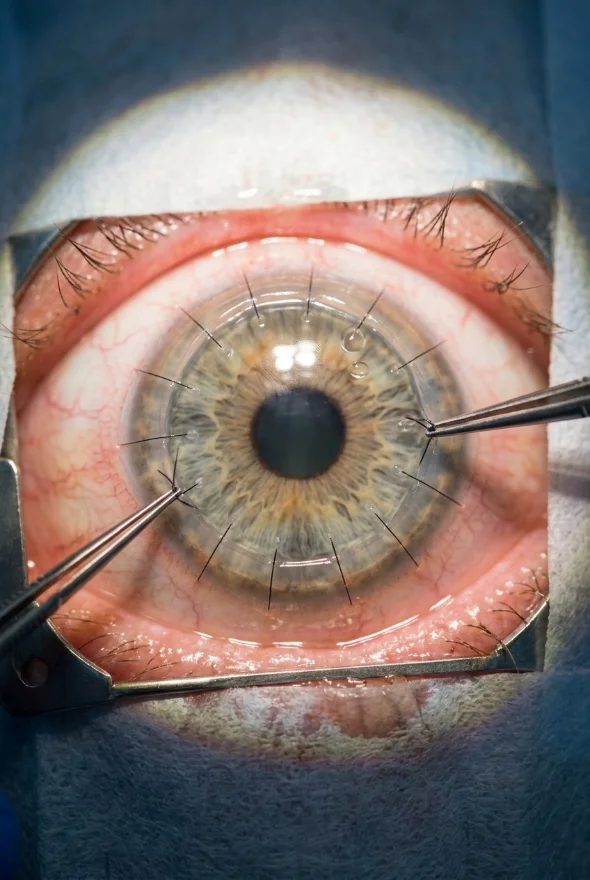
Usually not. Does insurance pay for laser eye surgery? When it is done to reduce your need for glasses or contact lenses, the NHS does not provide it, most private health insurance excludes it, Germany's statutory insurance (GKV) does not pay, and Dutch basic insurance does not cover it. Insurance and public schemes do pay for medically necessary eye laser treatment, such as laser for diabetic retinopathy or glaucoma. In the US, laser vision correction counts as a qualified expense for FSAs and HSAs. At Laser Istanbul Clinic, laser surgery is led by Prof. Dr. Ahmet Satıcı and Op. Dr. Aysan Bayram.
Does the NHS pay for laser eye surgery?
No, not for correcting your prescription. The NHS says laser eye surgery and lens surgery are usually only available privately. The Royal College of Ophthalmologists (RCOphth), the UK's professional body for eye doctors, is more direct in its patient information: surgery to correct the need for glasses or contact lenses is not available as an NHS procedure and is not covered by private health insurance schemes.
The NHS may offer laser eye surgery in two situations, according to its own guidance:
- you have an eye condition that could lead to loss of vision, including blindness
- you have problems with your sight that cannot be corrected by wearing glasses or contact lenses
The conditions the NHS lists as treatable with laser include diabetic retinopathy, complications after cataract surgery, age-related macular degeneration and glaucoma. That is a different kind of laser treatment from the one that removes your need for glasses, so the NHS is not "paying for LASIK" in these cases; it is treating disease.
The same logic applies to lens surgery. Cataract surgery to restore vision is available on the NHS, but the NHS does not pay for premium lenses or for lens surgery done to reduce dependence on glasses.
Does private health insurance cover laser eye surgery in the UK?
Usually not, with a few limited exceptions. Most standard UK private medical insurance policies explicitly exclude laser eye surgery when it is done to reduce dependence on glasses or contact lenses. Some comprehensive or upgraded policies include a limited optical or "laser eye surgery" benefit that pays a fixed cash amount towards the surgery, and some optical cash plans reimburse part of the cost up to an annual limit.
That means the honest answer for a UK patient is: do not assume, and do not expect a full refund. Read the wording on your policy, look for waiting periods, and ask for confirmation in writing before you pay a deposit (see "How do I check my own policy?" below).
Because insurance rarely pays, almost every UK patient pays privately. Clinics commonly offer interest-free finance, for example 0% over 10 to 24 months at some UK providers, usually with a deposit of £50 to £500. Finance spreads the cost; it does not reduce it.

Does insurance cover LASIK in the United States? What about FSA and HSA?
Often not directly, but US patients have more ways to soften the cost. The Refractive Surgery Council advises asking your insurance carrier or benefits manager whether you have benefits for laser vision correction, and states that laser vision correction is a qualified medical expense for flexible spending accounts (FSAs) and health savings accounts (HSAs). The Internal Revenue Service (IRS) likewise says you can include in medical expenses the amount you pay for eye surgery to treat defective vision, such as laser eye surgery.
In practice, that gives US patients three things to check:
- Your health plan's wording. Many plans treat vision correction as elective; yours may differ.
- Your vision or employer benefit. Some employers offer a discount or allowance for laser vision correction; ask your benefits manager.
- Pre-tax health accounts. If you have an FSA or HSA, ask your plan administrator to confirm that your procedure and provider qualify, particularly if you are travelling abroad for it.
Medicare is a separate question. Original Medicare Part B does not usually cover eyeglasses or contact lenses. It does cover cataract surgery that implants a conventional lens, and one pair of glasses or contact lenses afterwards. If your problem is cataract rather than a glasses prescription, Medicare may pay part of the cost; you pay a deductible and then 20% of the Medicare-approved amount, and a premium lens usually costs extra.
Does Germany's statutory health insurance (GKV) pay for Augenlasern?
No. Germany's statutory health insurers (gesetzliche Krankenversicherung, GKV) typically do not cover laser eye surgery, because they classify refractive errors as not being a medical condition, which makes laser correction not medically necessary. Private health insurers (PKV) vary by policy: tell your insurer before the procedure and ask for written confirmation of what they will pay.
The picture changes for cataract. German statutory insurance pays for standard cataract surgery with a basic (monofocal) lens; a premium lens is a private extra. That is why many German patients ask about lens surgery separately from laser.
Does Dutch basic insurance (zorgverzekering) cover eye laser treatment?
No. In the Netherlands, ooglaseren is not covered by the basic health insurance (basisverzekering); the Dutch government's own description of the basic package says that ordinary glasses and contact lenses are not reimbursed, and laser correction is not part of it. A small number of supplementary insurance policies (aanvullende verzekering) pay a modest fixed amount towards laser treatment, and they typically attach conditions, such as the treating doctor being BIG-registered or a member of the Dutch Ophthalmological Society. Many major insurers offer no cover at all. Check your own policy conditions, because amounts and terms vary widely.
What about France (mutuelle), Canada, Australia and Ireland?
Rules differ from country to country, and we only state a position where we have checked it against an official or published source. For France, Canada, Australia and Ireland, ask two organisations the same question before you book: your public health scheme (in France the Assurance Maladie) and your supplementary cover (in France your mutuelle; elsewhere your private insurer or extras policy). Ask specifically about "refractive surgery" or "laser vision correction", and ask for the answer in writing.
Laser eye surgery insurance coverage at a glance
| Country or scheme | Laser to reduce glasses or lenses | Medically necessary eye laser and cataract surgery |
|---|---|---|
| UK, NHS | Not provided; usually only available privately (NHS, RCOphth) | Offered for eye conditions that could lead to sight loss, and for sight problems glasses cannot correct; cataract surgery available |
| UK, private insurance | Excluded by most policies; a few upgraded policies or cash plans pay a fixed amount | Covered depending on policy |
| USA | Check your plan; counts as a qualified expense for FSA and HSA | Medicare Part B covers cataract surgery with a conventional lens (20% after the deductible) |
| Germany, GKV | Not covered; refractive error is not classed as a medical condition | Standard cataract surgery covered; premium lens is extra |
| Germany, PKV | Depends on policy; get written confirmation first | Depends on policy |
| Netherlands, basic insurance | Not covered | Medically necessary care covered under the basic package |
| Netherlands, supplementary | A few policies pay a fixed amount, often with provider conditions | Not applicable |
| France, Canada, Australia, Ireland | Check with your public scheme and your supplementary insurer | {{confirmed position}} |
When does insurance or the health service pay for eye laser?
When the laser treats a disease or a vision problem that glasses cannot correct, not a prescription you would like to be rid of. Examples of eye conditions the NHS lists as treatable with laser are diabetic retinopathy, complications after cataract surgery (a cloudy capsule is cleared with a laser), age-related macular degeneration and glaucoma.
If you are not sure which side of the line you fall on, your own eye test result is the answer. A short-sighted, long-sighted or astigmatic eye with otherwise healthy eyes is a prescription question, and insurance will generally treat laser as elective. A diagnosed eye disease is a medical question, and your health service or insurer will usually have a pathway for it. Your surgeon can also tell you in plain terms if laser is not right for you: the American Academy of Ophthalmology lists severe dry eye, thin corneas, corneal disease and keratoconus among the reasons a person may not be a candidate for LASIK.
What will I pay myself for laser eye surgery?
Typical published prices in 2026, before any insurer contribution, give you the scale of what is at stake:
| Market | Typical published 2026 price | What it covers |
|---|---|---|
| UK | About £1,295–£1,995 per eye for LASIK or LASEK; about £2,500–£2,950 or more per eye for SMILE; roughly £2,600–£6,500 for both eyes | Many UK clinics quote per eye; very low headline prices are often reserved for the simplest prescriptions |
| USA | National average of $4,492 for LASIK (both eyes), reported by the Refractive Surgery Council on 4 June 2026 | Beware "$299 per eye" advertising, which typically excludes pre- and post-operative visits and applies only to minimal prescriptions |
| Germany | From €1,990 per eye (LASEK/PRK), €2,100 (Femto-LASIK), €2,575 (SMILE pro) at one large German laser centre | Includes pre-examination, six weeks of check-ups and re-treatment within five years |
| Laser Istanbul Clinic | From {{£ price}} for both eyes | Pre-operative examination and scans, surgery by your named surgeon, medication, follow-up checks in Istanbul, a personal interpreter, a coordinator and remote follow-up |
At Laser Istanbul Clinic, surgery takes place in a fully equipped, Ministry of Health–licensed operating theatre in Istanbul. Hotel and airport transfers are not included; they are arranged on request and charged separately, and flights are not included either. For a side-by-side comparison with the UK, US and EU, see our guide to laser eye surgery cost in Turkey vs UK/US/EU.
Will insurance cover complications if I have laser surgery abroad?
Not automatically, and you should check before you travel. GOV.UK states that standard travel insurance does not normally cover you if you travelled abroad for elective surgery, that the GHIC and EHIC cards do not cover planned treatment abroad, and that insurance may not be valid for some costs, for example if there are complications after the surgery. The NHS treatment-abroad checklist advises you to make sure you have appropriate travel insurance, to tell your insurer about your plans, to stay in the country for a suitable time to recover, and to budget for exchange rates, a possibly longer stay and the cost of any return trip.
What to do about it:
- Tell your travel insurer you are travelling for treatment and ask in writing what is and is not covered, including complications.
- Ask your clinic what follow-up is included. With Laser Istanbul Clinic, your surgeon checks your eyes before you fly home, and your coordinator and surgeon follow your recovery remotely, by video, at agreed intervals. If you need to be seen in person at home, we help you arrange it and share your full surgical records.
- Plan the practical side of recovery too: see driving, sport and screens after laser eye surgery.
How do I check my own policy?
Use this five-step check before you pay a deposit:
Find the exclusions
Open your policy documents and look for the words "refractive surgery", "laser vision correction", "elective" or "cosmetic".
Ask for the benefit in writing
Email your insurer or benefits manager: "Does my plan pay anything towards laser vision correction, and under what conditions?" Keep the reply.
Ask about conditions
Some policies set limits on the provider or the treating doctor, a waiting period, or a fixed maximum amount. Confirm whether treatment abroad is allowed.
Ask about tax-advantaged accounts
In the US, ask your FSA or HSA administrator to confirm eligibility for your procedure and provider.
Get an itemised quote
Insurers and plan administrators work from itemised invoices. Ask the clinic what the price includes: tests, surgery, medication, follow-up and any re-treatment.
The RCOphth says your clinic should be clear from the outset about the total cost, which normally includes follow-up clinic visits and treatment for any problems resulting from surgery. Additional laser treatments to fine-tune the result are also normally included for up to two years after surgery. Treatment or tests for unrelated eye health problems are normally charged separately.
Frequently asked questions
Usually not when the surgery is done to reduce your need for glasses or contact lenses. The NHS does not provide it, most UK private policies exclude it, German statutory insurance and Dutch basic insurance do not pay for it, and US coverage depends on your plan. Eye laser treatment for disease, such as diabetic retinopathy or glaucoma, is treated as medical care and is handled differently.
Not to correct your prescription. The NHS says laser eye surgery and lens surgery are usually only available privately, and may be offered only if you have an eye condition that could lead to loss of vision or sight problems that glasses and contact lenses cannot correct.
Most standard policies exclude it. Some upgraded policies or optical cash plans pay a fixed amount towards the surgery, so read your policy and ask your insurer to confirm in writing before you commit.
In the US, the Refractive Surgery Council states that laser vision correction is a qualified medical expense for FSAs and HSAs. Ask your plan administrator to confirm eligibility for your procedure and provider before you pay.
Original Medicare Part B does not usually cover eyeglasses or contact lenses, and Medicare's published guidance covers cataract surgery with a conventional lens rather than LASIK. If you have cataract, Medicare may pay part of the cost; ask about your own plan for anything else.
No. GKV insurers treat refractive errors as not being a medical condition, so laser correction is not medically necessary under their rules. Private insurers (PKV) vary by policy; get written confirmation before treatment. Standard cataract surgery is covered, but a premium lens is a private extra.
Not under basic insurance. A few supplementary policies pay a fixed amount, usually with conditions about the treating doctor, and many insurers offer no cover. Check the conditions of your own policy.
Often, because you pay yourself either way. Published 2026 prices run from about £2,600 to £6,500 for both eyes in the UK and a national average of $4,492 in the US. Compare what each price includes, including follow-up and re-treatment, and add the cost of travel and any hotel and transfers.
Not necessarily. GOV.UK says standard travel insurance does not normally cover you if you travelled abroad for elective surgery. Tell your insurer you are travelling for treatment and ask what is covered, including complications.
Paying for laser eye surgery yourself? See what Istanbul costs.
Your surgeon at Laser Istanbul Clinic examines your eyes, tells you honestly whether laser is right for them, and confirms your price in writing, including what is and is not included. Laser surgery is led by Prof. Dr. Ahmet Satıcı and Op. Dr. Aysan Bayram.
Sources for the facts on this page
- The Royal College of Ophthalmologists. Patient Information: Laser Vision Correction (PROF/2024/499), section "How much does laser vision correction cost?": surgery to correct the need for glasses or contact lenses is not available as an NHS procedure and is not covered by private health insurance schemes; total cost should include follow-up; fine-tuning laser normally included for up to two years. https://www.rcophth.ac.uk/wp-content/uploads/2026/08/Laser-vision-correction-patient-information.pdf
- NHS. Laser eye surgery and lens surgery: usually only available privately; NHS may offer for eye conditions that could lead to sight loss or sight problems glasses cannot correct; conditions listed. https://www.nhs.uk/tests-and-treatments/laser-eye-surgery-and-lens-surgery/
- Laser Eye Surgery Hub. Compare Laser Eye Surgery Costs From 8 UK Providers, 2026: most UK private policies exclude laser eye surgery; some upgraded policies or cash plans pay a fixed amount; UK 2026 prices; 0% finance options. https://www.lasereyesurgeryhub.co.uk/laser-eye-surgery/costs/
- Refractive Surgery Council. How Much Does LASIK Cost? (published 4 June 2026): US national average $4,492; FSA/HSA qualified expense; check with insurer or benefits manager; "$299 per eye" warning. https://americanrefractivesurgerycouncil.org/cost-of-lasik/
- Internal Revenue Service. Publication 502, Medical and Dental Expenses (eye surgery to treat defective vision, such as laser eye surgery, may be included in medical expenses). https://www.irs.gov/publications/p502
- Medicare.gov. Cataract surgery and Eyeglasses and contact lenses: Part B covers cataract surgery with conventional lens (20% coinsurance after deductible), one pair of glasses or contacts after; does not usually cover eyeglasses or contact lenses. https://www.medicare.gov/coverage/cataract-surgery and https://www.medicare.gov/coverage/eyeglasses-contact-lenses
- Smile Eyes. Augen lasern Kosten 2026: GKV does not cover laser because refractive errors are classed as not medical conditions; PKV varies, get written confirmation; German prices per eye. https://smileeyes.de/wissen/augen-lasern-kosten/
- Rijksoverheid (Dutch government). Wat zit er in het basispakket van de zorgverzekering: ordinary glasses and contact lenses are not reimbursed by basic insurance. https://www.rijksoverheid.nl/onderwerpen/zorgverzekering/vraag-en-antwoord/wat-zit-er-in-het-basispakket-van-de-zorgverzekering
- Zorgwijzer. Ooglaseren vergoeding: not covered by basic insurance; a few supplementary policies pay fixed amounts with conditions (BIG-registered doctor, NOG membership). https://www.zorgwijzer.nl/zorgverzekering-vergelijken/ooglaseren
- GOV.UK. In hospital abroad / treatment abroad: standard travel insurance does not normally cover elective surgery abroad; GHIC/EHIC do not cover planned treatment. https://www.gov.uk/guidance/in-hospital-abroad
- NHS. Treatment abroad checklist: appropriate travel insurance, tell your insurer, recovery time, return-trip and exchange-rate budgeting. https://www.nhs.uk/using-the-nhs/healthcare-abroad/going-abroad-for-treatment/treatment-abroad-checklist/
- American Academy of Ophthalmology. LASIK — Laser Eye Surgery: who is not a candidate (severe dry eye, thin corneas, corneal disease, keratoconus and others). https://www.aao.org/eye-health/treatments/lasik