
- Home
- Knowledge centre
- Comparisons
- Contact Lenses vs Laser Eye Surgery: 10-Year Cost and Safety
Contact Lenses vs Laser Eye Surgery: 10-Year Cost and Safety
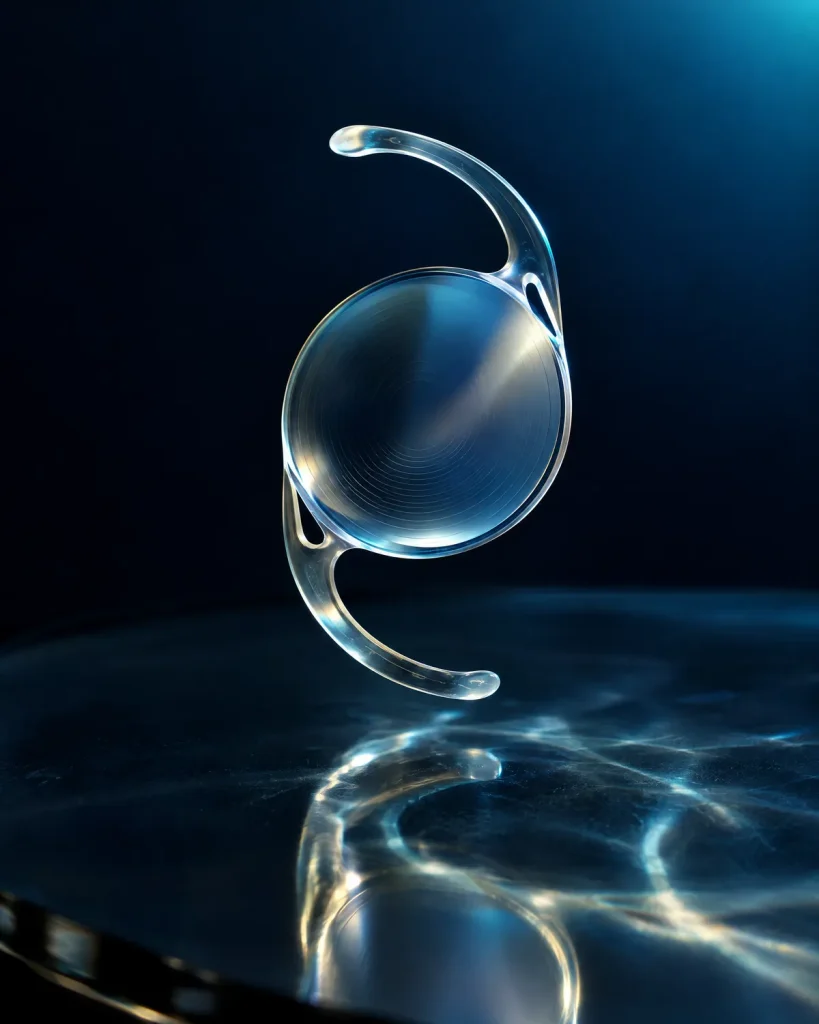
Over ten years, laser eye surgery usually costs less than daily contact lenses once your yearly lens spend passes a break-even point, and it ends the daily infection risks of lens wear, but it is a one-off operation with its own risks, including dry eye and night-vision symptoms. Contact lenses are reversible and low-risk when worn correctly. Prof. Dr. Ahmet Satıcı and Op. Dr. Aysan Bayram check candidacy for laser in Istanbul before any treatment is booked.
- Laser eye surgery tends to win on 10-year cost if you wear lenses every day, your prescription has been stable, and your eyes pass the pre-operation tests. The longer you wear lenses, the bigger the gap.
- Contact lenses win on flexibility. They need no operation, can be changed as your prescription changes, and are the right choice if your eyes are not yet stable or you are not suitable for laser.
- Neither is risk-free. Lens wear carries a small, ongoing risk of infection that depends heavily on hygiene. Laser carries a one-off set of risks (dry eye, glare, halos, under- or over-correction) that is usually small but can be permanent.
Contact lenses vs laser eye surgery: side by side
The two options solve the same problem in different ways: lenses sit on the eye every day, while laser reshapes the cornea once. This table compares what matters most when you decide.
| Contact lenses | Laser eye surgery (LASIK, SMILE, PRK) | |
|---|---|---|
| How it works | A lens on the surface of the eye corrects focus each day. | A laser reshapes the cornea once so that the eye focuses without glasses or lenses. |
| Up-front cost | Low: eye test and first supply of lenses. | Higher: one price for the whole treatment. |
| Running cost | Ongoing: lenses, solution, case, regular eye tests. | Usually none after recovery, apart from routine check-ups. |
| 10-year cost | Your yearly spend multiplied by ten (worked examples below). | One treatment price, plus travel if you have it abroad. |
| Reversible? | Yes. Stop wearing them at any time. | No. Reshaping the cornea is permanent. |
| Main safety concern | Eye infection and corneal ulcers, linked to hygiene, water and sleeping in lenses (FDA, CDC). | Dry eye, glare, halos, double vision, under- or over-correction; long-term data are limited (FDA). |
| Who it is not for | People with eye conditions that make lens wear uncomfortable or unsafe. | People with unstable prescriptions, thin corneas, keratoconus, severe dry eye or other conditions (AAO, FDA). |
| Reading glasses later | Multifocal or monovision lenses can be used. | Laser does not treat presbyopia, the age-related loss of close-up focus (AAO). |
| Daily routine | Cleaning, case care, never sleeping or swimming in lenses. | None once healed. Some drops during recovery. |
Who each option suits
Contact lenses may suit you if…
- Your prescription is still changing. The FDA says you are probably not a good candidate for refractive surgery if you needed a change in your glasses or contact-lens prescription in the past year.
- You only need vision correction occasionally. If you wear lenses a few days a month, the running cost is low and surgery may never pay for itself.
- You are not suitable for laser. Thin corneas, keratoconus and severe dry eye are among the reasons the AAO lists for not having LASIK.
- You are under 18, or you take part in contact sports. The FDA notes that no lasers are approved for LASIK under 18, and that boxing, wrestling, martial arts and similar activities are a reason for caution.
- You prefer a reversible option. You want to wait for more long-term evidence, or simply do not want an operation.
Laser eye surgery may suit you if…
- You wear lenses or glasses every day and your yearly lens spend is high enough that surgery pays for itself within a few years.
- Your prescription is stable and your eyes are healthy. The AAO describes good candidates as at least 18 (preferably over 21), with a stable prescription, enough corneal thickness and generally good eye health.
- Lenses are uncomfortable or inconvenient. Dry, red or irritated eyes at the end of the day, or the routine of cleaning and replacing lenses, are common reasons people ask about laser.
- You want freedom from lens-care risks. You swim, travel or work in dusty or dry environments, and the water and hygiene rules are hard to follow.
Borderline cases need a surgeon's judgement
Some patients fall between the two: a prescription at the edge of what laser can treat, thin corneas that might suit a surface treatment (PRK) rather than LASIK, or signs of keratoconus that rule laser out altogether. In those cases the conversation with the surgeon matters as much as the operation. Our surgeons review your prescription and scans first and tell you if laser is not right for you.
Which costs less over 10 years: contact lenses or laser eye surgery?
For most daily wearers, laser costs less over ten years; for occasional wearers, lenses usually do. The deciding number is your own yearly spend, so work it out first.
Your yearly contact-lens spend = lenses + solution (if you wear monthly lenses) + replacement cases + eye tests required to renew your prescription. Multiply by ten for the 10-year cost. (We have not quoted one "typical" figure because lens types, prescriptions and retailers vary widely; use your own receipts or subscription.)
Typical published laser prices (both eyes, USD, 2025–26)
| Country | LASIK / Femto-LASIK | SMILE / SMILE Pro |
|---|---|---|
| Istanbul | $1,450–2,700 | $2,000–3,450 |
| UK | $4,000–7,500 | $5,900–10,200 |
| USA | $4,000–6,000 | $5,000–8,000 |
Advertised ranges, not quotes. Many Istanbul packages include a hotel and airport transfers, so compare like with like. At Laser Istanbul Clinic, laser treatment starts from {{price}} for both eyes. Hotel and airport transfers are not included; they are a separate charge, arranged on request. Flights are not included either.
Break-even: how many years until laser pays for itself?
Divide the laser price by your yearly lens spend. These are worked examples, not averages: the three yearly spends are scenarios to show how the sum works.
| If your yearly spend is… | 10-year lens cost | Break-even vs Istanbul LASIK ($1,450–2,700) | Break-even vs UK LASIK ($4,000–7,500) | Break-even vs US LASIK ($4,000–6,000) |
|---|---|---|---|---|
| $500 | $5,000 | 2.9–5.4 years | 8–15 years | 8–12 years |
| $1,000 | $10,000 | 1.5–2.7 years | 4–7.5 years | 4–6 years |
| $1,500 | $15,000 | 1.0–1.8 years | 2.7–5 years | 2.7–4 years |
Read the table like this: at a yearly spend of $1,000, a $2,000 LASIK treatment pays for itself in two years, while a $6,000 treatment takes six. Over a full decade, lenses at that spend would cost $10,000.
What the simple sum leaves out
- Travel. If you have laser abroad, add flights, hotel and transfers to the treatment price. A trip to Istanbul is a fixed cost, so the maths still favours laser for daily wearers, but include it honestly.
- Retreatment. Vision can be under- or over-corrected, and the AAO notes that this can often be improved with glasses, lenses or further laser. Ask any provider in writing whether a touch-up is included and for how long.
- Reading glasses. Laser does not treat presbyopia, so you may still need reading glasses later, just as lens wearers may need a different lens type.
- Time. Lens wearers also spend daily time on cleaning, case care and refills; surgery has recovery days and follow-up checks.
Is laser eye surgery safer than contact lenses?
Neither is risk-free, and the risks are different in kind. Lens risks come back every day you wear them; laser risks come mostly at the time of surgery and during healing, and some can be permanent. Here is what the evidence says about each.
Contact lens risks
- Infection and corneal ulcers. The FDA states that wearing contact lenses puts you at risk of serious conditions including eye infections and corneal ulcers, which in rare cases can cause blindness. The CDC calls lenses medical devices and says that not wearing, cleaning and storing them as directed raises the risk of microbial keratitis.
- How common are the severe cases? In a Norwegian study covering 2018–2020 (Sund et al., Acta Ophthalmologica, 2025), the yearly incidence of severe, hospital-treated contact-lens keratitis was 2.52 per 10,000 users of extended-wear lenses used overnight and 0.52 per 10,000 users of daily disposable lenses. Those figures are for severe cases only; milder infections and irritations are more common. Counted over ten years, 0.52 per 10,000 a year is roughly 5 severe cases per 10,000 daily-disposable wearers (simple arithmetic on the study's yearly rate).
- Habits matter. The CDC advises avoiding sleeping in lenses unless directed by your eye care provider, removing lenses before swimming or showering, and replacing your case at least every three months. The FDA adds that lenses should not be exposed to any water and that lens solution should never be reused.
- When worn properly, lenses are safe for most people. The American Optometric Association states that lenses prescribed by a licensed optometrist are worn safely and comfortably by millions of people worldwide.
Laser eye surgery risks
- Side effects. The AAO lists dry eyes and changing vision during the day, which usually settle within about a month, plus glare, halos and reduced night vision, which can be temporary or permanent.
- More serious risks. The FDA lists loss of lines of vision on the eye chart that cannot be corrected, glare, halos or double vision that can seriously affect night-time vision, under- or over-treatment, and severe dry eye that may be permanent. It also notes that the long-term safety and effectiveness of LASIK is not known.
- What patients report. In the FDA-led PROWL studies (Eydelman et al., JAMA Ophthalmology, 2017), 43% of military and 46% of civilian participants reported new visual symptoms at three months, while dissatisfaction was low: 1–4% with their vision and 1–2% with the surgery.
- Satisfaction. A systematic review of 19 studies covering 2,198 patients found an overall satisfaction rate of 95.4% after primary LASIK (Solomon et al., Ophthalmology, 2009).
- Results. About 9 in 10 people who have LASIK end up with vision between 20/20 and 20/40 without glasses or contact lenses (AAO, January 2026).
So which is safer?
For a healthy patient who follows the rules, both are generally safe. Lenses spread a small risk over every year of wear and depend on your daily habits; laser concentrates its risks around one operation and recovery. That is why careful candidate selection matters more than the technology: the FDA's list of reasons to avoid refractive surgery, including an unstable prescription, wound-healing conditions and dry-eye disease, is the starting point for any surgeon.
Before you decide: five questions to ask
Is my prescription stable, and for how long?
Surgery is permanent, so stability matters.
Do my scans show I am a suitable candidate?
Corneal thickness, shape and tear quality all affect the answer.
Which treatment would you recommend for my eyes, and why?
LASIK, SMILE and PRK suit different corneas.
What are my personal risks, and what happens if the result is not perfect?
Ask for the realistic best and worst outcomes in writing.
What is included in the price?
Examination, scans, medication, follow-up and any retreatment should be clear before you pay a deposit.
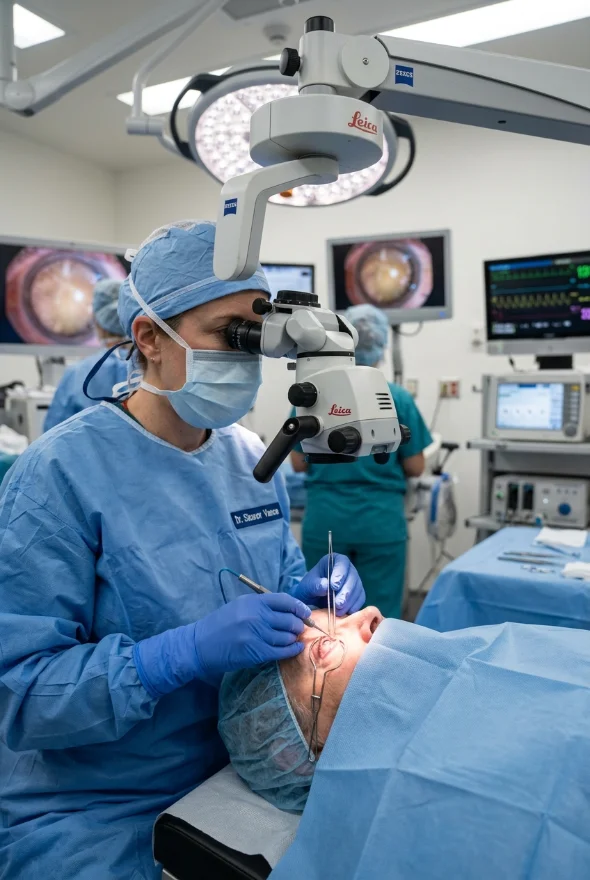
How laser treatment works with our surgeons in Istanbul
Laser eye surgery with us is planned and carried out by a named surgeon, so the answer to "who will operate on me?" is always a name:
- Prof. Dr. Ahmet Satıcı: laser eye surgery (LASIK, SMILE Pro, PRK), ICL, cataract and premium lens surgery, eyelid and oculoplastic surgery, squint and glaucoma.
- Op. Dr. Aysan Bayram: laser eye surgery, cataract surgery and retinal disease. She speaks English and is our female surgeon.
- Doç. Dr. Muhammet Derda Özer (Doç. means Associate Professor): cornea, keratoconus and cross-linking. If your scans suggest keratoconus, he is the surgeon who advises on the alternatives to laser.
How your treatment runs:
- Your surgeon reviews your case first. You send your prescription and any eye reports, and the surgeon suggests the options and confirms a written price.
- Your surgery takes place in a fully equipped, Ministry of Health–licensed operating theatre in Istanbul. You receive the address before you travel.
- Your surgeon examines you in Istanbul, with corneal topography and other scans. If the tests show laser is not right for you, your surgeon tells you.
- The same surgeon operates and checks your recovery, in Istanbul and then by video once you are home.
Included in your treatment price: pre-operative examination and scans, surgery by your named surgeon, medication, follow-up checks in Istanbul, a personal interpreter, a coordinator and remote follow-up. Not included: flights, hotel and airport transfers. Hotel and transfers are a separate charge, arranged on request.
Frequently asked questions
Over ten years it usually is for people who wear lenses daily. Divide the laser price by your yearly lens spend to find your break-even point: at $1,000 a year, a $2,000 treatment pays for itself in two years. If you wear lenses only occasionally, lenses may stay cheaper.
Both are generally safe for suitable patients, but the risks differ. Lenses carry an ongoing risk of infection that depends on hygiene; laser carries one-off risks such as dry eye, glare and halos, some of which can be permanent. In a Norwegian study, severe lens infections occurred in 0.52 per 10,000 daily-disposable wearers a year.
Neither is better for everyone. LASIK suits adults with a stable prescription and healthy corneas who want to be free of lenses, and contact lenses suit people whose eyes are still changing or who are not suitable for laser. A surgeon's examination decides which applies to you.
For many patients, yes: a systematic review found 95.4% satisfaction after primary LASIK. It is worth it if you are a suitable candidate, understand the risks and wear lenses or glasses often enough for the cost to make sense.
Yes. Many people who ask about laser are current lens wearers. Your surgeon will tell you whether you need to stop wearing lenses for a period before your scans, and for how long for your type of lens.
No. It corrects short-sightedness, long-sightedness and astigmatism within limits, but it does not treat presbyopia, the age-related loss of close-up focus, according to the AAO. You may still need reading glasses later.
The AAO and FDA list unstable prescriptions, thin corneas, keratoconus, severe dry eye, uncontrolled diabetes and certain eye infections or healing conditions as reasons for caution. Our surgeons check these with scans before any treatment is booked.
The reshaping of the cornea is permanent, but your eyes can still change with age, and the FDA notes that long-term safety data are limited. Vision may also be under- or over-corrected at first, and the AAO says this can often be improved with glasses, lenses or further laser.
Published Istanbul prices for LASIK are $1,450–2,700 for both eyes, against $4,000–7,500 in the UK, roughly 65% lower comparing the middle of each range. Hotel and airport transfers are not included in our prices; they are a separate charge.
Sources for the facts on this page
- American Academy of Ophthalmology, "What Is LASIK?" (published 9 Jan 2026): about 9 in 10 reach 20/20–20/40; dry eye, glare, halos; candidate criteria; presbyopia not treated; under/over-correction. https://www.aao.org/eye-health/treatments/lasik
- FDA, "What are the risks and how can I find the right doctor for me?": loss of vision lines, glare/halos/double vision, dry eye possibly permanent, long-term safety not known. https://www.fda.gov/medical-devices/lasik/what-are-risks-and-how-can-i-find-right-doctor-me
- FDA, "When is LASIK not for me?": unstable prescription, healing conditions, contact sports, under 18, cost. https://www.fda.gov/medical-devices/lasik/when-lasik-not-me
- FDA, "Contact Lens Risks": infections and corneal ulcers; no water exposure; remove for swimming; never reuse solution; replace case. https://www.fda.gov/medical-devices/contact-lenses/contact-lens-risks
- CDC, Contact Lens prevention guidance: avoid sleeping in lenses unless directed; remove before swimming or showering; replace case at least every three months. https://www.cdc.gov/contact-lenses/prevention/index.html (and https://www.cdc.gov/contact-lenses/about/index.html)
- **Sund MH, Slettedal JK, Sæthre M, et al. "Incidence, risk factors, and patient characteristics in severe contact lens-related microbial keratitis." Acta Ophthalmologica 2025. PMID 39540620** (Norway, 2018–2020; 2.52 vs 0.52 per 10,000 a year). https://pubmed.ncbi.nlm.nih.gov/39540620/
- **Eydelman M, Hilmantel G, Tarver ME, et al. "Symptoms and Satisfaction of Patients in the PROWL Studies." JAMA Ophthalmology 2017. PMID 27893066** (new visual symptoms 43% and 46% at 3 months; dissatisfaction 1–4% vision, 1–2% surgery). https://pubmed.ncbi.nlm.nih.gov/27893066/
- **Solomon KD, Fernández de Castro LE, Sandoval HP, et al. "LASIK world literature review: quality of life and patient satisfaction." Ophthalmology 2009. PMID 19344821** (95.4% satisfaction, 2,198 patients). https://pubmed.ncbi.nlm.nih.gov/19344821/
- American Optometric Association, "Contact lenses": lenses prescribed by a licensed optometrist are worn safely by millions. https://www.aoa.org/healthy-eyes/vision-and-vision-correction/contact-lenses
- Abstracts of the PubMed items were read via Europe PMC (https://www.ebi.ac.uk/europepmc/webservices/rest/search).
Ask a named surgeon whether laser suits your eyes, free
Send your prescription, scans or eye reports, and Prof. Dr. Satıcı or Op. Dr. Bayram will tell you whether laser may suit you, which treatment they would suggest and what it would cost, in writing, with no obligation.
3 eye surgeons
Your case is reviewed by a named surgeon, not a salesperson. Reply within {{response time}}.
 Prof. Dr. Ahmet Satıcı
 Doç. Dr. Muhammet Derda Özer
 Op. Dr. Aysan Bayram