
- Home
- English-Speaking Eye Surgery in Turkey: Your Personal Interpreter and Coordinator
English-Speaking Eye Surgery in Turkey: Your Personal Interpreter and Coordinator
Having eye surgery in Turkey should feel English-speaking from your first WhatsApp message to your last video check-up. At Laser Istanbul Clinic, a personal interpreter joins every appointment in Istanbul and one coordinator looks after you from planning to recovery at home, so you never have to guess what someone has just said about your eyes.

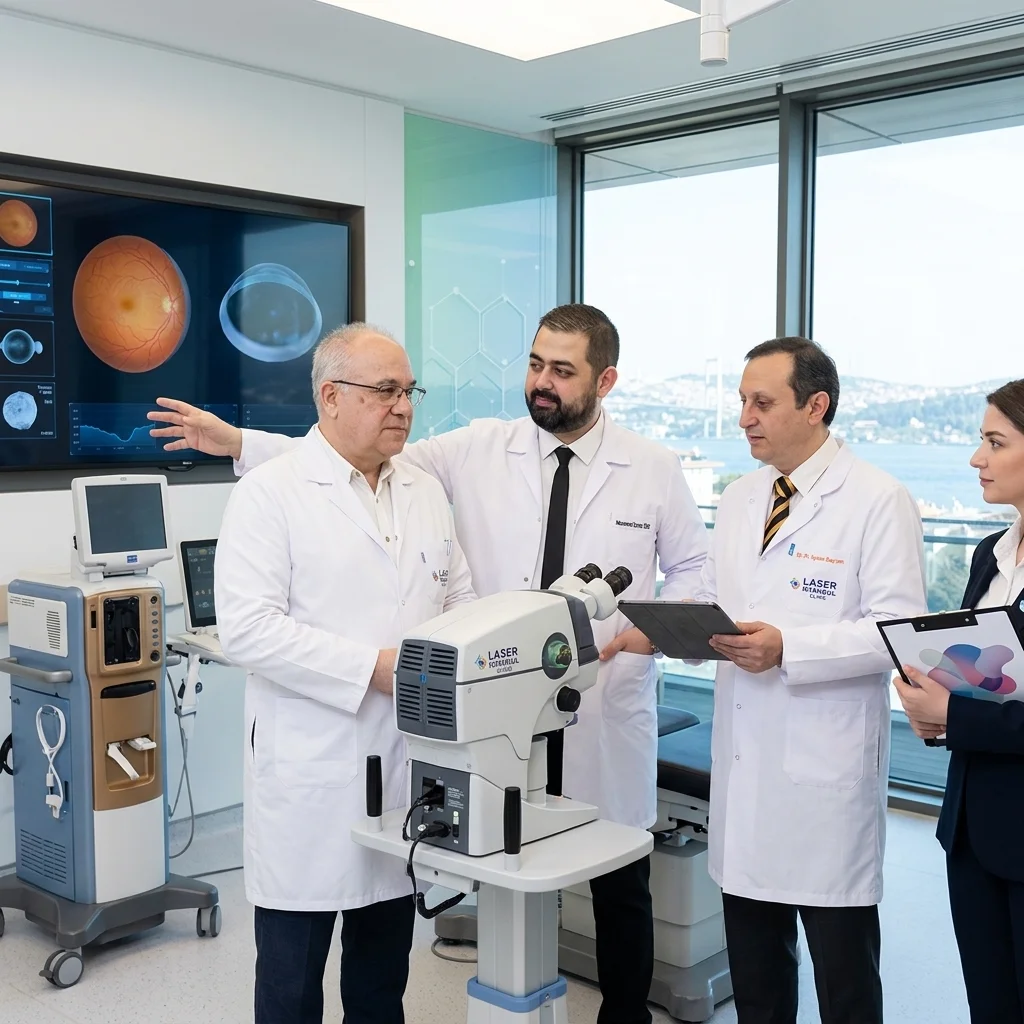
Yes, eye surgery in Turkey can be fully English-speaking. With Laser Istanbul Clinic, your surgeon is Prof. Dr. Ahmet Satıcı, Doç. Dr. Muhammet Derda Özer or Op. Dr. Aysan Bayram; Dr. Özer and Dr. Bayram speak English. On top of that, a personal medical interpreter joins your examination, consent discussion, surgery and every check-up, and one coordinator handles your plan, documents and remote follow-up. Both are included in your treatment price.
Eye surgery in Turkey: will everything be English-speaking?
Yes: every conversation that affects your eyes happens in English, with a professional interpreter in the room. Istanbul is a Turkish-speaking city, and many people you meet in shops, taxis and pharmacies will speak little English. Inside your treatment, that doesn't have to matter.
Here's who you'll speak to, and in which language:
| Person | Their role | Language with you |
|---|---|---|
| Your coordinator | Your single point of contact, from first message to remote follow-up | English, by WhatsApp, email, phone and in person |
| Your surgeon | Reviews your case, examines you, operates and checks your recovery | Doç. Dr. Özer and Op. Dr. Bayram speak English; Prof. Dr. Satıcı: {{Prof. Satıcı's languages}}. Your interpreter is present with every surgeon |
| Your interpreter | Stays beside you at every appointment in Istanbul | English (and {{interpreter languages}}) |
| Nurses and theatre staff | Prepare you on the day and look after you before and after surgery | Through your interpreter, who stays with you |
| Your written documents | Plan, quote, consent information, surgical report, drop schedule | Provided in English |
"Doç." is short for Doçent, the Turkish title for an Associate Professor. All three surgeons are fully trained ophthalmologists (eye surgeons):
- Prof. Dr. Ahmet Satıcı: cataract and premium lens surgery (including trifocal lenses and lens replacement), laser eye surgery (LASIK, SMILE Pro, PRK), ICL, eyelid surgery, squint and glaucoma
- Doç. Dr. Muhammet Derda Özer: cornea, keratoconus and cross-linking, corneal transplant, retina, uveitis, eye tumours and cataract; speaks Turkish and English
- Op. Dr. Aysan Bayram: cataract, laser eye surgery and retinal disease; speaks English
Why an interpreter when the surgeon speaks English? Because eye surgery decisions depend on detail: the lens model, the expected result, the specific risks for your eyes, the exact drop schedule. Even a surgeon with excellent English may switch to Turkish with the theatre team, and you may be nervous, tired or have dilated pupils and blurred vision. The interpreter is there so that nothing gets lost, whoever is speaking.
What your personal interpreter does
Your interpreter is a member of our team whose only job during your appointments is to make sure you understand, and are understood. They are with you in person throughout your treatment in Istanbul:
At your full eye examination
Scans and measurements involve a lot of instructions ("look at the light", "don't blink", "chin on the rest"). Your interpreter explains each test and tells the surgeon about your symptoms, history and medication accurately.
At the consent discussion
Your surgeon explains the recommended treatment, the alternatives, the expected result and the risks for your eyes. Your interpreter makes sure every point is clear and that your questions get a full answer.
On the day of surgery
Your interpreter stays with you while you're prepared, explains what's happening and is there as soon as you come out. Most laser and lens procedures take under 30 minutes.
At every check-up in Istanbul
Your interpreter makes sure you understand what the surgeon sees and what happens next.
With your medication
You'll leave with several types of eye drops. Your interpreter goes through which drop, how often and for how long, and makes sure you have it in writing in English.
Before you fly home
At your final check, your surgeon confirms when you can fly and what to watch for. Your interpreter makes sure you leave with your full records.
What your interpreter doesn't do: give medical advice, choose your treatment or take your consent. The Royal College of Ophthalmologists (RCOphth) advises that only the operating surgeon should advise you on the choice of procedure and take your consent. Our interpreters interpret; your surgeon decides with you.
Why a professional medical interpreter matters
Research shows that professional interpreters make fewer clinically important mistakes than family members, friends or untrained staff, and that patients who have one get care closer to that of patients who share their doctor's language.
- A 2007 systematic review in Health Services Research (Karliner and colleagues, 28 studies) found that professional interpreters were associated with better clinical care than ad hoc interpreters in all four areas examined: communication, use of services, clinical outcomes and patient satisfaction.
- A 2012 study in the Annals of Emergency Medicine (Flores and colleagues) analysed 1,884 interpreting errors in recorded hospital visits. The share of errors that could have had clinical consequences was 12% with professional interpreters, compared with 22% with ad hoc interpreters and 20% with no interpreter. Interpreters with at least 100 hours of training made far fewer such errors.
- An earlier study in Pediatrics (Flores and colleagues, 2003) found that the most common interpreting error was leaving something out, and that ad hoc interpreters' errors were more likely to matter clinically (77% compared with 53%). Examples included missed questions about drug allergies and missed instructions on medication dose and duration.
That's why the UK's NHS England guidance on interpreting services (2018) says patients should always be offered a registered interpreter, and that relying on family, friends or unqualified interpreters is strongly discouraged. The UK's National Travel Health Network and Centre (NaTHNaC) makes the same point for medical travel: if you have treatment in a country where you can't speak the language, you must think about how you will communicate.
For eye surgery, the details that get lost are exactly the ones that matter: an allergy to a drop, a previous eye operation, which eye is being treated, how many times a day to use each medication. A dedicated interpreter removes that risk.
What your patient coordinator does
Your coordinator is the one person you contact about everything, before, during and after your trip. You get their name and direct number when you first get in touch, and they stay with you until your follow-up ends.
Before you travel, your coordinator:
- collects your glasses prescription, eye reports and questions, and passes them to the right surgeon for your condition
- sends your surgeon's recommendation and written price, and arranges a video call with your surgeon if you'd like one
- helps you choose dates that leave enough time for your examination, surgery and check-ups
- reminds you about anything that affects your tests. The US Food and Drug Administration (FDA), for example, advises stopping soft contact lenses for 2 weeks, and rigid or toric lenses for at least 3–4 weeks, before the baseline evaluation for laser eye surgery, because lenses change the shape of the cornea
- sends you the address of your appointments and a day-by-day plan
- books a hotel and airport transfer for you if you ask (these are not included in the treatment price and are charged separately)
While you're in Istanbul, your coordinator:
- confirms every appointment time and makes sure your interpreter meets you
- is your contact for practical questions: changes to plans, directions, a pharmacy, a late flight
- makes sure your surgical report, lens details (for lens surgery) and drop schedule are ready before you leave
After you fly home, your coordinator:
- checks in on your recovery and answers practical questions
- arranges your video follow-ups with your surgeon at the agreed intervals
- helps you arrange an in-person check with a local optometrist or ophthalmologist if your surgeon wants you seen, and sends them your records
You can reach your coordinator by {{contact channels, e.g. WhatsApp, phone and email}} during {{coordinator hours}}. For an urgent eye problem, see "Aftercare" below.
From first message to home: who looks after you at each step
- Your first message
Your coordinator replies within {{response time}} and asks for your prescription and any eye reports.
- Surgeon review
The surgeon best suited to your eyes reviews your details and recommends a treatment. Your coordinator sends you the recommendation and written price in English.
- Video call (optional)
You talk to your surgeon before you book, with an interpreter if you need one. The RCOphth advises taking at least a week after this consultation to think things through; travelling patients can do that at home, before they book flights.
- Planning
Your coordinator helps with dates, sends your day-by-day plan and, if you ask, books a hotel and transfer at a separate charge.
- Examination in Istanbul
Full tests with your surgeon and your interpreter. If the results change the plan, your surgeon explains why. If you're not a suitable candidate, your surgeon will tell you.
- Surgery day
Your surgeon operates in a fully equipped, Ministry of Health–licensed operating theatre in Istanbul. Your interpreter stays with you before and after.
- Check-ups and home
Your surgeon checks your eyes again before you fly. At home, your coordinator stays in touch and your surgeon reviews your recovery by video.
Your consent, in words you understand
You should never sign anything about your eyes that you haven't fully understood. Consent is a conversation with your surgeon, not a form, and it only works if you follow every word.
With us:
- Your surgeon takes your consent, in person, after examining you, as the RCOphth recommends. Your interpreter is present throughout.
- The consent information is in English, and you can take time to read it.
- You're encouraged to ask questions, including the same question twice. A good surgeon would rather explain again than have you agree to something you don't understand.
- You're never rushed. The RCOphth warns patients never to feel pressured into consent by limited-time offers or discounts. We don't use them.
Useful questions to ask through your interpreter: Which eye(s)? Which laser or which lens model, and why? What result is realistic for me? Which complications are most likely for my eyes, and how would they be treated? What will I be able to do in the first week? Who do I contact if something feels wrong after I get home? The RCOphth suggests making sure, before surgery, that you have the contact details of a named doctor who can deal with any problems afterwards.
Getting around Istanbul when you don't speak Turkish
You don't need any Turkish for your treatment. Outside your appointments, a few practical points help:
- Plan the right length of stay. Most patients stay 3–5 days for laser eye surgery and 5–7 days for lens replacement or cataract surgery, so your surgeon can check you before you fly.
- Check your flight home with your surgeon. Most patients can fly 1–3 days after laser surgery and about 3–7 days after lens or cataract surgery. After some retina operations that use a gas bubble in the eye, flying isn't safe for several weeks; your coordinator plans your dates around this.
- Hotel and transfers. These are not included in your treatment price. If you'd like us to arrange them, your coordinator books them at a separate charge, so a driver meets you at the airport and you're not reading signs with freshly treated eyes.
- Bring someone if you can. A companion is helpful on surgery day, when your vision may be blurred. They don't need to speak Turkish either.
- Keep your coordinator's number handy, for anything from a taxi address to a pharmacy question.
After you fly home: follow-up in English
Your coordinator and your surgeon stay with you after your trip, and every message, video call and written instruction is in English.
Your drops. Eye drops are a key part of recovery. After cataract surgery, the NHS says you'll usually need drops for about 4 weeks. The RCOphth advises setting reminders for antibiotic and anti-inflammatory drops after laser surgery and leaving at least two minutes between different types of drops so each one absorbs. You leave Istanbul with a written schedule in English; if you're unsure, message your coordinator.
Your records. NaTHNaC advises medical travellers to make sure they have copies of all overseas medical records, including scans, before they leave. You go home with your full surgical report and, for lens surgery, the exact lens model and power, in English, ready to show your optician or GP.
Your follow-up. Your surgeon reviews your recovery by video at agreed intervals, with your coordinator arranging each call. If you need to be seen in person, we help you arrange it locally and send your records. The RCOphth notes that you may not be aware of a problem in the healing phase, so attend your reviews even if your eye feels good.
Know the urgent warning signs. The RCOphth advises contacting your surgeon without delay if you have increasing pain, light sensitivity, redness or blurred vision. After cataract or lens surgery, a dark shadow across part of your vision, flashing lights or a sudden shower of new floaters can mean a retinal detachment: go to an eye casualty or emergency department straight away, then tell your coordinator.
Everyday care. After cataract surgery, the NHS advises not rubbing your eye, avoiding swimming (even with goggles) and wearing an eye shield at night if you're given one. After laser surgery, most surgeons recommend no swimming for a week.

Other languages, families and personal preferences
English is only one of the languages we work in. Our interpreters cover {{interpreter languages}}, so if you're more comfortable in another language, or a family member is, tell your coordinator when you first get in touch.
- Family members are welcome at appointments, with your agreement. They're there to support you, not to interpret: your professional interpreter does that, so your family can listen instead of translating.
- If you'd prefer a female surgeon, Op. Dr. Aysan Bayram operates on cataract, laser and retinal cases.
- If you have particular needs, such as mobility, hearing, dietary or prayer requirements, tell your coordinator before you travel so your plan takes them into account.
What's included, and what isn't
Your personal interpreter and coordinator are part of every treatment, not an add-on. Each treatment has one written price from your surgeon that includes:
- pre-operative examination and scans
- surgery by your named surgeon
- medication
- follow-up checks in Istanbul
- a personal interpreter at every appointment
- a coordinator and remote follow-up after you return home
Not included: flights, hotel and airport transfers. Hotel and transfers can be arranged on request at a separate charge.
Frequently asked questions
It can be, from start to finish. With Laser Istanbul Clinic, a personal interpreter joins every appointment in Istanbul, your coordinator works with you in English, and all your documents are in English. Doç. Dr. Muhammet Derda Özer and Op. Dr. Aysan Bayram also speak English.
Many do, but not all, and the wider team in theatre usually works in Turkish. Of our three surgeons, Doç. Dr. Özer and Op. Dr. Bayram speak English; Prof. Dr. Ahmet Satıcı speaks {{Prof. Satıcı's languages}}. Whichever surgeon you see, your interpreter is present, so you never depend on anyone's second language.
Because the details matter and stress makes misunderstandings more likely. Studies of recorded hospital visits show that interpreting errors are common and that leaving things out is the most frequent mistake. Your interpreter makes sure nothing is missed between you, your surgeon and the theatre team.
They're welcome to come, but we don't ask them to interpret. Research published in Pediatrics and the Annals of Emergency Medicine found that ad hoc interpreters, such as relatives, make more errors with potential clinical consequences than professional interpreters, and NHS England's guidance strongly discourages relying on family or friends. Let your family support you; let the interpreter interpret.
Your coordinator is your one contact for everything practical. They pass your details to the right surgeon, send your written price, plan your dates and appointments, book a hotel and transfer if you ask (at a separate charge), make sure you leave with your records and arrange your video follow-ups after you go home.
Yes. Every treatment price includes your examination and scans, surgery, medication, follow-up checks in Istanbul, a personal interpreter, a coordinator and remote follow-up. Flights, hotel and airport transfers are not included.
Yes. Your consent information is provided in English, and your surgeon takes your consent in person, with your interpreter present. You can ask as many questions as you need before you sign.
Your coordinator, by {{contact channels}}. They arrange your video reviews with your surgeon and help you get seen locally if needed. For sudden pain, a shadow in your vision or flashing lights, go to an eye casualty or emergency department first, then let your coordinator know.
Yes. Our interpreters cover {{interpreter languages}}. Tell your coordinator which language you prefer when you first get in touch, so the right interpreter is booked for every appointment.
Yes. Op. Dr. Aysan Bayram, an eye surgeon since 1999, treats cataract, laser and retinal cases. Ask your coordinator when you send your details.
Sources for the facts on this page
- Karliner LS, Jacobs EA, Chen AH, Mutha S. Do professional interpreters improve clinical care for patients with limited English proficiency? A systematic review of the literature. Health Serv Res. 2007;42(2):727–54 (28 studies; professional interpreters associated with improved care vs ad hoc in all four areas: communication, utilisation, clinical outcomes, satisfaction). https://pubmed.ncbi.nlm.nih.gov/17362215/
- Flores G, Abreu M, Barone CP, Bachur R, Lin H. Errors of medical interpretation and their potential clinical consequences: a comparison of professional versus ad hoc versus no interpreters. Ann Emerg Med. 2012;60(5):545–53 (1,884 errors; errors of potential consequence 12% professional vs 22% ad hoc vs 20% none; ≥100 hours of training associated with fewer errors). https://pubmed.ncbi.nlm.nih.gov/22424655/
- Flores G, Laws MB, Mayo SJ, et al. Errors in medical interpretation and their potential clinical consequences in pediatric encounters. Pediatrics. 2003;111(1):6–14 (omission the most common error at 52%; ad hoc vs hospital interpreters' errors of potential clinical consequence 77% vs 53%; examples: drug-allergy questions and medication dose/duration omitted). https://pubmed.ncbi.nlm.nih.gov/12509547/
- NaTHNaC / TravelHealthPro, Medical tourism: travelling for treatment (updated 17 June 2024): travellers treated where they can't speak the language must consider how they will communicate; take copies of all overseas medical records, including scans; follow-up may not be easily available. https://travelhealthpro.org.uk/factsheet/59/medical-tourism-travelling-for-treatment
- NHS, Cataract surgery: recovery (eye drops usually for about 4 weeks; eye shield at night; don't rub the eye; no swimming, even with goggles). https://www.nhs.uk/conditions/cataract-surgery/recovery/
- US Food and Drug Administration, What should I expect before, during and after LASIK surgery? (stop soft lenses 2 weeks, toric soft or rigid gas-permeable at least 3 weeks, hard lenses at least 4 weeks before the baseline evaluation). https://www.fda.gov/medical-devices/lasik/what-should-i-expect-during-and-after-surgery
Ask a surgeon, in English
Send us your prescription or eye report and your questions. Prof. Dr. Satıcı, Doç. Dr. Özer or Op. Dr. Bayram will tell you whether surgery may suit your eyes and which option, and your coordinator will reply in English within {{response time}}. No obligation and no deadline.
3 eye surgeons
Your case is reviewed by a named surgeon, not a salesperson. Reply within {{response time}}.
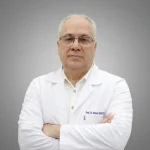 Prof. Dr. Ahmet Satıcı
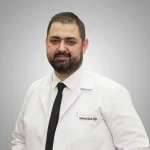 Doç. Dr. Muhammet Derda Özer
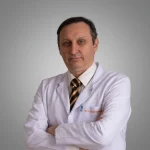 Op. Dr. Aysan Bayram