
- Home
- Knowledge centre
- Eye conditions & symptoms A–Z
- New Glasses Headache and Dizziness: Why It Happens and What to Do
New Glasses Headache and Dizziness: Why It Happens and What to Do
A new glasses headache is common and usually settles within a few days to about two weeks while your eyes and brain adapt to the new lenses. Dizziness or mild nausea can come with it, especially with progressive (varifocal) lenses. If it lasts longer than a week, or comes with dizziness or nausea, go back to your optician for a re-check: the prescription, lens centring or frame fit may need adjusting. Sudden severe headache, eye pain or vision loss needs urgent care.
Is a new glasses headache normal?
Yes, a headache in the first days of wearing new glasses is a common and usually harmless adjustment. Healthline's medically reviewed guide explains why: each eye has six muscles, and as your eyes learn to see through a new prescription, those muscles have to work harder, which can bring on a headache. The same guide says such headaches should resolve within a few days.
Your brain is adapting too. After months or years of seeing a blurred or different image, a sharper or differently shaped image can feel strange at first. Floors may seem nearer or farther away, and stairs may feel odd.
New glasses are most likely to cause trouble when you:
- have never worn glasses before
- have a stronger or changed prescription, especially new or altered astigmatism correction
- have switched from single-vision lenses to bifocals, trifocals or progressive lenses
- have a big difference in power between your two eyes
- have changed frame size or shape
How long does a new glasses headache last?
Most people feel settled within a few days; if discomfort lasts longer than a week, especially with dizziness or nausea, contact your eye doctor for a re-check. That is the guidance in the Healthline guide, and it is a sensible rule of thumb.
Progressive lenses take longest. According to a research review (Pope, 2000, as summarised on Wikipedia), adaptation to progressive lenses ranges from a few hours for some people up to about two weeks, and headache and dizziness can occur during that period. The same summary says that going back to your old glasses during the adjustment makes it take longer, so wear the new pair as much as you can. Manufacturers report that 90–98% of wearers accept progressive lenses, but a minority never settle, a problem called progressive non-tolerance.
| Your situation | What is typical | When to go back to the optician |
|---|---|---|
| Single-vision lenses, small change | Mild tiredness or headache for a few days | Still uncomfortable after a week |
| First-ever glasses, or a big change | A week or two of adjustment | Headache is strong, constant or getting worse |
| Progressive / varifocal lenses | A few hours up to about two weeks | Dizziness or nausea beyond two weeks, or blur in one part of the lens that never clears |
| Astigmatism correction added or changed | Slight distortion at first | Distortion that does not fade, or tilted-looking floors and walls after two weeks |
New glasses headache symptoms: how to tell it is the glasses
Eye-related headaches have a recognisable pattern. Wikipedia's summary of eye strain (asthenopia) describes fatigue, pain in or around the eyes, blurred vision, headache and occasional double vision after visual tasks. The National Eye Institute (NEI) lists headaches, double vision, hazy vision and eye strain among the symptoms of refractive errors.
Signs that point to your glasses:
- Location: a dull ache around or behind the eyes, across the brow or at the temples, rather than a throbbing pain on one side of the head. A pressure spot over the nose or behind the ears can be the frame (see below).
- Timing: it builds after reading, screen time or driving, and eases when you rest your eyes.
- Visual signs: tired, sore or watery eyes, blur that comes and goes, and trouble focusing.
- Dizziness or mild nausea: most often with progressive lenses, or when you move your head and the edges of the lens seem to swim.
A headache that is mainly one-sided and throbbing, with nausea and sensitivity to light, may be a migraine rather than a glasses problem. The NHS describes migraine as a throbbing headache, often on one side, with nausea and sensitivity to light and sound, and sometimes visual aura such as zigzag lines or flashing lights. Keep a note of when your headaches happen: it helps your optician and doctor tell the two apart.
Why do new glasses give you a headache, dizziness or nausea?
Several different things can cause the same symptoms, and your optician can check each of them.
- Your eyes are adapting. The usual explanation: eye muscles working in a new way, and the brain learning a new image.
- Multiple lens powers. Bifocals, trifocals and progressive lenses have different powers in different zones. Healthline notes you must learn to look through the right part of the lens for each distance. A swimming feeling at the sides is common at first.
- The prescription is slightly wrong. An error in the measurement, or in the way the lenses were made, strains the eyes and brings headaches. Healthline lists a wrong prescription as one of its four main causes.
- The lenses are not positioned correctly. For progressive lenses the fitting position is critical. The Wikipedia summary says an incorrect specification can cause a narrow field of view, clear vision in one eye only and blur straight ahead. Lenses sitting off-centre from your pupils can also make your eyes work harder, which may be one reason some people describe feeling cross-eyed.
- The frame fit. Healthline notes that frames that fit too snugly or create pressure points can trigger headaches, and a professional can readjust them. Pads pressing on the nose or arms pressing behind the ears can leave an ache in exactly those places.
- Unequal power between the eyes. The Wikipedia article on anisometropia says that adults who get glasses for unequal prescriptions may have headaches, eye strain and aniseikonia (a different image size in each eye) and find adapting harder.
- An eye condition that has not been found. Needing frequent changes to your glasses can be a sign of cataracts, according to the NHS. A headache with eye pain, nausea, halos or blurred vision can signal something more serious (see the warning signs below).
Why do my new glasses make me feel cross-eyed?
The feeling that your eyes are being pulled together, or are working to line up, usually means your eyes and brain have not adapted to the new lenses yet. It can happen with a changed prescription, a different lens centre or a new lens type. If it fades over the first week or so, it is probably adaptation. If it lasts, if you notice double vision, or if one eye seems to drift, tell your optician: they can re-measure, check how your eyes work together and check the lens centring. The NEI lists double vision as a symptom of refractive error, and the NHS advises an urgent GP appointment or NHS 111 call when a headache comes with vision or eye problems.
Why do my new glasses make me nauseous?
Nausea usually comes with dizziness: when what you see does not match what your balance system feels, your brain reacts. It is most common with progressive lenses, strong new astigmatism correction or a big prescription change, and it should ease as you adapt. If dizziness continues, note that the NHS lists many causes unrelated to the eyes, including inner-ear problems, migraine, dehydration, low blood sugar and a drop in blood pressure when standing up. See your doctor if it persists, keeps coming back or comes with hearing changes, numbness or weakness. If you feel dizzy, lie down until it passes, get up slowly, and do not drive.
Why do my old glasses now give me a headache?
If your old glasses suddenly give you a headache, the usual reasons are that your eyes have changed or your brain has adapted to the new pair, so the old prescription now feels wrong. Switching back and forth can prolong the adjustment, as noted above for progressive lenses.
Other reasons:
- Your prescription has moved on. Eyes change. The NEI says regular comprehensive eye exams are important to detect and monitor refractive errors, and the NHS lists a prescription that keeps changing as a possible sign of cataracts.
- The old glasses are worn out. Scratched or loose lenses and bent frames reduce clarity and fit.
- Presbyopia is setting in. EyeWiki, the American Academy of Ophthalmology's clinical encyclopaedia, reports that people first notice presbyopia (age-related loss of near focus) at an average age of 42–44.
- Heavy screen use. The American Optometric Association (AOA) says uncorrected or under-corrected vision problems, such as astigmatism and farsightedness, are a cause of computer vision syndrome, with symptoms including eyestrain, headaches and blurred vision.
If you get a headache with both the old and the new glasses, the glasses are probably not the whole story. Book an eye examination.
How to get rid of a headache from new glasses
Try these in order:
- Wear the new glasses all day
Avoid swapping back to the old pair; adaptation is faster when your eyes can settle.
- Rest your eyes
For screens, follow the 20-20-20 rule recommended by the AOA: every 20 minutes, look at something 20 feet (about 6 metres) away for 20 seconds. Blink fully: people blink only 5 to 7 times a minute at a computer instead of the usual 15, according to the American Academy of Ophthalmology (AAO).
- Check the fit
Frames should sit evenly and not pinch behind the ears or press on the nose. Ask your optician to adjust them, as Healthline advises for pressure-point headaches.
- With progressives, turn your head, not just your eyes
Look through the top for distance and lower down for reading, and point your nose at what you want to see. If the clear zone feels narrow, have the fitting checked.
- Reduce glare and screen strain
Healthline suggests an anti-reflective coating for computer use, and the AAO suggests sitting about 25 inches from the screen, looking slightly downward.
- Use a simple painkiller if needed
Healthline mentions over-the-counter pain relievers; follow the pack instructions and ask a pharmacist if you are unsure.
- Go back after a week
If it is not settling, take the glasses back for a re-check of prescription, centring and fit. Tell them exactly where you feel the headache and when.
Is it the wrong prescription? What to ask your optician
A good optician will re-test your eyes and check the lenses against your prescription. Ask them to:
- re-check the prescription and compare it with the lenses in the frame
- check that each lens is centred in front of your pupil and, for progressives, that the fitting height is right
- check the frame fit and nose pads
- check whether your two eyes work together comfortably
- tell you what to expect: how many days of adaptation, and when to come back
If the glasses are correct and still uncomfortable after two weeks, ask about a different lens design or a repeat eye test.
When is a headache after getting glasses not about the glasses?
Glasses do not cause serious illness, but a headache that starts around the same time can still be unrelated. Get urgent medical help if any of these happen.
| Warning sign | What it may mean | What to do |
|---|---|---|
| Intense eye pain, red eye, rainbow-coloured circles around lights, blurred vision, nausea or vomiting with a headache | Acute angle-closure glaucoma, a sudden eye-pressure emergency (NHS) | Call 999 or go to A&E (UK), or your local emergency number. Do not drive yourself |
| Sudden, severe headache; confusion, drowsiness, weakness, speech problems, vision loss or a seizure | Possible neurological emergency (NHS) | Emergency services immediately |
| Headache with very high temperature, stiff neck or bright lights bothering you | Possible serious infection (NHS) | Emergency services immediately |
| Headache with vision or eye problems | Needs assessment (NHS) | Urgent GP appointment or NHS 111 (UK), or your local urgent service |
| Straight lines look wavy or the centre of your vision is blurred | Possible macular problem: see our guide to macular degeneration (yellow spot): symptoms and treatment | See your optician or eye doctor promptly |
The NHS says glaucoma that develops suddenly is a medical emergency. Eye-pressure problems can also develop without pain: read our guide to high eye pressure: normal values and what raises it.
Could glasses be the wrong answer altogether?
Some people get glasses headaches again and again: lenses that never feel right, a prescription that keeps changing, or simple tiredness with glasses. Others realise they would rather not wear glasses at all.
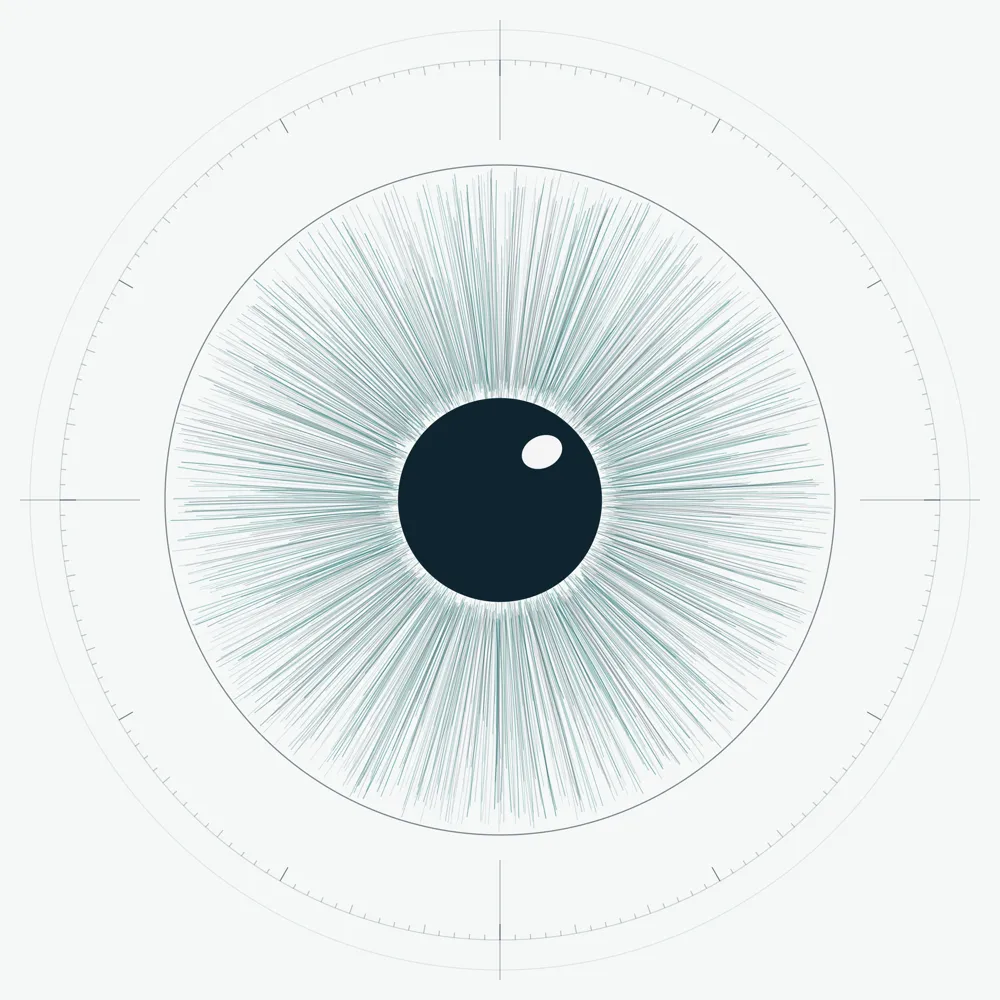
Laser eye surgery can correct short-sightedness, long-sightedness and astigmatism so that many people no longer need glasses for everyday life. It is not suitable for everyone, and your surgeon assesses each eye before recommending it. It does not treat headaches as such, and it does not stop age-related loss of near focus. If your headaches have another cause, correcting your prescription will not fix them. For suitable candidates, though, it can mean no longer depending on lenses. Laser surgery at Laser Istanbul Clinic is led by Prof. Dr. Ahmet Satıcı and Op. Dr. Aysan Bayram.
To find out whether you are a candidate, send us your prescription and scans: [Free online consultation: upload your prescription and scans] (/en/free-consultation/).
Frequently asked questions
Yes. Headaches in the first days are common because your eye muscles and brain have to adapt to a new prescription. They usually settle within a few days. If yours lasts more than a week, or comes with dizziness or nausea, go back to your optician.
Usually a few days. Progressive lenses can take from a few hours to about two weeks. If you are still uncomfortable after a week, ask for a re-check.
Wear them consistently, take regular screen breaks (look 20 feet away for 20 seconds every 20 minutes), ask your optician to adjust the fit, and take a simple painkiller if you need one. If the headache persists, ask for the prescription and lens centring to be checked.
Your brain is still adapting to the new image, especially with progressive lenses or a changed astigmatism correction. Dizziness should fade as you adapt. If it does not, or comes with other symptoms, see your optician or doctor.
Mild nausea can happen during the adjustment period, usually with dizziness. If it continues beyond a week or two, go back for a re-check.
It usually reflects your eyes working to adapt to the new lenses. If it does not fade, or you see double, tell your optician so they can check the lens centring and how your eyes work together.
Pressure from a snug or badly adjusted frame can cause headaches. Ask your optician to adjust the frame and nose pads.
Try not to: for progressive lenses, wearing the old pair prolongs adaptation. If symptoms are severe, rest your eyes and see your optician.
If you have a sudden severe headache, eye pain with a red eye and halos, vision loss, confusion, weakness or speech trouble, call emergency services.
Sources for the facts on this page
- Healthline. New Glasses Headache: Why It Happens and How to Treat It. https://www.healthline.com/health/new-glasses-headache
- NHS. Headaches. https://www.nhs.uk/conditions/headaches/
- NHS. Glaucoma. https://www.nhs.uk/conditions/glaucoma/
- NHS. Migraine. https://www.nhs.uk/conditions/migraine/
- NHS. Dizziness. https://www.nhs.uk/conditions/dizziness/
- NHS. Cataracts in adults. https://www.nhs.uk/conditions/cataracts/
- National Eye Institute (NIH). Refractive Errors. https://www.nei.nih.gov/learn-about-eye-health/eye-conditions-and-diseases/refractive-errors
- American Optometric Association. Computer Vision Syndrome. https://www.aoa.org/healthy-eyes/eye-and-vision-conditions/computer-vision-syndrome
- American Optometric Association. Astigmatism. https://www.aoa.org/healthy-eyes/eye-and-vision-conditions/astigmatism
- American Academy of Ophthalmology. Digital Eye Strain. https://www.aao.org/eye-health/tips-prevention/computer-usage
- EyeWiki (AAO). Presbyopia. https://eyewiki.org/Presbyopia
- Wikipedia. Progressive lens (adaptation section, citing Pope DR, Progressive Addition Lenses: History, Design, Wearer Satisfaction and Trends, OSA TOPS Vol. 35, 2000). https://en.wikipedia.org/wiki/Progressive_lens
- Wikipedia. Eye strain (asthenopia). https://en.wikipedia.org/wiki/Asthenopia
- Wikipedia. Anisometropia. https://en.wikipedia.org/wiki/Anisometropia
- NHS. Age-related macular degeneration (AMD). https://www.nhs.uk/conditions/age-related-macular-degeneration-amd/