
- Home
- Knowledge centre
- Comparisons
- Cataract vs Glaucoma: The Difference (Plus Ocular Hypertension vs Glaucoma)
Cataract vs Glaucoma: The Difference (Plus Ocular Hypertension vs Glaucoma)
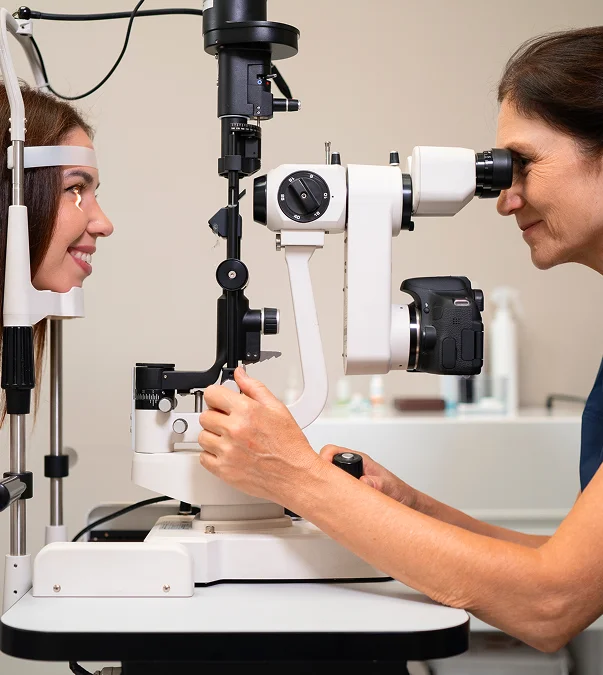
A cataract is a clouding of the eye's lens that makes vision hazy; it can be removed with surgery and sight usually improves. Glaucoma is damage to the optic nerve, usually linked to eye pressure; it often has no early symptoms, and lost vision cannot be restored. Ocular hypertension is high eye pressure with a healthy optic nerve, so it is a risk, not yet glaucoma. At Laser Istanbul Clinic, Prof. Dr. Ahmet Satıcı treats both cataract and glaucoma; Doç. Dr. Muhammet Derda Özer and Op. Dr. Aysan Bayram also operate on cataracts.
- Cataract = a cloudy lens. It affects the whole picture (blur, glare, faded colours), usually gets worse slowly with age, and is fixed by replacing the lens. Sight lost to a cataract can usually be brought back.
- Glaucoma = a damaged optic nerve. It usually starts at the edges of your vision, often with no symptoms, and treatment protects the sight you still have rather than restoring what is gone.
- Ocular hypertension = high pressure, healthy nerve. It is watched, and sometimes treated, to stop it becoming glaucoma.
Which is worse? Neither is "better" to have, but they behave very differently. Left untreated, both can cost you your sight. A cataract is reversible with surgery; glaucoma damage is permanent, which is why finding it early matters so much.
Cataract vs glaucoma: side by side
Both conditions become more common with age, and both are found in the same routine eye test, which is why they are so often confused. In reality, they affect different parts of the eye and call for different treatment.
| Cataract | Glaucoma | |
|---|---|---|
| What it is | The lens inside the eye becomes cloudy. | The optic nerve, the cable from eye to brain, becomes damaged, usually linked to pressure inside the eye. |
| Part of the eye | Lens (at the front, behind the pupil). | Optic nerve (at the back of the eye) and the drainage system that controls pressure. |
| Typical symptoms | Blurred or cloudy vision, glare and halos around lights, trouble driving at night, faded colours, sometimes double vision. | Usually none at first. Side (peripheral) vision fades gradually; a sudden attack (acute angle-closure) brings severe eye pain, redness, blurred vision, halos around lights, headache and nausea. |
| How fast | Develops gradually over months or years. | Open-angle glaucoma develops slowly over years; an acute attack can strike suddenly. |
| Pain | No pain. | None in the common type; severe pain in an acute attack. |
| Can lost vision be restored? | Yes, in most people: the cloudy lens is replaced. | No. Damage is permanent; treatment aims to stop it getting worse. |
| Main treatment | Cataract surgery: the cloudy lens is replaced with an artificial lens. | Eye drops first; laser or surgery if drops are not enough. |
| How it is found | Eye examination; you usually notice symptoms yourself. | Comprehensive eye examination with pressure test, optic-nerve check and visual-field test; many people have no symptoms to notice. |
| Cure? | Yes, surgery removes the cataract. | No cure; it is managed for life. |
Sources for this table: NHS, National Eye Institute (NEI), American Academy of Ophthalmology (AAO). See the full list at the end.
Who gets a cataract, and who is at risk of glaucoma?
Cataract: usually age, but not only
The NHS says cataracts mostly affect people over 60. Other causes and risk factors include a previous eye injury or eye surgery, long-term steroid use, smoking, diabetes, severe short-sightedness, uveitis (inflammation inside the eye), family history and unprotected sun exposure. The NEI notes that by age 80 most people have a cataract or have had one removed.
Glaucoma: often silent, so risk groups should be checked
The NHS lists people over 50, those with a family history of glaucoma, people of Black African, Caribbean or Asian descent, and people with short-sightedness, long-sightedness or diabetes as being at higher risk. In the United States, the NEI adds African Americans from age 40 and Hispanic/Latino people over 60. The AAO also lists thin corneas and long-term steroid use. The NEI says that about half of people with glaucoma do not know they have it, because there is nothing to feel. The NHS advises everyone to have an eye test at least every two years.
Ocular hypertension vs glaucoma: what is the difference?
Ocular hypertension is eye pressure that is higher than normal in an eye whose optic nerve and visual field are still healthy; glaucoma is when the optic nerve has actually been damaged. Glaucoma UK puts it simply: ocular hypertension means raised pressure in an otherwise healthy eye, while glaucoma means high pressure alongside a damaged optic nerve and loss of visual field.
| Ocular hypertension | Glaucoma | |
|---|---|---|
| Eye pressure | Above the usual range. The AAO gives normal pressure as roughly 10–20 mmHg; EyeWiki describes ocular hypertension as pressure consistently above 21 mmHg. | Often high, but not always: "normal-tension glaucoma" damages the nerve even when pressure readings are normal (AAO). |
| Optic nerve | Looks healthy. | Damaged. |
| Visual field (side vision) | Normal. | Loss of side vision, usually slowly. |
| Symptoms | None. | None at first in the common type. |
| What it means | A risk factor: the person is at higher than average risk of developing glaucoma. | A disease that needs lifelong monitoring and treatment. |
| Treatment | Often watched at regular checks; drops or laser (selective laser trabeculoplasty, SLT) if the risk is high enough. | Drops, laser or surgery to lower pressure and protect the nerve. |
How likely is ocular hypertension to turn into glaucoma? In the Ocular Hypertension Treatment Study, 9.5% of people who were only observed developed glaucoma within five years, against 4.4% of those who used pressure-lowering drops, a risk reduction of more than 50%. EyeWiki reports that about 45% of untreated patients had developed glaucoma after 20 years of follow-up. Risk is higher with thin corneas, higher starting pressure, a larger "cup" in the optic nerve and older age, so your ophthalmologist measures corneal thickness and examines the nerve before deciding whether to treat or watch.
Why one pressure reading is not enough. The AAO states that a single eye-pressure test by itself is not enough to diagnose glaucoma. A full exam looks at the nerve and the visual field too.
Cataract vs glaucoma symptoms and vision: what you actually notice
What cataract vision looks like
The NHS lists blurred or misty vision, difficulty seeing in dim light or at night, glare and halos around lights, faded colours (blues in particular) and, sometimes, double vision. Symptoms usually creep in slowly and affect the whole field of view. Reading and driving at night are often the first things to suffer.
What glaucoma vision looks like
In the common open-angle type, nothing hurts and central vision stays sharp for a long time. Side vision fades first, so many people miss it until the damage is advanced, which is why the AAO calls it the "silent thief of sight". An acute angle-closure attack is different and is an emergency: sudden blurred vision, severe eye pain, headache, nausea, vomiting and rainbow-coloured halos around lights. The NHS says to call 999 if these symptoms come on suddenly.
Why the two are confused
Halos around lights appear in both: gradually with a cataract, and in a sudden attack with angle-closure glaucoma. Blurred vision can be either. Only an eye examination can tell them apart, and a sudden painful red eye with halos should never be put down to a cataract.
Macular degeneration vs glaucoma vs cataracts
People often add a third condition to the comparison. Age-related macular degeneration (AMD) affects the macula, the part of the retina used for reading and recognising faces.
| Cataract | Glaucoma | Macular degeneration (AMD) | |
|---|---|---|---|
| Affected part | Lens | Optic nerve | Macula (centre of the retina) |
| Typical loss | Overall haze and glare | Side vision first | Central vision (middle of the picture) |
| Reversible? | Usually, with surgery | No | Treatment aims to slow it; central loss is not simply reversed |
| Total blindness? | Possible if left untreated | Possible if left untreated | The NHS says it does not cause total blindness but makes reading and recognising faces difficult |
Per the World Health Organization (WHO), among about 1 billion people with preventable or unaddressed vision impairment (fact sheet of 10 February 2026), 94 million are due to cataract, 8 million to age-related macular degeneration and 7.7 million to glaucoma. The three can occur together in the same person, so an eye examination should check all of them.

Treatment: cataract surgery vs glaucoma treatment
Cataract: one operation fixes the cause. Cataract surgery is the only way to remove a cataract (NEI). The surgeon replaces the cloudy lens with a clear artificial lens. The NHS says surgery usually takes 20 to 45 minutes under local anaesthetic, you are awake but feel no pain, and most people go home the same day. Eye drops are needed for about four weeks, and serious complications are rare. The NEI reports that 9 out of 10 people who have cataract surgery see better afterwards.
Glaucoma: lowering pressure, for life. Every glaucoma treatment, from drops to surgery, aims to lower eye pressure to protect the optic nerve. The AAO describes the usual order: daily eye drops first; laser (trabeculoplasty to improve drainage in open-angle glaucoma, or iridotomy for narrow-angle glaucoma); then surgery such as trabeculectomy or a drainage device if those are not enough. Treatment can stop damage getting worse but, in the words of the NEI, it will not undo damage already done. Patients are usually reviewed every few months, and drops must be used as prescribed.
When the two meet. The AAO notes that in people with narrow drainage angles, removing the eye's natural lens can itself lower eye pressure. So if you have both a cataract and glaucoma, your surgeon may plan the cataract operation with your pressure in mind. This is a decision for an examining surgeon, not something to assume from an article.
Who needs which check-up or treatment?
See an eye specialist about a cataract if…
The NHS says you do not need surgery immediately: stronger glasses and brighter light can help for a while, but over time cataracts get worse. The right moment is when sight problems affect your daily life.
- Your vision is blurry or hazy and glasses no longer fix it.
- Glare, halos or poor night vision make driving or reading hard.
- Colours look washed out or yellowed.
Have your pressure and optic nerve checked for glaucoma if…
- You are over 40, and especially over 50.
- A parent, brother or sister has glaucoma.
- You are of African, Caribbean, Asian or Hispanic descent, or have diabetes, severe short-sightedness or thin corneas.
- A routine test found high eye pressure (ocular hypertension).
Go to emergency care today if…
- You have sudden severe eye pain with a red eye, blurred vision, halos around lights, headache or nausea. This may be an acute glaucoma attack.
Who treats what at Laser Istanbul Clinic
- Prof. Dr. Ahmet Satıcı: cataract and premium lens surgery, and glaucoma treatment.
- Doç. Dr. Muhammet Derda Özer (Doç. means Associate Professor): cataract surgery, plus cornea, retina and uveitis; speaks Turkish and English.
- Op. Dr. Aysan Bayram: cataract surgery, laser eye surgery and retinal disease; speaks English.
Cataract vs glaucoma: is there a cost difference?
Yes, because the treatments are different. Cataract surgery is a single operation with a set price per eye, so it is the easier of the two to compare. Glaucoma care depends on what you need: drops, laser, a stent, trabeculectomy or a drainage tube, so each case is priced after an examination.
Cataract surgery: typical published prices (USD, per eye, monofocal lens, 2025–26)
| Where | Typical published price |
|---|---|
| Istanbul | $1,100–2,700 |
| UK (private) | $3,350–4,700 |
| USA | $3,500–7,000 |
| Germany | Covered by statutory insurance (premium lens extra) |
Advertised ranges, not quotes. Many Istanbul packages include hotel and transfers, so compare like with like. At Laser Istanbul Clinic, cataract surgery starts from {{price}} per eye. Hotel and airport transfers are not included; they are a separate charge, arranged on request. Flights are not included. In the NHS, cataract surgery is free at the point of use, but about 650,000 people in the UK are waiting, with a median wait of 41 weeks, and the NHS does not pay for premium lenses.
Standard vs premium lens, and toric vs regular. The lens you choose changes the price more than anything else. According to the AAO, the monofocal lens is the most common: it focuses at one distance, usually far, and you wear glasses for reading. Premium options include multifocal and extended depth-of-focus (EDOF) lenses, which give both near and far focus, and toric lenses, which also correct astigmatism (an uneven curve of the cornea or lens). A regular monofocal lens does not correct astigmatism, so glasses or a toric lens are needed for that. Trifocal lens replacement in Istanbul is typically advertised at $3,400–7,000 for both eyes. Your surgeon will recommend a lens after measuring your eyes.
Glaucoma treatment: from {{price}}, confirmed in writing after your surgeon reviews your case. The cost depends on whether you need laser, a stent or surgery.
When you compare quotes, check: per eye or both eyes? Which lens, by name? Are scans, medication, follow-up checks and an interpreter included? At Laser Istanbul Clinic, the price includes pre-operative examination and scans, surgery by your named surgeon, medication, follow-up checks in Istanbul, a personal interpreter, a coordinator and remote follow-up.
Frequently asked questions
A cataract is a cloudy lens, which blurs vision and can be cured by replacing the lens. Glaucoma is damage to the optic nerve, usually linked to eye pressure, and its damage is permanent. A cataract affects the clarity of the whole picture; glaucoma usually takes the side vision first, often without symptoms.
Glaucoma is usually considered more serious, because the sight it takes cannot be brought back, while a cataract can normally be removed and sight improves. Both can lead to blindness if left untreated. According to the WHO, 94 million people have vision impairment from unaddressed cataract and 7.7 million from glaucoma.
Ocular hypertension is high eye pressure with a healthy optic nerve and normal side vision. Glaucoma is damage to the optic nerve, with or without high pressure. Ocular hypertension raises your risk of glaucoma but is not glaucoma itself. In the Ocular Hypertension Treatment Study, treating with drops cut five-year risk from 9.5% to 4.4%.
Cataract: blurred or cloudy vision, glare and halos, poor night vision and faded colours. Open-angle glaucoma: usually no symptoms until side vision is lost. An acute glaucoma attack causes severe eye pain, a red eye, halos, headache and nausea and needs emergency care.
Yes. Both are more common with age, so many people have both. In people with narrow drainage angles, removing a cataract can itself lower eye pressure (AAO). Your surgeon plans the order of treatment after examining you.
No. Cataract surgery replaces the cloudy lens; it does not repair an optic nerve. It can lower pressure in some eyes with narrow angles, but you will usually still need glaucoma checks. Glaucoma has no cure, only treatment to slow or stop further loss, according to the NHS.
No. The NEI says treatment will not undo damage already done, but it can stop it getting worse. That is why regular eye tests matter: the NHS advises one at least every two years, and more often if you are at higher risk.
A cataract is seen on an examination of the lens. Glaucoma needs a comprehensive eye exam that includes a pressure test, a look at the optic nerve and a visual-field test. The NEI says a comprehensive dilated exam is the only way to find out if you have glaucoma.
Prof. Dr. Ahmet Satıcı treats both cataract and glaucoma. Doç. Dr. Muhammet Derda Özer and Op. Dr. Aysan Bayram also perform cataract surgery. Your quote names the surgeon, and surgery takes place in a fully equipped, Ministry of Health–licensed operating theatre in Istanbul.
Cataract surgery is a set price per eye, from {{price}}, and the lens you choose changes it. Glaucoma treatment depends on whether you need drops, laser, a stent or surgery, and is quoted after review. Hotel and airport transfers are not included in either; they are a separate charge.
Sources for the facts on this page
- NHS, Glaucoma: definition, no symptoms at first, acute symptoms, risk groups, eye test at least every 2 years, no cure, call 999 for sudden symptoms. https://www.nhs.uk/conditions/glaucoma/
- NHS, Cataracts in adults: definition, symptoms, risk factors (over 60, injury, steroids, smoking, diabetes), stronger glasses help for a while, surgery needed over time. https://www.nhs.uk/conditions/cataracts/
- NHS, Cataract surgery: 20–45 minutes, local anaesthetic, same-day home, drops about 4 weeks, serious complications rare. https://www.nhs.uk/conditions/cataract-surgery/
- NHS, Age-related macular degeneration: affects central vision, does not cause total blindness. https://www.nhs.uk/conditions/age-related-macular-degeneration-amd/
- National Eye Institute (NIH), Cataracts: surgery is the only way to remove a cataract; 9 in 10 see better; by age 80 most have a cataract or have had surgery. https://www.nei.nih.gov/learn-about-eye-health/eye-conditions-and-diseases/cataracts
- National Eye Institute (NIH), Glaucoma: often no symptoms, about half unaware, comprehensive dilated exam with visual-field test, treatment will not undo damage. https://www.nei.nih.gov/learn-about-eye-health/eye-conditions-and-diseases/glaucoma
- American Academy of Ophthalmology, What Is Glaucoma?: types, symptoms, "silent thief of sight", damage permanent, normal pressure about 10–20 mmHg, normal-tension glaucoma, single pressure test not enough, risk factors. https://www.aao.org/eye-health/diseases/what-is-glaucoma
- American Academy of Ophthalmology, What Is Ocular Hypertension?: definition, healthy optic nerve, monitoring vs treatment, risk groups, corneal thickness. https://www.aao.org/eye-health/diseases/what-is-ocular-hypertension
- American Academy of Ophthalmology, Glaucoma Treatment: drops, laser trabeculoplasty and iridotomy, surgery, drainage devices, cataract surgery can lower pressure in narrow angles. https://www.aao.org/eye-health/treatments/glaucoma-treatment
- American Academy of Ophthalmology, IOL implants: lens replacement after cataracts: monofocal most common; multifocal, EDOF, toric lenses. https://www.aao.org/eye-health/diseases/cataracts-iol-implants
- Glaucoma UK, Ocular hypertension: raised pressure in an otherwise healthy eye vs glaucoma; monitoring; drops or SLT. https://glaucoma.uk/about-glaucoma/types-of-glaucoma/ocular-hypertension/
- Ocular Hypertension Treatment Study (OHTS), Results: 9.5% observation vs 4.4% drops develop glaucoma at five years; risk factors. https://ohts.wustl.edu/results/
- EyeWiki (AAO), Ocular Hypertension: pressure consistently above 21 mmHg without optic-nerve damage; about 45% at 20 years in untreated patients; risk factors. https://eyewiki.org/Ocular_Hypertension
- World Health Organization, Blindness and vision impairment (10 February 2026): cataract 94 million, AMD 8 million, glaucoma 7.7 million among about 1 billion with preventable or unaddressed vision impairment. https://www.who.int/news-room/fact-sheets/detail/blindness-and-visual-impairment
- NICE guideline NG81 (glaucoma) could not be opened (HTTP 403) and is therefore not cited on this page.
Not sure whether it is a cataract, glaucoma or just high pressure? Ask a named surgeon, free
Send your prescription, scans or eye reports, and Prof. Dr. Satıcı, Doç. Dr. Özer or Op. Dr. Bayram will tell you which treatments may suit you, who would operate and what it would cost, in writing, with no obligation. This does not replace an examination in person; if you have sudden eye pain or sudden vision loss, seek emergency care first.
3 eye surgeons
Your case is reviewed by a named surgeon, not a salesperson. Reply within {{response time}}.
 Prof. Dr. Ahmet Satıcı
 Doç. Dr. Muhammet Derda Özer
 Op. Dr. Aysan Bayram