
- Home: eye surgery in Istanbul
- Free eye tools
- Colour blindness test
Online Color Vision Test: A Free Color Blind Test (Ishihara-Style)
Before you start: turn the screen brightness up, switch off night mode, blue-light filters and any colour filters, take off tinted or colour-correcting glasses, and wear your normal clear glasses or contact lenses.
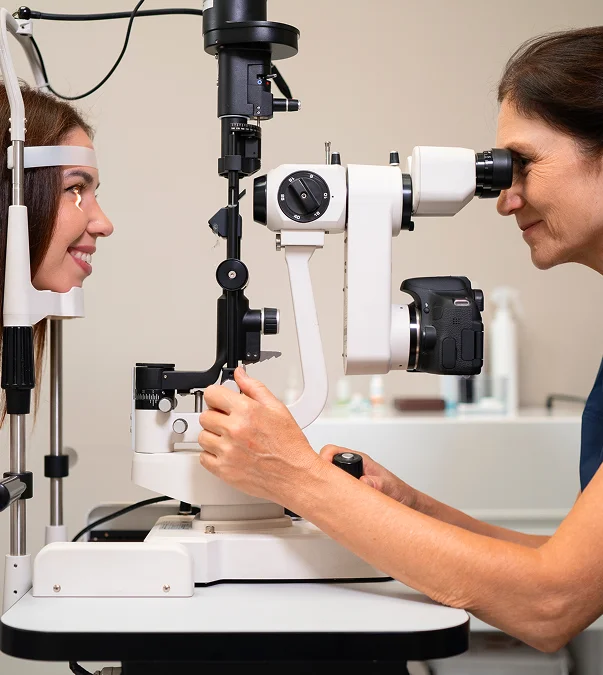
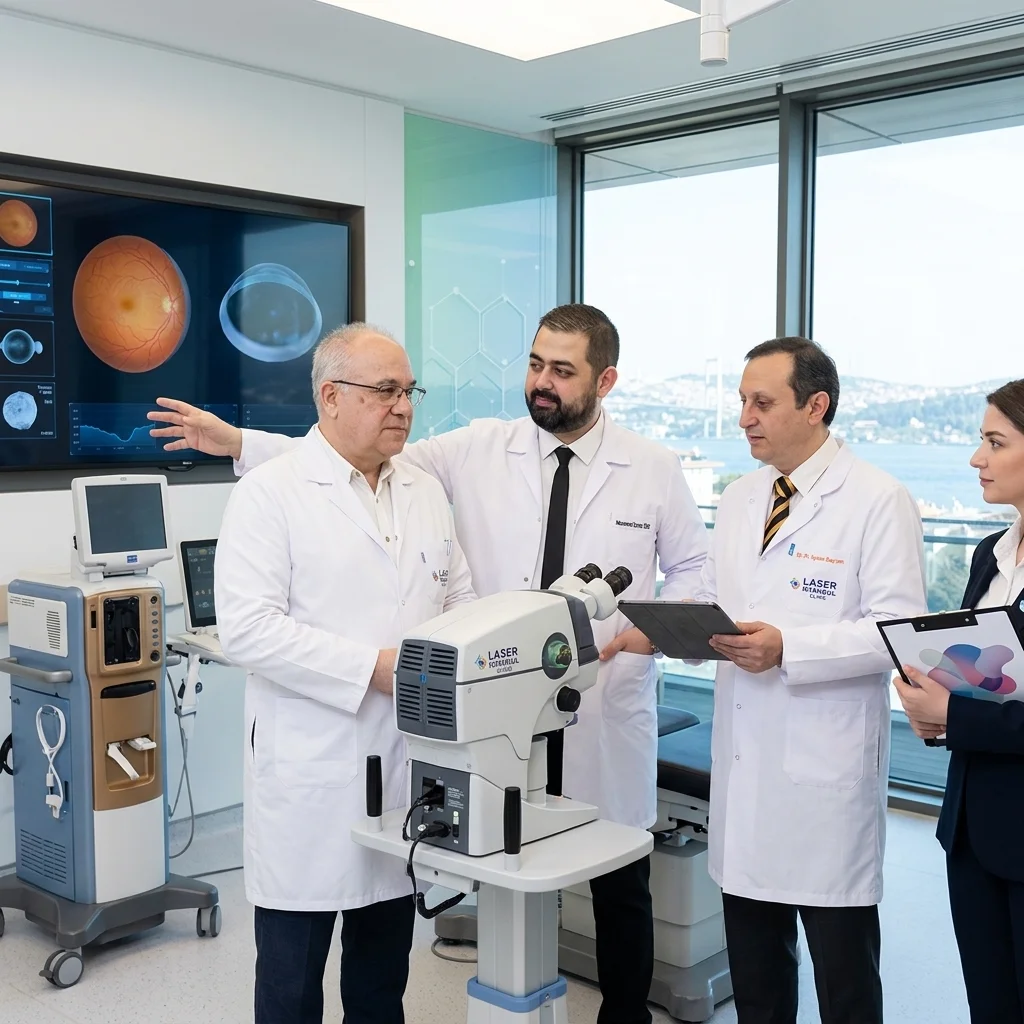
This free online color vision test shows 11 dot patterns, each hiding a number. If you read them, your color vision is probably typical; if you miss several, you may have red-green color blindness, the most common type. This color blind test takes about 3 minutes. It is a quick check, not a diagnosis; Prof. Dr. Ahmet Satıcı, Doç. Dr. Muhammet Derda Özer (Doç. = Associate Professor) and Op. Dr. Aysan Bayram can examine you properly.
Before you start: turn the screen brightness up, switch off night mode, blue-light filters and any colour filters, take off tinted or colour-correcting glasses, and wear your normal clear glasses or contact lenses.
What your color blindness test result means
Here is what each outcome usually means.
| Your result on this check | What it suggests | What to do |
|---|---|---|
| Read almost all red-green plates (0 or 1 missed of 8) | No red-green difficulty found | Nothing, unless you still notice colour mix-ups; then ask an optician for a formal test |
| Missed 2 or 3 red-green plates | Possible mild difference, or screen and light effects | Retest on another screen in daylight; ask an optician if it repeats |
| Missed 4 or more red-green plates | Typical of red-green color blindness | Ask an optician or eye doctor for a formal test |
| Missed both blue-yellow plates | Possible blue-yellow difference (rare when inherited) | See an eye doctor |
| Could not read the practice plate | Screen settings, or a colour or vision problem | Check settings, retry, then see an eye doctor |
What is color blindness?
Color blindness, also called colour vision deficiency, means you see colours differently from most people (NEI). Most people who have it are born with it, and it usually runs in families. About 1 in 12 men have it, against about 1 in 200 women, which is roughly 3 million people in the UK (Colour Blind Awareness).
Red-green types are X-linked: a boy has one X chromosome, so one altered copy is enough, while a girl needs both altered (MedlinePlus).
What are the types of color blindness?
| Type | What is affected | What changes | How common |
|---|---|---|---|
| Deutan (deuteranomaly, deuteranopia) | Green-sensitive cones | Certain greens look more red | Most common red-green type |
| Protan (protanomaly, protanopia) | Red-sensitive cones | Reds look more green and less bright | Less common than deutan |
| Tritan (tritanomaly, tritanopia) | Blue-sensitive cones | Blue and green, and yellow and pink, are hard to tell apart | Fewer than 1 in 10,000 people |
| Complete (achromatopsia) | Cone function largely absent | Little or no colour, often with blurred sight and light sensitivity | Rare |
"Anomaly" means a weaker colour signal; "-opia" means that signal is missing (NEI). Red-green color blindness, the deutan and protan types together, is by far the most common; blue-yellow and complete forms are rare.
Is this online color vision test accurate?
It is a screening check, not a diagnosis. Opticians use the Ishihara test, a set of dot plates with 38 plates in full, but online versions can be less accurate because screens show colours differently (All About Vision, reviewed Nov 2025). Even with printed plates, about 20% of people with typical colour vision make an error if none is allowed, and the plates cannot reliably show severity (Rodriguez-Carmona et al., 2012). Eye doctors confirm and classify it with further tests, such as the D-15 arrangement test or an anomaloscope. A colour test is not part of the routine NHS eye test, but you can ask an optician for one (NHS).
Causes: born with it, or acquired later?
Most colour blindness is inherited and stays the same for life. It can also be acquired, from eye disease such as glaucoma or cataract, diabetes, multiple sclerosis, liver disease, stroke, injury, or some medicines (NHS, NEI). The AAO names hydroxychloroquine as one such medicine. Colours that start to look faded or different deserve an eye examination: in optic neuritis, for example, colours can look washed out.
Color blind glasses: do they work?
Colour blind glasses (colour blindness glasses) and special contact lenses use filters to increase contrast between colours, and the AAO says they "may help". In a 2022 study in the journal Eye, 13 people with red-green color blindness who wore filter glasses daily for 11 to 14 days saw colours better, but still discriminated colours less well than people with typical colour vision (University of the Incarnate Word). There is no cure for inherited colour blindness (NEI, NHS). If an eye condition such as cataract is the cause, treating it may help restore colour vision (NHS).
When to see an eye doctor
Get help today for sudden loss or blurring of vision, a dark curtain across your vision, new flashes or floaters, or a painful red eye. Call your local emergency number (112 in the EU and Türkiye, 999 in the UK, 911 in the US and Canada).
Book an eye examination soon if colours have recently looked faded or different, one eye sees colour differently from the other, or your child uses the wrong colours when drawing (NHS).
A normal result is not a clean bill of health: this test checks colour only.
This color vision test is a screening tool only. It does not diagnose color blindness or any other eye condition, cannot tell you which type you have or how strong it is, and does not replace a colour vision test by an optometrist or ophthalmologist. Results depend on your screen and lighting and may not be accurate. If you are worried about your eyes, or your colour vision changes suddenly, see an eye doctor.
More free eye tools
If your result shows a change that needs explaining, or your colour vision has changed recently, a full examination looks for the cause. Prof. Dr. Ahmet Satıcı, Doç. Dr. Muhammet Derda Özer or Op. Dr. Aysan Bayram can review your eye reports and tell you which tests or treatments may suit you. Read about our eye examinations and diagnostic tests or take our online eye test (vision check).
- Check yourself for astigmatism with the astigmatism test
- Check your central vision with the Amsler grid test
- Understand your glasses prescription: sphere, cylinder, axis
- Convert 20/20, 6/6, decimal and percentage vision
- Which lens is right for me? Take the lens finder quiz
- Eye colour chart and inheritance calculator
- See all free eye tools
Color blind test: frequently asked questions
Yes. This color blind test free of charge needs no sign-up and no payment.
Yes. Many people with mild red-green colour blindness reach adulthood without noticing. If colour mix-ups happen often, ask an optician for a formal test.
Deutan colour blindness is a red-green type in which the green-sensitive cones are weak (deuteranomaly) or missing (deuteranopia). Deuteranomaly is the most common type of red-green colour vision deficiency (NEI).
No. There is no cure for colour vision deficiency that runs in families (NEI, NHS). Special glasses or lenses can improve colour contrast for some people (AAO). If another condition is the cause, treating it may help (NHS).
Yes, but much less often: about 1 in 200 women, against 1 in 12 men (Colour Blind Awareness).
In the UK, you do not have to tell the DVLA that you are colour blind (GOV.UK). Some jobs, such as pilot or train driver, can be closed to people with colour vision deficiency (NHS). Rules differ by country, so check locally.
Sources for the facts on this page
- Colour blindness means seeing colours differently; most people are born with it and it runs in families; about 1 in 12 men; red-green most common, blue-yellow less common, complete rare; deuteranomaly the most common red-green type (greens look more red); protanomaly (reds look more green and less bright); protanopia and deuteranopia = cannot tell red from green; acquired causes including cataract; colour plate tests; no cure for the inherited form; special glasses and lenses increase contrast: National Eye Institute, "Color blindness" https://www.nei.nih.gov/eye-health-information/eye-conditions-and-diseases/color-blindness and "Types of color vision deficiency" https://www.nei.nih.gov/eye-health-information/eye-conditions-and-diseases/color-blindness/types-color-vision-deficiency
- Symptoms in children (wrong colours when drawing); causes (glaucoma, diabetes, liver disease, multiple sclerosis, injury, stroke, medicines); Ishihara and colour-arrangement tests, not part of the routine NHS eye test but available from opticians; no treatment for the inherited form, treating the cause may help; jobs such as pilot or train driver: NHS, "Colour vision deficiency" https://www.nhs.uk/conditions/colour-vision-deficiency/
- Acquired causes (glaucoma, diabetes, macular degeneration, hydroxychloroquine and others); no treatment for congenital colour blindness, special contact lenses and glasses "may help"; acquired forms treated by addressing the cause: American Academy of Ophthalmology, "What is color blindness?" https://www.aao.org/eye-health/diseases/what-is-color-blindness
- X-linked inheritance of red-green colour blindness (fathers cannot pass X-linked traits to sons); blue-yellow defects fewer than 1 in 10,000, men and women equally: MedlinePlus Genetics, "Color vision deficiency" https://medlineplus.gov/genetics/condition/color-vision-deficiency/
- 1 in 12 men (8%) and 1 in 200 women; about 3 million people in the UK; genetic or acquired: Colour Blind Awareness, "Colour blindness" https://www.colourblindawareness.org/colour-blindness/
- Protan defects affect L (red) cones and deutan defects M (green) cones; deutan defects more common than protan; X-linked recessive: Mitiku et al., Journal of the Egyptian Public Health Association, 2020, https://pmc.ncbi.nlm.nih.gov/articles/PMC7364690
- Ishihara test has 38 plates in full; online versions may be less accurate depending on screen colour quality; D-15 test; anomaloscope; reviewed 15 Nov 2025 by Thomas J. Stokkermans, OD, PhD: All About Vision, "Color blind test: Are you color blind?" https://www.allaboutvision.com/en-ca/eye-exam/color-blind-tests/
- About 20% of people with typical colour vision fail the Ishihara test when no errors are allowed; neither the number of plates failed nor a severity index reliably shows severity: Rodriguez-Carmona M, O'Neill-Biba M, Barbur JL. "Assessing the severity of color vision loss with implications for aviation and other occupational environments." Aviation, Space, and Environmental Medicine 2012;83(1):19-29. https://doi.org/10.3357/asem.3111.2012
- Filter glasses improved colour perception in 13 people with red-green deficiency (11 to 14 days of daily wear, Eye, February 2022) without giving typical colour vision: University of the Incarnate Word, "UIW study finds special glasses help color blind see colors better" https://www.uiw.edu/news/2022/02/uiw-study-finds-special-glasses-help-color-blind-see-colors-better.html
- Colour blindness need not be reported to the DVLA: GOV.UK, "Driving eyesight rules" https://www.gov.uk/driving-eyesight-rules
- Optic neuritis: decreased colour vision, colour appears "washed out": NHS ophthalmology patient leaflet, "Optic neuritis" https://hey.nhs.uk/patient-leaflet/optic-neuritis
- Urgent symptoms (sudden vision loss, curtain or shadow, floaters, flashes, painful red eye): NHS, "Detached retina" https://www.nhs.uk/conditions/detached-retina-retinal-detachment/
- Emergency numbers: 112 in the EU, European Commission https://digital-strategy.ec.europa.eu/en/policies/112 · 112 in Türkiye, 112.gov.tr https://www.112.gov.tr/kilis/acil-durumlarda-tek-numara-112 · 999 in the UK, NHS https://www.nhs.uk/nhs-services/urgent-and-emergency-care-services/when-to-call-999/ · 911 in Canada, Parks Canada https://parks.canada.ca/voyage-travel/securite-safety/urgence-emergency
- Own design (not external facts): the plate-generation method, palettes, the 8 + 2 plate split, the error thresholds (one red-green error allowed) and the result groups, all to be validated before launch (tool specification section 10).
Colours look different, or want a second opinion?
Send us your eye reports, and one of our surgeons will tell you which tests or treatments may suit you, with no obligation.
3 eye surgeons
Your case is reviewed by a named surgeon, not a salesperson. Reply within {{response time}}.
 Prof. Dr. Ahmet Satıcı
 Doç. Dr. Muhammet Derda Özer
 Op. Dr. Aysan Bayram