
- Home
- Knowledge centre
- Eye glossary A–Z
- Strabismus (Squint): What It Is, Types, Causes, Symptoms and Treatment
Strabismus (Squint): What It Is, Types, Causes, Symptoms and Treatment
Medically reviewed by {{surgeon}} · {{review date}} ({{surgeon's title and specialty}}). Last updated {{date}}.
Strabismus (noun; also called squint, crossed eyes or wall eyes): strabismus is a misalignment of the eyes, where one eye points in a different direction from the other. The NHS describes it as eyes that point in different directions, with one eye turning in, out, up or down while the other looks straight ahead. It can be present all the time or come and go, and it affects children and adults. At Laser Istanbul Clinic, squint in children and adults is assessed and operated on by Prof. Dr. Ahmet Satıcı.
Squint versus squinting. In British English, "squint" is the everyday word for strabismus. "Squinting" (narrowing your eyes to see better or against bright light) is a different thing and is not a medical condition. If one eye visibly drifts, that is strabismus and needs an eye specialist.
Strabismus (squint): key facts
- Medical name
- Strabismus; "squint" in UK usage, "crossed eyes" for an inward turn
- What it is
- Eyes that do not line up: one eye turns in (esotropia), out (exotropia), up (hypertropia) or down (hypotropia)
- How common
- About 2.1% of children (Royal College of Ophthalmologists); about 4% of the US population (AAPOS)
- Main types in children
- Roughly 60% turn inwards and 20% outwards (Royal College of Ophthalmologists)
- Main risk to a child's sight
- Amblyopia (lazy eye), because the brain can start to ignore the misaligned eye
- Usual first treatment
- Glasses if the squint is linked to a focusing problem, then treatment of any lazy eye, then eye muscle surgery if a turn remains
- Specialist
- Ophthalmologist with squint expertise, often working with an orthoptist; at Laser Istanbul Clinic, Prof. Dr. Ahmet Satıcı
What is strabismus? Types of strabismus
Strabismus is named by the direction the eye turns, and by whether the turn is constant or intermittent. AAPOS lists the main groups as horizontal (esotropia and exotropia) and vertical (hypertropia and hypotropia), plus special forms such as Brown syndrome, Duane syndrome and palsies of the cranial nerves that move the eye.
| Type | What happens | Key facts |
|---|---|---|
| Esotropia ("crossed eyes") | One eye turns inwards, towards the nose | EyeWiki (American Academy of Ophthalmology) separates infantile esotropia (starting before 6 months of age), accommodative esotropia (linked to uncorrected long-sightedness, the most common subtype) and acquired forms |
| Exotropia ("wall eyes") | One eye turns outwards, towards the ear | AAPOS describes intermittent exotropia, where the eye drifts outwards when the person is tired, ill or not paying attention, and sensory exotropia, where one eye has much reduced vision. Intermittent exotropia affects about 1% of the general population and makes up about 75–90% of exotropia (EyeWiki) |
| Hypertropia | One eye sits higher than the other | A vertical turn, which can follow a nerve palsy or an eye muscle problem |
| Hypotropia | One eye sits lower than the other | The same misalignment seen from the other eye: a hypertropia in one eye is a hypotropia in the other |
| Constant or intermittent | The turn is present all the time, or only sometimes | The Royal College of Ophthalmologists classes strabismus as intermittent or constant, infantile or acquired, accommodative or non-accommodative, comitant (same angle in every direction of gaze) or incomitant (changes with gaze direction) |
Tropia and phoria. A tropia is a visible turn. A phoria is a tendency for the eyes to drift that the brain normally keeps in check. EyeWiki describes intermittent exotropia as progressing from exophoria (a latent drift) to exotropia (a visible one).
Is it true strabismus or "pseudostrabismus"?
Pseudostrabismus is when the eyes look as if they are not straight, but they actually are. AAPOS says it is usually caused by a flat nose bridge and small skin folds at the inner corners of a baby's eyes, which are most noticeable in photographs when a child looks sideways. It needs no treatment and often improves as the child grows, but only an eye examination can tell the two apart, and AAPOS advises regular check-ups because these children can develop true strabismus later.
What causes strabismus (squint)?
Strabismus has many causes, and in most cases the cause lies in how the brain controls eye movement rather than in the eye muscles themselves. AAPOS states that most cases come from abnormal neuromuscular control of eye movement in the brain, and less often from a problem with the muscles.
In children, the NHS lists these causes:
- vision problems such as short-sightedness, long-sightedness or astigmatism
- rarer causes such as measles, Down's syndrome, developmental delay, cerebral palsy and brain or nerve problems
- in some cases, an eye cancer called retinoblastoma
The Royal College of Ophthalmologists adds that strabismus is more common after assisted delivery (forceps or caesarean section), low birth weight, premature birth and in children with neuro-developmental conditions. AAPOS also lists hydrocephalus among the conditions that raise the risk.
In adults, the American Academy of Ophthalmology (AAO) lists diabetes, thyroid eye disease, myasthenia gravis, brain tumours, stroke, head injury and damage to the eye muscles from earlier surgery. Many adults simply have a squint that began in childhood.
Why a proper check matters. The Royal College of Ophthalmologists notes that a squint can be the first sign of a serious eye or brain condition in a child, such as retinoblastoma, hydrocephalus or a brain tumour. That is why a new squint in a child is always examined by an eye specialist and never just watched.
Strabismus symptoms: how do you know if you or your child has a squint?
The main sign of strabismus is eyes that do not look in the same direction, but symptoms differ between children and adults. In children the turn is often what other people notice first. In adults, double vision is the most important symptom to recognise.
| Symptom | What it can point to |
|---|---|
| One eye visibly turns in, out, up or down | Strabismus; it may be constant, or appear when the person is tired or unwell |
| Closing one eye, especially in bright sunlight | Often seen in intermittent exotropia (AAPOS) |
| Head tilt or head turn | Trying to see clearly or avoid double vision (AAO) |
| Double vision | The brain is receiving two different pictures; typical of adult-onset strabismus |
| Blurred vision, trouble reading, loss of depth perception | The eyes are not working together (AAO) |
| A child who ignores one eye, or whose vision is poorer in one eye | Possible amblyopia (lazy eye) |
Adults: long-standing versus sudden. AAPOS explains that a squint present for many years usually does not cause double vision, whereas a squint that starts suddenly in an adult almost always does. Sudden double vision should be assessed promptly by a doctor, because it can signal a nerve, thyroid, muscle or brain problem.
Babies. The Royal College of Ophthalmologists explains that an occasional intermittent turn is a quite common finding in healthy newborn babies and should not cause undue concern. Normal coordination of the two eyes becomes evident at about three months, and any squint that persists after this age is significant.
Strabismus and lazy eye (amblyopia): what is the link?
Strabismus and lazy eye are two different conditions, but one often causes the other. AAPOS explains that when the eyes are misaligned, the brain receives two conflicting pictures and may ignore the image from the turned eye to avoid double vision. If this happens in childhood, vision in that eye does not develop properly: this is a lazy eye (amblyopia). EyeWiki reports amblyopia in about 40–50% of children with infantile esotropia.
The NHS says lazy eye treatment (glasses, an eye patch over the stronger eye, or drops that blur it) should ideally start before the age of 7, while vision is still developing. The NHS also notes that a lazy eye may need treating before squint surgery, and AAPOS says problems such as amblyopia are typically addressed before surgery. Squint surgery straightens the eye; it does not by itself make a weak eye see better.
How is strabismus diagnosed?
An eye specialist diagnoses strabismus with a short, painless examination that measures how the eyes line up and move. The Royal College of Ophthalmologists and EyeWiki describe the standard tests:
- Cover and uncover test and alternate cover test. Each eye is covered in turn while you look at a target, and the examiner watches whether the eye moves to pick up the target. It is done for distance and near, with and without glasses where appropriate.
- Prism cover tests. Prisms of different strengths measure the size of the turn, sometimes in nine positions of gaze to see whether it changes with direction.
- Eye movements and binocular function. The specialist checks how well the eyes move together and tests stereopsis (depth perception).
- Vision and refraction. Vision in each eye is measured, and EyeWiki lists cycloplegic refraction (measuring glasses power with dilating drops), because uncorrected long-sightedness is a common cause of an inward turn.
- Eye health check. The back of the eye is examined, because a squint can be the first sign of another eye or nerve condition.
If an adult has sudden double vision, the examiner also looks for a cause such as a nerve palsy, thyroid eye disease or a problem in the brain, and further tests may be needed.
Strabismus treatment: from glasses to surgery
Strabismus treatment starts with the simplest option that fits the cause: glasses first, then treatment of any lazy eye, and surgery for the turn that remains. The NHS lists glasses, eye exercises, surgery and injections as the main options. The best choice depends on the type of squint, the person's age and whether there is double vision.
| Treatment | What it does | Typically used for |
|---|---|---|
| Glasses | Correct the focusing error that drives the squint; sometimes with prisms or bifocal lenses (AAPOS) | Accommodative esotropia and squints linked to long-sightedness, short-sightedness or astigmatism |
| Patching or blurring drops | Make the brain use the weaker eye | Lazy eye (amblyopia) in children |
| Prism glasses | Bend light to reduce double vision without moving the eye | Some adults with double vision |
| Eye exercises | Train the eyes to work together | Selected cases, for example convergence insufficiency (AAO) |
| Botulinum toxin injection | Temporarily weakens an eye muscle; the NHS says the effect lasts less than 3 months | Selected cases; EyeWiki notes it works best for smaller angles of inward turn |
| Strabismus surgery | Repositions or tightens eye muscles to change the alignment | Squints that remain after glasses and lazy eye treatment, in children and adults |
Does a squint go away on its own?
Usually not. The NHS says a squint is unlikely to get better on its own and that treatment is usually recommended. The exception is the intermittent drifting that is common in newborns, which the Royal College of Ophthalmologists says normally settles by about three months.
How does strabismus surgery work?
Strabismus surgery loosens or tightens the muscles that move the eye so the eyes line up. AAPOS explains that the surgeon reaches the muscles through a small opening in the conjunctiva (the clear skin over the white of the eye), and the eye is never removed. In a recession the muscle is detached and re-stitched further back to weaken it; in a resection or plication it is shortened or folded to strengthen it. The NHS says the operation is done under general anaesthetic, usually takes less than an hour and uses dissolvable stitches hidden behind the eye. Most people go home the same day and return to work or school after about a week.
Is strabismus surgery for adults worth it?
For many people, yes. AAPOS states that eyes can be straightened at any age, with successes reported in people in their 90s, and that adult strabismus surgery is reconstructive, not cosmetic: it addresses problems such as double vision and depth perception, and quality of life. The NHS says surgery can improve how the eyes line up even when a squint has been left for a long time.
What are the risks of squint surgery?
Risks should be stated plainly. The NHS lists the need for further surgery (often needed, particularly for severe squints), permanent double vision, infection or an abscess around the eye, a muscle slipping out of position and, rarely, loss of vision. EyeWiki reports that around 20% of adults do not achieve satisfactory alignment with one operation, that 9% of adults have temporary double vision after surgery (usually resolving within 6 weeks) and that 0.8% develop persistent double vision. In infantile esotropia, 15–30% of children need a second operation (EyeWiki). Nobody can guarantee a result; a specialist explains your own risks before you decide.
Treatment with us: squint assessment and strabismus surgery for adults and children are led by Prof. Dr. Ahmet Satıcı, a Professor of Ophthalmology. Surgery takes place in a fully equipped, Ministry of Health–licensed operating theatre in Istanbul. If your squint is linked to a retinal or corneal problem, our retina and cornea specialists can review your reports: Doç. Dr. Muhammet Derda Özer (Doç. = Associate Professor) and Op. Dr. Aysan Bayram.
When to see a doctor about a squint
Seek prompt medical care (the same day if there is a sudden change) if:
- an adult develops a sudden squint or sudden double vision
- a squint appears after a head injury, or comes with a severe headache, a drooping eyelid or weakness
- a child has a squint together with poor-looking vision or an unusual look to the eye (the NHS notes retinoblastoma as a rare cause)
Book an appointment with an eye specialist if:
- your child has a constant squint at any age, or a squint that comes and goes after 3 months of age (NHS)
- you notice a child closing one eye in bright light, tilting the head or ignoring one eye
- you have had a squint since childhood and it bothers you, whether through double vision, eye strain or how it looks to you
- a squint that was treated before has come back
You do not need to travel before you are assessed: you can send photos and any existing reports for a free online review.
Frequently asked questions
Strabismus is a misalignment of the eyes, where one eye points in a different direction from the other. It can be constant or intermittent, and the turn can be inwards, outwards, upwards or downwards.
Nothing: squint is the everyday UK word for strabismus, and "crossed eyes" usually means an inward-turning squint (esotropia). "Squinting" in the sense of narrowing your eyes to see better is a different matter.
The main types are esotropia (inward turn), exotropia (outward turn), hypertropia (one eye higher) and hypotropia (one eye lower). Each can be constant or intermittent, and present from infancy or acquired later.
According to the American Academy of Ophthalmology, causes include diabetes, thyroid eye disease, myasthenia gravis, brain tumours, stroke, head injury and earlier eye surgery. Many adults have had a squint since childhood. A sudden squint with double vision needs prompt assessment.
No. Strabismus is eyes pointing in different directions. Lazy eye (amblyopia) is reduced vision in one eye because the brain favours the other. One can cause the other, so they are often treated together, usually with lazy eye treatment first.
Many squints can be straightened with glasses, treatment of lazy eye and, where needed, surgery, but results vary. Some people need more than one operation, and some keep a small turn. A specialist can tell you what is realistic for your type of squint.
It can. Double vision is most likely when a squint starts in adulthood. A long-standing squint usually does not cause double vision, because the brain learns to ignore the image from the turned eye.
Yes. AAPOS says eyes can be straightened at any age, and surgery for adults is reconstructive, not cosmetic. Because outcomes depend on the cause, adults are examined first to decide whether surgery, prisms or another treatment suits them best.
Usually not. The NHS says a squint is unlikely to get better on its own. Only the brief, intermittent drifting of the eyes that is common in newborns typically settles by about three months.
Sources for the facts on this page
- NHS. Squint (strabismus). Last reviewed 2 May 2023. https://www.nhs.uk/conditions/squint/
- NHS. Squint: surgery. https://www.nhs.uk/conditions/squint/surgery/
- NHS. Lazy eye. https://www.nhs.uk/conditions/lazy-eye/
- The Royal College of Ophthalmologists. Guidelines for the Management of Strabismus in Childhood. https://www.rcophth.ac.uk/wp-content/uploads/2026/06/Management-of-strabismus-guideline.pdf
- AAPOS (American Association for Pediatric Ophthalmology and Strabismus). Strabismus. https://aapos.org/glossary/strabismus
- AAPOS. Pseudostrabismus. https://aapos.org/glossary/pseudostrabismus
- AAPOS. Esotropia. https://aapos.org/glossary/esotropia
- AAPOS. Exotropia. https://aapos.org/glossary/exotropia
- AAPOS. Strabismus surgery. https://aapos.org/glossary/strabismus-surgery
- AAPOS. Adult strabismus. https://aapos.org/patient/patient-resources/adult-strabismus-new
- American Academy of Ophthalmology. Adult strabismus. 24 June 2026. https://www.aao.org/eye-health/diseases/adult-strabismus
- EyeWiki (AAO). Esotropia. https://eyewiki.org/Esotropia
- EyeWiki (AAO). Infantile esotropia. https://eyewiki.org/Infantile_Esotropia
- EyeWiki (AAO). Intermittent exotropia. https://eyewiki.org/Intermittent_Exotropia
- EyeWiki (AAO). Strabismus surgery complications. https://eyewiki.org/Strabismus_Surgery_Complications
Squint in you or your child, or an old squint that has come back?
Send us photos of the eyes looking straight ahead and any reports you already have. Prof. Dr. Ahmet Satıcı will review them and tell you whether surgery, glasses or another route is likely to suit you, with no obligation.
3 eye surgeons
Your case is reviewed by a named surgeon, not a salesperson. Reply within {{response time}}.
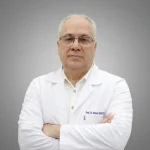 Prof. Dr. Ahmet Satıcı
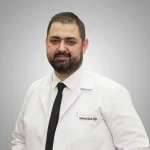 Doç. Dr. Muhammet Derda Özer
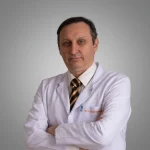 Op. Dr. Aysan Bayram