
- Home
- Knowledge centre
- Eye glossary A–Z
- Colour Blindness: What It Is, Types, Causes and Tests
Colour Blindness: What It Is, Types, Causes and Tests
Medically reviewed by {{surgeon}}, {{surgeon's title and specialty}}, on {{review date}}. Last updated {{date}}.
Colour blindness (also colour vision deficiency, or "color blindness" in US spelling): seeing colours differently from most people, so that certain colours are hard to tell apart. Most people who have it are born with it, and the most common type is red-green colour blindness, which mainly affects men. It rarely means seeing in black and white. There is no cure for the inherited forms, but a colour vision test confirms it, and an eye doctor can check whether a later change in colour vision has a treatable cause.
Colour blindness: key facts
- How common
- About 1 in 12 men (8%) and about 1 in 200 women; about 3 million people in the UK and an estimated 300 million worldwide
- Most common type
- Red-green colour blindness; deuteranomaly is its most common form
- Rarer types
- Blue-yellow: fewer than 1 in 10,000 people worldwide, men and women equally. Complete colour blindness (achromatopsia): rare
- Usual cause
- Inherited. Red-green types are carried on the X chromosome
- Can it start later in life?
- Yes. Eye disease, some illnesses, injury, ageing and some medicines can cause acquired colour vision loss
- Effect on sharpness
- Red-green and blue-yellow types disturb colour perception but do not affect sharpness of vision
- Diagnosis
- Colour plate test, hue (arrangement) test or anomaloscope
- Cure
- None for inherited forms; treating the cause can help acquired forms
- Specialist
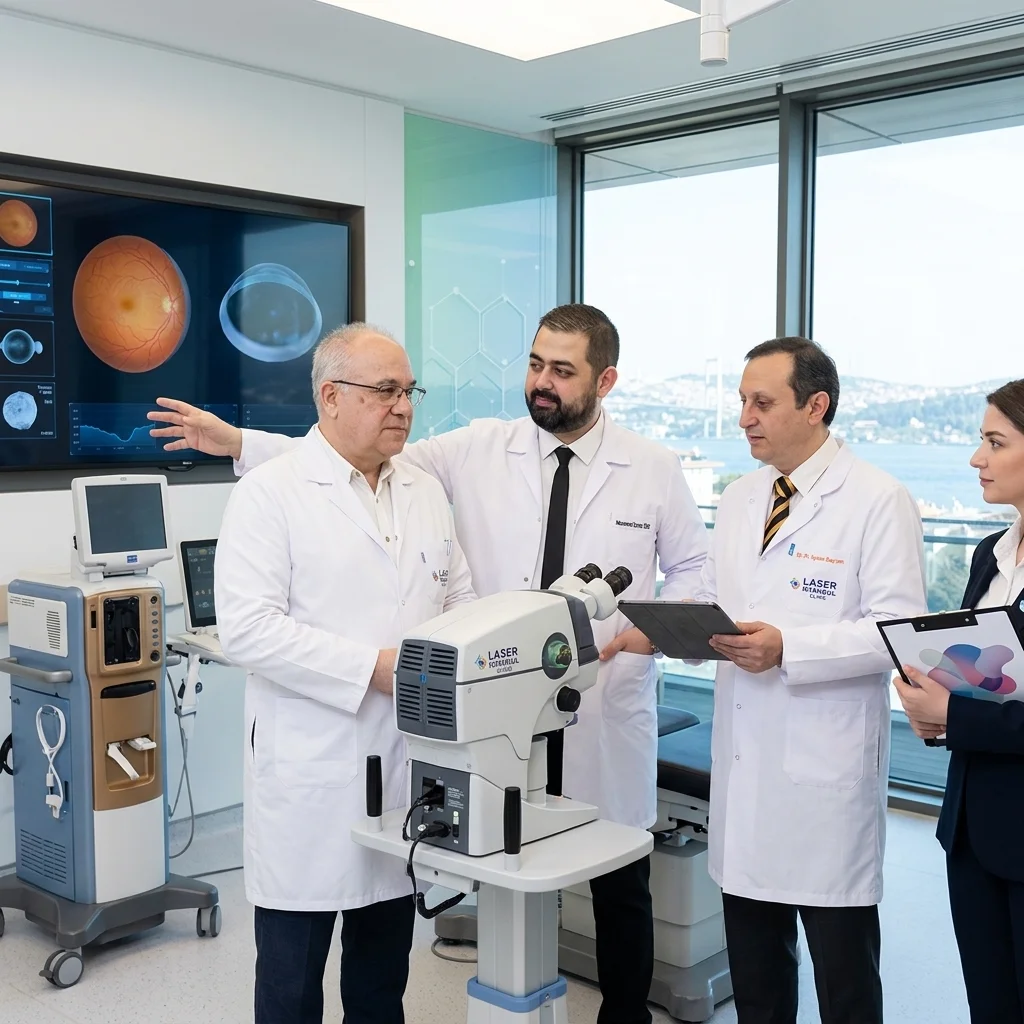
- Ophthalmologist (eye doctor) or optometrist; at Laser Istanbul Clinic, Prof. Dr. Ahmet Satıcı, Doç. Dr. Muhammet Derda Özer and Op. Dr. Aysan Bayram
How does colour vision work?
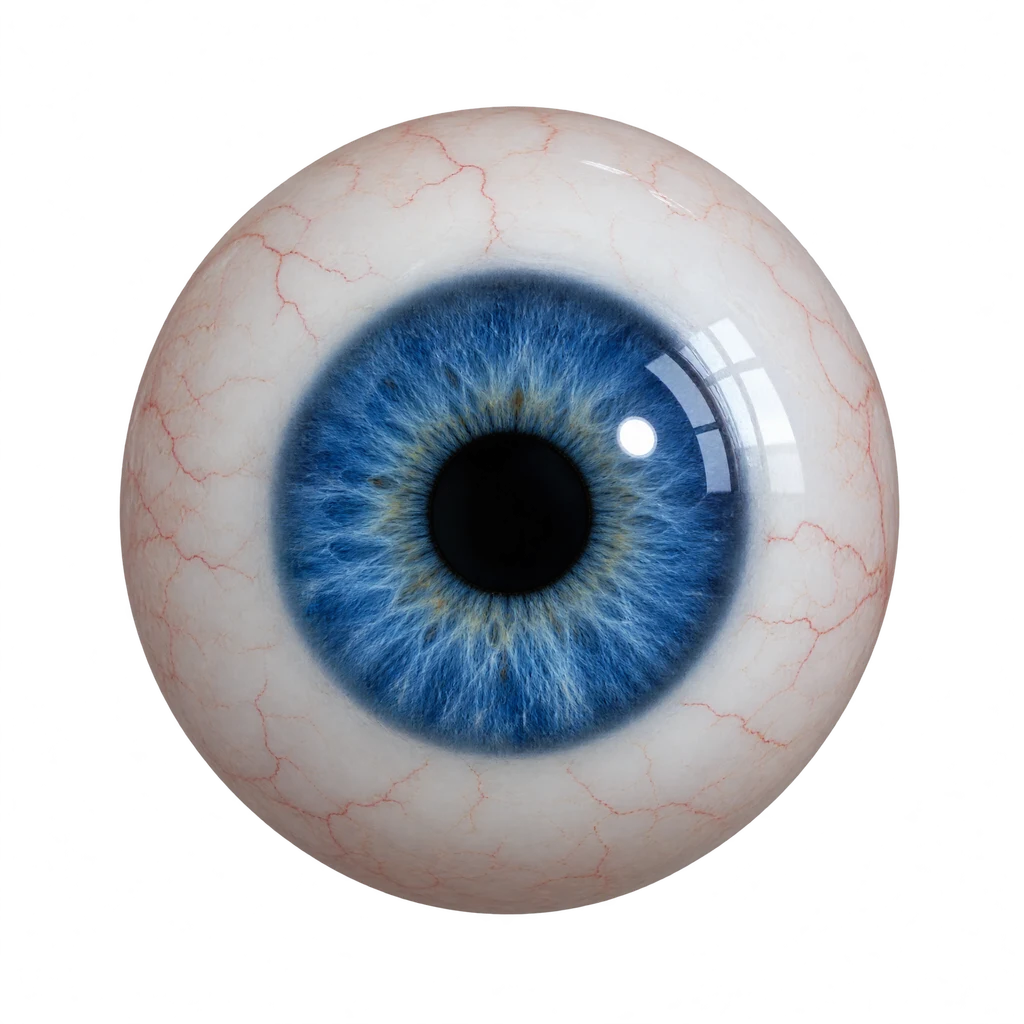
Colour vision depends on cone cells in the retina. The retina is the light-sensitive layer at the back of the eye, and it contains two kinds of light-detecting cell. Rods detect only light and dark and work well in dim light, while cones detect colour and are concentrated near the centre of your vision (American Academy of Ophthalmology, AAO). There are three types of cone, which respond to red, green and blue light, and the brain compares their signals to work out every colour you see.
If all three cone types are present and working normally, you have typical colour vision. Colour blindness happens when one type of cone works differently or is missing. The AAO describes the mild form as one where all three cone types are present but one does not work properly, and the severe form as one where cones are absent.
Because this is about colour and not detail, red-green and blue-yellow types disturb colour perception without affecting sharpness of vision (MedlinePlus Genetics).
What are the types of colour blindness?
The National Eye Institute (NEI) divides colour vision deficiency into three groups: red-green, blue-yellow and complete. The ending of each name tells you how strong the effect is: -anomaly means a weaker colour signal, and -opia means the signal is missing.
| Type | What changes | Severity | How common |
|---|---|---|---|
| Deuteranomaly (red-green) | Certain shades of green look more red | Usually mild; typically does not interfere with daily life | The most common type of red-green colour blindness |
| Protanomaly (red-green) | Certain shades of red look more green and less bright | Usually mild | Red-green types as a group affect about 1 in 12 men |
| Deuteranopia and protanopia (red-green) | Red and green cannot be told apart at all | Stronger | Part of the red-green group |
| Tritanomaly (blue-yellow) | Blue and green, and yellow and red, are hard to tell apart | Varies | Blue-yellow defects overall: fewer than 1 in 10,000 people |
| Tritanopia (blue-yellow) | Blue and green, purple and red, and yellow and pink cannot be told apart; brightness perception is reduced | Stronger | As above |
| Achromatopsia (monochromacy) | No colour is seen; clarity of vision may be reduced and bright light is uncomfortable | Severe | Rare. The blue cone form is about 1 in 100,000 people |
What is red-green colour blindness?
Red-green colour blindness (red-green colour vision deficiency) is the most common type. Reds and greens, and shades made from them such as browns and oranges, are easy to confuse. Depending on whether the red-sensing (protan) or green-sensing (deutan) cones are affected, it is called protan or deutan colour blindness. A search for "red-green vision weakness" or "red-green deficiency" means this condition.
What is blue-yellow colour blindness (tritanopia)?
Blue-yellow colour blindness, called tritan colour blindness, is much rarer than red-green: it affects fewer than 1 in 10,000 people, and men and women equally. People with tritanopia confuse blues with greens, purples with reds and yellows with pinks. Because inherited blue-yellow colour blindness is so rare, a new blue-yellow problem in an adult deserves an eye examination, since eye disease can be the cause.
Does colour blindness mean seeing in black and white?
Almost never. Complete colour blindness, achromatopsia, where everything looks grey, is the rarest form (AAO, NEI). Most colour blind people do see colours; they just cannot tell some of them apart.
What causes colour blindness?
Inherited colour blindness (present from birth)
Most colour blindness is genetic, passed from parents to children (NEI). Three genes matter. Two of them, OPN1LW and OPN1MW, are on the X chromosome and make the red- and green-sensitive pigments. The third, OPN1SW, is not on a sex chromosome and makes the blue-sensitive pigment (MedlinePlus Genetics).
Why are more men than women colour blind? Red-green colour blindness is X-linked recessive. A boy has only one X chromosome, so a single altered gene on it is enough. A girl has two X chromosomes and is affected only if both carry the change, which is why about 1 in 12 men but only about 1 in 200 women are affected (MedlinePlus Genetics; Colour Blind Awareness). Fathers cannot pass an X-linked trait to their sons, and it is most often inherited from the mother. Blue-yellow and complete forms involve other chromosomes and affect men and women equally (NEI).
Acquired colour blindness (developing later in life)
Colour vision can also change after birth. The causes named by the NEI, the AAO and the NHS include:
- eye diseases: glaucoma, age-related macular degeneration and cataract (the NEI notes colour vision may worsen with age, especially with cataracts, where the lens becomes cloudy)
- illnesses affecting the eye, optic nerve or brain: diabetes, multiple sclerosis, Alzheimer's disease, liver disease and stroke
- injury: a head injury, a detached retina and some tumours
- medicines: such as hydroxychloroquine (Plaquenil), used for rheumatoid arthritis and other conditions (AAO, NEI)
Acquired colour vision loss can be a sign of an underlying problem, and the AAO advises that anyone with a significant change in colour perception should see an ophthalmologist. Often the underlying condition is one our surgeons treat: cataract, glaucoma and retinal disease are all part of their work, and treating the cause may improve colour vision (AAO, NHS).
Colour blindness symptoms: what does it look like?
The main symptom is difficulty telling certain colours apart. It is often so mild that people do not notice it (NEI). Signs include:
- confusing reds, greens, browns and oranges, or blues and purples
- difficulty seeing the difference between shades of the same colour
- finding some colours less bright than other people do
- trouble with charts, maps or graphs that rely on colour coding
Colour Blind Awareness reports that around 60% of colour blind people are likely to have problems every day, and that about 40% of colour blind students leave school unaware of their condition. A person with moderate red-green colour blindness can typically identify only about five colours accurately from a standard 24-pencil box.
In children: the NHS lists using the wrong colours when drawing, trouble with colour-sorting tasks and less interest in colouring activities. A child assumes that everyone sees the way they do, so children rarely raise it themselves, and a test is worth considering if colour blindness runs in the family.
Severe forms: the very rare complete forms can also cause light sensitivity and involuntary back-and-forth eye movements (nystagmus), with reduced sharpness of vision (NEI, MedlinePlus Genetics).
How is colour blindness diagnosed and tested?
Colour blindness is diagnosed with a colour vision test. The NEI lists three:
- Colour plate test (the most common). You look at a circle made of many coloured dots with a number or shape hidden in it. People with typical colour vision can see the figure; people with colour blindness may see nothing or a different figure. The best known is the Ishihara test.
- Hue (arrangement) test. You arrange coloured objects in rainbow order, from red to purple. Mistakes in the order show which colours you confuse.
- Anomaloscope. You look through an eyepiece at two lights of different brightness and adjust them to match. It is used to find the type and how strong it is.
The NHS notes that colour vision tests are not part of a routine NHS eye examination, but you can ask for one at an optician. If colour blindness runs in your family, or you think you or your child may have it, the NEI advises talking to your eye doctor.
Can I test myself at home? An online screening can show whether you are likely to have red-green colour blindness, but it is not a diagnosis, because colours look different on different screens. You can try our free colour blindness test (Ishihara-style), then take the result to an optician or eye doctor for a formal test.
Colour blindness treatment: is there a cure?
There is currently no treatment for inherited colour blindness (NHS, NEI, AAO). What you can do depends on the cause:
| Situation | What helps |
|---|---|
| Inherited (from birth) | No cure. Everyday workarounds and, for some people, colour-filtering glasses or lenses |
| Acquired from an eye disease (cataract, glaucoma, macular disease) | Treating the disease; for example, treating a cataract may help restore colour vision (NHS). No result can be promised |
| Caused by a medicine | Your prescribing doctor may review or change it. Never stop a medicine without medical advice |
| Caused by an illness or injury | Treating the illness; colour vision may or may not recover |
Do colour blind glasses work?
They can help some people, but they do not cure colour blindness. Special glasses and contact lenses that increase the contrast between colours "may help", according to the AAO. In a 2022 study published in the journal Eye, 13 people with red-green colour blindness wore filter glasses daily for 11 to 14 days and saw colours better, but still discriminated colours less well than people with typical vision (University of the Incarnate Word). It was a small study of one type of glasses, so results will not be the same for everyone, and the study covered red-green types only.
Is gene therapy available?
Not as a routine treatment today. The NEI describes gene therapy as a promising area for severe forms of colour vision deficiency, but it is research and not something you can have in a clinic. Be wary of anyone offering a "cure".
Living with colour blindness
- Tell your school or workplace, and ask for colour-coded material to be labelled with text or patterns.
- Use colour-naming apps and labels, and ask someone to help sort clothes.
- Learn the order of traffic lights (red on top, green at the bottom).
- Colour blindness may rule out some careers for safety reasons, such as being a pilot or train driver (NHS), and can be a disadvantage in some technical and defence roles. Check the requirements of a job early.
- In the UK, colour blindness does not have to be reported to the DVLA (GOV.UK). Rules differ in other countries, so check locally.
When to see a doctor about colour blindness
Seek same-day care from an eye doctor or eye emergency service if your colours suddenly look different or faded together with sudden loss or blurring of vision, a dark curtain or shadow across your vision, new flashes or a shower of floaters, or a painful red eye. Call your local emergency number (112 in the EU and Türkiye, 999 in the UK, 911 in the US and Canada) if you cannot reach an eye service.
Book an examination soon if:
- colours look different or faded to you, in one or both eyes, and this is new
- your colour vision seems to be getting worse
- your child uses the wrong colours when drawing, or colour blindness runs in your family (the NHS advises visiting an optician)
- you take hydroxychloroquine or a similar long-term medicine and notice any change in colour vision
You do not need urgent care if you have always seen colours this way and nothing has changed, but a formal test is still worthwhile, for a child at school or when choosing a career.
If you already have a diagnosis such as cataract, glaucoma or a retinal condition and want a second opinion, you can send your scans for review before you travel.
Frequently asked questions
Colour blindness, or colour vision deficiency, means seeing colours differently from most people, so some colours are hard to tell apart. Most people are born with it and it runs in families. Red-green is the most common type.
Yes, but it is much less common. About 1 in 12 men have red-green colour vision deficiency compared with about 1 in 200 women, because red-green colour blindness is X-linked and a woman is usually affected only if both X chromosomes carry the change. Blue-yellow forms affect men and women equally.
It is the most common type of colour blindness, in which reds and greens (and shades made from them, such as browns and oranges) are hard to tell apart. It is called protan when the red-sensing cones are affected and deutan when the green-sensing cones are. Deuteranomaly, a mild form, is the most common.
Tritanopia is a rare form of blue-yellow colour blindness. People with it cannot tell blue from green, purple from red, or yellow from pink, and see some colours less brightly. Blue-yellow defects affect fewer than 1 in 10,000 people.
Yes. Eye diseases such as glaucoma, macular degeneration and cataract, illnesses such as diabetes and multiple sclerosis, injuries and some medicines (including hydroxychloroquine) can all cause colour vision to change. If this happens to you, see an eye doctor, because treating the cause may help.
Inherited colour blindness has no cure. Special filter glasses and lenses may help some people see differences between colours, but they do not restore typical colour vision. If an eye disease or a medicine is the cause, treating the cause may improve colour vision.
Almost never. Seeing no colour at all, called achromatopsia, is rare. Most colour blind people see colour but confuse particular pairs, such as red and green.
In the UK, colour blindness does not have to be reported to the DVLA (GOV.UK). Traffic lights follow a fixed order, with red at the top. Rules in other countries differ, so check with your local licensing authority.
Take a colour vision test. An optician or eye doctor can do a colour plate (Ishihara-style) test in a few minutes, or an anomaloscope for a more detailed result. You can start with our free online colour blindness test, but it is only a screening check.
Sources for the facts on this page
- National Eye Institute (NIH). Color blindness (overview). https://www.nei.nih.gov/learn-about-eye-health/eye-conditions-and-diseases/color-blindness
- National Eye Institute. Types of color vision deficiency. https://www.nei.nih.gov/learn-about-eye-health/eye-conditions-and-diseases/color-blindness/types-color-blindness
- National Eye Institute. Causes of color vision deficiency. https://www.nei.nih.gov/learn-about-eye-health/eye-conditions-and-diseases/color-blindness/causes-color-vision-deficiency
- National Eye Institute. Testing for color vision deficiency. https://www.nei.nih.gov/learn-about-eye-health/eye-conditions-and-diseases/color-blindness/testing-color-blindness
- NHS. Colour vision deficiency. https://www.nhs.uk/conditions/colour-vision-deficiency/
- American Academy of Ophthalmology. What is color blindness? https://www.aao.org/eye-health/diseases/what-is-color-blindness
- MedlinePlus Genetics (US National Library of Medicine). Color vision deficiency. https://medlineplus.gov/genetics/condition/color-vision-deficiency/
- Colour Blind Awareness. Colour blindness. https://www.colourblindawareness.org/colour-blindness/
- GOV.UK. Driving eyesight rules. https://www.gov.uk/driving-eyesight-rules
- University of the Incarnate Word. UIW study finds special glasses help color blind see colors better (on the 2022 study in Eye). https://www.uiw.edu/news/2022/02/uiw-study-finds-special-glasses-help-color-blind-see-colors-better.html
- Mitiku et al. Congenital color vision deficiency (X-linked recessive inheritance, occupations affected). Journal of the Egyptian Public Health Association, 2020. https://pmc.ncbi.nlm.nih.gov/articles/PMC7364690
- Emergency numbers: European Commission (112 in the EU) https://digital-strategy.ec.europa.eu/en/policies/112 · 112.gov.tr (Türkiye) https://www.112.gov.tr/kilis/acil-durumlarda-tek-numara-112 · NHS (999) https://www.nhs.uk/nhs-services/urgent-and-emergency-care-services/when-to-call-999/ · Parks Canada (911) https://parks.canada.ca/voyage-travel/securite-safety/urgence-emergency
Has your colour vision changed, or want an expert eye check?
Send us your eye report or scans. Prof. Dr. Ahmet Satıcı, Doç. Dr. Muhammet Derda Özer (Doç. = Associate Professor) or Op. Dr. Aysan Bayram will review them and tell you which tests or treatments may suit your eyes, with no obligation.
3 eye surgeons
Your case is reviewed by a named surgeon, not a salesperson. Reply within {{response time}}.
 Prof. Dr. Ahmet Satıcı
 Doç. Dr. Muhammet Derda Özer
 Op. Dr. Aysan Bayram